HELSINKI – Almost 70 percent of Finns are still members of the national Lutheran church. But that doesn’t mean they’re believers. Less than a third of Finns now say they believe in God. This historically Christian nation has not only left the faith but has begun criminal investigations of Christians.
But this is still a nation with a constitution that still tells the national church to “proclaim a Bible-based Christian faith.” So, why is Finland investigating a member of parliament for ‘proclaiming her Bible-based Christian faith’?
MP Under Investigation for “Defaming or Insulting” Homosexuals
Päivi Räsänen is under two investigations for allegedly defaming or insulting homosexuals. The first after she shared a Bible verse on Twitter last year aimed at Finland’s Lutheran church for promoting the homosexual lifestyle.
Räsänen told us, “In my tweet, I directly cited Romans first chapter and verses 24 to 27 and posted the picture of the passages from the Bible.” The passage condemns homosexuality.
Finland’s Prosecutor General has now opened a second investigation concerning a pamphlet that Päivi wrote 15 years ago about Biblical Christian marriage, called “Man and woman, He created them.”
Tweet Results in Criminal Investigation
It is biblical teaching that the Finnish constitution says it supports. Räsänen told us that because of that, she assumed the investigation would not go anywhere.
“Yes, yes, I assumed. In fact, it was a surprise for me that there is even a police investigation about that case. I wouldn’t have believed it.
Leif Nummela, editor of a Christian newspaper and a Christian TV host in Finland told us, “I thought that this couldn’t happen. It was unbelievable. It was a real surprise. And my first thought was, ‘are they really going this far’?”
The Lutheran pastor who published the pamphlet Päivi wrote on Christian marriage is also under investigation.
Rude Awakening for Finland’s Christians
Finnish Christian broadcaster, author and theologian Pasi Turunen says this has been a rude awakening for many Christians.
“Finnish Christians have lived in a very homogeneous Christian culture,” Turunen said. “It’s been very easy because everybody thinks and believes the same way pretty much and now this has become a completely new situation for us when our faith is challenged.”
Päivi said this all began in prayer when she felt led by the Lord to do something to wake up the national church in Finland on the issue of homosexuality. But she now fears this investigation will make them too afraid to proclaim their faith.
“I’m worried that this case, the criminal investigation, might frighten some Christians to hide and to keep silent.”
The Price Tag for Speaking Out
Turunen said, “It raises the threshold of saying anything in the public square and in one way, I see that that’s the purpose of this kind of attack: to put a high price tag on speaking your Christian mind out loud in the society.”
If convicted, Päivi could be fined or even imprisoned. And Turunen and Nummela both feel that support for her from Finnish evangelical leaders has been weak.
“If we could easily have two hundred thousand Christians saying, ‘this is horrendous, stop persecuting Päivi Räsänen,’ and that would have a huge impact,” Nummela said.
Turunen said he wishes “that evangelical leaders would be more outspoken and bolder. Otherwise, there will come a time when each of us will be in front of the firing squad.”
Päivi says she’s not afraid and believes God has a plan in this for Finland.
She said, “I am waiting to see what God is doing, because when He raises up prayers, then we can know that He is doing something.”
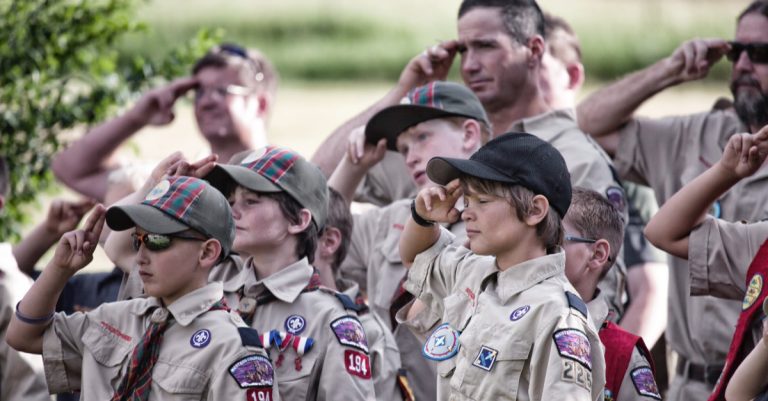
The Boy Scouts of America filed for bankruptcy protection on Tuesday, according to the AP, due to lowering membership and a surge of child abuse lawsuits.
“We are outraged that there have been times when individuals took advantage of our programs to harm innocent children,” said Roger Mosby, president and CEO of BSA. “While we know nothing can undo the tragic abuse that victims suffered, we believe the Chapter 11 process, with the proposed trust structure, will provide equitable compensation to all victims while maintaining the BSA’s important mission.”
The 110-year-old organization has suffered in recent years as sex abuse claims have plagued the nonprofit. Due to changes in states’ statute-of-limitations laws, over 12,000 victims have come forward with claims against BSA. The Scouts will likely be forced to sell campgrounds and hiking trails in order to raise necessary funds for a compensation trust that will top out at over a billion dollars.
Local chapters of BSA will not be affected as they are “legally separate and distinct organizations.”
In the last few years, membership for a group once held in high esteem has dropped substantially. In the 1970s, four million members worked their way to become Eagle Scouts. Now, only two million are members. Girls were admitted recently in order to make up for the dropping membership and BSA even attempted to eliminate “Boy” from its name. But, the…
China has appointed a new leader best known for destroying crosses on churches as head of China’s office in Hong Kong.
Xia Baolong has been a long-time ally of President Xi Jinping, as reported by The Guardian. He replaced Zhang Xiaoming as Director of the Hong Kong and Macau Affairs Office on Thursday.
Baolong’s appointment is a sign that China is not budging on maintaining power over the semi-autonomous city, despite Hong Kong’s violent and persistent protests.
“It signals that China will bring Hong Kong under closer scrutiny and tighten control over all aspects of the city,” said Willy Lam, adjunct professor at Chinese University of Hong Kong.
Other Hong Kong citizens are concerned about Baolong’s close allegiance to President Xi.
Franklin Graham Says the Gospel ‘Is What Is Really Being Banned’ in Britain
Evangelist Franklin Graham says the opposition to his United Kingdom tour is due to opposition to the gospel – and that those who have banned him are “truthophobic.”
Graham is scheduled to preach in eight United Kingdom cities between May 30 and Oct. 4 but doesn’t have a place to speak due to a series of cancellations. The arenas and convention centers that were set to host Graham dropped him under pressure from LGBT groups and activists.
At issue are Graham’s biblical positions on marriage and sexuality. The Billy Graham Evangelistic Association says the tour will go on, despite him being banned from specific locations.
Graham, in a Facebook post Sunday, stood his ground.
“Opposition to the Gospel shouldn’t really surprise us,” he wrote. “Jesus warned that it would come. As you may know, my eight-city evangelistic tour across the UK has been met with resistance by LGBTQ activists who inaccurately claim that I am homophobic, Islamophobic, and say that I speak hate. Anyone who knows me or has heard me speak knows that this really isn’t true – but, I DO preach the TRUTH of the Gospel. Could it be, rather, that these folks are truthophobic or free-speech-ophobic?”
Graham embedded a video from Martyn Iles, managing director of the Australian Christian Lobby. Iles defended Graham in the 10-minute clip.
“Martyn asks if society has become so ‘tolerant’ that it…
ORLANDO, Fla. (BP) — First Baptist Church of Orlando, Fla., has paid the full cost of the 2020 Southern Baptist Convention Pastors’ Conference, leaders said Monday (Feb. 17) in response to disagreement about speakers and performers slated for the June 7-8 event.
“We will not receive any financial support of any kind from any SBC entity or auxiliary,” pastors’ conference leaders said in a statement released by Matthew Robinson, First Orlando pastor of administration. “Our hope is that this will ease conflicts or tensions that exist over the slated program for the conference. The 2020 SBC Pastors’ Conference is in no way being sponsored, controlled or paid for by the SBC, even though its purpose is still to bless and encourage SBC pastors and wives.” The speakers and performers remain the same as originally announced, the conference said.
Pastors’ Conference President David Uth, pastor of First Baptist Orlando, responded as early as Feb. 11 to concerns voiced among Southern Baptists that not all speakers and performers invited to the event are Southern Baptist, as well as to a scheduled performance by a woman who is a spoken word artist but also a teaching pastor at her non-Southern Baptist church.
Others have also been critical of the inclusion of David Hughes, pastor of Church by the Glades, a Southern Baptist congregation in Coral Springs, Fla. The church has received attention for various performances in its services, as well as sermon series with sensual themes.
“My goal, my prayer was that we could open ourselves up to hear from people that maybe were good friends of ours, but not in our Southern Baptist Convention,” Uth has said. “I feel like they have a message for us. I feel like God wants to speak to us through them. So my goal and my hope was that we could hear their message, we could learn from them, and we could embrace it.”
Uth responded after he received both affirming and disparaging feedback regarding the inclusion of Hosanna Wong as a spoken word artist, with many complaining that Wong is also a network associate teaching pastor at the Chula Vista location of the multisite EastLake Church in the San Diego area. Others pointed out Jim Cymbala, pastor of the evangelical non-denominational Brooklyn Tabernacle in Brooklyn, N.Y.; and Wayne Cordeiro, founding pastor of New Hope Christian Fellowship, based in Honolulu, Hawaii.
A pastor recently told me (Preston) about Tyler and Amanda (names changed), high-school sweethearts raised in Christian homes, living in the Bible belt. After getting married, they seemed to be living the American dream with a house, good jobs, and two kids. Then Jon, a friend of Tyler’s, began living with their family. Amanda developed a close relationship with him, but their flirtation soon developed into something more, and Jon and Amanda proposed to Tyler that they begin exploring polyamory, with Amanda adding Jon as a significant other. They also encouraged Tyler to develop a relationship with another woman he’d met at the gym. He agreed.
When Tyler and Amanda came out as polyamorous, their parents were shocked. What seemed like a fringe practice of the sexual revolution had settled into the heartland of Middle America.
Making the situation even more complex, Tyler and Amanda sought counseling from a Christian counselor who advocated polyamory. Tyler’s parents were disturbed by what their son and daughter-in-law heard there: “It’s only adultery or cheating if someone is kept in the dark. If you are open and honest, this is a God-honoring relationship. And this is good for the kids! It takes a village to raise a child, so a polyamorous relationship actually brings more support and ‘family’ into your kids’ lives, much like the extended families in the past.”
Tyler’s parents wanted to know how to respond to their children but also wanted to know how the church should respond. Should Jon be welcomed into the church as an addition to Tyler and Amanda’s family? In a world where many sexual choices and identities are accepted, polyamory is often still stigmatized, so Tyler’s parents didn’t know who to talk to or where to turn.
An Introduction to Polyamory For many Christians, polyamory seems so extreme and rare that there’s no need to talk about it. But it is much more common than some people think, and it’s growing in popularity. According to one estimate, “as many as 5 percent of Americans are currently in relationships involving consensual nonmonogamy,” which is about the same percentage as those who identify as LGBTQ. A recent study, published in a peer-reviewed journal, found that 20 percent of Americans have been in a consensual non-monogamous relationship at least once in their life. Another survey showed that nearly 70 percent of non-religious Americans between the ages of 24 and 35 believe that polyamory is okay, even if it’s not their cup of tea. And perhaps most shocking of all, according to sociologist Mark Regnerus in Cheap Sex, roughly 24 percent of church-going people believe that consensual polyamorous relationships are morally permissible.
Over the last several years, my (Preston’s) full-time job at The Center for Faith, Sexuality & Gender has been helping leaders and pastors engage questions about sexuality and gender with theological faithfulness and courageous love. Naturally, I often get asked, “What’s the next discussion Christians need to have about these issues?” My answer is always the same: “Polyamory.”
Polyamory—from the Greek poly, meaning “many,” and the Latin amor, meaning “love”—refers to “the practice of, or desire for, intimate relationships with more than one partner, with the consent of all partners involved.” While these intimate relationships between three or more people are typically sexual, they don’t need to be. And they can take many different forms. For instance, vees (Vs) are poly relationships where one person is sexually engaged with two other people (as in the case of Tyler, Amanda, and Jon), while triads are relationships where all three are sexually involved with each other. Another defining element of polyamorous relationships is that they are honest and consensual—cheating and lying are frowned upon in the poly community.
Unlike polygamy, polyamory does not always involve a marriage commitment, and it is much more egalitarian. Polyamory is also different from swinging or open relationships, though they do overlap. Open relationships are polyamorous, but not every polyamorous relationship is an open relationship. Sex and relationship therapist Renee Divine says, “An open relationship is one where one or both partners have a desire for sexual relationships outside of each other, and polyamory is about having intimate, loving relationships with multiple people.” Notice again that polyamory is not just about sex. It includes love, romance, and emotional commitment among three or more people.
Preparing a Pastoral Response How can pastors and leaders prepare to address questions related to polyamory? Several pastors tell us it’s becoming more common for people who identify as poly to ask about their church’s view on the matter. Will they be accepted and affirmed? The discussion is still young enough that most pastors have some time to construct a robust, compassionate, thoughtful response to the question, “Is your church inclusive of people who are poly?”
How would you respond to Tyler, Amanda, and Jon? How would you counsel Tyler’s parents to respond? Tyler’s parents’ pastor advised them to first listen to their son rather than trying to preach at him, so after Tyler came out to them, they set up a time to simply connect and listen. Though they were clear they did not affirm Tyler’s choice, they did affirm their love for Tyler, Amanda, and their grandkids. They made a point to keep their weekly Thursday afternoon “dates” with their grandkids and stay a part of their lives. Because of this, Tyler has maintained his relationship with his parents, and though his relationship choices are unbiblical, they have been able to communicate their love and care for him and his family. Amanda’s mother responded differently. Decades earlier, her relationship with Amanda’s father had ended when he had proposed a polyamorous relationship and then left when she wasn’t open to it. Amanda’s choice reopened her mother’s unhealed wounds. Feeling angry and betrayed, Amanda’s mother effectively broke off the relationship with her daughter. When children choose less than God’s best for their relationships, affirming both grace and truth is a difficult but necessary balance for parents to maintain.
The title of this article probably has piqued the interest of some and drawn the skeptical eye of others.
“Church planting preaching?” “Secular preaching?” How can the sacred process of proclaiming the timeless and infallible Word of God to his people be any different whether it takes place in a school gymnasium or within the sanctified walls of a traditional church building?
That is a great question.
I have had the privilege of spending much time with church planters across North America, and I’ve seen some who have understood the difference and some who have not. I have observed some who have intuitively grasped the distinction and communicate directly to the hearts of their audience with candor, precision, and great power.
I have also watched too many unartfully fumble their eternal opportunity. I have heard carefully crafted, well-polished messages that sounded eerily familiar to what John Piper or David Platt might have effectively preached, but to an audience that seemed inattentive and uninspired.
What accounts for such a difference? Sunday by Sunday, John Piper and David Platt seem to have their audiences leaning forward, engaged, and busily taking notes for deep personal application.
So, why does it often feel so bizarre and ill-fitting in a church plant? Is it the gymnasium? Maybe it’s the sheet-metal music stand? Would a proper pulpit normalize the peculiarity?
The fact that this discussion has been largely neglected leaves most church planters with little more than their personal experience to determine an approach to missionary preaching. Some planters have had the benefit of marinating in missional environments under skillful gospel communicators, and these blessed few have numerous second-nature advantages as they approach their own craft.
Intuitively, they perceive and account for the worldview diversity in their audience. And because of this cultured sensitivity, their approach to preaching is fundamentally different.
Over the next two Missio Mondays we will examine six characteristics that differentiates gospel proclamation within a secular church planting environment from our classical understanding of preaching within the common worldview of Christendom.
Today we will look at the first two.
1. Empathize with your audience
Without question, most sermons heard by a potential church planter were delivered in the context of an established church. That means that most of the messages we have experienced were delivered to an audience with a thoroughly Christian worldview (or at least intellectual assent to that worldview) with all of the implicit assumptions therein.
There is often an evangelistic appeal somewhere in the message, but it’s presented with the assured confidence that the vast majority of the hearers are well acquainted with the main themes of the culture of the faithful. Prayerfully, this is not the preaching context that most will be experiencing as a church planter because their ministry will take them deep into the harvest fields.
For the majority of planters, if they are knee-deep in engaging the constituency of their context, the audience they will assemble will look, think, and behave much differently from the well-dressed crowd attending church across the street.
Their new congregation’s innate operating system will filter information much differently from those who have long made “church” part of their weekly routine. Many of the same statements that normally inspire solidarity, nodding heads, and muffled “Amens” to good churchmen will rouse irritation, confusion, and disengagement to the less-religious newcomers among us.
For example, the defining cultural issue of this generation that separates secularists from their sacred neighbors is that of human sexuality. Convictional Christians and cultural secularists have deepened the divide of communication and understanding through the radically divergent ways each group approaches this subject.
Convictional Christians see this issue as a biblical one. The Bible has clear and unmistakable teachings on human sexuality, and part of the big package of being a Christ-follower is to resist the impulse of aligning with the changing tides of culture and remain faithful to the Word of God. To well-discipled Christians, the issue is not easy, but it is exceedingly simple.
Nominal Christians and cultural secularists approach this issue differently. To Christians this is an issue of faithfulness. To the nominal and secular, this is an issue of justice. Their worldview elevates the human equality of all as the highest good and concludes that the astringent Christian positions on sexuality are unjust relics from a much uglier era of human history.
In 1995, I taught a non-credit night course in Russian church history for what would become the Russian-American Christian University (RACU). It was a memorable experience on multiple counts.
The class was held in rented space on the old campus of the Patrice Lumumba People’s Friendship University, where a larger-than-life bust of the school’s namesake Congolese communist martyr was on display in the lobby. Outside my classroom windows were the walls of the Donskoi Monastery, where the Bolsheviks imprisoned Russian Orthodox Patriarch Tikhon until his death in 1925. I team-taught in a stimulating partnership with a friend, Orthodox journalist and future priest Yakov Krotov. And I was teaching unusually attentive students as eager to learn as any I have ever encountered.
For a few short years, less than two decades (1996-2011), an American-style Christian liberal arts university sought to plant seeds in Moscow, where the soil would grow increasingly rocky and thorny. Explanations for RACU’s demise are easy to come by. They include an evangelical constituency limited in size and financial wherewithal, economic instability (including the 1998 ruble crisis and the 2008-09 recession), a political order devolving from pseudo-democracy to authoritarianism, deteriorating Russian-American relations, growing xenophobic nationalism, and a declining pool of college-age youth.
Above all, RACU could not overcome increasingly crippling state restrictions on private higher education and the lack of an established rule of law, which fueled (and was fueled by) pervasive corruption. Though the school was predominantly evangelical, it made earnest efforts to develop positive relations with the Russian Orthodox Church, efforts that were successful with some hierarchs but less so in the immediate neighborhood of its new building, which barely opened before pressures on all sides forced its closure and sale.
Fighting to Survive Taking into account the overwhelming odds against RACU, a key question comes to mind: How did the school manage to survive as long as 17 years and produce ten graduating classes? Part of the explanation for its endurance lies in the enthusiastic support it received from elements of the U.S. Christian college network, as well as generous contributions from evangelical donors on and off its board. (Full disclosure: I was a member of that board.) But the chief reason for RACU’s resilience was the competence and character of its founding president, John Bernbaum, who writes about his experience in Opening the Red Door: The Inside Story of Russia’s First Christian Liberal Arts University.
Bernbaum’s preparation for the post included a Ph.D. in European history, work in the U.S. State Department, decades of teaching and administrative experience with the Washington-based Council for Christian Colleges and Universities, and a gift for networking and donor development. Just as critical to the enterprise were Bernbaum’s abiding sense of God’s leading and a seemingly inexhaustible reservoir of energy, optimism, fortitude, and perseverance.
In the context of global Christianity, RACU was part of a rapid, multi-continent expansion of faith-based higher education over the past half-century—a phenomenon ably documented in the 2014 volume Christian Higher Education: A Global Reconnaissance. Compared to Asian and African newcomers, RACU’s imprint was quite modest, at least quantitatively. With a student body that never exceeded 200, it was dwarfed, for example, by the 3,500 students of South Korea’s Handong Global University (founded one year before RACU) or the 10,000 students of Nigeria’s Bowen University (founded in 2002).
So why write an entire book on a school with such a limited lifespan and a quite modest enrollment? For one, the saga of RACU’s hard-fought, short-lived existence bears telling because it played out in Russia, a nation that rightly commands the world’s attention, for good or ill. In addition, RACU’s promise and plight serves as a cautionary tale demonstrating the obstacles confronting any institution struggling to prevail in an environment of widespread corruption, economic uncertainty, and the arbitrary exercise of power.
As a people for whom Jesus explicitly prayed would be united as one (John 17:20-23), we cannot allow political tribal markers to define our identity more than the blood of Christ does. Christ did not die for us to merely tolerate one another, but to love and bear with one another—even if we do not like how our Christian brother and sister triages political priorities (Eph. 4:2; Col. 3:13). Diverging political urgencies compel competing visions for Christian political witness. On one side is an evangelical constituency that views Christian political witness as mediated primarily through moral consistency; on the other side a constituency that views secularism ravaging basic pillars of human decency. Though the categories are imprecise, the contest rages between those more attuned to social justice and those more attuned to cultural conservatism.
As I witness self-identified evangelicals engaged in our fraught political climate—a climate captured in microcosm by the Christianity Today impeachment editorial—I am alarmed by the judgment-casting from both sides, especially on social media. Neglected are the listening and sympathizing that Scripture demands of Jesus’ disciples (James 1:19). We tell ourselves that politics ranks below our faith obligations, but our actions betray our priorities. Political affiliation—especially in the Trump era—determines how we relate to and how we regard the political preferences of others.
For the Trump-voting Christian, refusal to support the president is seen as elitist capitulation. For the Trump-opposing Christian, support for the president is low-culture captivity to nationalism and nativism in Jesus’ name. Trump defenders reject the assertion that voting for Donald Trump is at odds with moral credibility and Christian integrity. Excuses pave over the president’s excesses for the sake of policy wins and proximity to power. Trump-resisters condescendingly downplay the achievements of the Trump administration many Christians favor. For resisters, whatever Trump is for must either be opposed outright, or if acceptable, begrudgingly acknowledged.
There are thoughtful Christians who will carefully decide to support President Trump in his re-election. There are thoughtful Christians who believe President Trump’s baggage, character flaws, and bravado cannot justify voting for him. I can respect both and refuse to see either as reasons to throw stones. At the same time, cartoonish extremes on both sides need rebuke.
We use cookies to ensure that we give you the best experience on our website. If you continue to use this site we will assume that you are happy with it.