


Jim Denison on Three Biblical Responses to the Divisions in Our Nation

Jim Denison is the founder and CEO of the Denison Forum, a nonprofit Christian media organization that comments on current issues through a biblical lens. The views expressed in this commentary do not necessarily represent those of BCNN1.

Yesterday was unusually chaotic even for American politics.

Democratic Party officials announced partial results from the Iowa caucuses at 5 p.m. EST showing Pete Buttigieg and Bernie Sanders in the lead. Their statement came nearly a full day after the results were delayed due to reporting issues. Four hours later, President Trump began his State of the Union address.

He became only the second president to do so while under impeachment. The atmosphere in the room was unusually tense and partisan.

The president handed copies of his speech to Vice President Pence and House Speaker Nancy Pelosi. She extended her hand, but he turned away without shaking it. She then introduced him, but not with the customary, “Members of Congress, I have the high privilege and distinct honor of presenting to you the president of the United States.” Instead, she said simply, “Ladies and gentlemen, the president of the United States.”

During the speech, the president honored a Tuskegee Airman and his grandson who intends to become an astronaut. He welcomed home a soldier who reunited with his family for the first time in months. The speech recounted remarkable economic good news and called on Congress to make progress on a variety of fronts.

Then, at the conclusion of the speech, the Speaker of the House stood, took her copy of the address, and tore it in two. She said later that she destroyed the speech “because it was the courteous thing to do considering the alternatives.” She added that she was “trying to find one page with truth on it” but “couldn’t.”

My purpose in responding today is emphatically not to advance a partisan agenda. I would offer the same response to last night’s divisiveness if the president were a Democrat and the House Speaker a Republican.

In such a bitterly divided culture, my purpose today is to consider biblical ways to deal with disagreements as a nation and as individuals.

First, we must honor the position even if we disagree with the person.

Peter instructed us: “Be subject for the Lord’s sake to every human institution, whether it be to the emperor as supreme, or to governors as sent by him to punish those who do evil and to praise those who do good” (1 Peter 2:13-14). Paul agreed: “Let every person be subject to the governing authorities. For there is no authority except from God, and those that exist have been instituted by God” (Romans 13:1).

Note that the emperor to whom they referred was Nero, one of the most despotic tyrants in Roman history.

In light of God’s word, it was wrong for Republican Congressman Joe Wilson to cry out “You lie!” when President Obama was delivering a joint address to Congress in 2009. (The congressman soon apologized, and the president accepted his apology.) It was also wrong for Speaker Pelosi to rip up President Trump’s speech.

Congressman Wilson and Speaker Pelosi obviously disagreed with the presidents whose speeches they protested. But Scripture teaches us to honor the position, even if we disagree with the person.

Source: Christian Headlines

All Content & Images are provided by the acknowledged source

Franklin Graham Promises That UK Evangelism Tour Will Go on After All Planned Venues Cancel Events

Franklin Graham said he will seek out alternative venues for a United Kingdom tour this spring after all eight venues reneged on plans to host the evangelist, saying his views on homosexuality are incompatible with the values of the British people.

Graham, who was in London on Thursday (Feb. 6) to rally churches to his tour, said seven venues canceled their contracts with him and an eighth backed out after agreeing in principle.

“This attack on me is an attack on religious freedom and freedom of speech,” Graham told Religion News Service by phone. “For any Christian group that wants to rent a venue that believes the Bible is the Word of God, they’re in danger of being canceled.”

He said he would sue all seven sites where he signed contracts and expected to win.

On Wednesday, the Utilita Arena in Newcastle upon Tyne became the seventh venue to cancel Graham’s scheduled appearance. Venues in Birmingham, Liverpool, Sheffield and London have also canceled.

The tour was scheduled during Pride Month in the U.K., which falls in June.

“Franklin Graham’s views are wholly inconsistent with our city, which is preparing to welcome huge celebrations and tens of thousands of people this summer for UK Pride,” Ste Dunn, chair of the Northern Pride group, said on a petition site calling for an end to Graham’s tour. The petition had more than 5,700 signers.

Graham, who has spoken out against same-sex marriage and transgender people, insisted he does not preach against homosexuality; he only calls it out as sin.

“I believe marriage is between a man and woman,” he said. “That’s the same position that the Queen of England has, that the Church of England has.”

Source: Religion News Service

All Content & Images are provided by the acknowledged source

National Prayer Breakfast Speakers Say Loving Your Enemies is Not Easy

Inside the International Ballroom at the Washington Hilton, the mood at the National Prayer Breakfast was half church service, half political rally.

The program began with a spirited rendition of Hank Williams’ “I Saw the Light,” led by members of the House of Representatives’ prayer breakfast group, followed by prayers from the co-hosts, Rep. John Moolenaar, a Republican from Michigan, and Rep. Tom Suozzi, a New York Democrat.

National Prayer Breakfast starts with some Hank Williams pic.twitter.com/mH1CFZWyZN

— Bob Smietana (@bobsmietana) February 6, 2020

Their prayers and opening remarks echoed the larger theme of the prayer breakfast this year, which centered on Jesus’ commandment to love your enemies.

“Jesus’ teachings are a solid foundation for building relationships,” said Moolenaar.

The two were also featured in a video about religious persecution, another focus for this year’s event. After the video — and the entrance of President Donald Trump, carrying a newspaper with the headline “Acquitted” — Speaker of the House Nancy Pelosi led a prayer for those suffering religious persecution around the world, including Muslims, Yazidis, Buddhists, Christians and those from other faiths.

“Let us pray that the names of the persecuted always live on our lips and their courage carried through our actions,” she prayed. “And let us pray that we honor the spark of divinity in them and in all people, including ourselves.”

The recent division in the United States over Trump’s impeachment was on the minds of attendees and organizers alike. Several mentioned the theme of the day was especially timely — and that gathering people together around tables to talk and get to know each other is one way to defuse some of the tensions in the country.

“If we are to heal our divisions — we need to spend time together,” he said.

Suozzi’s words echoed a larger belief of The Fellowship, the nonprofit that puts on the National Prayer Breakfast. Members of the group describe themselves as friends who get together to talk about the teachings of Jesus. While the group positions itself as open to all faiths, the themes of the event are distinctly Christian.

Author and Harvard professor Arthur Brooks urged those in attendance not to let their disagreements over politics lead to contempt. Brooks recalled speaking to a group of conservative activists and telling them their political opponents were neither evil nor stupid.

That line, he said, did not get much applause.

He went on to talk about being raised by Christian parents in Seattle, who had progressive politics. His parents were neither evil nor stupid, he said. And he challenged listeners to remember their loved ones who have different points of view — and to stand up for those who would ridicule them.

Brooks also said Jesus asked his followers to love their enemies — not just tolerate them. Putting that into practice, he admitted, is hard.

Source: Religion News Service

All Content & Images are provided by the acknowledged source
North American Mission Board Defends Dismissal of Lawsuit in Appeals Court

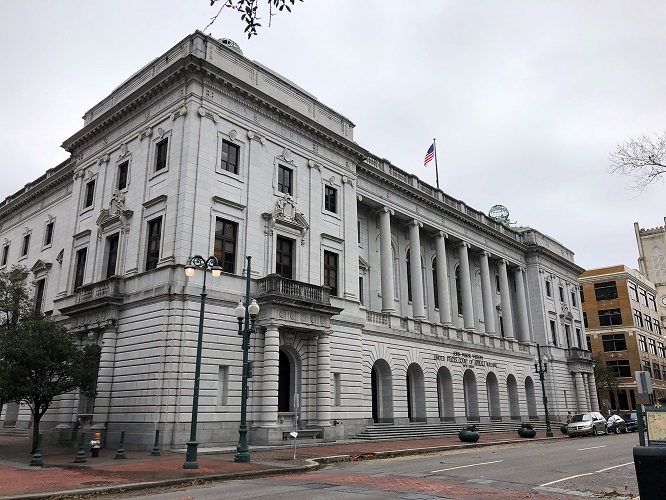
The 5th U.S. Circuit Court of Appeals heard oral arguments Thursday over a lower court’s dismissal of a lawsuit against the North American Mission Board by a former executive of the Baptist Convention of Maryland/Delaware (BCMD).

The three-judge panel sharply questioned both sides as to whether and how First Amendment legal precedent protecting churches and religious organizations from state interference applied to the case.

Will McRaney, the BCMD’s former executive director, filed a lawsuit in 2017 alleging NAMB had intentionally defamed and wrongly influenced his 2015 termination by the BCMD after a dispute over collaborative missions efforts in the region. The suit also claimed NAMB had prevented or attempted to prevent him from speaking at conferences after his departure from the BCMD, and that he suffered emotional distress when his photo was displayed in the reception area of NAMB’s offices in Alpharetta, Ga.

Except to acknowledge the photo had been posted in the reception area of its headquarters, NAMB has consistently denied McRaney’s claims.

Last April, Senior Judge Glen Davidson of the U.S. District Court Northern District of Mississippi dismissed the lawsuit, ruling the court could not consider McRaney’s claims because of the ecclesiastical abstention doctrine, which prevents the government from interfering in church or religious matters. But McRaney’s counsel argued Thursday that the ecclesiastical abstention doctrine did not apply.

“NAMB is not a church,” attorney Harvey Barton argued. “They are an entity that controls money…. This is a dispute about power and money. It’s not about church doctrine. It’s about who gets to be in control.”

Representing NAMB, attorney Donna Jacobs of the firm Butler Snow argued that both sides agreed the initial conflict was over missions strategy. Jacobs said McRaney’s acknowledgment of that in his claims showed the dispute was “inherently religious.”

McRaney was the BCMD’s executive director from 2013 until he was terminated in June 2015. He filed suit in April 2017, after more than a year of online postings alleging various wrongdoing by NAMB and its president Kevin Ezell — including the claim, made in the lawsuit, that NAMB threatened to withhold money and to end a strategic partnership agreement for evangelism and church planting “unless McRaney was terminated.”

NAMB has consistently denied that claim, along with others. Its response to McRaney’s lawsuit claimed the BCMD had become “a dysfunctional and difficult ministry partner” while he was its executive director.

Barton, McRaney’s counsel, argued Thursday that McRaney had opposed NAMB’s desire for a new strategic partnership agreement with BCMD because it would have lessened BCMD’s autonomy.

After the hearing, McRaney told Baptist Press he “regret(ted) having to be here, but I certainly am glad for the opportunity to defend the historic Southern Baptist position.”

Jacobs told the judges that NAMB had never claimed to have any authority or hierarchical control over the BCMD. She agreed with Barton that the Southern Baptist Convention and its various entities and state conventions are autonomous rather than a top-down hierarchy like some other religious denominations, characterizing NAMB’s relationships and agreements with BCMD and other state conventions as “cooperative.”

When questioned by the judges about the SBC’s autonomous organizational structure, Jacobs argued that the differences from other denominations should not afford the SBC and its entities “lesser protection” from government interference in their religious affairs.

Jacobs also argued that McRaney’s claims that the dispute was over missions strategy showed the case concerned religious matters.

In a statement released after the hearing, George McCallum, NAMB’s legal counsel, reiterated Jacobs’ argument.

Source: Baptist Press

All Content & Images are provided by the acknowledged source
Carter Tan on Chinese American Churches’ Reactions to the Coronavirus

Carter Tan is the English Ministries pastor at Grace Chinese Baptist Church in Richmond, Va. The views expressed in this commentary do not necessarily represent those of BCNN1.

It has felt like a ghost town at church for the last two weeks. The normal hustle and bustle, the loud chattering and warm greetings were noticeably missing from our Friday evening gatherings and Sunday Service.

Since the news of the coronavirus broke out in early January, we have seen our church attendance decrease by nearly 40 percent on Sunday mornings. I expect attendance to continue to decrease as more and more cases are reported worldwide and in America. Fear is one driving factor for the decrease in attendance, while good old precautionary common sense is the other.

Fear is a powerful emotion indeed. When our Elder and Deacon Board issued an official statement asking church members to self-quarantine if they had been to China recently, it sparked mixed reactions. On one hand, it assured the members that leadership is taking active precautionary steps to avoid contributing to the spread of coronavirus. On the other hand, it created suspicion and irrational fear in others to stay away from the church at all costs.

In comparison, the Weekly U.S. Influenza Surveillance Report from Centers for Disease Control and Prevention estimates that this season alone has seen at least 19 million flu illnesses, 180,000 hospitalizations and 10,000 deaths from flu. That seems to be more of a dire threat to American Chinese churches than the coronavirus.

Source: Baptist Press

All Content & Images are provided by the acknowledged source
LifeWay Christian Resources CEO Ben Mandrell Announces Renewed Mission and Focus

LifeWay Christian Resources CEO Ben Mandrell unveiled to trustees a new organizational structure and mission statement to align the organization for future ministry and growth.

LifeWay experienced a successful transition in closing its brick-and-mortar retail chain in 2019 and saw significant growth in its direct sales channels, Mandrell reported to trustees during their biannual board meeting, Feb. 3-4 in Nashville.

“We knew it would take us some time to recover from the store closures, but we are rebounding faster than we expected,” Mandrell said. “It’s early, of course, but we are pleased with where we are after the first quarter.”

Sales through LifeWay.com are showing increases of more than 25 percent over last year, Mandrell noted. “Since LifeWay.com is our most popular channel, we want our online store to be intuitive, smart and streamlined. We have a team of talented employees working diligently to enhance that experience.”

In addition to its e-commerce site, LifeWay continues to engage customers through its Customer Service Center, a network of church partners, and partnerships with independent Christian bookstores and other retailers, Mandrell said. Through its Authorized Dealer Program, LifeWay is now showcasing products in 459 locations across 46 states. “We’re finding new shelf space to allow customers to touch and feel our products before they buy them.”

In addition to independent bookstores, LifeWay is also partnering with local churches that wish to carry an assortment of LifeWay resources, Mandrell reported. “Together, we’ve extended our ministry reach into more than 90 new markets — regions where LifeWay never had a brick-and-mortar storefront.”

Mandrell reminded trustees, “LifeWay is far more than a chain of brick-and-mortar stores. In the past year, LifeWay served more than 75,000 churches around the globe through our resources, events and services.”

Refocusing the mission

Reflecting on the past year, Mandrell said he is reminded how the Lord has provided and sustained LifeWay through a difficult season.

“But challenges always present opportunities,” he said. “We’ve had the opportunity to reimagine the future of LifeWay and refocus our mission.”

Mandrell then revealed LifeWay’s new mission statement — “We exist to honor God and serve churches by designing trustworthy experiences that fuel ministry.”

He reminded trustees of LifeWay’s creation story, how the founding president James M. Frost cast a vision for an organization that would fuel the ministry of local churches by creating doctrinally sound, easy to use materials.

“Frost saw enormous potential in designing tools that make church ministry more effective,” Mandrell said. “It’s my desire to continue that vision and commitment as we come alongside local churches in order to support the Great Commission.”

Mandrell explained that the mission statement is intended “to help us recalibrate our culture and set a compass for our future.” He also said LifeWay is engaged in a rebranding process and plans to unveil a new logo and brand promise in the coming months.

“As LifeWay engages a changing marketplace, we are imagining new ways to get products to our customers,” Mandrell said, “and we are positioning ourselves to serve churches scattered across the globe.”

Source: Baptist Press

All Content & Images are provided by the acknowledged source

Jonathan Aigner on Why Church Music Time is Not Worship

Jonathan Aigner holds a music degree from Baylor University in Texas and a Master of Arts in theology from Wheaton College in Illinois. He is an elementary school music teacher and the traditional worship minister at a United Methodist church. Kelsey and Jonathan live in the Houston, Texas area with their beloved dog. The views expressed in this commentary do not necessarily represent those of BCNN1.

This is music. Just music. Only music. Strums on a guitar. Slaps on a drum. Chords chopped onto an electrified piano. Glib, high-larynx wails into a hot mic. I’d advise against it, of course, but you can certainly choose to like it if you want. You are free to immerse yourself in the electronically-boosted experience.

Just don’t call it worship.

It’s just music.

I’ve said before that there’s a reason the contemporary pop-worship church holds such a low view of Holy Communion. It just doesn’t understand the point. Music is their substitute sacrament. Through commercial music, they allow themselves to be carried away on an emotional level into a perceived sensory connection with the divine. When you interpret worship through the lens of emotional stimulation, the bread and wine don’t make sense. It doesn’t compute. No overwhelming feeling equals no worship. But for the historic church, there was no worship without the Eucharist. It was the natural culmination of the liturgy. We take in the bread and wine, and we are poured out into a dry, thirsty creation as participants in the gospel story.

This saccharine substitution contains the ultimate compromise. God is willing to give us the real presence, but instead we’ve settled for something else. In fact, we’re so sold on it that we’re willing to throw away wads of cash for a pseudo-divine, over-romanticized, emotional experience.

Music is not worship. Worship is a function of the church where the Word is preached and the sacraments are administered. It is a disciplined, structured reenactment of God’s story that we as God’s people participate in as if our lives depended on it. The church enters as God’s covenant people, shaped by redemption’s story. We participate in the proclamation of God’s Word. We give thanks at Table.

And then we go, strengthened, changed, renewed, refocused by the grace God offers to us.

All Content & Images are provided by the acknowledged source
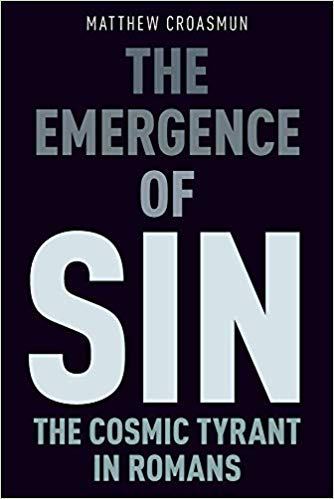
Theologian Scot McKnight’s Review of ‘The Emergence of Sin: The Cosmic Tyrant in Romans’ by Matthew Croasmun

Scot McKnight is an American New Testament scholar, historian of early Christianity, theologian, and author who has written widely on the historical Jesus, early Christianity and Christian living. He is currently Professor of New Testament at Northern Baptist Theological Seminary in Lombard, IL. The views expressed in this commentary do not necessarily represent those of BCNN1.

My review of a fantastic new book, now in paperback: Matthew Croasmun, The Emergence of Sin: The Cosmic Tyrant in Romans (New York: Oxford University Press, 2017).

Sin in the Pauline letters seems to be more than the violation of a command and seems to take on systemic force. Christian theology’s doctrines of original sin and guilt are but one example of theological attempts to come to terms with lower case sins and upper case Sin as a tyrant. In Matthew Croasmun’s recently published dissertation, The Emergence of Sin, a series of proposals are made that provide innovative solutions to all the above and more.

Croasmun establishes both the contours and parameters of the discussion in chapter one, which sorts out scholarship more or less into the individual or psychological (R. Bultmann), cosmic or mythological (E. Käsemann), and the systemic view of liberation theologians (E. Tamez). His terms are “sin came through sinning” (4), standing under definite dualism’s lordships (11), and sinful institutions (15). Croasmun’s contention is not that these elements are not each present, for they are, but that they can’t explain enough. Sin, what is it? Personification or a hyper reality? Is the individual sinning paradigm sufficient for the cosmology and anthropology at work? Is not Sin experienced as something outside and inside, as some kind of cosmic tyrant? What happens then to cosmology and anthropology? “We would prefer a reading that can hold together both sides of the contradiction, about which Bultmann and Käsemann more or less choose sides: that is, that human agents are subject to a power, Sin, that constrains their freedom to act; and that they are nevertheless responsible for their sin. Liberationist readers move us in the direction of being able to hold these two “sides” of the debate in tension, though not without introducing their own difficulties and limitations” (15). Whether it is social or cosmic forces, the systemic theory of Sin acting upon humans offers promise in coming to terms with the Pauline presentations in Romans. How then can Sin be explained as an enslaving force or power? Are the structures simply consequences of individual sins or do they take on a power of their own? What happens then to cosmology and anthropology? What is a person, or what is an agent? Is Sin a person or agent? Sin, Romans 7:8, makes clear is some kind of agent acting upon the person in his or her attempt to observe Torah.

The singular contribution of The Emergence of Sin is Croasmun’s lengthy, accessible and paradigm-altering proposal that sin by the individual, Sin as a cosmological presence and Sin as a systemic can be explained best by emergence theory. In chapters two and three the author examines emergence theory and personhood by appealing to the physical and social sciences as well as philosophy, sociology and psychology. His concern is “trans-ordinal theory,” or the relationship of various levels and how one is caused or correlated with another. Emergence is “concerned with the appearance of higher-order properties at coordinating higher levels of complexity” (23). The “wetness” of water, beehives, memory and money each briefly illustrate emergence that appears to be both caused by lower order elements yet taking on something of a life of its own. Dualistic theories are on their way out as some kind of ontological monism becomes more and more the scientific orthodoxy. Reductionisms are emergentism’s primary challenge: that is, the thought that lower levels always explain higher levels. However, “explain” and “explain away” are not the same thing. The mind does not exist apart from the chemicals at work in the brain, yet the mind and its intentions do real work in the world (hence, something like emergence is better than dualism or reductionism).

The core to Croasmun’s explanation of emergence theory itself is the dialectical relationship of supervenience and downward causation. Supervenience is not as intuitively clear as downward causation: the former refers to a causal basis of higher properties from which they emerge while the latter contends that what emerges works back almost in cyclical fashion upon the supervenience base making it more of what it is. They feed on one another and form one another. I shall enter our topic now into the discussion: human agents sin and from these sins, Sin emerges and Sin as an Agent works back on humans to precipitate more sin and sinning. Sin is ontologically dependent for its existence on human sinning. Croasmun’s ability to think through various systems of thought comes into play in these two chapters, each of which both demonstrates and illustrates this interplay of supervenience and downward causation. For example, the mind supervenes on the brain but the mind is not reducible to brain. Mind, thus, is more than brain.

Importantly, the question becomes Is the Mind then something other than brain? Croasmun examines this dialectic with amazing dexterity in chemistry, biology, sociology, and then focuses on racism. Back to sins and Sin: “In this light, the conflict between Käsemann and more radical liberationists, on the one hand, and Bultmann and the Vatican, on the other, is entirely predictable: it is the conflict between dualists and reductionists. Those more committed to modernist frameworks (Bultmann and the Vatican in this case) adopt the reductionist view. Those more committed, largely for theological reasons, to the recovery or preservation of premodern frameworks (Käsemann, Gaventa, etc.) adopt a dualist view. Those less committed to modern or premodern Western frameworks (non-Western liberationists and postmodern Westerners) are inclined toward something that looks more emergent” (55).

Source: Christianity Today

All Content & Images are provided by the acknowledged source

Mission Project Expands Bible Knowledge in the Persian Gulf

Joining 80 leaders from 24 countries in Washington, DC, last September, the World Evangelical Alliance (WEA) announced 2020 to be the Global Year of the Bible.

“Ignorance of Scripture is ignorance of Christ,” said WEA general secretary Ephraim Tendero. “In contrast to the sacred writings of many other traditions, the Bible is meant to be read and understood by all people.”

But what if they cannot read? This is the case for up to 40 percent of the 1.5 million Telugu-speaking workers in the Gulf states. Having dropped out of school in their native India, these migrants find that the crowded labor camps of the United Arab Emirates (UAE) and Bahrain offer the best opportunity to support their families back home.

But having come to the glitzy Gulf to gain a meager share of petrodollars, many find also the spoken—and storied—words of Jesus.

In 2019, the Bible Society of the Gulf (BSG) was awarded “Best Mission Project” by the United Bible Societies (UBS). Honored in the category of “Focusing on Audiences,” BSG’s pioneering audio and storytelling work among illiterates distinguished it among the 159 UBS branches worldwide.

“We help migrant workers rediscover themselves as children of God,” said Hrayr Jebejian, BSG general secretary. “Through the faith and hope of scripture, they gain the strength to navigate their many challenges.”

Jebejian’s book, Bible Engagement, noted during the UBS ceremony, described the long working hours, high rates of suicide, and sexual abuse endured by migrants in the UAE—65 percent of whom are Telugu. Their average monthly wage is $175, which sometimes goes unpaid. The kafala system of sponsorship places the migrant’s passport in the hands of the employer, complicating any return back home.

International attention in recent years has led to legal reform, but the isolation of labor camps means many violations go unnoticed. And the lack of communal space ensures that the church is often the only venue for outside social interaction, whether the migrant is Christian, Muslim, or from the majority Hindu population.

Babu Ganta, communications director for the BSG, first traveled to the Gulf in 1983 to train English teachers. An educated Telugu Indian, his dismay at the average of two suicides per week drove him to write Hope, a simple booklet of scriptural encouragement and the plan of salvation.

“My words won’t comfort, or convict people of sin,” he said, “but God’s words will.”

Yet despite distribution of 300,000 copies in 19 languages, too many were still unreached.

Back in 2000, UBS realized that a changing world demanded it shift from traditional distribution targets to a focus of engagement and transformation.

In South Africa, the local Bible society tackled the AIDS epidemic. The UK society emphasized the arts. The Peru society addressed issues of spousal and child abuse.

In the Gulf, the BSG turned to illiteracy, designing a large print workbook on the Sermon on the Mount as an elementary primer. Over 12,000 have been distributed through migrant churches so far.

“Every night after work, we gather in our room and have a ‘family’ prayer by reading this book,” Renuka, an elementary-educated Telugu working for a cleaning company, told Ganta.

“We share our thoughts and pray for one another.”

But in the late 2000s, the BSG introduced the Mega Voice Player (MVP) and Proclaimer audio tools for those who could not read at all. Loaded with the Telugu Bible and other Christian materials, up to 200 MVPs and 800 Proclaimers are distributed each year. (Proclaimers can be used in a church service of up to 100 people. MVPs are designed for smaller groups.)

Source: Christianity Today

All Content & Images are provided by the acknowledged source
WATCH: Tony Evans Speaks on Having Strength in Your Struggles

Tony Evans Speaks on Strength in Your Struggles. This sermon was preached on 02/02/2020 at Oak Cliff Bible Fellowship.

All Content & Images are provided by the acknowledged source
