PODCAST: A Variety of Views, Part 2 (The Prophet Daniel’s Report #667 with Daniel Whyte III)

Welcome to The Prophet Daniel’s Report. This is report #667.

My name is Daniel Whyte III here to remind you that Jesus Christ is coming back soon and that you need to be prepared. This broadcast is not about predictions, nor is it about setting dates as some foolishly have done, however it is all about preparation.

First, today, let’s look at some Signs of His Coming in the news.

The disciples asked Jesus in Matthew 24:3, “What shall be the sign of thy coming, and of the end of the world?” Jesus Christ gave them (and us) clear signs that show us when we can begin to expect to see the Coming of the Lord and the end of the world. Looking at world events through the lens of the Word of God, let’s look at some headlines from today’s news that point to the Second Coming of the Lord Jesus Christ.

First, today, under the Sign category of WARS & RUMOURS OF WARS — According to The Jerusalem Post, Three rockets struck the US Embassy compound in Baghdad. At least one made a direct hit on a dining facility or cafeteria at the site. Sirens that sounded in the embassy compound warned people to seek shelter. According to Iraqi sources, at least one person was wounded in the attack. It is the latest attack on the US Embassy in Baghdad, following weeks of rocket attacks near the embassy and a mass protest in late December. Iraqi politicians led by Muqtada al-Sadr [MOK-TADA AL-SA-DEER] and Hadi al-Amiri [HAH-DEE AL-AH-MI-RI] have called for US forces to leave the country. Sadr [SA-DEER] encouraged a “million person” protest Friday to evict the US. Iranian-backed Shi’ite militias have been targeting US forces for months with rocket attacks. The five Katyusha [KAH-TOO-SHAH]-style rockets are the latest attack on the US Embassy and the Green Zone around it. Three rockets hit near the same compound area on January 20. One attack ended with a rocket landing near the deputy ambassador’s residence. The US has evacuated most diplomatic personnel from the embassy since tensions with Iran rose in May.

Second, today, under the Sign category of EARTHQUAKES IN DIVERS PLACES — According to BBC News, At least 31 people have been killed and more than 1,600 injured in a powerful earthquake in eastern Turkey. The magnitude-6.8 quake centred on the town of Sivrice [SIV-RIS] in Elazig [EH-LAH-ZIG] province caused buildings to collapse and sent residents rushing into the street. Earthquakes are common in Turkey – about 17,000 people died in a quake in the western city of Izmit [IZ-MIT] in 1999. Tremors were also felt in neighbouring Syria, Lebanon and Iran. Turkey’s Disaster and Emergency Management Authority said more than 400 aftershocks were recorded. According to the latest count, some 1,607 people were injured by the earthquake.

Third, today, under the Sign category of PESTILENCES & FATAL EPIDEMIC DISEASES — According to BBC News, Chinese officials say a new coronavirus that has spread to more than 20,000 people is infectious in its incubation period – before symptoms show – making it harder to contain. Over 450 people have died from the virus. Health minister Ma Xiaowei [JI-AH-WEY] told reporters the ability of the virus to spread appeared to be strengthening. Several Chinese cities have imposed significant travel restrictions. Wuhan [WOO-HAHN] in Hubei [HOO-BAY], the source of the outbreak, is in effective lockdown. Officials announced that the sale of all wildlife in China would be banned. The virus is thought to have originated in animals, but no cause has been officially identified. In humans, the incubation period – during which a person has the disease, but no symptoms yet – ranges from between one and 14 days, officials believe. Without symptoms, a person may not know they have the infection, but still be able to spread it.

——-

Now, it’s time for Prophecy Bootcamp.

Prophecy Bootcamp is where we deal with the basics of prophecy, the Second Coming of Christ, and what will happen in the future according to the Bible. Our aim here is not to make predictions but to help you get prepared by understanding how things will unfold in the end times.

Our topic for today is titled “A Variety of Views, Part 2” from Tim LaHaye and Ed Hindson’s book “The Essential Guide to Bible Prophecy.”

Amillennial. This approach sees no Millennium of any kind on the earth. Rather, amillennialists tend to view so-called millennial prophecies as being fulfilled in eternity. Biblical references to the thousand years are interpreted symbolically. In this scheme, the church age ends with the return of Christ to judge the world and usher in eternity. God’s promises to Israel are viewed as having been fulfilled in the church (the New Israel of the new covenant); therefore, amillennialists see no specific future for national Israel. They view the church age as an era of conflict between the forces of good and evil that culminates with the return of Christ.

Amillennialists do not believe in a literal kingdom on the earth following the second coming of Christ. They tend to spiritualize and allegorize the prophecies concerning the Millennium and attribute yet-unfulfilled prophecies relating to Israel to the church instead. Those who hold to amillennialism also believe Satan was bound at Christ’s first appearance on earth 2000 years ago. Furthermore, its adherents differ as to whether the Millennium is being spiritually fulfilled currently on earth or whether it’s being fulfilled by the saints in heaven. However, they tend to agree that our current state of affairs is probably as good as it’s going to get and that the eternal state (heaven), not the millennial kingdom, will immediately follow the second coming of Christ. Those who hold to this view do not adhere to a simple and plain literal interpretation of Scripture.

Lord willing, we will continue looking at this topic in our next podcast.

In closing, let’s consider what God wants you and I to do in light of His Second Coming.

Jesus Christ said in Luke 19:13 to “Occupy till I come.” In light of that, we are continuing our journey through the book, “Coming Events and Present Duties,” by J.C. Ryle. It is a collection of what he called “prophetic tracts” that focus on the believer’s duty in light of the signs which point to the Second Coming of Jesus Christ.

This section is titled, “What Time Is It?” (Part 27). J.C. Ryle writes:

But perhaps this address has fallen into the hands of some true believer. Are you that man? Then remember these words. “The night is far spent, and the day is at hand.”

I ask you to live as if you believed the words we have been considering, and to show the world you think them true. The nearer you draw to home, the more wakeful you ought to be. The more you realize the second personal coming of the Lord Jesus, the more lively ought your Christianity to be.

Ah! it is but too true, as Legh Richmond said on his death-bed, “We are but half awake! We are but half awake!” The best of us need to have our hearts stirred up by way of remembrance. Let us rub the sleepy eyes of our mind, and look the speedy coming of our Master full in the face. Let the time past suffice us to have been drowsy and lazy servants. For the tme to come let us work like those who feel, “The Master will soon be here.”

I remember, when I was a schoolboy, I could wake up, however tired with a long journey, when I began to draw near home. Soon as I saw the old hills, and trees, and chimnies, the sense of weariness was gone, and I was all alive. The prospect of soon seeing much-loved faces,–the joy of thinking of a family gathering, all this was able to drive sleep away. Surely it ought to be the same with us in the matter of our souls. The night is far spent, and the day is at hand. Yet a little while, and He that shall come will come and will not tarry. Then let us cast off every work of darkness. Let us put on the whole armour of light. Let us be ashamed of our past drowsiness. Let us awake, and sleep no more.

If the Lord tarries His Coming and we live, we will continue looking at this topic in our next broadcast/podcast.

……..
CLOSING PRAYER
…….

Remember the words of the Lord in Matthew 24:42: “Watch therefore: for ye know not what hour your Lord doth come.” Matthew 24:44 says, “Therefore be ye also ready: for in such an hour as ye think not the Son of man cometh.”

If you are not ready for the Return of Jesus Christ, may I encourage you to get ready today by receiving Him as your Savior. Here is how:

First, accept the fact that you are a sinner, and that you have broken God’s law. The Bible says in Romans 3:23: “For all have sinned and come short of the glory of God.”

Second, accept the fact that there is a penalty for sin. The Bible states in Romans 6:23: “For the wages of sin is death…” Third, accept the fact that you are on the road to hell. Jesus Christ said in Matthew 10:28: “And fear not them which kill the body, but are not able to kill the soul: but rather fear him which is able to destroy both soul and body in hell.” Also, the Bible states in Revelation 21:8: “But the fearful, and unbelieving, and the abominable, and murderers, and whoremongers and sorcerers, and idolaters, and all liars, shall have their part in the lake which burneth with fire and brimstone: which is the second death.”

Now that is bad news, but here is the good news. Jesus Christ said in John 3:16: “For God so loved the world, that he gave his only begotten Son, that whosoever believeth in him should not perish, but have everlasting life.” Just believe in your heart that Jesus Christ died for your sins, was buried, and rose from the dead by the power of God for you so that you can live eternally with Him. Pray and ask Him to come into your heart today, and He will.

Romans 10:9-13 says, “That if thou shalt confess with thy mouth the Lord Jesus, and shalt believe in thine heart that God hath raised him from the dead, thou shalt be saved. For with the heart man believeth unto righteousness; and with the mouth confession is made unto salvation. For the scripture saith, Whosoever believeth on him shall not be ashamed. For there is no difference between the Jew and the Greek: for the same Lord over all is rich unto all that call upon him. For whosoever shall call upon the name of the Lord shall be saved.”

Keep looking up for your redemption draweth nigh. Let us join in the prayer of John the Revelator — “Even so, come, Lord Jesus.” God bless you.

All Content & Images are provided by the acknowledged source

PODCAST: Whyte House Family Devotional Reading of Charles Spurgeon’s Morning and Evening #18 (with Daniel Whyte III)

This is Daniel Whyte III, president of Gospel Light Society International with the Whyte House Family Devotional Reading of Charles Spurgeon’s Morning and Evening podcast. This is Episode #18.

Charles Spurgeon was a prominent English Particular Baptist preacher. He was very influential among the Christians of various denominations during his age and even today, and is commonly called the “Prince of Preachers”. After some time of alternately searching for God and running from God, he had a powerful encounter which led him to give his life to Christ. Spurgeon was only 16 when he preached his first sermon and he began publishing books shortly afterward. At the time of his death, he had preached nearly 3,600 sermons and published 49 volumes of commentaries, sayings, anecdotes, illustrations and devotions. Spurgeon said, “encouraging thoughts are like honey to the heart”, and wrote this devotional in hopes that its uplifting messages for each day of the year would bring comfort and refreshment to our walk with God. He was inspired by Isaiah 50:4 which reads, “He wakeneth morning by morning. He wakeneth mine ear to hear as the learned” and Psalm 63:5-6 which says, “My soul shall be satisfied as with marrow and fatness; and my mouth shall praise thee with joyful lips; when I remember Thee upon my bed, and meditate on Thee in the night watches.”

Psalm 100:2 reads: “Serve the Lord with gladness: come before his presence with singing.”

Delight in divine service is a token of acceptance. Those who serve God with a sad countenance, because they do what is unpleasant to them, are not serving him at all; they bring the form of homage, but the life is absent. Our God requires no slaves to grace his throne; he is the Lord of the empire of love, and would have his servants dressed in the livery of joy. The angels of God serve him with songs, not with groans; a murmur or a sigh would be a mutiny in their ranks. That obedience which is not voluntary is disobedience, for the Lord looketh at the heart, and if he seeth that we serve him from force, and not because we love him, he will reject our offering. Service coupled with cheerfulness is heart-service, and therefore true. Take away joyful willingness from the Christian, and you have removed the test of his sincerity. If a man be driven to battle, he is no patriot; but he who marches into the fray with flashing eye and beaming face, singing, “It is sweet for one’s country to die,” proves himself to be sincere in his patriotism. Cheerfulness is the support of our strength; in the joy of the Lord are we strong. It acts as the remover of difficulties. It is to our service what oil is to the wheels of a railway carriage. Without oil the axle soon grows hot, and accidents occur; and if there be not a holy cheerfulness to oil our wheels, our spirits will be clogged with weariness. The man who is cheerful in his service of God, proves that obedience is his element; he can sing,

“Make me to walk in thy commands,
’Tis a delightful road.”

Reader, let us put this question—do you serve the Lord with gladness? Let us show to the people of the world, who think our religion to be slavery, that it is to us a delight and a joy! Let our gladness proclaim that we serve a good Master.

PRAY.

Thank you for listening to the Morning and Evening podcast. If you do not know the Lord as your Savior, here is how you can be saved from Hell and walk with the Lord morning and evening until you go to that wonderful place called Heaven when you die:

First, accept the fact that you are a sinner, and that you have broken God’s law. The Bible says in Romans 3:23: “For all have sinned and come short of the glory of God.”

Second, accept the fact that there is a penalty for sin. The Bible states in Romans 6:23: “For the wages of sin is death…”

Third, accept the fact that you are on the road to hell. Jesus Christ said in Matthew 18:8: “Wherefore if thy hand or thy foot offend thee, cut them off, and cast them from thee: it is better for thee to enter into life halt or maimed, rather than having two hands or two feet to be cast into everlasting fire.” Also, the Bible states in Revelation 21:8: “But the fearful, and unbelieving, and the abominable, and murderers, and whoremongers and sorcerers, and idolaters, and all liars, shall have their part in the lake which burneth with fire and brimstone: which is the second death.”

Now that is bad news, but here’s the good news. Jesus Christ said in John 3:16: “For God so loved the world, that he gave his only begotten Son, that whosoever believeth in him should not perish, but have everlasting life.” Just believe in your heart that Jesus Christ died for your sins, was buried, and rose from the dead by the power of God for you so that you can live eternally with Him. Pray and ask Him to come into your heart today, and He will.

Romans 10:9 & 13 says, “That if thou shalt confess with thy mouth the Lord Jesus, and shalt believe in thine heart that God hath raised him from the dead, thou shalt be saved… For whosoever shall call upon the name of the Lord shall be saved.”

If you believe that Jesus Christ died on the Cross for your sins, was buried, and rose from the dead, and you want to trust Him for your Salvation today, please pray with me this simple prayer: Holy Father God, I realize that I am a sinner and that I have done some bad things in my life. I am sorry for my sins, and today I choose to turn from my sins. For Jesus Christ sake, please forgive me of my sins. I believe with all of my heart that Jesus Christ died for me, was buried, and rose again. I trust Jesus Christ as my Savior and I choose to follow Him as Lord from this day forward. Lord Jesus, please come into my heart and save my soul and change my life today. Amen.

If you believed in your heart that Jesus Christ died on the Cross, was buried, and rose again, allow me to say, congratulations on doing the most important thing in life and that is accepting Jesus Christ as your Lord and Saviour! For more information to help you grow in your newfound faith in Christ, go to Gospel Light Society.com and read “What To Do After You Enter Through the Door”. Jesus Christ said in John 10:9, “I am the door: by me if any man enter in, he shall be saved, and shall go in and out, and find pasture.”

If you accepted Jesus Christ as your Savior today, please email me at [email protected] and let us know. There is some free material that we want to send you. If you have a prayer request, please e-mail that to us as well, and we will pray for you until you tell us to stop.

God loves you. We love you. And may God bless you.

All Content & Images are provided by the acknowledged source

Billions of Locusts Descend on East Africa, and the Outbreak Could Grow 500 Times Bigger

NASUULU CONSERVANCY, Kenya (AP) – As locusts by the billions – yes, billions – descend on parts of Kenya in the worst outbreak in 70 years, small planes are flying low over affected areas to spray pesticides in what experts call the only effective control.

It is challenging work, especially in remote areas where mobile phone signals are absent and ground crews cannot quickly communicate coordinates to flight teams. 

The ground crews are in “the most woeful terrains,” Marcus Dunn, a pilot and the director at Farmland Aviation, said Saturday. “If there is no network, then the fellow on a boda boda (motorcycle), he has to rush off now and go and get a network.”

Just five planes are currently spraying as Kenyan and other authorities try to stop the locusts from spreading to neighboring Uganda and South Sudan. The United Nations has said $76 million is needed immediately to widen such efforts across East Africa.

A fast response is crucial. Experts warn that if left unchecked, the number of locusts could grow by 500 times by June, when drier weather will help bring the outbreak under control. 

The finger-length locusts swept into Kenya from Somalia and Ethiopia after unusually heavy rains in recent months, decimating crops in some areas and threatening millions of vulnerable people with a hunger crisis. 

Somalia’s agriculture ministry on Sunday called the outbreak a national emergency and major threat to the country’s fragile food security, saying the “uncommonly large” locust swarms are consuming huge amounts of crops.

In swarms the size of major cities, the locusts also have affected parts of Sudan, Djibouti and Eritrea, whose agriculture ministry says both the military and general public have been deployed to combat them. 

Kenya’s agriculture minister has acknowledged that authorities weren’t prepared for the scope of the infestation this year. That’s not surprising, considering it’s been decades since the country’s last comparable outbreak, U.N. officials say.

The locusts also are heading toward the breadbasket of Ethiopia, Africa’s second-most populous country, in that nation’s worst outbreak in 25 years. On Thursday, startled residents of Ethiopia’s capital, Addis Ababa, started reported sightings of the insects. 

“I was surprised to find the locusts inside my living room,” said one resident, Mathewos Girma, showing a photo on his mobile phone. “It appears it is knocking on each and every one of our doors.” 

Zebdewos Selato, an agriculture ministry official, told The Associated Press the relatively few locusts reaching Ethiopia’s capital are “leftovers” from the “massive invasion” in the eastern and southern parts of the country. Spraying is being conducted around the city to stop the outbreak from spreading elsewhere, he said.

Until the drier weather in June, more rain across the region will bring fresh vegetation to fuel further waves of locust breeding. One field in Kenya on Saturday appeared to be full of mating bright yellow locusts.

“They are trying to mate and reproduce, so we need more help and because we are racing against time,” said Salat Tutana, the chief agriculture officer in Isiolo county.

“So far we have decimated around five swarms in Samburu and Isiolo (counties) but we keep on receiving more swarms every week, and that is a lot in terms of the ecosystem,” he said. “They are destroying the environment.” 

Within hours, the locusts can strip a pasture of much of its vegetation. 

“That’s a very sad situation, especially for the pastoralists” whose livelihoods rely on their cattle, Tutana said.

Just hours after the spraying, the normally bouncing locusts were dozy, slow and dying. They lay scattered on the ground, crunching underfoot.

The five planes currently operating are capable of looking over this part of Kenya, Dunn said, but if there’s an increase in locusts in other parts of the country “we are going to need some more assistance, because we just don’t know how big this problem is going to be.” 

Copyright 2020 The Associated Press. All rights reserved. 

Source CBN

All Content & Images are provided by the acknowledged source
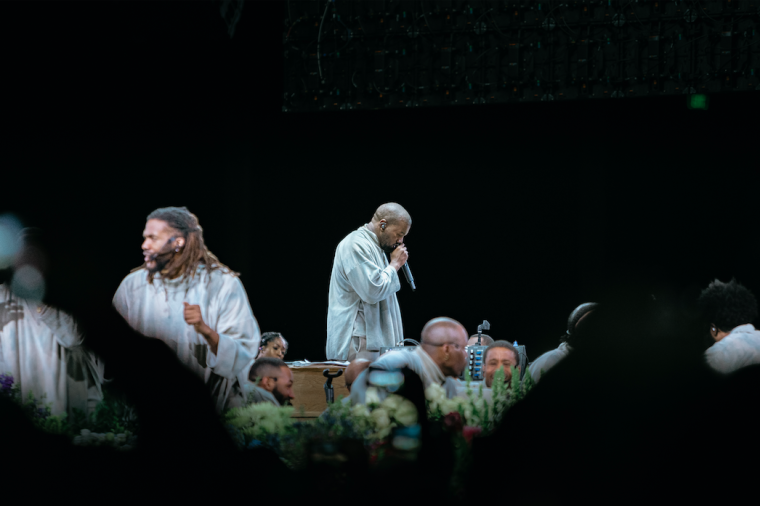
China Reports 259 Have Died of New Virus, US Declares Emergency and New Entry Restrictions

WASHINGTON – The United States on Friday declared a public health emergency because of a new virus that first struck in China, has now spread to other nations.

The growing coronavirus threat is leading the US government to warn Americans against any travel to China. The White House will temporarily bar entry to nationals who pose a transmission risk, and three major airlines have stopped service to the Chinese mainland. The new restrictions begin Sunday afternoon.

“The risk of infection for Americans remains low and with these and our previous actions we are working to keep the risk low,” Health and Human Services Secretary Alex Azar said.

The travel warning came when the State Department raised its China travel advisory to a red level four — one day after the World Health Organization declared the coronavirus a public health emergency.

Secretary of State Mike Pompeo in a tweet Thursday night called the travel advisory necessary due to the spread of the novel coronavirus and the emergency designation by WHO.

.@StateDept is increasing the #China Travel Advisory to Level 4 – Do Not Travel. This is due to the spread of the novel #coronavirus throughout China & the @WHO determination that the outbreak constitutes a Public Health Emergency of International Concern. https://t.co/BIIUdavoP0

— Secretary Pompeo (@SecPompeo) January 31, 2020

“Our greatest concern is the potential for the virus to spread to countries with weaker health systems and which are ill-prepared to deal with it,” said World Health Organization Director-General Tedros Adhanom Ghebreyesus.

Also on Friday, US air carriers Delta, American and United Airlines announced the suspension of travel to the Chinese mainland, following the lead of other international airlines.

Meanwhile, the city of Wuhan, which is considered as ground zero for the disease, is a ghost town.

Numbers of the infected are climbing with China reporting 11,800 confirmed cases of coronavirus with 259 deaths related to the illness. On Thursday, the US reported its sixth case, and the first involving person to person transmission.   

Hundreds of Americans flying on a US government-chartered plane earlier this week from China to California are now in a CDC mandated 14-day quarantine.

“It’s just like a movie, it’s just like a movie,” said American evacuee Jarred Evans.  “You have to survive. And the movies are fake, but this is real life and you have to take it very seriously and you have to take care of your body.” 

Stocks took a tumble after the US airlines announced they would halt service to China.  The Dow Industrial Average plunged more than 600 points by the closing bell on Friday.  The latest evidence that the coronavirus is causing not only a major health concern but an economic one as well.

Source CBN

All Content & Images are provided by the acknowledged source
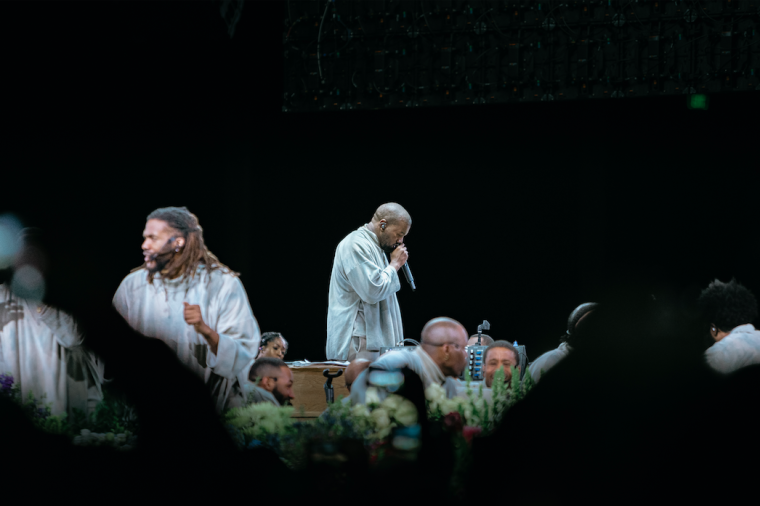
Billions of Locusts Descend on East Africa, and the Outbreak Could Grow 500 Times Bigger

NASUULU CONSERVANCY, Kenya (AP) – As locusts by the billions – yes, billions – descend on parts of Kenya in the worst outbreak in 70 years, small planes are flying low over affected areas to spray pesticides in what experts call the only effective control.

It is challenging work, especially in remote areas where mobile phone signals are absent and ground crews cannot quickly communicate coordinates to flight teams. 

The ground crews are in “the most woeful terrains,” Marcus Dunn, a pilot and the director at Farmland Aviation, said Saturday. “If there is no network, then the fellow on a boda boda (motorcycle), he has to rush off now and go and get a network.”

Just five planes are currently spraying as Kenyan and other authorities try to stop the locusts from spreading to neighboring Uganda and South Sudan. The United Nations has said $76 million is needed immediately to widen such efforts across East Africa.

A fast response is crucial. Experts warn that if left unchecked, the number of locusts could grow by 500 times by June, when drier weather will help bring the outbreak under control. 

The finger-length locusts swept into Kenya from Somalia and Ethiopia after unusually heavy rains in recent months, decimating crops in some areas and threatening millions of vulnerable people with a hunger crisis. 

Somalia’s agriculture ministry on Sunday called the outbreak a national emergency and major threat to the country’s fragile food security, saying the “uncommonly large” locust swarms are consuming huge amounts of crops.

In swarms the size of major cities, the locusts also have affected parts of Sudan, Djibouti and Eritrea, whose agriculture ministry says both the military and general public have been deployed to combat them. 

Kenya’s agriculture minister has acknowledged that authorities weren’t prepared for the scope of the infestation this year. That’s not surprising, considering it’s been decades since the country’s last comparable outbreak, U.N. officials say.

The locusts also are heading toward the breadbasket of Ethiopia, Africa’s second-most populous country, in that nation’s worst outbreak in 25 years. On Thursday, startled residents of Ethiopia’s capital, Addis Ababa, started reported sightings of the insects. 

“I was surprised to find the locusts inside my living room,” said one resident, Mathewos Girma, showing a photo on his mobile phone. “It appears it is knocking on each and every one of our doors.” 

Zebdewos Selato, an agriculture ministry official, told The Associated Press the relatively few locusts reaching Ethiopia’s capital are “leftovers” from the “massive invasion” in the eastern and southern parts of the country. Spraying is being conducted around the city to stop the outbreak from spreading elsewhere, he said.

Until the drier weather in June, more rain across the region will bring fresh vegetation to fuel further waves of locust breeding. One field in Kenya on Saturday appeared to be full of mating bright yellow locusts.

“They are trying to mate and reproduce, so we need more help and because we are racing against time,” said Salat Tutana, the chief agriculture officer in Isiolo county.

“So far we have decimated around five swarms in Samburu and Isiolo (counties) but we keep on receiving more swarms every week, and that is a lot in terms of the ecosystem,” he said. “They are destroying the environment.” 

Within hours, the locusts can strip a pasture of much of its vegetation. 

“That’s a very sad situation, especially for the pastoralists” whose livelihoods rely on their cattle, Tutana said.

Just hours after the spraying, the normally bouncing locusts were dozy, slow and dying. They lay scattered on the ground, crunching underfoot.

The five planes currently operating are capable of looking over this part of Kenya, Dunn said, but if there’s an increase in locusts in other parts of the country “we are going to need some more assistance, because we just don’t know how big this problem is going to be.” 

Copyright 2020 The Associated Press. All rights reserved. 

Source CBN

All Content & Images are provided by the acknowledged source

WATCH: Jessica Simpson Breaks Out in Singing of “Amazing Grace” After Opening Up About Alcoholism, Childhood Abuse, and Her ‘Path to Surrender’

Pop star Jessica Simpson made an appearance on “Today” recently and broke out in worship after opening up about her past struggles with alcohol and sexual abuse.

Simpson sat down with Hoda Kotb last week to discuss her new memoir, Open Book. In the interview, the singer opened up about being molested as a child and not immediately speaking about it to her parents, who were in ministry at the time, because of the shame she felt.

She also talked to Kotb about her addiction to alcohol, which Simpson overcame a couple of years ago. The new author admitted drinking as early as 7 a.m. at times. Everything changed in 2017, however, after being unable to participate in Halloween with her kids and family. The next day Simpson sought therapy and has been sober ever since.

“I just realized that I had to surrender,” she said. “I just want to continue on the path that I’m on and at this point in my life, now I’m strong enough to deal with anything that comes my way because I don’t have something to retreat to that will numb me from actually going through it.”

At the close of her interview with “Today,” Kotb requested the singer sing the song that brings Simpson peace since faith is such an important part of her journey. She then sang a verse from the popular hymn, “Amazing Grace.”

SOURCE: Christian Post, Jeannie Law

All Content & Images are provided by the acknowledged source
Christina Crook on What Christians Can Learn From the Sharing Economy

Christina Crook, the author of “The Joy of Missing Out: Finding Balance in a Wired World,” writes and speaks about the intersection of technology, relationships and joy. The views expressed in this commentary do not necessarily reflect those of BCNN1.

In the treetops of Fewell Island, South Carolina, six young adults in harnesses dangle awkwardly from ropes. Down below, a group stands huddled in windbreakers and hoodies in the frigid February air, calling out encouragement to the Irish girl tearfully embracing the 20-foot-high pole overhead.

“Come on, Paula! You’ve got this!”

Forty minutes later, a crowd greets Paula as she ziplines her way back to solid ground.

Our group’s easy camaraderie belies the fact that most of us have met less than 24 hours ago. We are here for an A-GAP experience — all of us Christians and all of us voluntarily without our phones.

Started in 2018 by Marygrace Sexton, founder and CEO of Natalie’s Orchid Island Juice Co., A-GAP is a nonprofit with the mission to help people of Christian faith journey to clarity, unity and simplicity in a technology-free environment. In short, Christian digital detox.

Over the last decade, Sexton, a Florida business owner, mother and grandmother, had developed an acute sense of technology’s adverse effects, particularly decreased intimacy and professional performance within her own organization. This led to the launch of A-GAP: a reprieve to encourage contemplation, spiritual rejuvenation and healthy technology habits.

Most of the attendees, ironically, found out about the retreat through the internet: A post on the Instagram account of Charlotte One, a young adult ministry in Charlotte, North Carolina, drew a sizable portion of the group. Paula McKee — Paula from the high ropes course, an au pair originally from Belfast — was invited by text. But we each took a step of faith and showed up.

We can credit the internet with fostering these kinds of trusting acts, which have also powered the growth of the sharing economy. While the debate rages on whether this so-called gig economy is undermining secure jobs by replacing them with an army of mercenary, part-time workers, it has opened up new avenues of trust and camaraderie between citizens as they become customer and client.

The traditional commercial relationship, too, becomes more complex in the gig economy. Instead of grunting a rote “How are you today?” or “Have a nice day” or other platitudes as we do at retail outlets, we want to know more about the person we’ve contracted before we accept their services or rate them. That’s opening up intimate conversations and relations most consumers have never had to have before, which in turn opens up all types of opportunities to network, trust and share.

Ten years ago, no one would have dreamed of getting into the back of a stranger’s car or staying in their apartment. Now, thanks to Airbnb and car services like Lyft and Uber, it’s commonplace. (The Anabaptists, cool kids that they are, were doing their version of Airbnb, called Mennonite Your Way, long before there was an internet.)

Trust is built (and broken) the same way online and off — through the keeping or severing of promises. While trust can begin to grow online, it is solidified in close proximity. That’s why when we meet our ride-share driver, our trust in them and the sharing economy grows. We’ve closed the gap.

Of course, this trust can be broken in stunning ways, and the internet, through people’s use of blatant visual distortion and propagation of misinformation, provides plenty of opportunities for that as well. Trusting communities require a balance between nurturing existing relationships and extending outward to form new ones. Mistrust can grow when communities only take care “of their own.”

Chris Lawrence is a pastor of Living Hope church in New York City’s East Harlem, an English-speaking congregation in a historically Spanish community. His church members are making progress slowly with what they call “re-neighboring the street”: connecting 400 households that share the same block but do not currently have much to do with each other.

Source: Religion News Service

All Content & Images are provided by the acknowledged source

Caucus results from Iowa are delayed: Perception, presuppositions, and the word of God

Iowa held its first-in-the-nation caucuses last night. President Trump won on the Republican side, as expected. However, we still don’t know the winner on the Democratic Party side.

The Iowa Democratic Party said the results were delayed due to “inconsistencies in the reporting of three sets of results.” They stressed that there was not a “hack or intrusion,” but announced around 2 a.m. that the results would be provided “later today.” Officials are now hand counting the results

There are two very different ways to see this unusual delay. 

One is that Democrats in Iowa are working to provide results in as trustworthy a manner as possible. After the razor-close 2016 race in Iowa between Hillary Clinton and Bernie Sanders, Mr. Sanders’ allies pushed the Democratic National Committee to require caucus states to track and report the raw numbers of support for each candidate. In Iowa, the new reporting standards slowed the gathering of data to a crawl. Technical issues contributed to the delays. 

The other is to view the Democratic Party’s delayed reporting as indicative of its suitability to lead. GOP Congressman Mark Meadows of North Carolina tweeted: “Folks—this is the party that wants to run your healthcare, control your employment, decide what kind of car you can drive, and more.” 

Bernie Sanders and millennials 

These conflicting perspectives reflect the larger conflicts in our culture. 

For example, Bernie Sanders was favored by oddsmakers to win the Iowa caucuses. His campaign is fueled principally by his appeal to millennials. His focus on wealth inequality, universal health care, student loan debt, and climate change resonate with many of them. The fact that he is “quite substantially not religious,” in the words of his brother, is not a detriment to a generation noted for its lack of religious commitment

Consider that college graduates are less likely than non-graduates to agree

… Read More


Click Read More to read the rest of the story from our content source/partners – Denison Forum.

قالب وردپرس

A Tool to Give You an Idea Where Your Church Is Headed in the Future

Podcast Episode #612

SUBSCRIBE:
iTunesRSSStitcherTuneIn RadioGoogle Play • iHeart Radio • Spotify

Chuck Lawless from the Church Answers team joins us to talk about an exciting new tool created by Southeastern Seminary. The Church Future Indicator is a free tool everyone will want to get ahold of. The tool is helpful and gives great insight into where your church is headed.

Highlights:

  1. A tool meant to be a motivator, not a discourager
  2. The need for churches to face reality
  3. The need for churches to have hope and solutions
  4. Hint #1: The Primacy of Prayer
  5. Hint #2: The Great Commission Is Still Great

Other Highlights:

  • A church cannot turnaround until they are ready to face reality.
  • The Church Future Indicator tool helps churches see hope for the future.
  • Praying churches are led by praying pastors.
  • It is a sin to be good when God has called us to be great.
  • The Great Commission is still great.

Resources mentioned in today’s podcast:


Episode Sponsors

Vanderbloemen has been serving churches for nine years, but did you know that Vanderbloemen also serves Christian schools, nonprofits, and Christian businesses? So if you’re listening, and you know a Christian school, nonprofit, or values-based business that is hiring, contact our friends at Vanderbloemen for your staffing needs.

For more information, visit Vanderbloemen.com.


The mission at Southeastern Baptist Theological Seminary is to glorify the Lord Jesus Christ by equipping students to serve the church and fulfill the Great…

… Read More


Click here to read the rest of the story from our content source/partners – Thom Rainer.

قالب وردپرس

Christina Crook on What Christians Can Learn From the Sharing Economy

Christina Crook, the author of “The Joy of Missing Out: Finding Balance in a Wired World,” writes and speaks about the intersection of technology, relationships and joy. The views expressed in this commentary do not necessarily reflect those of BCNN1.

In the treetops of Fewell Island, South Carolina, six young adults in harnesses dangle awkwardly from ropes. Down below, a group stands huddled in windbreakers and hoodies in the frigid February air, calling out encouragement to the Irish girl tearfully embracing the 20-foot-high pole overhead.

“Come on, Paula! You’ve got this!”

Forty minutes later, a crowd greets Paula as she ziplines her way back to solid ground.

Our group’s easy camaraderie belies the fact that most of us have met less than 24 hours ago. We are here for an A-GAP experience — all of us Christians and all of us voluntarily without our phones.

Started in 2018 by Marygrace Sexton, founder and CEO of Natalie’s Orchid Island Juice Co., A-GAP is a nonprofit with the mission to help people of Christian faith journey to clarity, unity and simplicity in a technology-free environment. In short, Christian digital detox.

Over the last decade, Sexton, a Florida business owner, mother and grandmother, had developed an acute sense of technology’s adverse effects, particularly decreased intimacy and professional performance within her own organization. This led to the launch of A-GAP: a reprieve to encourage contemplation, spiritual rejuvenation and healthy technology habits.

Most of the attendees, ironically, found out about the retreat through the internet: A post on the Instagram account of Charlotte One, a young adult ministry in Charlotte, North Carolina, drew a sizable portion of the group. Paula McKee — Paula from the high ropes course, an au pair originally from Belfast — was invited by text. But we each took a step of faith and showed up.

We can credit the internet with fostering these kinds of trusting acts, which have also powered the growth of the sharing economy. While the debate rages on whether this so-called gig economy is undermining secure jobs by replacing them with an army of mercenary, part-time workers, it has opened up new avenues of trust and camaraderie between citizens as they become customer and client.

The traditional commercial relationship, too, becomes more complex in the gig economy. Instead of grunting a rote “How are you today?” or “Have a nice day” or other platitudes as we do at retail outlets, we want to know more about the person we’ve contracted before we accept their services or rate them. That’s opening up intimate conversations and relations most consumers have never had to have before, which in turn opens up all types of opportunities to network, trust and share.

Ten years ago, no one would have dreamed of getting into the back of a stranger’s car or staying in their apartment. Now, thanks to Airbnb and car services like Lyft and Uber, it’s commonplace. (The Anabaptists, cool kids that they are, were doing their version of Airbnb, called Mennonite Your Way, long before there was an internet.)

Trust is built (and broken) the same way online and off — through the keeping or severing of promises. While trust can begin to grow online, it is solidified in close proximity. That’s why when we meet our ride-share driver, our trust in them and the sharing economy grows. We’ve closed the gap.

Of course, this trust can be broken in stunning ways, and the internet, through people’s use of blatant visual distortion and propagation of misinformation, provides plenty of opportunities for that as well. Trusting communities require a balance between nurturing existing relationships and extending outward to form new ones. Mistrust can grow when communities only take care “of their own.”

Chris Lawrence is a pastor of Living Hope church in New York City’s East Harlem, an English-speaking congregation in a historically Spanish community. His church members are making progress slowly with what they call “re-neighboring the street”: connecting 400 households that share the same block but do not currently have much to do with each other.

Source: Religion News Service

All Content & Images are provided by the acknowledged source