
Red Cabbage Cake

This cake recipe is born out of my desire to eat healthy cakes. In my mind, I am thinking that adding vegetables to cake recipes will make them more healthy and hopefully still allow my occasional indulgence in a good dessert dish…!

Vegetables have been successfully added to cakes, most popular being carrots, so why not use other vegetables too.

Of course, I knew not all vegetables will be ideal for making cakes, so I really had a lot of fun experimenting with different ones, and after several attempts, I came up with a favourite… #RedCabbageCake.

I actually do love cabbage because of its fantastic nutritional benefit; especially the red one. I have created some really exciting recipes using red cabbage, and here is another one!

Colour, Texture, Taste Verdict
So I, from my judgement, came to the following conclusions: the cake was really moist. It felt that the cabbage brought a lot of moisture to the cake, and it was a little dense. The texture was great, and the intense colour from the cabbage created a visual appeal. It tasted great and I really loved it.

What to do
I used one of my favourite cake recipes. To add the cabbage, I first blended some into a smooth puree. I then added to the batter a little at a time. Then baked the cake as usual.

Served two ways: with custard and with ice-cream


Source : Food Blogger : Funke-koleosho

Pro-Life Group Accuses Fox of Censoring Super Bowl Ad

Pro-life group, Faces of Choice, has claimed that Fox News is censoring their Super Bowl ad featuring abortion survivors.

Lyric Gillett, founder of the nonprofit, told Faithwire that she had been working with Fox News since last July to meet all requirements to air her commercial during the Feb. 2 Super Bowl.

“Every time we would send them something, they would ask for something else,” she said. “It was as if they were continuously moving the bench post of what we had to hop over. Every time we gave them what they said was needed to satisfy, they would push it further and further and further down.”

After nearly four months of working with Fox, Gillett received word that all of the advertising spots had been purchased and hers was not to be included. She said she was “furious,” but agreed to wait should any future spots opened up. Her ad buyer told her that this can sometimes happen.

“So that’s what we did,” she said. “We emailed Fox and told them, ‘Look, y’all have strung us along for a very long period of time. We are asking that you do us the dignity and the professional response of giving us an answer for clearance so that, should a spot open up, we can fall right into it.”

Fox eventually told Gillette that the ad would not receive clearance unless ad spots were made available. Though spots did eventually open up, Gillette believes her ad was at a disadvantage since it had not yet been cleared.

Source: Christian Headlines

All Content & Images are provided by the acknowledged source
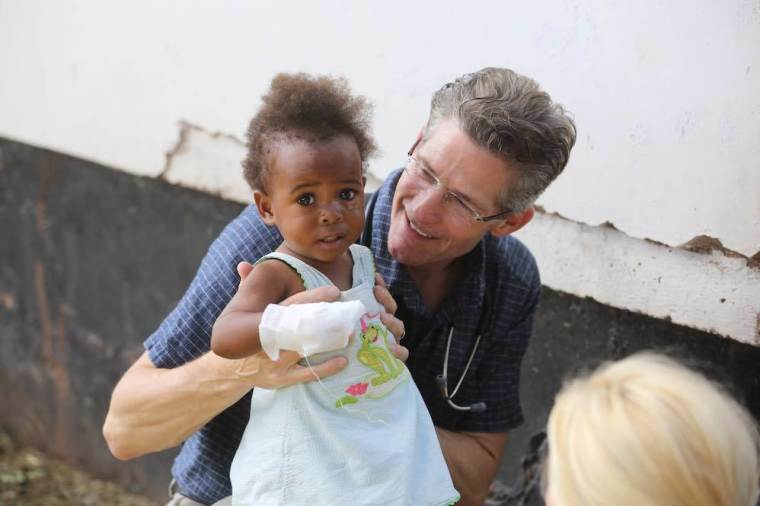
Dr. Paul Osteen Hopes to Mobilize and Inspire Medical Missionaries at Lakewood Church’s Upcoming Global Medical Missions Conference

Dr. Paul Osteen, brother of megachurch pastor Joel Osteen, is hoping to inspire medical missionaries during Lakewood Church’s upcoming Global Medical Missions Conference (also known as the M3 Conference).

“You don’t have to look far to see that there are people in need all over the world,” Dr. Paul Osteen, a surgeon who spends about four months a year serving in missions hospitals across the globe, told The Christian Post.

“Because of the overwhelming needs around us, one can easily wonder how they can make a real difference. I urge people to pray about how God can use them to be a part of the solution to help these people.”

He and his wife, Jennifer, will be bringing together doctors, nurses and other healthcare professionals to Houston on Feb. 21-22 for their fifth annual M3 conference. They are opening the doors to anyone who has an interest in learning more about global healthcare needs.

When discussing his intent for the conference, Osteen said he “hopes attendees will learn how much of a difference they can truly make when they see the need and choose to help in some way.”

The theme of this year’s conference is centered on the question “Can you see it?” which is inspired by the scripture John 4. In that verse, Jesus said, “Open your eyes and take a good look at what’s right in front of you…”

Lamenting the state of poverty and conflict across the globe, Osteen noted, “Every day, 830 mothers in low-resource communities die of childbirth-related issues. Right now, 74 million people are displaced or refugees. There are 420 million children living in war zones. Half of the world’s population lacks access to basic medical care.

SOURCE: Christian Post, Jeannie Law

All Content & Images are provided by the acknowledged source

Scott Reddig on Setting the Record Straight About Health Care Sharing Ministries

The views expressed in this commentary do not necessarily reflect those of BCNN1. Opinions expressed are solely those of the author(s).

Perhaps no other topic tends to be more polarizing or politicized in America than healthcare. Here at Medi-Share, one of the nation’s leading nonprofit Health Care Sharing Ministries, we often find ourselves in the middle of conversations or news articles regarding our unique approach to meeting the healthcare needs of Christians. 

One such article was recently published in The New York Times under the headline, “It Looks Like Health Insurance, but It’s Not. ‘Just Trust God,’ Buyers Are Told.” We appreciate the interest in the unique and growing alternative of health care sharing, but we believe the article left readers with misleading conclusions. Though other ministries will want to speak for themselves, I’d at least like to set the record straight regarding Medi-Share.

Significant Facts Omitted or Misrepresented

The article described an unfavorable experience of a handful of members across several ministries and then implied that these experiences are the norm for members of health care sharing ministries. I don’t believe that’s true, and I can affirm that’s definitely not true at Medi-Share. We have a 26-year history of faithfully sharing among our members, an A+ rating with the Better Business Bureau, and consistently high member satisfaction scores (which we monitor continuously). That’s real proof that the great majority of our members like the experience and value they and their families receive by participating in Medi-Share. Since 1993, every eligible bill submitted through the Medi-Share program has been paid by our membership. During 2019, more than $50 million in medical bills were shared each month by the faithful members of Medi-Share.

I was particularly concerned that the one example The New York Times article cited about a Medi-Share member’s experience left out a key part of the story. Yes, it’s true that our member had a medical event that was initially determined not eligible for sharing under the program guidelines. But what the article failed to mention was that the member followed our member appeal process and the initial decision was reversed by our community. Ultimately, this member’s bills were taken care of — that too was omitted. We’ve since learned that an example cited about a Samaritan Ministries’ member was also inaccurately reported.

I wish the article had sought and offered examples I hear every day from members. They are compelling and would more accurately depict the experiences most typical of our community. Let me offer two.

SOURCE: Christian Post, Scott Reddig

All Content & Images are provided by the acknowledged source

John Piper’s Desiring God Ministry Examines How Politics Has Changed the Meaning of ‘Evangelical’

Since Donald Trump burst onto the political scene in 2016, there is one group among which he has maintained consistent and unwavering support – white evangelicals. While votes from the faith community have been invaluable to Trump’s political goals, some have also lamented the subsequent effect politics have had on distorting the true meaning of the term “evangelical.” Indeed, in our divisive political times, evangelicals are seen – at least in the mainstream media – as being almost synonymous with President Trump.

“Evangelicalism went from being America’s most controversial religious movement to its most reviled one,” writes the Vardaman Distinguished Professor of History at Baylor University, Thomas S. Kidd, in a feature piece at Desiring God. Trump’s election, Kidd said, has “generated an often-acrimonious debate among scholars about whether embracing “Trumpism” was an aberration for white evangelicals, or instead, a natural outgrowth of what the movement always has represented.”

As ever, the media has happily labeled all evangelicals as Trump supporters. This, along with an inability to define what being an “evangelical” truly means in the context of our current cultural climate, has caused a “crisis with acute political ramifications,” according to Kidd.

The problem, Kidd argues, goes far beyond political jostling. Rather, there is “widespread confusion about the meaning of the term itself,” he writes.

The word “evangelical” actually finds its origins in the Greek word “euangelion,” which simply means “good news.”

So why has the term become so political? Well, it could be something to do with the fact that in the 1980s, the influential Baptist preacher Jerry Falwell, Sr., once told fellow believers that to be evangelical was to “get saved, baptized, and registered to vote.”

The reality, Kidd argues, is that by this particular decade, many Republican evangelical insiders “were conveying to their followers that to be evangelical was to vote, and to vote Republican.”

In addition, choosing not to vote or casting a vote for a Democrat candidate, was viewed as a grave sin by some prominent evangelical leaders.

Soon, conservatives realized that the so-called “evangelicals” were becoming less picky about the particular virtues or religious traits exhibited by the party’s nominee – they would simply cast their vote for the GOP regardless.

Source: Christian Headlines

All Content & Images are provided by the acknowledged source

Dolly Parton and For King and Country Win Grammy for ‘God Only Knows’

In collaboration with the Christian duo For King and Country, Dolly Parton won her ninth Grammy award over the weekend for the single “God Only Knows.”

Though Parton couldn’t attend the ceremony, Josh and Luke Smallbone of For King and Country praised the country music legend in their acceptance speech, according to CBN News.

“To dear Dolly Parton who is an incredible human being,” they said. “It’s one of the greatest moments of our career to collaborate with her and her team. She said, ‘I love this because it’s reaching to the marginalized, the depressed, the suicidal, which is all of us at some point.’”

The song won in the Best Contemporary Christian Music Performance and Song category. The song highlights struggles that only God knows with a refrain that includes the lines: “God only knows what you’ve been through//God only knows what they say about you//God only knows the real you//There’s a kind of love that God only knows.”

Parton was also nominated for her song “Girl in the Movies” with Linda Perry.

Source: Christian Headlines

All Content & Images are provided by the acknowledged source

Ann Layne on My Experience With Mental Illness

The views expressed in this commentary do not necessarily reflect those of BCNN1. Opinions expressed are solely those of the author(s).

Even when I was young, I felt the presence of Jesus in my life.  I guess it started when my mom sent me to Sunday school.  I felt a stirring inside of something I can’t fully  explain.  All those songs about Jesus loving the little children… I knew he loved me.

When I went to camp as a young girl, I’d walk along the beach alone.  Lost in my thoughts.  I’d pretend that I was beautiful like the teenagers I saw.   I was beautiful, I just didn’t see myself like that.  While I was walking on the beach, I remember feeling like I was being watched.  At the time I didn’t know who it was.  As I got older, I’d wiggle because I felt I was being watched.  When I was an adult I put it together and realized Jesus was watching me grow.

It was a love affair from the beginning between the Lord and I.  With all passionate loves there is heartbreak.  My mother died of cancer when I was ten years old.  It was a long drawn out illness that lasted about five years. I think I saw my mother suffer too much.   It’s hard for a child to watch your mother die of cancer.  The intense pain and grief lasted years. I didn’t know but I was depressed.  All I knew was that I was very angry with the Lord.  I know now that he has a plan for each of us.  I only understood this as l got older.

My dreams were dark and I stayed away from church in my late teens.  Jesus did not abandon me.  He had never left my side.   As time passed, I went to Mass by myself.  I prayed for my mother and for my own health. Other than that, I did not know what to ask Jesus for.  It was only later in life that I began to understand all my blessings come from the Lord.  I could ask him for financial assistance, protection, guidance and much more.

My 30s were not peaceful.  My marriage was stable but I was not.  My work life was lacking, so I quit my job.  What happened is difficult to explain.   I started not feeling well and I was becoming increasingly paranoid.  My obsessive compulsive disorder symptoms came back.  In my 20s, I had the classic hand washing compulsion and the obsession with germs.  It was bad for a while but I learned a remedy on my own.  That if I don’t give in to the compulsion, it slowly goes away.   Years later I took a course on OCD.  The instructor said you have to at first live with the anxiety.  Stop yourself from checking or washing and live with the anxiety.  Then slowly the anxiety begins to lessen.  Does it go away?  Everyone is different but mine although it did not go away, it is considerably better.  I am able to function quite well now.

Dealing with all these mental health issues was not easy.  I began to pray in a way I never did before.  I would just speak to the Lord and tell him my problems.  I’d pray every day that He would alleviate my illness.  It did not happen overnight but I could see that things were changing.  My relationship with the Lord grew and I could tell He was listening to my prayers.

SOURCE: Christian Post, Ann Layne

All Content & Images are provided by the acknowledged source
Greg Laurie on How Kobe Bryant’s Death Reminds Us Life is Not Fair

Greg Laurie is the pastor and founder of the Harvest churches in California and Hawaii and of Harvest Crusades. He is an evangelist and a best-selling author. His books include Hope for Hurting Hearts and Johnny Cash: The Redemption of an American Icon. The views expressed in this commentary do not necessarily represent those of BCNN1.

I could hardly believe the news this weekend: Kobe Bryant, the LA Lakers basketball superstar, had died in a helicopter accident near Los Angeles. Eight other people, including his 13-year-old daughter Gianna, also perished in the crash.

How could a champion like Kobe, so vibrant and full of life, suddenly leave us?

Kobe Bryant was among the very best to play in the NBA. He played 20 seasons with the LA Lakers, won 5 championship rings and finished with 33,643 career points. At 41 years old, he was a living and breathing legend that even other NBA stars were star-struck by.

He even picked his own nickname, “Black Mamba,” after the fastest lethal snake in the world—and passed it on to his daughter Gianna, a budding basketball star, whom he called “Mambacita.”

The truth is, the vast majority of us didn’t know Kobe personally. Maybe we went to one of his games, but that was the extent of our relationship with him. Yet his death somehow has touched millions of Americans deeply. I believe it’s because it suddenly jolted us to the reality that life is not fair.

Why are people like Kobe and his daughter and the other passengers aboard that fateful flight taken while others will wake up tomorrow to face a new day?

There are no easy explanations, but here are three things we should keep in mind as we reflect on Kobe’s passing:

I have a smartwatch. Periodically, I will get a message on it that simply says, “Breathe.” Funny thing is, I was breathing already, but it’s reminding me of something that I should never take for granted.

Every day is a gift. Every single heartbeat and every breath you take is a blessing. Don’t take it for granted. And don’t take your health or your family for granted either.

The Bible reminds us, “Teach us to realize the brevity of life, so that we may grow in wisdom” (Psalm 90:12 NLT).

Kobe was a very successful man with many beautiful things, but I am certain he would have traded it all for one more precious day of life. He was not given that choice.

I remember the day 11 years ago when my wife and I heard the devastating news that our son Christopher had died in an automobile accident on his way to work. It was as if all the air was sucked out of the room and time stood still. I felt as though if words could kill you, I could have died on the spot that day.

In my time of pain and darkness, I called out to God, and He was there for me. The Bible says He is “the God of all comfort” (2 Corinthians 1:3).

Sometimes things happen in life that are unfair, and we will never get a satisfying answer for why they happened. At times such as these, I have learned that the right question to ask is not “Why?” but “Who?” Who do you turn to at a time like this?

Source: Christian Headlines

All Content & Images are provided by the acknowledged source

John Stonestreet on Why I’m Optimistic About Christian Education – No Matter How the Supreme Court Rules

John Stonestreet is President of the Colson Center for Christian Worldview, and radio host of BreakPoint, a daily national radio program providing thought-provoking commentaries on current events and life issues from a biblical worldview. John holds degrees from Trinity Evangelical Divinity School (IL) and Bryan College (TN), and is the co-author of Making Sense of Your World: A Biblical Worldview. The views expressed in this commentary do not necessarily represent those of BCNN1.

Back in 2015, the state legislature of Montana created a dollar-for-dollar tax credit for individuals who donate to organizations that provide scholarships to private school students. In response, the Montana Department of Revenue ruled that such a tax credit would violate the state’s version of the “Blaine Amendment,” which prohibits state funding of religious education. So, the state terminated the program altogether.

Kendra Espinoza, a single mom who works extra jobs in order to send her kids to a Christian school in Kalispell, challenged the Department of Revenue’s ruling in court. The case is currently on the Supreme Court’s docket for this term.

During oral arguments, conservative justices like Alito and Kavanaugh brought up the Court’s decision in Trinity Lutheran v. Comer, which held that forcing a church school to choose between “[participating] in an otherwise available benefit program or [remaining] a religious institution” violated the Free Exercise clause.

Unsurprisingly, the liberal justices disagreed.

What was surprising is that the editorial board of the Washington Post came out on the side of Espinoza. Using scholarships at private, religious schools was not only a parent’s right, the editorial board wrote, but using them didn’t “undermine” or “harm” public education or the state, “contrary to many of the tropes advanced by those opposed to school choice.”

The Post also called out the hypocrisy of upper-middle class opponents to these kinds of programs by noting that, “People with means take for granted the ability to choose their child’s school by paying tuition or moving to communities with quality schools.” So why begrudge people like Kendra Espinoza the same opportunity?

It’s not often I find myself in complete agreement with the editorial board of the Washington Post! I’m old enough to remember when the very existence of Christian educational alternatives was threatened by government entities. Oh yeah, we are all old enough…such threats are still very much a reality, especially in California.

The truth is, government-imposed ideologies, especially so-called SOGI (sexual orientation and gender identity) legislation, very much threaten the future of Christian educational institutions. Still, I hold great hope for their futures, and not only because this crucial Montana case is being heard in our recently remade Supreme Court. It’s because Christians are currently bringing an incredible amount of innovation and creativity to the realm of education.

Source: Christian Headlines

All Content & Images are provided by the acknowledged source

John Stonestreet and Roberto Rivera on Archaeological Discovery in Israel Confirms Biblical Narrative Yet Again

The views expressed in this commentary do not necessarily reflect those of BCNN1. Opinions expressed are solely those of the author(s).

Stop me if this sounds familiar: Archaeologists digging in Israel discover artifacts buried for about three millennia. Upon close examination, their find either confirms the biblical narrative or at least undermines a long-accepted dismissal of a biblical claim.

Okay, don’t stop me. After all, it won’t matter if you try, because I never get tired of telling stories like these.

Archaeologists from Azusa Pacific University and Hebrew University excavating at Tel Abel Beth Maacah (a 3,000 year old site about four miles west of Dan, which is as far north as you can go and still be in Israel) found a room dating back to the ninth century before Christ “that contained broken jars.”

That may not sound particularly exciting or newsworthy, but stay with me here.

During the reign of King Ahab, Abel Beth Maacah was where the kingdoms of Israel, Aram, and Phoenicia met. The city is mentioned in 2 Samuel 20 as a “city that is a mother in Israel” and part of “the Lord’s inheritance.” Now, some scholars have disputed that Abel Beth Maacah was an Israelite city, as the Bible claims. In their reckoning, the biblical authors were “reading back” subsequent events to more ancient history.

However, some of the jars contained residues that suggested that the room was “an ancient wine cellar,” and at least one of the jars had an inscription which was so faint that it required special equipment to see it. The inscription read “lbnayo,” which means “belongs to Benjamin.”

“Benjamin? Benjamin who?” you might ask. “Who cares?” Well, the important detail here is that the inscription was written in Hebrew.

As Biblical Archaeology Review put it, this finding suggests “that Abel Beth Maacah was an Israelite city at the time when Ahab was the Israelite King.”

Obviously, it’s important to be cautious and not over-interpret the data here. The field of biblical archaeology, and archaeology in general, is a human endeavor subject to human failings like most other areas of study. Sloppiness, bias, fraud, or simple good-faith errors can lead to flawed interpretation of findings. Caution is advised.

Unfortunately, what has long passed for caution in archaeology is what would be better identified as a “hermeneutics of suspicion.” In other words, there is often a taken-for-granted assumption that the Bible can’t be trusted. Because it deals with religion and morality, it must be exaggerating, if not outright lying on its historical claims.

SOURCE: Christian Post, John Stonestreet and Roberto Rivera

All Content & Images are provided by the acknowledged source