Stocks move higher on Wall Street a day after a big drop

Stocks moved broadly higher on Wall Street in afternoon trading Tuesday, reversing most of the indexes’ losses from a sell-off the day before.

The gains placed the market on track to snap a two-day skid fueled by fears that the spread of a new virus in China could hamper global ecomomic growth.

The rebound comes as the United States and several other nations prepared Tuesday to airlift citizens out of a Chinese city at the center of the outbreak, which has killed more than 100 people.

Technology stocks were the biggest gainers. Apple, which reports earnings later Tuesday, climbed 2.4% and was one of the biggest gainers in the tech sector. Chipmakers including Intel also made solid gains. Many of those companies are affected by China’s economy because they rely heavily on that nation for sales and supply chains.

Banks and other financial companies also climbed, along with communications stocks. Utilities and real estate companies lagged the market as investors turned away from safe-play sectors.

Bond prices fell, sending yields higher following a significant drop a day earlier. The yield on the 10-year Treasury climbed to 1.64% from 1.60% late Monday.

Wall Street is in the midst of a heavy week for corporate earnings and investors have some key companies to assess. Starbucks will report its results later Tuesday. Boeing, McDonald’s, Facebook and Microsoft will all report results on Wednesday. Other big names reporting this week include Coca-Cola, Amazon, Caterpillar and Exxon Mobil.

KEEPING SCORE: The S&P 500 index rose 1% as of 1:37 p.m. Eastern time. The Dow Jones Industrial Average rose 203 points, or 0.7%, to 28,739. The Nasdaq rose 1.3%. The Russell 2000 index of smaller company stocks rose 0.8%.

OVERSEAS: Markets in Hong Kong, Taiwan and mainland China were closed Tuesday for Lunar New Year holidays. Indexes fell elsewhere, including a 3.1% tumble for South Korea’s benchmark. European markets rose.

VIRUS STATUS: More than 4,500 people have been confirmed ill with the virus and 106 have died in the outbreak of a new coronavirus centered in the Chinese city of Wuhan, an industrial hub along the Yangtze river. The virus has now spread to more than a dozen countries.

Hong Kong has joined much of China in seriously restricting travel by cutting all rail links to the mainland. China’s containment efforts began with the suspension of plane, train and bus links to Wuhan and has now expanded to 17 cities with more than 50 million people in the most far-reaching disease-control measures ever imposed.

MORE HOSPITABLE: Shares in casino operators, hotel chains, cruise lines and other travel-related companies recouped some of the losses over the past few days as worries about the virus outbreak’s impact on tourism hammered the stocks.

Wynn Resorts rose 1% and Las Vegas Sands gained 1.4%. Delta Air Lines added 1.6% and Carnival gained 2.4%.

WEAK DOSE: Pfizer dropped 5.2% after the biggest U.S. drugmaker reported disappointing fourth-quarter earnings. The company’s revenue fell during the quarter as it continues to slim down and focus on developing new drugs. It moved its huge stable of nonprescription medicines into a new joint venture with GlaxoSmithKline last year.

BUYING PARTS: Auto parts supplier BorgWarner sank 8% after saying it will buy Delphi Technologies for about $3.3 billion. The deal will help strengthen the company’s power electronic products, but it comes along with a warning to investors about potentially weak sales in 2020, particularly for light and commercial vehicles.

THIN HOG: Harley-Davidson lost 3.6% after the storied motorcycle maker reported weak fourth-quarter earnings and revenue. The company had a tough quarter for U.S. sales, which led the overall worldwide drop.

___

Source: Associated Press – ALEX VEIGA

All Content & Images are provided by the acknowledged source

Kansas City Chiefs Have Inspiring ‘Faith-Filled,’ Family Environment, Chaplain Says

Kansas City Chiefs Have Inspiring ‘Faith-Filled,’ Family Environment, Chaplain Says


The chaplain for the Super Bowl-bound Kansas City chiefs says the organization’s openness to matters of faith makes his job “easy.”

The Chiefs’ chaplain, Marcellus Casey, told Sports Spectrum he grew up a fan of the Chiefs because his father, Carey Casey, was the team chaplain. Even then, Marcellus was impressed with the organization – especially with then-owner Lamar Hunt, who passed away in 2006. Hunt’s children now own the team. Clark Hunt, a son, is the CEO. 

“I remember as a little kindergartner, meeting Lamar Hunt in the parking lot and just how cordial and kind and loving he was with my father and I,” Marcellus Casey told Sports Spectrum.

“You see that legacy [today] throughout the whole family, with Clark and his wife, Tavia, and all the Clark siblings – it’s really a family environment. It’s really a faith-filled environment at the stadium and with their family. So it makes it really easy as a chaplain to have a positive impact with the players and with the coaches.”

Clark Hunt is open about his Christian faith. As Christian Headlines previously reported, he and Tavia helped establish a pre-game non-denominational chapel service for fans. Clark and Tavia attend.

Casey said he treats the players just like “human beings” who have “feelings” and “families,” even though they’re seen as stars in the public eye.

“They have past hurts…

… Read More

Click here to read the rest of the story from our content source/partners – Christian Headlines.

قالب وردپرس

Setting the Record Straight About Health Care Sharing Ministries

COMMENTARY

Perhaps no other topic tends to be more polarizing or politicized in America than healthcare. Here at Medi-Share, one of the nation’s leading nonprofit Health Care Sharing Ministries, we often find ourselves in the middle of conversations or news articles regarding our unique approach to meeting the healthcare needs of Christians.

One such article was recently published in The New York Times under the headline, “It Looks Like Health Insurance, but It’s Not. ‘Just Trust God,’ Buyers Are Told.” We appreciate the interest in the unique and growing alternative of health care sharing, but we believe the article left readers with misleading conclusions. Though other ministries will want to speak for themselves, I’d at least like to set the record straight regarding Medi-Share.

Significant Facts Omitted or Misrepresented

The article described an unfavorable experience of a handful of members across several ministries and then implied that these experiences are the norm for members of health care sharing ministries. I don’t believe that’s true, and I can affirm that’s definitely not true at Medi-Share. We have a 26-year history of faithfully sharing among our members, an A+ rating with the Better Business Bureau, and consistently high member satisfaction scores (which we monitor continuously). That’s real proof that the great majority of our members like the experience and value they and their families receive by participating in Medi-Share. Since 1993, every eligible bill submitted through the Medi-Share program has been paid by our membership. During 2019, more than $50 million in medical bills were shared each month by the faithful members of Medi-Share.

I was particularly concerned that the one example The New York Times article cited about a Medi-Share member’s experience left out a key part of the story. Yes, it’s true that our member had a medical event that was initially determined not eligible for sharing under the program guidelines. But what the article failed to mention was that the member followed our member appeal process and the initial decision was reversed by our community. Ultimately, this member’s bills were taken care of — that too was omitted. We’ve since learned that an example cited about a Samaritan Ministries’ member was also inaccurately reported.

I wish the article had sought and offered examples I hear every day from members. They are compelling and would more accurately depict the experiences most typical of our community. Let me offer two.

Consider Cathrine, a Medi-Share member in California who just this past year was facing the difficult challenge of fighting cancer. Medi-Share members shared all of her medical bills, and also supported her in prayer, enabling her to focus on her health and recovery instead of having to worry about tens of thousands of dollars in medical bills. In Cathrine’s words, “With Medi-Share, you feel like you have an ally, and you just don’t get that in other places.”

Even more recently I heard from a five-year member of Medi-Share named Julie who described a terrifying series of cardiovascular symptoms experienced by her husband, resulting in a number of expensive tests and a hospitalization. Thankfully, he was eventually sent home with a clean bill of health, but that wasn’t the only bill. Julie told us, “We owed over $100k and the only way we wouldn’t have to declare bankruptcy was if Medi-Share members came through for us. And came through they did! In our time of need, Medi-Share staff was there to pray with us, guide us through the [sharing] procedures, and the members shared in all of our needs! Thank you so much Medi-Share for doing what you promised to do!” 

Correct, It’s Not Insurance. Medi-Share Is a Health Care Sharing Ministry

Yes, health care sharing ministries like Medi-Share are not insurance. The article stated that correctly. Our members don’t rely on legal obligations but on the faithfulness of God providing through other members of our community. To a secular audience that might sound risky. But for our Christian audience, the concept of a community of believers coming together to support each other, believing that God will provide…that is totally sensible and even inspirational. It’s how we do life.

I believe we can all agree that there are some fundamental challenges with our healthcare system in America, but the solution is to have more options for your healthcare not fewer. Like other health care sharing ministries, Medi-Share is not for everyone. But for our 400,000+ members, they are loud and clear that this program provides them a great experience with real value alongside the intangible blessing of community.

*****

Scott Reddig is the chief executive officer of Christian Care Ministry, a Florida-based non-profit ministry that operates Medi-Share, one of the leading health care sharing ministries in the United States. Since the program’s inception in 1993, Medi-Share says its members have shared more than $3 billion in medical bills and saved an additional $1.6 billion in medical costs from access to an extensive network of 900,000+ health care providers. Medi-Share reports it has more than 400,000 members in all 50 states. Medi-Share describes itself as a community of Christians who share one another’s healthcare burdens and encourage one another through community and prayer. For more information, visit Medishare.com.


Source CBN

All Content & Images are provided by the acknowledged source

British Arena Boots Franklin Graham over ‘Homophobic’ Biblical Views

British Arena Boots Franklin Graham over ‘Homophobic’ Biblical Views


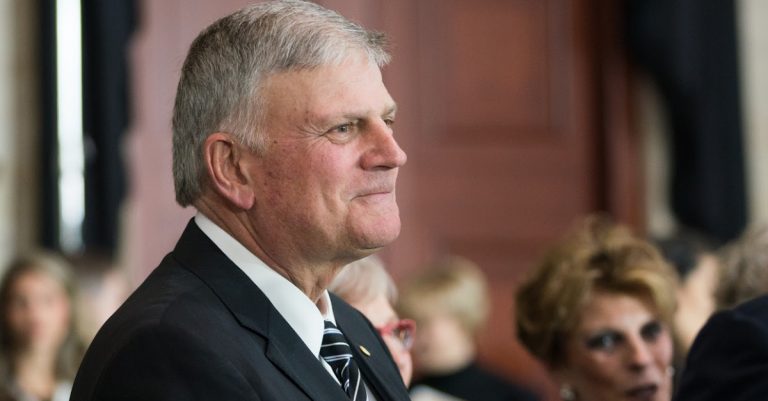
Franklin Graham is scheduled to preach the gospel in eight cities across the United Kingdom later this year, but one of those stops is now in jeopardy after the venue canceled the booking over his biblical views on LGBTQ issues.

ACC Liverpool, an arena and conference center, dropped Graham and said in a statement, “Over the past few days we have been made aware of a number of statements which we consider to be incompatible with our values.” He was scheduled to preach in Liverpool on June 12.

“In light of this we can no longer reconcile the balance between freedom of speech and the divisive impact this event is having in our city,” the statement said. “We have informed the organisers of the event that the booking will no longer be fulfilled.”

Graham, though, said in a Monday statement that everyone is welcome. 

“The Gospel is inclusive,” Graham wrote. “I’m not coming out of hate, I’m coming out of love.”

A Change.org petition that labeled Graham a “homophobic hate preacher” had gathered more than 350 signatures as of Tuesday morning. 

“We fear that with such a high-profile event gaining traction, Graham’s appearance may incite hateful mobilisation and risk the security of our LGBTQ+ community,” the petition said. 

Liverpool’s mayor, too, wanted the event canceled. 

The Liverpool City Region Pride Foundation wrote to city leaders and said of Graham’s…

… Read More

Click here to read the rest of the story from our content source/partners – Christian Headlines.

قالب وردپرس

How to raise a generation who values the sanctity of life

“Your eyes saw my unformed substance; in your book were written, every one of them, the days that were formed for me, when as yet there was none of them” —Psalm 139:16

Today, abortion is legal nationwide, shootings are everyday news, and assisted suicide has found acceptance in nine US states. Society has lost sight of the preciousness of life. The sacredness of humanity has vanished in the tumultuous rhythm of current events. 

Today, life is far too often carelessly taken for granted and written off as a mundane right. Humankind has established a sense of entitlement toward life, as if we own and deserve to do with it as we please. 

And the generation coming of age is not exhibiting much progress toward an increased value and respect for life.

Generation Z longs for more than online videos

Those who belong to Generation Z (born in the late 1990s and early 2000s) have been marked by attributes such as self-reliance, a distrust for political and religious institutions, and an aptitude for entrepreneurship and technological savvy. 

Adam Wright, President of Dallas Baptist University, points to Gen Z’ers as “independent, resourceful, entrepreneurial . . . accused of having an ‘8-second filter’ honed and crafted to curate their attention on the things that matter and resonate most to them.” Dr. Wright believes the generation “craves authenticity, transparency, and is seemingly skeptical most of the time towards authority, institutions, and those in positions of leadership.”

In “Christianity isn’t catching on with Generation Z,” Brendan Pringle speaks to Gen Z’ers lack of church attendance and religious distrust, pointing to a deficiency of moral guidance as the largest culprit in their absence of religion. Where once they may have asked a pastor about life’s toughest questions, many now turn to their most-trusted source for “expert” opinions: the internet.

A recent New York Times article…

… Read More


Click Read More to read the rest of the story from our content source/partners – Denison Forum.

قالب وردپرس

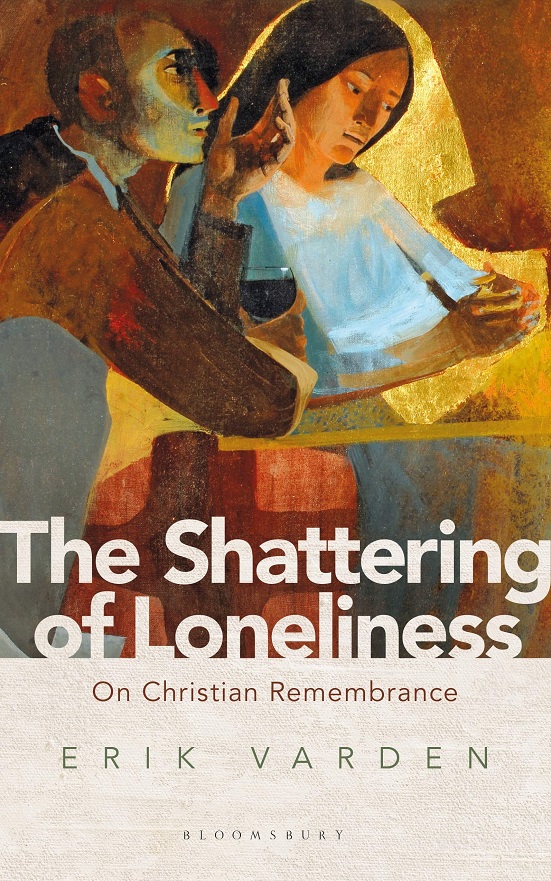
Book Review: ‘The Shattering of Loneliness: On Christian Remembrance’ by Erik Varden

Review by Jonathan Callis. Callis teaches English at Oklahoma Baptist University. The views expressed in this commentary do not necessarily represent those of BCNN1.

When I was 10 years old, my dad would often interrupt our family devotions and begin speaking in this odd, rhapsodic way about the Incarnation. At the time I didn’t understand the connection between the mysterious thing he called the Incarnation and the boring Bible lesson we’d just been reading. Yet his reverent words took up residence in my memory. They became a sort of incantation, a spell he spoke over me that I could never figure out. I couldn’t escape the feeling that the Incarnation was somehow central to my existence. What did it mean that God took on flesh and dwelt among us?

Two decades later, I stood over my wife in a room full of highly specialized doctors and nurses. There must have been 17 people in this room. “It’s a party!” they all kept telling me. Most of the nurses in the room would never get to see something like this again.

For my wife, this was no party. She was sliced open, her abdomen retracted into a circular hole. Her body was a portal to transmit three brand-new souls into the world. I snuck a look at the first, continuing to watch as the doctor pulled two more babies out.

Eventually I looked over at my wife, who was stretched out in cruciform position on the operating table. Her arms were spread wide. Her face was separated from her body by a curtain that kept her from seeing those three newborns, those babies she carried—in rapidly increasing agony—over the preceding 35 weeks.

I can think of no image from my own life that so perfectly captures the mystery of incarnation. On one side of the room there are three beautiful and healthy boys, an image of the divine gift of life. On the other side my wife is lying down, pale and barely conscious. Over the coming years, Amy would develop anemia, insomnia, and depression from the bodily strain of keeping these three identical boys alive (along with raising our 4-year-old and 2-year-old daughters). But in that moment there are the boys, healthy and crying and demanding love. I ask permission to go and hold them. All Amy can do is stare blankly before finally nodding her head. She’s too exhausted to move and too emotionally spent to appreciate what’s just happened.

In The Shattering of Loneliness: On Christian Remembrance, the Roman Catholic priest Erik Varden has written a book that describes just this mixture of joy and brokenness we experience as incarnate creatures. A former abbot of an English monastery, Varden has spent much of his life under a rigorous monastic rule. Even though I’m a Protestant who struggles to pray as often I should, Varden writes for Christians like me. He understands the desires that keep us from God and the deeper longings that lead us back to him. I was continually moved by his descriptions of beauty and suffering that call out for spiritual explanation. Varden has written one of those merely Christian books that illuminate the whole life of faith.

The son of a rural veterinarian from Norway, Varden became fascinated by World War II and the Holocaust at a young age. As a boy, he saw a man working in the field, shirtless and scarred all the way down his back. As his father later told him, the farmer had spent time in a Nazi camp, where he had been brutally whipped. The memory stayed with Varden and left him with a desire to understand the meaning of suffering. He wanted to find a good reason for that visceral image of pain. A few years later the adolescent Varden would hear the composer Gustav Mahler’s Symphony No. 2 (known as the Resurrection Symphony). This time he found himself moved by an almost inarticulate longing, and he began groping slowly toward belief. In the music he heard Mahler’s exultant insistence that our sufferings “are not in vain.”

By narrating these two experiences, Varden initiates the pattern for his short but remarkable book of spiritual devotion. He explores a theology of incarnation—our longing for God through our broken bodies and desires—through life, art, and theological meditation. Most chapters begin with a short reflection on communion or the Holy Spirit and then move toward an illustration of that theological insight, whether in life or art. Varden is not difficult to read, but his readings of Scripture and literature are theologically profound. He rewards careful attention and rereading. He describes familiar writers like Athanasius and Leo Tolstoy just as fluently as he introduces lesser-known figures such as the French Resistance worker Maiti Girtanner and the Swedish existentialist playwright Stig Dagerman.

While there is much to savor in Varden’s book, the first and last chapters are the most powerful. In the first chapter, “Remember you are dust,” Varden shows how the Genesis account of creation points in two directions. First, God’s creation of man reminds us of our humble origins. We are made of the dust of the earth. And after a life burned up with desires, we return to dust and ashes.

Source: Christianity Today

All Content & Images are provided by the acknowledged source

Scot McKnight on Positive Law in Christian Theology

Scot McKnight is an American New Testament scholar, historian of early Christianity, theologian, and author who has written widely on the historical Jesus, early Christianity and Christian living. He is currently Professor of New Testament at Northern Baptist Theological Seminary in Lombard, IL. The views expressed in this commentary do not necessarily represent those of BCNN1.

It is not uncommon to hear the word “law” in Christian circles to be a bad thing. Law v. grace, for instance. Saved by faith, not by law. Yet nearly all such Christian circles appreciate and subordinate themselves to constitutional law in the USA. They think Christians should “live by the law” and they also think Christians are “not under the law.”

How do these two sense of “law” work together?

That is one of the many questions at work in David W. Opderbeck’s new book, Law and Christian Theology: Classic Questions and Contemporary Perspectives.

David is well-known to this blog for his former contributions and comments. But he has now added to his law degree and professorship in law a degree in theology from Nottingham.

As a young professor I remember hearing a Hebrew Bible professor discuss the laws of Israel as a constitution and thus the laws were not unlike contemporary laws. Since then I have always tried to keep that larger constitutional perspective in reading what the Bible says about law as covenant obligation for Israel. However, few have been the books that crossed my desk that seriously took up the discussion of how the Bible’s law emerges into or relates to contemporary law — natural, positive — and how Christians relate to laws of the land. David Opderbeck offers to Bible professors as well as to pastors and serious readers a full-orbed discussion of law in the Christian tradition. The book will generate much light and many discussions.

It has two sections: Theology, which covers the narrative of Scripture and how law fits into it, a chp on the law in history, and then a constructive theologiy of law after modernity. The second section, Praxis, which covers the praxis of law in ordinary time, slavery and race, and then abortion and LGBTQ rights.

The focus of this book is on “positive” law, that is, how common law (or how humans inchoately learn to live with one another) forms into positive laws that emerge consciously, intentionally, and locally. More or less (unless I’m mistaken), divine law can be discussed along with positive law. Positive law is to be distinguishes from “natural” law, which he as a Christian, sees at some level born into the essence of who we are as made in the image of God.

Here’s a fundamental idea of Opderbeck’s:

Prior to the eschaton, humans positive law is therefore necessary to restrain evil, mirror God’s righteousness, guide human conduct, and promote human liberation.

Opderbeck approaches Scripture with a keen eye to all discussions among evangelicals. His approach is to sketch the narrative of Scripture with a view to where law fits and how it fits. This opening chapter is admirable in breadth and helpful in orienting us to how law fits into the narrative. Esp when performed by someone like Opderbeck who understands law in its modern legal framework.

Source: Christianity Today

All Content & Images are provided by the acknowledged source

True Story of a KKK Member Who Converted to Christianity Under Ministry of Black Pastor Coming to the Big Screen

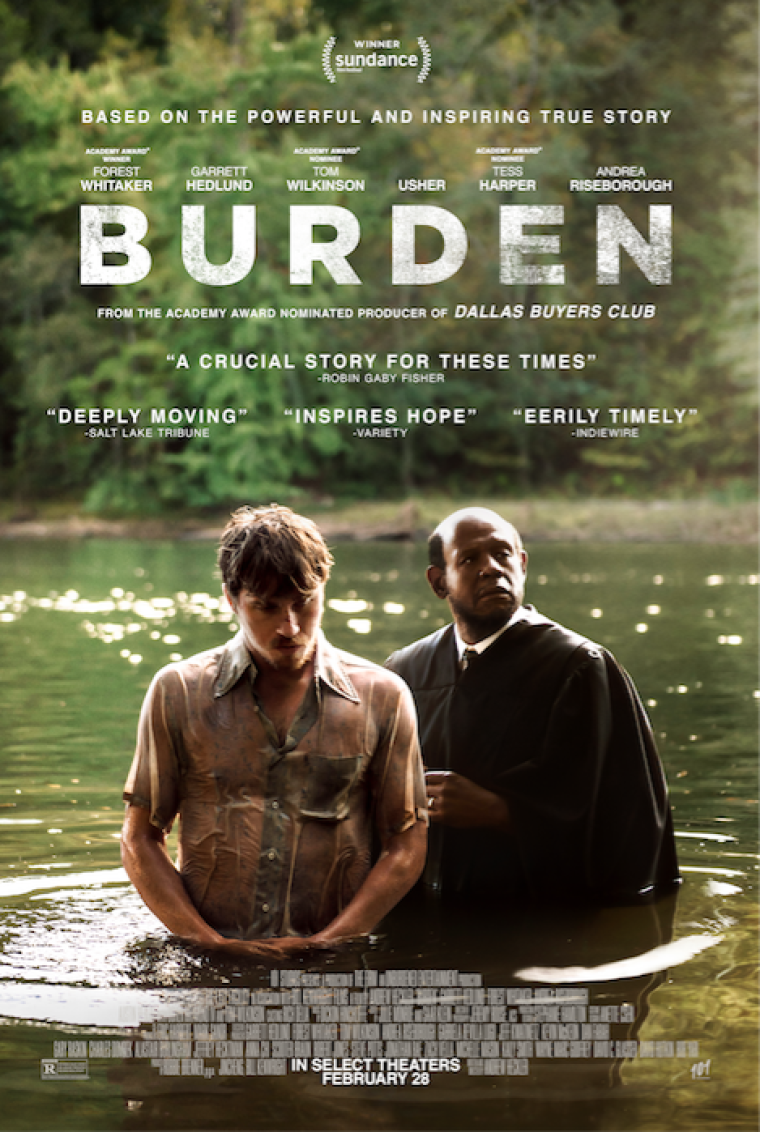
“Burden,” a powerful new film about a former KKK member whose life was transformed after forming a friendship with a black preacher he once planned to assassinate, will soon hit the big screen.

Releasing in select theaters Feb. 28, “Burden” follows the true story of Michael Eugene Burden Jr., who in 1996 opened the Redneck Shop and Klan Museum in Laurens, South Carolina, displaying KKK paraphernalia, including white-hooded Klan uniforms and photographs of lynchings.

However, after meeting a woman who persuades him to leave the KKK, Burden renounces his Klan membership and sells his store to the Rev. David E. Kennedy, a black pastor whose own uncle was lynched by the KKK.

Burden’s decision to sell his store infuriates Klan members, who seek vengeance. Because the KKK holds tremendous power over the small town, Burden soon finds himself jobless and penniless.

Despite his own misgivings, Reverend Kennedy, the pastor of New Beginnings Church, decides to shelter Burden, his girlfriend, and her son. In doing so, the pastor and community members set aside their own misgivings in hopes of teaching the former clan member about love and acceptance. Thanks to the pastor’s kindness, compassion, and grace, Burden embraces Christianity and is baptized.

A trailer for the forthcoming film shows the moment Reverend Kennedy embraces Burden, telling skeptical community members, “I view him as a brother in Christ.”

“I wonder if y’all can forgive me,” Burden later says. “I hope God can forgive me.”

All Content & Images are provided by the acknowledged source

True Story of a KKK Member Who Converted to Christianity Under Ministry of Black Pastor Coming to the Big Screen

“Burden,” a powerful new film about a former KKK member whose life was transformed after forming a friendship with a black preacher he once planned to assassinate, will soon hit the big screen.

Releasing in select theaters Feb. 28, “Burden” follows the true story of Michael Eugene Burden Jr., who in 1996 opened the Redneck Shop and Klan Museum in Laurens, South Carolina, displaying KKK paraphernalia, including white-hooded Klan uniforms and photographs of lynchings.

However, after meeting a woman who persuades him to leave the KKK, Burden renounces his Klan membership and sells his store to the Rev. David E. Kennedy, a black pastor whose own uncle was lynched by the KKK.

Burden’s decision to sell his store infuriates Klan members, who seek vengeance. Because the KKK holds tremendous power over the small town, Burden soon finds himself jobless and penniless.

Despite his own misgivings, Reverend Kennedy, the pastor of New Beginnings Church, decides to shelter Burden, his girlfriend, and her son. In doing so, the pastor and community members set aside their own misgivings in hopes of teaching the former clan member about love and acceptance. Thanks to the pastor’s kindness, compassion, and grace, Burden embraces Christianity and is baptized.

A trailer for the forthcoming film shows the moment Reverend Kennedy embraces Burden, telling skeptical community members, “I view him as a brother in Christ.”

“I wonder if y’all can forgive me,” Burden later says. “I hope God can forgive me.”

All Content & Images are provided by the acknowledged source

‘God Is Great’: 2006 Interview with Kobe Bryant Gives Sneak Peek into Late Basketball Star’s Faith

‘God Is Great’: 2006 Interview with Kobe Bryant Gives Sneak Peek into Late Basketball Star’s Faith


In one of the most trying seasons of his life, Kobe Bryant learned one valuable lesson: “God is great.”

After news broke Sunday night that Bryant, along with his 13-year-old daughter Giana and seven others, was killed in a tragic helicopter accident over the weekend, social media lit up with posts remembering the inspiring basketball star for both his athletic prowess and his character.

According to Faithwire, one post by megachurch pastor Mike Todd highlighted a clip from a 2006 interview with Stephen A. Smith who asked the legend about one of the most difficult times of his life. Three years prior, in 2003, the then 24-year-old was brought up on sexual assault charges. Several women filed a felony assault charge against Bryant, causing severe damage to his reputation and marriage.

On the show “Quite Frankly,” Smith asked: “But what did you learn from that whole experience? Just having to go through what you went through?”

“God is great,” Bryant exclaimed.

“Is it that simple?” the interviewer queried.

“God is great,” Bryant repeated. “It doesn’t get much simpler than that.”

Smith followed up asking Bryant if he truly knew that before being accused of rape. “Did you know that? I mean everyone knows that but the way you know it now, did you know it before that incident took place?” Smith asked.

“You can know it all you want, but…

… Read More

Click here to read the rest of the story from our content source/partners – Christian Headlines.

قالب وردپرس