Church of England Says Sexual Relations Outside of Heterosexual Marriage 8216Falls Short of God8217s Purpose for Human Beings8217

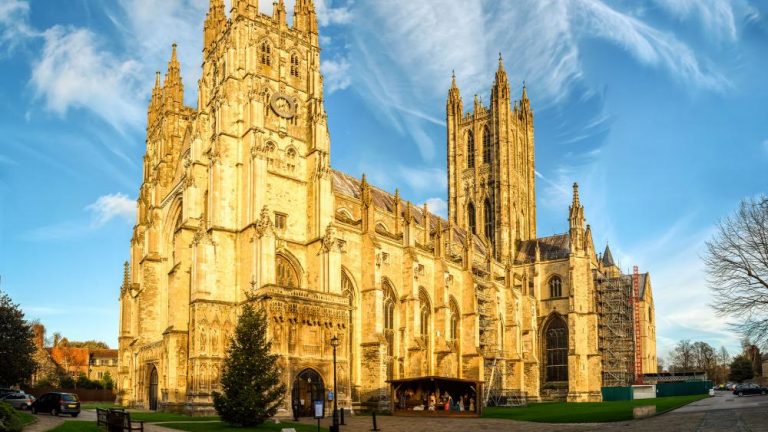
The Church of England has released a guidance stating that sexual relations belong between married, heterosexual couples, and that sex in gay or straight civil partnerships “falls short of God’s purpose for human beings.”

The House of Bishops of the Church of England issued pastoral guidance in response to the recent introduction to mixed-sex civil partnerships, which says: “For Christians, marriage – that is, the lifelong union between a man and a woman, contracted with the making of vows – remains the proper context for sexual activity.”

The church “seeks to uphold that standard” in its approach to civil partnerships, and “to affirm the value of committed, sexually abstinent friendships” within such partnerships.

“The introduction of same sex marriage, through the Marriage (Same Sex Couples) Act 2013, has not changed the church’s teaching on marriage or same sex relationships,” it says.

“Sexual relationships outside heterosexual marriage are regarded as falling short of God’s purpose for human beings.”

The Church of England explains that while “many of the provisions in the legislation on civil partnerships are, however, similar to, or identical with, those in marriage law,” the commitment in a civil partnership is different than that of a marriage.

“In particular, [civil partnerships are] not predicated on the intention to engage in a sexual relationship,” says the guidance.

SOURCE: Christian Post, Leah MarieAnn Klett

All Content & Images are provided by the acknowledged source

Covington Catholic School Student Nick Sandmann Returns to March for Life One Year after Confrontation

Covington Catholic School Student Nick Sandmann Returns to March for Life One Year after Confrontation


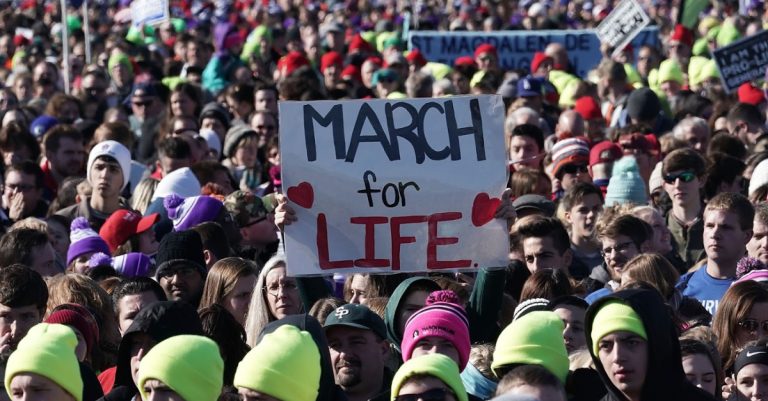
The high school student who was criticized last year for an encounter with a Native American activist at the 2019 March for Life says he was glad to be back at this year’s March for Life.

“I will never pass on an opportunity to March for Life!” Nick Sandmann wrote with a post of four photos from the march, the Western Journal reports.

In 2019, Sandmann and some classmates from Covington Catholic High School were recorded at the March for Life event. Sandmann was wearing a red Make America Great Again cap, and Native American activist, Nathan Phillips, was playing a drum and singing.

In the video, the two stand face to face with Sandmann appearing to stare down Phillips. Around them, a group of students chanted and rallied. The video went viral soon after.

Initial media reports suggested that Sandmann, then 16, was trying to bully Phillips, but later video showed that Sandmann was trying to defuse the situation.

“Exactly one year ago today, Nathan Phillips approached after the March For Life in Washington, D.C.,” Sandmann tweeted. “Today I stood in the exact same spot I had year ago and did my first fair interview compared to the setup @ NBC. I won’t ever be bullied or surrender. Thanks for all your…

… Read More

Click here to read the rest of the story from our content source/partners – Christian Headlines.

قالب وردپرس

Vikings Quarterback Kirk Cousins Finishes Reading Through the Entire Bible and Recommends Doing So to Others

Vikings quarterback Kirk Cousins finished reading through the Bible in two years and would “definitely recommend it.”

Cousins posted a photo of his personalized Bible with an “FCA” logo on the top right corner on Twitter last week.

“It took me over two years, but just finished reading through the entire Bible for the first time. Def recommend it!” he wrote. The post has received over 90,000 likes with over 6,000 comments.

It took me over two years, but just finished reading through the entire Bible for the first time. Def recommend it! pic.twitter.com/EjBqVWMZLZ

— Kirk Cousins (@KirkCousins8) January 18, 2020

One commenter agreed with him writing, “The best book you can read. I’ve read it multiple times, and now I’m reading it with my wife. God is good.”

The football star has not been shy about his faith. Earlier this year, when his team defeated the New Orleans Saints in a stunning victory, he gave airtime to God.

Source: Christian Headlines

All Content & Images are provided by the acknowledged source

Trump Administrations HHS Threatens to Pull Funding From California for Requiring Private Insurers to Cover Abortion

The Trump administration’s Department of Health and Human Services is threatening to pull federal funding from California for requiring private insurers to cover abortion.

The department’s Office for Civil Rights (OCR) issued a notice of violation to California Friday, saying the state was breaking federal conscience laws. Specifically, HHS says the state is in violation of the Weldon Amendment, which bars federal funds for any state or local program that “subjects any institutional or individual health care entity to discrimination on the basis that the health care entity does not provide, pay for, provide coverage of, or refer for abortions.”

A 2014 California rule requires all insurance plans to cover abortion.

HHS was acting on complaints from Skyline Wesleyan Church and Missionary Guadalupanas of the Holy Spirit, a Catholic order of religious sisters.

California has 30 days to respond. If it doesn’t roll back the requirement, the state could lose federal money, HHS said. Further, “this action may ultimately result in limitations on continued receipt of certain HHS funds,” HHS said in a statement.

“No one in America should be forced to pay for or cover other people’s abortions,” said OCR Director Roger Severino. “We are putting California on notice that it must stop forcing people of good will to subsidize the taking of human life, not only because it’s the moral thing to do, but because it’s the law.”

Source: Christian Headlines

All Content & Images are provided by the acknowledged source

Jim Denison on Why People Hate the Jews

Jim Denison is the founder and CEO of the Denison Forum, a nonprofit Christian media organization that comments on current issues through a biblical lens. The views expressed in this commentary do not necessarily represent those of BCNN1.

Kobe Bryant, one of the greatest players in basketball history, died yesterday in a helicopter crash along with his thirteen-year-old daughter Gianna.

Bryant played twenty seasons for the Los Angeles Lakers, winning five NBA titles. He was forty-one years old. For more, see my website article, “The death of Kobe Bryant and the urgency of legacy.”

As the sports world follows this terrible tragedy, the world’s attention is focused on another tragedy of global significance.

Today is International Holocaust Remembrance Day. The United Nations General Assembly designated January 27, the anniversary of the liberation of Auschwitz-Birkenau, as this annual day of commemoration.

Today is the seventy-fifth anniversary of that liberation. More than 1.1 million men, women, and children lost their lives at Auschwitz-Birkenau. However, this was just one of more than forty-four thousand incarceration sites operated by the Third Reich.

The Jewish people comprise only 0.2 percent of the global population. Despite their tiny demographic size, they have been the victims of systemic persecution and oppression for millennia, beginning with their enslavement in Egypt (Exodus 1:12-15) and continuing today.

The UN urged every member state not only to honor the six million Jewish victims of the Holocaust and millions of other victims of Nazism, but also to develop educational programs to prevent future genocides.

In that context, I’d like to ask today: Why do so many people hate the Jews? Let’s consider three factors.

In Genesis 26, Isaac is in conflict with the Philistines. The heart of the dispute was that “he had possessions of flocks and herds and many servants, so that the Philistines envied him” (v. 14). As a result, they stopped his water wells, threatening his future, and urged him to abandon land he had cultivated (vv. 15–16).

From then to today, jealousy of Jewish achievements has been a tragic factor in anti-Semitism.

The Jews’ passion for literacy, centered in their love for the Torah and commitment to teach it to their children (Deuteronomy 6:4-7), made them unique across centuries when literacy was in decline and positioned them for success in business and commerce. And their commitments to family and to family traditions and values have enabled them to survive and thrive in the most challenging of times and places.

Today, 44 percent of Jewish households in America have an income exceeding $100,000. This is 50 percent higher than the US average. Though Jews constitute only 2.1 percent of America’s population, they comprise 37 percent of our Nobel laureates.

Jealousy contributes to a second factor: fear of Jewish uniqueness and success.

Source: Baptist Press

All Content & Images are provided by the acknowledged source

Brazil Selects Creationist to Head Education Agency Overseeing All Graduate Study Programs

Brazil’s appointment of an Intelligent Design advocate as the head of a government agency that oversees all of its graduate study programs has drawn criticism from some of the country’s scientists. 

Over the weekend, President Jair Bolsonaro’s administration named Benedito Guimarães Aguiar Neto as the new president of CAPES, an agency within Brazil’s Ministry of Education, according to the website of the American Association for the Advancement of Science (AAAS).

CAPES regulates, supervises and evaluates all graduate-level programs at the South American country’s universities, and funds thousands of scholarships for master’s and doctoral students. It also issues funding calls for research and provides training for teachers in primary and secondary education, according to a Brazilian government press release.

Aguiar Neto graduated with a degree in electrical engineering in 1977 from the Federal University of Paraíba (UFPB) and completed a master’s degree at the same institution in 1982. He also completed his doctorate in the area in 1987 from Technische Universität Berlin, in Germany; and post-doctorate in 2008 from the University of Washington.  

He served as the head of Mackenzie Presbyterian University (MPU) for the last eight years. MPU is a private religious school located in Sao Paulo. It advocates the teaching and study of intelligent design (ID), an outgrowth of biblical creationism that argues that life is too complex to have evolved by Darwinian evolution, and so required an intelligent designer.

According to the AAAS website, Aguiar Neto was recently quoted in an MPU press release as saying that ID should be introduced into Brazil’s basic education curricula as “a counterpoint to the theory of evolution,” and so that creationism could be supported by “scientific arguments.” 

He made the comments prior to the second Congress on Intelligent Design, which was held at Mackenzie in October 2019. 

Some of Brazil’s scientists are criticizing Aguiar Neto’s appointment and wonder how this could reshape the country’s education programs. 

“It is completely illogical to place someone who has promoted actions contrary to scientific consensus in a position to manage programs that are essentially of scientific training,” evolutionary biologist Antonio Carlos Marques of the University of São Paulo’s Institute of Biosciences told the website. 

Researchers have been at odds with the new policies of President Bolsonaro’s administration since he took office last January. The administration has done away with several government agencies previously dedicated to climate change. 

Evangelical Christians in Brazil are among Bolsonaro’s strongest supporters. 

Source CBN

All Content & Images are provided by the acknowledged source

Attending the World Holocaust Forum in Israel Was Deeply Spiritual for Vice President Mike Pence 

Attending the World Holocaust Forum in Israel Was Deeply Spiritual for Vice President Mike Pence 


Late last week, over 40 world leaders landed in Tel Aviv, Israel, to commemorate the 75th anniversary of the liberation of the Auschwitz concentration camp and to declare “never again” in the World Holocaust Forum.

Vice President Mike Pence was in attendance, as well as representatives from the three other Allied powers—Russian president Vladimir Putin, UK’s Prince Charles, and French President Emmanuel Macron.

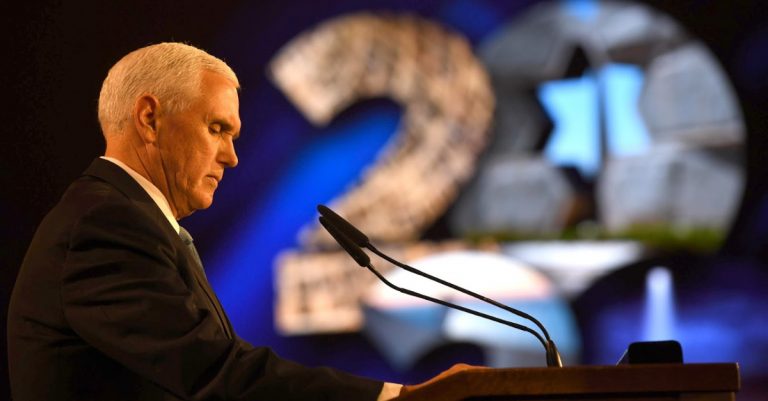
“We gather on this occasion, here on Mount Herzl, to fulfill the solemn obligation, an obligation of remembrance to never allow the memory of those who died the Holocaust to be forgotten by anyone, anywhere in the world,” Pence said in his opening speech.

For the Vice President committed to his Christian beliefs, the trip was also a spiritual one, according to CBN.

“For Christian believers, we’re grounded in the conviction that we’re called to bless Israel,” he said. “The Bible tells us that those who bless her will be blessed and those who curse her will be cursed.

“Really, since before the American founding, Americans called for the restoration of Israel to the Promised Land. And when Israel was restored in 1948, America was the first nation on earth to recognize the Jewish State of Israel. And we’ve been with them every step of the way because its’ a heart connection,” he said.

There was a new level of urgency at the

… Read More

Click here to read the rest of the story from our content source/partners – Christian Headlines.

قالب وردپرس

Mark Silk on the New Wall of Separation Between Church and State

Mark Silk is Professor of Religion in Public Life at Trinity College and director of the college’s Leonard E. Greenberg Center for the Study of Religion in Public Life. He is a Contributing Editor of the Religion News Service. The views expressed in this commentary do not necessarily represent those of BCNN1.

In October of 1802, a group of Baptists in Danbury, Connecticut, wrote to President Thomas Jefferson asking that he support their efforts to do away with their state’s Standing Order, which taxed citizens to support the Congregational Church. Jefferson was happy to oblige, writing on January 1, 1803:

Believing with you that religion is a matter which lies solely between Man & his God, that he owes account to none other for his faith or his worship, that the legitimate powers of government reach actions only, & not opinions, I contemplate with sovereign reverence that act of the whole American people which declared that their legislature should “make no law respecting an establishment of religion, or prohibiting the free exercise thereof,” thus building a wall of separation between Church & State.

Over the past few decades, Jefferson’s wall metaphor has come in for plenty of criticism from conservatives — perhaps because, after the Supreme Court decided in the middle of the last century that the First Amendment’s religion clauses applied to the states, something like a wall of separation was indeed built between church and state.

From bans on prayer and Bible reading in public schools to teaching creationism to rules regarding religious displays on public land, the Court embraced the principle that government endorsement of religion, or the appearance of such endorsement, is unconstitutional. Call it the Endorsement Wall.

Today we’re seeing the building of a new wall of separation, this one resulting from a systematic effort to exempt religious institutions and individuals from government rules. Call it the Religious Liberty Wall.

During the last decades of the last century, the Supreme Court under Chief Justices Warren Burger and William Rehnquist took an increasingly expansive view of the government’s right to set bounds on religious liberty.

In the 1982 Bob Jones University case, the Court upheld the right of the IRS to deny tax-exempt status to private schools that practice racial discrimination. In 1986, it denied a Jewish chaplain’s right to wear a yarmulke while on duty and in uniform as a commissioned officer in the Air Force. And in the notorious 1990 peyote case, Employment Division v. Smith, the Court went so far as to assert that Free Exercise claims cannot be made in federal court, challenging neutral laws of general applicability.

Source: Religion News Service

All Content & Images are provided by the acknowledged source
Alabama High School Student Uses Locker to Pray for Her Classmates

PELL CITY, Ala., (BP) — To help meet the needs of fellow classmates, 16-year-old junior Brianna Farris started a “prayer locker” ministry at her school — Pell City High School.

Students can write down and leave requests of any nature in the locker. Brianna then takes them home and prays for them individually.

Brianna said she first had the idea to start a prayer ministry when she often found herself serving as a shoulder for her friends to cry on.

“I would always go home and pray for them [her friends] as well, so I got the idea of people being able to drop prayers or anything that they want to discuss in my locker,” Brianna said.

When Brianna went to her mother, Candace Farris, with the idea, her mother warned her that it may cause controversy among students who do not believe in prayer.

“When she first told me she was feeling led to do the prayer locker, I asked her what she would do if she got an ugly note,” Candace said. “She thought about it for a minute and said ‘Well, I would pray for them too.’ Then I knew she would be able to handle it.”

Brianna said she could not shake the idea or get rid of the desire to start a prayer ministry.

“I felt that I was being led to do this,” Brianna said. “If someone feels the need to put a mean note in my locker, then maybe they are trying to reach out and ask for prayers or help too.”

Brianna started the locker by simple putting a note on the outside indicating that students could drop prayer requests in the locker, submitted anonymously or with a name.

Because the locker was arranged by Brianna and not sponsored by faculty the school administration allowed it, reported the Dothan Eagle.

The locker saw immediate success, garnering anywhere from five to 10 prayers each week.

Brianna estimated that the reaction from students was about 95 percent positive and 5 percent uncertain or skeptical, but not outright negative.

“It just took off,” Brianna said. “I did not know it would do so well.”

“We never imagined how many people she would touch and lives she would impact,” Candace added.

Brianna said she also rewrites the requests she receives, labels them with her school name and leaves them in the prayer basket at the church she attends with her family, Mt. Zion Free Will Baptist Church in Pell City, so the congregation can join in on praying for the students.

Mt. Zion pastor Michael Barber said the entire congregation is excited for Brianna and her efforts to minister to her school.

“We are really proud of her at the church,” Barber said. “For a young person to really appreciate the power of prayer, but also in a setting with her peers, just says a lot about her walk with the Lord as well. I’m very proud of her.”

Source: Baptist Press

All Content & Images are provided by the acknowledged source

Paul Matzko on the Hidden Cost of Tax Exemption

In theory, churches should make attractive neighbors. They are places of prayer, worship, and good works. When you see a sign pop up in an empty field announcing new church construction, you might think of the new families that will move to the neighborhood, the children who will attend the youth group, and the volunteers who will run the Vacation Bible School.

But that’s not how the suburban town of Stafford, Texas, responded. The city council instead instituted a review process to make it harder for churches to build there, preferring a factory or big-box retailer takes the space instead. When that didn’t work, the council instructed the city lawyer to see if he could find a way to keep churches out.

“I don’t hate God. I’m not against America and apple pie,” a city councilman told the Los Angeles Times in 2006. But, he insisted, churches were a problem. For one reason: They don’t pay their share of taxes.

“Zero revenue,” the councilman said. “Somebody’s got to pay for police, fire and schools.”

This feeling that churches don’t contribute to the common good is not uncommon in America. There are many municipalities that view churches as basically parasitical, receiving all the protection and benefits of local government without bearing their fair share of the financial burden. Cash-strapped towns have frequently tried to use zoning laws to block the development of new churches and are only stopped when the federal government enforces the religious land-use laws that Christian groups advocated for in 1993 and 2000.

These laws were framed as defenses of religious freedom, and there are indeed cases of hostile local governments wanting to limit religious expression because they find the preacher or theology of a church objectionable. But more often it is tax exemption itself that makes churches unwelcome neighbors. It is not the offense of the gospel that has made these churches toxic; it’s their tax-exempt status. Perhaps it is time to count the hidden costs of tax exemption.

The issue of church tax exemption has come up during the Democratic presidential primary, most notably at a town hall last October focused on LGBT issues. Former Texas congressman Beto O’Rourke was asked whether “religious institutions like colleges, churches, charities” should lose their tax-exempt status if they oppose same-sex marriage. O’Rourke’s answer was a straightforward “yes.” He elaborated that “there can be no reward, no benefit, no tax break for anyone, or any institution, any organization in America, that denies the full human rights and the full civil rights of every single one of us.”

O’Rourke’s comments provoked an immediate wave of criticism from conservatives. Evangelist and political activist Franklin Graham tweeted that he would “not bow down at the altar of the LGBTQ agenda nor worship their rainbow pride flag.” O’Rourke was critiqued by liberals as well. Presidential hopeful Pete Buttigieg, who is himself in a same-sex marriage, condemned O’Rourke’s recklessness, saying the congressman had not thought through the implications of his radical position.

This is not a new debate, however. Church tax exemption in America dates back to the 18th century, an inheritance from the European tradition of state-supported (also known as “established”) denominations that were exempt from paying taxes and, in fact, were supported by taxes levied on the general public. The privileges of establishment came with a degree of government control over churches and had a stultifying effect on religious life. Evangelical dissenters from the established churches like Isaac Backus and John Leland joined with freethinkers like Thomas Jefferson to end religious establishments by separating church from state. When evangelicals were on the religious periphery looking in, they were opposed to special government favors for religious groups.

However, as membership in evangelical denominations swelled during the Second Great Awakening, evangelicals went from outsiders to insiders. At the same time, government taxing authority grew—with new forms of income, property, and corporate taxes—and churches were given favorable treatment. The result was a new form of religious establishment, albeit a more generalized version, with tax exemptions.

There were periodic attempts to limit the church tax exemption, like when President Ulysses S. Grant, in his 1875 State of the Union address, called for “correcting an evil that, if permitted to continue, will probably lead to great trouble in our land.” Grant argued that churches received “all the protection and benefits of Government without bearing [their] proportion of the burdens and expenses of the same.”

Many Christians today simply assume that the tax exemption is a natural prerogative, the potential loss of which should be either lamented or fought against with whatever political influence remains. They have become so used to tax-exempt status for churches that they struggle to imagine a world in which that status does not exist yet churches still do.

Christian apprehensions about the removal of tax-exempt status for religious organizations have been commonplace since the US Supreme Court’s decision in Bob Jones University v. United States (1983). The proximate issue in that case was not opposition to same-sex marriage, rather opposition to desegregation at religious institutions, especially fundamentalist high schools and colleges.

Bob Jones University claimed its ban on interracial dating was rooted in religious belief and, as such, ought to be protected by the First Amendment to the US Constitution. Internal Revenue Service (IRS) rules from the 1970s said organizations that discriminated on the basis of race were not entitled to tax exemptions. The school lost the case because the court found that an infringement on religious liberty could be justified when “necessary to accomplish an ‘overriding governmental interest’ ”—like ending racial segregation.

Historian Randall Balmer argues the evangelical backlash against the court’s ruling propelled the rise of the new Christian Right. Conservative political activist Paul Weyrich used the threat of losing tax-exempt status for segregated Christian schools—reframed, of course, as a matter of religious liberty—as the wedge issue to organize a conservative grassroots movement. He cofounded the Moral Majority with Jerry Falwell Sr., who was worried about the tax implications for Lynchburg Christian School, his segregated academy and the precursor to Liberty University.

Balmer’s thesis remains an open subject for debate among historians, but the Bob Jones case certainly deepened conservative Christians’ sense of cultural isolation. They perceived themselves to be victims of secular elites who disdained the faithful. As university president Bob Jones III put it at the time, once “there were a lot of people who felt the way we did. We were in the mainstream. Then liberalism came in and everyone turned away and those who didn’t looked like little islands in the stream.”

In the university chapel on the day of the court ruling, Jones said, “Our nation from this day forward is no better than Russia insofar as expecting the blessings of God is concerned. You no longer live in a nation that is religiously free.”

None of the conservatives involved at the time showed any concern about whether the blessings of God might instead be withheld from their religious institutions because they had fought so hard to defend the vestiges of a dying white supremacist order. It wasn’t until 2008 that Bob Jones University finally apologized for its racist policies. Other formerly segregated churches and schools haven’t done that much. Hyperbolic claims about the end of religious liberty have often been followed by deafening silence.

It is unlikely that many Christians today would sympathize with Bob Jones University’s fight to maintain racial segregation. Public opinion has shifted to the point where many Christians have forgotten that appeals to religious liberty were once a crucial buttress for Jim Crow segregation. But the rhetoric that conservative Christians used in the early 1980s is very similar to the rhetoric used today, albeit directed at same-sex marriage rather than interracial dating. As the Republican governor of Florida Rick Scott put it, Democrats “don’t care about religious liberty” and have “a complete disregard for the freedoms guaranteed in our constitution.” Ben Sasse, Republican senator from Nebraska, called O’Rourke’s answer “un-American.”

O’Rourke’s comments reveal the transformation of what seems politically possible, what political observers call a shift of the “Overton Window.” Secular views about same-sex marriage have changed dramatically over the past decade—much faster than views on segregation changed a generation ago. And it is not only secular views that are changing: Many young evangelicals say they are fine with same-sex civil marriage. Conservatives who fear they will be in the minority on the issue may well echo Bob Jones III’s complaints about being marooned on “little islands.” The tide is already coming in.

This dramatic shift is visible in recent court decisions. During oral arguments for Obergefell v. Hodges (2015), in which the Supreme Court invalidated state bans on same-sex marriage, Justice Samuel Alito asked whether the case at hand, combined with the precedent from BJU v. US, would empower the IRS to revoke the tax-exempt status of religious schools opposed to same-sex marriage. The government’s representative answered clearly: “It’s certainly going to be an issue.”

The tax-exempt status of churches opposed to same-sex marriage has not been challenged in court, but it may only be a matter of time. Ross Douthat, a conservative Catholic columnist at The New York Times, alluded to this in a prescient essay written a year before Obergefell. The title of Douthat’s article—“The Terms of Our Surrender”—communicates something of his mood at the time. Conservative Protestants and Catholics had lost the battle over same-sex marriage. All that remained was for the spoils from the culture war, among them tax exemption for churches, to be divvied among the victors, who would decide whether to be magnanimous or punitive to the defeated.

Douthat’s article represents a more dovish impulse within conservative Christianity. There is regret in Douthat’s words, a sense that Christians have fundamentally mistreated the LGBT community via law and culture and will now reap the whirlwind they had sown. This is in sharp contrast to the hawkish defiance of other conservative Christians, such as Graham.

Source: Christianity Today

All Content & Images are provided by the acknowledged source