Life Through Hibiscus-Colored Glasses

Paging through Chicano Eats is a little like walking through a kaleidoscopic candy store display. Vibrant jewel tones and geometric shapes come into focus, whether you’re looking at a shelf of clay cookware or a bowl of ruby-red frijoles charros. And then there are the recipes that are literally inspired by classic Mexican candies, like the Duvalin-hued Jell-O mold, and the spicy, charred wings that take after Lucas Gusano tamarind candies.

The new cookbook is by Esteban Castillo, who writes and photographs an award-winning blog of the same name. Like the blog that he founded in 2016, the book documents some of the most memorable food that Castillo grew up eating during a childhood split between Mexico and California. There are also glimpses into the confidently carefree way that he cooks now, at home in Fresno, from the roasted garlic and poblano tagliatelle, to the brownie tart swirled with cajeta and cream cheese.

I recently caught up with Castillo to talk about some of the ingredients, color theory, and family memories that inspire his work, and what it was like to translate this all into a cookbook.

How long have you been blogging at Chicano Eats, and what made you decide to start the project?
I have been blogging for just under four years now! What really pushed me to start blogging was that I just didn’t see any other voices like mine, and I could never find any of the recipes I had grown up with, either. The food-blogging space is very white-centric, and seeing big publications turn to them to share our recipes and stories led me to ask myself, “What can I do to change that so that we can have a seat at the table and also be able to share our own stories?”

Both your blog and the book have such a distinct visual identity. When it comes to visualizing dishes and how you want to photograph them, where do you find inspiration?
The way I shoot my dishes has always been intentional, and a lot of my inspiration comes from geometry and color theory and the way shapes and shadows all work together. There’s a strong perception that Mexican food is cheap and is nothing more than tacos or burritos, and so I’ve shot everything with a colorful and minimalistic approach to help change that. I want you to be able to take a step back and see one of my photos and challenge your biases.

When you set out to write a book, were there any nonnegotiable recipes you knew you wanted to include in there?
Just like with the blog, I wrote this book because I hadn’t seen anyone else write a cookbook from the perspective of someone who grew up in between the United States and Mexico, who was also queer. The recipes in the “Essentials” chapter were especially important because they are the foundation of our cuisine and a great introduction to my culture. Growing up, my parents had very little money to work with, so we’d often have a pot of beans and rice for dinner, and I’ve always been taught that if you can learn to make a great pot of stovetop beans, you’ll never go hungry.

The book really weaves together dishes that you grew up eating in Southern California and Colima, Mexico, with the way you think about cooking now. Were there any childhood dishes that you had to learn how to make (or re-learn) specifically for the book?
One of my favorite dishes in the book (that almost didn’t make it into the book) is the Beef Birria (a stew braised in a chile guajillo broth traditionally made with goat). I tested the recipe a few times, and it just didn’t taste like home to me, so I gave up on it. Months later, before turning in my completed manuscript, I gave it one more chance, and I called my mom for advice. I made it the next morning, and I just remember walking into the kitchen and it smelling like my mom’s house—and I knew then that the recipe was perfect, and it was!

I love how much hibiscus comes into play in the book—an ingredient I mostly tend to associate with teas and aguas frescas. What do you like about hibiscus, and do you have any advice about working it into both savory dishes and desserts?
Hibiscus is just such a diverse ingredient, and I love that you are able to use the tea to infuse barbecue sauces with it, but then again use the rehydrated flowers for jam and salsas, or sauté it with spices for tacos—I think it just comes from having to be resourceful and doing the most with what’s at hand. Taste your ingredients, and let your mind wander—you never know what you might come up with.

I kept gasping while reading the “Postres” chapter because of all the brilliant uses of gelatin. There’s the layered pastel beauty of the Duvalin Jell-O, and the crisp cross-section of the dulce de leche chocoflan. Can you tell me about where some of these ideas came from, and why you find Jell-O such a source of inspiration?
Jell-Os are just such great vessels for ideas, and this chapter was heavily inspired by the kinds of Jell-Os and desserts my aunts used to make. The Duvalin is a frosting-like candy that comes in a combination of flavors, but my favorite was always the one that had the hazelnut, strawberry, and vanilla layer, so for me, translating that into a Jell-O was a no-brainer.

A few other recipes in the book were also inspired by some of the candies I grew up with, like the tamarind wings in the appetizer chapter. I re-created the flavors of the spicy tamarind  Lucas Gusano candy, and made a tamarind ancho chile sauce to mimic the flavors to toss wings in.

This interview has been edited and condensed for clarity.

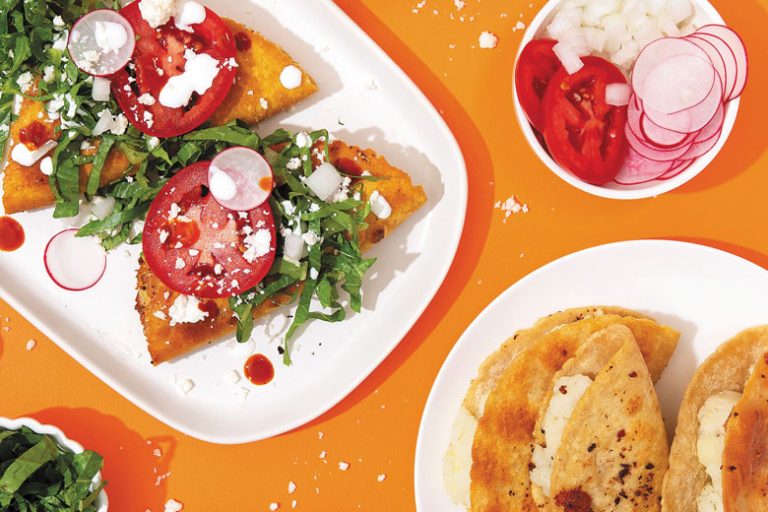
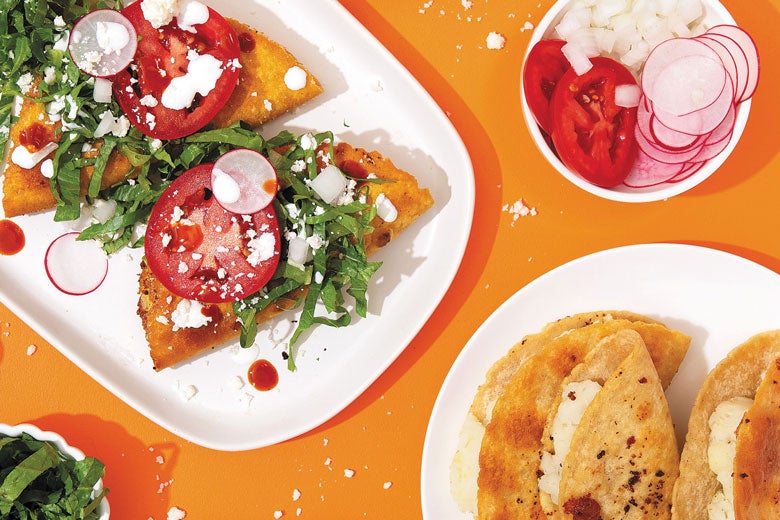
Tacos de Papa

4 RECIPES WE LOVE FROM CHICANO EATS

MICHELADA RIBS WITH HIBISCUS BBQ SAUCE
With its saturated magenta color and soft floral flavor, hibiscus has a savory side that’s worth getting to know, especially in these beer-braised ribs.

MI ABUELITA’S TACOS DE PAPA
These crispy tacos are filled with a garlicky potato mash and a bright adobo sauce.

MAC AND QUESO FUNDIDO
Castillo combines creamy, melty queso fundido with cavatappi pasta for a mac you can eat straight from the skillet.

DULCE DE LECHE CHOCOFLAN CAKE
Defying all logic and gravity, it’s a fudgy chocolate cake on the bottom, and a creamy dulce de leche flan on top.

MORE COOKBOOKS TO BUY, READ, AND COOK FROM

Random House has put together a free summer sampler of recipes from Ina Garten, Danny Trejo, Toni Tipton-Martin, Bryant Terry, Aaron Franklin, and more.

Last week, we talked to John deBary, the author of Drink What You Want. He has opinions about Singapore Slings and swim-up bars.

As big Spam fans, we obviously excited to see The Ultimate SPAM Cookbook.

Sports and tailgating may be on pause, but that doesn’t mean you can’t eat your fill of pulled pork and BBQ wings this summer. Let Tailgreat, by John Currence, show you the way.

Whether or not you’ve realized it, you’ve probably seen an Instagram photo of her famous pan-banging chocolate chip cookies at one time or another. If you’ve tried them yourself, you won’t want to miss Sarah Kieffer’s 100 Cookies, which comes out in August.

Journey to the Land of Prosciutto and Frico

“Friuli is a land of castles and giants and princes,” says cookbook author Meredith Erickson of the topic of her latest deep dive, Friuli Food and Wine, written with Bobby Stuckey and Lachlan Mackinnon-Patterson, co-owners of Frasca Food and Wine in Boulder. “Friuli is mysterious.” Erickson, along with her collaborators (who met working at The French Laundry before decamping to rural Colorado), is exploring this lore through a richly photographed travelogue and cookbook tackling the food of Italy’s extreme north.

Technically called Friuli Venezia Giulia, or FVG to avoid the marble mouth, the region borders Austria, Slovenia, and the Adriatic Sea. The food and wine culture can’t be put in a single box, influenced as it is by the neighboring Austro-Hungarian Empire countries, as well as the varied geography—the protruding Dolomites and Carnic Alps and the surf rolling into the port of Trieste. Wine is king, particularly the whites, and the prosciutto di San Daniele and frico made with local Montasio cheese are legendary. But looking closer, as the authors do, Friuli is far from the sun-soaked stereotypes of Italy’s south.

This is the land of crisp Friulano (the region’s namesake white wine) and the “OG polenta,” as Erickson writes in the book about the region’s buckwheat version that predates corn. FVG is a unique place, with a level of isolation from the rest of the Boot—both cultural and geographical—that feels almost like the island of Sicily in the south. But unlike Sicily, few in the United States have identified Friuli as a region to seek out for travel, or for cooking through at home. The authors give readers plenty of reason to do so here, and, as Erickson writes from her current home in Milan, plenty to love for the wine nerd, cyclist, runner, and Italian lover.

Why has Friuli been so overlooked as one of Italy’s finest regions for food and wine?
For some, the mystery comes from its border with Slovenia—we’re not in an Under the Tuscan Sun realm here. And that’s what I like about it. Much of Friuli sits in the shade of the Carnic Alps, and its real estate on the Adriatic—though completely singular with the lagoon of Grado—is relatively small. Millions flock to Venice each year, and I think Friuli is just outside of that spotlight. But I think that’s part of FVG’s appeal. You can land in Venice and literally be eating the freshest seafood an hour later in Grado and drinking Friulian wines. Don’t get me wrong—I love Venice—especially when it’s quiet, like it is now. But if you love the underdog and the undiscovered, and the warmest hospitality, my money is on FVG every time.

How were you introduced to the region, and how often do you visit?
I’ve always been intrigued by Friuli. I guess my first introduction was in Ernest Hemingway’s A Farewell to Arms. At that time, I was interested from a wine perspective, with the famed wines of Gravner, Radikon, and Vodopivec. When I started reading Bobby’s wine list at Frasca from my home in Montreal, well, it was one of the lists I was most impressed and excited by. I reached out to Bobby saying, “Hey, if you’re ever interested in a collaboration . . .” And he was in touch right away. We visited FVG four times for the book, and I’ve been back twice—all in the span of four years or so.

How did Bobby and Lachlan come to love the region, and what’s it like traveling there with them?
It was around 2001 that Bobby and Lachlan (pictured above right), along with Bobby’s wife, Danette, traveled to Friuli. A year later, they decided to move to the “culinary middle of nowhere” in Colorado to open a restaurant where the food and wine would be inspired by the relative middle of nowhere of Friuli Venezia Giulia, Italy. They’ve been visiting the region for the better part of 15 years, usually about two to three times a year. So it’s really the best, traveling with them. They have the whole routine down: Arrive and go straight to the FVG HQ (home away from home), La Subida. It’s the most incredible restaurant and inn—the best family, and what a wine list.

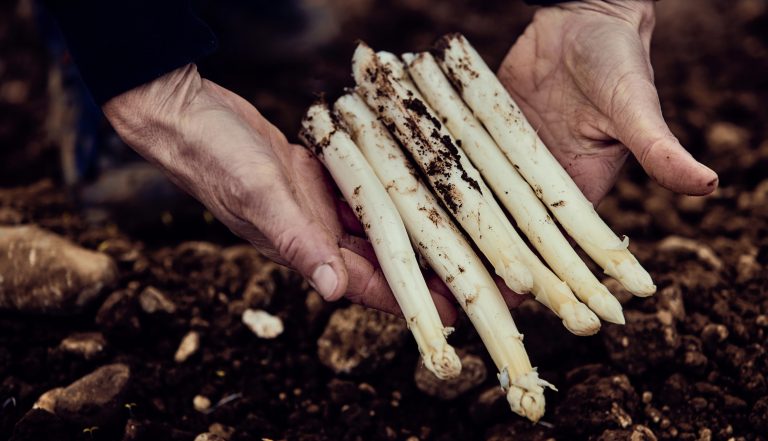
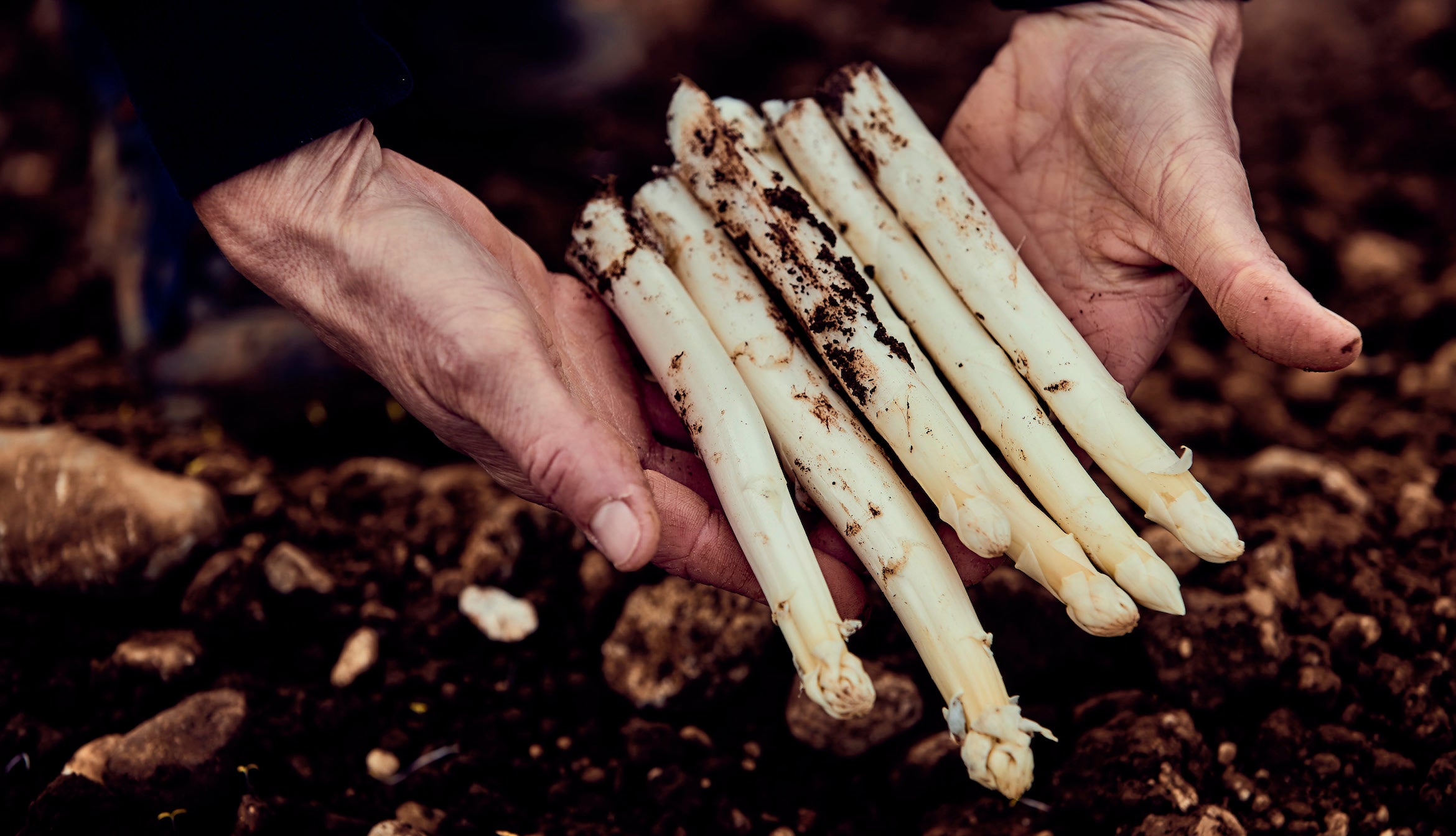
White Asparagus

The book’s photography is both rich and intimate. How did the photo shoots get organized, and how many shoot days do you estimate were done?
We wanted to portray FVG in both a full and whole sense, so we categorized the book (and our shoots) into three manageable sections, namely land (including vineyards, so this is where all the wine action happened), sea, and mountains. With mountains in mind, I should say that this part of the world was already on my Alpine Cooking radar, so discovering more about the Carnic and Julian Alps was a bonus. William Hereford, the photographer we worked with, might know the shooting days involved specifically, but all I can really say is that it was a lot.

The book details a number of regional specialities, and one I landed on is frico, which you write is considered the pizza of Friuli. What does that mean?
We say in the book that frico is to Friuli what pizza is to Naples. What we mean is that it’s an essential regional dish and the best one on offer. Frico is something that comes with a lot of opinions. At Frasca in Boulder, they do frico caldo and frico croccante. Both are ways to use up the scraps from Montasio, the FVG cheese. Hot, it’s served over the top of potatoes, almost like a rösti. Cold, they’re crispy baked pieces of cheese. Either way, frico is dangerously good, and I don’t trust myself around any of it!

What’s another little-known dish from the region that more people should know about?
I’ll give you the three dishes I always serve at a dinner in order. First, Rosa di Gorizia, apple, and horseradish salad. It doesn’t matter how you make this combination work, but these are three quintessential FVG products. Rosa di Gorizia (radicchio) are not always easy to find, so consult with your most esteemed and friendly grocer.

Tagliolini al Portonat knocks it out of the park every time. It’s so easy, yet so impressive for any guest. Essentially, it’s pasta with cream and poppy seeds, all wrapped in the thinnest strands of prosciutto di San Daniele you can get your hands on.

Gubana is a Friuliano sweet roll/cake filled with raisins soaked in Amaro Nonino (also Friulian!) for up to 24 hours. Its big and it’s boozy.

You were living in Italy when COVID-19 broke. How are you doing?
I was living in Italy up until March 12, at which point I decided to fly back to Montreal and ride out the storm. I was in deep solo isolation for a solid three months. When I left Milano, there was no one on the streets and strict curfews. Upon returning in July, it feels much less quiet and very safe. The summer is quiet in Milan, as many are in the mountains or at the sea. I’m just so thankful to be here that I barely want to leave my neighborhood.

Let’s talk about your previous book, Alpine Cooking, which is an amazing work. We talked about this on the TASTE Podcast a bit as well. Why is mountain food so misunderstood? What does your book do to smash that?
Thank you. My book reminds readers that the mountains are for everyone. That’s my pitch and my honest thought and feeling. Those who live in the mountains are the OG isolationists! It takes incredible will to not only survive but to thrive at altitude. It also means the blinders are on, in some ways, to the rest of the world—which leads to incredible clarity, a sort of purity, and also creativity.

What are you currently working on—bookwise, or anything else you want to share?
There are two things I can mention here, both of which I’m super excited about. First, in November, I’ll be hosting an Audible Original podcast called “Field Guide to Canada.” The first season is ten episodes; a cross-country version of “my” Canada complete with incredible characters, locations, and food, of course. Canada is so massive, and I often think about what my ultimate itinerary would be if I were driving coast to coast. This show highlights why I love certain locations and, moreover, shines a light on some really inspiring Canadians. It’s unique, and I’m loving the audio element and working with a team. I don’t think there’s anything else quite like it out there. But bookwise, I’m happy to announce my next book will be called “Alta Italia” and is all about Northern Italy. It’s the same vibe as Alpine (same team, same photographer: Christina Holmes). It’s a travelogue turned up to 11. Even though I’ve just started writing –it’s the reason I flew back to Milan as soon as I could—I think it’s going to be an incredible couple years.

This interview has been edited and condensed for clarity.

Woven Lasagna

5 RECIPES WE LOVE FROM FRIULI FOOD AND WINE

BUCKWHEAT BLECS WITH CHICKEN AND ROSEMARY
The authors joke that the alternate title for the book is “Weird Pasta Shapes,” with buckwheat “blecs” being one of them. But when done with this simple and robust braised chicken, what a winner it is.

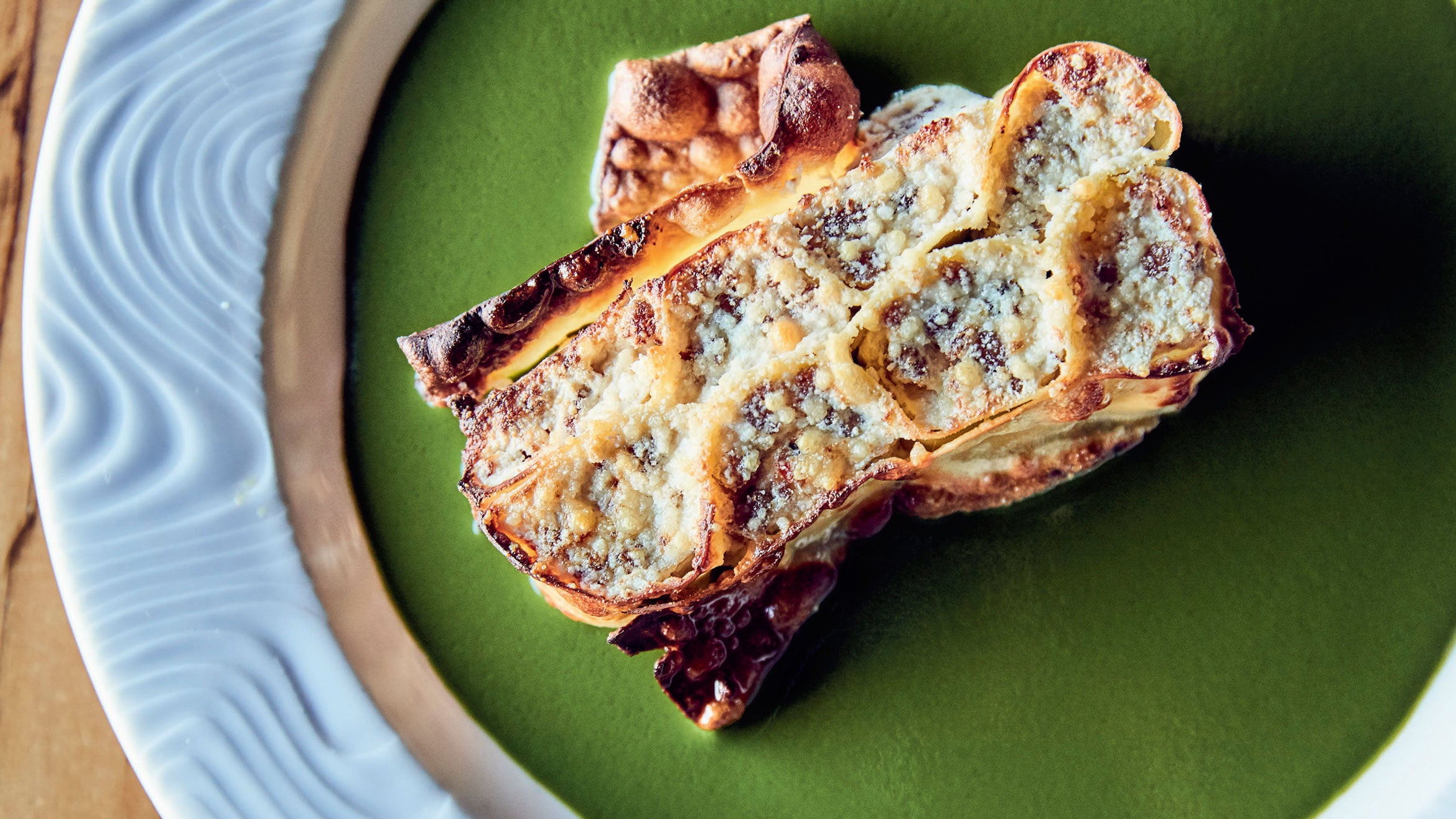
WOVEN LASAGNA
We know lasagna at TASTE—we wrote a book about it in 2019—and we will still scour this planet for new and creative versions. Here we are.

ROASTED PORK AND PEACHES
In summer or early fall, this is a simple and extremely wise way to cook a hunk of pork (in this case, a boneless pork loin). The authors believe that the light meat goes well with peaches (or persimmon in other months). We agree!

BAKED SPAGHETTI WITH MUSHROOMS IN PARCHMENT
It’s a baked gift from the spaghetti gods, and it’s probably our new favorite way to serve this classic pasta.

CHOCOLATE SALAMI
This is a Frasca original, and it was created by the restaurant’s pastry chef, Alberto Hernandez. Using really good chocolate and pistachios is pretty essential here, but overall, the dramatic dish is easier to make than you think.

OTHER BOOKS TO BUY, READ, AND COOK FROM

Random House has put together a free summer sampler of recipes from Ina Garten, Danny Trejo, Toni Tipton-Martin, Bryant Terry, Aaron Franklin, and more.

Last week, we talked to Esteban Castillo, the author of the new technicolor, Jell-O-filled, very exciting book Chicano Eats.

Rose Levy Beranbaum is one of the most renowned authors when it comes to pies, pastries, and cakes. In Rose’s Ice Cream Bliss, she takes on the world of frozen treats.

If you’re looking forward to cooling down with fall weather in a few months, get ready for all of the cooking that will go along with it, with Nigel Slater’s Greenfeast: Autumn, Winter.

A classic in our libraries this summer is Andrea Nguyen’s Vietnamese Food Any Day—especially when there’s extra eggplant around to bathe in smoky green onion oil, or a grill on hand for skewers of steak to top vermicelli bowls.

And hey, maybe you would like to pick up the book I wrote with Deuki Hong: Koreatown: A Cookbook.

How to Gut a Fish in the Dark

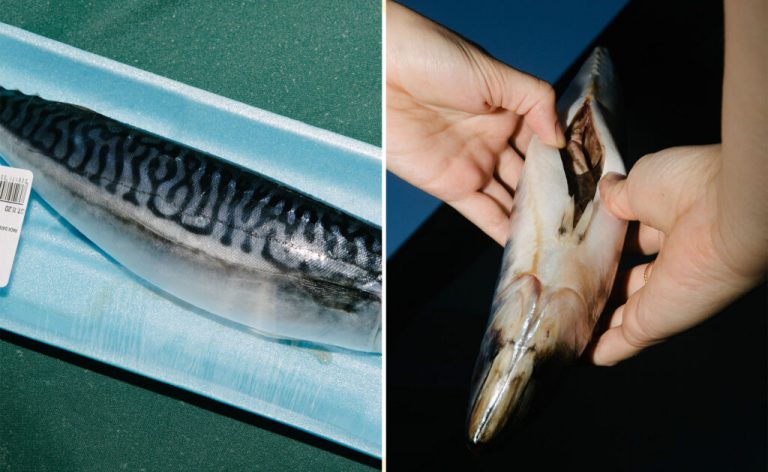
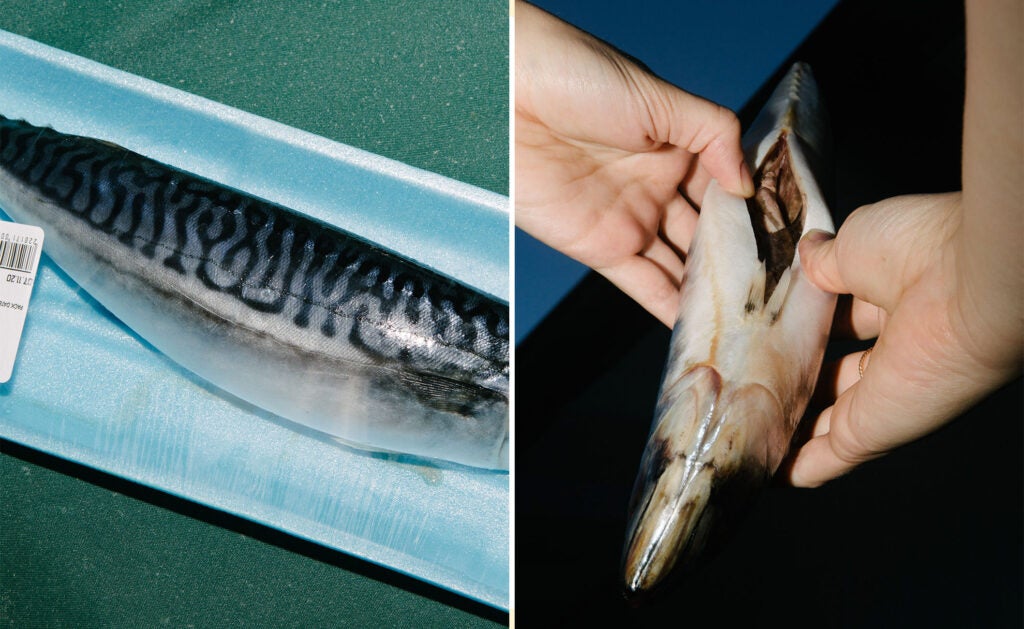
The man behind the fish counter found me investigating a mangled heap of pale salmon fillets. The adjacent row of whole mackerel looked more inviting. The man told me that their fish guy had gone home for the night—if I wanted the fish, I would have to clean it myself. I needed it for an attempt at a teishoku, a Japanese-style set meal, but I had no idea how to gut a fish.

After delaying the decision with a lap around the aisles of my neighborhood market, I decided that I needed to learn how to clean a fish—a task I’ve managed to avoid for 27 years. Since the lockdowns began in March, I’ve been bunkered down in Portland, Oregon, trying to cook something each week that challenges me to stretch beyond my usual skill set. But more important, I wanted to learn how to gut the fish because our food system excels at alienating people from the food they eat. This separation allows people like me to eat animals even though I am unsure if I could kill them. Why am I okay with that violence when someone else does it for me? And why do the workers assigned these tasks so often work in terrible conditions?

Even as someone who regularly cooks and eats fish, I rarely have to think about the fish’s journey to my fridge. I can outsource the catching, the killing, the transportation, and the gutting. Consumers don’t have to think about how fishing industry workers labor on average 14.6 hours a day and are at higher risk for opioid use disorders, according to a 2018 study published in the International Journal of Environmental Research and Public Health. They also don’t have to think about what happens to the rest of the fish when they buy a fillet wrapped in plastic or pulled from a mound of ice. But considering the dire condition of Earth’s oceans—approximately 30 to 35 percent of fish populations are fished unsustainably, according to a 2016 United Nations report on the state of world fisheries—it is clear that our relationship with fish must change. We need to reckon with the whole fish, guts and all.

How to Gut a Fish

After bringing home my mackerel that evening, while finishing up the last few emails of the day so that I could turn my attention to dinner, the lights went out. Portland is built in a forest, and the branches have a tendency to body slam the electric lines. I heard the telltale groan from one of my neighbors across the street.

Not allowing a lack of electricity, and a therefore out-of-commission oven, to thwart my plans, I decided to grill on an 18-inch Weber on the porch. But I still needed to figure out how to gut the mackerel. I tried using cell phone data to watch a YouTube tutorial, but it never loaded. I tried calling my fish-loving friend Ben, but he didn’t answer. The light was quickly starting to fade from the sky. I looked at the fish sitting in the sink; the fish looked back at me with its glassy eyes. “I’ll get you gutted, don’t worry,” I said, as I patted its tiger-marked skin.

It is, of course, my dad who I should’ve called first. He grew up fishing around O‘ahu, with nothing more than a bamboo pole, a hook, and some fishing line. During the summers, when the reef fish spawned, he’d catch dozens of papio (small ulua) at a time, dump them into a sink, and gut them all. Nobody else was going to do it. If his family was eating fish, that meant catching, gutting, and cooking them, too.

I started to worry that I was going to need to perform surgery on this fish without any medical school training. In the dark.

I tried to FaceTime him so he could get a visual. The video call couldn’t connect. I started to worry that I was going to need to perform surgery on this fish without any medical school training. In the dark. In a last-ditch effort, I ran out to the street, where sometimes, if the stars align, cell service bounces down to my phone. I dialed my dad and waited. Thankfully, he picked up.

I told him about the power outage and the uncleaned fish fiasco. He laughed.

“Okay, so you need to take a knife,” my dad said calmly, “and stick it in the anus.” I gasped. I imagined my grandma’s eyes widening, overhearing this on the other end of the line. But then again, she has lived in Hawaii for almost a century; she knows how to clean fish, too.

“And then just run it along the bottom up to the gills. You’ll see the guts, and they should come out pretty easily,” he explained. “Then rub it with oil and salt, and do it about five minutes each side on the grill.”

I went back inside to my fish, whose corporeal form remained in the sink. The sun had set, and I didn’t want to use my phone’s flashlight, because I needed to save the remaining battery. A soft blue twilight barely illuminated my hands. I held the fish up to the window and tried to find its butthole.

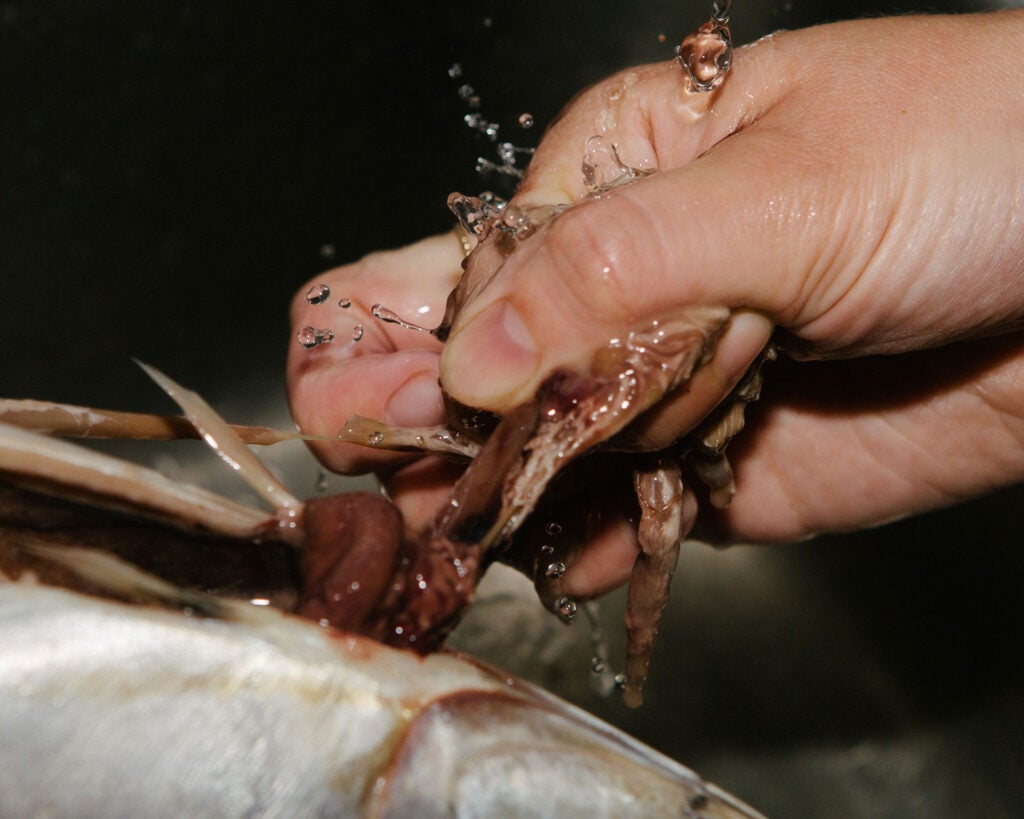
“Thank you, fish,” I muttered, and I pushed in the knife. I ran the blade along the bottom axis until it brushed up against the gills. I peered into the flaps of flesh and saw the guts presenting themselves. I tugged at them, and they obliged, sliding out into my hands. I laid the goopy strings of innards aside in a little dish. In a matter of moments, the deed had been done.

How to Gut a Fish

I ran cold water over the cavity, and it occurred to me how lucky it is that the guts run along the bottom and not in the core of the fish, like the seeds of an apple. After setting the fish in a baking tray, I gave him a little massage with olive oil and some sea salt from the Oregon coast. I went out to light the charcoal, and I grabbed a cold Asahi from the fridge. I dumped the hot coals into the grill and set my friend down to sizzle. While waiting for the fish to finish grilling as my dad had instructed, the kitchen lights flashed on, and I heard cheers from around the neighborhood. I shook my head and cursed at the newly illuminated kitchen.

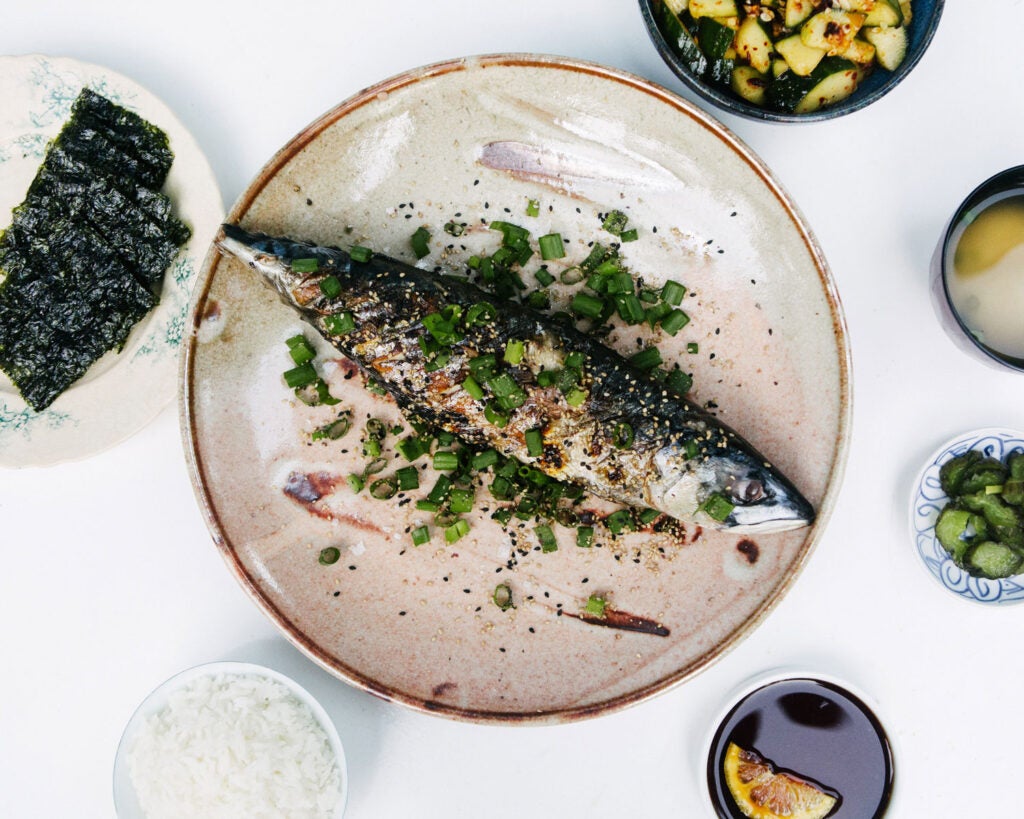
Mackerel is an oily, fishy fish. I like to take a chunk of the meat and dunk it into a lemon, soy sauce, and grated daikon situation, and then rest it on a bed of rice, if only for a moment, so that the excess sauce and fish bits flavor the rice, before shoveling it into my mouth. The soy sauce stands up to its fishiness, and the lemon and daikon cut the oiliness.

I stared down at the fish’s innards. I couldn’t bear to throw them in the trash. We had gone through so much together.

After my partner and I devoured the fish, the guts from earlier were still digesting in the dish on the counter, and they needed a final resting place. Maybe when I die, I thought, my guts will be torn out in preparation for a proper grilling. A real send-off. But what would become of my guts in that scenario? I stared down at the fish’s innards. I couldn’t bear to throw them in the trash. We had gone through so much together.

How to Gut a Fish

I recently watched a large Australian man on YouTube swear that tomatoes grow best when they are planted on top of a fish. (I assume he meant a dead fish.) According to Alaska’s Department of Fish and Game, when salmon die and decompose, they provide riverside ecosystems with nitrogen, phosphorus, and other nutrients, which help the surrounding trees and plants grow faster and stronger. If a salmon carcass can help a tree to grow hundreds of feet tall, maybe mackerel guts can help a tomato plant overcome its unlucky placement in the backyard of a first-time vegetable gardener.

I took the fish skeleton and the dish of guts into the yard, and I dumped them into a large pot of soil. This past weekend, I purchased a 2-inch tomato start, and I plopped it on top of the remnants. I dug down a few inches, expecting to find a riot of maggots and worms munching away. Thankfully, I didn’t see that, just a few bones sticking out. Maybe, in a few months, I’ll have my first backyard tomato. If I do, I’ll want to grill it, and I’ll need to bring home another fish.

Where There’s Summer Fruit, There Are Galettes

“Despite the heat, I think summer is the best time of year to bake,” writes Yossy Arefi in Sweeter Off the Vine. From bubbling peach galettes with demerara sugar–sparkled crusts to slab pies stuffed with juicy apricots, a quick scroll through the Brooklyn-based photographer and writer’s Instagram says it all. She makes a compelling case for a sauna-like stint in the kitchen with the oven cranked to 350ºF, especially right now, when the markets are packed with peaches, blueberries, and apricots in New York City and much of the Northeast.

The height of this blazing summer harvest has us reaching for Sweeter Off the Vine, a book that was originally published in 2016. Luckily, there’s no shortage of fresh ideas about how to put your farmers’ market haul to work. The pages of Sweeter Off the Vine are filled with bursts of berry-clad spelt shortcakes, fluffy ice granules of melon granita, and bowls of whipped ricotta crowned with piles of figs—plus all-purpose templates for crusts, creams, and tart shells suited for any seasonal ingredient. Throughout her recipes, there’s a tendency to enhance fruit with spices in subtle ways: Sugar meets threads of vibrant saffron and vanilla bean to lightly sweeten blackberries, and roasted cherries get a warm, heady infusion of cardamom, bay leaf, and black pepper.

With her second cookbook, Snacking Cakes, coming out this fall (which you can preorder here), Arefi’s baking style hones in on straightforward, everyday cakes—but it doesn’t skimp on the options. (There are 50 base recipes and seemingly endless variations.) I recently caught up with Arefi to hear more about her cookbooks—old and new—plus a few of her best tricks for getting out of a baking rut.

We’re in prime fruit-baking season right now, but with fewer gatherings this summer, has the way you’ve been baking lately changed at all?
Just about any fruit dessert can also make a great breakfast, so a little extra is no big deal. Fruit crisps are the ultimate scale-up or scale-down sort of recipe, so I’ve been making a lot of them.

You can use just a handful or two of fruit for one or two people, or fill up a 9×13 baking pan if you have a big family. They’re also so easily adaptable—use whatever fruit looks best at the market, sweeten and spice to taste, and make a buttery, crumbly topping with whatever combination of flour, oats, and nuts you like. I made a vegan and gluten-free rhubarb and raspberry crisp that was so good. I just learned about Miyoko’s Creamery (their cultured vegan butter is so good!).

What ingredients are you most excited about from the farmers’ market right now, and what do you plan on doing with them?
We are just starting to get really good stone fruit, and I absolutely love baking with plums and nectarines. They are great just about any way, but one of my favorites is making Italian plum pie with a cardamom-rye crust. Nectarines make excellent pies and galettes, too, and you don’t have to peel them.

I think anyone who follows you on Instagram knows how you feel about galettes. But out of buckles, cobblers, crisps, and slab pies—what’s a close second, and why?
Crisp! It’s so easy and adaptable. I have to admit, I am a lazy cook and baker in the summer, and crisp is the perfect way to celebrate summer fruit.

For the people who try to avoid their oven at all costs during the summer, what’s your no-bake dessert solution?
I think a galette or crisp is always a good idea (use whatever fruit you like!), but if you don’t want to turn on the oven—wine-soaked peaches with lemon verbena or watermelon granita with chile and lime. Both are so refreshing!

Your next cookbook, Snacking Cakes, is coming out in October. What was it like writing your second book?
I had so much fun writing Snacking Cakes! It was such a fun experience to really zero in on one topic and just go for it. The goal was to make a book full of cakes that were appealing and interesting, but also totally not intimidating for any level of baker.

The cakes are so fast to put together, and the sort of thing that you can keep on the counter for a few days to cut a little sliver off when you are feeling snacky. I tried to hit every possible flavor craving—there are 50 base recipes but lots of variation suggestions, so there is hopefully something for everyone. I hope people love it as much as I loved writing it.

Do you ever find yourself in a cooking/baking rut? What helps you get out of it?
Yes! I flip through cookbooks and scroll through Instagram. This time of year especially, I love vegetable-forward cookbooks, and I’ve really been enjoying Vegetable Kingdom by Bryant Terry. The panko-crusted cauliflower and coconut curry is so, so good. Then, for dessert, The Joys of Baking by Samantha Seneviratne—which is full of beautiful stories and recipes. I also just got New World Sourdough by Bryan Ford, and I am excited to dive in.

On Instagram, I always want to eat whatever Hetty McKinnon is making for dinner, or Natasha Pickowicz’s delicious fruit-forward desserts. Adrianna Adarme is always cooking up something good, and Angela Davis inspires me to get out and grill. Plus, Millie Peartree, Heart of Dinner, Food Bank for NYC, and God’s Love We Deliver—who are working hard to feed people during our current crisis.

I used to stroll through the farmers’ market a few times a week, but I’m doing less of that these days. I follow the Union Square Greenmarket and a few other farms and farmers’ markets around the country to see what is popping up and in season.

This interview has been condensed and edited for clarity.

Blueberry Cobbler

FOUR EXCITING DESSERTS FROM SWEETER OFF THE VINE

APRICOT AND BERRY GALETTE
Baking seasonal berries into a galette is smart. Adding some saffron-vanilla sugar to that is smarter. 

BLUEBERRY SKILLET COBBLER
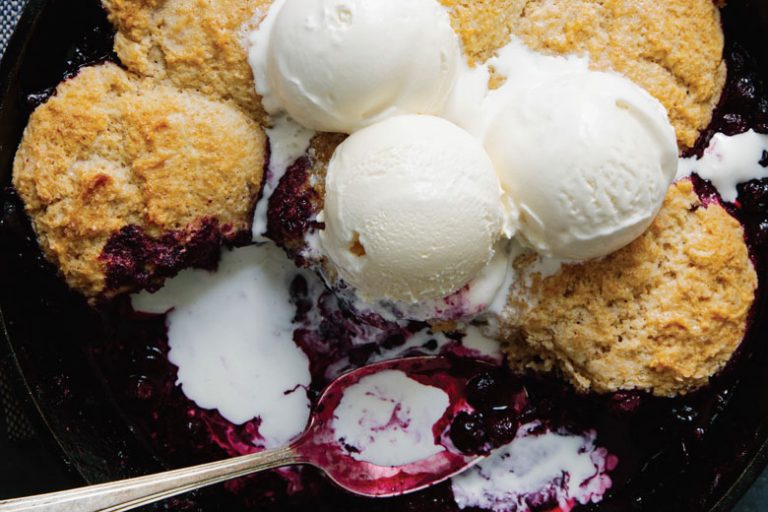
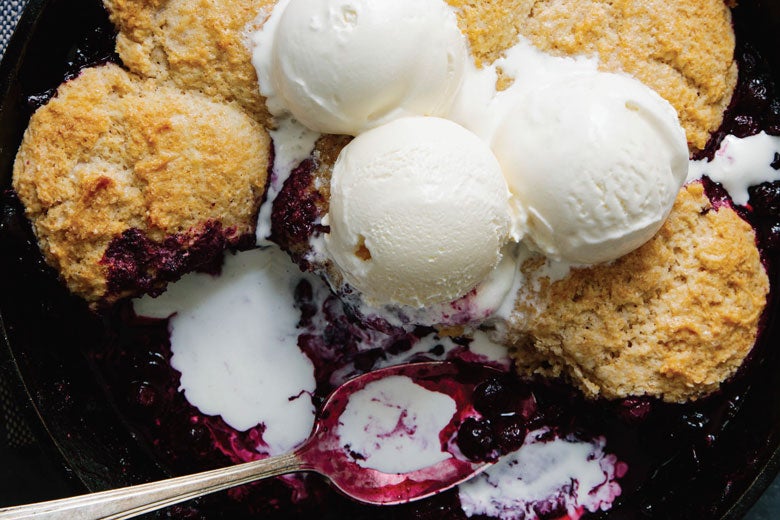
This cobbler has it all: juicy blueberries, subtle nutmeg spice, and fluffy whole wheat biscuits.

WATERMELON GRANITA
Eat your summer watermelon in icy granita form—and spike it with chile powder and lime.

WINE-SOAKED PEACHES
If you’re inevitably stuck with a few subpar peaches, a two-day soak in wine and lemon verbena will turn them into something truly divine. (Pro tip: use up that extra liquid in a spritz.)

OTHER BOOKS TO READ, BUY, AND COOK FROM

Sipping wine on the streets of Paris with a few small grazing plates may be a far-flung idea right now, but with some antique kitchenware and recipes from La Buvette, by Parisian restaurant owner Camille Fourmont and Kate Leahy, you might just be able to transport yourself.

Add Fany Gerson’s Mexican Ice Cream to your summer rotation for horchata-, queso-, and avocado-flavored frozen desserts.

Random House has put together a free summer sampler of recipes from Ina Garten, Danny Trejo, Toni Tipton-Martin, Bryant Terry, Aaron Franklin, and more.

Last week, we caught up with author Meredith Erickson to talk all things Friuli Venezia Giulia—meaning plenty of frico, prosciutto, and Montasio cheese—as seen in her newest book, written with Bobby Stuckey and Lachlan Mackinnon-Patterson, Friuli Food and Wine.

The Many Meals and Muses of Alexander Smalls

Alexander Smalls might be the only person who’s won a Grammy, a Tony, and a James Beard Award. His most recent book, Meals, Music, and Muses: Recipes from My African American Kitchen, bridges his celebrated careers as both an opera singer and a restaurateur while telling the story of Southern food through music. It’s a rich and layered read, with each chapter paying tribute to a genre of music and a genre of food that, as Smalls writes in the book’s introduction, “are rooted in a knotty lineage that connects West Africa and Western Europe.” There’s jazz (the improvisational bites that begin a meal), spirituals (rice, pasta, and grits), and serenades (comforting sweets).

The book came out as a follow-up to Between Harlem and Heaven, the James Beard Award–winning cookbook that Smalls published with JJ Johnson and Veronica Chambers in 2018. It was published just as he put the finishing touches on Let Us Break Bread Together, the first recording he’s made in 30 years, which pays tribute to some of the musical history that he touches on in Meals Music, and Muses.

When COVID-19 hit, Smalls had to put the recording’s release, along with a new restaurant project in London, on pause, but he’s been staying busy and creative while quarantining at home in New York. We recently caught up over the phone to talk about how Meals, Music, and Muses came about, and how inextricably linked those meals and music can be.

How are you doing? Are you in Harlem right now?
I’m in Harlem, and for the most part I’ve been quarantining, and I’ve taken this quite seriously and also tried to benefit from this time—unqualified time alone—me, myself, and I with my thoughts and creativity and sensitivity, and I can just engage in not only what is going on in the world, with the protests, but in life, where we are, and meaningful conversations.

I’m old enough to have been a young boy during the Civil Rights Movement. So when all of the COVID pandemic hit us, and then the rioting or protesting soon followed, it was really extraordinary, because it wasn’t just the pandemic that was suffocating Americans. It was unfinished business. So here we are.

Meals, Music, and Muses is broken into chapters based on genres of music, pairing each type of music with a category of Southern cooking. How long did you know that you wanted to write a book in this format?
On the one hand, I could say I’ve known all my life, since that’s how I live my life. But from a place of application, once you’ve done a few things, that kind of gives you a view on life. Five restaurants, a Grammy, and a Tony, some other awards along the way. Traveled around the world. A sense of being seasoned and having had multiple careers and been involved in telling and curating a story. You kind of feel like you have a kind of platform, if you will, to talk about it in a very full way. So I felt like, with Meals, Music, and Muses, how fitting it was to give readers an opportunity to witness my process through my own eyes and through the things that were most important to me.

One of the links that you draw in Meals, Music, and Muses between music and food is this tradition of traveling to Europe. You talk about doing this yourself as a young opera singer. And for cooks in the 18th and 19th centuries to go to Europe to learn techniques. Do you think we’re still holding ourselves to too much of a Eurocentric standard, when it comes to both these worlds—food and music? And what do you think needs to change to break out of that?
In my case, for music, I was studying the classics. The classic European music. While there is American opera, the fact of the matter is that the principles of what opera and classical music is has always been defined culturally as European. So it was necessary to go to the source. The thing about African Americans and almost any discipline, but particularly classical music, is we’ve always had to be first and foremost as good as, and then better, just to be regarded or considered. For me, as a young black boy coming out of a small, very conservative town in South Carolina, I certainly was one of the only Black people I knew who sang opera and classical music and who pursued it. So basically, going to Europe was where I had to cut my teeth.

Now, having said that, bring in the culinary component, and as you rightly pointed out, that goes back to Thomas Jefferson and everybody else who sent their slaves to Europe to learn the classics and all that. Again, opera and classical cooking and fine dining are essentially in that same European category of “this is where the fundamentals are taught.” It doesn’t matter that the foundation of European cooking essentially was gathered from Africa and Asia, and African and Asian food is extraordinarily intricate and complicated.

But it’s all about packaging and marketing and who gets credit. So there we are in Europe, learning all of those things that they found somewhere else. But it was always about a credibility issue. And you really can’t even approach or disturb or challenge any discipline until you can perform that discipline as well as anyone else who is an authority of it. And then you go about rearranging.

Two of the recipes I’m really excited to cook from the book both involve chicken liver—the Gullah dirty rice and the mustard barbecued chicken livers. Is this something you grew up eating? Because I don’t think of chicken livers as a kid food.
Oh, yeah, fried chicken livers and fried gizzards. I grew up eating fried chicken livers and fried gizzards. Even Kentucky Fried Chicken use to do fried chicken livers and fried chicken gizzards. Only locations in the South—they pressure fried, so the gizzards would be so incredibly tender. I remember we used to fight, at Sunday dinners, over the gizzards and the livers. So my father, who was in the grocery business, would buy extra, and my mother would just make a plate full.

Another one of the strong corollaries in this book between food and music is the role they play in hosting a party. And you write a lot about how much you love cooking for friends. Once it’s safe again to host people, are you already dreaming of your next party menu?
Oh my god, you have no idea. I mean, I’m fine, I’m on the other side of this, but I can tell you, around the end of March? I had so many parties and events planned before this thing hit. I put together a party for the Swiss ambassador and his wife from Rwanda, coming up from DC. She’s a filmmaker, and I had all of my fancy film friends and my fancy actresses and actors. So I put together this amazing dinner, and it had to be canceled begrudgingly at the last minute. It’s one of those things where, at that point, I really didn’t realize what bad shape we were in. I was still trying to pretend that, for some reason, dinner parties at my house were not off-limits.

So what happened was, I was getting my guest list together, and I reached out to my friend Lupita Nyong’o, and Lupita said to me, “Alexander, I just flew back here from Paris, and it’s crazy out there, and I know it hasn’t hit in the same way here yet, but I’m not going to be part of the problem, and I’m not going to be available for a problem.” (I can’t tell you the story without doing some name-dropping.) A couple hours later, Cicely Tyson called. And I told her what Lupita said, and she said to me, “Well, Lupita’s right, and I’m right behind her. And I’m telling you right now, cancel this thing and go to bed.” So that was the wake-up call.

One day, I was in the apartment a month or two after that, and I was so sad. I have a big dining room, which is rare for a New York apartment. And I was looking at my dining room. And I literally pulled out my fine dishware and set the table for 12 people. Crystal, linen, the whole nine yards. I took pictures of it, I poured myself a bourbon, and I really got a little teary-eyed. And I let it sit there for a few days, and then I packed it up and went about my business.

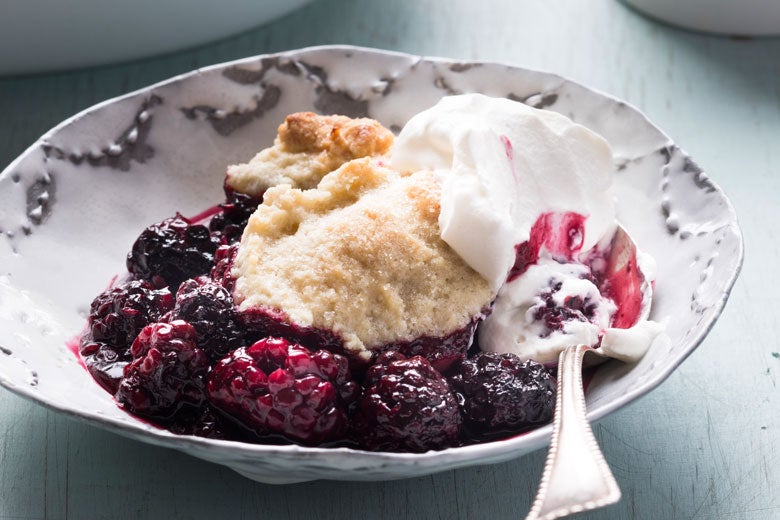
Blackberry Cobbler

4 RECIPES WE LOVE FROM MEALS, MUSIC, AND MUSES:

Gullah Dirty Rice
This rice is full of savory, buttery bits of chicken livers and gizzards—a great way to use the extras that come out of the next chicken you buy, or an excuse to buy a whole carton of them from your butcher.

Mustard-Barbecued Chicken Livers on Peppered Turnip Greens
These fried chicken livers with stewed turnip greens were a runaway hit at Smalls’s first New York City restaurant, Café Beulah.

Lemon Candied Yams
Lemon adds a little brightness to the mellow, brown-sugar sweetness of these yams.

Blackberry Cobbler
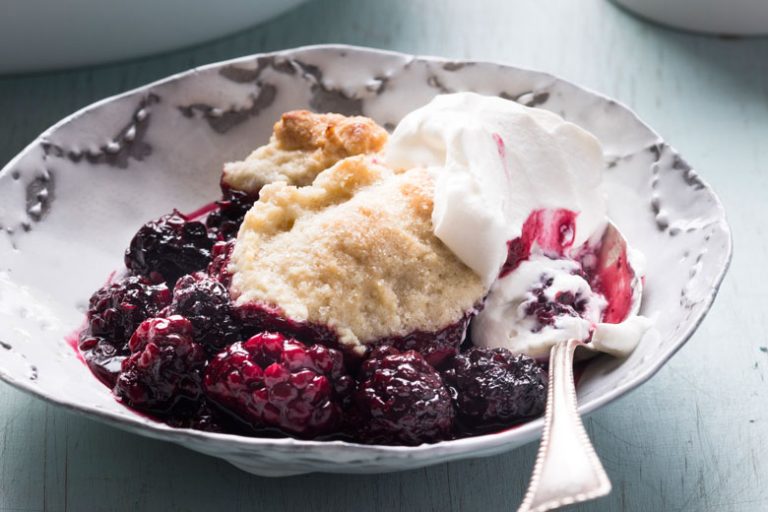
As Smalls writes, “You simply can’t talk about the South without talking about blackberries.”

MORE BOOKS TO BUY, READ, AND COOK FROM:

Last week, we talked galettes with photographer Yossy Arefi, author of Sweeter Off the Vine and Snacking Cakes.

Take an audio masterclass on sourdough from the bakers behind San Francisco’s Tartine.

When it comes to using up that summer stone fruit, it’s also hard to go wrong with Baking at République.

If you’re a fan of her show Time to Eat, or a Great British Baking Show devotee, don’t forget to preorder Nadiya Hussain’s newest cookbook.

Whether you’re vegan, vegetarian, or just want to think more creatively about your meatless meals, Meera Sodha’s East has plenty of inspiration.

Cook Your Cucumbers

It is paramount, when New Orleans’ summer doldrums drape their gravity-blanket selves over the city as they now have, to possess a mindless cucumber recipe. Mine is a tumble of salted sliced cucumbers mixed with red onion, mint, vinegar, and olive oil. As Elaine Stritch once said, perhaps apocryphally when brought to a club late one night in the 1960s, “Just give me a bottle of vodka and a floor plan.” I feel you, Stritchy. What I need for cooking in July and August are the essential ingredients and a road map. Zero thinking, please. Well, I need watermelon slabs and juice, too, but I digress. The heat warps the brain.

I hit a cucumber wall a few weeks ago. I discovered I can only eat so many raw cucumbers while the seeded fruit propagate unabated during their growing season, lasting from early spring to late summer, depending on your locale. I started looking at the cucumbers in my crisper with fresh glances. Seeing what more they wanted from me; taking in the shape of them. No, not like that. No judgment, though—these are trying times.

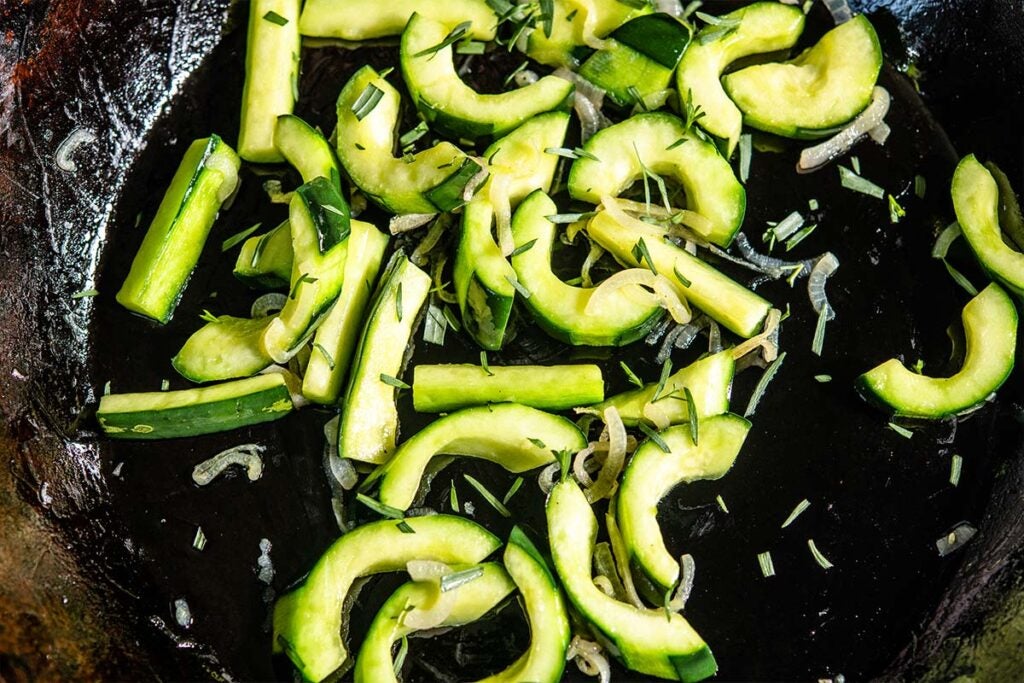
Cooked Cucumber Salad

As I stared into the middle distance with the refrigerator door open, I remembered seeing cooked cucumbers referenced in two cookbooks. First, Julia Child’s The Way to Cook, originally published in 1989. In one recipe, she has you julienne cucumbers, then season them with salt and wine vinegar before cooking them in a skillet with butter. Minimal heat in the kitchen from the stovetop. Into it. The precision stroke work of julienning? Less so. I turned then to Cucumbers, one of the small, appealing single-subject cookbooks from Short Stack Editions. There are two recipes for cooked cukes in there, and I figured I may as well ask its author, Dawn Perry, her opinions on heat plus cucumbers. I mean, Julia Child is not about to take my call.

Cooked Cucumber Salad

“How much can a cucumber do?” Perry told me she asked herself when she was creating the recipes for the book. “Cucumbers are friendly with vegetables like zucchini, so why couldn’t I treat them as such?” Both cucumbers and summer squash are fruiting members of the Cucurbitaceae family. They are more alike than different, but for cucumber’s wicked crunch when raw. They even have similar water contents. For one of Perry’s recipes, butter-baked cucumbers, she had stumbled on Julia Child’s way of cooking cucumbers while researching. Perry took hers to the oven, adding thinly sliced shallots and basting the face-up, skin-on cucumber halves with butter as they roasted for 20 minutes. I was not about to activate my oven. Instead, I merged the two approaches.

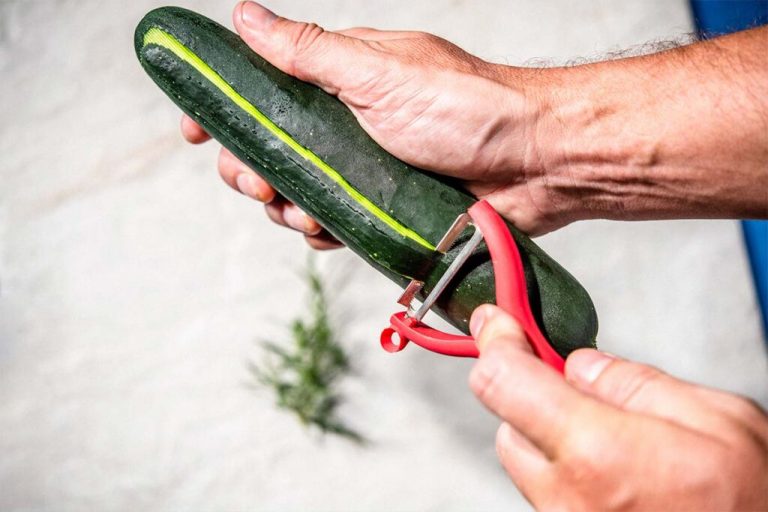
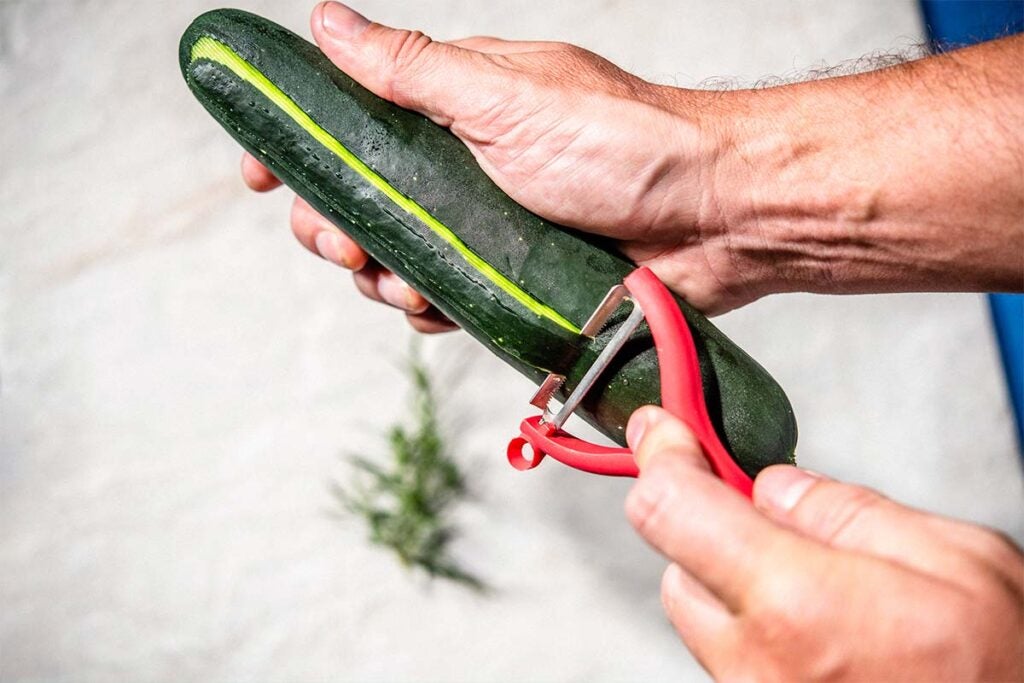
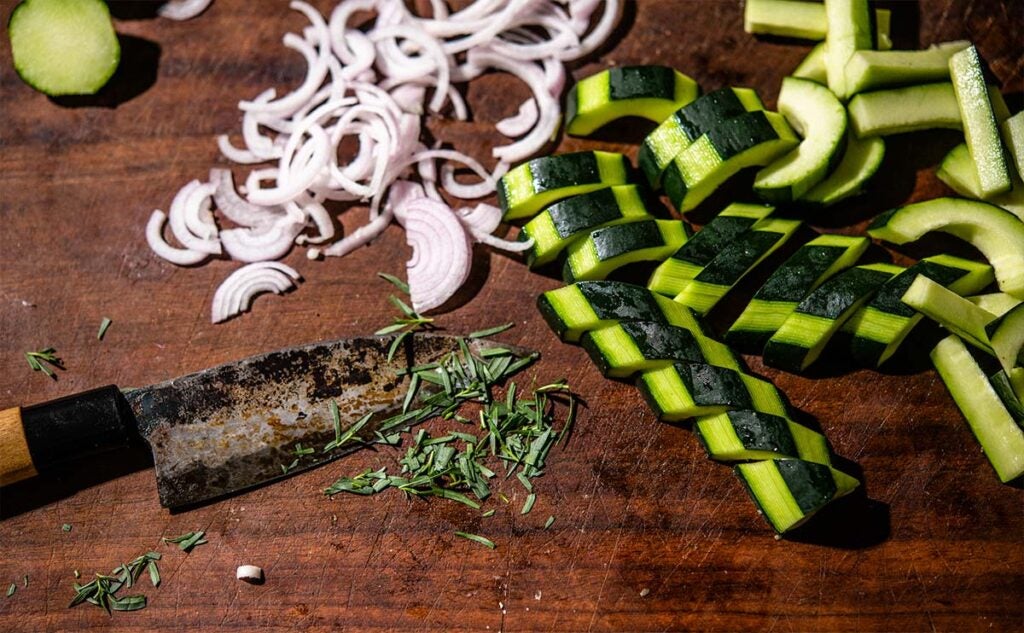
I had had it with seeds, so I halved the cucumbers lengthwise and removed their innards with a spoon. You can peel the cukes, if you like. I think it is imprudent, unless the skins are caked with wax, as so many supermarket cucumbers tend to be. The skin on these hothouse cukes are often thick and bitter, and the seeds are sizable, too. I then cut my seeded cucumber halves into chunks and, like Perry, slivered some shallot rings. Into a skillet went butter, then the shallot. Once the shallot was translucent, in minutes, in went the cucumber chunks and salt. Toss and stir, until the cucumbers go the tiniest bit squishy. This takes mere minutes. You want them to fight back when you bite, then comply.

Cooked Cucumber Salad

Lemon, cream, herbs: There are many ways you could finish these cucumbers. Because there is fat involved in cooking them, the cucumbers bleed their plucky essence into the butter. That means they create their own sauce, of sorts, which raw cucumbers cannot and will not do, and they would be superb alongside most any simply cooked protein. A grilled fish fillet, a sautéed chicken cutlet, poached shrimp.

As it goes, I soon stumbled on additional ways with heating cucumbers. Of course, Thai cuisine knows from cooked cucumbers. David Thompson’s Thai Food features two intriguing examples: a tamarind curry in which sea bass and cucumbers simmer together; and a stir-fry of cucumbers, steamed pork belly, and eggs. I have no strength for either until next summer. Maybe.

London Tube Tips: 12 Ways to Navigate the City’s Underground

Riding public transportation can be intimidating, and that was definitely the case for me when first using the London Underground (aka: the Tube). All the colorful lines of the map, different sides of the tracks and the passenger etiquette made no sense at first. There was also the added fear that I wouldn’t be able to navigate my way to the hotel, the London Eye or, even worse, to see the changing of the guard at Buckingham Palace But, after hopping on and off dozens of times I became a semi-pro or at least adequate enough to list these London Tube tips to make your life easier.


1. Buy an Oyster Card

It’s official: traveling with the Oyster Card is a breeze! The Oyster Card is a reloadable smartcard that is filled with as much or as little money as you’d like to put on it. Though you do have to pay a £5.00 fee on new Oyster cards, it is typically much cheaper using it than just buying single tickets on the tube to each of your destinations. The bonus is that the card can be used on more than just the Tube. Its good for buses, trams, TfL Rail and much more!

2. Only Smart Cards Work at the Ticket Machine

A Smart Card is like a regular credit card except it contains an embedded microprocessor. They’re more popular in Europe and this American gal tried many times to reload my Oyster Card using an ordinary credit card on the ticket machine, but can’t understand why it won’t work. Until I figured out that I have to use a Smart Card, which I didn’t have at the time. Instead, I reloaded my card with the help of an in-person attendant.

3. Watch Out for Oncoming Traffic

The London Tube is the most practical (not to mention affordable) means of transportation, so A LOT of people use it. Whenever a train arrives, it unloads dozens, if not hundreds of people. So, remember this Tube tip: Step aside and do not block their way!

4. Have Your Card/Ticket Ready

Keep in mind that you need your card or ticket with you when you enter the train platform, so when you approach the gate barrier, make sure it’s already in your hand or pocket. This way, you won’t have to look for your ticket or card in front of the gate and risk holding up the line. Don’t forget: you also need your card when you exit!

5. Check the Underground Line Map

I cannot stress this hard enough: always double-check your destination on the Line Map. You don’t want to get lost and find yourself in the middle of nowhere. The stop in bold is where you’re at. Look for the stop you’re going to and the color of the line it’s on. If you’re still unsure, you can always ask the friendly staff around the station.

If you are like me and would feel more comfortable studying the map ahead of time, you can find it here.

Check the London Underground Line Map

6. Stand to the Right

Stand to the right side when riding escalators. The left side is usually for those people who are in a rush and would like to walk (or run) going up or down. My husband got caught on the left and that is not a place you want to be unless you intend on getting shoved, nudged and bumped. Absolutely, under no circumstances, stand to the right and leave your luggage on the left.

7. Check that You are on the Right Side of the Tracks

You may be on the right line, but are you on the right side of the tracks? This is as important as checking the right line to take because you might end up in the opposite direction of where you intend to go!

8. Mind the Gap

Wherever part of the world you are, as long as you’re riding a train, minding the gap is one of the most important underground tips you have to remember. “Mind the Gap” has been my favorite London terminology because of the way the conductor speaks it with his English accent to remind the passenger to be aware of the few inch gap between the train door and the platform.

9. Stand Behind the Yellow Line

The yellow line marks the place where every passenger should stand which is a safe distance from the tracks. You do not want to fall onto the tracks! Standing here also gives the arriving passengers a safe way to get off the train. However, some folks have no patience and shove their way forward even when people are still getting off.

10. Pay Attention to the Signs

The signs will help you know which trains that are arriving at the station. You have to be mindful of it because there may be a lot of trains that pass through the track that you’re on but goes to a different destination than the one you want. Just because you’re on the right line and side, doesn’t automatically mean that the train that passes is the right one you should take.

11. Do NOT lean on the Poles

I’m not going to lie, this was one of the Tube tips that I had a hard time abiding with. The poles inside the train are meant for holding on to, not for leaning against. Since there is only a limited seating capacity on the train, some of the passengers would just stand and the poles are there for support in case of bumps or sudden stops.

12. Watch the Signs Before Exiting

After you successfully find the right line, side, and train, the next challenge is to exit at the right station. There are diagrams inside the train to indicate the station, but for extra safety when the train stops, look out the window before exiting. There will be large signs that tell you the name of the stop you are at.

Whether you’re headed for a stroll at Hyde Park or heading back to your hotel, remember these London Tube tips and I’m sure you’ll find your way. Though the first day of my London Underground experience was frightening, by day two it was easy to navigate my way throughout Zone 1 without committing any tube faux pas—besides #11.

What London Tube tips would you add?

Other Essential Information about the London Tube


More London Related Posts

A Guide to Changing of the Guard at London’s Buckingham Palace
Walk Across London’s Abbey Road and Stand in a Red Phone Booth
Attend a Proper British Afternoon Tea in London
Take a Spin on the London Eye
Stroll Through London’s Hyde Park
Learn Sign Language While Drinking at the Oldest Wine Bar in London


San Francisco Bucket List: 60 Best Things to Do in the Fun City of SF

When you think of the most fun city in California, where do you think of? Los Angeles? Santa Barbara? For me it is always San Francisco. It’s the city of Dungeness crab, sourdough bread and, of course, the breathtaking Golden Gate Bridge. Some people have even left their hearts here. San Francisco is on most travelers Things to Do List and for very good reason. Whether your a first-time visitor or a local, the City has something to offer for everyone and here’s just a little taste of the best things to do in San Francisco and attractions not to be missed.


1. ✦ Shop at Union Square

Union Square holds one of the largest collections of department stores, boutique shops, beauty salons, art galleries, and so on, in all of the United States. Therefore, you can absolutely rest assured it’ll be among the best of the best spots to shop while in San Francisco. In addition, there are also many live events held at Union Square – it’s really not a spot you’ll run out of things to do in! If you visit during the winter season, there’s even an ice skating rink for visitors’ additional pleasure.


2. ✦ Drink an Irish Coffee at the Buena Vista

Famous bartender Larry Nolan serves up thousands of Irish coffees a day at The Buena Vista, using a recipe that was perfected in 1952. It’s not just the quantity that’s impressive, but the technique too. On a busy night a couple dozen stemmed glasses will be lined up in a row and strategically filled in a low-tech assembly line fashion. Also, if you sit at the bar with Larry, he might possibly blow your mind with fun magic tricks while you drink your Irish coffee. Don’t get worried if you become a little addicted to this drink because you can learn to make Irish Coffee the Buena Vista way at home.


3. ✦ Eat Chinese Food in Chinatown

Not only is San Francisco’s Chinatown the oldest in North America, it also hosts the largest Chinese community outside of Asia. It’s held a highly influential position historically and culturally ever since its establishment, and there are many points of interest for you to spend half a day to a day exploring, with food being one of the main highlights for many. There’s so many different restaurants for you to choose from, but some of the best spots are Good Mong Kok Bakery (if there’s one spot in Chinatown you’ll have everyone recommending you to visit, this is IT), Dim Sum Bistro, Hing Lung Company, Z & Y Restaurant and Sam Wo Restaurant. Whichever restaurant you choose, you can rest assured you’ll be treated to a wonderful and authentic meal.


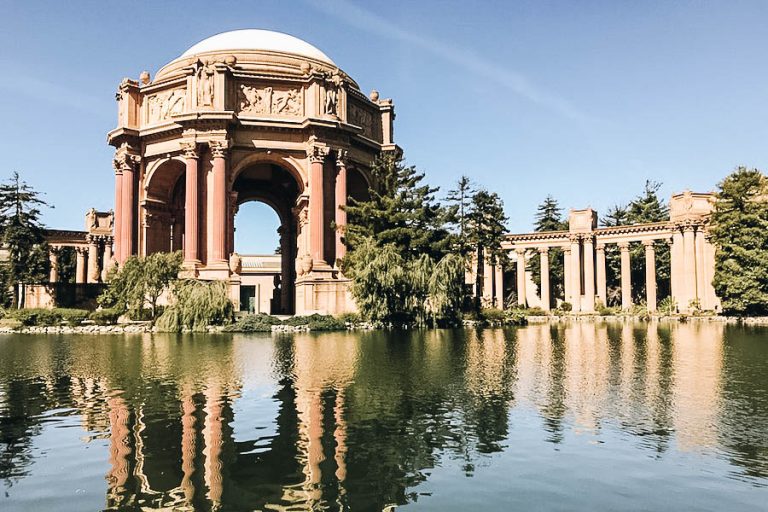
4. ✦ Ogle the Architecture at the Palace of Fine Arts

This gorgeous building was built in 1919, and was inspired by ancient Greek and Roman architecture. It is an attraction that needs to be seen from all angles! It stands at the foot of a lagoon that reflects the palace by daylight, so start with a walk of the perimeter. Then head inside to stand amongst of gigantic pillars. There are so many tiny details, statues, and cravings to take in, that you really need to take some time to see appreciate them all. Don’t forget to make your way back to the Palace of Fine Arts at night to get a view of it all lit up.


5. ✦ Get Chocolate at Ghirardelli Square

Located on the fisherman wharf, Ghirardelli Square, is home to some of the world’s best chocolate. Ghirardelli Chocolate, the squares namesake, has been manufacturing at the heart of the square for ages. There is a legendary story to be heard on site, about how the Italian founder, back in the 1800’s, made his way to San Francisco by way of Peru. And although Ghirardelli moved their main plant away ages ago, they still produce on the small-scale here and the storefront remains an iconic symbol of the area.

Get a chocolate sundae or just a simple bar. It doesn’t’ matter, they’re all good. Neighboring alongside the chocolate company is an eccentric mix of shops, and restaurants that will appeal to all palates, even if you don’t have a sweet tooth.


6. ✦ Spot the Wild Parrots

There is no specific address where you can spot a flock of wild cherry-headed conure parrots roaming around San Francisco. But, your best bet would be to start at Coit Tower and then walk down the 400 Telegraph Hill steps scoping out the trees along the way. This area is where I had my first sighting and was also the inspiration for the documentary The Wild Parrots of Telegraph Hill.


7. ✦ Climb the 16th Avenue Tiled Steps

The 16th Avenue Tiled Steps are a neighborhood project to create beautiful mosaic artwork on a set of 163 stairs. The steps are a colorful display featuring waves of turquoise, bright birds and vibrant sea animals of all kinds. Make your way to the top, stopping to marvel at the fascinating artwork along the way and to catch your breath because the stairs are pretty steep!

This flashy Things to do in San Francisco attraction is situated in a quiet residential area, with limited tourists and plenty of parking. There were only six other people when we went for a visit!


8. ✦ Eat an It’s It

It’s It is an ice cream brand in San Francisco, having been founded more than 90 years ago, specializing in unique ice cream sandwiches. It’s deemed so iconic that it’s even claimed to be among San Francisco’s attractions – which obviously means you can’t go to San Francisco and not try out It’s It! Currently they have around 9 different flavors for you to choose from, with its newest addition to their roster a large scoop of vanilla ice cream placed between two chocolate chip cookies. Especially on a hot summer’s day, there’s nothing better than a taste of delicious and cooling ice cream like this.


9. ✧ Eat a Molecular Gastronomy Meal

What is molecular gastronomy? It is a study of scientific principles where chefs explore the physical and chemical transformations of ingredients. Think powdered food, deconstructed dishes and delectable foams. Atelier Crenn restaurant in San Francisco is a master at creating a bucket list worthy “cutting-edge” tasting menu. It will be pricy, $335 for the multi-course tasting menu, but it will also be one meal that your taste buds and eyes will never forget. A meal fit for your Couple’s Bucket List.

Bonus: If “eating at a Michelin starred restaurant” is on your bucket list, this one has two.

Learn more: Watch Atelier Crenn’s Tasting Menu in Only 60 Seconds


10. ✦ Take in the View from Twin Peaks

The best view of San Francisco is from Twin Peaks, which is geographically located at the center of the city. It’s hard to believe that the first time I went here was just a few months ago and now I am in love taking in the 360-degree view from the hilltop. Here you can see the Golden Gate Bridge, Alcatraz, the Mission District, the famous Haight Ashbury suburb and the gorgeous modern houses surrounding the hill.

If you are lucky you may also get a glimpse of the endangered mission butterfly while you are there, or one of the cheeky raccoons or opossums that call the hill their home.


11. ✦ Shop Oddities at Paxton Gate

Paxton Gate is a shop that sells a variety of different kinds of things, much of which you won’t see on sale in many other places. Just to enter and browse around the shop is an intriguing experience on its own! Some of the oddities to browse and shop at Paxton Gate are the octopus wall mount, knitted frog dissection, coyote baculum and diaphonized iguana specimen. Do you dare to surprise a loved one with a quirky souvenir like this? Or will you perhaps be interested in buying yourself one?


12. ✦ Bicycle (or Walk) Across the Golden Gate

Even though it happens often for me, driving over the Golden Gate bridge still is impressive. But, what is even more thrilling is taking a bike or walk across San Francisco’s Golden Gate Bridge. You can bring your own bike or easily rent one nearby. Blazing Saddles is a reputable company that will take you on an 8-mile guided bike tour that includes a ride across the bridge or choose to do a self-guided trip (booking information here). Just be sure to abide by the laws of the bridge for bikes and pedestrians.

Book a Tour: Cycle The Golden Gate Bridge and Alcatraz Ticket


13. ✦ Hike Sutro Baths

The eerie ruins at Sutro Baths are a reminder of yesteryear. They were created by the former mayor of San Francisco, as part of an entertainment complex but unfortunately the building mysteriously burnt down shortly after the center was closed in the 60’s. The Sutro Baths were famous for their tide-fed, salt water pools. At the time, the millionaire was dedicated to providing low-cost entertainment to the city’s residents. Today, the ruins sit upon a stony hill overlooking the beautiful Pacific Coast.

There are several trails leading in and around the ruins, and there is even one that will lead you to a brilliant view of the iconic Golden Gate Bridge.


14. ✧ Get Fresh Crab at a Fisherman’s Wharf Sidewalk Stand

Fisherman’s Wharf has 8 sidewalk stands spread across San Francisco, so it’ll be super easy to fit into your schedule. They have a wonderful selection of seafood on sale, beyond just crab and shrimp. If you’re visiting San Francisco during the crab season, which is in November, it’ll be the best time possible to have your fix of fresh crab at one of their stands! Fisherman’s Wharf itself is San Francisco’s most famous waterfront spot, so you really have no excuses for not visiting and grabbing a fresh meal there. Think of the sea lions who’ve come all that way to greet you!


15. ✦ Attempt to Escape From a Trapped Room

One of the most mind challenging thing to do in San Francisco-the Real Escape Game is a live puzzle where the idea is to solve puzzles and riddles in order to find your way out of a locked room in a limited amount of time. This challenging game was brought to San Francisco from Japan, which is not at all surprising since the Japanese are experts at creating quirky experiences, like Tokyo’s Cat Cafe or the Alcatraz ER themed restaurant.

Read More: Play the Real Escape Logic Game. San Francisco.


16.  ✧ Visit the Antique Vibrator Museum

Yes, it’s a museum exactly for the type of vibrators that may have already crossed your mind! It’s by far one of the most unique things to do in San Francisco, and could be a lot of fun for you to sightsee. Some of the oldest antique vibrators in the museum date all the way back to the late 1800s! The Antique Vibrator Museum is open from 12:30 to 6:30 every day, and every 3rd Sunday at 3pm you can join on a free docent tour.


17. ✧ Play Trampoline Dodge Ball

With over 8,000 square feet of trampoline space, House of Air provides the perfect space for a jumpy game of dodgeball. You can join one of their weekly leagues or hop into the hourly dodgeball sessions during Open Jump.


18. ✧ Drink at a Tiki Bar

While Tiki Bars, an aesthetic style formed based on real facts and imagined styles of Pacific Islands, have faded from popularity in many other areas in the States, there’s still many popular ones you can find in San Francisco. And as far as food and drinks go, this is among the top things to do in San Francisco. To find a top notch quality Tiki Bar in San Francisco, visit a spot like Bamboo Hut, Tonga Room & Hurricane Bar, Pagan Idol or Smuggler’s Cove, all of whom have a different kind of charm – or quirky detail – to bring to the table. Especially Tonga Room is known to be found on many travelers’ bucket lists, there’s simply something irresistible in how over the top they go to provide their clientele an entertaining stay. I mean, there are tropical storms dripping off the wall and a band playing on a floating island in the middle of a pool!

19. ✧ Pose with the Haight Ashbury Sign

San Francisco is as much about technology these days as it once was about the Summer of Love and the Haight Ashbury neighborhood was at the epi-center of it all. Today, the suburb still embodies the vibrancy and color of its hay-days. There are a number of great walking tours, to hear stories of the stars, leaders of movements, and runaways that once occupied the area. Otherwise, don a pair of circle sunglasses, and throw up a peace sign for an iconic photo at the intersection of these two classic streets that became synonymous with the counter-culture movement.


20. ✧ Eat at a Food Truck

San Francisco has a growing food truck scene which is very evident by the bustle of people who go Off the Grid every Friday night at Fort Mason. This trendy thing to do is a weekly Northern California food party, that draws 6-9,000 eaters, has over 32 vendors featuring food and drink from around the world. Not only can you get a sensory overload of smells, but also partake in fun games like tabletop shuffleboard and Whack-a-Mole.


21. ✧ Take a Free Swing Dance Lesson in the Park

Swing dancing is a lively group of dances that originated in the “swing era”, from the 1920s-1950s. This couples dance often features dancers spinning, flipping and lifting their partners through the air. Every Sunday at noon in Golden Gate Park you can be a part of the action by learning basic swing dance moves at the appropriately named event “Lindy in the Park“.


22. ✦ See a Beautiful Bride at the City Hall

Another unique one of San Francisco’s attractions, thanks to its gorgeous interior and long history, the City Hall is a popular spot in San Francisco for getting married and snapping some stunning wedding photos in. Unlike in many other places where City Hall may be seen as a wedding spot for those hoping to skip out on big ceremonies, this historic landmark is among San Francisco’s most elegant places to get wed. And for you that means the possibility of seeing a gorgeous bride or two as you pass by!


23. ✧ Have Afternoon Tea at the Palace Hotel

The Palace Hotel is nothing short of grand! You will feel like royalty sipping on tea, and snacking the afternoon away here. Their Grand Court Tearoom is set in an admirable glass atrium, and decorated with rich furniture, chandeliers, and greenery. Tea is served on China, and the menu consists of English classics such as scones with Devonshire cream, finger sandwiches, and an assortment of pastries. A pianist is usually tinkling away on the grand piano that sits in the center of the Court. The hotel itself has a rich history, and has been serving San Francisco since the early 1900’s.


24. ✦ Eat Italian Food in North Beach

There’s good food all over the city of SF, but if you are looking for an authentic Italian meal head to North Beach. The neighborhood is known as “little Italy”, and you be hard-pressed to find a bad pasta dish there!


25. ✦ Stroll Through the Japanese Tea Garden

I feel as if I have been transported back to my favorite tiny Asian country whenever I explore the Japanese Tea Gardens in San Francisco. This sprawling complex is part of the Golden Gate Park, and has everything you could expect from a Tea Garden. Pagodas, ponds of koi, stone bridges, exotic plants, and of course an authentic tea house. The peaceful atmosphere is also reflective of some of Japans most popular religions, Buddhism and Shino. So there are various carvings, and sculptures dotted throughout the garden to reflect this.


26. ✦ Visit the Pet Cemetery

This Pet Cemetery, located in Presidio, was once a U.S. army fort, at one point in time housing several military families who eventually grew to have the need of burying their deeply loved pets. However, while it’s known to be a sanctuary for deceased pets since at least the 1950s, it’s somewhat unclear where the actual beginnings of the area start from. Nevertheless, it’s a haunting and heartbreaking spot to visit today, the surrounding Presidio a paranormal hot spot by and of itself.


27. ✧ See an Opera at the Opera House

I think everyone should go to the Opera at least once in their lives. So, look no further than the San Francisco Opera House. They feature both innovative and classical operas for a total of nine different operas annually. The building itself is rich in heritage, and has been dedicated to American war heroes, as the War Memorial Opera House. For decades legendary figures in the world of Opera have donned the stage here. Come and see why opera has never gone out of style!


28. ✦ Marvel at the Outrageously Huge Beach Blanket Babylon Hats

Beach Blanket Babylon is the longest running musical revue and has rightfully been called “the real San Francisco treat”. It has been seen by over 6 million people, with more than 15,000 performances. Why? Because its spoofs on pop culture are hilarious, the headdresses are outrageously huge and the costume colorfully elaborate. I’ve seen it twice!


29. ✦ See the Dutch Windmill

This is a great place to spend the afternoon with family, friends, or a lover. Surrounding the windmill are fields of green, and the lovely Queen Wilhelmina Tulip Garden. Although the pretty Dutch windmill, and its sibling the Murphy Windmill only exist for aesthetic these days. They were once an important mechanism to irrigate the sandy park by pumping water from wells deep below. By the 50’s the windmills were in a state of extreme disrepair, but the state has since taken efforts to preserve the history of these stunning Golden Gate Park landmarks.


30. ✦ Drive (& Walk) Down The “Crookedest Street”

Lombard Street has eight hairpin turns that has made it famously known as the “Crookedest Street in San Francisco”, though there is some debate that it isn’t actually the most ziggedy-zaggedy. But, with up to 350 cars an hour driving down, it’s definitely the most well-known and iconic thing to do. Traditionally, tourists will slowly drive down the short switchbacks, but what is even better is walking down this steep 600 foot long road. On foot you are able to fully see not only the red bricked road, but also the beautiful homes that line it.


31. ✦ Go Inside Coit Tower

Go into Coit Tower for the fantastic artwork, and then take an elevator to the top for an utterly impressive 360 degree views of the city below. This attraction was built on Lillian Hitchhook Coit’s request, the towers namesake. She was a wealthy woman and eccentric socialite who left a large sum of her fortune to the City of San Francisco with a parting note. She requested the money be used “for the purpose of adding to the beauty of the city I have always loved.” How beautiful.


32. ✧ Eat Your Way Through the Ferry Building Marketplace

Originally, the Ferry Building was a central point in transportation for those arriving to San Francisco, and especially during the Gold Rush its importance as an arrival point for the ferryboat was integral. By 1950s, Ferry Building was barely used for transportation, however, and in early 2000s it went through a restoration and reopened as a food market. There’s plenty to discover as you eat your way through the marketplace, but here are some stops you got to take during your food tour: Vive La Tarte, Hog Island Oyster Bar, Boulette’s Larder, Out the Door, Fort Point Beer Co. and Cowgirl Creamery. And don’t let the exterior of the former ferry building fool you–this marketplace houses some of the tastiest restaurants with the most talented chefs in all of San Francisco.


33. ✦ See the Balmy Alley Murals

Balmy Alley is located in the Mission district of San Francisco and has the most concentrated selection of murals in the city. The artwork on this block long alley began in the mid-80’s to voice outrage over political injustices and human rights issues in Central America. Today, it is a colorful collection of murals that depicts the artists’ interpretation of world issues.


34. ✧ Go to the Exploratorium After Dark

The Exploratorium After Dark 18+ event is so fun for a night out! It’s almost like a circus funhouse, with drinks! The exhibit is based on science, art, and perception. It features over 600 interactive exhibits consisting of dazzling kaleidoscopes, distorting mirrors, and pitch black rooms. There is great music, guest speakers, and unique films and clips that keep me coming back time and time again.


35. ✦ Find Your Favorite View of the Golden Gate

It’s no secret that Golden Gate is perhaps San Francisco’s most iconic sight to see today. Thanks to its location and massive size, it’s possible to view and admire the Golden Gate Bridge from several different locations, so perhaps you might want to see it from an alternative view each day of your trip, or even make a day out of discovering your favorite view of the Golden Gate. If you go in the morning, the South Vista Point casts a beautiful hue of early morning’s sunshine over the bridge and its surroundings, whereas in the afternoons it’ll be covered by shadows.

Fort Point also offers spectacular views of the Golden Gate reaching into the horizon; the north side’s Marin Headlands has several perspectives from which to view the gate through, with it being the best spot for evening photography on a clear night; Fort Baker offers some of the most stunning and unique views of Golden Gate you may have seen yet; the views from St. Francis Yacht Club during sunset will have your jaw dropping; and my personal favorites are Golden Gate Overlook, Crissy Field, Presidio’s Marshall Beach, Battery Spencer and also Alcatraz, at least for the views themselves even if they don’t always provide the the best photograph. If you’ve got the time to spare, crossing the Golden Gate Bridge is also among the top things to do in San Francisco – and it’s another perspective of the bridge you’ll get to view.


36. ✧ See What’s in Bloom at the Conservatory of Flowers

This green house and botanical garden is a must thing to do for all ages. I love, as they say, smelling the roses… when they’re in bloom. Flowers blossom year-round here and the onsite greenhouse beautifully compliments the flowers it protects with its glass paneling, and Victorian architecture. Both exotic, and domestic flowers reside within the conservatory. It is part of the grand Golden Gate Park.


37. ✧ Do a Tea Tasting

Yet another fun activity to do in San Francisco that you may not immediately think of is to do tea tasting! As the city holds an ample amount of high quality tea shops, it’s an excellent place for sampling tea. Some of the spots you’ll want to check out for tea in San Francisco are Tea Time, Red Blossom and San Francisco Herb Co. As for the absolute best tea tasting experiences, you’ll need to find yourself inside Vital Tea Leaf, Song Tea & Ceramics and Aroma Tea Shop.


38. ✦ Eat the California State Bird

Eating the California State bird? Isn’t that illegal? You’re not even allowed to pick the state’s poppy flower, are you? Technically, neither action is against the law, but there is something so wrong about consuming your home state bird. Yet, at San Francisco’s State Bird Provisions, there is also something so deliciously right.

State Bird Provisions is a dim sum style restaurant that each evening serves 12-15 creative plates that servers peddle on push carts and trays. Though the menu may rotate, the CA State Bird (the quail) with Provisions is a permanent fixture on their list. As well as it should be.

Read More: Eat the California State Bird in San Francisco


39. ✦ Take a Cable Car Ride

Would a Things to Do in San Francisco list be complete without having take a cable car ride on it? The cable car is a San Francisco icon, carrying countless tourists up and down the steep hills. Though it is one of the cities most popular attractions, it is also a handy form of transportation taking folks to many sites around town. You can even follow up your ride with with a visit to the Cable Car Museum.


40. ✦ Giggle at the Sea Lions at Pier 39

This massive group of sea lions moved onto Pier 39 some years ago, outnumbering the boaters who once docked there. After some discussion with the Marine Mammal Centre, they collectively decided to let them stay and move the boaters to another pier. And they have now become quite an attraction! Apparently, they love this dock so much for the quantity of food in the area, the distance from open water predators, and comfortability of the docks themselves. When I look out onto the hundreds of sea lions that call Pier 39 home, it is not hard to see why they are often likened to water dogs for their playful nature. When they are not lazing around, they are dipping, diving, and barking at each other simply for the fun of it.


41. ✧ Drink at a Rooftop Bar

Wherever you go in the world, it’s always good to check out a rooftop bar or two for some of the best views and atmosphere any city has to offer. And the bustling scene in San Francisco is no different! I warmly recommend you check out Everdene, El Techo de Lolinda (where you can combine amazing margaritas with delicious Mexican bites), Jones and Charmaine’s (for that hotel rooftop bar atmosphere). These rooftop bars don’t just serve you with killer view, they’re also known to be serving some of San Francisco’s yummiest drinks!


42. ✦ Take a Selfie With the Painted Ladies

The Painted Ladies are the set of Victorian row houses that are located across from Alamo Park. Also known as “Postcard Row”, they frequently appear in the media and are most well-known for being a part of the sitcom “Full House”.


43. ✧ Take a Ride on the Seward Street Slides

This adult playground is not a well-known attraction in the City of San Francisco but it is one of the best things to do! Bring your own toboggan of cardboard for a faster ride and some durable pants. The pair of slides the park is famous for, are side by side and very steep! Perfect for racing. Surprisingly, the Seward Street slides were designed by a 14-year girl in the 70’s when she won a Parks and Rec competition.


44. ✧ Get a Sushi Burrito at Sushirrito

Have you yet had the chance to try out a sushi burrito? Well, while you’re in San Francisco, you’ll be able to try one out in the place where it was born! At Sushirrito here are quite a few different options to choose from, often with an intriguing combination of ingredients, and especially the Sumo Crunch seems to be popular among locals.


45. ✧ Explore Alcatraz at Night

Alcatraz is a former military prison located on an island one and a half miles from the mainland. With approximately 1.5 million visitors a year, a visit to “The Rock” is a must for your San Francisco bucket list. But, add more excitement to your adventure by taking an evening tour of Alcatraz. If visiting this jail isn’t spooky enough during the day, by night it will send a chill down your spine. Make sure to book a couple months early, spots fill up fast.

You can make an entire day of it with the Alcatraz Night Tour + Napa & Sonoma Tour from San Francisco.


46. ✧ Find a Gold Painted Fire Hydrant

Somewhere hidden within the historic Mission Distinct of San Francisco is this little hero that saved much of the city. Most of the main water mains were broken or dry following the devastating 1906 earthquake, and fires were breaking out all over the city. They threatened to eat up the Mission District too until someone discovered this “little giant”, the fire hydrant who after two-days managed to put out the riotous fires plaguing the area. A plaque on the sidewalk beside the hydrant honors the firefighters who fought the fires, and each year the hydrant is re-painted in gold to commemorate the event.


47. ✦ Drink Cocktails at a Secret Speakeasy

When you make an ‘appointment’ (not a reservation) at Wilson & Wilson, you are given a password with your confirmation. This password gets you into the secret speakeasy, located behind a nondescript door of the 1920s style bar Bourbon & Branch. Once inside the dimly lit drinking establishment, you can do a 3 cocktail coursing that includes an apertif, main and digestif. An expert mixologist will guide you with the perfect selections for your palate.


48. ✧ Get Happy at the Walt Disney Museum

This remarkable museum walks you through the life of Walt Disney himself, the creator of the iconic brand, onto the early workings of Mickey Mouse as an animated character. The Walt Disney Museum has lots of interactive exhibits, and year-round exhibits. I wouldn’t recommend it for younger kids, but adults and teens will be absorbed in reading about the inspiration behind each character and the cultural implications of them. But beware, you might feel like bingeing on Disney films after your visit, or up and driving to Disneyland itself!


49. ✧ Attend the Folsom Street Fair

Try not to be intimidated by this event, it is nothing but fun and a true testimony to San Francisco’s inclusiveness and laid back attitude. The Folsom Street Fair is dubbed “the world’s largest leather and fetish event”, and “leather pride week”. The scandalous X-rated parade, is what the fair has become famous for, and it is coupled with some great music, and tasty food. It is a San Francisco rite of passage!


50. ✦ See the Jellyfish at the Aquarium of the Bay

It is so fun getting up close and personal with the jellyfish at Aquarium of the Bay. They have great Japanese Sea-nettle, and moon jellyfish exhibits. If you didn’t know, these underwater creatures are made up of 95% water. So they don’t have any organs, bones, a brain or a heart. This makes them look otherworldly as they float just few inches away from eye level! Thousands of other marine life also call the aquarium home including a number of sharks, star fish, eels, rays, and colorful fish.


51. ✧ Sail Under the Golden Gate Bridge

Just Google that and you’ll immediately get offered a dozen different companies you can do this with–that’s how popular of an experience it is! And, why wouldn’t it be? Like I mentioned before, Golden Gate Bridge is pretty much the quintessential San Francisco attraction, and sailing underneath it allows you to see it from another, unique angle. These sailing trips usually go near Alcatraz, so if you don’t happen to have time to fully visit the island, this way you’ll get to see it a little bit closer, too!


52. ✦ Visit a Fortune Cookie Factory

The Golden Gate Fortune Cookie Factory is a tiny hidden treasure located in the heart of San Francisco’s Chinatown. The small shop barely fits a handful of people, but it’s worth cramming your body inside just to get a whiff of the enticing aroma and a free sample of a hot off the press fortune cookie. Photos of the production facility will cost you a mere 50 cents, which seems beyond reasonable when you see these ladies working so hard.

This will probably be the quickest stop on this Things to Do in San Francisco list (tens minutes max), but it is a tasty experience.


53. ✦ Root for the SF Giants at AT&T Park

Take me out to the ballgame! Like most cities in America, we are deeply dedicated to our baseball team. And there is no better way to see our beloved San Francisco Giants kick butt then at home at AT&T Park. Located downtown, the atmosphere is absolutely buzzing come game day! There are loads of restaurants, and bars just outside the park for a bite or drink, before or after the game, if you don’t want to pay stadium prices. Baseball is so popular in San Fransisco so if you’re visiting the area, you should definitely go and watch a game.


54. ✦ Eat the Famous San Francisco Sourdough

Sourdough bread has been a part of the San Francisco culture since the California Gold Rush when French bakers brought over expert baking techniques. There are plenty of places around the city to buy a loaf of this sour-style bread; Try the Pain au Levain at Acme, Sourdough Long Loaf at Boudin or the Organic Sourdough Batard at Noe Valley Bakery. But, if eating a plain loaf of bread isn’t on your carb agenda head over to Tartine to indulge in one of their delicious sandwiches made with their housemade Sourdough Country Levain.

Read More: Taste Test: The Best Sourdough Bread in San Francisco


55. ✧ Soak in an Onsen

This off-beat activity is one of the top ways to relax in busy San Francisco. Onsen is a restaurant, bath house and spa. They offer great health-conscious bites, and authentic Japanese bathing experiences. As they state on their website, “The bathing ritual in Japan is deeply ingrained in their society, with the idea that a daily soak with cleanse and restore body a soul.” So take some time for yourself, or bring and friend and have a fun day with this unique bucket list experience.


56. ✦ Play an Antique Arcade Game

Musee Mecanique is a private collection of coin-operated, antique arcade games and mechanical musical instruments. Walking through will take you on a trip down memory lane, before home video and smart phone app games became so popular. Bring a roll of quarters to take a pony ride, battle with an arm wrestler or hear the Barbershop Quartet belt out a tune.


57. ✧ Take a Brewery Tour

Get a taste of San Francisco history with a peak into America’s first and oldest craft brewery, Anchor Brewing. Though their Steam beer is what they seem to be most known for, you will also get a glimpse into their other tasty selections and their centuries-old craft brewing techniques. Of course the best part of the tour is the samples at the end.


58. ✧ Play Frisbee Golf at Golden Gate Park

The Golden Gate Park is a popular place to play Frisbee golf in San Francisco, for all levels of Frisbee golf lovers. So find a group of friends or other people to play with. It’s a ton of fun and a great way to stay fit on your trip! After you’ve worked up a sweat, the park is also perfect for relaxing and having a picnic. Oh, and did you know that the Golden Gate Park is actually bigger than New York City’s Central Park? Now that you do know that, it probably won’t surprise you as much when you go and, on top of space to play a couple of rounds of Frisbee golf in, you’ll find your eyes gawking at Dutch windmills, Japanese Tea Garden, and possibly even an albino alligator.


59. ✧ Navigate the Infinite Mirror Maze

Located by Pier 39, where you can also hop on a boat that sails from underneath the Golden Gate Bridge, is this absolutely magnificent Magowan’s Infinite Mirror Maze. The colorfulness of the maze creates a near psychedelic experience, with the black lights ensuring you won’t find your way through the maze too easily. There is no time limit so for that 5 dollars you spend on it, you can even spend half a day there! Children aged 5 or under are admitted for free.


60. ✦ Eat an Egg Custard Tart

An egg custard tart features a silky egg yolk custard in a crunchy pastry shell that is traditionally found in various Asian countries. The Golden Gate Bakery in Chinatown is know to have one of the best recipes in the city, maybe the world. If you can act actually get one, you might agree. It is well known that the shop randomly closes. In fact, a “on vacation” sign is in their window so often that there is a website called “Is the Golden Gate Bakery Open Today?” dedicated to letting the consumers know when they can and can not get their beloved tart. Even if they are open, you will most likely have a long line to contend with. This all adds to the bucket list challenge.

. . .

Start ticking these activities off your San Francisco Bucket List, and you will soon see why San Francisco is the funnest city in California, and one of the best cities in the world.

Essential Tips for Visiting San Francisco

Getting There: SFO is a major hub and most airlines will fly into it, with United being the leading carrier. You can easily check for the best fare deals at Skyscanner. You can also use choose ‘cheapest month’ as the departure to find the lowest priced dates to fly to your destination.

Where to Stay in San Francisco: It’s almost always best to stay near the city center or at least public transportation. In the shopping district of Union Square Staypineapple at The Alise or choose the centrally located Omni Hotel on California Street. Or search some great deals on hotels of your choice at Booking.com. If you’re looking for more of a home atmosphere (or are traveling with a group of people), head over to Airbnb that has houses, apartments and even just a room for rent in every price range.

Getting Around: Driving in San Francisco can be a bit of a challenge and parking fees can be expensive, but if you choose to rent a car, RentalCars.com has great deals. If you are not renting a car, there are plenty of options. Both Lyft and Uber are available all over the city, plus most of the major attractions can be accessed with the Hop-On Hop-Off Bus. Or do a GoCar 3-Hour Tour of San Francisco’s Parks and Beaches.

Special Note: With the purchase of a Go San Francisco Card of the San Francisco City Pass you can pay one nominal fee and get entry to dozens of the Bay Area’s best attractions and tours!

Top San Francisco Tours:


Related California Posts

Walk on Fort Bragg’s Glass Beach in Northern California
5 Must-Do Japanese Restaurant Experiences in San Francisco
Take a Hot Air Balloon Ride Over the Vineyards of Northern California
California Dreaming: 9 Incredible Winter Stops in the Yosemite Valley
California: 25 Photos to Inspire Your Point Reyes Bucket List
Go Wild Mushroom Hunting in California’s Napa Valley
Have A Very White Christmas in Yosemite Valley
Spend An Afternoon at Hog Island Oyster Farm in Tomales Bay
Drive the 72 Miles Around Lake Tahoe
Find Peace at the Petrified Forest in Calistoga
Half Moon Bay Bucket List: 30 Things to Do Along California’s Coastside

This post contains affiliate links, which means I may receive a commission
if you make a purchase using that link. You can read my disclosure here.


200 Bucket List Examples: 10,000 Things To Do Before You Die

Are you looking for Bucket List ideas? Sometimes it’s best to look at examples from others and this page is filled with bucket lists for you to peruse, ponder and get inspired by. There are over 200 lists and 10,000 ideas of things to do before you die.

Don’t know what a bucket list is or how to create one? Check out these posts for help:


Adventure Bucket Lists

If swimming in a jellyfish lake, flying in a wing suit, going volcano boarding or hiking the Inca trail sounds like the perfect afternoon, then these lists are for you. Even if you are not an adrenaline junkie it’s fun to look through and see what seriously adventurous people will do.


Food & Drink Bucket Lists

Being a restaurant owner and foodie, I am obsessed with foodie bucket lists—the more bizarre or unique the better. Things like eating bone marrow, dining at Napa’s French Laundry, or hunting for truffles would all be great additions to the food section of your bucket list.


Random Bucket Lists

This section is dedicated to lists that include everything under the sun. They are not specifically geared towards travel, adventure or food, but instead are a hodgepodge of all the rest!


Relationship, Family & Friends Bucket Lists

Whether you want to get a couples massage with your partner, take surfing lessons with your mom or plan the ultimate fishing trip for you and your son, you can find an extensive collection of similar ideas in this section.


Seasonal Bucket Lists

Summer is the perfect time to make a sand castle at the beach, while Fall is great for finally perfecting that pumpkin pie. In this section you can find a bucket list goal for every season!

Spring

Summer

Fall/Autumn

Winter


Sports & Fitness Bucket Lists

With ideas like doing the polar bear plunge to attending game seven of the Stanley Cup to playing a wicked game of frisbee golf, these lists will fill the sports and fitness fanatic hunger in you.


Travel Bucket Lists – General

So many places to see, so little time! Have fun searching through the thousands of travel ideas including castle hopping in Ireland, hiking Cinque Terre in Italy, ice climbing in Iceland and going on an African safari in Tanzania.


Travel Bucket Lists — International

From Tokyo to Ibiza, these International travel bucket lists focus on an individual fabulous city or country. How about adding ‘see the White Temple of Chiang Rai’ or ‘visit Dracula’s castle in Transylvania‘ to your Things to do Before You Die list?


Travel Bucket Lists — United States

You don’t have to leave the United States to find some of the best bucket list destinations. From Vegas to NYC, these buckets are all about the best city or state in the good ole’ USA.


You Might Also Enjoy

10 Incredible Ways a Bucket List Can Improve Your Life
My Book: Bucket List Adventures
50 Fun Questions to Ask Your Partner To Get to Know Them Deeper
Indoor Skydive Experience: Weightlessness in a Wind Tunnel

Thailand’s Wat Rong Khun: The White Temple in Chiang Rai

Have you heard of a Buddhist temple with a Spiderman and Michael Jackson on its walls? No, you’re not dreaming. The White Temple in Chiang Rai (Wat Rong Khun) has something to surprise even a seasoned traveler. Traditional Thai deities? – Sure. Grotesque mythical creatures? – Of course! Unexpected satirical fusions of modern life? – You bet. Cognitive dissonance and unforgettable experience guaranteed.

The White Temple is arguably one of the most bizarre temples in Thailand, and is a vision of pure white—go figure. Located about two and a half hours north of Chiang Mai, it is an amazing fusion of traditional Thai elements and modern design and pop culture. It’s creator Chalermchai Kositpipat is one of those brave people who dare to create such thought-provoking combinations. Yes, he gets lots of criticism. But he still is true to himself and his vision. Kositpipat aims this temple to promote Buddhist practices and remind people of the importance of meditation and spiritual practice.


History of the White Temple

Wat Rong Khun or the White Temple is one of the most original temples in Thailand. The original version of the temple was in very poor condition, when a famous Thai visual artist, Chalermchai Kositpipat, decided to buy the temple and turn it into a masterpiece of modern art. He designed and constructed the modern version of the temple.

A team of 120 volunteer builders, architects, and artists worked together to make Kositpipat’s dream come alive. The owner paid $1.2 million to realize this project, yet the construction of the temple is not finished yet. Currently, the compound has 4 parts: a meditation hall, a hall of relics (ubosot), an art gallery, and accommodations for monks. All the 9 planned parts of the temple are going to be constructed around 2070.

Architecture and Design

The White Temple in Chiang Rai is created in an eclectic style, combining the features and elements from different styles and epochs. The temple has elaborate ornamentation of facades and traditional Buddhist architecture. All the White Temple is covered with white plaster and small glass inserts. The sneaks of the edges and the three-tiered roof represent the traditional elements of Thai architecture.

There’s a pond at the entrance of the temple. A narrow white ornate bridge leads to the main building. The bridge is decorated with multiple religious images. Two statues of kinnaras, Thai mythical creatures, are guarding the bridge. On this bridge, you will also meet the statues symbolizing temptations, anger, and suffering. You will have to leave them behind to find your way to happiness. In addition, the entrance to the temple is guarded by two giant dragons.

The White temple of Chiang Rai has hundreds of different detailed sculptures, which slightly resemble the creations of Gaudi or the chimeras of Notre Dame. The surrounding pools reflect the elaborate temple, which creates even more noble impression.

All the visual elements combine to create a unique surrealistic impression on the visitor. The overarching theme of this temple is escaping desire and greed and reaching enlightenment.

The art gallery features Chalermchai Kositpipat’s works. The artist uses some of his artworks to express the satirical view of the modern world and trending tendencies. He is quite an extraordinary thinker, and his art hasn’t been accepted for many years because of its modern features and bizarre perspective.

Symbolism

Every detail in this temple has its symbolic meaning. Most Buddhist temples are decorated with an abundance of bright colors, but this one is stunningly white. The ivory-white color symbolizes purity. If you look at the temple on a sunny day, you’ll be amazed by all the shimmering sparkles surrounding it. All the temple is decorated with elaborate plasterworks and small pieces of glass between them. The glass represents the wisdom of Buddha.

*Note: Bring your sunglasses, you’re gonna need them. Not only for the brightness of the color, but also for the reflections from the mirrored glass mosaic scattered throughout the grounds.

The exteriors of all but one of the buildings in the complex are white. The exception is the washroom. This building is of golden color. The creators used this color deliberately to express disapproval of modern obsession with money and wealth.

Amongst all the purity the creator has representations of evil too, with its eerie disembodied heads hanging from the trees and spooky hands reaching out from the ground, symbolizing Hell.

Some of the artworks in the Temple are depicting impure aspects of mundane life. There are lots of images from pop culture, like Spiderman, Michael Jackson, Hello Kitty, and many others. These images symbolize the imperfect humanity, that leads people nowhere and does not bring them real happiness. On the front wall of the main hall, there are depictions of people who escaped the earthly temptations and reached heaven.

Also, outside the temple, there is a metal statue of the Predator. This is a satire on international politics and people’s consumerist and thoughtless attitude to nature. Walking on the temple grounds you’ll get the unforgettable feeling of traveling into some surreal movie.

During my visit, just outside the temple fence were intriguing tree-like structures filled with hanging metal ornaments. Each of the thousands of tin ornaments hanging from these trees had hand written personal notes on them—A wish for the future. Even though I had just been in Hong Kong making incense wishes at a Monastery, I couldn’t resist making a wish here too. Is there really a limit on wishes? I purchased an ornament for about $2, and wrote my wish at the provided stations. It simply said: Health, Food & Travel.

Tips for Visiting the White Temple of Chiang Rai

The White Temple is located only 13 km south of Chiang Rai, just under three hours north of Chiang Mai. There are multiple ways to get there:

Getting There

Tours: Taking a tour is the easiest way to see the White Temple (especially if you are coming from Chiang Mai) and here are some of the best:

Public Buses: Public buses are available throughout the day. The route starts at Chiang Rai Bus Terminal 1. The buses go almost every hour, from 6:15 am to 5 pm. It will take you some 20 min to get there.

Taxi: Also, you can get there using a taxi and other means of transportation.

Hours of Operation

The temple is open for visitors daily from 8am to 6pm. At midday, there’s an hour-long break.

What to Wear

The visitors have to wear clothes covering their shoulders and knees. Also, on the entrance to the White Temple, the visitors are supposed to take off their shoes.

The White Temple in Chiang Rai tells us an incredible story. It’s very much like the modern world with traditions, technology, and new emerging tendencies tightly connected. It is a very modernistic and original way to make people pay attention to the most important things in life. The temple leaves an unforgettable impression and reminds us of the importance of paying attention to our spiritual part. So, when in Thailand, visit this one-of-a-kind place!


Related Chiang Mai

Bucket List of 18 Things to Do in Chiang Mai, Thailand
Get a Thai Massage in Thailand
Eat Insects at Chiang Mai’s Sunday Night Market
Bathe Elephants at a Rescue in Thailand
Learning to Make Pad Thai in Thailand
Learn to Make Handicraft Umbrellas in Chiang Mai
Wat Chedi Luang: Explore a Temple Inside the City Walls of Chiang Mai
Get a Foot Massage by a Prison Inmate in Chiang Mai
Map of Chiang Mai
Get a Foot Massage by a Prison Inmate in Chiang Mai
Traveling by Tuk Tuk in Chiang Mai & Other Transporation
Tour an Insect Museum in Chiang Mai