

Spirit AeroSystems lays off 450 more employees in Wichita – KWCH
WICHITA, Kan. (KWCH) – Spirit AeroSystems announced Friday plans to lay off 1,100 employees who work on commercial programs to “support alignment of workforce levels with the customer demand for aircraft,” The measure includes 450 more employees in Wichita.
Spirit said the move is directly tied to the 737 MAX production rate reduction, the third this year, and the ongoing pandemic “which continue to impact the demand for new commercial aircraft and the airline industry as a whole.”
The manufacturer said production was lowered from 125 units to 72 units for 2020, a reduction of more than 80 percent from its 2019 production rates.
“Our production rates for commercial aircraft have fallen from historic highs to significantly lower volumes in a matter of months,” said Tom Gentile, President and CEO, Spirit AeroSystems. “We are taking this action to better calibrate our employment level to the reduced demand we see from our customers. This action, along with previous actions, is intended to reduce costs, increase liquidity and position Spirit to remain financially healthy while we move through a period of recovery in the commercial aviation market.”
“Although this extraordinary time has required us to make difficult decisions, we remain focused on fulfilling requirements to our customers, including the important work we provide for defense and space programs,” Gentile said. “I continue to remain confident in the future of the aviation industry, and in our ability to navigate through these challenges to emerge a stronger company.”
Copyright 2020 KWCH. All rights reserved.
Boeing Shows Super Hornets Bristling With 14 Missiles In Formal Sales Pitch To Canada – The Drive

Boeing has formally submitted its Block III F/A-18E/F Super Hornet to the Royal Canadian Air Force’s competition to select its next fighter jet. The company also released concept art of the configuration it is pitching to the Canadians, which shows aircraft equipped with conformal fuel tanks, carrying a podded infrared search and track sensor, and armed with an impressive 12 AIM-120 Advanced Medium-Range Air-to-Air Missiles and a pair of shorter-range AIM-9X Sidewinders. Lockheed Martin is also competing with its F-35 Joint Strike Fighter and Saab has submitted its Gripen E.
The Royal Canadian Air Force (RCAF) is hoping to receive 88 new fighter jets to replace its existing CF-18A/B+ Hornets under what is officially known as the Future Fighter Capability Project (FFCP). Canada’s Public Services and Procurement department announced that it had received all three formal proposals on July 31, 2020. The final contract could be worth between 15 and 19 Billion Canadian dollars, or between around $11.2 billion and nearly $14.2 billion in U.S. dollars at the present rate of conversion.
“We have a partnership with Canada that spans more than 100 years,” Jim Barnes, the Director of Canada Fighter Sales at Boeing Defense, Space & Security, said in a statement regarding his company’s submission. “The Super Hornet is the most cost-effective and capable option for the FFCP, and a Super Hornet selection will help the RCAF meet their mission needs.”
The Boeing press release doesn’t highlight any specific features of the Super Hornets that it is offering to the RCAF, but, as noted, the concept art shows jets with conformal fuel tanks (CFT). The CFTs are a key component of the Block III Super Hornet, which the Chicago-headquartered plane maker first developed for the U.S. Navy and that you can read about in more detail in this past War Zone piece.

Boeing
The firm has highlighted in the past how the CFTs would fit well with Canada’s requirements for its fighter jet fleets, which includes major air defense mission sets as part of the U.S.-Canadian North American Aerospace Defense Command (NORAD) and NATO’s air policing operations in Europe. The extra fuel gives the jets extra range and allows them to stay on station longer without the burden of drop tanks that also take up underwing hardpoints that could be used for weapons or other stores. One of the aircraft in Boeing’s concept art is also carrying a buddy refueling store, which would allow RCAF Super Hornets to refuel each other in flight. This could help further extend the ability of aircraft on patrol to stay aloft.
The podded infrared search and track sensor (IRST), which is built into a modified drop tank that the aircraft can carry on its centerline station, is another upgrade for the Super Hornet that the U.S. Navy has been working on for years now and that you can read about in much more detail in this recent War Zone feature. The IRST system offers an invaluable additional tool for spotting and tracking targets, including stealthy aircraft, at extended ranges that is also immune to electronic warfare jamming.

Boeing
Concept art Boeing released in announcing its subission of a rpoposal for the FFCP competition. The aircraft in the foreground is carrying a podded infrared search and track sensor in a modified drop tank.
The Super Hornets would also come with an active electronically-scanned array (AESA) radar that would also offer improved target detection and target capabilities, especially compared to the RCAF’s existing Hornets. Last month, the U.S. government actually approved the potential sale of an upgrade package for the CF-18A/B+s that would notably include refitting them with AN/APG-79(V)4 AESA radars.
That prospective deal also included a batch of AIM-9Xs, which are not presently in Canada’s inventory, but is another item that Boeing has highlighted in announcing its Super Hornet offer for the RCAF. These Sidewinders are still receiving upgrades that are increasingly making them a longer-range, multi-purpose weapon rather than just a dogfighting missile, as you can read about in more detail in this previous War Zone story.
Overall, Boeing’s concept art shows a serious air-to-air loadout overall, including five AIM-120s under each wing and another two on the aircraft’s fuselage stations on the sides of the engine air intakes, representing around between $12 and $13 million in weapons alone. The Canadians had previously expressed an interest in buying AIM-120D missiles, the most advanced version of the AMRAAM to date, which would be a good fit for these new aircraft.
Boeing, which for a time looked like it might get shut out of the Canadian fighter jet competition over a tangential trade dispute, could actually have a leg up in the competition because of its long history working with the RCAF and its CF-18A/B+ fleet. The company’s offer is “leveraging existing infrastructure to drive down the long-term sustainment cost of the aircraft,” Barnes, the Director of Canada Fighter Sales, added in his statement. This is true in that there is an extensive commonality between the legacy Hornet and Super Hornet that goes far beyond hardware. Training and sustainment, in particular, enjoys substantial continuity between the two types.

Canadian Forces
Still, the Super Hornet offer is likely to face significant competition for the final contract, especially from Lockheed Martin’s F-35. Canada is already a member of the Joint Strike Fighter Program, which has created unusual, but serious complications for the FFCP. Canadian authorities had planned to buy 65 of those jets before the Liberal Party government under Prime Minister Justin Trudeau scrapped that deal after coming to power in 2015. The Canadian Department of National Defense subsequently agreed to buy 25 ex-Royal Australian Air Force F/A-18A/B Hornets as an interim option, after a proposed purchase of 18 new F/A-18E/F Super Hornets from Boeing collapsed in 2017.
“We are extremely proud of our longstanding partnership with Canada, which has played a key role in the F-35’s development,” Greg Ulmer, F-35 Program Executive Vice President at Lockheed Martin, said in a statement. “The 5th Generation F-35 would transform the Royal Canadian Air Force fleet and deliver the capabilities necessary to safeguard Canadian skies. The F-35’s unique mix of stealth and sensor technology will enable the Royal Canadian Air Force to modernize their contribution to NORAD operations, ensure Arctic sovereignty and meet increasingly sophisticated global threats.”
The concept art that Lockheed Martin released along with its proposal notably shows F-35A variants with an optional drag chute installed on top of the rear fuselage. Lockheed Martin developed this feature first for Norway’s F-35As, which is intended to help with landings on runways covered in snow or ice. The RCAF similarly operates from bases in areas where these weather conditions, as well as extremely low ambient temperatures, are common. Curiously, however, Canadian authorities have previously said that they will not conduct cold-weather testing on any of the entrants in the FFCP and instead rely on data already gathered as part of evaluations by other countries.

Lockheed Martin
Concept art that Lockheed Martin released accompanying its announcement about entering the competition to supply the RCAF’s next fighter jet that shows three F-35As equipped with optional drag chutes.
Saab’s Gripen E is certainly more of a dark horse contender. The Swedish aviation company has been promoting significant potential industrial cooperation as a key component of Gripen offers to Canada and other prospective buyers, as well.
“The system [Gripen E] meets all of Canada’s specific defense requirements, offering exceptional performance and advanced technical capabilities,” Jonas Hjelm, Senior Vice President and head of Saab’s Aeronautics business area, said in a statement. “A guarantee to share key technology, in-country production, support and through-life enhancements will ensure that Canada’s sovereignty is enhanced for decades.”

Saab
Gripen was designed to operate highly efficiently from austere conditions by small teams in cold climates, something that Canada could find attractive.
Canadian authorities hope to pick the winner of the FFCP competition in 2022. The goal is to have the first new fighter jet touch down in the country in 2025.
The competition over who will supply Canada’s next fighter jet already looks set to be fierce in the coming years.
Contact the author: [email protected]
TikTok is shopping itself and Microsoft is interested – Fox Business

FOX Business’ Charlie Gasparino discusses speculation of TikTok being in talks with Microsoft to purchase the platform.
As the White House prepares to enact a ban on TikTok from being used by U.S. consumers over security concerns, the popular music app’s Chinese-based parent company is looking for a savior in the form of tech giant Microsoft.
FOX Business was first to report Friday that Microsoft has begun talks to buy the entity. According to people with direct knowledge of the matter, the talks have initially focused on TikTok’s smaller U.S. business, but they say Microsoft might want the scale of the entire company which boasts hundreds of millions of users worldwide.
TIKTOK FACES WELL-FUNDED RIVALS, REGULATORY SCRUTINY IN U.S.
Either way, the talks are a realization on the part of Beijing-based Bytedance, TikTok’s parent company, that it needs to unload its U.S. subsidiary before the Trump administration shuts it down. Investment bankers tell FOX Business if the Microsoft deal falls through, Bytedance will certainly shop TikTok wider including to private equity firms. A person with direct knowledge tells FOX Business there are two to three serious buyers that have expressed interest.
Any deal will be closely scrutinized by the Trump administration. “If Microsoft or any U.S. company buys TikTok this will be carefully monitored to make sure there is absolutely no Chinese involvement in the new company,” said one Wall Street executive with knowledge of the matter.
| Ticker | Security | Last | Change | Change % |
|---|---|---|---|---|
| MSFT | MICROSOFT CORP. | 205.01 | +1.11 | +0.54% |
As FOX Business reported earlier Friday, President Trump is prepared to sign an order to force Bytedance to divest its U.S. TikTok operations over security concerns. The divesture notice followed a review by the Committee on Foreign Investment in the United States (CFIUS), an arm of the Treasury Department. CFIUS has been investigating whether TikTok is sharing its user data with the Chinese government for surveillance purposes—which has been vehemently denied by TikTok.
The discussions between Microsoft began about a month ago as the Trump Administration seemed to be moving ahead with a divestiture notice, these people say. That is when Bytedance approached senior Microsoft executives regarding a sale of at least its US operations.
The decision to approach Microsoft stemmed from a realization that not only was TikTok’s U.S. operations about to be upended by U.S. regulators but also that Microsoft was possibly the only U.S. tech company not in Congress’ crosshairs that has enough cash that would be allowed to make the purchase, these people added.
According to financial records, the Seattle-based tech titan has $136 billion in cash and liquid investments that can be converted into cash.
MICROSOFT’S SMITH TALKED WITH HOUSE ANTITRUST COMMITTEE: REPORT
Microsoft was noticeably absent from this week’s House Judiciary subcommittee on antitrust on alleged abuses by big tech. Thursday’s session on Capitol Hill showed that there is rare, bipartisan agreement that the companies that testified — Facebook, Amazon, Apple, and Google – may be reaching monopoly status and should not be allowed to grow through acquisitions.
A TikTok spokesman declined to comment on “rumors or speculation” but did not deny the talks are taking place. Microsoft declined comment and a Treasury spokesman had no comment.
TIKTOK PLANS TO ADD 10,000 JOBS IN U.S. OVER NEXT THREE YEARS
Bankers are unsure how much TikTok is worth on its own, and it’s even more difficult to estimate the value of just its U.S. business, though some believe it could be valued into the tens of billions of dollars given its growing popularity particularly among young people and influencers.
TikTok has 800 million users worldwide and 80 million in the United States. Those users – posting and sharing short music videos — provide a treasure trove of personal information that the U.S. government believes the Chinese government has forced TikTok to hand over for surveillance purposes.
But these same users and the data they provide could be leveraged by a U.S. company, like Microsoft, for its legitimate business activities as well.
GET FOX BUSINESS ON THE GO BY CLICKING HERE
Microsoft still has questions about any purchase. The tech firm is one of the biggest players in computer software and cloud computing. But it has a limited and mixed record in social media. In 2012 it launched So.cl (pronounced social) to compete with Facebook but shut it down in 2017. It currently owns and operates LinkedIn, a business-oriented social network with an older demographic that it purchased in 2016.
Microsoft is also unclear if just owning TikTok’s U.S. business is worth the effort, bankers say. The TikTok brand would remain and operate globally. Recently, Facebook has said it is looking to compete globally in the short-video business. Bankers think Microsoft may seek to buy the entire company, but it’s unclear Bytedance wants to sell all of TikTok.
Senators press Postal Service over complaints of slow delivery | TheHill – The Hill
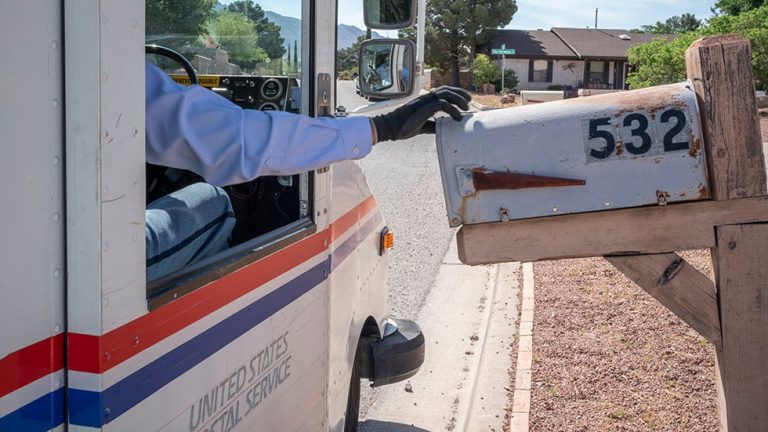
Four Senate Democrats are pressing the U.S. Postal Service (USPS) over complaints about slow delivery since Postmaster General Louis DeJoy took over in June amid concerns a backlog could affect tallying mail-in ballots in November.
Sens. Gary Peters Gary Charles PetersTrump may have power, but he still has no plan to fight the pandemic 100 Days: Democrats see clear path to Senate majority Hillicon Valley: Feds warn hackers targeting critical infrastructure | Twitter exploring subscription service | Bill would give DHS cyber agency subpoena power MORE (D-Mich.), Amy Klobuchar
 Amy KlobucharGOP sparks backlash after excluding election funds from COVID-19 bill Hillicon Valley: Feds warn hackers targeting critical infrastructure | Twitter exploring subscription service | Bill would give DHS cyber agency subpoena power Democratic senators call for ‘thorough and comprehensive’ review of Google’s Fitbit acquisition MORE (D-Minn.), Tom Carper
 Thomas (Tom) Richard CarperBarrasso nuclear bill latest GOP effort to boost uranium mining Lawmakers weigh increased telework as some agencies push federal workers back to the office Senate report says Russian oligarchs evading U.S. sanctions through big-ticket art purchases MORE (D-Del.) and Charles Schumer
 Chuck SchumerLincoln Project targets Senate races in Alaska, Maine, Montana with M ad buy Pelosi, Schumer say GOP Senate coronavirus bill is ‘selling out working families’ The Hill’s 12:30 Report – Presented by Facebook – Barr’s showdown with House Democrats MORE (D-N.Y.) sent a letter to DeJoy demanding he explain new changes he implemented this month, saying they’ve heard concerns from their constituents over USPS’s quality of service. They also dinged the postmaster general for not responding to a letter Peters sent him earlier this month.
“It is essential that the Postal Service not slow down mail or in any way compromise service for veterans, small businesses, rural communities, seniors, and millions of Americans who rely on the mail – including significant numbers who will be relying on the Postal Service to exercise their right to vote,” they wrote.
“However, your failure to provide Congress with relevant information about these recent changes or to clarify to postal employees what changes you have directed as Postmaster General, undermines public trust and only increases concerns that service compromises will grow in advance of the election and peak mail volumes in November,” they added.
The senators asked DeJoy to offer a full explanation for each change he’s implemented, provide a list of all processing centers and post offices that have implemented operational changes, and clarify what effect the changes had on service performance. They demanded a response by Aug. 4.
The letter comes after reports surfaced earlier this month highlighting changes DeJoy made that sparked fears of delivery delays. Among other things, DeJoy told employees to leave mail at distribution centers if delivery of the packages would delay letter carriers from their routes, a measure he defended as a cost-cutting measure.
The USPS finds itself in a deep financial hole, seeing its coffers deplete in the age of emails and social media.
“In making any changes to Postal Service operations, you should carefully study their service impacts, costs, and other factors in advance, and implement them in a clear and well-documented manner, with the cooperation of unions and key postal stakeholders,” the senators wrote. “It is unacceptable to implement broad and non-transparent changes that may slow down service during a pandemic, when the Postal Service’s capacity as an essential agency is already strained,” the senators wrote.
The move brought on accusations that DeJoy, a North Carolina logistics executive who has donated millions to Republican committees in recent years, is working as a political ally of President Trump Donald John TrumpTrump campaign cancels ad buys to review messaging strategy: report Nunes declines to answer if he received information from Ukraine lawmaker meant to damage Biden Poll: Plurality of ‘Gen Z’ voters say they see more political ads from Trump than Biden MORE.
Trump has railed against mail-in ballots, arguing without evidence that they are particularly susceptible to fraud and suggested this week that the Nov. 3 election be delayed.
A Postal Service spokesman told Reuters the agency “is taking immediate steps to increase operational efficiency by re-emphasizing existing plans that have been designed to provide prompt and reliable service within current service standards.”
Elon Musk: Tesla is seeing ‘strong’ demand through pandemic – Electrek.co

CEO Elon Musk insists that Tesla is seeing “strong” demand throughout the whole pandemic and the CEO attributes this success to Tesla’s online orders.
During Tesla’s last earnings call, Musk insisted that shareholders and analysts shouldn’t worry about demand despite the automotive industry as a whole seeing a major downturn amid the pandemic.
The CEO repeated several times that “demand is not an issue” and that it “outpaces supply” at the moment.
Now in a interview on the Daily Drive Automotive News podcast, Musk reiterated that Tesla is seeing “strong orders”:
“We saw strong orders through the whole pandemic, we still had a good order volume. I guess people are less inclined to want to go to a dealership, do the test drive and hang out in the lobby and that kind of thing.”
Tesla has been betting on internet sales for a while.
Last year, it was a controversial subject after Musk announced that Tesla would go to a model of online sales only and close most of its stores with the goal to be able to sell the Model 3 for $35,000.
However, the CEO ended up reversing the move later in 2019 and kept most of its retail locations open.
At the time, surveyed showed that while most of Tesla’s sales are done online, most customers still went to the stores to get information from Tesla’s staff and test drive the vehicles before buying.
Musk’s new comments about demand also come after Tesla cut prices across its Model 3 and Model Y lineup last quarter.
Here’s the new podcast on which Musk made these new comments today:
Electrek’s Take
I am sure that Tesla doesn’t have issues with demand, but that’s also because they are pulling some demand levers.
That includes the price cuts and the announcement of the price increase for FSD.
I am sure that Tesla received more orders that they could deliver in Q2 from those moves.
There are also plenty more demand levers to pull like the launches of Model Y LR RWD, Model Y 7-seater, Model S Plaid, and more.
Therefore, I tend to agree with Elon. Demand shouldn’t be an issue any time soon.
FTC: We use income earning auto affiliate links. More.
Subscribe to Electrek on YouTube for exclusive videos and subscribe to the podcast.

Trader Joes says no to changing ethnic-sounding label names – NBC News

LOS ANGELES — Trader Joe’s, which said earlier this month it was moving to change the names of some of its products after an online petition denounced them as racist, now says it will stick with labels like Trader Jose’s and Trader Ming’s for Mexican and Asian food.
“We want to be clear: we disagree that any of these labels are racist,” the popular grocery chain said in a statement posted on its website. It added, “We do not make decisions based on petitions.”
The petition posted on change.org by a high school student claims the names create “a narrative of exoticism that perpetuates harmful stereotypes.”
Other Trader Joe’s names cited include Trader Giotto’s and Trader Joe San for Italian and Japanese foods.
After the petition was launched Trader Joe’s issued a statement saying it has been in the process of updating such product labels.
“While this approach to product naming may have been rooted in a lighthearted attempt at inclusiveness, we recognize that it may now have the opposite effect — one that is contrary to the welcoming, rewarding customer experience we strive to create every day,” company spokeswoman Kenya Friend-Daniel said at the time.
But in its recent statement the grocery chain said it still believes the names, many created decades ago, represent lighthearted efforts at inclusion, adding that its customers say they still like them.
“We thought then — and still do — that this naming of products could be fun and show appreciation for other cultures,” the company added.
That was news to Briones Bedell, the San Francisco Bay Area high school senior who launched the petition drive.
“It seems to be this complete reversal of their previous commitment to removing names from international foods that the corporation themselves have described as not being conducive to creating a welcoming customer experience,” she told The Associated Press.
In an email Friday, Friend-Daniel said the company has indeed dropped some names over the years, including Arabian Joe’s and Armenian Joe’s, and may drop others in the future. But that will be solely on input from its employees and customers and not Bedell’s petition.
“Moving forward, we will continue to evaluate those products with name variations that remain in our stores,” Friend-Daniel said. “If we find certain product names and-or products are not resonating with customers, we won’t hesitate to make changes.”
Bedell, who described herself and her family as frequent Trader Joe’s shoppers until she launched her petition drive, said she always found the names in question offensive.
But she didn’t launch her petition drive, she said, until she looked into the history of the company founded by the late Joe Coulombe in 1958.
The chain’s website describes how its name and South Pacific decor were inspired by his reading of the book “White Shadows in the South Seas” and a ride on the Disneyland Jungle Boat Cruise, a comical attraction that takes people along rivers populated by rhinos, native headhunters and others that threaten to attack them.
She saw the book and the ride as being filled with racist stereotypes of native savages and white gods that she says Trader Joe’s appropriated to sell food and beverages.
“It’s intended to allow the consumer to build up this perceived sophistication through their knowledge of worldliness through their choice of food,” she said. “But it’s not a cultural celebration or representation. This is exoticism. These brands are shells of the cultures they represent.”
Although her petition had more than 5,000 signatures Friday, it’s brought Bedell some intense blow-black across social media, where she’s been the frequent target of vile, sexist insults and other name-calling.
Interestingly enough, she said, the criticism has come from across the political spectrum, with conservatives denouncing her for promoting cancel culture while liberals accuse her of wasting time on a trivial issue.
Despite that, she wants the debate to continue.
“I’ve just been really grateful that this has sparked as much conversation as it has,” she said. “I hope in any future endeavors I can act as a facilitator so people can make up own minds about what is right.”
This story has been corrected to show the spelling of the last name of Trader Joe’s founder is Coulombe.
Local Bar & Grill Gets Liquor License Suspended for Allowing Dining Inside Atrium – westsiderag.com

Posted on July 31, 2020 at 3:42 pm by Carol Tannenhauser

Dining in the Hi-Life atrium.
By Carol Tannenhauser
On Thursday, July 30th, the New York State Liquor Authority (SLA) suspended the liquor license of Hi-Life Bar & Grill, on 83rd Street and Amsterdam Avenue, for allegedly violating the dining-in ban still in effect in New York City due to the coronavirus.
“I’m still reeling,” said owner Earl Geer, in an email to WSR. “A half hour ago, reps from the SLA came with cops to shut our bar down. Last night, we were given a notice by an SLA rep for utilizing our sidewalk café atrium, with French doors open, to serve diners. This is a gray area, as it has a fixed roof.”
Geer said he was under the misunderstanding that when guidelines were modified to include street seating with solid overhead covering, i.e. tents, that seating in his cafe, with all doors open and also plexiglass separating diners, was in compliance.
“We complied immediately on Wednesday night, but today we learned that the ‘Full Board’ voted and suspended a number of licenses, including ours. So much for three strikes,” he added.
The fine for the violation could be as much as $10,000, Eater said.
Geer emphasized that he is “very supportive of Governor Cuomo and all he has done to keep New York City safe, and will always comply with city and state regulations. “While we would have appreciated a warning,” Geer said, “We apologize for the misunderstanding and any noncompliance.”
“I’m heartbroken,” said Upper West Sider and tipster Joe Mutz. “I’ve consumed more meals there than I can count.”
Until the matter is resolved, Hi-Life’s kitchen will remain open for outdoor dining and delivery, and will offer complimentary watermelon and mint-infused water, ice teas and Arnold Palmers. Geer is calling this a “neighborhood booze cleanse.”
Earl wrote about the difficulties of operating a restaurant amid the pandemic here.
The staff of Hi-Life created a GoFundMe account to help with Hi-Life’s legal expenses and lost business. Click here to donate.