

‘);$vidEndSlate.removeClass(‘video__end-slate–inactive’).addClass(‘video__end-slate–active’);}};CNN.autoPlayVideoExist = (CNN.autoPlayVideoExist === true) ? true : false;var configObj = {thumb: ‘none’,video: ‘politics/2020/06/15/us-postal-service-financial-crisis-trump-pkg-dean-newday-vpx.cnn’,width: ‘100%’,height: ‘100%’,section: ‘international’,profile: ‘expansion’,network: ‘cnn’,markupId: ‘large-media_0’,adsection: ‘const-article-pagetop’,frameWidth: ‘100%’,frameHeight: ‘100%’,posterImageOverride: {“mini”:{“width”:220,”type”:”jpg”,”uri”:”//cdn.cnn.com/cnnnext/dam/assets/200117115238-01-usps-trucks-file-small-169.jpg”,”height”:124},”xsmall”:{“width”:307,”type”:”jpg”,”uri”:”//cdn.cnn.com/cnnnext/dam/assets/200117115238-01-usps-trucks-file-medium-plus-169.jpg”,”height”:173},”small”:{“width”:460,”type”:”jpg”,”uri”:”//cdn.cnn.com/cnnnext/dam/assets/200117115238-01-usps-trucks-file-large-169.jpg”,”height”:259},”medium”:{“width”:780,”type”:”jpg”,”uri”:”//cdn.cnn.com/cnnnext/dam/assets/200117115238-01-usps-trucks-file-exlarge-169.jpg”,”height”:438},”large”:{“width”:1100,”type”:”jpg”,”uri”:”//cdn.cnn.com/cnnnext/dam/assets/200117115238-01-usps-trucks-file-super-169.jpg”,”height”:619},”full16x9″:{“width”:1600,”type”:”jpg”,”uri”:”//cdn.cnn.com/cnnnext/dam/assets/200117115238-01-usps-trucks-file-full-169.jpg”,”height”:900},”mini1x1″:{“width”:120,”type”:”jpg”,”uri”:”//cdn.cnn.com/cnnnext/dam/assets/200117115238-01-usps-trucks-file-small-11.jpg”,”height”:120}}},autoStartVideo = false,isVideoReplayClicked = false,callbackObj,containerEl,currentVideoCollection = [],currentVideoCollectionId = ”,isLivePlayer = false,mediaMetadataCallbacks,mobilePinnedView = null,moveToNextTimeout,mutePlayerEnabled = false,nextVideoId = ”,nextVideoUrl = ”,turnOnFlashMessaging = false,videoPinner,videoEndSlateImpl;if (CNN.autoPlayVideoExist === false) {autoStartVideo = true;if (autoStartVideo === true) {if (turnOnFlashMessaging === true) {autoStartVideo = false;containerEl = jQuery(document.getElementById(configObj.markupId));CNN.VideoPlayer.showFlashSlate(containerEl);} else {CNN.autoPlayVideoExist = true;}}}configObj.autostart = CNN.Features.enableAutoplayBlock ? false : autoStartVideo;CNN.VideoPlayer.setPlayerProperties(configObj.markupId, autoStartVideo, isLivePlayer, isVideoReplayClicked, mutePlayerEnabled);CNN.VideoPlayer.setFirstVideoInCollection(currentVideoCollection, configObj.markupId);videoEndSlateImpl = new CNN.VideoEndSlate(‘large-media_0’);function findNextVideo(currentVideoId) {var i,vidObj;if (currentVideoId && jQuery.isArray(currentVideoCollection) && currentVideoCollection.length > 0) {for (i = 0; i 0) {videoEndSlateImpl.showEndSlateForContainer();if (mobilePinnedView) {mobilePinnedView.disable();}}}}callbackObj = {onPlayerReady: function (containerId) {var playerInstance,containerClassId = ‘#’ + containerId;CNN.VideoPlayer.handleInitialExpandableVideoState(containerId);CNN.VideoPlayer.handleAdOnCVPVisibilityChange(containerId, CNN.pageVis.isDocumentVisible());if (CNN.Features.enableMobileWebFloatingPlayer &&Modernizr &&(Modernizr.phone || Modernizr.mobile || Modernizr.tablet) &&CNN.VideoPlayer.getLibraryName(containerId) === ‘fave’ &&jQuery(containerClassId).parents(‘.js-pg-rail-tall__head’).length > 0 &&CNN.contentModel.pageType === ‘article’) {playerInstance = FAVE.player.getInstance(containerId);mobilePinnedView = new CNN.MobilePinnedView({element: jQuery(containerClassId),enabled: false,transition: CNN.MobileWebFloatingPlayer.transition,onPin: function () {playerInstance.hideUI();},onUnpin: function () {playerInstance.showUI();},onPlayerClick: function () {if (mobilePinnedView) {playerInstance.enterFullscreen();playerInstance.showUI();}},onDismiss: function() {CNN.Videx.mobile.pinnedPlayer.disable();playerInstance.pause();}});/* Storing pinned view on CNN.Videx.mobile.pinnedPlayer So that all players can see the single pinned player */CNN.Videx = CNN.Videx || {};CNN.Videx.mobile = CNN.Videx.mobile || {};CNN.Videx.mobile.pinnedPlayer = mobilePinnedView;}if (Modernizr && !Modernizr.phone && !Modernizr.mobile && !Modernizr.tablet) {if (jQuery(containerClassId).parents(‘.js-pg-rail-tall__head’).length) {videoPinner = new CNN.VideoPinner(containerClassId);videoPinner.init();} else {CNN.VideoPlayer.hideThumbnail(containerId);}}},onContentEntryLoad: function(containerId, playerId, contentid, isQueue) {CNN.VideoPlayer.showSpinner(containerId);},onContentPause: function (containerId, playerId, videoId, paused) {if (mobilePinnedView) {CNN.VideoPlayer.handleMobilePinnedPlayerStates(containerId, paused);}},onContentMetadata: function (containerId, playerId, metadata, contentId, duration, width, height) {var endSlateLen = jQuery(document.getElementById(containerId)).parent().find(‘.js-video__end-slate’).eq(0).length;CNN.VideoSourceUtils.updateSource(containerId, metadata);if (endSlateLen > 0) {videoEndSlateImpl.fetchAndShowRecommendedVideos(metadata);}},onAdPlay: function (containerId, cvpId, token, mode, id, duration, blockId, adType) {/* Dismissing the pinnedPlayer if another video players plays an Ad */CNN.VideoPlayer.dismissMobilePinnedPlayer(containerId);clearTimeout(moveToNextTimeout);CNN.VideoPlayer.hideSpinner(containerId);if (Modernizr && !Modernizr.phone && !Modernizr.mobile && !Modernizr.tablet) {if (typeof videoPinner !== ‘undefined’ && videoPinner !== null) {videoPinner.setIsPlaying(true);videoPinner.animateDown();}}},onAdPause: function (containerId, playerId, token, mode, id, duration, blockId, adType, instance, isAdPause) {if (mobilePinnedView) {CNN.VideoPlayer.handleMobilePinnedPlayerStates(containerId, isAdPause);}},onTrackingFullscreen: function (containerId, PlayerId, dataObj) {CNN.VideoPlayer.handleFullscreenChange(containerId, dataObj);if (mobilePinnedView &&typeof dataObj === ‘object’ &&FAVE.Utils.os === ‘iOS’ && !dataObj.fullscreen) {jQuery(document).scrollTop(mobilePinnedView.getScrollPosition());playerInstance.hideUI();}},onContentPlay: function (containerId, cvpId, event) {var playerInstance,prevVideoId;if (CNN.companion && typeof CNN.companion.updateCompanionLayout === ‘function’) {CNN.companion.updateCompanionLayout(‘restoreEpicAds’);}clearTimeout(moveToNextTimeout);CNN.VideoPlayer.hideSpinner(containerId);if (Modernizr && !Modernizr.phone && !Modernizr.mobile && !Modernizr.tablet) {if (typeof videoPinner !== ‘undefined’ && videoPinner !== null) {videoPinner.setIsPlaying(true);videoPinner.animateDown();}}},onContentReplayRequest: function (containerId, cvpId, contentId) {if (Modernizr && !Modernizr.phone && !Modernizr.mobile && !Modernizr.tablet) {if (typeof videoPinner !== ‘undefined’ && videoPinner !== null) {videoPinner.setIsPlaying(true);var $endSlate = jQuery(document.getElementById(containerId)).parent().find(‘.js-video__end-slate’).eq(0);if ($endSlate.length > 0) {$endSlate.removeClass(‘video__end-slate–active’).addClass(‘video__end-slate–inactive’);}}}},onContentBegin: function (containerId, cvpId, contentId) {if (mobilePinnedView) {mobilePinnedView.enable();}/* Dismissing the pinnedPlayer if another video players plays a video. */CNN.VideoPlayer.dismissMobilePinnedPlayer(containerId);CNN.VideoPlayer.mutePlayer(containerId);if (CNN.companion && typeof CNN.companion.updateCompanionLayout === ‘function’) {CNN.companion.updateCompanionLayout(‘removeEpicAds’);}CNN.VideoPlayer.hideSpinner(containerId);clearTimeout(moveToNextTimeout);CNN.VideoSourceUtils.clearSource(containerId);jQuery(document).triggerVideoContentStarted();},onContentComplete: function (containerId, cvpId, contentId) {if (CNN.companion && typeof CNN.companion.updateCompanionLayout === ‘function’) {CNN.companion.updateCompanionLayout(‘restoreFreewheel’);}navigateToNextVideo(contentId, containerId);},onContentEnd: function (containerId, cvpId, contentId) {if (Modernizr && !Modernizr.phone && !Modernizr.mobile && !Modernizr.tablet) {if (typeof videoPinner !== ‘undefined’ && videoPinner !== null) {videoPinner.setIsPlaying(false);}}},onCVPVisibilityChange: function (containerId, cvpId, visible) {CNN.VideoPlayer.handleAdOnCVPVisibilityChange(containerId, visible);}};if (typeof configObj.context !== ‘string’ || configObj.context.length 0) {configObj.adsection = window.ssid;}CNN.autoPlayVideoExist = (CNN.autoPlayVideoExist === true) ? true : false;CNN.VideoPlayer.getLibrary(configObj, callbackObj, isLivePlayer);});CNN.INJECTOR.scriptComplete(‘videodemanddust’);
European G.D.P. Shrinks by Historic Margin – The New York Times

Percentage change from previous quarter

Percentage change from previous quarter
The European economy tumbled into its worst recession on record in the second quarter, as quarantines in countries across the continent brought business, trade and consumer spending to a grinding halt.
From April to June, gross domestic product fell from the first quarter by 11.9 percent in the 27 member states of the European Union, and by 12.1 percent in countries that use the euro currency, according to figures released on Friday by Eurostat, the bloc’s statistics agency.
On an annualized basis, European Union economies shrank by 14.4 percent, and eurozone economies by 15 percent, the sharpest contractions since statistics started being kept in 1995.
But there were signs that the worst may have passed since then, and that a tentative recovery was gaining some traction as governments unleashed enormous stimulus spending. Lengthy lockdowns, while painful for business and industry, have helped curb a widespread resurgence of the pandemic in most countries, easing reopenings.
The data was especially grim for nations on Europe’s southern rim, which were among the worst affected by the virus and which faced longer quarantine periods than northern European countries.
In Spain, which has had one of Europe’s highest death tolls, the economy shrank by a staggering 22.1 percent from a year ago and by 18.5 percent from the first quarter. France, the eurozone’s second-largest economy, shrank by 19 percent from a year ago and by 13.8 percent from the first quarter; and Italy, the third-largest economy in the zone, contracted by 17.3 percent from a year ago and by 12.4 percent from the first quarter. France is officially in recession, with three straight quarters of contraction.
On Thursday, the authorities reported that the German economy, Europe’s largest, shrank by 11.7 percent from the same period last year and by 10.1 percent from the previous quarter.
European Union leaders last week agreed to a landmark stimulus of 750 billion euros, or about $884 billion, to rescue their economies and to anchor a mild turnaround that had started to take hold after lockdowns began to be lifted.
But risks abound as surges in new cases are reported, increasing the possibility of more quarantines.
“The hard part of this recovery is set to start about now,” Bert Colijn, senior economist for the eurozone at ING Bank, said in a note to clients.

European countries have, for the most part, contained the spread of coronavirus. But the outbreak, which was early and widespread, has left a deep scar on the region’s economy: A 12 percent contraction in the second quarter of the year compared with the first quarter. Different government interventions and infection rates means the impact has been uneven. Here are snapshots from the region’s largest economies in the three months that ended in June.
France
Though France’s 13.8 percent decline is stark, a mild rebound in consumer spending and business activity after quarantines were lifted has helped the country avoid a far sharper decline. In fact, the nation’s central bank recently revised its economic forecasts, expecting slightly less damage in the next few years.
The government’s largess has been key: It spent over 100 billion euros ($118 billion) to pay businesses not to lay off workers, it delayed deadlines for business taxes and loan payments, and deployed over 300 billion euros in state-guaranteed loans to struggling companies.
Germany
The 10.1 percent drop in Germany’s G.D.P., the largest since the country began keeping quarterly records, might already be painting a darker picture of the economy than is warranted. Separate data released Thursday showed the labor market stabilized in July and surveys of business activity indicate a quick rebound.
But the continuation of this recovery is at risk. Germany was in a better position than other European Union countries because the government was effective in containing the spread of the coronavirus. However, there is now an increase in new infections as Germans return from holidays abroad, stoking fear of a second wave.
Italy
The devastating economic impact of Italy’s outbreak and lockdown, the first in Europe, was a 12.4 percent drop in G.D.P. While the central bank estimates that two government relief packages mitigated the contraction, a slow return in tourism, consumer spending, and business investment is dragging the recovery down.
“At least for Italy, the possibility of a V-shaped recovery is not what we have in front of us,” Bank of Italy’s governor, Daniele Franco, said. One slice of the economy is experiencing a stronger rebound: industrial production. During the first phase of the lockdown, which ended in early May, half of the Italian companies that were forced to shut managed to reopen, the central bank said.
Spain:
Spain’s recession is the deepest of all the European countries that have reported second-quarter G.D.P. so far. The economy contracted 18.5 percent compared to the first three months of the year, and the outlook for the rest of the year is grim. Spain officially ended its Covid-19 state of emergency on June 21, but it has since been struggling with an increase in the number of new cases and over 300 local outbreaks, particularly severe in the northeast.
Tourism is a substantial component of the Spanish economy but hopes of a tourism-led economic recovery this summer have been undermined by quarantine restrictions placed on the nation and its islands by Britain and other countries.

Exxon Mobil announced a record-breaking quarterly loss of $1.1 billion, blaming the coronavirus pandemic for lowering oil and gas prices and sales volumes.
The results from the largest American oil producer were further evidence of the deepest downturn for the industry in the modern era. Oil prices have recovered in recent weeks to around $40 a barrel, but that is still roughly a third below the oil price of the beginning of the year.
Chevron, the second largest U.S. oil company, also posted disappointing results for the quarter on Friday and said it was writing off its $2.6 billion investment in Venezuela because of the country’s political instability and American sanctions against its government.
Exxon’s oil production was down 3 percent and natural gas output was down 12 percent, compared to the quarter a year ago, a reflection of the crippling of global demand for energy due to a worldwide recession.
Darren W. Woods, Exxon’s chairman and chief executive, attempted to put the best face on the results.
“The global pandemic and oversupply conditions significantly impacted our second quarter financial results,” he said. “We responded decisively by reducing near-term spending and continuing work to improve efficiency. The progress we’ve made to date gives us confidence that we will meet or exceed our cost-reduction targets.”
The $1.1 billion loss compares to a profit of $3.1 billion a year ago. At the same time the company’s capital and exploration expenditures were down to $5.3 billion from $8.1 billion in the quarter last year.
Chevron said it lost $8.3 billion in the quarter; a year earlier it reported a $4.3 billion profit.
The company reported an adjusted quarterly loss of $3 billion, excluding one-time items, compared to adjusted earnings of $3.4 billion in the same quarter of 2019. In addition to the $2.6 billion Venezuelan write down, Chevron also took a $1.8 billion write down based on the company’s oil and gas price outlook.
Chevron reported sales and other revenue of $16 billion, compared to $36 billion in the same period a year earlier.
“We’re focused on what we can control,” Michael K. Wirth, Chevron’s chairman and chief executive, said in a statement. “We’re transforming our company to be more efficient, agile and innovative.”
Exxon and Chevron said they would maintain their dividends.

United plans to add more than 25 international routes to its September schedule, a sign of limited optimism in a battered industry at a time when coronavirus cases continue to rise across the country.
Many of the new routes include destinations in Europe and Asia where governments currently restrict or limit American visitors. United said it would adjust its schedule as necessary to deal with travel and quarantine restrictions.
“We continue to be realistic in our approach to building back our international and domestic schedules by closely monitoring customer demand and flying where people want to go,” Patrick Quayle, United’s vice president of international network and alliances, said in a statement.
Many people are still flying for essential business, to visit friends and family or to return home. Some of the shorter international flights United is adding will serve limited demand for leisure travel.
The airline said it will launch a new route connecting Chicago and Tel Aviv if it is able to obtain government approval. The airline will also resume service between some of its American hubs and Amsterdam, Frankfurt, Munich, Sydney, Costa Rica, St. Thomas, Ecuador and several destinations in Mexico. United also plans to continue to fly to New Delhi and Mumbai and between Chicago and Hong Kong, pending government approval.
Overall, the airline plans to operate about 37 percent of the flights it flew last September, a four-point increase from August. The Transportation Security Administration has only screened about 26 percent as many people at its checkpoint in recent days as it did on the same days a year ago.

Government payments played a critical role in propping up the American economy, data released Friday shows.
Consumer spending rose 5.6 percent in June, the Commerce Department said, the second straight monthly increase after a record-setting plunge in April.
But the end of some benefits, namely the $1,200 payment made to many individuals, also meant that personal income fell 1.1 percent last month. Incomes could fall further now that the federal government’s additional unemployment benefits have ended, at least temporarily.
To understand what’s happening, it helps to go back to the beginning of the pandemic. When businesses began shutting their doors and furloughing workers in March, both incomes and spending fell. Congress then stepped in with a multi-trillion-dollar rescue package, which included sending $1,200 checks to most American families and expanding the unemployment insurance system.
As a result, personal incomes rose a record 12.1 percent in April, despite a big drop in wage and salary earnings. But spending still fell, at least in part because people had fewer opportunities to go shopping and dine out. (Other data suggests spending fell sharply among the wealthy, while rebounding more quickly for other income groups once government checks began arriving.)
In May and June, those patterns began to reverse. Spending picked back up as the economy reopened. Wage and salary incomes rose too, as companies began rehiring furloughed workers. Government payments fell with the end of the $1,200 checks, but remained high.
The net result: Overall personal income was higher in June than in February. But without government intervention — especially the expanded unemployment benefits, which are injecting money into the economy at a rate of $1.4 trillion a year — incomes would be lower now than when the crisis began.
Spending has rebounded but remains almost 7 percent below its precrisis level, even with the government help. And now, that help is in danger of running out: The $600 a week in extra unemployment benefits expires today, and senators have left for the weekend.
Stocks gave up their early gains on Friday as gnawing concerns about the economic toll of the pandemic contended with a surge in profits reported by America’s largest tech companies.
The S&P 500 was slightly lower, after earlier rising about half a percent. The index is still on track to end July with a gain of about five percent. The index has climbed for four consecutive months — rising about 25 percent since the end of February.
A big factor behind that rally has been the relative success of big technology companies, which were well positioned to benefit from a shift to remote work and limits on public activity.
On Thursday, investors heard just how much they benefited. Amazon, Apple and Facebook reported surging profits on Thursday. The blockbuster earnings seemed to briefly put aside the uncertainty and pessimism surrounding the economic impact of the pandemic, but also perhaps underscored the concerns of lawmakers, expressed on Wednesday, that American’s tech giants have gotten too big.
Shares of Amazon, Apple and Facebook rose on Friday and lifted the Nasdaq composite. Alphabet, the parent company of Google, which reported its first-ever decline in quarterly revenue on Thursday, was lower.
But the virus continues spreading, and its damage is mounting. On Thursday, the United States reported that its economy fell 9.5 percent in the second quarter, compared with the previous quarter, the most on record. On Friday, the authorities reported that the eurozone contracted 12.1 percent in the second quarter. Both the United States and Europe are in deep recessions caused by shutdowns in economic activity to curb the spread of the disease.

A day after lawmakers grilled the chief executives of the biggest tech companies about their size and power, Alphabet, Amazon, Apple and Facebook reported surprisingly healthy quarterly financial results, defying one of the worst economic downturns on record.
Even though the companies felt some sting from the spending slowdown, they demonstrated, as critics have argued, that they are operating on a different playing field from the rest of the economy.
Combined, the companies reported $28.6 billion in quarterly net profit, underscoring how regulatory scrutiny remains more background noise and a distraction for them rather than an imminent threat to their businesses.
“The strong continue to get stronger,” said Dan Ives, managing director of equity research at Wedbush Securities. “As many companies are falling by the wayside, the tech stalwarts continue to gain muscle and power in this environment.”
The editors and reporters for the DealBook newsletter sift through a lot of company reports and dial into many earnings conference calls. A huge number of companies reported their latest financial results on Thursday, and aside from the tech giants’ bumper profits these are some of the things that caught our notice, from lapsed cereal eaters to “coronabeards.”
🍺 “To put a finer point in the level of demand we’re seeing, we eclipsed July 4 week shipment days in the United States four times already this year. That’s unheard of.” — Gavin Hattersley, the C.E.O. of Molson Coors
🇯🇵 “We would be in Tokyo right now under normal circumstances. So it’s a total bummer for our company that we don’t have the Olympics.” — Jeff Shell, the C.E.O. of NBCUniversal
🥣 “Special K gained share in quarter two as did Mini-Wheats and Raisin Bran. We are also excited about the consumer trial and rediscovery we are seeing from new and lapsed users in cereal.” — Steven Cahillane, the C.E.O. of Kellogg’s
🧔 “As people go back to work in offices and outside the home, we’ll see a pickup in the wet shave rate.” — David Taylor, the C.E.O. of Procter & Gamble, in response to an analyst question about the rise of mullets and “coronabeards” during lockdowns
🍩 “I love when we really get on our doughnut mojo, but look, we are leaning into beverages in a big way.” — David Hoffmann, the C.E.O. of Dunkin’ Brands

With Zoom call fatigue setting in and boozy lunches out of the question during the coronavirus pandemic, housebound executives are finding new ways to meet and bond in video games. The goal is to break up a day that is crammed with get-togethers that generally look, sound and feel identical.
And for people like Lewis Smithingham, an advertising executive in Brooklyn, an outing in virtual space is a chance to form memories with people he has never met, which is a crucial part of developing relationships, business and otherwise.
“It’s my golf,” he said. Unlike golf, video games come with social distancing built in. It is back slapping without the slapping or the back, ideal during a pandemic.
Nobody knows how many executives are meeting in video games, including game publishers, but examples are popping up on Twitter and other social media platforms.
The idea of holding business meetings in a virtual world enjoyed a certain vogue about a decade ago. More than 1,400 organizations had a presence on Second Life, an online realm with everything an avatar would need, including auditoriums and beer.
For Mr. Smithingham, different games offer advantages for different clients. Gunplay and mayhem is not always the right fit. He is a fan of Animal Crossing: New Horizons, a new version of a long-popular Nintendo game, which was released in March.
“My production value is now considerably better in Animal Crossing than it is on Zoom,” he said.

Fiat Chrysler reported a net loss of 1 billion euros ($1.2 billion) in the second quarter, but said it expects improving economic conditions to lift its fortunes in the second half of the year.
Forced to shut down operations in Europe and North American for much of the quarter because of the pandemic, Fiat Chrysler said revenue dropped 56 percent, to 11.7 billion euros. It also used some 5 billion euros in cash.
In a conference call, the automaker’s chief executive, Mike Manley, said auto sales are recovering faster than had been expected, and the company has been able to ramp production back to normal levels in North America. Its European plants should return to typical production levels in the third quarter, the company said.
“We expect significant improvement in profitability and cash flows,” he said. “We expect a much, much better second half.
The automaker also plans to introduce five new electric vehicles in the coming months, including plug-in hybrid versions of three different Jeep models.
Fiat Chrysler is in the process of merging with French automaker PSA Group, maker of the Peugeot and Citroën brands. The combined company will be called Stellantis.
Europe has a bad rep with investors. For years, asset managers and bank strategists have characterized the region by its anemic growth rate and shaky political union, and steered investors away.
Now, a crisis has turned into an unlikely investment opportunity as the region appears to have handled the pandemic better than some other parts of the world. In the past few months, European assets have staged a comeback, writes Eshe Nelson, who gives two reasons for the turnaround:
The euro has gained more than 5 percent against the dollar so far this year, according to FactSet data. Since late May, Europe’s stock market has recorded stronger gains than the S&P 500 index, after taking the strength of the euro into account.
Investors are starting to take advantage of the relative cheapness of European equities, but a sustained recovery in either stock market will depend on consumer and business confidence returning, which would in turn stir economic activity.
Here’s some of what happened on Thursday that you might have missed.
Ford Motor said it earned $1.1 billion in the second quarter as a large one-time gain in the value of its investment in an autonomous driving company more than offset losses in its main business. Without the gain, from its stake in Argo AI, Ford lost $1.9 billion excluding interest and taxes. The result was better than Ford’s earlier forecast of a pretax loss of $5 billion.
United Airlines warned its pilots that it might need to expand planned furloughs if demand for flights remained deeply depressed and a vaccine was not mass produced by the end of next year. The airline previously said that it could furlough up to one third of its pilots, or 3,900 people, this year and next.
Comcast, the largest cable operator in the U.S., said that Peacock, its new streaming product, attracted 10 million sign-ups in its first three months.
California Pizza Kitchen filed for bankruptcy protection in Texas. The company, which operates more than 200 locations in the United States and internationally, said it would use the restructuring process to close unprofitable locations and cut debt, and planned to emerge from bankruptcy in less than three months.
Pastor, Church Member Die for Proclaiming Christ in Eastern Uganda

NAIROBI, Kenya, July 30, 2020 (Morning Star News) – Christians in eastern Uganda had what seemed to be an effective strategy for bringing the gospel to Muslims on the banks of Lake Nakuwa, part of Lake Kyoga.
The Christians from Namuseru village, Gadumire Sub-County in Kaliro District would cross the lake to go fishing and, as they interacted with Muslims near Lugonyola village, become fishers of men, inviting them to evangelistic meetings there.
In time hard-line Muslims began warning the Christians to stop evangelizing in the area, sources said. The last warning came on June 21, a day before radical Muslims from Lugonyola village beat and drowned 25-year-old pastor Peter Kyakulaga and 22-year-old church member Tuule Mumbya in the lake, one of the pastor’s relatives said.
“We have discovered that your mission is not to fish but to hold Christian meetings and then convert Muslims to Christianity,” one of the Muslims told the Christians on June 21, according to the relative. “We are not going to take this mission of yours lightly. This is our last warning to you.”
David Nabyoma, chairperson of the local council from Namuseru village, said Christian friends knocked on his door at 10 p.m. the night of June 22.
“They were requesting help, saying Muslims from Lugonyola had invaded the area around the lakeside, and several Christians were reported to have been injured, including my…
… Read More
Click here to read the rest of the story from our content source/partners – Christian Headlines.
Australia to force Google and Facebook to pay news publishers – CNBC
Facebook and Google logos
Peter Foley/Bloomberg | Getty Images
Google and Facebook could be forced to pay Australian news publishers to distribute their content, in a landmark regulatory move from the country’s competition regulator.
The Australia Competition and Consumer Commission was tasked by the government earlier this year with developing a mandatory code for the tech giants to pay for their use of news content. If approved, a draft code announced by the ACCC Friday would allow Australian outlets to secure payments in a matter of months.
It is aimed at addressing “acute bargaining power imbalances” between news groups and Google and Facebook, the ACCC said. Under the rules, if the publishers and digital platforms are unable to agree a deal after three months of formal talks, a “final offer” arbitration process will be? initiated that results in the selection of the “most reasonable” offer in 45 business days.
“Our regulatory changes are designed to create a level playing field and a fair-go,” Australian Treasurer Josh Frydenberg said Friday. “We want the rules in the digital world to reflect the rules in the physical world. We want to ensure consumer protection is enhanced, competition is increased and of course we deliver a sustainable media environment for all Australians for the future.”
The move could see Australia become the first country to force Google and Facebook to pay for news content. It comes after talks between the online platforms, ACCC and media companies failed to result in agreement. The draft code will undergo a month-long consultation before being debated in parliament. If it is passed, it is expected to be reviewed in a year’s time.
It’s not yet clear how much the development will impact Google and Facebook’s revenues. Google parent company Alphabet reported its first revenue decline in history in its second-quarter earnings report Thursday, while Facebook posted an 11% climb in revenues. The two firms have been under the regulatory spotlight of late, with their CEOs appearing alongside the bosses of Amazon and Apple in a congressional antitrust hearing on Wednesday.
Google said it was “deeply disappointed and concerned” by the ACCC’s draft mandatory code.
“The Code discounts the already significant value Google provides to news publishers across the board — including sending billions of clicks to Australian news publishers for free every year worth $218 million,” Mel Silva, managing director of Google Australia and New Zealand, said in a statement Friday.
“It sends a concerning message to businesses and investors that the Australian Government will intervene instead of letting the market work, and undermines Australia’s ambition to become a leading digital economy by 2030. It sets up a perverse disincentive to innovate in the media sector and does nothing to solve the fundamental challenges of creating a business model fit for the digital age.”
William Easton, Facebook’s managing director of Australia and New Zealand, said the company was currently “reviewing the Government’s proposal to understand the impact it will have on the industry, our services and our investment in the news ecosystem in Australia.”
Last month, Google said it would pay some publishers in Australia, Germany and Brazil directly to license their content, as part of a new service expected to launch later this year. It marked a change in tack for the internet giant, which has for years fended off demands from news organizations to pay for the distribution of their work.
France’s competition regulator ruled in April that Google must pay publishing firms and news agencies for reusing their content. Such regulatory pressure has heightened at a time when news outlets are grappling with a sharp decline in advertising expenditure due to the coronavirus pandemic.
Why Pfizer Could Be a Bigger Coronavirus Winner Than Moderna – Motley Fool

There’s one U.S. company developing a novel-coronavirus vaccine candidate that’s probably been in the headlines more than any other. Moderna (NASDAQ:MRNA) made waves earlier this year with its rapid development of a COVID-19 vaccine candidate that uses messenger RNA (mRNA). The mRNA spurs the ribosomes to generate antigens that are like the spike protein in SARS-CoV-2 (the novel coronavirus), then the body responds by producing antibodies against it.
Moderna quickly established itself as a leader in the race to develop a COVID-19 vaccine. Its stock has skyrocketed as a result, more than quadrupling so far this year.
But a much larger drugmaker also has a mRNA-based COVID-19 vaccine candidate. Pfizer (NYSE:PFE) teamed up with German biotech BioNTech (NASDAQ:BNTX) in March because of the promise of its BNT162 program. Don’t be surprised if Pfizer actually becomes a bigger coronavirus winner than Moderna.

Image source: Getty Images.
Running neck-and-neck
One reason why Moderna has received so much attention is that its COVID-19 vaccine candidate, mRNA-1273, advanced through clinical studies very quickly. A phase 1 study conducted by the National Institutes of Health dosed its first participant on March 16. Moderna’s phase 2 study of mRNA-1273 began in late May. The biotech kicked off a phase 3 study earlier this week.
Pfizer and BioNTech were over a month behind Moderna in beginning clinical testing of four COVID-19 vaccine candidates, with the first participants in a phase 1/2 study conducted in Germany dosed on April 29. A phase 1/2 study in the U.S. began the following week.
But Pfizer has now nearly caught up with Moderna. The big drugmaker and its smaller German partner announced on Tuesday of this week that COVID-19 vaccine candidate BNT162b2 is being advanced into pivotal phase 2/3 clinical testing.
More importantly, Pfizer and BioNTech could have late-stage results roughly around the same time as Moderna. The two companies stated that they “expect to be ready to seek Emergency Use Authorization or some form of regulatory approval as early as October 2020.” That’s in line with public statements made by Moderna CEO Stephane Bancel, who recently said that late-stage results for mRNA-1273 could be released in October or November.
Way ahead
Pfizer is way ahead of Moderna in other ways.
Moderna is on track to be able to make around 500 million doses of its COVID-19 vaccine annually beginning in 2021. It thinks that this level could be increased to 1 billion doses per year, but Moderna is relying on third parties to help boost its production capacity.
Meanwhile, Pfizer and BioNTech expect to deliver up to 100 million doses by the end of this year, assuming BNT162b2 wins authorization or approval. The companies aim to produce around 1.3 billion doses by the end of 2021.
So far, Moderna has received substantial funding from the U.S. government. However, the biotech has not yet lined up any supply deals in the U.S., or with any other country.
What about Pfizer? It recently landed a massive deal with the U.S. government to supply an initial order of 100 million doses of its COVID-19 vaccine for $1.95 billion. There’s also an option in the agreement for the U.S. to purchase another 500 million doses.
In addition, Pfizer signed a deal with the United Kingdom to supply 30 million doses of its COVID-19 vaccine for an undisclosed amount. Both the U.S. and U.K. agreements are contingent upon approval or authorization of the coronavirus vaccine developed by Pfizer and BioNTech.
Different kinds of winning
It’s not hard to imagine Pfizer becoming a bigger winner with BNT162b2 than Moderna will be with mRNA-1273. Pfizer’s greater production capacity and big supply agreements already in place give it distinct advantages. There’s also a possibility that BNT162b2 could have a better safety profile than mRNA-1273, although we won’t know for sure until late-stage results are available for both vaccine candidates.
However, there are different kinds of winning. Even if BNT162b2 is more successful commercially than mRNA-1273 (again, assuming both vaccine candidates win approval), Moderna could still beat Pfizer in terms of stock performance. A biotech stock like Moderna, with a market cap of around $32 billion, would have much more room to run than a big pharma stock like Pfizer, with a market cap of close to $220 billion.
Also keep in mind that Moderna owns all the rights to mRNA-1273. Pfizer gave BioNTech an upfront payment of $185 million and made an equity investment of around $113 million in the German biotech. It might have to pay BioNTech up to $563 million in milestone payments. Details of how any sales and profits of BNT162b2 would be split between the two partners weren’t announced. The bottom line is that Pfizer won’t pocket all of the money that BNT162b2 might make if it’s approved.
Even with these caveats, though, Pfizer should stand to make a lot of money if BNT162b2 is successful in late-stage testing. And with a merger of its growth-challenged Upjohn unit with Mylan likely to wrap up in the fourth quarter of 2020, the big drugmaker could soon become a bigger winner than it’s been in a long time.
Pharma giant Merck raises 2020 outlook, saying the worst of the coronavirus impact is behind it – CNBC
A nurse holds up a one dose bottle and a prepared syringe of measles, mumps and rubella virus vaccine made by Merck at the Utah County Health Department in Provo, Utah.
George Frey | Getty Images
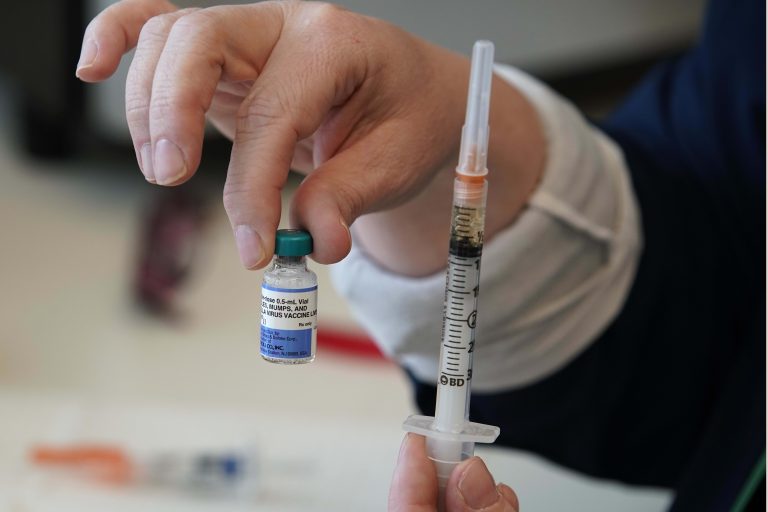
Pharmaceutical giant Merck on Friday beat Wall Street expectations in the second quarter and raised its overall earnings guidance for the year, saying the worst of the coronavirus pandemic is behind it.
The company, which is racing to develop two vaccines as well as a treatment to fight Covid-19, told investors the “majority of the negative impact” hit its earnings during the quarter. It expects a gradual recovery through the third quarter “with a return to normal operating levels in the fourth quarter.”
“As expected, social distancing measures in many regions negatively impacted second-quarter volumes for many of our products,” CEO Ken Frazier said during a conference call discussing the company’s second-quarter earnings. “However, customer access to care is steadily improving, including in our portfolio of vaccines, which was hit particularly hard this quarter.”
The company’s shares rose by nearly 3% in premarket trading. The Covid-19 pandemic cost Merck $1.6 billion in lost revenue during the quarter as fewer people visited doctor’s offices. The company estimated the total revenue impact of the pandemic at $1.95 billion for 2020, slightly less than previous projections.
Sales of its blockbuster cancer drug Keytruda helped offset an 8% decline in revenue to $10.87 billion during the three months ended June 30 from $11.76 billion from a year earlier.
The New Jersey-based company previously warned that the coronavirus would hit its 2020 sales as the pandemic prevented people from going to doctor’s offices in the second quarter. Two-thirds of the company’s products, including Keytruda, are administered by physicians, Chief Financial Officer Robert Davis said during the company’s first-quarter conference call.
Keytruda’s sales jumped 29% to $3.9 billion from $2.36 billion the year before.
Here’s how the company performed versus what Wall Street expected, based on average analysts estimates compiled by Refinitiv.
- Adjusted EPS: $1.37 versus $1.04 expected.
- Revenue: $10.87 billion versus $10.39 billion expected.
Merck said it now expects full-year adjusted profit of $5.63 to $5.78 per share, compared with its prior forecast of $5.17 to $5.37 per share. Net income attributable to shareholders rose to $3 billion, or $1.18 per share, in the quarter, from $2.67 billion, or $1.03 per share, a year earlier.
Merck is among several companies working to develop Covid-19 vaccines and therapeutics, although the company jumped into the race later than many others, including pharmaceutical giants Pfizer, Johnson & Johnson and Moderna.
Merck acquired Austrian vaccine maker Themis Bioscience, which is developing a Covid-19 vaccine with Institut Pasteur and the University of Pittsburgh. The company said Friday clinical trials for the candidate are scheduled to begin in the third quarter.
It is also collaborating with scientific research nonprofit IAVI on a separate Covid vaccine. Merck said Friday clinical trials for this vaccine candidate will begin later this year.
“Both vaccine candidates will soon enter the clinic and we have begun investing to facilitate our ability to manufacture hundreds of millions of doses,” Frazier said during the call.
The company also announced a collaboration with Ridgeback Biotherapeutics to develop an oral antiviral therapeutic against Covid.
Julie Gerberding, chief patient officer for Merck, told Congress on July 21 that the company would not sell its vaccines at cost if approved by regulators, although she added that the company was “a long way from understanding the cost-basis.” Merck has yet to begin human trials for its vaccine candidates, well behind some competitors like Moderna and Pfizer, which began their late-stage human trials on Monday.
Amazon, Apple, Google and Facebook smash Q2 earnings – Business Insider – Business Insider
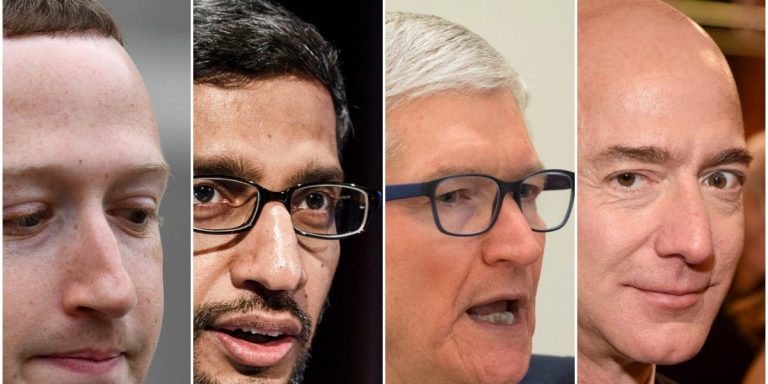
- The four big tech giants announced blockbuster earnings on Thursday, just a day after testifying before the Congress on anticompetitive behaviour.
- Facebook, Amazon, Google, and Apple added an additional $230 billion in market value.
- Analysts warn that while there may be tougher times ahead for these companies, their business is far from reaching its peak.
- Visit Business Insider’s homepage for more stories.
Four of the biggest tech companies in the world – Amazon, Apple, Google, and Facebook – announced stronger-than-expected second-quarter earnings on Thursday, defying worries about Wednesday’s antitrust hearings and an ongoing pandemic.
The strong results from the four companies, often categorized as “Big Tech,” comes a day after their CEOs testified before the Congress, defending the size of their companies
Amazon CEO Jeff Bezos, Facebook CEO Mark Zuckerberg, Alphabet CEO Sundar Pichai and Apple CEO Tim Cook took part in an ongoing investigation by the House Judiciary’s antitrust subcommittee that looked into whether the big tech companies are using their position to control the market unfairly.
It also comes at a time when the world is in the midst of containing a pandemic and the economic blowout is visible across sectors and the economy. On Thursday, the US gross domestic product fell at an annualized rate of 33% in the second quarter, the Commerce Department said Thursday. It’s the largest fall on record dating back to the 1940s.
On Friday, the euro zone economy shrank at its fastest rate in history, losing 12.1% in the second-quarter.
How big is Big Tech?
However, the pandemic seems to have helped Big Tech add another $230 billion of market value. With more people staying home during lockdown, there has been a surge in demand and usage.
On Wednesday, Facebook founder Mark Zuckerberg implied at the historic antitrust hearing that every other company was beating the social media giant.
“The most popular messaging service in the US is iMessage,” Zuckerberg said in his opening remarks, referring to Apple’s texting service. “The fastest-growing app is TikTok. The most popular app for video is YouTube. The fastest growing ads platform is Amazon. The largest ads platform is Google. And for every dollar spent on advertising in the US, less than 10 cents is spent with us.”
Yet on Thursday, Facebook’s earnings jumped 11% year-on-year. It reported daily active users of nearly 1.8 billion, 12% higher than last year, and monthly active users of 2.7 billion, another 12% rise.
This contrast — a Big Tech CEO playing down their size one day and revealing impressive earnings the next — was replicated across Amazon, Apple, and Alphabet, Google’s parent company. In Congress, these companies portrayed themselves as plucky success stories that faced fierce competition. Their balance sheets tell a different story.
Amazon reported record quarterly profit and a 40% bump in sales. In his opening remarks to Congress on Wednesday, Bezos had argued: “Every day, Amazon competes against large, established players like Target, Costco, Kroger, and, of course, Walmart—a company more than twice Amazon’s size.” This week, Bezos’ net worth has increased to $181 billion thanks to the rise in Amazon’s share price.
Apple reported Q3 revenues of $59.7 billion, more than $6 billion up on last year, and profits of $11.25 billion despite shuttering many of its stores.
Alphabet was the only one of the four to see revenue decline to $31.6 billion, down 2% year-on-year as advertising demand slowed, but it still beat Wall Street estimates.


Statista
Christopher Rossbach, CIO of J. Stern & Co., said in a research note that the antitrust hearings may mean some tough times ahead but these companies continue to grow. “Tougher times may lie ahead, and investors need to be aware that — as we have seen with the Congressional Hearing this week — politicians are growing increasingly concerned about the reach of these companies. But that doesn’t mean the business has peaked, indeed far from it.
On Amazon, Rossbach said, “We expect that more people will use ecommerce in future as habits will form, while Amazon has many more areas of retail spend to expand into. For example, just this week, Amazon announced a new service for the UK grocery sector which has seen online food delivery almost double over the last four months during the pandemic. In the US, with its large and loyal Amazon Prime membership base, Amazon can capture even more share than the estimated 4% that they currently have in US retail spend — we expect it to double in the next decade,” J.Stern & Co.’s Rossbach said.
Meanwhile, Martin Garner, COO at CIS Insight said in a note that Facebook was insulated from the worst of the COVID-19 affects because smaller companies needed to move online quickly in order to reinvent themselves during the lockdown.
“Facebook saw healthy growth in user numbers, with those using any of the Facebook family of services in a month passing 3 billion for the first time during 2Q20. This extraordinary reach plus its strength in direct response advertising meant that Facebook saw less of a hit on its advertising business than others. These also helped increase the number of active advertisers on the platform to 9 million.”
Apple has a similar story to tell. The iPhone maker beat analyst expectations with its stock price crossing $400 per share for the first time on Thursday.
“COVID-19 has demonstrated that Apple is a more diversified and resilient business than many gave them credit for. The unique dynamics of the pandemic saw the usual growth dynamics reverse with Mac and iPad flying high whilst iPhone and Watch slowed. Meanwhile, services has become the recurring revenue stream that delivers with remarkable consistency,” Geoff Blaber, Vice President Research at CCS Insight said in a note.
Market Performance
The stellar performance from the tech giants has pushed their stocks higher in pre-market.
“The ‘gang of four,’ Alphabet, Amazon, Apple and Facebook all hit match-winning home runs with the release of their Q2 earnings in after-hours trading. Of the four, only Alphabet suffered a sales drop, and even that was less than expected. The other three showed impressive gains and blew forecasts out of the water,” Jeffrey Halley, Senior Market Analyst for Asia Pacific at OANDA wrote in an email to clients on Thursday.
Deutsche Bank’s Jim Reid in his morning note, ‘Early Morning Reid’ said the four tech companies represent about 16% of the S&P 500 and over a third of the Nasdaq 100.
“Apple (+6% after-market trading) reported quarterly revenues ahead of analysts’ estimates as iPhone and laptop demand surged, causing revenues to come in 11% higher than a year earlier,” he wrote.
“Facebook (+6% after-market trading) saw Q2 sales beat even the most bullish analyst’s estimate, with revenues rising 11%. Amazon (+5% after-market trading) beat on profits even after increasing costs substantially through the pandemic. Q2 revenues were up 40% from the same quarter last year, which offset over $4bn in incremental covid-1 related costs. Lastly, Google’s parent company, Alphabet, had falling revenues for the first time as companies lowered ad-spend during the pandemic.”
Twitter hack: Staff tricked by phone-phishing scam – BBC News
 Image copyright
Reuters
The unprecedented hacking of celebrity Twitter accounts this month was caused by human error and a spear-phishing attack on Twitter employees, the company has confirmed.
Spear-phishing is a targeted attack designed to trick people into handing out information such as passwords.
Twitter said its staff were targeted through their phones.
The successful attempt let attackers tweet from celebrity accounts and access their private direct messages.
The accounts of Microsoft founder Bill Gates, Democratic presidential hopeful Joe Biden and reality star Kim Kardashian West were compromised, and shared a Bitcoin scam.
It reportedly netted the scammers more than $100,000 (£80,000).
The attack has raised concerns about the level of access that Twitter employees, and subsequently the hackers, have to user accounts.
Twitter acknowledged that concern in its statement, saying that it was “taking a hard look” at how it could improve its permissions and processes.
“Access to these tools is strictly limited and is only granted for valid business reasons,” the company said.
Not all the employees targeted in the spear-phishing attack had access to the in-house tools, Twitter said – but they did have access to the internal network and other systems.
Once the attackers had acquired user credentials to let them inside Twitter’s network, the next stage of their attack was much easier.
They targeted other employees who had access to account controls.
Analysis
By Joe Tidy, cyber-security reporter
Twitter isn’t clarifying whether or not their employees were duped by an email or a phone call. The consensus in the information security community is that it was the latter.
Phonecall spear-phishing, commonly known as vishing, is bread and butter for the sort of hackers who are suspected of this attack.
The criminals obtained the phone numbers of a handful of Twitter staff and, by using friendly persuasion and trickery, got them to hand over usernames and passwords that gave them an initial foothold into the internal system.
As Twitter puts it, the scammers “exploited human vulnerabilities”. You can imagine how it possibly went:
Hacker to Twitter employee: “Hi, I’m new to the department and I’ve locked myself out of the Twitter internal portal, can you do me a huge favour and give me the login again?”
The fact that Twitter staff were susceptible to these basic attacks is embarrassing for a company built on being at the forefront of digital technology and internet culture.
Twitter said the initial spear-phishing attempt happened on 15 July – the same day the accounts were compromised, suggesting the accounts were accessed within hours.
“This attack relied on a significant and concerted attempt to mislead certain employees and exploit human vulnerabilities to gain access to our internal systems,” the company said.
“This was a striking reminder of how important each person on our team is in protecting our service.”

Media playback is unsupported on your device
Twitter did not state whether the attack involved voice calls, despite a previous report from Bloomberg stating that at least one Twitter employee was contacted by attackers through a phone call.
Phishing is most commonly done by email and text message, encouraging recipients to click on links that take them to websites with fake log-in screens.
Spear-phishing is a version of the scam targeted at one person or a specific company, and is usually heavily customised to make it more believable.
One victim whose account was compromised told the BBC there were several things Twitter could have done differently.
“They shouldn’t give the ability to a single employee to remove both email address on file and two-factor authentication,” they said.
“I understand why there’s a need for this – for example if a dormant account has a very old email that’s inaccessible and you’ve lost your phone or something- but it should require two employees to sign off.”
They also said communication from Twitter was poor.
“It took 10 days to reset this account with no actual personal response from Twitter. I literally got a ‘click here to continue’ automated email from their system when they added my email back to the account to allow me to reset it – and it looked like a phishing email.”
U.S. agrees to pay Sanofi and GSK $2.1 billion for 100 million doses of coronavirus vaccine – CNBC

A small bottle labeled with a “Vaccine” sticker is held near a medical syringe.
Dado Ruvic | Reuters
The U.S. government will pay drugmaker Sanofi and GlaxoSmithKline up to $2.1 billion to develop and deliver 100 million doses of their potential coronavirus vaccine, the companies announced Friday.
More than half of the $1.5 billion will be used to support further development of the vaccine, including clinical trials. The rest will be for manufacturing and delivery of the 100 million doses, the companies said. The U.S. will have the option to order an additional 500 million doses, they said.
“The global need for a vaccine to help prevent COVID-19 is massive, and no single vaccine or company will be able to meet the global demand alone,” Thomas Triomphe, executive vice president and global head of Sanofi’s vaccine division, said in a statement.
“From the beginning of the pandemic, Sanofi has leveraged its deep scientific expertise and resources to help address this crisis, collaborating with the U.S. Department of Health and Human Services to unlock a rapid path toward developing a pandemic vaccine and manufacturing at large scale.”
Public health officials say there is no returning to “normal” until there is a vaccine against the coronavirus, which has infected more than 17 million people worldwide and killed at least 667,808, according to data compiled by Johns Hopkins University. More than 150 vaccines are under development, according to the World Health Organization, with 25 already in clinical trials.
It’s a record-breaking time frame for a process that normally takes about a decade to develop an effective and safe vaccine. The fastest-ever vaccine development, for mumps, took more than four years and was licensed in 1967.
Sanofi and GSK announced April 14 that they had entered an agreement to jointly create a Covid-19 vaccine by the end of next year. To make it, Sanofi said it would repurpose technology it uses in flu vaccines while GSK would provide adjuvant technology designed to enhance the immune response in vaccines.
Sanofi is leading the clinical development of the potential vaccine and expects an early-stage human trial to begin in September, followed by a late-stage trial by the end of the year. If the vaccine proves to be safe and effective, the companies expect to request regulatory approval in the first half of 2021.
The announcement comes less than two weeks after the U.S. government said it would pay Pfizer and biotech firm BioNTech $1.95 billion to produce 100 million doses of their vaccine if it proves safe and effective.
On Thursday, senior administration officials at the Department of Health and Human Services said on a conference call that Pfizer and competitor Moderna, which began a phase three trial for its leading vaccine candidate on Monday, have already vaccinated “several hundred people” within the first few days.
HHS Secretary Alex Azar said in a statement Friday the portfolio of vaccines being assembled for the U.S. increases the odds that “we will have at least one safe, effective vaccine as soon as the end of this year.”
“Today’s investment supports the Sanofi and GSK adjuvanted product all the way through clinical trials and manufacturing, with the potential to bring hundreds of millions of safe and effective doses to the American people.”
Strong online sales help stem revenue declines at Under Armour during pandemic, shares jump – CNBC
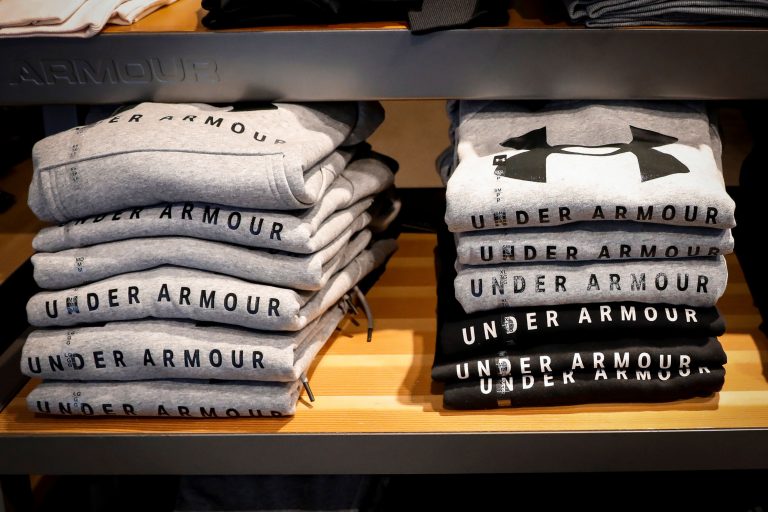
Products are displayed in an Under Armour store in New York City, November 4, 2019.
Brendan McDermid | Reuters
Under Armour said Friday its fiscal second-quarter revenue fell 41%, but overall its results came in better than the retailer was expecting thanks to an e-commerce boost.
The sneaker maker estimated roughly 80% of stores where its merchandise can be purchased, including its own shops, were closed due to the coronavirus pandemic through mid-May.
Selling directly to customers made its sales more profitable and there was less of a drag from items being sold at off-price channels. As a result, its gross margins strengthened 280 basis points to 49.3%.
“Although revenues were understandably down, the company showed an incredible ability to raise gross margins,” BMO Capital Markets analyst Simeon Siegel said in an interview. “They’re effectively capturing more on less.”
Under Armour shares jumped about 12% in premarket trading.
Here’s how the retailer did during the quarter ended June 30 compared with what analysts survyed by Refinitiv were expecting:
- Loss per share: 31 cents, adjusted, versus a loss of 41 cents, expected
- Revenue: $707.6 million versus $543.8 million, expected
With stores reopening, the company said it was “encouraged” by the momentum it was seeing in June and July.
“However, we remain appropriately cautious with respect to the balance of 2020 due to continued uncertainty related to consumer shopping dynamics, the potential for a highly promotional environment and proactive decisions to reduce inventory purchases to be more aligned with anticipated demand related to ongoing COVID-19 impacts,” Chief Executive Patrik Frisk said in a statement.
Under Armour said its second-quarter net loss widened to $182.9 million, or 40 cents per share, from a loss of $17.3 million, or 4 cents a share, a year earlier.
Excluding a restructuring charge of $39 million, the retailer lost 31 cents a share. That was less than the 41-cent loss analysts were predicting, according to Refinitiv.
Revenue fell to $707.6 million from $1.19 billion a year ago. Analysts expected revenue of $543.8 million.
Within that, apparel sales were down 42%, amounting to $426 million, while footwear revenue dropped 35% to $185 million, and accessories revenue fell 47% to $56 million.
Under Armour said it ended the quarter with cash and cash equivalents on hand of $1.1 billion.
It said inventories were up 24% to $1.2 billion.
Earlier this week, the Baltimore-based company said it received notice of a possible enforcement action from the Securities and Exchange Commission related to the accounting treatment of sales it booked between the third quarter of 2015 and the fourth quarter of 2016.
On July 22, Under Armour in addition to two executives — Kevin Plank, its former CEO and current executive chairman, and David Bergman, its current CFO — received the Wells notices related to a previously disclosed probe by the SEC, the company said in an 8-K filing.
A Wells notice doesn’t necessarily mean the company or the executives violated the law. However, it does indicate the agency is considering an enforcement action. Under Armour said Monday that it maintains its actions were “appropriate,” and it intends “to work toward a resolution of this matter.”
As of Thursday’s market close, Under Armour shares are down about 47% this year. The company has a market cap of about $5.2 billion.
Find the full earnings press release from Under Armour here.
