Why are Americans so conflicted over the coronavirus pandemic?
Many school boards across the nation are debating with local health officials and parents over opening school this fall. Some universities are planning to reopen in-person classes, while others are not.
Some churches are holding in-person worship services while others are not. Some ministers see restrictions on such worship services as an infringement of our religious freedom while others do not. Debates are raging over various therapies and the propriety of receiving an eventual vaccine for COVID-19.
Meanwhile, bad news continues to mount. More than 1,400 coronavirus-related deaths were reported nationwide Wednesday, roughly one fatality for every minute of the day. The total number of confirmed cases has passed seventeen million as of this morning.
The US economy contracted by 9.5 percent last quarter in a record decline. The stock market fell more than two hundred points yesterday in response. The chair of the Federal Reserve has warned that the path of the economy depends on the path of the pandemic. And stimulus payments run out today as Congress cannot agree on next steps to provide economic assistance.
We might think that the worst pandemic and recession in a century would unite us in response, but the opposite seems to be the case. Why?
Explaining our “loose” culture
In an article for the Boston Globe, cultural psychologist and author Michele Gelfand writes: “The decentralized, defiant, do-it-your-own-way norms that make our country so entrepreneurial and creative also deepen our danger during the coronavirus pandemic. To fight this pandemic, we can’t just shift our resources; we have to shift our cultural patterns as well.”
In her view, our nation’s conflicted responses to the pandemic “reflect a broader cultural phenomenon. In a loose culture like the United States’s, people are simply not used to tightly…
(Reuters) – Gilead Sciences Inc on Thursday posted worse-than-expected quarterly results, but raised its 2020 sales forecast to include revenue from its antiviral drug remdesivir, one of the only treatments shown to help COVID-19 patients.
Gilead said it expects total 2020 sales of $23 billion to $25 billion, up from its previous range of $21.8 billion to $22.2 billion.
“We think this implies up to $1 billion to $3 billion of remdesivir, … a positive that was not expected at the start of the year,” said Jefferies analyst Michael Yee.
Gilead’s second-quarter sales fell nearly 10% from a year earlier to $5.1 billion, short of the average analyst estimate of $5.3 billion, according to Refinitiv.
The results reflected weak sales of Gilead’s hepatitis C drugs and flagship HIV treatments during coronavirus pandemic lockdowns. The company said it expects its HIV drugs and hepatitis C sales to begin regaining momentum in the current third quarter.
Adjusted earnings for the second quarter of $1.11 per share fell short of analysts’ average estimate by 34 cents.
Shares of Gilead, which closed up about 1% in regular trading, were down 3.5% at $69.80 in extended trading.
Second-quarter sales of Gilead’s HIV drugs fell 1% from a year earlier to $4 billion, while sales of drugs to cure hepatitis C fell 47% to $448 million due to fewer new patients and competition from rival drugs.
Gilead this month began commercial sales of remdesivir, which is given to hospitalized patients by infusion. The drug was granted emergency use authorization by the U.S. Food and Drug Administration in May after it demonstrated an ability to shorten hospital stays for COVID-19 patients, but does not yet have full U.S. approval. It was approved in Japan.
Demand for remdesivir continues to outstrip supply in many parts of the world.
Gilead’s chief executive, Daniel O’Day, on a conference call, said the company expects by the end of September to be producing enough remdesivir to meet real-time global demand.
Gilead said it still expects to manufacturer 2 million or more remdesivir treatment courses cumulatively in 2020, and its revenue outlook reflects expected sales of up to 1.5 million courses this year.
The company said it has launched a clinical trial of an inhaled formulation of remdesivir, with the aim of more effectively delivering the drug to lung tissue. Gilead also plans to study the drug in patients with earlier-stage COVID-19.
The U.S. National Institute of Allergy and Infectious Diseases is currently conducting a trial of remdesivir in combination with Olumiant, an arthritis drug from Eli Lilly & Co, and those results are expected next month.
So far, only remdesivir and the generic steroid dexamethasone have been shown in rigorous clinical trials to help patients with COVID-19.
(Reporting By Deena Beasley and Michael Erman; Editing by Bill Berkrot and Leslie Adler)
At Bankrate we strive to help you make smarter financial decisions.
While we adhere to strict
,
this post may contain references to products from our partners.
Here’s an explanation for
.
Bankrate follows a strict editorial policy, so you can trust that
we’re putting your interests first. Our award-winning editors and
reporters create honest and accurate content to help you make the
right financial decisions.
Key Principles
We value your trust. Our mission is to provide readers with
accurate and unbiased information, and we have editorial standards
in place to ensure that happens. Our editors and reporters
thoroughly fact-check editorial content to ensure the information
you’re reading is accurate. We maintain a firewall between our
advertisers and our editorial team. Our editorial team does not
receive direct compensation from our advertisers.
Editorial Independence
Bankrate’s editorial team writes on behalf of YOU – the reader.
Our goal is to give you the best advice to help you make smart
personal finance decisions. We follow strict guidelines to ensure
that our editorial content is not influenced by advertisers. Our
editorial team receives no direct compensation from advertisers,
and our content is thoroughly fact-checked to ensure accuracy. So,
whether you’re reading an article or a review, you can trust that
you’re getting credible and dependable information.
You have money questions. Bankrate has answers. Our experts have
been helping you master your money for over four decades. We
continually strive to provide consumers with the expert advice and
tools needed to succeed throughout life’s financial journey.
Bankrate follows a strict editorial policy, so you can trust that
our content is honest and accurate. Our award-winning editors and
reporters create honest and accurate content to help you make the
right financial decisions. The content created by our editorial
staff is objective, factual, and not influenced by our
advertisers.
We’re transparent about how we are able to bring quality content,
competitive rates, and useful tools to you by explaining how we
make money.
Bankrate.com is an independent, advertising-supported publisher
and comparison service. We are compensated in exchange for
placement of sponsored products and, services, or by you clicking
on certain links posted on our site. Therefore, this compensation
may impact how, where and in what order products appear within
listing categories. Other factors, such as our own proprietary
website rules and whether a product is offered in your area or at
your self-selected credit score range can also impact how and
where products appear on this site. While we strive to provide a
wide range offers, Bankrate does not include information about
every financial or credit product or service.
If you’re thinking about getting a mortgage, you might be concerned that mortgage interest rates may creep up in August after falling steeply since the start of the pandemic. The good news is experts expect rates to stay at or near historic lows in August 2020.
“Mortgage rates are likely to remain at record low levels through August and for the foreseeable future, given the weak economic backdrop. The uncertain nature of the coronavirus and the likelihood of a long economic recovery will keep a lid on mortgage rates,” says Greg McBride, CFA, Bankrate chief financial analyst.
Mortgage rates have continued their downward trend since the COVID-19 crisis started months ago. The average yield on the benchmark 30-year fixed-rate mortgage fell in the last week of July to a new record low of 3.30 percent, based on Bankrate’s weekly poll of major lenders. A year ago, the 30-year was 3.97 percent. The 30-year fixed-rate average for the week is 0.67 percentage points below the 52-week high of 3.97 percent.
Where mortgage rates are headed in August
Rates aren’t likely to rise or fall much in the near future, the pros agree.
“While some slight daily variation can be expected, there should be little change in the 30-year fixed mortgage rate in August. The continued demand for 10-year Treasury securities – the anchor for long-term mortgage rates – will serve to keep rates hovering around plus or minus 3 percent,” says Ken H. Johnson, real estate economist with Florida Atlantic University in Boca Raton, Florida.
Logan Mohtashami, an Orange County, California-located lead analyst at HousingWire, echoes those thoughts.
“The 10-year yield refuses to break under 0.62 percent with any kind of velocity,” says Mohtashami. “But we have two factors that might drive rates just a tad downward: if the government disaster relief isn’t big enough, and if some of the recent economic gains are lost. Also, if this second surge of coronavirus cases gets worse, it will cause the 10-year yield to break lower.”
Indeed, the longer our nation goes without an effective COVID-19 vaccine, the more uncertain our economy becomes and the more likely it is that rates will stay flat or fall even more.
“How we manage the pandemic will be a major factor in where mortgage rates go in the long run,” says Johnson. “With a combination of effective vaccines and treatments, the impact of the virus on the economy will be less and, all else being equal, rates should remain steady.”
The forthcoming election could alter matters sooner than expected, too.
“I expect the 30-year rate to dip below 3 percent in August, as the election cycle will have enough traders nervous that you’ll see additional money flowing to bond holdings, driving rates downward,” says Derek Egeberg, producing branch manager for Academy Mortgage Corporation in Yuma, Arizona. “I anticipate rates to remain lower through the end of the fourth quarter and until earnings for this year’s holiday season are reported and the election cycle is over.”
Mortgage rates beyond August
The Mortgage Bankers Association predicts that the 30-year fixed-rate should remain relatively unchanged over the next five months, averaging 3.3 percent for 2020 and heading up to 3.5 percent in 2021. Freddie Mac expects rates to remain low, dropping to a yearly average of 3.4 percent this year and 3.2 percent in 2021. Fannie Mae, meanwhile, foresees rates dropping to 3.0 percent in the third and fourth quarters of 2020 and dipping to as low as 2.8 percent a year from now.
Forecasting through the rest of the year and into 2021, McBride believes the path of mortgage rates will be dictated by how the economy fares, ongoing stimulus measures from the Federal Reserve, and the inflation outlook.
Act soon on a new mortgage or a refinance, expert advises
Egeberg is convinced right now is the most ideal time to purchase or refinance a home.
“Similar to asking our grandparents why they didn’t buy more homes 50 years ago when prices were cheaper, our children will ask us about the ‘Great Interest Rate Decline’ of 2020 and if we were able to capitalize on these historic low rates,” he says. “This is the single biggest buying opportunity of our lifetime due to how affordable the debt payments are the current interest rate environment.”
Before rushing into a decision, however, do your homework first; crunch the numbers and ensure you can afford the monthly payments.
“Rather than timing a home purchase based on low mortgage rates, it’s better to make sure your finances are in solid shape before taking the plunge,” McBride says. “Work on improving your credit score, paying down debt and boosting savings. These steps will make you better prepared for successful homeownership, regardless of whether your rate is 2.5 percent or 3.5 percent.”
Photo by Wolfgang Kaehler/LightRocket via Getty Images.
Fox Business Flash top headlines are here. Check out what’s clicking on FoxBusiness.com.
China’s manufacturing activity edged up in July and export orders strengthened despite weak U.S. and European demand, a survey showed Friday, in fresh signs the world’s second-largest economy is gradually recovering from the coronavirus pandemic.
The monthly purchasing managers’ index issued by the Chinese statistics bureau and an industry group rose to 51.1 from June’s 50.9 on a 100-point scale. Numbers above 50 show activity increasing.
A measure of new orders improved to 51.4 from 51.7, according to the National Bureau of Statistics and the China Federation of Logistics & Purchasing. New export orders rose 5.8 points to 48.4.
The results suggest “China’s economy continues to maintain a rebound trend,” the federation said in a statement.
China, where the pandemic began in December, was the first economy to shut down to fight the virus and the first to try to revive business after the ruling Communist Party declared victory over the disease in March.
The economy grew by an unexpectedly strong 3.2 percent over a year earlier in the three months ending in June, rebounding from a 6.8 percent contraction the previous quarter.
Manufacturing is close to normal activity but retailing, restaurants and other service industries are struggling.
Forecasters warn exports are likely to dip again later in the year once demand for masks, surgical gloves and other medical supplies eases. That will increase the burden on Chinese consumers and government stimulus spending to keep a recovery on track.
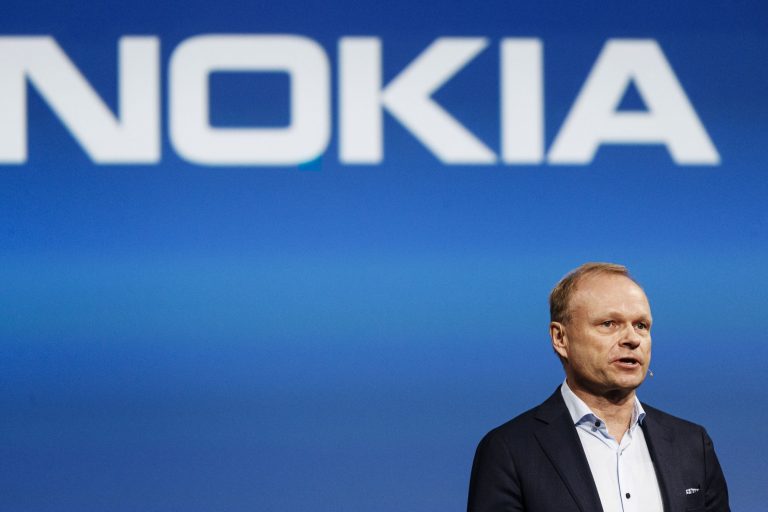
(Bloomberg) — Nokia Oyj bumped up its full-year earnings guidance after slashing costs and overhauling its products to catch up with rivals in the market for fifth-generation wireless networks.
The company expects diluted earnings per share of 0.25 euro cents, plus or minus 5 cents, versus a previous projection for 0.23 euro cents.Adjusted operating profit for the second quarter was 423 million euros, beating average analyst estimates of 289.8 million euros according Bloomberg-tracked ratings.
Key Insights
Chief Executive Officer Rajeev Suri’s last results as CEO mark a low-point for Nokia after it lost ground to competitors in 5G mobile networks and the coronavirus disrupted supply chains and dampened investment.“Nokia-level revenue was down in the quarter” largely due to Covid-19 and China declines, Suri said in the statement. “We expect that the majority of sales missed in the quarter due to Covid-19 will shift to future periods.”Its fortunes are set to improve as a new low-cost radio-access base station puts it back in the game on 5G and chief rival Huawei is forced out of key European markets by a U.S.-led boycott campaign. That company’s struggles may be one reason Nokia can upgrade its guidance.Nokia said it expects to slightly underperform its primary addressable market, excluding China. Previously it had said it expected to perform in line with the market.
Market Context
Nokia shares were up about 4% for the year through Thursday’s close. More analysts are advising clients buy the stock than are recommending a hold or a sell stance.
Get More
Suri’s replacement, Pekka Lundmark, takes over on Aug. 1 and is expected to begin a review of strategy. Suri’s biggest move was to buy rival Alcatel-Lucent in 2016, a deal that gave Nokia a wider product portfolio but required a complex integration process that, according to analysts, distracted management just as the 5G race was beginning.Nokia’s second-quarter net sales were down 11% from a year earlier to 5.09 billion euros ($6.05 billion), compared to an average analyst forecast of 5.31 billion euros.Nokia reported an operating margin of 9.5% plus or minus 1.5 percentage points, against a previous midpoint of 9.0%.See the numbers here.Nokia Cuts 1,200 French Jobs in Former Alcatel-Lucent BusinessHow Nokia’s Alcatel Deal Has Come Back to Haunt Its CEO
(Updates with CEO comments under Key Insights)
For more articles like this, please visit us at bloomberg.com
Subscribe now to stay ahead with the most trusted business news source.
Among the positions being filled, she said, are loan officers, underwriters, loan processors and customer service jobs for offices in Buckhead and Alpharetta. That’s a sign that the housing market in Atlanta is still strong.
But, in large swaths of the economy, the continued spread of the coronavirus is chilling consumer spending, Wald said. “The bad news is that, even with the reopenings, you still have over 600,000 people in Georgia receiving unemployment benefits. That is more than the populations of Augusta, Columbus, Savannah and Albany combined.”
Meanwhile, those who lost work because of the pandemic are no longer receiving an extra $600 a week from the federal government. A bitterly divided Congress has thus far been unable to reach a compromise on a new aid package.
Other data shows the economy’s reopening as far from complete.
In late July, Georgians were working 21% fewer hours than they were in late February, while in Metro Atlanta, hours worked were down 26%, said Andrew Vogeley, product manager at Homebase, which sells a scheduling and time tracking tool.
In mid-June, more people were working more hours, Vogeley said. “Both Georgia and Atlanta are down from mid-June peaks. Atlanta had been outpacing the rest of the country, but now is lagging it.”
Swamped by the unprecedented flood of claims, Georgia’s Department of Labor fell far behind. Many who are unemployed have waited months for their benefits to be paid. But, after slow improvement, the state has now made payments to 92% of the claims deemed valid, said Mark Butler, the state’s labor commissioner.
The state Department of Labor has struggled for months with an unprecedented wave of layoffs plus he need to implement new federal programs. Mark Butler, Georgia’s labor commissioner, says the latest proposals to unemployment benefits will make a tough situation even tougher.
Credit: Contributed
Credit: Contributed
With the unprecedented level of unemployment claims, money for paying the benefit is running low. The balance in the state’s unemployment insurance fund is now less than 25% of the $2.5 billion it held as the crisis began.
Should that fund be depleted, Georgia would need to borrow from the U.S. Treasury to make payments.
Many of the claims have come from those who lost jobs in hotels, food services, health care and social assistance, retail, administrative services and manufacturing, the Department of Labor said.
According to the Census Bureau, more than 50% of adults who make $75,000 or less annually have lost income during the pandemic. For those whose pay was $25,000 or less, at least 60% have lost income.
“This recession is having a horrible impact on people who are the least capable of coping with that impact,” said Mike Alexander, director of the Center for Livable Communities at the Atlanta Regional Commission.
New jobless claims in Georgia
Week ending
June 6: 135,254
June 13: 131,997
June 20: 125,725
June 27: 117,485
July 4: 105,160
July 11: 138,452
July 18: 122,313
July 25: 84,984
Sources: U.S. Employment and Training Administration, Georgia Department of Labor
Amazon wants to launch 3,236 internet-beaming satellites in an effort called Project Kuiper, which would directly compete with SpaceX’s growing fleet of Starlink spacecraft.
Despite heated competition, Amazon managed to trounce the opposition of its competitors and win US Federal Communications Commission approval to deploy Kuiper in space.
SpaceX’s Starlink project appears to be years ahead of Amazon’s Kuiper, having already launched hundreds of satellites and started a beta test program for consumers.
However, Amazon has committed to invest “more than $10 billion” to realize Kuiper and blanket Earth with affordable web access.
Amazon, founded by Jeff Bezos in 1995, just claimed a major victory by getting regulatory approval to create Kuiper, a planned fleet or constellation of 3,236 of internet-beaming satellites.
If realized, Kuiper would compete with Starlink, a similar yet potentially much larger fleet of 12,000 to 42,000 satellites — many times the number of spacecraft humanity has ever launched — being formed by SpaceX, the aerospace company founded by Elon Musk.
On Wednesday, the FCC’s five commissioners unanimously voted to permit Amazon to launch its Kuiper fleet into space and communicate with Earth-based antennas, giving the project the paperwork it needs to get off the ground.
“We conclude that grant of Kuiper’s application would advance the public interest by authorizing a system designed to increase the availability of high-speed broadband service to consumers, government, and businesses,” the FCC wrote in its order, released on July 30.
In a subsequent announcement by Amazon on Thursday, the company pledged to invest “more than $10 billion” in its effort to provide “reliable, affordable broadband service to unserved and underserved communities around the world.”
“A project of this scale requires significant effort and resources, and, due to the nature of [low-Earth orbit] constellations, it is not the kind of initiative that can start small. You have to commit,” Amazon said.
That amount, incidentally, is precisely what SpaceX COO Gwynne Shotwell estimated in May 2018 as the cash it may take to complete Starlink.
A heated competition to dominate space-based internet
In his descriptions of Starlink to reporters in May 2019, Elon Musk has said SpaceX is attempting to claim just 1-3% of a roughly trillion-dollar-a-year global telecommunications business. He also said the project could net SpaceX between $30 billion to $50 billion a year — about 10 times what it takes in for launching rockets. (This has prompted some analysts to value the company upwards of $100 billion.)
The same market access and capture is likely true of Amazon, which has prompted heated regulatory battles with SpaceX and other companies, at one point even prompting Musk to call Bezos a copycat. However, with Amazon’s growing and lucrative digital entertainment divisions, bringing affordable high-speed internet to populated and remote areas alike stands to expand its customer base and bottom line.
Like SpaceX, though, Amazon had to go through the FCC first.
The federal regulator is in charge of divvying up the wireless spectrum and assigning permission to use certain frequencies for specific purposes — in the case of Kuiper, Starlink, OneWeb, and other planned providers, shuttling web data to and from space to blanket America (and other parts of the world) in high-speed, low-lag broadband. Amazon asked for the FCC’s permission in 2019, engaging the company in a heated competition with similar providers.
Now, with the FCC’s authorization, Amazon can launch its planned satellites, which would circle the planet at altitudes ranging from about 367 miles (590 kilometers) to 391 miles (630 kilometers), a region called low-Earth orbit (LEO) or even very low-Earth orbit (VLEO). Such distances are more than 50 times closer than traditional geostationary internet satellites, enabling them to shuttle data at fiber-optic-like spaces.
The FCC order states that Amazon plans to launch Kuiper in five phases and that its not-yet-existent internet service is supposed to come online after 578 satellites.
How big those satellites will be, what they will look like, and which rocket or rockets will launch them into orbit is not yet clear. But Bezos in 2000 founded an aerospace company called Blue Origin that is working to — as SpaceX has successfully done — develop reusable rockets. Blue Origin’s forthcoming planned heavy-lift rocket is called New Glenn, and it may have the potential to deploy dozens or hundreds of satellites at once.
An illustration of Blue Origin’s reusable New Glenn rocket launching toward space.
Blue Origin
The FCC’s order didn’t grant everything Amazon wanted, but the company nevertheless emphasized its importance by announcing its massive planned investment in the scheme.
“We have heard so many stories lately about people who are unable to do their job or complete schoolwork because they don’t have reliable internet at home,” Dave Limp, a senior vice president at Amazon who previously developed its Kindle product and is now overseeing Kuiper. “There are still too many places where broadband access is unreliable or where it doesn’t exist at all. Kuiper will change that. Our $10 billion investment will create jobs and infrastructure around the United States that will help us close this gap.”
In addition to its goals of serving up internet to home consumers, schools, businesses, emergency responders, medical establishments, Amazon said it also plans to “provide backhaul solutions for wireless carriers extending LTE and 5G service to new regions” to bring internet to hard-to-reach areas by other means.
Late last year, Amazon unveiled plans to open a giant factory to develop, test, and build Kuiper satellites in Redmond, Washington.
The clock is ticking for Amazon to execute. The FCC requires 50% of its satellites to be operational by July 30, 2026, and the rest of its fleet to launch before July 30, 2029, or the company could lose its permission to operate the network.
The government’s decision only obliquely addressed the threat and growing impact of low-flying fleets of satellites to astronomy, and especially to radio astronomers. In its decision, the FCC noted avoiding such disruption is “not a condition” for its authorization, but that Amazon “should be aware of these facts” and work with the National Science Foundation to mitigate the problems.
Keep abreast of significant corporate, financial and political developments around the world.
Stay informed and spot emerging risks and opportunities with independent global reporting, expert
commentary and analysis you can trust.
We use cookies to ensure that we give you the best experience on our website. If you continue to use this site we will assume that you are happy with it.