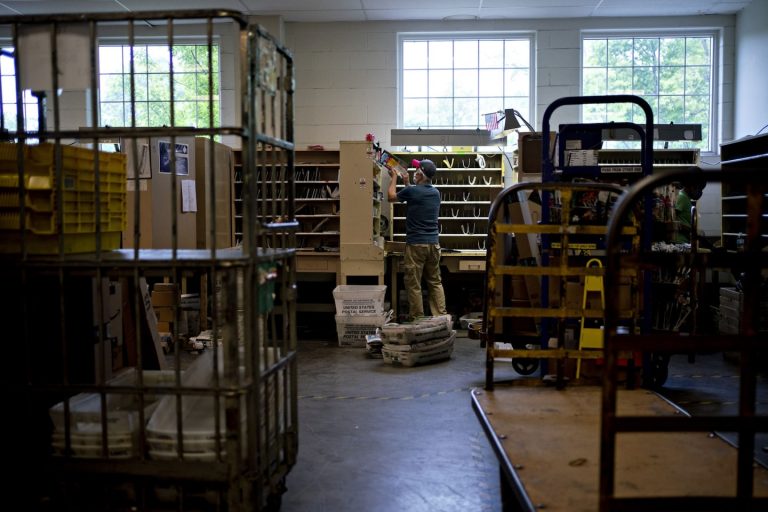

Postal Service backlog sparks worries that ballot delivery could be delayed in November – The Washington Post

Please enable cookies on your web browser in order to continue.

The new European data protection law requires us to inform you of the following before you use our website:

We use cookies and other technologies to customize your experience, perform analytics and deliver personalized advertising on our sites, apps and newsletters and across the Internet based on your interests. By clicking “I agree” below, you consent to the use by us and our third-party partners of cookies and data gathered from your use of our platforms. See our Privacy Policy and Third Party Partners to learn more about the use of data and your rights. You also agree to our Terms of Service.

Coca-Cola to enter hard seltzer market – Fox Business

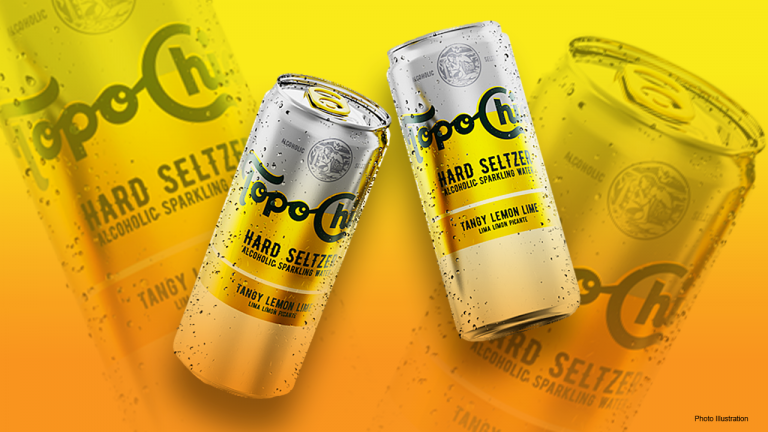
The Coca-Cola Company will be expanding its brand portfolio to include a hard seltzer beverage later this year, a spokesperson at the company has confirmed for FOX Business.

The new drink’s name is Topo Chico Hard Seltzer and it will be made from Topo Chico Mineral Water – a sparkling water company that has sourced and bottled water in Monterrey, Mexico since 1895 and was bought by Coca-Cola in 2017 for $220 million.

HARD SELTZER REACHED RECORD SALES JULY 4 WEEK: NIELSEN

Topo Chico has reportedly “been popular with many mixologists,” according to a press release issued by Coca-Cola on Thursday.

Moreover, Coca-Cola’s boozy beverage will be offered in select Latin American cities at some point in 2020. An exact date has not been specified. Though, the U.S. is scheduled to distribute Topo Chico Hard Seltzer in 2021, a Coca-Cola spokesperson told FOX Business.

The Coca-Cola Company – which had an estimated 43.3 percent of the U.S. market share in 2018, according to research from Statista – is no stranger to sparkling drinks or alcoholic beverages. In fact, the company has been building on these drink categories in recent years domestically and abroad.

DURING CORONAVIRUS BOSTON BEER COMPANY’S TRULY HARD SELTZER SMASHES SALES

Outside of Topo Chico, Coca-Cola’s water brands Dasani, Smartwater, I LOHAS and Ciel all hve sparkling variants, and in late 2019, the company launched its flavored sparkling water brand AHA.

Meanwhile, in Japan, Coca-Cola introduced Lemon-Do in May 2018. The lemon-flavored alcoholic beverage rolled out with ABV contents of three-, five-, seven- and nine-percent in a nine-month span, according to a report from The Wall Street Journal last year.

TickerSecurityLastChangeChange %
KOCOCA-COLA COMPANY47.69-0.33-0.69%

CHEAP BOOZE, HARD SELTZER SALES SPIKE DURING COVID-19

Interestingly enough, Coca-Cola President and CEO James Quincy told Yahoo! Finance that the company would not be selling alcoholic beverages in the U.S. after the successful launch of Lemon-Do.

However, sparkling soft drinks declined by 12 percent in North America, Western Europe and India, according to Coca-Cola’s Second Quarter 2020 Results. The cause was “due to pressure in away-from-home channels,” the report stated.

READ MORE ON FOX BUSINESS BY CLICKING HERE

The hard seltzer market, on the other hand, has seen explosive growth in the last two years. The category surpassed $1 billion in off-premise sales during the week of the Fourth of July holiday, a to market research report from Nielsen showed earlier this month.

Beer and alcohol companies have launched or have announced plans to launch hard seltzer brands unlike most soft drink companies.

Monster Beverage Corp is one soft drink company that has reportedly discussed hard seltzer’s potential internally, according to a report from The Motley Fool, but Coca-Cola also has a minority stake in the company 16.7 percent, which it bought in June 2015 for $2.15 billion.

CLICK HERE TO READ MORE ON FOX BUSINESS

Apple announces 4-for-1 stock split – CNBC

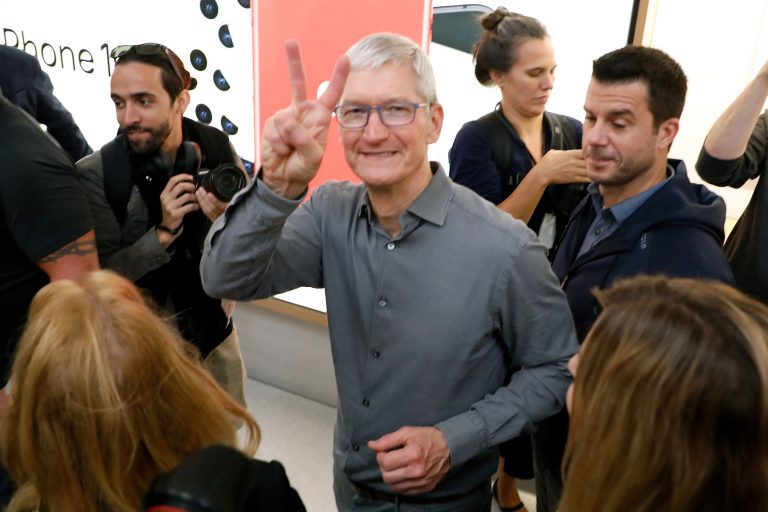
Apple on Thursday announced in its fiscal third-quarter earnings that the Board of Directors has approved a four-for-one stock split.

That means that, for each share of Apple stock that an investor owns, they’ll receive three additional shares. It also makes single shares in Apple more affordable for investors to buy. It follows a similar move Apple made in 2014, when it offered a 7-to-1 stock split. At the time, Apple was trading above $600 per share. The split brought shares of Apple to about $92 a share.

Read more details about Apple’s earnings report

Stock splits are cosmetic and do not fundamentally change anything about the company, other than possibly making the shares accessible to a larger number of investors because of their cheaper price.

Since Apple stock currently trades above $380, it means investors should expect to again have a chance to buy a share of Apple for around $100, depending on where the stock trades at the end of August.

The shares will be distributed to shareholders at the close of business on August 24, and trading will begin on a split-adjusted basis on August 31.

This is Apple’s fifth stock split since it went public. It also split on a 7-for-1 basis on June 9, 2014; a 2-for-1 basis on February 28, 2005; a 2-for-1 basis on June 21, 2000; and on a 2-for-1 basis on June 16, 1987.

Subscribe to CNBC on YouTube. 

Atlassian acquires asset management company Mindville – TechCrunch

Impossible Foods brings meatless burger to Walmart – CNBC

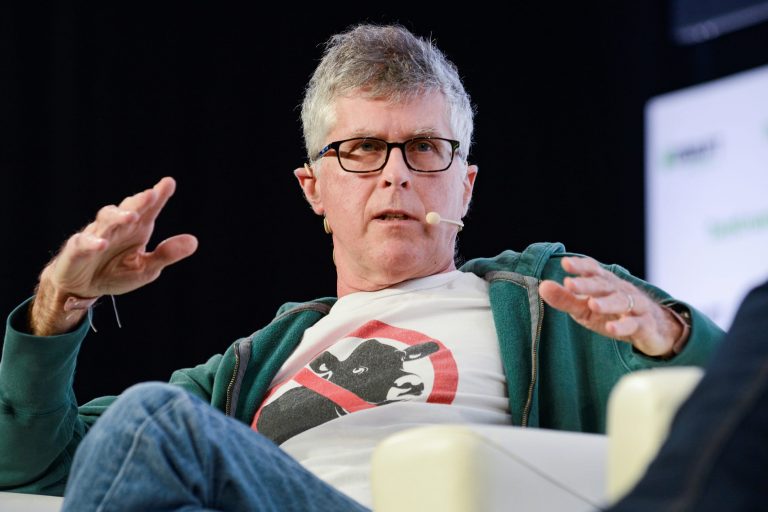
Impossible Foods CEO Patrick Brown said the launch of the Impossible Burger in Walmart is a “very significant step” for the company, as the discount retailer is the biggest seller of meat in the U.S.

“Walmart is the largest food retailer in the world,” Brown said Thursday on “Closing Bell.” “It has a huge presence 90% of the U.S. population lives within a mile of a Walmart store.”

Brown said the partnership is exactly the kind the company wants, especially considering Walmart’s commitment to sustainability. The launch brings Impossible to more than 2,000 stores in all 50 states, as well as on the Walmart website and app.

The partnership boosts the vegan burger’s availability to more than 8,000 retail locations nationwide, as the company’s retail footprint has become 50 times larger than it was six months ago. Impossible’s rival Beyond Meat is already available in retailers such as Kroger.

Brown said he does not view the two companies in competition with each other and he wishes Beyond luck in their business. Instead, he said both companies are competing against the meat industry. He described Impossible Foods’ mission as completely replacing the need for animals in the food system.

More than 90% of Impossible customers are current meat consumers, Brown said, meaning purchases largely come from customers selecting its product as an alternative to meat. With this in mind, Brown said he was happy the product will be sold in the meat aisle of stores so it can be where buyers are looking.

“I think we’re going to see, with the disruption of the meat industry, more first-time buyers that are looking elsewhere for their meat,” he said. “It’s very sticky. A majority of them become repeat customers.”

Impossible Foods ranked No. 49 on the 2020 CNBC Disruptor 50 list.

Las Vegas Sands president says city of Las Vegas will see more pain as pandemic persists – CNBC

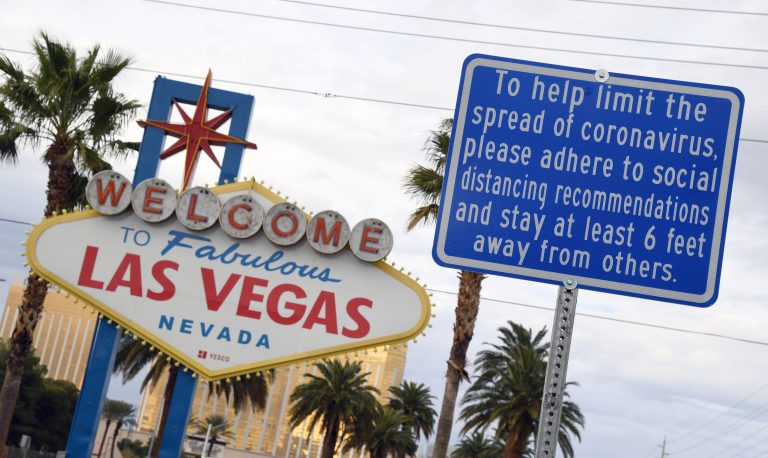
Las Vegas Sands President Robert Goldstein told CNBC on Thursday that the city of Las Vegas will continue to struggle economically as the coronavirus pandemic persists. 

“It’s clearly a difficult time for us … and from my perspective, we’re in for some more pain around here,” Goldstein said in an interview on “The Exchange” with CNBC’s Contessa Brewer

Goldstein’s comments come two days after the announcement that CES, the U.S.’ biggest technology show, will be an online-only event in January due to the coronavirus — yet another blow to the economy of Las Vegas, where CES is held. Last year, the multiday event had more than 171,000 attendees from across the world. 

“Las Vegas … is a large-scale city by any means you measure it: 150,000 sleeping rooms, large conventions, large banquets. Large is the word for Las Vegas, so not exactly an easy place to be in this environment,” said Goldstein, who called CES going virtual “hurtful short term” for the city. 

Casino resorts in Las Vegas closed due to the coronavirus in mid-March and began to reopen on June 4.

Las Vegas is a destination city dependent on tourism, especially from visitors who fly in. For Las Vegas to recover meaningfully, Goldstein said, a vaccine to prevent Covid-19 or “something that changes the consumer perception of this virus” is needed. “And I don’t see that happening short term,” said Goldstein, who also is chief operating officer. 

Las Vegas Sands, which generates about 90% of its EBITDA from Macao and Singapore, did receive a bit of relatively positive news this week as the Chinese government will begin broader visa issuance for Macao. The company generates a little over 60% of its revenue from the Chinese territory and casino hub. 

“It’s a step in the right direction, but not the step,” Goldstein said, because the change to visa issuance policy does not yet cover tourists. “We’re tourist-driven.” 

However, Goldstein said he believes that a restart to the critical program known as the individual visit scheme, or IVS, may not be too far off. “I think it will happen in the course of the summer or fall. It will be slow. It will not be large steps. It will be a series of small steps leading to a full-scale IVS opening both for Guangdong and all of China at some point,” he said. “What that point is, no one really knows.” 

But he added: “We do know that the Asian consumer, the Chinese consumer, is very conversant with a virus environment. They’re used to masks and gloves and social distancing and temp checks. They’re not going to respond like Americans, who had a hard time with it. We also know that they’re not going to travel beyond China, so I think Macao will become a very favorable destination when those doors do open.” 

Shares of Las Vegas Sands were higher by more than 3% on Thursday, outperforming the broader S&P 500, which was trading slightly negative. The company, founded by CEO Sheldon Adelson, reported last week net revenues were down 97% year over year for the quarter that ended June 30. It posted a net loss of $985 million for the quarter. 

Despite the financial challenges the pandemic has presented for the company, it recently said it was extending its pledge to maintain employee benefits and pay through at least Oct. 31. In a letter to employees obtained by CNBC’s Brewer, Adelson said he believed Las Vegas Sands was the only casino operator not to furlough or lay off workers due to the Covid-19 crisis. 

Adelson feels that “supporting people in these difficult times is the right thing to do from a moral perspective, at a time when this city is really having some incredible challenges,” Goldstein said. “But also business wise, we believe this pandemic will eventually go away and we’ll be at the head of class in terms of desirability both for customers and also for employees.” 

CNBC’s Contessa Brewer contributed to this report.

Facebook usage and revenue continue to grow as the pandemic rages on – The Verge

The surge in Facebook usage during early shelter-in-place orders in the United States was not just a blip. Daily users of Facebook increased 12 percent year over year, to 1.79 billion. Monthly usage across its family of apps, which also include Instagram and WhatsApp, rose 14 percent, to 3.14 billion. And Facebook’s mostly ad-based based business rose along with them: the company’s revenue was up 11 percent year over year, to $18.69 billion.

“We’re glad to be able to provide small businesses the tools they need to grow and be successful online during these challenging times,” Facebook CEO Mark Zuckerberg said in a statement. “And we’re proud that people can rely on our services to stay connected when they can’t always be together in person.”

The company’s stock surged more than 5 percent in after-hours trading.

While Facebook has thrived during the pandemic, its growth is still lower than that of other tech giants. For example, Amazon revenue grew 40 percent to $89 billion in earnings announced Thursday, beating analyst expectations by roughly $8 billion. Still, Facebook did better than Alphabet, where revenue declined 2 percent year over year.

But the company’s numbers are impressive in part because of a high-profile advertiser boycott that roiled the social network in July. Coca-Cola, Lego, Starbucks, and Unilever are among the companies that pulled advertising from Facebook and other social networks, driven by a coalition of civil rights groups that accused them of doing too little to stop the spread of hate speech.

Even without big-brand advertisers, Facebook was able to grow revenue on the strength of the millions of small businesses that rely on it for direct-response advertising. Facebook said in the first three weeks of July, revenue growth was roughly in line with its second quarter growth rate of 10 percent, indicating that the company had largely shrugged off the boycott.

As it did last quarter, the company warned that increased engagement may not last once the COVID-19 pandemic begins to subside. “More recently, we are seeing signs of normalization in user growth and engagement as shelter‑in-place measures have eased around the world, particularly in developed markets where Facebook’s penetration is higher,” the company said.

Usage will be flat or slightly down next quarter, the company said.

Facebook has $58.24 billion in cash and cash equivalents on hand, the company said. It now has 52,534 employees, up 32 percent from a year earlier.

Google parent company Alphabet sees its first revenue decline in history – The Verge

Google parent company Alphabet warned in last quarter that it was expecting to see the impact of coronavirus in the second quarter results, and it did: the company saw its first revenue decline in its history. But it managed to beat Wall Street’s revenue expectations.

Total revenue for the quarter was $38.3 billion, versus the $37.4 billion expected, but that marks a 2 percent decline from the second quarter of 2019. Net income dropped to $6.9 billion, from $9.9 billion a year ago,. Revenue for Search was $21.3 billion, down from $23.6 billion.

“We continue to navigate through a difficult global environment,” CFO Ruth Porat said in a statement announcing the earnings.

One bright spot was YouTube, where advertising revenue rose to $3.81 billion, from $3.6 billion last year. Google’s Cloud division saw rising revenue as well, to $3.01 billion from $2.1 billion in the year ago quarter.

During a call with analysts, Porat said she was “cautiously encouraged” by the company’s growth near the end of the quarter, which ended June 30th, but added “we believe it its premature to gauge the durability of recent trends given the obvious uncertainty of the global macro environment.”

CEO Sundar Pichai said on the call that while the economic climate remained fragile due to the coronavirus pandemic, “we saw the early signs of stabilization as users returned to commercial activity online.”

Pichai said YouTube and Google Play subscriptions saw “good traction” in the quarter, with app and game downloads rising 35 percent. It added some large customers to its Cloud segment, including Deutsche Bank, Pichai added, and Cloud also benefited from the number of people working from home during the pandemic. “Customers are choosing Google Cloud to either lower their costs by improving operating efficiency or to drive innovation,” he said.

Revenue for Alphabet’s Other Bets category — which includes its experimental X lab, Waymo self-driving subsidiary, and a number of other divisions like its Verily life sciences unit was down, to $148 million from $162 million a year ago. Other Bets saw an operating loss of $1.12 billion.

Google “other revenues,” which includes its hardware, Play Store, and non-advertising YouTube revenues — reported $5.12 billion, up from $4 billion.

Asked about the anti trust investigations into Google’s search and Android businesses, Pichai said the company would “adapt,” adding, “I think the scrutiny is going to be here for a while.”

Alphabet was one of four tech giants reporting quarterly earnings on Thursday, and the only one whose results showed a decline from the year-ago quarter. Its stock rose slightly in after-hours trading Thursday.

Stocks are set to jump Friday after four tech giants post strong earnings, Nasdaq futures gain 1% – CNBC

Stock futures jumped on Thursday night, priming Wall Street to end the week on a high note as some of the biggest tech stocks — Facebook, AmazonAlphabet and Apple — reported quarterly results that beat high expectations. 

Nasdaq 100 futures traded 0.9% higher. Dow Jones Industrial Average futures gained 173 points, or 0.7%. S&P 500 futures climbed 0.5%.

Apple reported a blowout quarter, with overall sales expanding by 11%. Apple also announced a 4-for-1 stock split

“Apple’s earnings report was breathtaking,” said Andrew Smith, chief investment strategist, Delos Capital Advisors. “Double-digit revenue growth during a quarter which saw most of the U.S. economy shutdown is remarkable. This earnings report shows that Apple is firing on all cylinders. Apple’s stock crossed the symbolic $400 a share threshold in after-hours trading, boosted by a four-for-one stock split, which was icing on the cake for investors.”

Amazon, meanwhile, traded 5.3% higher as the company saw its sales skyrocket during the coronavirus pandemic. Facebook shares rallied more than 7% after the bell as the social media giant posted revenue growth of 11% even amid the coronavirus pandemic slowdown. The company also issued stronger-than-expected sales guidance for the current quarter. 

Google-parent Alphabet also posted better-than-expected results, sending the stock up 0.4%. The stock’s performance was muted relative to the other Big Tech names as the company’s overall revenue decline in its history. Revenues for Google Cloud were also just below analyst expectations. 

“The numbers were amazing relative to expectations,” said Peter Boockvar, chief investment officer at Bleakley Advisory Group. “We’ll see after their conference calls what has been priced in and what hasn’t.”

With those gains, the four stocks were set to add about $200 billion to their total market cap, bringing it to more than $5 trillion

Big Tech has been the stalwart on Wall Street this year. Amazon and Apple are up 65.2% and 31%, respectively, in 2020. Facebook and Alphabet have risen more than 14% over that time period. 

The Dow and S&P 500 both fell on Thursday after the U.S. government released data showing the biggest quarterly gross domestic product contraction on record for the country. The Dow dropped more than 200 points and the S&P 500 ended the day down 0.4%. U.S. GDP contracted by 32.9% during the second quarter, surpassing a record drop from mid-1921

— CNBC’s Patti Domm contributed to this report.

Subscribe to CNBC PRO for exclusive insights and analysis, and live business day programming from around the world.

Amazon Q2 earnings blow past estimates as coronavirus buying boosts revenue, profit – Yahoo Finance

Amazon (AMZN) posted second quarter earnings on Thursday that blew away Wall Street estimates, bolstered by consumer trends during the coronavirus pandemic that have catapulted the tech giant into one of the crisis’ biggest beneficiaries.

The company’s results are even more impressive given that it acknowledged spending over $4 billion during the quarter on COVID-19 related costs. Here are the results compared to estimates from consensus compiled by Bloomberg:

The quarter’s performance was boosted by operating cash flow that surged 42% to $51.2 billion for the trailing twelve months, compared with $36.0 billion comparable year-ago period. Net sales soared 40% compared with $63.4 billion a year ago, and Amazon’s Web Service (AWS) — the company’s massive cloud operation — saw 29% growth as more companies shifted to working remotely.

Patrick Moorhead, president and principal analyst at Moor Insights and Strategy, noted that AWS’s growth during the quarter was “larger than the entire annual revenue of many cloud plays. AWS is well on its way to creating an annualized, $40B revenue company. This makes AWS larger than Salesorce.com and SAP.”

Meanwhile, Amazon also said it plowed over $9 billion into capital projects, and saw its grocery delivery capacity skyrocket by more than 160% amid a threefold spike in online grocery sales during the quarter.

“We’ve created over 175,000 new jobs since March and are in the process of bringing 125,000 of these employees into regular, full-time positions,” CEO Jeff Bezos said in a statement.

“And third-party sales again grew faster this quarter than Amazon’s first-party sales. Lastly, even in this unpredictable time, we injected significant money into the economy this quarter, investing over $9 billion in capital projects, including fulfillment, transportation, and AWS,” he added.

A surging stock

The stock — which rallied by over 6% in after-hours trading — has been on a tear since the coronavirus pandemic resulted in widespread lockdowns, with home-bound consumers flocking to the website for their needs. Year to date, Amazon has rallied by over 63%, far outpacing the S&P 500 Index.

Amazon’s results boosted the net worth of Bezos, the world’s richest person, by almost $10 billion to $189.5 billion, according to Bloomberg’s Billionaires Index data. The billionaire is his company’s single largest individual stockholder, owning over 11% of the shares outstanding.

Amazon has notched multiple consecutive record closes — along with the other cohorts within the high-flying “FAANG” tech stocks that include Facebook (FB), Amazon (AMZN), Apple (AAPL), Netflix (NFLX) and Alphabet’s Google (GOOG).

According to Q3 guidance provided by the company, net sales for the next quarter are expected to check in between $87 billion and $93 billion, a 24% – 33% gain from the comparable period in 2019. Coronavirus-related spending is seen topping $2 billion in Q3, Amazon said, on operating income that is expected to fall within a $2 billion to $5 billion range.

Daniel Salmon, an analyst at BMO Capital Markets who ranks Amazon at No. 4 among a “mega cap pecking order” of top stocks, said this week that the stock’s “long-term opportunity is stronger than ever, and we also continue to see outperformance over the next 12 months.”

However, he added that the bank was “cautious” given the recent surge, and the potential for Amazon to ramp up investment spending.

Bezos goes to congress

The Q2 report comes on the heels of Bezos testifying before Congress for the first time ever Wednesday afternoon. The billionaire, who is usually able to control the narrative over the technology and retail behemoth, found himself on the defensive after being asked about Amazon’s use of third-party seller data.

When asked if customer information is used for Amazon’s benefit, Bezos said the company restricts this, but added: “I can’t guarantee that the policy hasn’t been violated” — a response that raised eyeballs among market participants.

Javier David is an editor for Yahoo Finance. Follow him on Twitter: @TeflonGeek

Find live stock market quotes and the latest business and finance news

For tutorials and information on investing and trading stocks, check out Cashay

Follow Yahoo Finance on TwitterFacebookInstagramFlipboardLinkedIn, and reddit.