

How could God allow that to happen?

Adobe Stock

When something terrible happens like the coronavirus pandemic or the death of George Floyd, we want to know why. 

How could God allow such an awful thing to happen? 

How does it fit into his divine plan? 

There are no easy answers, but we struggle to find them. Students of human behavior call it our “search for meaning.” Faced by a great evil like racism—brought to the fore when Floyd was killed—we can at least resolve to work to right that wrong in the future, and that can provide the comfort of knowing we have done what we could. 

But natural events like Hurricane Katrina or the pandemic are particularly hard to explain because there is no human cause other than living in a fallen world. 

Is it God’s judgment?

Some Christians have interpreted the pandemic as a sign of the coming end times and God’s judgment, but theologians such as Dr. Robert Jeffress, senior pastor of First Baptist Church of Dallas, disagree. 

“There is nobody who can say, with any authority, that this is God’s judgment against our country or our world,” Jeffress said. “Any pastor or so-called prophet who says that the coronavirus is God’s judgment on America is either a crank or a crook.” 

But when the Air Force Academy established a place of worship in 2010 for Wiccans, Druids, and members of other religions, Jeffress said that our nation would be judged because of it. In other words, we know we bring on God’s judgment when we break his laws, but we won’t know this side of heaven why he does certain things or allows them to happen.

Is it ‘a brute fact of nature’? 

Sam Ben-Meir, a professor of philosophy and world religions at Mercy College in New York, mused in a recent article:What is the temptation to view a catastrophe like the plague as divine punishment as opposed to a brute fact of nature? Surely at least one reason we are tempted to do so is because, if it is heavenly retribution, then…

… Read More


Click Read More to read the rest of the story from our content source/partners – Denison Forum.

قالب وردپرس

Rebecca St. James Is Back from Hiatus with Christian Life Podcast, Worship Album

Rebecca St. James Is Back from Hiatus with Christian Life Podcast, Worship Album


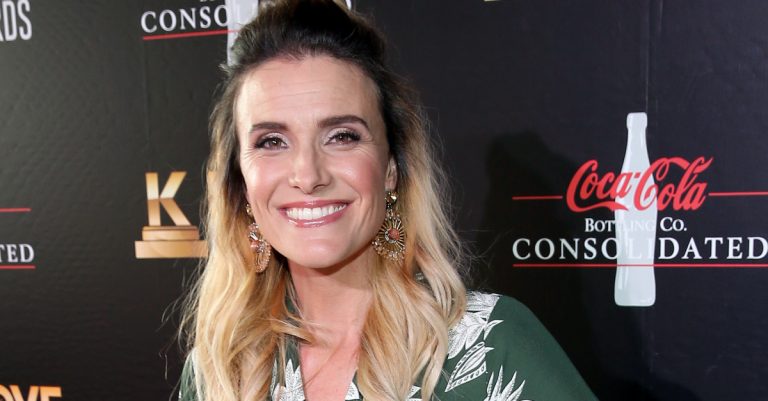
Following nearly a decade without new music, Rebecca St. James is back in the spotlight with a new podcast, a new song, and – soon – a new album.

St. James released a new single June 12, one month after she launched a new podcast, Rebecca St. James Friends & Family, about faith and family life. Next month, she will release a new worship album, Dawn.

It’s been nine years since she released new music and about seven since she toured. But St. James – who has nine No. 1 Christian radio singles, multiple Dove Awards, and a Grammy – says she’s enjoyed the time out of the limelight. She was married during her hiatus. She also gave birth to two children, both girls. She’s now pregnant with her third child, a boy.

“I have enjoyed it very much,” she told Christian Headlines, referencing her time away from music. “I felt very called to kind of take a hiatus from music. … I was pretty exhausted at that point after doing nearly two decades of music. I just needed to live out this dream of establishing family life.”

During that time St. James helped her brothers – Luke and Joel Smallbone of King & Country – pen three songs on their album Burn the Ships. (They sang backup for her prior to forming their own group.) She also experienced multiple instances of joy and tragedy – experiences she discusses on her podcast.

“God just did a lot in our family’s life…

… Read More

Click here to read the rest of the story from our content source/partners – Christian Headlines.
قالب وردپرس

78 Percent of Black Christians but 38 Percent of White Christians Say ‘U.S. Has a Race Problem,’ Barna Finds

78 Percent of Black Christians but 38 Percent of White Christians Say ‘U.S. Has a Race Problem,’ Barna Finds


Twice as many black Christians as white Christians believe the United States has a race problem, according to a Barna survey that also shows a big difference in opinion about whether the U.S. has historically been oppressive to minorities.

Barna posted the data on its website Wednesday, although the survey was taken in 2019 and “can’t account for any shift due to the present, heated national discussion surrounding racism and white supremacy,” Barna said.

Still, “these recent responses point to a disconnection that has led us to this moment: disagreement about whether there is an issue in the first place,” Barna said. The survey was conducted with the Racial Justice and Unity Center.

According to the poll, 78 percent of black practicing Christians but 38 percent of white practicing Christians agree that the U.S. has a race problem. Overall, 46 percent of all practicing Christians in the United States agree with the statement.

Practicing Christians, according to Barna, are self-identified Christians who have attended a worship service within the past month and agree strongly that “their faith is very important in their life.”

Meanwhile, 75 percent of black practicing Christians either agree or strongly agree that, “historically, the U.S. has been oppressive to minorities.” By comparison, 42 percent of white practicing Christians…

… Read More

Click here to read the rest of the story from our content source/partners – Christian Headlines.

قالب وردپرس

Juneteenth and the husband of a Charleston victim: Sowing the seeds of love

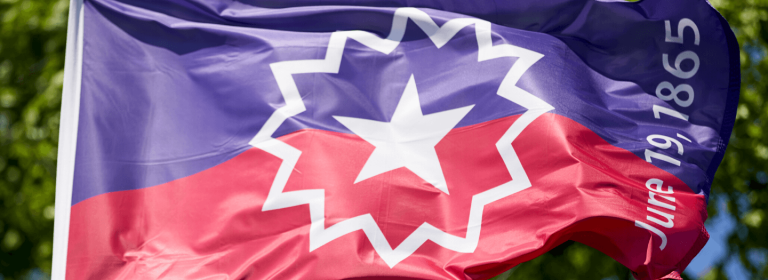
The Juneteenth flag, commemorating the day that slavery ended in the US. (AP Images)

Today has been called “our country’s second independence day,” and for good reason.

On this day in 1865, US Maj. Gen. Gordon Granger arrived in Galveston, Texas, where he announced that the Civil War was over and that the 250,000 slaves of Texas were free. Even though President Abraham Lincoln’s Emancipation Proclamation had been signed two years earlier, the lack of Union soldiers in the Confederate state of Texas meant the proclamation was not enforced until Granger arrived. 

Celebrations among former slaves soon ensued. The next year, freed slaves celebrated the anniversary with prayer services, church gatherings, speeches, readings, picnics, and rodeos. 

Today, Juneteenth parades, concerts, cookouts, and other events will be held across the country. Every state except Hawaii, North Dakota, and South Dakota currently recognizes Juneteenth as a state holiday or day of observance. 

Racial justice and the sanctity of life 

Juneteenth should not only be a secular holiday—it should be a spiritual holiday as well. 

As an evangelical Christian, I am deeply committed to a doctrine we call the “sanctity of life”—the belief that life is sacred from conception to natural death. This doctrine is often invoked with regard to abortion, the tragic killing of unborn children. In recent years, it has also been applied to the escalating practice of euthanasia. 

But it also applies to the sin of racism. And just as with abortion and euthanasia, this cause is worthy of our best, enduring commitment. 

In responding to nationwide calls for racial justice, this week we have been discussing Benjamin Watson’s claim that we need awareness, advocacy, and action. We’ll close with his third imperative as God’s invitation to us today. 

God’s word calls us to three kinds of action in response to racial injustice in our…

… Read More


Click Read More to read the rest of the story from our content source/partners – Denison Forum.

قالب وردپرس

Three Easy Steps to Assess Your Church’s Communication Strategy

As we move to a more digital-focused world, your church’s communication strategy will become more critical as you navigate this new terrain. Your church’s communication strategy will be the roadmap to helping you determine what effective communications will look like for your church and congregation.

In this post, we’re going to walk you three key questions that will help you hit the pause button and take a step back to assess your church’s communication strategy. 

Question 1: Does your church’s communication strategy have a clear goal?

When you look at your strategy, do you have a clear goal for the strategy? This question is crucial because it forces you to understand what you want to communicate clearly.

Think of your goal as a call to action. What is the one thing you want your congregation to do when you execute your communications strategy? For example, do you want people to join a small group, go on a mission trip, or invite a neighbor to church? 

Another way to look at a goal is to figure out your definition of success. How do you know if your communications strategy is a success? What are the key indicators that would let your church know that your church’s communication strategy is working? Without knowing the goal or what success looks like, you’ll have no idea if you have the right strategy. 

Question 2: Can the strategy be explained on a single sheet of paper?

Communication strategies tend to grow larger over time. It’s easy to begin adding new methods of…

… Read More


Click here to read the rest of the story from our content source/partners – Thom Rainer.

قالب وردپرس

Most Churches Have Chosen Not to Return to In-Person Services, Survey Finds

Most Churches Have Chosen Not to Return to In-Person Services, Survey Finds


A new survey says that most churches have not returned to in-person services, and many are uncertain about the future of worship gatherings.

The survey is from the Wheaton Billy Graham Center’s Send Institute, Exponential, and the Association of Related Churches. Some 767 responses were recorded for the study.

In a key finding, the survey showed that most churches have the potential to meet for in-person services, but 67 percent have not.

“Some church leaders explain that while they are allowed to gather in some capacity, the health and safety of their congregation and community outweigh their ability and desire to gather,” the study said. “Others have shared that restrictions on congregational singing, hesitation from ministry volunteers, and the inability to linger before and after services for conversations, greatly reduce the value of their in-person gatherings.

About 33 percent of pastors reported their churches have returned to in-person gatherings, but only about half of the congregation is attending.

As expected, 80 percent of large churches, those who boasted an attendance greater than 1,000 before the nationwide quarantines, reported they are not meeting.

In another key finding, half of churches will most likely return to in-person gathering this month, but about a third said they aren’t sure.

The survey said that one pastor said that “it does not make sense…

… Read More

Click here to read the rest of the story from our content source/partners – Christian Headlines.
قالب وردپرس

7 Modern-Day Missionaries That Changed the World

7 Modern-Day Missionaries That Changed the World


These history makers changed the world around them with their “yes” to God’s calling on their lives. Read stories of these inspirational missionaries and be encouraged!

William Carey

British born William Carey is often referred to as the “father of modern Missions.” Born in 1761 this Baptist minister was a missionary, a translator, a social reformer and a cultural anthropologist. He began his work in India founding schools for impoverished children. His work and writing is responsible for the founding of the Baptist Missionary Society, whose reach covers forty countries.

Over his years on the mission field, Carey translated the Bible into dozens of Indian dialects and founded a college to equip local ministers. He truly lived up to his own quote, “Expect great things from God. Attempt great things for God.

Mary Slessor

Mary Slessor lived a radical life as a missionary to Nigeria. Known for her powerful personality and sense of humor, Slessor fearlessly worked in regions where many missionaries before her had been martyred. Yet she remained unswayed by the imminent danger saying, “Why should I fear? I am on a Royal Mission. I am in the service of the King of Kings.

In the regions she worked, twins were seen as a bad omen and abandoned by their villages to die in the jungle. Not on Slessor’s watch. She began scooping up the abandoned twins and taking them in. Over her years of service, she…

… Read More

Click here to read the rest of the story from our content source/partners – Christian Headlines.

قالب وردپرس

Tony Evans: ‘Failure of the Church’ Has Led to America’s Current Racial Problem

Tony Evans: ‘Failure of the Church’ Has Led to America’s Current Racial Problem


Texas pastor Tony Evans says churches have an obligation to help fix the current divide in America because churches stood on the wrong side of multiple issues of race during the past 200 years.

Evans made the comments this month to Scripps National News and to the Don Kroah Show on WAVA in Washington, D.C.

“The only reason this problem has existed this deep for this long is the failure of the church,” Evans said on the Don Kroah Show of racism and racial injustice. Evans is the author of Oneness Embraced and the pastor of Oak Cliff Bible Fellowship in Dallas.

“Had the church not endorsed slavery, had the church not endorsed … segregation, Jim Crow and many of the systems, [then] they would not have been adopted and perpetuated in the culture. So since the church contributed to this mess, the church has got to fix it,” he said.

Evans gave examples of how he has experienced racism.

“I was the first African American to earn a doctorate from Dallas Seminary, but if I would have applied a few years before I did, they would not let me in because of the laws of segregation,” he said on the Don Kroah Show. “The only reason I’m on radio is [because] James Dobson intervened, because the radio stations told me that a black speaker would be too offensive to their white listeners. He intervened, and that opened up some doors. … 

“When I was in college in Atlanta, I walked…

… Read More

Click here to read the rest of the story from our content source/partners – Christian Headlines.
قالب وردپرس

Blind Woman Banned from City Park for ‘Conversations about Jesus’ Files Complaint

Blind Woman Banned from City Park for ‘Conversations about Jesus’ Files Complaint


A blind Rhode Island woman filed a charge of religious discrimination with the state Commission for Human Rights Tuesday after a local park banned her from the premises for two years and threatened her with arrest for having conversations with patrons about Jesus.

Gail Blair, who is blind from a genetic condition known as retinitis pigmentosa, says in the discrimination charge she was never combative and never argued with anyone who wanted to end the conversation in Wilcox Park in Westerly, R.I. She also says she didn’t follow people. 

Blair handed a copy of the Gospel of John to those who talked with her.

Blair filed the discrimination charge against The Memorial and Library Association, which manages Wilcox Park and Westerly Public Library in Westerly, R.I. She was banned from the adjacent library even though she says she never had a conversation with any strangers in the building about Christ.

Blair is claiming “unlawful discrimination … on the basis of my disability and my religious beliefs.”

“I respectfully request that the Commission intercede and require the Memorial and Library Association to make amends for their unlawful discrimination, and to permit me to return to the park and library to make full use of its accommodations and services, including through peaceful, civil, and non-confrontational conversations about Jesus,” she wrote.

First Liberty…

… Read More

Click here to read the rest of the story from our content source/partners – Christian Headlines.
قالب وردپرس

Singer gives concert for senior adults from a cherry picker: Finding the purpose that will simplify your life

Woman singing under spotlight.

Colette Hawley is a singer based in Chicago. For years, she has visited senior centers to sing to residents. However, when the coronavirus quarantine began, especially affecting older adults, she had to revise her strategy.

She rented a thirty-foot cherry picker bucket truck. With its help, she sang outside the windows of residents on the third and fourth floors of Chicago Methodist Senior Services.

Her inspiring Memorial Day concert made global news. “I did find the overwhelming response really heartwarming because it indicated to me that people really do want to see something good happening for seniors in these nursing homes,” she said. “People just don’t know what to do and how to do it.”

“Everyone was smiling and laughing,” said Jenn Ross, art program coordinator at the residence where Colette sang. “There’s a huge loss right now without having family members and friends and volunteers here to engage with folks. . . . It really kind of boosted morale all around.”

Dallas Mavericks owner Mark Cuban, who attended Indiana University with Colette, said that she “has always had an amazing heart and a desire to entertain people. Leave it to her to find a way when others don’t know how.”

Here’s the part of the story that especially struck me: at one point in her career, Colette lost her singing voice. She could sing low notes but not midrange or high notes. “When I went to sing the notes, they did not come out,” she said. “I could not produce the sounds.”

She sought the help of therapists, consulted doctors, and even had surgery, but nothing helped. Years later, she discovered that the more she sang for seniors, the more her voice slowly came back. It is now stronger than ever.

“I took that as a pretty big sign from the universe that this was where I was meant to be and what I was meant to do,” she said.

Finding the purpose that will simplify your life

Like…

… Read More


Click Read More to read the rest of the story from our content source/partners – Denison Forum.

قالب وردپرس