Mother Teresa greeting people at the Missionaries of Charity For Destitute Children in New Delhi in 1997. (Photograph: Ravi Raveendran/AFP/Getty)
Nun’s former lawyer says he will take legal action against unauthorised use of design to combat ‘misuse’ of reputation
The white, blue-rimmed cotton sari made famous by Saint Teresa of Kolkata has been trademarked in a case the nun’s former lawyer has claimed as a first for a religious uniform anywhere in the world.
The design of the sari, which Teresa is said to have purchased from a Kolkata market the evening she was granted permission to start working in the city’s slums, is now the exclusive intellectual property of the Missionaries of Charity, the order the nun founded nearly 70 years ago.
A lawyer for the order, Biswajit Sarkar, said he had applied for the trademark in 2013 to combat the “misuse” of the saint’s reputation, often for commercial gain. The trademark was formally granted in early 2016 but only recently publicised.
He said he would now take “severe” legal action against unauthorised use of the design, even by charitable enterprises that the order’s nuns had been willing to tolerate.
“There are many organisations starting schools naming themselves after Mother Teresa, and wearing the uniform, where the Missionaries of Charity have no connection,” he said.
Teachers at some schools named after Teresa had been writing to the Missionaries of Charity complaining about late salary payments, unaware their schools were separate entities, he said.
A cooperative bank had also been established in the nun’s name, he said, and in another instance, religious books were being published with the blue-striped trimming, giving the impression they were endorsed by the Kolkata-based order.
Sarkar, who has also had the name Mother Teresa trademarked, said the “soft-hearted” nuns had initially objected to also copyrighting the uniform. “They don’t like taking court cases,” he said. “They say, ‘One day the people will understand they are doing the wrong thing.’
“But we cannot allow that. Now if anybody is misrepresenting the Missionaries of Charity we can take severe legal action.”
He said no exceptions would be made for use of the pattern by other religious orders, or by not-for-profit enterprises.
“Even the nuns were asking me, if the people are not using it for commercial gains, should we stop them?” he said.
“But whether it is for commercial gain or not is not the issue. We are thinking about our identity. If the blue pattern, which is unique in the world, is diluted or used by the public, then one fine morning the organisation will lose their identity.”
Students walk on the campus of Yale University in New Haven, Connecticut. (REUTERS/Shannon Stapleton)
Join us on the new C-Pop podcast where Taylor and Jessilyn discuss, debate and sometimes deride pop culture with a strong sense of humor and a focus on Christ. Listen at charismapodcastnetwork.com.
Her parents met at a gay nightclub in San Francisco. Mom was looking for a safe place to dance and dad happened to be the security guard at the club.
“He abandoned my mother and me after abusing both of us physically,” Rachel Gilson recalls, in a first-person account in Christianity Today (CT). “I didn’t even know he existed until I was 10, by which time my mother had remarried.
She grew up in a lax household, where she was allowed to watch horror movies as a child. “When it came to sex, nothing was hidden. There were jokes and stories and, when I was 10, I helped my mother clip images from an adult magazine for a bachelorette party,” she recalls.
At 14, she met her first boyfriend, but only a year later, became attracted to another girl in her AP European history class. “She was a senior, beautiful and popular. I was struck by her beauty. The attraction felt like what other girls described feeling for a boy.”
She wondered if it was okay to feel this way about a girl. She had a vague understanding that it was wrong, but no Christian foundation had been established in her life.
The two kissed for the first time on Rachel’s 16th birthday and developed a romantic relationship.
After graduation, Rachel felt “exhilarated” to leave for Yale University, where she entered a selective humanities program for freshmen.
She met fascinating people and “enjoyed unlimited access to alcohol. It seemed too good to be true.”
Then she discovered her girlfriend from high school was cheating on her with a semi-homeless guy in Lake Tahoe. “When Christmas vacation came, I paid her a visit, but everything felt icy, still, frozen shut. On Christmas morning, as I read Don Quixote on her futon (while she had sex with her boyfriend in the other room), I wondered what my life had become.”
When she returned to school, in her first philosophy class, Rachel began to wonder about the existence of God. In her room, she began furtively Googling religious terms. “When my roommate entered, I would slam down the laptop lid and pretend I was doing French homework.”
In the torrent of webpages Rachel explored, something shocking happened: she began to encounter Jesus for the first time.
But the Jesus she found when she searched the internet confounded her stereotypes. “Again and again, I saw how Jesus noticed, dignified and served people I would have thrown aside. But I was troubled by a suspicion that my life was against his.”
A Book That Drew Her Heart
One day Rachel was in the room of a lapsed Catholic friend when she noticed the book Mere Christianity by C.S. Lewis. She knew nothing about the author or the book, but the title intrigued her—and she quietly slipped the book into her bag.
The more she read, Lewis’s persuasive arguments began to grip her heart. Suddenly it dawned on her: There was a God! Her heart and her head could no longer deny it.
At the same time, a spirit of repentance fell on her, and she became aware of her own sinfulness. “I had lied and cheated; I was cruel—I had even stolen that book from a sweet, unsuspecting friend! How would I face a pure and holy God?”
“But when I considered what Jesus had done—how He endured separation from God so that I could be joined—I knew I would be a fool to reject His offer. As my heart swelled with thankfulness, I clenched my eyes and prayed, surrendering myself to Jesus.”
The following Saturday, Yale Students for Christ hosted a Valentine’s Day party. Rachel felt embarrassed about her newfound faith, so she arrived late and pretended she had come by accident.
She confided in someone that she had become a Christian two days earlier and was then invited to join a Bible study.
Over the course of that semester, she began to wonder how she would deal with her attraction to women. “I knew the Bible was clear: What I wanted was off-limits. But I didn’t understand why. How could love, intimacy and companionship be forbidden by this loving, intimate, companion-seeking God?”
“Thus I had to learn my first lesson of the Christian life: how to obey before I understood. My whole life had taught me to master a concept before I could assent to it. How could I possibly agree to something so costly without grasping the reason?”
Ultimately, she realized the answer involved trust. “I knew Jesus was worthy of trust, because he had made a greater sacrifice. He took the pain and shame of a criminal’s death and suffered the Father’s rejection, all so I could be welcomed. Who could be more deserving of trust?”
But she wondered if God would remove her attraction to women. “Those first years of Christian faith included relationships with women that were spiritual, freeing, and intimate, yet non-erotic. But in other cases, personal and sexual chemistry lured me back into old patterns. Why wouldn’t God just fix me?” she wondered.
“Slowly, I came to understand that ‘making me straight’ wasn’t the answer. There is no biblical command to be heterosexual. Through study, conversations and prayer, I eventually arrived at a crucial truth: that sex wasn’t something God discovered, then fenced about with arbitrary restrictions, but something He made—to teach and to bless us. When His teachings went against my instincts, denying my desires became a profound way of saying, ‘I trust you.'”
Early in her faith, Rachel stumbled when she “stupidly” went back and had sex with her high-school girlfriend.
Then something surprising happened. God brought a man into her life. “We had met the summer before on a Christian mission. We were friendly, but I was not attracted to him. He knew all about my past.”
Rachel admired his goodness, warmth and their shared priorities. “Step by step, Jesus opened my eyes to a kind of human love I hadn’t seen, one steeped in commitment and spiritual joy, rather than passion for passion’s sake. Once again, I obeyed before I understood; I married that young man before I really fell in love with him, because I loved Jesus first.”
“The truth is, even 10 years into my marriage, when I experience attraction to someone other than my spouse, that person is female.
“Still, my marriage has been a place of joy and healing. When people ask me my orientation, my most honest answer is ‘married’—with the same blessings and burdens of other married believers, and with the same source of hope and power, the Holy Spirit.”
“That’s why this is not the story of my becoming straight, which has never truly happened and is beside the point. It is the story of my becoming whole, which is happening every day.”
Readers are Leaders! Subscribe now and get 3 magazines for the price of 1. Get Charisma, Ministry Today and SpiritLed Woman all for $24. YES – Sign me up!
3 Reasons Why you should read Life in the Spirit. 1) Get to know the Holy Spirit. 2) Learn to enter God’s presence 3) Hear God’s voice clearly! Click here to draw closer to God!
Topic: Tune In to the Spirit of Grace [Thursday October 12, 2017]
For the grace of God that bringeth salvation hath appeared to all men, teaching us that, denying ungodliness and worldly lusts, we should live soberly, righteously, and godly, in this present world. – Titus 2:11-12
Grace teaches us! The “Spirit of grace” instructs us from the inside. Let the Holy Spirit of God counsel you and teach you how to live in this present world. If you listen to the voice of the world, you will be worldly minded, or carnally minded, which is death. But, if you tune in to the voice of the Spirit of grace, you can become spiritually minded. And, according to the Word, that is life and peace. So, when the Spirit of God speaks to you through that still, small voice inside your heart, listen and obey Him. His way works! Trust Him and remember that He’s got your well-being in mind.
Maybe He’s asking you to eliminate some activity that’s consuming too much of your time and attention. Or maybe He’s prompting you to get up a little earlier and spend more time in the Word and in prayer. Whatever it is He is telling you to do, if you’ll do it, you’ll be stronger in the grace of God, and consequently, in the blessing of God.
Don’t hesitate another moment. Do it! If you want a change, make a change.
Scripture Reading: 1 Corinthians 1:3-8
This message was written by Kenneth and Gloria Copeland, the leader of the Kenneth Copeland Ministries (www.KCM.org) that specializes in teaching principles of bible faith – prayer, healing, salvation and other biblical topics.
The church member may have meant well, but her words stung the new pastor. After all, he had been at the church for only three months, and he had already heard that sentiment expressed more than a dozen times.
He knew he would be living in the shadow of a legend. He just had no idea how big that shadow would be.
There are several succession situations for pastors that are often more difficult than others, I know. I hear about them almost every day. Here are five of the most common:
The long-term pastor. If a previous pastor has been at the church ten or more years, you can be assured the current pastor will hear many comparisons. Every pastor brings a new culture to the church. It often takes church members a few years to adjust.
The church-splitting pastor. This pastor left mad. Perhaps the pastor was fired or left angry about something that happened in the church. Instead of finding another church in another community, the pastor decides to start a church in the same community. Church members follow the pastor. When the new pastor arrives, he often has to deal with hurting and angry members. Some of the members will actually have family splits over choosing churches. It’s not a fun situation to lead.
The moral failure pastor. When there is pastoral moral failure, church members are hurt. Some are angry. Many of the congregants don’t know if they can trust a pastor again. The new pastor walks into a very difficult situation. He now has to pay for the sins of his predecessor.
The omnipresent pastor. This pastor seemed like he visited every member every month. He was in homes. He attended all events. He visited the hospital fifteen times a day. He counseled people every day. He went to funerals and weddings he did not officiate. He was the superman pastor. Except that his family suffered greatly. Except that the church suffered because he would never let go. He just enjoyed the attention too much. And now the remaining members want to know why the new pastor is not visiting them in their homes nine days a week.
The oratorical pastor. The previous pastor could preach with seemingly unmatched excellence. His sermons were legendary. He had more downloads to his podcasts than the current pastor has hairs on his head. Comparisons are frequent and not flattering for the new guy. And downloads are lower by 97 percent.
Does this situation sound familiar to some of you pastors?
Remember, your identity is in Christ.
Be comfortable in how God made and wired you.
You have nothing to prove in the comparison game.
Persevere.
This season of dealing with the past will fade into new opportunities that will cause members to look to the future with excitement and anticipation.
Topic: Christianity Is Serious [Thursday October 12, 2017]
Be ye doers of the word, and not hearers only . . . — James 1:22
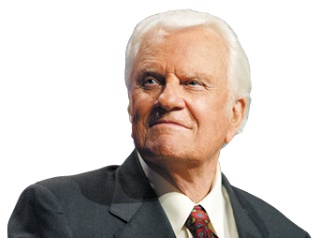
Jesus indicated that there will be a permissive society just before He comes back. “As in the days of Noah, so shall it be also in the days of the coming of the Son of man.” The world today is on an immoral binge that has not been known since the days of Rome. We are in a hedonistic society, and what we are seeing is human nature expressing itself without God. Many have fallen into an antinomianism in which they believe intellectually and then go out and live like the devil, imagining that God will forgive them and take them to heaven. I believe there is an obedience to the Gospel, there is a self-denial and a bearing of the cross, if you are to be a follower of Christ. Being a Christian is serious business.
Prayer for the day: Teach me to deny my selfish desires and obey Your commandments, Lord Jesus. Cleanse me so that I might be used to penetrate society deeply for You.
Written by Billy Graham, Founder of Billy Graham Evangelistic Association(BGEA). BGEA exists to proclaim the Gospel of Jesus Christ by every effective means and to equip the church and others to do the same.
Topic: Communion Is Sacred – Thursday October 12, 2017.
Luke 22:19 “And he took bread, and gave thanks, and brake it, and gave unto them, saying, This is my body which is given for you: this do in remembrance of me.”
Text: Luke 22:19
The bread of communion symbolizes the body of Jesus which was broken for us through His sufferings. He not only died for us on the cross but also bore 39 stripes on His back by which we are healed. Partaking of communion should remind us of the emotional and physical salvation that Jesus provided for us. The Lord’s Supper comes from a part of the Passover meal that was celebrated only once a year. However, the early Christian church took Communion weekly and sometimes daily. There is no specific frequency of the Lord’s Supper prescribed in scripture.
As we take Communion, we are solemnly proclaiming the Lord’s death, and our union with Him and with others through that death. This is a profession of our faith and therefore, there are serious consequences for those who profess something they don’t possess.
It is most likely that what makes a person worthy or unworthy is whether or not he is born again. This is also totally consistent with the doctrine of grace that Paul constantly preached. There were unbelievers among the true Christians just as Jesus prophesied, and this still exists today. It is a dangerous offense for an unbeliever to take the Lord’s Supper. When taking Communion, each person should examine himself to see whether or not he is in the faith (2 Cor. 13:5).
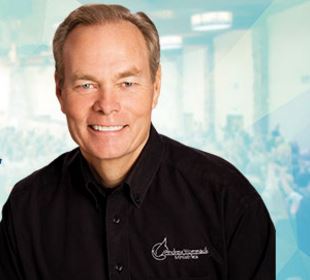
This message was written by The Association of Related Ministries International (ARMI) is an extension of Andrew Wommack Ministries (AWM). ARMI is a unique partnership committed to providing resources to help like-minded ministers succeed in a spirit of excellence and to draw from the experience and expertise of both the AWM and Charis Bible College staff. (www.awmi.net).
Topic: The Good Shepherd — Thursday October 12, 2017.
Read: Isaiah 40:6–11, Bible in a Year: Isaiah 39–40; Colossians 4 He gathers the lambs in his arms and carries them close to his heart. Isaiah 40:11
I sat in the hospital room with my husband, waiting anxiously. Our young son was having corrective eye surgery and I felt the butterflies jostle in my stomach as I fretted and worried. I tried to pray, asking God to give me His peace. As I leafed through my Bible, I thought about Isaiah 40, so I turned to the familiar passage, wondering if anything fresh would strike me. As I read, I caught my breath, for the words from so many years ago reminded me that the Lord “tends his flock like a shepherd” as He “gathers the lambs in his arms and carries them close to his heart” (v. 11). In that moment my anxiety left me as I realized the Lord was holding us, leading us, and caring for us. That was just what I needed, Lord, I breathed silently. I felt enveloped in God’s peace during and after the surgery (which thankfully went well).
The Lord promised His people through the prophet Isaiah that He would be their shepherd, guiding them in their daily lives and giving them comfort. We too can know His gentle tending as we tell Him our anxious thoughts and seek His love and peace. We know that He is our Good Shepherd, holding us close to His heart and carrying us in His everlasting arms.
Prayer: Lord Jesus Christ, You are the Good Shepherd who lays down His life for His sheep. Thank You for the gift of Your sacrificial love and for the peace that passes all understanding.
The Good Shepherd cares for His sheep.
Insight:
Isaiah 40 starts a significant shift in the book of Isaiah, from grief and pronouncements of judgment for Israel’s sin, to a note of rock-solid comfort (v. 1), forgiveness, and healing—based entirely on God’s mercy and goodness. When the prophet wonders whether the people are too weak and fickle for this message, he is reminded that God’s restoration is not based on them, but only on God’s powerful word (v. 8).
In fact, Isaiah 40 is the first Old Testament text that explicitly articulates the theme of “good news” (v. 9) so important in the New Testament. This good news is that God’s powerful love in our lives does not depend on us. Despite our sin, we can always rely on our merciful God who will both tenderly care for us like a shepherd (v. 11) and, like a mighty warrior (v. 10), powerfully transform our lives.
In order to trust God with our deepest struggles, why do we need Him to be both tender like a shepherd and powerful like a warrior? Monica Brands
This message was written By Amy Boucher Pye [Our Daily Bread Ministries.]
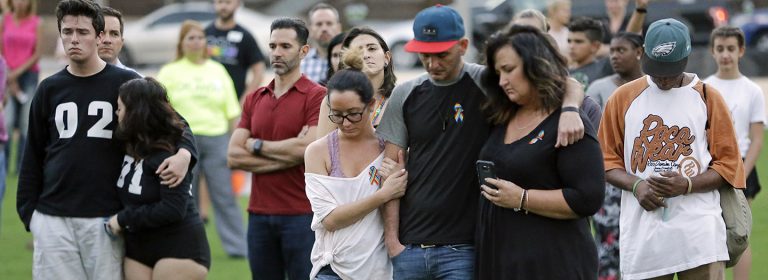
“I was agnostic going into that concert and I’m a firm believer in God now,” Taylor Benge told CNN after surviving the Las Vegas shooting. He explained: “Because there’s no way that all of that happened and that I made it and I was blessed enough to still be here alive talking to you today.”
One man responded on social media by quoting atheist Sam Harris: “Either God can do nothing to stop catastrophes like this, or he doesn’t care to, or he doesn’t exist. God is either impotent, evil, or imaginary. Take your pick, and choose wisely.”
There’s another option.
God created us with free will so we could choose to love him and each other (Matthew 22:37, 39). But freedom without consequences is not free. If I choose not to go to work but God miraculously transports me to my office, I have no real choice in the matter.
Of course, we would like God to prevent horrific misuses of freedom such as the Las Vegas shooting. But logically, he could not honor our freedom while preventing its results, no matter how tragic they are.
Here’s the problem: sometimes in the Bible, that’s just what he did.
When Shadrach, Meshach, and Abednego were condemned by King Nebuchadnezzar to the fiery furnace, God protected them from the fire (Daniel 3:27). When Daniel was thrown into the lions’ den, God sent an angel to shut the predators’ mouths (Daniel 6:22). When Herod imprisoned Peter, the Lord sent an angel to free him (Acts 12:6–11).
If God could protect these men from the consequences of misused freedom, why did he not protect those who were killed or injured in Las Vegas? Why did he not protect the victims of the Holocaust or 9/11?
It seems to me that we have three options.
One: God is capricious.
Grieving the death of his wife, C. S. Lewis noted, “The conclusion I dread is not ‘So there’s no God after all,’ but ‘So this is what God’s really like. Deceive yourself no longer.’” Perhaps God loves some people more than others. Perhaps some of us are more important to his purposes than others.
But “God is love” (1 John 4:8). Therefore, his character requires him to love us all unconditionally. He loved those who died in Las Vegas no less than those who survived.
Two: God has reasons he won’t explain to us.
Perhaps our Creator is unwilling to explain himself to his creation. But he invites us to “reason together” with him (Isaiah 1:18)—the Hebrew means to “argue it out.” He wants us to love him “with all your mind” (Matthew 22:37).
Three: God has reasons we cannot understand.
When God allows or prevents the consequences of misused human freedom, he must have reasons that are consistent with his loving heart. But if he is God and we are not, it is only logical that his thoughts would be higher than ours (Isaiah 55:9). A math teacher cannot teach calculus to a toddler. Even God cannot explain what we cannot comprehend.
Here’s the good news: in heaven “I shall know fully, even as I have been fully known” (1 Corinthians 13:12). So will you.
I do not know why God allowed the tragedy in Las Vegas. But I do know that he redeems all he allows and that he is love. The less we understand our Father’s ways, the more we need to trust his heart.
Trump’s executive order is expected this week and would allow businesses and other groups to buy health insurance together.
Critics are worried those health plans would not be regulated by the same rules as Obamacare plans, such as the law that people with pre-existing conditions are protected.
Trump’s order could make plans cheaper for healthier people, while the Obamacare marketplace would be used primarily for sicker people. Eventually, that could cause a hike in premium costs, according to TheHill.com.
“If this executive order is anything like the rumors then it could have a huge impact on stability of the individual insurance market,” said Larry Levitt, a health policy expert at the Kaiser Family Foundation.
Supporters of Trump’s executive order say it would free up the healthcare marketplace and actually, lower prices for Americans.
Allowing people more affordable arrangements is not a bad thing,” said Kevin Kuhlman, director of government relations at the National Federation of Independent Businesses.
Association health plans, where people are able to band together to purchase a plan, already exist, but Trump’s change could allow them to get around Obamacare rules.
The changes “will lead to less [insurers] playing in this market and potentially a sicker risk pool which translates to higher premiums,” said Kevin Lucia, a professor at Georgetown University’s Center for Health Insurance Reforms.
(Photo: Facebook/Roman Catholic Diocese of San Diego)The California headquarters for the Roman Catholic Diocese of San Diego, California.
A Roman Catholic Church bishop recently oversaw a mass for the LGBT community and their family members, with an emphasis on both being welcoming and having respectful disagreement.
Auxiliary Bishop John Dolan of the Diocese of San Diego oversaw the mass on Saturday at St. John the Evangelist Catholic Church.
The worship service was held in honor of the 20th anniversary of the release of the Catholic Church pastoral document “Always Our Children,” which focused on how to minister to parents with homosexual children.
The San Diego Diocese directed The Christian Post to a copy of Bishop Dolan’s homily, in which he noted that “Always Our Children” received criticism from both liberals and conservatives.
Expand | Collapse
REUTERS/NAVESH CHITRAKARA man is shown here holding on to a flag representing the LGBT community during the South Asia Lesbian, Gay, Bisexual, and Transgender Sports Fest in Kathmandu, Nepal.
“It was too left-leaning for some; even though the bishops then made it clear that the letter was not breaking any new ground on sexual morality, chastity, and mature sexual development according to Sacred Scripture and Tradition,” said Dolan.
“The document was also too right-leaning for others; especially as the language used in the document regarding homosexuality seemed stilted and even offensive to many in the gay community.”
Dolan went on to note that since the release of the pastoral message, dialogue between the Church and the LGBT community has not always been “fruitful or civil.”
“Ad hominem attacks and lies about those with whom we disagree must always be avoided,” continued Dolan.
“Civil discourse and fruitful dialogue cannot be forfeited by those who uphold the teachings of the Church and/or by those who struggle to incorporate our teachings within their personal lives.”
The Saturday mass was not without its critics, as a small number of Catholics protested outside of the church, with one telling the San Diego Union Tribune that she considered the “Always Our Children” document “flawed.”
“The Church is bending with the cultural zeitgeist. The Church is bending with the times and with the pervasiveness of homosexual activism throughout the country and indeed the globe,” said the protester, as quoted by the Tribune.
“And we feel the Church should stand strong as a bulwark against cultural trends. … Our concern today is the Church is becoming too accommodating to homosexuality.”
We use cookies to ensure that we give you the best experience on our website. If you continue to use this site we will assume that you are happy with it.