


Selena Gomez Says She is Reading and Leaning on the Bible During Coronavirus Quarantine

Singer Selena Gomez revealed she’s leaning on Scripture during the coronavirus quarantine in America. 

Gomez joined her former Disney Channel peer Miley Cyrus for her new show on social media called “Bright Minded.” Cyrus has been hosting interviews during the quarantine on Instagram Live. In her latest episode, she said she’s “learning things every day” amid the virus outbreak, to which Gomez responded by sharing some of the things she does to keep her mental health strong.

“I read Scripture and poetry and everything and there’s just one line that says, ‘I choose to see the goodness in the land of the Lord,’ for me speaking personally and it’s because we weren’t really prepared for this specifically,” Gomez shared. “But I know that there are moments where this is where we test each other, like how are we going to treat each other?”

The “Rare” singer said that as she walks her dog, she’s seen a change in her neighbors.

“People walk by and then you switch sides; they’re saying ‘hi’ and they’re being friendly and they’re being kind and that’s something that I hope happens, as well as that,” Gomez said.

She added, “This can be a time to be gentle with ourselves, like you said, taking breaks from all the noise, even taking breaks from social media for a second and just being outside or being with my [fur] babies outside and just breathing in air. I think that that’s something that’s really important.”

SOURCE: Christian Post, Jeannie Law

All Content & Images are provided by the acknowledged source

Greg Laurie’s Palm Sunday Online Service Had 1.3 Million Viewers, Including President Trump, With 11,207 People Making Decisions to Give Their Lives to Christ

California megachurch pastor Greg Laurie’s Palm Sunday webcast service drew 1.3 million people, including President Donald Trump, with 11,207 people making decisions to have a relationship with Christ.

Harvest Christian Fellowship, a multicampus church based in Riverside with campuses in California and Hawaii, said on Monday that “a lot of new people visited us” because of Trump’s tweet, where he announced that he would be watching the service.

“Palm Sunday is the beginning of a Holy week for many people of Faith and a great day to lift our voices in Prayer,” Trump tweeted on Saturday. “I will be tuning into Pastor @greglaurie at @harvestorg Church in Riverside, California tomorrow at 11:00 A.M. Eastern.”

In a Facebook post, Laurie said that he was “as surprised as anyone” when he heard Trump say he would tune in for the service.

“I knew he might send a Tweet out about this, but I was not sure when,” Laurie explained. “It’s not like he does not have a lot on his plate! I am thankful the President feels it is important for us as Americans to attend Church, even if it is only online now. Thank you, President Trump!”

Laurie, known for hosting evangelistic crusades at stadiums, mentioned that Trump had hoped to join Harvest’s upcoming Easter service in person but “unfortunately that has not worked out.”

Although Trump said that it is “sad” that people have to watch Palm Sunday and Easter Sunday services on their computers, Laurie cited a verse from Matthew to stress that Jesus said that when ‘two or more are gathered in my name, I am there in the midst of them.’”

“So we are having church in the home or wherever you are watching us,” he said. “The Lord is here with us.”

During the service, Associate Pastor Jason Powell said that the online response the church has received as been “unbelievable.”

“We never anticipated this work that God was prepared to do,” Powell said. “So what we did is we said, ‘Lord, this is what we got.’ We offered our fish and loaf, so to speak. God has multiplied and cast a seed far beyond what we could imagine. The past three weeks, did  you know we have had over 1 million people that have joined us online for Harvest at Home.”

SOURCE: Christian Post, Samuel Smith

All Content & Images are provided by the acknowledged source

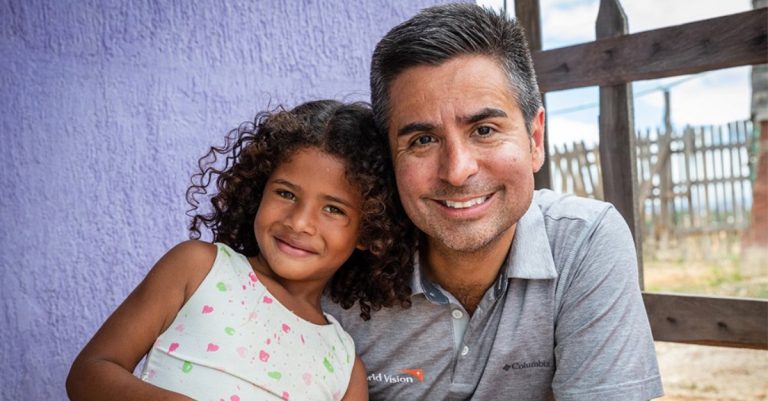
World Vision US President Says ‘All Hands on Deck’ for Pandemic

World Vision US President Says ‘All Hands on Deck’ for Pandemic


(RNS) — World Vision U.S. President Edgar Sandoval Sr., like many Americans, has been working from home in recent weeks. But he continues his mission to help vulnerable children and families across the globe during the coronavirus epidemic.

World Vision staff are working with church volunteers — responding simultaneously for the first time in this country and globally — to provide needed food and supplies and help faith leaders train local communities on ways to reduce the spread of COVID-19.

The evangelical Christian humanitarian organization estimated it has helped about 4.3 million people worldwide with coronavirus preparations. It plans to reach 5 times that number in the next six months.

In the U.S., staff and volunteers have helped more than 2,700 children and adults with emergency aid since March 20. They’ve also provided much-in-demand health supplies — tens of thousands of masks, gloves and gowns — to U.S. health care workers.

Sandoval, who describes himself as a “Bible-based Christian” who attends nondenominational churches, spoke with Religion News Service on Wednesday (April 1) about the challenges ahead.

The interview has been edited for length and clarity.

You have been president of World Vision since 2018. How would you compare the coronavirus to any other global crisis you have faced since you started?

This is probably the most uncertain and concerning situation…

… Read More

Click here to read the rest of the story from our content source/partners – Christian Headlines.

قالب وردپرس

Supreme Court Declines to Hear Catholic Church’s Challenge to D.C. Metro’s Ban on Religious Ads

The Supreme Court denied hearing a petition from the Catholic Church on Monday challenging the Washington D.C. Metropolitan Area Transit Authority’s policy banning religious advertising as a violation of the First Amendment.

The case was set in motion after WMATA refused to run a Christmas ad from the church in 2017. The U.S. Court of Appeals for the D.C. Circuit previously upheld the ban on religious messages on buses and trains and in stations as lawful and free from discrimination, The Washington Post reported.

While Justice Neil M. Gorsuch and Justice Clarence Thomas agree that the decision by the U.S. Court of Appeals for the D.C. Circuit was wrong, the Supreme Court chose not to review the case because Justice Brett Kavanaugh, who was involved with the lower court’s ruling, had to recuse himself from the case.

“Because the full Court is unable to hear this case, it makes a poor candidate for our review,” Gorsuch wrote.

In his dissent, Gorsuch argued that WMATA’s policy is a clear case of “viewpoint discrimination.”

“At Christmastime a few years ago, the Catholic Church sought to place advertisements on the side of local buses in Washington, D. C. The proposed image was a simple one — a silhouette of three shepherds and sheep, along with the words ‘Find the Perfect Gift’ and a church website address. No one disputes that, if Macy’s had sought to place the same advertisement with its own website address, the Washington Metropolitan Area Transit Authority (WMATA) would have accepted the business gladly,” he noted.

SOURCE: Christian Post, Leonardo Blair

All Content & Images are provided by the acknowledged source
Tyler Perry Leaves $21,000 Tip for Staff at His Favorite Atlanta Restaurant After Getting Takeout During Coronavirus Pandemic

After creating the star-studded #HesGotTheWholeWorldChallenge to raise COVID-19 awareness, Tyler Perry decided to use some of his $600M fortune to help the staff at one of his favorite restaurants in Atlanta.

On Sunday, the 50-year-old movie/TV mogul left a $500 tip for each of the 42 out-of-work servers employed at the West Paces location of Houston’s while picking up a to-go order, according to TMZ.

Perry’s $21K tip serves as a bit of a cushion for the struggling workers, who might have to wait up to 20 weeks for a $1,200 (and $500 for each child) stimulus check from the federal government.

As of Sunday, 219 people in Georgia have died from coronavirus and a further 6,742 have been infected, according to 11Alive.com.

On Thursday, Governor Brian Kemp issued a stay-at-home order (but kept beaches, parks and churches open) after drawing criticism for not being aware that ‘this virus is now transmitting before [asymptomatic] people see signs.’

Tyler (born Emmitt Perry Jr.) is well known for his generous charitable acts and he employs 400 people at his 330-acre military base-turned-studio in Atlanta featuring 12 sound stages, which he acquired in 2015.

SOURCE: Daily Mail, Cassie Carpenter

All Content & Images are provided by the acknowledged source

P!nk Says ‘I’ve Never Prayed More in My Life’ After She and Her Three-Year-Old Son Contracted Coronavirus

In the midst of quarantine parenting, things got scary for P!nk, who tested positive for COVID-19 alongside her 3-year-old son, Jameson.

The singer, who revealed her diagnosis earlier this week, had a long discussion about her family’s experience with the coronavirus with friend and author Jen Pastiloff on Instagram on Sunday (April 5). The live chat was part of a “Chat and Feed” series to raise money to feed people in need.

“I haven’t dressed up in three weeks. I really needed it. Thank you for the opportunity,” P!nk said as she began to talk about this “crazy time.”

“We have been really, really sick,” she noted, though they are doing better now. “My 3-year-old, Jameson, has had the worst of it. I’ve had many nights where I’ve cried and I’ve never prayed more in my life.”

“At one point I heard myself saying, ‘I thought they promised us our kids would be OK.’ And it’s not guaranteed. There’s no one that is safe from this,” said P!nk, who later described her 3-year-old as “perfectly fine” before contracting COVID-19. Although she and Jameson fell ill, her husband Carey and daughter Willow did not.

“Jameson’s been really, really sick,” she explained. “I’ve kept a journal of his symptoms for the past three weeks, and mine as well. He still, three weeks later, has a 100 temperature … It’s been a roller coaster. It’s been a different roller coaster for both of us.”

SOURCE: Billboard, Ashley Iasimone

All Content & Images are provided by the acknowledged source

Ed Stetzer on How the Coronavirus is Pushing Us to a Better Way of Church

Ed Stetzer is executive director of the Billy Graham Center, serves as a dean at Wheaton College, and publishes church leadership resources through Mission Group. The Exchange Team contributed to this article.

Life looks rather different today than it did a month ago. All parts of life—home, community, work, even church. In fact, the Sunday morning gathered experience has been dethroned as the primary focus of our churches. Yes, it’s a painful thing for those of us who like to get together to learn and pray and worship together. We are simply following the tradition that Christ-followers have lived out for millennia.

And yet, for the sake of those around us, we cannot be together. For a season. For the sake of our world. It’s hard, and lonely.

But I would argue that in the midst of all this pain, some good can come.

Dethroning the Queen

I played competitive chess in high school. When you want to better yourself in competitive chess, you and your competitor take the queen off the board and you play with the other pieces.

Here’s why: When you have inexperienced chess players, the queen is zipping around the board taking knights and various pawns. What is happening is that the whole game, the whole board, is revolving around the queen.

That’s fine unless you play against someone in competitive chess. In this case, you won’t have a chance. If you want to win in chess, you have to use all the pieces and use all the pieces well.

That can apply to church as well.

If our churches are to be effective at gospel work, we need to engage all the men and women that God has given us. They’re not pieces and they’re not pawns, but neither is the Sunday morning worship service the queen. Right now, the queen of Sunday worship has been removed for some time and looks remarkably different than she did even last month.

The queen is dethroned. There is a sadness about this, sure. But I would argue that this allows us to look at the board differently.

In fact, we must not let the queen back if it means that the people of God are put back on the bench. We must not go back to seeing church as Sunday morning. It was never all about the weekend, and too many pastors who said that made it too much about them.

We are being given a new opportunity to do things differently. We are being given a great opportunity for all of God’s people to join Jesus on mission and for the church to look and stay looking different.

Now, please don’t misunderstand. I’m not devaluing the gathering of God’s people. I’m not discounting the place of the ordinances or the sacraments. Those deeply matter— I’ve written on them extensively. And we will gather again. However, I am saying something that almost all evangelical traditions believe— that God’s people should be engaged in God’s mission, and too often they are not.

Church is too consumer, and needs to be more about mission.

It’s a Different World Out There

We are being reminded lately that God can do more in a couple of months than we can accomplish in decades. For decades, we’ve been having a conversation about being on mission and how God is mobilizing his church on mission. Maybe, I would argue, it’s time for the conversation to turn into greater action.

It’s time to do it.

Source: Christianity Today

All Content & Images are provided by the acknowledged source

Justin Bieber Says He and Hailey Are ‘Praying for Those Who Have Endured Loss and Discomfort’ Amid Coronavirus Pandemic and Are ‘Working on Ways to Help Those in Financial Crisis’

Justin Bieber penned a note to fans on Instagram to say that he is praying for, and wanting to help, those whose lives have been affected by the COVID-19 virus.

“As we all know things right now are definitely uncertain. Our routines, structure, and plans are all altered due to a horrific virus that is sweeping our nation,” Bieber wrote on Saturday (April 4). “There are people who have lost love ones and also people battling for their lives. I woke up today healthy which I am so grateful for but I know there are people who didn’t. I write this to acknowledge the people who don’t have it so easy.”


As we all know things right now are definitely uncertain.. Our routines, structure, and plans are all altered due to a horrific virus that is sweeping our nation. There are people who have lost love ones and also people battling for their lives. I woke up today healthy which I am so grateful for but I know there are people who didn’t. I write this to acknowledge the people who don’t have it so easy. I want to say that Hailey and I are praying for you, we are praying for those who have endured loss and those who are enduring a great deal of discomfort due to this virus. We understand there are a lot of people who can’t afford to stay home right now, people who don’t know how they are going to pay their bills. There are people facing extreme anxiety and worry. We are currently working on ways to help those in financial crisis and will let you know how you can help as well . We love you and we are in this together .

A post shared by Justin Bieber (@justinbieber) on

“I want to say that Hailey and I are praying for you,” he said, “we are praying for those who have endured loss and those who are enduring a great deal of discomfort due to this virus.”

“We understand there are a lot of people who can’t afford to stay home right now, people who don’t know how they are going to pay their bills. There are people facing extreme anxiety and worry. We are currently working on ways to help those in financial crisis and will let you know how you can help as well. We love you and we are in this together,” wrote Bieber.

SOURCE: Billboard, Ashley Iasimone

All Content & Images are provided by the acknowledged source

Playing God: Pandemic Brings Moral Dilemmas to US Hospitals

Medical professionals across the US are preparing COVID-19 units in a suspenseful quiet, while others in places like New York are already overwhelmed with patients. The city has ordered hospitals to increase capacity by 50 percent, and they are looking at ways to use temporary facilities, including a recently arrived Navy hospital ship, hastily built field hospitals, and even hotels.

In the midst of all this, doctors and nurses are preparing to face agonizing ethical decisions as their Italian counterparts have already in recent weeks. According to some estimates, the number of projected coronavirus patients needing ventilation in the US could reach anywhere between 1.4 and 31 patients per available ventilator.

There are three main ethical concerns that medical professionals are now facing, according to the Center for Bioethics and Human Dignity: protecting the vulnerable by not overwhelming health care systems, allocating insufficient medical supplies, and keeping medical workers safe who lack the proper protective equipment against the virus. The questions are very real: Who should receive medical care when there aren’t enough resources to go around?

Two ethicists aiding US medical workers with these dilemmas are Carol L. Powers, a lawyer and the co-founder and chair of the Community Ethics Committee out of Harvard Medical School’s Center for Bioethics in Boston; and David Stevens, a physician and CEO emeritus of the Christian Medical & Dental Associations in Bristol, Tennessee who spent 11 years on the front lines of the HIV/AIDS and malaria epidemics in Africa.

CT spoke to Powers and Stevens about how Christians should approach issues of life or death.

How does the relationship between the physician and patient change during a public health crisis like a pandemic?

Powers: In the normal course, the physician-patient relationship is shaped by two different “spheres of decision-making.” Typically, the patient is charged with articulating their individual goals of care based upon their personal values and preferences. The physician then responds with various treatment options that would accomplish those individual goals of care.

In a public health crisis where health-care resources become limited, the physician-patient relationship changes drastically. The weight accorded to an individual patient’s goals of care diminishes in light of the community’s increased need for health care resources. Rather than focusing solely on the patient in the bed, the physician must now consider the many patients in many beds. Treatment options available to both the physician and the patient become necessarily limited.

Critical care resources—an isolation unit or an ICU bed or a ventilator or dialysis—may not be a treatment option offered or it may even be withdrawn. In the case of non-critical medical needs, surgeries or treatments may be delayed or become completely unavailable. Resource allocation questions force a shift in the physician-patient relationship so that the patient’s desires for specialized medical treatments cannot be accommodated and the physician reluctantly becomes a gatekeeper for access to any care at all. Medical care that was once assumed to be available may become limited or completely unavailable.

For the physician, an uncomfortable shift occurs from providing patient care supported by evidence-based medical standards offering a full panoply of treatment choices to operating under crisis standards of care providing limited treatment options in an attempt to save as many people in jeopardy as possible.

Whenever the question arises “what should we do?” then you are in the arena of ethics. The focus of decision-making in ethics often centers upon balancing benefits and burdens of competing “good or right answers.” In our pre-March 2020 world, a patient was able to exercise a good deal of decision-making authority about what treatment options they wanted based upon an ethical decision-making principle of autonomy. In our post-March 2020 world, the ethical principle of justice asserts itself and physicians must find ways to allocate limited resources in ways that are fair and do the most people the most good. For years, we have stayed away from talking about rationing health care and now, because of a crisis beyond our control, we are being forced to ask hard resource allocation questions.

How are medical professionals making decisions about who to prioritize for care?

Stevens: The four basic principles of ethics [include] beneficence, which is doing good; non-malfeasance, which is doing no harm, justice, [and autonomy], and all those things are impacted by an epidemic.

You have the ethical quandary of, do I take care of the sickest folks or do I take care of the most folks? You focus on those in the middle. You have those that aren’t very sick, you tell them to stay home. And then you have people who are desperately sick and when there are not enough respirators, there’s going to be a decision-making situation where you’re going to say, this person is so sick, I’m just going to sedate them or give them something for pain or air hunger, but I don’t have the resources nor the time to focus on this person to the detriment of 15 others who are moderately sick who I can save. That is what we call competing goods. Both of those are good things but you can’t do both.

I remember as a young missionary in Kenya, we had a lot of premature births—some of the highest in the world because we had the highest multiple births—that one out of every 28 deliveries was a set of twins. So we had a lot of preemies. We didn’t have 24-hour electricity. We had a little generator we could use to run one isolette. You can put three premies in an isolette, but what do you do when the fourth one comes? I had to make this decision many times and say, Okay, great, this one’s doing betterI think we can take it out and put this one in. But other times you looked, and all of them were doing bad and you think, this one is so bad in the middle, I’m going to take that one out and just give it comfort care and give it back to its mother and I’m going to take this other one that was just born and is doing better and put it in.

Well, that’s not fair. You can’t be fair in these types of resource-depleted situations. And you get into what we call utilitarian ethics of doing the best you can to save the most people when you can’t save them all. You do that while not violating any moral absolutes.

Powers: There are several different ways to allocate scarce medical resources. One could argue for a first-come, first-served system or even a lottery. What most hospitals are instituting are crisis standards of care that are that trying to maximize the most life years. What that means on a practical basis is a patient with COVID-19 whose health is already compromised by other life-threatening medical conditions may not receive as much intensive medical support as someone whose health is not medically compromised.

Doctors are trying to assess who will benefit the most for the longest when they offer access to scarce medical resources. It means hard choices are inevitable, especially because we have come to rely on the physician acting as an advocate for their individual patients. In order to keep that relationship intact as far as possible, hospitals are now putting into place triage teams—clinicians who are not directly providing care to a patient—who evaluate the test results and determine who will be most likely to benefit the most.

Stevens: One of the premises of medicine is you do no harm. We are taught in health care in this country that you never do anything you’re not trained to do, that you’re not competent to do. We’re already moving past that in New York because you’re going to have people that haven’t practiced medicine in years coming back to help out. This is a place where you have to do that. There’s a place when you’ve got a moral duty to help people, but you have a conflict. And you’ve got to set priorities and you have to allocate limited resources. All these things play into it and make it a very difficult situation, especially here in the US where people haven’t had to deal with these things.

All Content & Images are provided by the acknowledged source

‘Faith over Fear’: Thousands Place Crosses in Yards to Celebrate Hope amidst Pandemic

‘Faith over Fear’: Thousands Place Crosses in Yards to Celebrate Hope amidst Pandemic


A campaign encouraging homeowners to place crosses in their front yards has now spread to at least six states, with supporters hoping to spread an Easter message of hope during the COVID-19 pandemic.

Facebook in recent days has been filled with thousands of pictures of crosses displayed by homeowners in Georgia, Kentucky, Ohio, Louisiana, Arkansas and Florida.

The “Faith over Fear” movement originated in Middle Georgia. (Some are calling it “Faith not Fear.”)

Many homeowners are putting Christmas lights on the crosses.

Susan Polhill of Louisville, Ga., told The Augusta Chronicle she got the idea after reading about Californians hanging Christmas lights during the pandemic to bring people cheer.

“I thought, ‘Gosh, that is awesome!’ It is the Easter season, so let us light up some crosses as they are packed with meaning,” Polhill said. “We post pictures on Facebook of all the crosses along with a special scripture or verse from a hymn or song. … The cross is a symbol of what Jesus has done for us, all people.”

The “Faith over Fears Crosses in Middle Georgia” Facebook page has more than 10,000 members. Similar pages have been set up by Christians in Arkansas and Louisiana. A Jefferson County, Ky., Facebook page has 11,000 members.

The Middle Georgia page encourages the community to place a cross “in your yard to bring hope and assurance that…

… Read More

Click here to read the rest of the story from our content source/partners – Christian Headlines.

قالب وردپرس