Johnny Pereira on From Crisis to Catalyst: How to Innovate Well by Asking Three Key Questions

The church is closed.

The words I never thought I’d have to say outside of an act of God. Well, we’re in the middle of one and I’ve had to tell my people that the way we’ve been doing church for the past 15 years has to change.

Unsurprisingly, this has led to a lot of confusion, concern, and even anger. What do you mean church is closed? Don’t you have faith?! Yes. But the church is greater than filling our buildings, and as many have said, the greatest way we can serve out neighbor is to close.

In the intervening days I’ve seen a lot of language around the church in crisis. How is the church going to endure through this crisis? How will this crisis change the church?

Instead, at Salem Chapel, we’ve been trying to change the way we look at this season. As the church works to understand and engage the gravity of the suffering and loss around the globe, I’d argue that we are best served by seeing this season as a catalyst. By catalyst, I simply mean change; the process by which some event substantively and irrevocably changes reality.

That’s us.

This experience has and is going to change us. We are going to be different on the other side, and so the church needs to think critically about how to respond proactively and productively. We need to keep our eyes fixed on the gospel mission, even as the world around us turns inward and self-protection.

In this spirit, I want to offer three catalyst question we are asking at Salem Chapel and how we have answered those questions in this new environment. This is not comprehensive by any stretch. Many people in our churches are taking the lead in projects I will only hear about afterward but are having significant kingdom impact today. But these are a few of our initiatives that I’d encourage you and your organization to consider as you think through these questions.

Catalyst Question #1: How are we gathering together for church service?

This is the most significant question most churches are grappling with this week. Some will be hosting online services for the first time in their history, others have streamed live services but never really given thought to tailoring their messages and delivery to an online audience.

At Salem, we are part of this move to online church and in thinking through this catalyst question we had four critical responses:

Developing a new platform
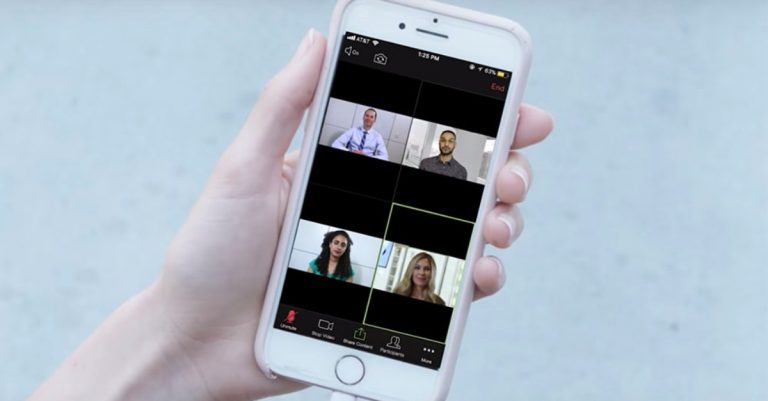
One thing this pandemic has taught us is how we can take for granted our buildings and services as platforms to proclaim the gospel and minister to people. No longer able to gather, we’re left trying to figure out how to cobble together new platforms online. But the immediate question is what to use? Facebook? Zoom? Skype? Carrier Pigeons? The choices are overwhelming and pastors don’t want to make a mistake out of the gate and alienate their people against the transition.

In response, we’ve turned to churchonlineplatform.com. It’s a free online program that allows viewers to comment, ask for prayer, and indicate they desire to trust Christ as their Savior. You can establish hosts that are able to monitor this engagement and reach out to people during the service while others focus on the content.

Adapting a new method
While technology has changed some aspects of church, the bulk of our ministries have largely remained unchanged in generations. Welcome, Worship, Message, Worship, Farwell—all within a span of roughly 75 minutes. Small groups and various other ministries each take days or nights throughout the week to round out the majority of how we engage. Now we have to rethink this method in terms of time,

So, while many of the elements of our online gatherings are similar to the traditional methods, we are adapting wherever possible to take advantage of the online medium. We are scaling down production to emphasize the intimacy of worship, focusing familiar songs that will remind our people that God’s church has and will endure.

We are emphasizing interactive scripture reading, having people post in chat verses that have meant a lot to them with the video leader reading out a few as time allows. We set out intentional guided prayer times and invite leaders to pray over the church from their homes. Finally, we have shortened the preaching to 20 minutes, recognizing that attention spans for digital content are shorter.

In all, we’ve shortened the meetings to no longer than 45 minutes while offering more meetings throughout the week for people to take breaks and check in. While I anticipate some might scoff at this, we want to emphasize adaptation with the aim of seeing greater overall impact in and for the people God throughout the week.

Modeling a new setting
While our people are regularly accustomed to high quality production in our Sunday morning services and various weekly ministries, we have decided to intentionally scale down these efforts. Our thought process has been to reflect the context in which many of our people are engaging us: their living rooms. Through mimicking the environments of our average people, we want to model to them this experience of “doing” church in quarantine. Small, intimate, and networked.

While for some churches continuing in regular production quality is the right move, we have found our people are responding to this move and engaging enthusiastically in worship, prayer, and time in the Word.

Moreover, by modeling it to them, we have shown that they can take the initiative in reaching out their friends and family to likewise prayer and read scripture on their own time. In doing so, we’ve been able to encourage people to invite those who aren’t Christian and the de-churched to join not only our primary gatherings but their own.

In essence, we have strived to create a service that is replicable across our community.

Embracing a spirit of new
A critical piece for leaders and laity alike to remember in this time is to have grace as you find what works best for you and your church. Not all churches are the same and we shouldn’t expect to nail everything on the first try. If something doesn’t work make, learn what you can and try something new.

In this spirit, be ready to mix up the platforms, methods, and settings as you try to find new ways to keep your people connected. Only a few days in and we are already talking about the “rut of redundancy,” throwing the same thing at our people and pushing our people to fatigue.

This is critical: beware of over-saturation! We don’t know how long it will be before we can gather in person again so we do not want to push too much content out at once and overload the church to where it becomes ‘white noise.’

Instead, try elevating others in your church as a change in voice. Use testimonies of God at work among your people, invite experts in different fields to share how they live out their faith, and give platforms for medical works to share insights into how to prepare and to pray. In each, remember that your people are being bombarded with information so don’t be afraid to intentionally encourage a break.

It was in one our meetings thinking about shaking up the regular online gathering that we discussed the idea of a “drive-in” format for Easter. We are now putting plans into place for people to drive to the church parking lot and for us to conduct the service on our roof. While plans might change as we listen to medical experts, it marked an important step in embracing the spirit of new and thinking creatively.

Source: Christianity Today

All Content & Images are provided by the acknowledged source

Israel’s Tower of David Museum Is Using Virtual Reality to Allow People to ‘Visit’ the Western Wall during Passover

Israel’s Tower of David Museum Is Using Virtual Reality to Allow People to ‘Visit’ the Western Wall during Passover


Visitors and Christian travelers will not be able to visit the historic streets of Jerusalem this year as the coronavirus pandemic continues to spread around the world.

But visitors may still get a look at the city in April.

According to CBN News, Israel’s Tower of David Museum is using virtual reality to allow people to “visit” the Western Wall during Passover, the Church of the Holy Sepulcher during Easter and a look at the Dome of the Rock and the Al Aqsa Mosque during Ramadan.

The views come from Innovation Lab, which will provide a 360-degree virtual reality experience of both Jerusalem as it is today and a view of how the city looked 2,000 years ago.

“The tours and experiences encapsulate the essence of the innovative vision at the Tower of David Museum – to create a modern, dynamic, unique language for the rich story of Jerusalem,” said Eilat Lieber, director of the Tower of David Museum.

“VR can enable emotions felt as close to possible as when one is physically present. We hope that for those looking for hope in these uneasy times … and for those that might turn to prayer and to Jerusalem – might find a little bit of hope when becoming immersed in the holy city of Jerusalem,” she added.

With the world facing the challenges of the coronavirus outbreak, Lieber says she hopes the virtual tours will be uplifting for…

… Read More

Click here to read the rest of the story from our content source/partners – Christian Headlines.

قالب وردپرس

More Than Half of Americans Have Prayed for an End to the Coronavirus Plague – Daniel Whyte III Says God Doesn’t Want Prayers to End the Plague but Prayers to End the Sin That Led to the Plague

As the number of confirmed COVID-19 cases continues to rise and schools, workplaces and public gathering spaces across the United States remain closed, a new Pew Research Center survey finds that the coronavirus outbreak is having profound impacts on the personal lives of Americans in a variety of ways. Nearly nine-in-ten U.S. adults say their life has changed at least a little as a result of the COVID-19 outbreak, including 44% who say their life has changed in a major way.

Amid widespread calls from experts for Americans to socially distance from one another to avoid spreading the virus, what recently seemed like mundane daily activities now elicit concerns from large swaths of the population. About nine-in-ten U.S. adults (91%) say that, given the current situation, they would feel uncomfortable attending a crowded party. Roughly three-quarters (77%) would not want to eat out at a restaurant. In the midst of a presidential election year, about two-thirds (66%) say they wouldn’t feel comfortable going to a polling place to vote. And smaller but still substantial shares express discomfort even with going to the grocery store (42%) or visiting with a close friend or family member in their home (38%).

How are people adapting their behavior in light of the outbreak? Four-in-ten working-age adults ages 18 to 64 report having worked from home because of coronavirus concerns – a figure that rises to a majority among working-age adults with college degrees and upper-income earners. Still, despite current circumstances, about two-thirds of adults with children under 12 at home say it’s been at least somewhat easy for them to handle child care responsibilities.

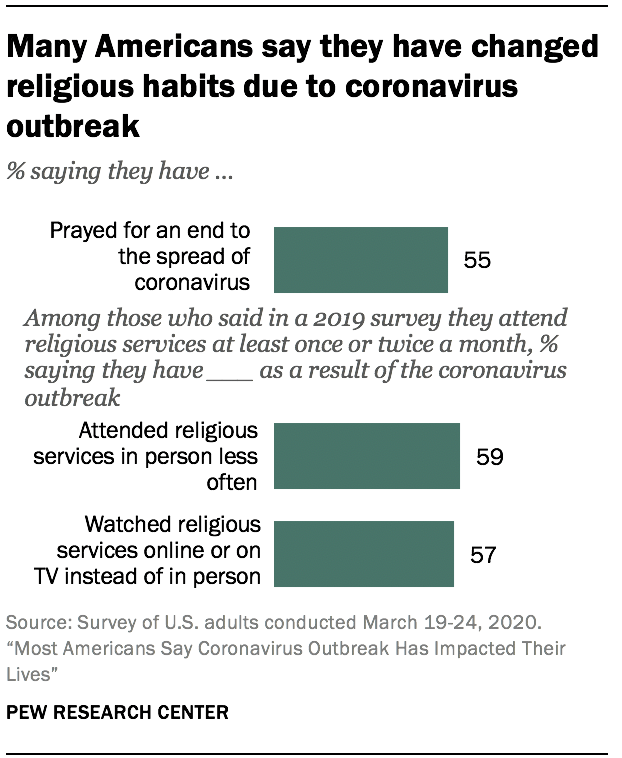
The virus also has impacted Americans’ religious behaviors. More than half of all U.S. adults (55%) say they have prayed for an end to the spread of coronavirus. Large majorities of Americans who pray daily (86%) and of U.S. Christians (73%) have taken to prayer during the outbreak – but so have some who say they seldom or never pray and people who say they do not belong to any religion (15% and 24%, respectively).

Among U.S. adults who said in an earlier survey they attend religious services at least once or twice a month, most (59%) now say they have scaled back their attendance because of the coronavirus – in many cases, presumably because churches and other houses of worship have canceled services. But this does not mean they have disengaged from collective worship entirely: A similar share (57%) reports having watched religious services online or on TV instead of attending in person. Together, four-in-ten regular worshippers appear to have replaced in-person attendance with virtual worship (saying that they have been attending less often but watching online instead).

These are among the findings of a Pew Research Center survey of 11,537 U.S. adults conducted March 19-24, 2020, using the Center’s American Trends Panel.1 Other key findings from the survey include:

Republicans are more likely than Democrats to say they feel comfortable proceeding with a variety of activities despite the coronavirus outbreak. For example, 69% of Republicans and people who lean toward the GOP say they would be comfortable visiting with a close friend or family member at their home, compared with 55% of Democrats and Democratic leaners. Along these same lines, Democrats are more likely than Republicans to say their lives have changed in a major way as a result of the virus, and that they have been feeling psychological distress.
Compared with older Americans, young adults are more likely to say they are comfortable going to a crowded party, a restaurant or a small gathering with close family or friends. Still, most adults under 30 say they are uncomfortable eating out at a restaurant (73%) or going to a crowded party (87%). Young adults are more likely than their elders to say they have used a food delivery service due to the outbreak.
Concerns about public activities and changes to personal lives have been felt more acutely in states with higher numbers of COVID-19 cases. For instance, 51% of those living in highly impacted states say their lives have changed in a major way, compared with 40% of those in states with the lowest numbers of cases.
Most Americans say their personal life has been affected by the coronavirus outbreak

Nearly nine-in-ten U.S. adults say their personal life has changed at least a little bit as a result of the coronavirus outbreak, with 44% saying their life has changed in a major way. Just 12% say their life has stayed about the same as it was before the outbreak.

Women (47%) are more likely than men (41%) to say their personal life has changed in a major way as a result of the coronavirus outbreak. And while more than four-in-ten white (45%) and Hispanic (47%) adults say this has changed their lives significantly, about a third of black adults (34%) say the same.

Income and education are also linked to assessments of the personal impact of the coronavirus outbreak. More than half of those with higher incomes (54%) say this has changed their life in a major way, compared with 44% of those with middle incomes and 39% of those with lower incomes.2

Similarly, 61% of those with postgraduate degrees, and a narrower majority of those with bachelor’s degrees (54%), say the coronavirus outbreak has changed their life in a major way. By comparison, 43% of those with some college and about a third of those with a high school diploma or less education (35%) say this has happened to them. Across income groups, those with at least a bachelor’s degree are more likely than those with less education to say the coronavirus outbreak has changed their life in a major way.

Across age groups, similar shares say the coronavirus outbreak has had a major impact on their personal life. For example, 43% of adults younger than 30 say the outbreak has changed their life in a major way, as do 45% of those ages 65 and older.

Not surprisingly, those in states with a high number of coronavirus cases are more likely than those in states that haven’t been as affected to say their personal life has changed in a major way because of the outbreak. About half of those who live in states with a high number of cases (51%) say their life has changed in a major way, compared with 43% of those in states with a medium number of cases and 40% of those in states with a low number of cases.3

Among the 33% of Americans who say they or someone in their household has either lost a job or took a pay cut because of the coronavirus outbreak, 54% say their personal life has changed in a major way as a result of the outbreak. This compares with 39% of those who say they have not experienced either of these situations.

About half of Democrats say their life has changed in a major way because of the coronavirus

Democrats are more likely than Republicans to say their personal life has changed in a major way as a result of the coronavirus outbreak: About half of Democrats and Democratic leaners (51%) say this, compared with 38% of Republicans and those who lean to the GOP.

These partisan differences remain even after accounting for the fact that Democrats are more likely than Republicans to live in states with a high number of confirmed cases of COVID-19. About a third of Democrats (34%) live in these states, compared with 22% of Republicans. More than half of Democrats in states with a high number of cases (57%) say their life has changed in a major way, compared with 42% of Republicans in states with a high number of cases. Similarly, in states with a medium or low number of cases, Democrats are more likely than their Republican counterparts to say the coronavirus outbreak has impacted their life in a major way.

More than three-quarters of Americans say they are not comfortable eating out in a restaurant given the current situation with coronavirus

Source: Pew Research

All Content & Images are provided by the acknowledged source

Virginia Governor Bans All on-campus Teaching, a Week After Evangelical Liberty University Allowed Students Back From Spring Break and at Least 11 Contracted Coronavirus

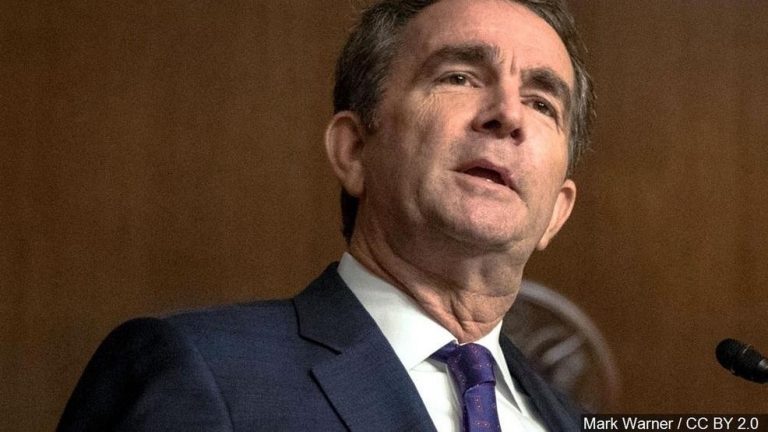
Virginia’s governor on Monday ordered all higher education institutions to stop any in-person instruction amid the coronavirus pandemic, a move likely aimed at Liberty University that has reopened its campus amid the outbreak.

‘We are in a public health crisis, and we need everyone to take this seriously and act responsibly,’ said Northam, a Democrat. ‘Our message to Virginians is clear: stay home. We know this virus spreads primarily through human-to-human contact, and that’s why it’s so important that people follow this order and practice social distancing. I’m deeply grateful to everyone for their cooperation during this unprecedented and difficult time.’

Liberty University in Lynchburg led by President Jerry Falwell Jr has faced intense criticism over its decision to welcome 1,900 students back to campus last week after the end of their spring break.

The vast majority of classes have been moved online, but the university has said publicly that in-person instruction was necessary for a few select courses.

‘We are currently reviewing what the governor said but aren’t able to make a comment at this moment,’ said Liberty spokesman Scott Lamb.

Lamb said he couldn’t immediately say whether any in-person instruction was continuing Monday, but the university’s website specifically mentioned that flight training for aeronautics courses would ‘remain in the traditional face to face format.’

Falwell tweeted Sunday night that only one off-campus student who never left Lynchburg had tested positive for the virus – a response to a story in the New York Times that said 11 Liberty students were sick with symptoms that suggested COVID-19.

Of the 11 who have symptoms, three have been referred to hospitals in order to get tests while eight have been told to self-quarantine, according to the newspaper.

Source: Daily Mail

All Content & Images are provided by the acknowledged source

'God is Speaking in a Fresh New Voice': VA Church Offers Drive-In Sunday Service

As COVID-19 continues to overthrow every aspect of our lives, churches across the nation are adapting to new restrictions and finding creative ways to worship together.

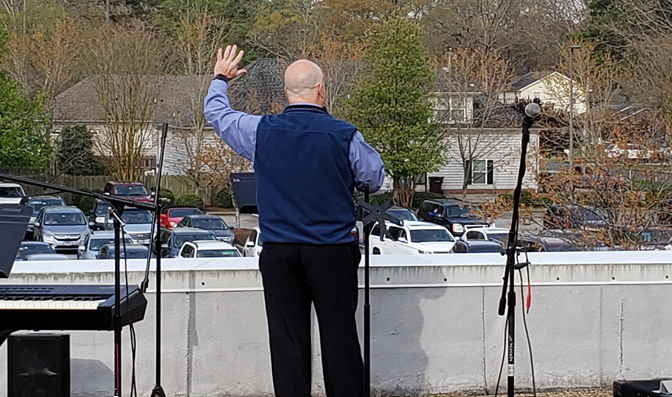
Great Bridge Baptist Church in Chesapeake, VA, has modified its Sunday service into a drive-in experience – providing music and a message from the church’s rooftop.

Churchgoers sit inside their vehicle in the church parking lot and tune their FM radio to hear Pastor Will Langford deliver the sermon.

Pastor Langford told CBN News that he heard about drive-in services from a church in Texas. The church staff prayed about the idea, then announced it to the members, and launched their first outside worship service last Sunday.

“This gives people the opportunity to still maintain social distancing and be a part of a live service from their car…while in a safe environment,” he said.

GET YOUR FREE FACTSHEET: Coronavirus: What You Need to Know

Church members are grateful for the opportunity to unite and worship as a group.

Worship Pastor Jonathan Lowery said it’s encouraging to see people worshipping together again.

“It’s great to see our church family come back together – it’s an encouragement,” he said.

Lowery explained that our normal routines have been disrupted so we can get back to the heart of the matter – reconnecting with Christ.

“We are never alone from the Lord. We’ve been stripped away from the norm so our hearts can become in tune with Him.”

Christi Briggs, who is a member of the worship team, views the drive-in service as a gift to the community.

“We are providing a way to still have an opportunity to worship,” she said. “It’s a gift to the community from our church.”

Years ago, Briggs and her husband were married at Great Bridge Baptist Church. They were overjoyed for the opportunity to celebrate their wedding anniversary last week with their church family.

“To be able to worship with my husband and church family was amazing,” she said.

After attending the church’s first drive-in service, Ramona Painter emailed Pastor Langford to share how moved she was by the experience.

“Though I was intrigued and excited by the opportunity to gather as one, I didn’t expect to find myself crying like a baby in the middle of your sermon. I don’t know if it was the Holy Spirit moving through me as I received the message or if I was feeling real peace for the first time in a couple of weeks, but those tears just kept flowing,” she said.” And they started again as I shared the experience with family and friends.”

“Thank you for the decision to gather together even if it’s within the confines of our car.  May we as Christians feel moved to share God more than ever and may we take the time to reflect on our own lives and influence in these trying days.”

Pastor Langford said he will continue keeping people connected to the church – even with a drive-in worship experience for as long as he can. “We evaluate the situation every week, but the plan is to stay on this path,” he concluded.

Despite the disruptions COVID-19 has created, Pastor Langford believes these were intended to draw our attention to something bigger.

“Disruptions can get our attention and God is speaking in a fresh, new voice,” he said. “I hope that He will use these disruptions so we become more dependent on His power and this will lead to a spiritual awakening.”

FOR CBN NEWS CONTINUING COVERAGE ON COVID-19, CLICK HERE. 

Source CBN

All Content & Images are provided by the acknowledged source
Glory Be to God: Pastor Kenny Baldwin of Crossroads Baptist Church in Virginia is Recovering at Home From the Coronavirus but Says at One Point “I Was Begging, God, Please Just Give Me a Chance” and Warns Everyone to Take This Seriously, “This Thing is No Joke”

WASHINGTON — “I’m telling you. This thing is no joke,” said Dr. Kenny Baldwin, senior pastor of Crossroads Baptist Church in Bailey’s Crossroads, Virginia. “It’s serious.”

Baldwin is sounding the alarm for people who still might not be taking the coronavirus seriously, despite the mounting toll. In the DMV alone, more than 2,700 cases have now been reported – including 45 deaths. Baldwin says it nearly took his life too.

“I have never been sick. I don’t get the flu,” he said. But when he contracted the coronavirus, he questioned if was going to live through the experience.

Baldwin became sick during a work trip in mid-March. He was preaching in North Carolina and didn’t feel well, so he went to an urgent care. Tests for both the flu and strep turned up negative, but he still felt sick. He developed chills, aches and a growing fever.

“I just knew it was different and something that I wasn’t used to,” he said.

Finally, he went back to the hospital, where he was diagnosed with pneumonia and released .

They told him to return if he didn’t feel better. He went back to the hospital a few hours later.

“They [doctors] did an x-ray again and from what I’ve been told, the x-ray was significantly worse from just that morning,” he said.

He went through a series of treatments. Nothing seemed to work.

“I was begging, God, please just give me a chance. Please get me through this,’ he said.

Left with few options, doctors eventually used hydroxychloroquine. The drug is prescribed to treat and prevent malaria, but is being used by some doctors to help treat COVID-19.

It’s the same medication touted by President Donald Trump as a miracle drug, although researchers say more testing is needed.

“I have nothing but praises for that drug,” Baldwin said.

Baldwin continues to recover at home with his family but warns skeptics to take the virus seriously.

Source: WUSA9

All Content & Images are provided by the acknowledged source

‘Zoombombing’ Comes for Houses of Worship

‘Zoombombing’ Comes for Houses of Worship


BOSTON (RNS) — On Sunday, Alex Merritt was signed in to the Zoom video conferencing app, discussing a biblical passage with members of his Sunday school young adults group at St. David’s Episcopal Church in Austin, Texas.

Then the trolls attacked.

Some began sharing their screens and drawing obscene images over the text the group had been discussing. “You are being hacked! You are being hacked!” one shouted. Another turned on his video and began revealing his genitals.

“It was generally chaotic and impossible to stop,” recalled Merritt. “It was a huge wake-up call for me because I’m an elementary public school teacher, and I don’t want the children in my class exposed to any of the pornographic images that trolls sent us.”

The mass transition of houses of worship to Zoom and other online video conferencing platforms has meant that religious services are more accessible than ever before.

Unfortunately for digital congregants, that means they are also more accessible to online trolls who have plenty of free time to disrupt their services with obscene or hateful interruptions.

Merritt’s church group, which had to shut down its meeting and set up a new one, originally put a public Zoom link on its website. Now, the group will only send the link to members of its private Facebook groups, all of whom have been approved.

“I think places of worship need to be really careful when they put public Zoom links on…

… Read More

Click here to read the rest of the story from our content source/partners – Christian Headlines.

قالب وردپرس

Vin Scully predicts more Americans will respond to COVID crisis with faith: An atheist doctor comes to faith through a dying priest

Vin Scully

Vin Scully is a legendary baseball broadcaster, the voice of the Los Angeles Dodgers from 1950 to 2016. Now ninety-two years old, he joined Fox News on Monday to discuss the delayed start to this year’s Major League Baseball season.

Scully, a devout Christian, said, “Now that I have some leisure time and we’re all locked in at home, I read an article and it was talking about what happened to Americans in World War II. It was such a terrible time.” 

He added, “Three-quarters of Americans belonged to a house of worship. Today . . . half of Americans are involved in a house of worship, prior to this pandemic. So there’s your answer . . . Although they might not be able to go to a house of worship, probably more Americans will be praying since World War II.” 

“More people will be coming back to the faith,” Scully went on. “And now that this terrible thing is upon us, people might very well get back to the center. And it’s a better world. We’ll see . . .” 

“With the humble is wisdom” 

I referenced the same Wall Street Journal column in yesterday morning’s Daily Article. Scully is right: the anxiety of this crisis may well be a catalyst for the spiritual renewal we need so urgently. 

As the saying goes, sometimes we need to get so far down that we have nowhere to look but up. Such humility is the foundational step to the spiritual awakening we need so urgently today. 

As we noted yesterday, God’s promise to his people that he would “heal their land” is tied directly to their response to his call: “If my people who are called by my name humble themselves, and pray and seek my face and turned from their wicked ways, then I will hear from heaven and will forgive their sins and heal their land” (2 Chronicles 7:14). 

First, they must “humble” themselves. The Hebrew word means “to bow the knee” or “to submit with humility.” 

Scripture consistently calls us to such…

… Read More


Click Read More to read the rest of the story from our content source/partners – Denison Forum.

قالب وردپرس

Leading Your Church When So Much Is Unknown

Podcast Episode #628

SUBSCRIBE:
iTunesRSSStitcherTuneIn RadioGoogle Play • iHeart Radio • Spotify

Every article dealing with the Coronavirus is a rehash of what everyone knows; we are in turbulent times. For leaders it is crucial to lead well even when so much is unknown. Thom and Sam discuss some best practices and how to shepherd your people during times of uncertainty.

Highlights:

  • Fear is an overriding emotion, especially when a lot of unknowns exist. 
  • Above all, pray to the Sovereign Creator. 
  • Let your church’s legacy and past remind people of your resiliency. 
  • Lead symbolically and inspire people.
  • Get people moving again through ministry. 
  • Focus on what you can control.

Resources mentioned in today’s podcast:


Episode Sponsors

Vanderbloemen has been serving churches for nine years, but did you know that Vanderbloemen also serves Christian schools, nonprofits, and Christian businesses? So if you’re listening, and you know a Christian school, nonprofit, or values-based business that is hiring, contact our friends at Vanderbloemen for your staffing needs.

For more information, visit Vanderbloemen.com.


The mission at Southeastern Baptist Theological Seminary is to glorify the Lord Jesus Christ by equipping students to serve the church and fulfill the Great Commission. The school offers more than 40 different degree programs, including the new Master of Arts in Church Revitalization in partnership with Church Answers and the Revitalization Network. This 37-hour…

… Read More


Click here to read the rest of the story from our content source/partners – Thom Rainer.

قالب وردپرس