

Demand for Online Ordering Due to Coronavirus Crisis Leaves Grocery Stores Scrambling, Customers Waiting

Click here to read.

Source: Houston Chronicle

All Content & Images are provided by the acknowledged source
Allen Jackson on Prayer is Not to be Used in Times of Crisis Only

Alexander Graham Bell won the first patent for a telephone in 1876, a device that fundamentally changed the way we communicate. And for more than 125 years, the telephone was used for one reason: to make phone calls. In June of 2007, though, that paradigm shifted when Apple released the first iPhone. The phone introduce us to the possibility of a multi-faceted personal communication device. From phone calls to text messaging to social media to the way we consume entertainment, smartphones have become an integral part of how we manage our lives, our businesses, and consume entertainment.

Similarly, many of us still use prayer for a particular purpose: to make our requests known to God in times of crisis. This reason for communicating with God isn’t bad. But I want to invite you to imagine prayer in a new way: more as a way to process life with God, than as a way to talk to God in times of crisis.

Imagine prayer as less of an old rotary-dial landline phone and more of an iPhone – a personal communications tool. Prayer can become an expression of awareness that God is alive and at work in the world around us. It’s the conduit for messaging and receiving messages from God, a way to connect with him and receive all manner of information from the Creator of the universe. And if you’ve never experienced prayer this way, it’s not hard to learn. You have a God who wants nothing more than to teach you.

If I’m certain of anything it’s this: God wants to teach us how to pray. He is a personal God; a God of love, who wants to connect and communicate with us. This kind of connection and communion, though, won’t happen overnight. It takes daily commitment.

Far too often prayer exists primarily in the realm of dutiful religious obligation – dry, powerless and inert, expressed in boredom or fear more than anticipation. Do you pray only when the chips are down? When there’s a mild life crisis? Is prayer relegated to the family meal, or to that nervous space just before the big test at school, or as you walk into the conference room for your annual review at work? These are all good times to communicate with the Creator of the universe, of course, but God doesn’t want to just hear from us before dinner or a test, or during the scarier times of our lives; he also wants to hear from us throughout the day. He wants to connect with us in all the moments of life, big and small. How do I know? Because Jesus modeled this truth.

SOURCE: Christian Post, Allen Jackson

All Content & Images are provided by the acknowledged source

Paul Kuzma on Pastoring in a Pandemic, Part 1

A historic number of pastors flood today’s Internet bandwidth in the midst of the global coronavirus pandemic. It’s a new way to pastor, and that means a new kind of pastoral stress.

Whether we’re in an area limiting public gatherings or in one sheltering in place to slow the spread of COVID-19, U.S. pastors have been working hard the last two weeks to figure out how to speak effectively to our flock when we can’t speak in person to our flock. Many now wear new hats – Virtual/Online Tech Expert and Media Presenter Specialist, for starters – piled on top of the dozens of our congregations’ existing expectations.

Was this on your resume before now? It sure wasn’t on mine, and I’m a Bible college graduate with more than 30 years’ experience of local church pastoral ministry who now counsels pastors. Coronavirus is changing the game; no single Bible college class or lesson could come close to preparing American pastors to shepherd in such a time.

This includes media classes, mind you. And this includes you, whether you’re leery of Facebook or can stream live to YouTube in your sleep.

Much of today’s stress is indeed technical in nature (how can I livestream my sermon
effectively?). We shelter against an outbreak that for most is still theoretical in nature (will anyone in my congregation get COVID-19?). So far, it’s the economic fallout that is anything but theoretical; giving is down 40 percent in some churches, and that’s enough to make many pastors wonder how long they’ll be in a job. However, ultimately, pastoring in pandemic is not a technical skill to be mastered.

From what I’ve seen so far, pastoring in pandemic has meant an explosion of creativity
beyond several years’ worth of combined Christmas and Easter worthiness. The spiritual, mental, emotional and physical energy expended over the last two weeks by the pastors I counsel far exceeds any mere holiday season – and so does their new stress level.

It’s not all bad stress. The creative juices can be a good stress, as long as the level and
prolonged nature of it is well-monitored. With healthy coping mechanisms in place, stress can actually help pastors grow and mature in their own Christ-likeness.

SOURCE: Christian Post, Paul Kuzma

All Content & Images are provided by the acknowledged source
Dr. Richard Land Answers: Should Churches Obey Government Orders to Close During Coronavirus?

Question: Should churches comply with government mandates to not hold worship services during the coronavirus pandemic?

In the last few weeks, social media and the internet in general have been replete with debates about whether or not churches should comply with government mandates to suspend worship services and related church group activities as the country seeks to stem the spread of the incredibly contagious coronavirus.

Many have said, “Yes, we have an obligation to obey the civil magistrate for conscience sake” (Rom 13:7). Others have responded, “No, we have special freedoms and protections under the First Amendment, and our ultimate loyalty must be to Jesus, not the state!”

Are Christians being good citizens by complying with the government’s attempts to protect the public welfare of the citizenry, or do we exercise our freedom of conscience and trust that God will protect us from the potential health consequences? Which option is a more winsome and appealing Gospel witness to a watching world?

Such discussions and debates concerning the interplay and interaction between Christians and civil government have been ongoing since the early days of the Christian church. After all, the Apostle Paul addressed this very issue in his letter to the church in Rome as early as approximately AD 58. Almost certainly addressing a question perplexing the Christ-followers in the capital of the Roman Empire, Paul informed them that the civil magistrate was “ordained of God” and that their divinely mandated purpose (Paul even calls them “God’s ministers”) was to punish those who “doeth evil” and to reward those who “do that which is good” (Rom. 13:1-7). The Apostle exhorts his Roman Christian brothers and sisters to obey the civil authorities “for conscience sake,” concluding, “Render therefore to all their due: tribute to whom tribute is due; custom to whom custom; fear to whom fear; honour to whom honour” (Rom13:7).

At the same time, Jesus teaches that our ultimate loyalty must be to God, not Caesar (Mark 12:17). In the book of Acts, the Apostles Peter and John illustrate the limits of divinely mandated civil authority when they were commanded to be silent and cease witnessing to Jesus crucified and resurrected for the sins of the world. When threatened in order to “cease and desist for preaching the gospel, the apostle replied, “For we cannot but speak the things which we have seen and heard” (Acts 4:20) and said, “We ought to obey God rather than men” (Acts 5:29).

Herein lies the biblical roots of Christian civil disobedience from Anabaptists, Roger Williams, Dietrich Bonheoffer, and Martin Luther King Jr. In living with the tension between fealty to the government and fealty to Christ, Christians are living out the inevitable reality of St.  Augustine’s “City of God “and the “City of Man,” and the “now, but not yet” reality of the fact that God has established his Church, “the colony of heaven” (Phil. 3:20) with His “peculiar people,” the church (1 Peter 2:9). While the church is the vanguard of His Kingdom here on earth, that Kingdom is “not yet” and will not be fully realized until the Second Coming of the Lord Jesus.

So, how is the now Holy Spirit inspired Christian church supposed to interact with the government concerning public policies and ultimate loyalties? A helpful summary of this issue for discussion purposes is provided by my own Baptist faith tradition, which historically has wrestled mightily with this question ever since emerging in the 16th century Reformation, first in Switzerland (the Anabaptists) and then in England (John Smyth, Thomas Helwys, Thomas Collier), and early New England (Roger Williams, Obadiah Holmes, John Leland).

SOURCE: Christian Post, Richard Land

All Content & Images are provided by the acknowledged source
Illinois Baptist State Association to Help Churches During Pandemic

SPRINGFIELD, Ill. (BP) — The Board of Directors of the Illinois Baptist State Association (IBSA) has affirmed a plan to assist churches that could be forced to stop ministry because of the coronavirus (COVID-19) pandemic. While pastors and church leaders are dealing with questions about worship services and how to continue ministry under the current shelter-at-home order, the next question for many leaders involves finances. And for a small percentage of churches, the health crisis could threaten their existence.

Meeting via video conference from their homes during a statewide order to shelter in place, the board heard reports from its three committees and IBSA Executive Director Nate Adams. “We’re trying to think of everything that we could be and should be doing at this time,” Adams said of IBSA’s efforts to assist churches during the pandemic.

IBSA is already offering webinars and other online resources for church leaders, including information about online giving options. Adams reported to the board his plan to establish an emergency fund for local churches, and a process for churches to apply for assistance. “We think this is another way we can seek to help churches that maybe have the most disastrous consequences they could face as a result of the pandemic,” Adams said.

Adams said the funds will be used to help churches that are unable to pay bills or might be forced to close their doors. The board agreed with his plan to set aside up to $100,000 for the emergency fund. While it’s not intended to cover salaries, the funds could help address a sudden, catastrophic need, such as utility bills or an overdue mortgage payment.

An application process for the emergency fund is expected to be ready by March 31.

The pandemic has had sweeping financial implications across the country and caused a record-high number of unemployment claims. Churches are bracing for decreases in giving as contributors experience financial hardship, and in-person worship services are indefinitely on hold.

Releasing funds from the IBSA Emergency Net Asset Account requires approval only from Adams and board chair Bob Dickerson, but Adams told the board he and Dickerson value the board’s affirmation of the plan and the amount. Board members expressed no opposition to the plan.

Administrative Committee chair Bob Dyer said the committee had looked at the plan from both sides — from the perspective of churches who will need assistance, and the impact that the pandemic will have on IBSA’s overall budget.

Source: Baptist Press

All Content & Images are provided by the acknowledged source
Georgia Church Commits $1,000 a Week for Struggling Churches

GAINESVILLE, Ga. (BP) — Zach Williams knows what it’s like to be a pastor when the finances are tight. He’s had those restless nights of trying to figure out how to meet church expenses. He’s heard a treasurer ask him to hold off on cashing his paycheck for a few more days.

“There have been many times that I’ve had to pray, ‘God, if you don’t do something, we won’t make it,’” Williams told The Christian Index. “And, of course, every single time He’s proven Himself faithful.”

At a mid-February deacons meeting, the subject turned to church finances. Flat Creek Baptist Church, the group acknowledged, was in good financial shape. In fact, it was better than good. At that point, Williams says he witnessed the most generous statement he’s ever heard.

“Our chairman of deacons, Royce Millwood, looked at everyone and said, ‘God has been so good to our church. We need to find ways to use this money for His glory and not hoard it for ourselves.’

“He said it, and we moved on,” Williams remembers. “But, the memory of it stayed with me.”

At that time, news of the coronavirus remained largely in China, although cases had begun appearing in the U.S. Still, it was hard to believe that the illness would squirm into every state of the country and halt day-to-day life as we know it.

And while churches have quickly adapted to online services and ministry while doing their best to adhere to recommendations on social distancing, everyone braces for a pronounced effect on giving.

Williams remembers the impact a hurricane, flood or blizzard could have on church tithes. “It would cripple us,” he says. “But you just had to figure out what you were going to do.

“When I heard churches could have their doors closed for eight weeks, I knew there would be some in danger of shutting down. My mind went to Acts 2:44-45 and how the early church gave to all those in need.”

Source: Baptist Press

All Content & Images are provided by the acknowledged source
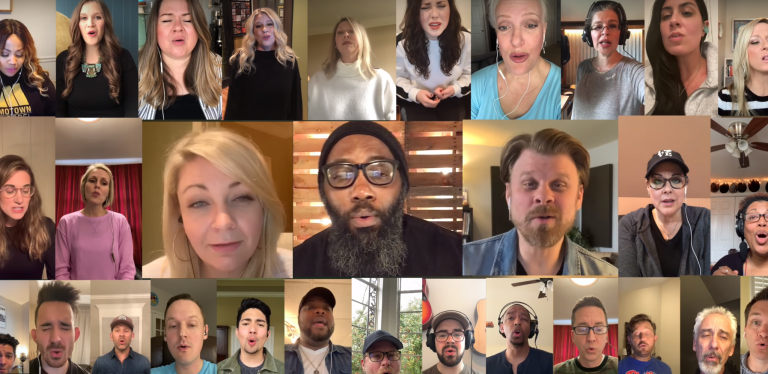
Video of Singers Performing ‘It is Well With My Soul’ in Quarantine Reaches Over a Million in One Day

NASHVILLE (BP) — Last week, lying in bed, music arranger and producer David Wise had an idea. Like seemingly everyone else in the world, he was troubled by the ongoing crisis of the COVID-19 pandemic and wondered how he might help.

Today, that moment of inspiration has encouraged more than a million people. The video of singers joining together on the hymn “It Is Well with My Soul,” produced by Wise, was released only yesterday (March 25), and its exponential impact caught him off guard.

“Our intention was we felt God was prompting us to release this song,” Wise told Baptist Press. “Not knowing that in 24 hours, we would have a million views. … Every five minutes another church is wanting to stream it. Radio stations are wanting to play this for people.”

The project started as a way to encourage his friends.

“I was just overcome with the spirit of the song ‘It Is Well,’” Wise said. “The Lord laid that song on my heart. I just said, ‘Wouldn’t it be so cool if right now, we were able to find a way to make music in a time when we can’t be together anymore?’”

He called a friend who is a music engineer and asked if the idea just might work — or if his friend thought he was crazy.

“I’ll do the dirty work,” he told his friend. “I’ll do the arrangement. I’ll make it as easy as I possibly can. Can we do it?”

His friend liked the idea and agreed to help. Things went very quickly after that.

“This song feels anointed,” Wise said, “I can’t even remember doing the arrangement. I sat down, and in less than two hours, I had it. My hands cannot manipulate something like that.”

He divided the arrangement into parts and sent a different part to each of 31 Nashville studio singers he works with regularly. Each singer got an email with the full arrangement chart, the part they were supposed to sing, and an example audio track of their part, which they could listen to as they sang to ensure they stayed on the beat.

“Every single solo and the choir is 100 percent recorded on cell phones,” Wise said.

After each singer recorded their part, Wise pieced them all together.

Source: Baptist Press

All Content & Images are provided by the acknowledged source
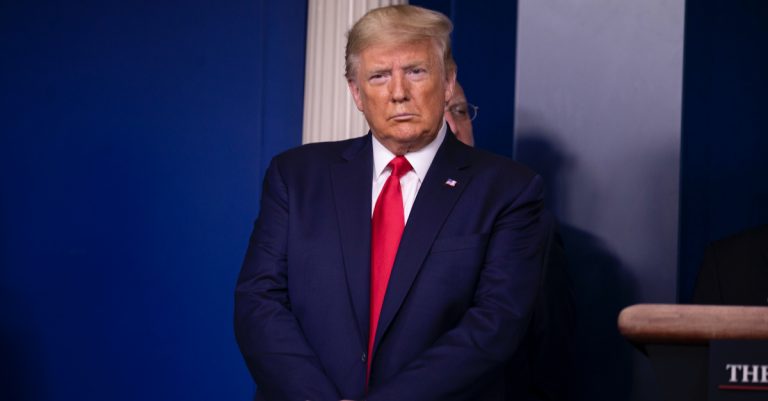
Most Americans Think Trump Is Either ‘Not Too’ Religious or Not Religious at All, Pew Finds

Most Americans Think Trump Is Either ‘Not Too’ Religious or Not Religious at All, Pew Finds


Though President Donald Trump has publicly identified as a Presbyterian and Protestant, and is often associated with evangelical leaders, there is a wide range of opinions among Americans about the details of his religious beliefs and practices, Pew Research Center says.

The polling agency reports that its research into Trump’s religion reveals that half of American adults say they’re either “not sure what his religion is (34 percent) or that he has no religion (16 percent),” while “just 33 percent say he’s Protestant.”

Overall, the report said, Americans “don’t think Trump is particularly religious.” Most say the president is “not too” (23 percent) or “not at all” (40 percent) religious. More than one-in-four (28 percent) say he’s “somewhat” religious, and less than one-in-ten – only 7 percent – say he’s “very religious,” according to the survey. Just more than a third (34 percent) express uncertainty about Trump’s specific religious affiliation.

The Pew report says Trump, a self-identified Presbyterian, is the ninth president to be affiliated with that Protestant faith group. A 2015 CNN report, published just over two months after Trump declared his candidacy, says that Trump attended First Presbyterian Church in the Jamaica neighborhood of New York’s Queens Borough. The report said he was confirmed there,…

… Read More

Click here to read the rest of the story from our content source/partners – Christian Headlines.

قالب وردپرس

Russell Moore Says Sanctity of all Human Life Takes Priority Over Economy During Pandemic

WASHINGTON (BP) — The coronavirus (COVID-19) pandemic “is no time to turn our eyes away from the sanctity of human life,” Southern Baptist ethicist Russell Moore said in a column published Thursday (March 26) in The New York Times.

Moore, president of the Ethics & Religious Liberty Commission (ERLC), wrote in response to recent suggestions from government officials and others “about weighing the value of human life against the health of the nation’s economy and the strength of the stock market,” he said in the column.

He acknowledged human beings are suffering from the economic disruption of layoffs and business closings in an effort to stop the spread of the coronavirus but wrote, “Still, each human life is more significant than a trillion-dollar gross national product. Stocks and bonds are important, yes, but human beings are created in the image of God.”

Moore’s column — with the headline “God Doesn’t Want Us to Sacrifice the Old” — came after Texas Lt. Gov. Dan Patrick, also a Southern Baptist, implied March 23 many elderly Americans would be willing to risk COVID-19 infection to save the economy. President Trump expressed the next day his desire to restart the economy by Easter (April 12).

The ERLC president also warned against recommendations that care for the “young and healthy” should take priority over care for the elderly and disabled.

“Such considerations turn human lives into checkmarks on a page rather than the sacred mystery they are,” he wrote. “When we entertain these ideas, something of our very humanity is lost.

“[W]e must guard our consciences,” Moore wrote. In a reference to the parable of the Good Samaritan, he said, “We cannot pass by on the side of the road when the elderly, disabled, the poor, and the vulnerable are in peril before our eyes. We want to hear the sound of cash registers again, but we cannot afford to hear them over the cries of those made in the image of God.”

Source: Baptist Press

All Content & Images are provided by the acknowledged source

What a Time for the Gospel!

Coronavirus cases in the U.S. continue to skyrocket and the stock market remains volatile. Last week, the U.S. closed its borders with Canada and Mexico, the tax deadline moved from April to July, and severely-affected states ordered citizens to stay home. See our full coronavirus coverage here.

Ron Hutchcraft of Ron Hutchcraft Ministries says fear has “gone viral.” “There was an earthquake a few days ago in Utah and, like any earthquake, the damage was localized,” he says.

“In this case, we’ve got a ‘coronaquake’ going on… and it’s shaking scores of nations and lives everywhere.”

Fear, like the coronavirus, does not respect person or status. More about that here. But believers have the antidote.

“There is a wonderful statement in Scripture that I came across just a couple of days ago from Psalm 29:11… ‘The Lord sits enthroned over the flood.’ Right now feels like a flood!” Hutchcraft says.

“Every hour there’s a flood of new information, new dangers, but the Lord sits enthroned over the flood. The Lord gives strength to His people and the Lord blesses His people with peace.”

SOURCE: Mission Network News, Katey Hearth

All Content & Images are provided by the acknowledged source