PODCAST: The Scripture & the Sense Podcast #430: Amos 3:5 (with Daniel Whyte III)

This is Daniel Whyte III president of Gospel Light Society International with The Scripture & the Sense Podcast #430, where I read the Word of God and give the sense of it based on an authoritative commentary source such as the Bible Knowledge Commentary or Matthew Henry Commentary. This podcast is based upon Nehemiah 8:8 where it says Ezra and the Levites “read in the book in the law of God distinctly, and gave the sense, and caused them to understand the reading.” The aim of this podcast is that through the simple reading of the Word of God and the giving of the sense of it, the church would be revived and the world would be awakened.

Today we are reading Amos 3:5.

5 Can a bird fall in a snare upon the earth, where no gin is for him? shall one take up a snare from the earth, and have taken nothing at all?

________

That was Amos 3:5. Now here is the sense of it.

The Bible Knowledge Commentary reads:

Fourth, a bird does not fall into a trap unless a snare has first been baited and set. Nor, fifth, does a trap spring up from the earth unless something catchable has triggered it. A captured bird or wild animal usually means a trap was used.

____________

Thank you for listening to the Scripture & The Sense Podcast. Remember to read the Word of God each and every day and pray without ceasing to God for wisdom to understand it and apply it to your life. Most importantly, believe on the Lord Jesus Christ and thou shalt be saved. Please stay tuned for a complete presentation of the Gospel of the Lord Jesus Christ so that you can get your soul saved from Hell to that wonderful place called Heaven when you die. May God bless you and keep you is my prayer.

All Content & Images are provided by the acknowledged source

Witnesses to the 'Uttermost Parts of the Earth:' Sharing the Gospel in Northern Siberia

YAMAL PENINSULA, NORTHERN SIBERIA – The locals call this place “Yamal,” which means “the end of the world.” And in many ways, it is. There are no roads here. People use frozen lakes and rivers to get around on reindeer or snowmobile.

The Yamal Peninsula sits in the deep, frozen Siberian tundra above the Arctic Circle – Latitude 70 degrees north. Longitude 70 degrees east.

The temperature here fluctuates between -30 and -60 degrees Fahrenheit. As I prepare to venture outside, I put on layers and layers of clothing.
 
It’s a little after 6:00 a.m. Peter Khundi, our Siberian guide, does last-minute checks on a snowmobile that has a sleigh attached. The sleigh is covered with reindeer skins. This is how we are going to travel into the tundra.   

The Dangerous Trek Across the Siberian Tundra

“I have to make sure we have enough rope and other emergency supplies in case we get stuck,” Peter says.

I ask him if this is dangerous. “Yes, it is,” he replies.

Our destination this morning is a four-hour journey deep into the wilderness to meet a nomadic family. Two hours into our journey, we stop briefly. It’s about 9:25 in the morning, and the sun has yet to rise. 

The sun shines only a few hours during the winter. When it does appear, normally around Noon, the sunrise is something to behold. 

“This is a special place,” Peter says.

Sharing the Gospel with One Family at a Time

Peter belongs to the largest nomadic tribe in Northern Siberia. It’s called the Nenets. He’s more than just a guide. He’s a Christian. And for the last few years, he’s been sharing the Gospel of Jesus Christ with his tribe and others who live here in the tundra.

“When I became a Christian, God gave me a new heart,” Peter tells me. “He also gave me a new heart for my people. I go out on my snowmobile meeting these nomadic families and telling them about the love of Christ.”

The Lifeblood of The Nenets – Reindeer

The Nenets are nomadic reindeer herders. The word “Nenet” means “child of a deer.” 

Reindeer are the lifeblood of the Nenets people here on the Siberian tundra because their meat and their hides fetch a lot of money in the villages.

“Our food, clothes, shoes, homes, our transportation – everything comes from them,” says a Nenets herdsman. “Without deer, we cannot not survive.”

And learning how to survive in the tundra begins at an early age.

“All my children were taught from a young age how to live in [these] harsh conditions. It is our way of life, but if you are not careful you can die out here,” says Ustinia Laptander of the Nenets Tribe.

The women take care of cooking, sewing clothes, and putting up the teepees. The men are hunters and care for the reindeer. 

When it comes to skinning the reindeer, the entire family is involved. The hide is used to make the teepees and clothes.

Blood and raw reindeer meat are often consumed for their vitamin content.  

“We use every part of the animal. Nothing is wasted,” says a nomadic man.

The Key to Evangelism in the Tundra: Friendship First

Peter is among a handful of evangelists reaching the Nenets people. He’s been visiting Ustinia’s family for a few weeks now.  

“He comes here to tell us about God,” Ustinia says. “We have good conversations.”

He’s supported by a local Siberian church and Russian Ministries, an organization focusing on spreading the Gospel in the former Soviet Union.

Peter says it starts with friendship evangelism.  

“I’ve brought presents for all the children today. Each box is filled with toys, school supplies, and a children’s Bible. We have to build relationships first,” says Peter.

Modern technology such as snowmobiles, cell phones, and generators have made life a little easier on the tundra.

“Before I had to rely on reindeer to get around. Now the snowmobile allows me to travel further distances to meet families,” Peter tells me.

There are no verifiable numbers, but Peter estimates some 500 Nenets people have accepted the Lord in recent years.  

“There are still thousands more who have yet to hear about Jesus,” he says.

So, for now, Peter continues to traverse the harsh landscape of the Siberian tundra in search of more people with whom to share the Good News of faith in Jesus. 

Source CBN

All Content & Images are provided by the acknowledged source

False Accusations Seriously Disrupt Lives of Eight Acquitted Christians in India

False Accusations Seriously Disrupt Lives of Eight Acquitted Christians in India


NEW DELHI, February 28, 2020 (Morning Star News) – False charges against eight Christians acquitted on Feb. 19 of kidnapping and forcible conversion in central India have traumatized families and cost them jobs, sources said.

Schoolteacher Amiya Jal, one of the Christians arrested on May 22, 2017 for allegedly abducting and forcefully converting 59 children, was suspended from his job at a reputable school while he spent 103 days in jail unable to obtain bail, he said.

“Even after I was bailed out, my school did not take me back, and so I was jobless for more than two years,” Jal told Morning Star News. “In July 2019 I have joined a school but not at my terms, as I was still under trial when they appointed me.”

Before Jal and other Christian leaders and Sunday school teachers were arrested as they accompanied the children to a Christian summer camp in Maharashtra state, he had purchased a house. He had to make payments on it without any income, he said.

“I borrowed money and paid them, and today I am in much debt,” Jal said. “We have exhausted all our savings, but I am thankful that the case is over and that I have been declared not guilty. I praise God for His faithfulness and am sure that, like in the book of Job, God will restore to me what my family and I have lost.”

Arrested at the Ratlam railway station in Madhya Pradesh state while accompanying the…

… Read More

Click here to read the rest of the story from our content source/partners – Christian Headlines.

قالب وردپرس

Jack Welch, Former Chairman and CEO of GE, Dies at 84

Jack Welch, a railroad conductor’s son who became chairman and CEO of General Electric and led it for two decades, growing its market value from $12 billion to $410 billion, has died. He was 84.

Welch died late Sunday at home, surrounded by his wife, Suzy, and family, and his beloved dogs nearby. The cause of death was renal failure, his wife said Monday.

With a determination to win by busting up bureaucratic complacency, Welch earned two titles — “manager of the century,” and “Neutron Jack,” the latter for slashing tens of thousands of jobs. Under his leadership, GE became the world’s most valuable company, after Microsoft. Its fortunes later turned south.

While at the helm, Welch bought and sold scores of businesses, expanding the industrial giant into financial services and consulting. GE Capital Bank was founded seven years into his tenure. His acquisitions included RCA — then-owner of NBC — and Kidder Peabody, the brokerage that became entangled in an insider trading scandal.

He also streamlined the conglomerate’s bloated bureaucracy by giving managers free rein to make changes they deemed beneficial to the bottom line.

He invented the “vitality curve,” in which managers were ranked into three groups. The top 20% “A” group was “filled with passion, committed to making things happen.” The “vital” 70% “B” group was essential to the company and encouraged to join the A’s. Then there was the bottom 10% “C” group. “The underperformers generally had to go,” Welch said in his 2001 book, “Jack: Straight From the Gut.”

According to the book, “the workforce went from 411,000 to 299,000 during his first five years as chief. With such cuts, he acquired the derisive moniker named after the neutron bomb, which was designed to kill multitudes without destroying cities.

All Content & Images are provided by the acknowledged source
Jim Denison on Responses to the Coronavirus and Opportunity for the Gospel

Jim Denison is the founder and CVO of the Denison Forum, a nonprofit Christian media organization that comments on current issues through a biblical lens. The views expressed in this commentary are solely those of the author(s) and do not necessarily represent those of BCNN1.

The first coronavirus death in the US occurred on Saturday, the second last night. Both patients were in Washington state and had underlying health conditions.

Two dozen new cases of the virus were reported over the weekend, bringing the total in the US to eighty-nine, up from sixty-five on Friday night.

As I will explain today, this is an unprecedented challenge to our nation and world. And it is therefore an unprecedented opportunity for the gospel.

This virus presents a global challenge unprecedented in my lifetime, because it shows the following three facts to be true.

One: Wealth cannot protect us.

The stock market just finished its worst week since the Great Recession of 2008, losing $3.6 trillion in value. According to one analyst, this crash “may have created a once in a lifetime buying opportunity.” By contrast, a CDC official warned that “disruption to everyday life may be severe” as the virus spreads in the US. If people are afraid to see other people, imagine the impact on churches, schools, offices, manufacturing, and retail.

Two: Medical science cannot stop the virus (so far).

A Harvard professor warns that “if a pandemic happens, 40 to 70 percent of people worldwide are likely to be infected in the coming year.” On the other hand, some think the virus will burn itself out in the summer heat. A middle position is that it becomes like the seasonal flu, only with a higher mortality rate.

Three: The epidemic knows no borders.

The World Health Organization warns that the virus could soon reach every nation in the world. Countries with communist governments, Muslim leaders, and democratic republics alike are susceptible.

Not in my lifetime have we seen such a holistic threat.

Hurricanes, tornadoes, and earthquakes affect specific cities and regions. Ebola was localized as well. The Great Recession affected different countries in different ways and was not a medical emergency.

So far as we know at present, this is a disease anyone can get. And it is therefore a disease everyone can get. We cannot depend on our wealth, current medical knowledge, or political structures to protect us.

As a result, the coronavirus is showing us what we should have known all along: we are mortals in desperate need of God. The virus is not changing the mortality rate—it is making it more real. We need God’s protection in the present and his saving grace for eternity.

One way God wants to redeem this pandemic is by using it to turn us to himself.

Source: Christian Headlines

All Content & Images are provided by the acknowledged source
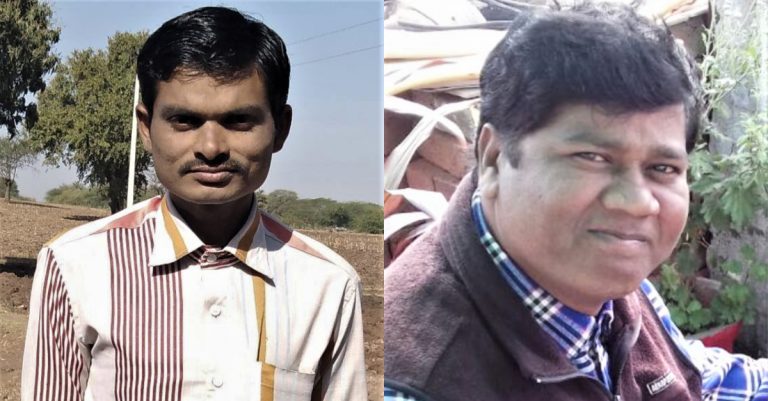
David Carlson & John Stonestreet on the Born Alive Protection Act Being Voted Down, Again

John Stonestreet is President of the Colson Center for Christian Worldview, and radio host of BreakPoint, a daily national radio program providing thought-provoking commentaries on current events and life issues from a biblical worldview. John holds degrees from Trinity Evangelical Divinity School (IL) and Bryan College (TN), and is the co-author of Making Sense of Your World: A Biblical Worldview. The views expressed in this commentary are solely those of the author(s) and do not necessarily represent those of BCNN1.

Once again, Senator Lindsey Graham has sponsored the “Pain-Capable Unborn Child Protection Act.” Once again, on Tuesday, the measure failed, this time 53-44, with two Democrats supporting it, and two Republicans voting against it. As Graham put it, “we vote on this every year.”

As the title suggests, the act would ban abortions after 20 weeks, once the fetus can feel pain. Right on cue, abortion supporters labeled the act “outrageously restrictive,” and the idea that children in the womb feel pain as “scientifically disputed.”

That the measure failed is no surprise, but to call it “outrageously restrictive” ignores abortion laws across the rest of the world. Germany and France both restrict abortions at 14 weeks of gestation. Norway restricts at 12 weeks, as does Ireland. Even notoriously liberal Sweden restricts abortions at 18 weeks.

In other words, the “Pain-Capable” Act, especially given the way we protect animals in our country, is quite reasonable. And if it’s reasonable, the other bill introduced Tuesday should be seen as downright obvious and humane.

As Republican Senator Steve Daines of Montana described from the Senate floor: “…the Born-Alive Abortion Survivors Protection Act … mandates that if a baby is born alive following a botched abortion, the doctor must protect that baby and give the same medical care that any other baby would receive.” Then he added, “Is that too much to ask for?”

Unfortunately, once again, it was; 41 senators, all of them Democrats, voted to block the Born-Alive Abortion Survivors Protection Act, which was sponsored by Nebraska Senator Ben Sasse.

Again, like the previous piece of legislation, the title accurately describes what the measure seeks to accomplish. Unlike many other pieces of legislation, the language of the measure is straightforward and easy to understand: “If an abortion results in the live birth of an infant, the infant is a legal person for all purposes under the laws of the United States, and entitled to all the protections of such laws.”

Furthermore, “Any health care practitioner present at the time the child is born alive shall … exercise the same degree of professional skill, care, and diligence to preserve the life and health of the child as a reasonably diligent and conscientious health care practitioner would render to any other child born alive at the same gestational age.”

Source: Christian Headlines

All Content & Images are provided by the acknowledged source

Charles C. Camosy on Health Care for All but the Most Vulnerable

Charlie Camosy has spent more than the last decade as a professor of theological and social ethics at Fordham University. He is the author of five books, including, most recently, “Resisting Throwaway Culture.” The views expressed in this commentary are solely those of the author(s) and do not necessarily represent those of BCNN1.

(RNS) — As a pro-life Roman Catholic, I firmly support the teaching of the Church that there is a fundamental right to health care. There is no way to decouple a defense of the dignity of the human person from that person’s right to life or the person’s right to basic and fundamental care. This is especially important for vulnerable human populations who have been unjustly pushed to the margins by those who hold power in a culture.

As a Catholic, then, I find it outrageous that the contemporary pro-life movement does not highlight the fact that, despite our massive wealth, the United States has the worst rate of maternal death in the developed world. Black women are most at risk, being nearly four times as likely to die during pregnancy than white women.

Some of the worst death rates are in states that have chosen not to expand Medicaid under the Affordable Care Act. If we actually stand for what we say we do, pro-lifers ought to be pressuring these states to protect these vulnerable populations at every turn.

Pro-lifers have done particularly good work, however, in fighting so that perhaps the most vulnerable population of all gets health care: babies who survive abortions.

This issue came to the fore when Gov. Ralph Northam of Virginia, himself a former physician, was asked about what should happen to a baby in such a circumstance. His reaction was revealing: He very confidently insisted that the baby would be kept comfortable and “would be resuscitated if that’s what the mother and the family desired, and then a discussion would ensue between the physicians and the mother.” (Even though he was not asked about specific kinds of babies who had survived abortion, a spokesperson later claimed, without evidence, that he was referring to babies with severe abnormalities.)

There are, of course, already laws against the direct killing of a child in such a circumstance. But there are no laws against a doctor and parents deciding that, because the abortion failed and what they wanted was a dead baby, the desired effect should be achieved by failing to give her the basic health care to which all human beings are entitled.

Pro-lifers have been trying to pass legislation to make sure babies who survive abortion get precisely the same care as any other baby born at the same gestational age. In the latest example of the incoherence of U.S. abortion politics, the party of “government staying out of our health care decisions” has been blocked in its attempts to pass the Born Alive Abortion Survivors Protection Act by the party of “health care for everyone.”

Democrats won’t even let the legislation come up for a vote in the House. And this week (Feb. 25), though three Democratic senators did vote for a bill in their chamber, 41 of their party blocked its passage via filibuster.

Source: Religion News Service

All Content & Images are provided by the acknowledged source

'Be Vigilant, but Don't Panic': 13 US States See Infection as Global Coronavirus Death Toll Passes 3,000

The deadly COVID-19 virus that has killed more than 3,000 people has claimed the lives of two Americans in Washington state.

Officials there say the coronavirus may have spreading undetected for weeks possibly infecting hundreds of people.

The two men in Washington state, one in his 50s, the other in his 70s, both had underlying health conditions.

The US Centers for Disease Control and Prevention are now dispatching teams to an elderly care center where the initial outbreak was reported.

The number of cases in the US rose from 65 to 88 over the weekend.

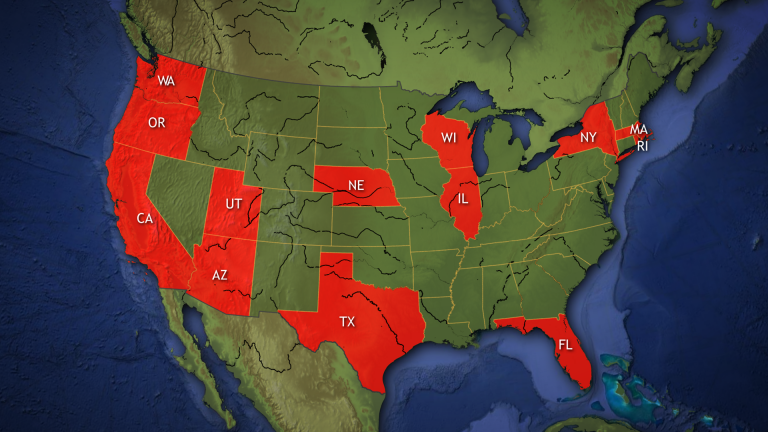
So far, 13 states across the country, including New York, Florida, California, and Arizona, are reporting cases of the coronavirus.

“The message is to be careful and be vigilant, but don’t panic,” said Rhode Island’s Gov. Gina Raimondo.

Vice President Mike Pence is sending a similar message, warning Americans to prepare for more cases, but insists the risks remain low.

“But it is not my confidence, it is the confidence of all of our health experts who are widely regarded as the best in the world,” Pence said on NBC’s Meet The Press.

Still, the virus continues to grow around the world with numbers of new cases exploding in South Korea.

Health officials in the capital of Seoul are going floor-by-floor disinfecting shops as hundreds of people line up for hours to buy masks.

The numbers infected in Italy and France also jumped over the weekend. Staff at the iconic Louvre museum in Paris forced to close its doors.

Even Pope Francis, appearing a little under the weather, told the faithful at the Vatican Sunday that he had to cancel a week-long spiritual retreat, but not due to the COVID-19 virus. “Unfortunately, my cold means I won’t be able to participate this year,” the Pope said during mass.

Meanwhile, a number of travelers from Italy and France apparently spread the virus to other parts of Europe and the Middle East.

Indonesia reported its first two cases on Monday. The president there saying they’ve been getting ready should the virus spread more widely.

“More than 100 hospitals have been prepared with isolation rooms for sufferers of COVID-19,” said Indonesia’s President Joko Widodo.

Back here at home, the Department of Health and Human Services is gearing up to increase testing for the virus.

“We now have 75,000 tests available out there in the United States and over the next week that will expand radically,” said HHS Secretary Alex Azar.

The coronavirus has so far infected more than 89,000 people in 60 countries around the world.


Source CBN

All Content & Images are provided by the acknowledged source

Anthony J. Carter on Being Set Free by the Cross but Still Living in Bondage

Anthony J. Carter is the lead pastor of East Point Church in East Point, Georgia. A graduate of Reformed Theological Seminary Orlando, he is the author of several books including Running from Mercy, Blood Work, and Black and Reformed. The views expressed in this commentary are solely those of the author(s) and do not necessarily represent those of BCNN1.

he United States of America is built upon the ideal of freedom. Though it has not always lived up to the true meaning of its creed, the great struggle in the conscience of America has been the struggle for freedom. On March 23, 1775, Patrick Henry spoke the immortal words in defense of freedom and the American Revolution: “Give me liberty or give me death!” For Henry, it was liberty or death. For Jesus Christ, it was liberty by death. The death and resurrection of Jesus Christ set us free. Yet, as all Americans know, freedom is not free. This is never truer than of the freedom we have in Jesus.

The Good News of the gospel is that Jesus died and rose again so we would be free from sin. Sin is a power that enslaves. From the beginning, the sin of Adam and Eve became the sin of all (Rom. 5:12). Consequently, being born in Adam is being born in bondage to sin. This is much like the great evil of human slavery we see in our history; one of the tragedies of the American slave system was that children born to slaves were slaves as well. But Christ broke the curse of sin in Adam and thus set the children of Adam free (v. 19). No longer slaves to sin, but now slaves to righteousness. No longer bound by the yoke of bondage, but now free in Christ. Nevertheless, that freedom is always under attack.

Following the Emancipation Proclamation and the formal end of slavery in the United States, there came a new kind of slavery, namely the oppression of Jim Crow laws. In some regards, this was more insidious and demeaning than the first. It gave the impression of freedom, yet it systematically and institutionally kept black Americans in bondage. This new slave system was not formal bondage, but it was oppression and bondage nonetheless and, as such, needed to be broken. Similarly, when a person has been set free from the penalty of sin through the cross of Christ, often that person may remain in bondage to the guilt and shame of his or her sin. The Cross sets us free from both slavery to sin and its guilt. This is where the promise and pronouncement of Romans 8:1 is critical to the Christian life. Anyone who is in Christ Jesus is no longer under condemnation for sins committed. In other words, Jesus not only paid the debt but also carried the guilt and shame often associated with it.

Guilt is one of the Devil’s most-utilized weapons against the Christian. Because sin yet remains in our lives and many live with daily struggles to overcome it, the Enemy of our souls often seeks to convince us to doubt the efficacy of God’s grace and the assurance of his mercy. He knows feelings of guilt and shame can be overwhelming and can lead to despair. If the Enemy can get you to despair and to wallow in your failures, he can keep you from living in the freedom Christ secured for you on the cross. And thus, he can bind you in a new kind of slavery—daily living below the dignity of your freedom in Christ and the joy of your salvation.

Yet Christ would have us remember that he put an end to all condemnation for sins past, present, and future. As the Bible asks and answers, “Who will bring any charge against those whom God has chosen? It is God who justifies. Who then is the one who condemns? No one. Christ Jesus who died—more than that, who was raised to life—is at the right hand of God and is also interceding for us” (Rom. 8:33–34).

The Irish hymn writer Charitie Lees Bancroft said it well:

When Satan tempts me to despair
And tells me of the guilt within,
Upward I look, and see him there
Who made an end of all my sin.

The work of Christ sets us free from sin and guilt in the past so we can live free today. This freedom is complete and demands we proclaim it.

Source: Christianity Today

All Content & Images are provided by the acknowledged source
Laura Barringer on ‘Who is My Neighbor?’, a New Book for Kids That Teaches a Parable of Jesus

I am a teacher of primary-age children, and I am continuously looking for developmentally appropriate ways to engage my students in conversations about kindness and friendship. Bibliotherapy is one of my favorite methods for encouraging such conversation, as children readily identify with storybook characters. It is rare for me to read aloud a story and my young students not offer immediate commentary about characters or events or connections to their own lives. “That happened to me!” someone will inevitably raise their hand and launch into an applicable (or not applicable) tale.

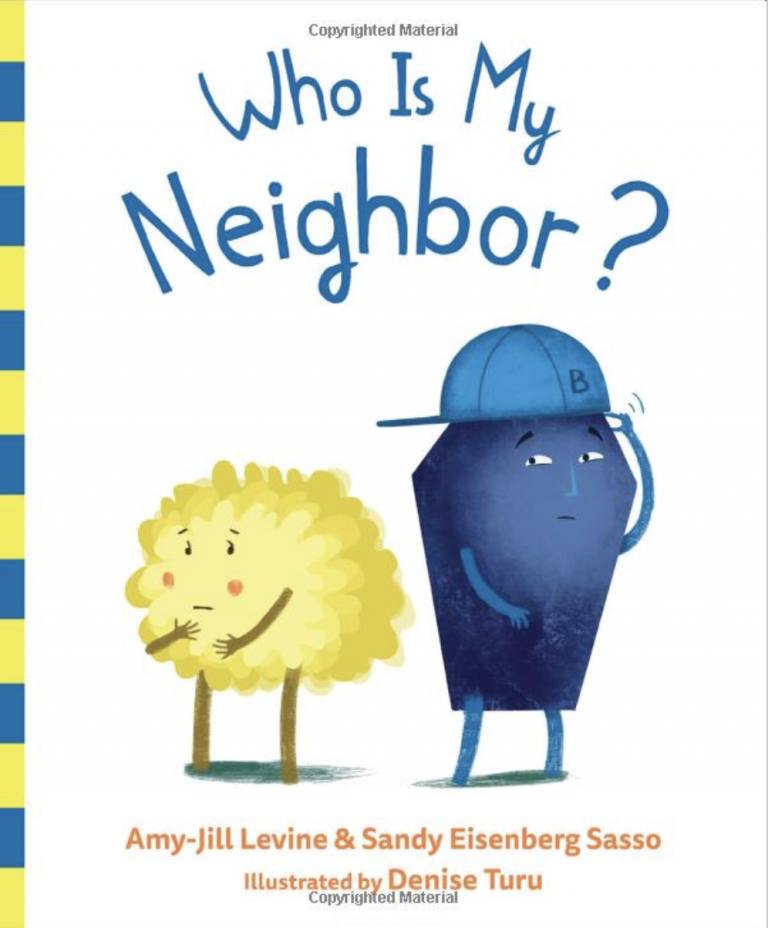
I recently was given a picture book worth sharing. It is a marvelous story for children, and it is perfect for parents or teachers who wish to teach children about kindness and empathy and helping others and doing the right thing. The title is Who Is My Neighbor? written by Amy-Jill Levine [my dad’s friend] and Sandy Eisenberg Sasso.

Who Is My Neighbor? tells the familiar parable of the Bible’s Good Samaritan but in a version highly relatable for young children. The story begins, “Once there was a town where only Blues lived…” The Blues, of course, thought they were the coolest color, far superior than Yellows. Blue parents warned their children to avoid Yellow children, and Yellow parents told their children the Blues were not their neighbors. One must only associate with one’s own group, taught the parents. “Yellows are the hottest,” the parents explained.

But then one day. One day Midnight Blue went for a bike ride, lost his balance, and tumbled off his bike. Navy and Powder Blue saw and ignored the injured Midnight Blue, leaving him to wonder why his neighbors left him ignored and bruised on the side of the road. “They must not be true Blue,” he concluded. But then Lemon rode by, saw Midnight Blue needed help, and stopped despite her fear of Blues. Lemon picked up Midnight Blue’s books, loaded him onto her bike, and sat with him at Dr. Gold’s office where he was cared for by a friendly and soothing Yellow doctor. “Good as gold!” the Yellow doctor encouraged his Blue patient.

Source: Christianity Today

All Content & Images are provided by the acknowledged source