Social Distancing Takes On New Meaning for Secret Believers as Saudi Arabia Expands Efforts to Contain Coronavirus Plague

It’s been a tough week for Saudi Arabia.  Forecasters predict a record low global oil demand due to coronavirus restrictions that will directly affect the country’s already-struggling economy.  Oil is responsible for 63-percent of national revenue, according to the IMF.

Now, Saudi Arabia is expanding its efforts to contain COVID-19 and deterred Hajj tourism could deal another difficult financial blow. The Hajj and Umrah, another Muslim pilgrimage, account for 20 percent of Saudi Arabia’s non-oil GDP, as noted here.

Use this Prayercast video to pray into the coronavirus pandemic. Stay informed by reading the latest updates here, or sign up for our daily email.

Total coronavirus infections in Saudi Arabia are approaching 2,000, and the death toll is up to 21. Kingdom officials put a 24-hour curfew on the holy cities of Mecca and Medina this week, and they’re asking Muslims to delay Hajj bookings. Each year, between one and two million Muslims journey to Saudi Arabia for the Hajj, a ritual that Islam requires every follower to do at least once.  Learn more here.

When Saudis leave Islam and turn to Christ, it sets them free from things like the Hajj.

However, for believers like Deena*, it doesn’t make life easier  Social distancing takes on new meaning because, if revealed, her faith in Jesus could get her killed.

Saudi Arabia is deeply rooted in Islam, and strict Islamic laws govern every aspect of public life. All Saudi citizens are expected to be Muslims, and leaving Islam is punishable by death. Religious freedom doesn’t exist, as described here by Open Doors:

Saudi believers must keep their faith completely secret. Christians from other countries risk arrest or being deported if they share their faith with Muslims. Some Saudis have had dreams and visions of Jesus; many others have responded to Christian content on TV or the internet.

Pray for Saudi Arabia here.

Deena began following Christ several months ago, and it’s been a lonely journey.

“Deena has been a believer for less than two years, and she has never met another believer,” JoAnn Doyle tells MNN. Doyle began Not Forgotten, a division of Uncharted Ministries.

SOURCE: Mission Network News, Katey Hearth

All Content & Images are provided by the acknowledged source

PODCAST: The Limits of Civil Obedience, Part 2 (A Christian Manifesto Today #42 with Daniel Whyte III)

Welcome to A Christian Manifesto Today episode #42. My name is Daniel Whyte III, president of Torch Leadership Foundation.

Pastor and Christian philosopher, Francis A. Schaeffer, warned us and created the war plan that we as Christians need today to deal with a society that is increasingly moving away from God, the Bible, and moral principles. He wrote “A Christian Manifesto” over 33 years ago and its words are just as relevant today as they were back then.

Our Christian Manifesto Today Passage from the Word of God today is Acts 5:26-29 which reads: “Then went the captain with the officers, and brought them without violence: for they feared the people, lest they should have been stoned. And when they had brought them, they set them before the council: and the high priest asked them, Saying, Did not we straitly command you that ye should not teach in this name? and, behold, ye have filled Jerusalem with your doctrine, and intend to bring this man’s blood upon us. Then Peter and the other apostles answered and said, We ought to obey God rather than men.”

Our Christian Manifesto Today quote today is from William Einwechter. He said: “When in his God-ordained role of civil magistrate (Rom. 13:1-6) man is called upon to make positive law for the governance of the body politic, the laws he enacts ought to be based on the commands and principles of God’s law. If the law is not based on the righteousness revealed in biblical law, then the law is not only unjust, it is also a usurpation of God’s sovereignty by man. No man or institution has authority to legislate anything that is contrary to God’s law. The state is not the creator of law, but the custodian of God’s law for the civil sphere. As God’s servant, the duty of the state is to interpret and apply biblical law to the circumstances of its own day within the sphere of its own jurisdiction (Deut. 1:16-17; 16:18-20; 2 Chron. 19:6-7).”

In this podcast, we are using as our text: “A Christian Manifesto” by Francis A. Schaeffer.

Dr. Francis A. Schaeffer writes in “The Limits of Civil Obedience” (Part 2):

The civil government, as all of life, stands under the Law of God. In this fallen world God has given us certain offices to protect us from the chaos which is the natural result of that fallenness. But when any office commands that which is contrary to the Word of God, those who hold that office abrogate their authority and they are not to be obeyed. And that includes the state.

Romans 13:1-4 says

Everyone must submit himself to the governing authorities, for there is no authority except that which God has established. The authorities that exist have been established by God. Consequently, he who rebels against the authority is rebelling against what God has instituted, and those who do so will bring judgment on themselves. For rulers hold no terror for those who do right, but for those who do wrong. Do you want to be free from fear of the one in authority? Then do what is right and he will commend you. For he is God’s servant to do you good. But if you do wrong, be afraid, for he does not bear the sword for nothing. He is God’s servant, an agent of wrath to bring punishment on the wrongdoer.

God has ordained the state as a delegated authority; it is not autonomous. The state is to be an agent of justice, to restrain evil by punishing the wrongdoer, and to protect the good in society. When it does the reverse, it has no proper authority. It is then a usurped authority and as such it becomes lawless and is tyranny.

In 1 Peter 2:13-17 we read:

Submit yourselves for the Lord’s sake to every authority instituted among men: whether to the king, as the supreme authority, or to governors, who are sent by him to punish those who do wrong and to commend those who do right. For it is God’s will that by doing good you should silence the ignorant talk of foolish men. Live as free men, but do not use your freedom as a cover-up for evil; live as servants of God. Show proper respect to everyone: Love the brotherhood of believers, fear God, honor the king.

Peter says here that civil authority is to be honored and that God is to be feared. The state, as he defines it, is to punish those who do wrong and commend those who do right. If this is not so, then the whole structure falls apart. Clearly, the state is to be a ministry of justice. This is the legitimate function of the state, and in this structure Christians are to obey the state as a matter of “conscience” (Romans 13:5).

But what is to be done when the state does that which violates its legitimate function? The early Christians died because they would not obey the state in a civil matter. People often say to us that the early church did not show any civil disobedience. They do not know church history. Why were the Christians in the Roman Empire thrown to the lions? From the Christian’s viewpoint it was for a religious reason. But from the viewpoint of the Roman State they were in civil disobedience, they were civil rebels. The Roman State did not care what anybody believed religiously; you could believe anything, or you could be an atheist. But you had to worship Caesar as a sign of your loyalty to the state. The Christians said they would not worship Caesar, anybody, or anything, but the living God. Thus to the Roman Empire they were rebels, and it was civil disobedience. That is why they were thrown to the lions.

Francis Legge in volume one of his book Forerunners and Rivals of Christianity from 330 B.C. to A.D. 330 writes: “The officials of the Roman Empire in times of persecution sought to force the Christians to sacrifice, not to any heathen gods, but to the Genius of the Emperor and the Fortune of the City of Rome; and at all times the Christians’ refusal was looked upon not as a religious but as a political offense.”

The bottom line is that at a certain point there is not only the right, but the duty, to disobey the state.

Lord willing, we will continue looking at this topic in our next episode.

Let’s Pray.

* * * * * * * *

Dear friend, if you are listening today, and you do not know the Lord Jesus Christ as your Saviour, allow me to show you how:

First, accept the fact that you are a sinner, and that you have broken God’s law. The Bible says in Romans 3:23: “For all have sinned and come short of the glory of God.”

Second, accept the fact that there is a penalty for sin. The Bible states in Romans 6:23: “For the wages of sin is death…”

Third, accept the fact that you are on the road to hell. Jesus Christ said in Matthew 10:28: “And fear not them which kill the body, but are not able to kill the soul: but rather fear him which is able to destroy both soul and body in hell.” Also, the Bible states in Revelation 21:8: “But the fearful, and unbelieving, and the abominable, and murderers, and whoremongers and sorcerers, and idolaters, and all liars, shall have their part in the lake which burneth with fire and brimstone: which is the second death.”

Now this is bad news, but here’s the good news. Jesus Christ said in John 3:16: “For God so loved the world, that he gave his only begotten Son, that whosoever believeth in him should not perish, but have everlasting life.” Just believe in your heart that Jesus Christ died for your sins, was buried, and rose from the dead by the power of God for you so that you can live eternally with Him. Pray and ask Him to come into your heart today, and He will.

Romans 10:9-13 says, “That if thou shalt confess with thy mouth the Lord Jesus, and shalt believe in thine heart that God hath raised him from the dead, thou shalt be saved. For with the heart man believeth unto righteousness; and with the mouth confession is made unto salvation. For the scripture saith, Whosoever believeth on him shall not be ashamed. For there is no difference between the Jew and the Greek: for the same Lord over all is rich unto all that call upon him. For whosoever shall call upon the name of the Lord shall be saved.”

Until next time, my friend, continue to stand for the Lord and his Word. God bless you!

All Content & Images are provided by the acknowledged source

PODCAST: The Road from Text to Sermon, Part 6 (Proclaim #56 with Daniel Whyte III

Welcome to episode #59 of PROCLAIM! — the podcast that teaches every Bible-believing Christian how to preach the Gospel by any means necessary in many different settings, including using the internet and the new “podcast pulpit”.

Our Scripture Verse on preaching is Isaiah 52:7 which reads: “How beautiful upon the mountains are the feet of him that bringeth good tidings, that publisheth peace; that bringeth good tidings of good, that publisheth salvation; that saith unto Zion, Thy God reigneth!”

Our quote on preaching today is from C.S. Lewis. He said, “The Church exists for nothing else but to draw men into Christ, to make them little Christ. If they are not doing that, all the cathedrals, clergy, missions, sermons, even the Bible itself, are simply a waste of time. God became Man for no other purpose.”

In this podcast, we are using as our texts, the following three books: “Lectures to My Students” by Charles H. Spurgeon; “The Preacher and his Preaching” by Alfred P. Gibbs; and “Biblical Preaching” by Haddon W. Robinson.

Today, our topic is titled “The Road from Text to Sermon, Part 6” from “Biblical Preaching” by Haddon W. Robinson.

Second, the developmental question, “What does this mean?” may also probe the audience. It takes several forms. If I simply stated my exegetical idea, would my audience respond, “What does he mean by that?” Are there elements in the passage that the biblical writer takes for granted that my audience needs explained to them? When Paul advised the Corinthians in 1 Corinthians 8 about meat offered to idols, idolatry and sacrifices were as familiar to his readers as shopping centers are to modern audiences. On the other hand, people today are as bewildered about the practices of idolatry as a Corinthian would be in a supermarket. Therefore, when we talk about “food sacrificed to idols,” we must do some explaining. The passage may be misunderstood or, more damaging, misapplied unless our listeners understand the background out of which the problem developed. They must enter into the psychological, emotional, and spiritual tensions posed by eating meat previously offered in sacrifice to heathen gods.

As a case in point, when Paul speaks of a “weak brother,” he does not necessarily mean someone who is easily tempted to sin. Instead, he has in mind an overscrupulous Christian who has not applied theology to experience. The weak Christian does not fully appreciate that “no idol is anything in the world” but is only a creation of superstition. In modern churches, therefore, many overscrupulous people who consider themselves “strong” would, in Paul’s mind, be “weak.” In a treatment of this passage, therefore, what Paul took for granted with his readers requires extensive explanation today.

In 1 Corinthians 12:13 the apostle observes: “We were all baptized by one Spirit so as to form one body—whether Jews or Gentiles, slave or free—and we were all given the one Spirit to drink” (NIV). Here again Paul assumes that his readers understand the baptizing work of the Holy Spirit. We cannot necessarily assume that our congregation has that knowledge. A reference to “the baptism of the Holy Spirit” now causes some noncharismatic listeners to shift uneasily in their pews and wonder: “What does that mean?” “What do people in my denomination think about it?” “Isn’t that an experience important to charismatics, and doesn’t it have something to do with speaking in tongues?” In a charismatic congregation listeners may assume that they know what the baptism of the Holy Spirit is but wonder what it has to do with Paul’s argument. If we were preaching on this passage, therefore, we could not ignore those responses. Instead, we would anticipate them in our preparation, and we might decide to devote some time in the sermon to expanding on the baptism of the Holy Spirit even though Paul did not.

Let’s Pray —

All Content & Images are provided by the acknowledged source

Priscilla Shirer Hopes Temporary Church Closures Will Force Ministers to Rely on the Holy Spirit Instead of Trying to ‘Manufacture’ the Fire of God With Production ‘Gimmicks’

Evangelist and author Priscilla Shirer said she hopes temporary church closures will empower ministers to rely more on the Holy Spirit instead of trying to manufacture the fire of God by using production “gimmicks” many modern churches have become dependent on.

Shirer was among 50 other Christian leaders, musicians, speakers, and pastors who participated in a 10-hour livestream event called “Leader Check In” hosted by PULSE and Year of the Bible founder Nick Hall on Wednesday. During her segment, she preached from 1 Kings 18:21, 23 and 24.

“I’ve been thinking about something this morning, just in preparation for the opportunity to share today with everybody who would be gathered in this particular week when we’re heading into Easter when we are celebrating the sacrifice of our Lord. With the power of our Lord that He got up out of the grave, that He still lives, ever making intercession for us, ever the mediator that bridges the gap between us and the Father. So the thoughts that have been on my mind have been in and around Elijah, one of the premier Old Testament prophets,” Shirer said.

The daughter of Dallas megachurch pastor Tony Evans taught from Elijah’s example when he proved that His God, not Baal, was the one true God. She said Elijah understood that as believers we are to provide the sacrifice and God is who provides the fire.

“We’re supposed to do our part but not step into the margin — that’s supposed to be God’s part,” Shirer explained. “It’s the Spirit’s part to light the fire, the anointing, the favor that will be required for every single one of our churches’ streams to be effective in the lives of people. That they reach all over the globe on this coming Sunday, when for the first time, definitely in my lifetime, maybe in history, that as many people have been reached on Easter Sunday as will be reached this Easter.

She said Easter won’t just be a “good production” or “good technology,” but it will be a service that will have to “impact the souls of human beings.”

“What that means is, is that it’s gonna have some fire on it. And it can’t be a fire that we have manufactured in our own humanity. Emotionalism is not gonna cut it, promotion is not going to cut it,” Shirer continued. “All the gimmicks and the stories and the emotionalism, the veneer of actually having an intimate relationship with Jesus Christ.

“The charisma, the talent, all that stuff that may have been able to carry us in front of a crowd, now that we’ve been stripped down, one of the things that I believe the Lord is inviting us back to is this reminder that we’re supposed to present ourselves, a living sacrifice to Him. That we give Him our best. That we study to show ourselves approved, that we walk in integrity, and in characters as leaders in the body of Christ. That we continue to cultivate an actual real-life friendship with God that doesn’t need an audience to sustain it.”

The Texas native whose mother recently died of cancer said this fire is only cultivated behind closed doors during one’s personal time with God.

SOURCE: Christian Post, Jeannie Law

All Content & Images are provided by the acknowledged source

Arab Baptist Theological Seminary Navigating Coronavirus Plague with Wisdom and Fearlessness

Arab Baptist Theological Seminary remains equipped not only to continue classes online, but also to interact with the coronavirus is a uniquely Christians way.

Lebanon’s coronavirus cases are staying low for now, but the hospitals warn they can’t handle a major outbreak. The country doesn’t need this threat; it already suffers a financial crisis and political turmoil.

In this time of suffering around the world, Arab Baptist Theological Seminary asks how Christians, who believe Jesus rose from the dead, can interact with such a threat to human life. ABTS remains open, despite most of their students going home. But with the extra space, the college offers its apartment rooms for medical workers who are concerned about infecting their families.

Colleges across the world have closed their doors due to the coronavirus, but some face this pandemic better equipped for online learning.

Ellie Haddad says, “We’re fortunate that we’re part of a big collaborative team of developing online material. And we launched our online certificate, which is equivalent to one year, a couple of years ago. We have many graduates out of that program.”

All in all, ABTS finds itself uniquely prepared for the outbreak. Haddad says, “We are at a mature place in [the] development of our online platform, where we looked at what’s left of the residential academic year, and we thought it would be [relatively] easy to move our instruction to online. So that’s what we have done.”

SOURCE: Mission Network News, Kevin Zeller

All Content & Images are provided by the acknowledged source

Antipas Harris on This Year, Christians Won’t Gloss Over Christ’s Suffering and Death

“Embrace Jesus crucified, loving and beloved, and in him you will find true life because He is God made man. Let your heart and your soul burn with the fire of love drawn from Jesus on the Cross!”– Catherine of Siena, 14th Century mystic during the Great Bubonic Plague

This year’s Holy Week has arrived with solemnity amid global calamity. COVID-19 is forcing all of us to confront our mortality. Trepidation has gripped millions of hearts. Many are desperately ill; others are compelled to have difficult end-of-life conversations with their families. Holy Week reminds Christians that through the Crucifixion of Christ, God identifies with humankind in suffering and death.

Traditionally, Christians gloss over the death of Christ with an eager eye on the resurrection (Easter). But there is a story before the glory! Paul says, “I want to know Christ and the power of his resurrection and the sharing of his sufferings by becoming like him in his death” (Philippians 3:10). Before we meet Christ in His glory, we endure the story of life.

Have we paid too little attention to Jesus’ suffering? Before He was a resurrected Christ, He was a suffering human being (Philippians 2:7-8).

Recently, a young man at Walmart asked me, “Hey, do you know about the Passover?” From the short conversation, the man was eager to promote ideology similar to that of Black Hebrew Israelites, a growing religion among mainly African Americans who believe black people are among the lost tribes of Israel.[1] Our short, intense exchange revealed that the man wanted to show me that Christians are deceived, and it was his duty to enlighten me of truth. As the man and I parted ways, I couldn’t shake the thought: “How well do contemporary Christians understand the faith’s theological connection with ancient Hebrew history?”

Passover and Yom Kippur (Exodus 12) are antecedent religious festivals from which Christians draw theological meaning for the Crucifixion. Both commemorate suffering lambs. The Messiah embodied God’s work for humanity in four ways:

1.  The Paschal Lamb. As Israel is held hostage in Egypt (Exodus 12), God instructs them to quarantine a spotless lamb for a few days and then slay it on the 14th day of the first month of the Hebrew calendar. They were to splatter the lamb’s blood on their home’s doorposts. God promised that death would spread through Egypt but pass over the houses with the blood. It happened as God promised. Thus, the Hebrew tradition is to celebrate Pesach (Passover) because the lamb’s blood protected their households.

Similarly, Jesus’ blood shed on the cross protects humanity from adverse consequences of sinful nature. Theologian Karl Barth suggests that Jesus on the cross is God’s self-revealed, redeeming “yes” in the middle of humanity’s “no.”[2] This means that Jesus, as Paschal Lamb, is our hope in despair. In Christ, distress is not our destination.

2.  The Vicarious Lamb. The innocent lamb in the Exodus story died so that God’s people could live.

Jesus is the Lamb of God that died so that we don’t have to die but have eternal life. Theologian Jürgen Moltmann notes, “The cross, the overcoming of sin by vicarious expiation, is the centre of the gospel.”[3] Paul writes, “[Jesus] died for all, so that those who live might live no longer for themselves, but for him who died and was raised for them” (2 Corinthians 5:15). The Lamb died for us so that we might live beyond the grave.

SOURCE: Christian Post, Antipas Harris

All Content & Images are provided by the acknowledged source

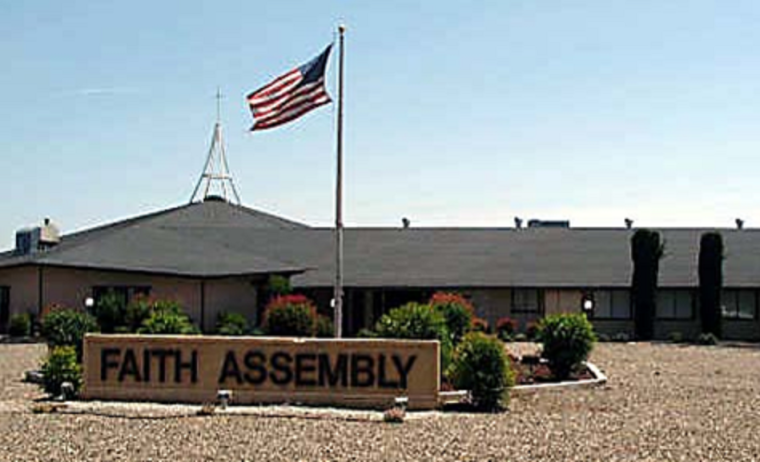
Health Officials in Shasta County, California, Praise Pastor Paul Tilley for Response to Coronavirus Outbreak at His Church

Health officials in Shasta County, California, have praised pastor Paul Tilley and his Faith Assembly Church in Redding for how they responded to a coronavirus outbreak at the church that left one person dead.

“We are impressed with how proactive the church has been since learning about the first case in their congregation,” Brandy Isola, the county’s public health branch director, told the Record Searchlight.

“We have community transmission in Shasta County. We recognize that there is less than ideal testing capacity in our county, state and country. This means that there are cases of COVID-19 in our community that Public Health has not been notified about. It is critically important that everyone stay at home except for essential services, follow social distancing practices when it is necessary to go out and practice excellent hygiene,” she said.

Tilley told the Record Searchlight that once he heard a member of his congregation tested positive for the coronavirus, he contacted Shasta County health officials on March 23 — the same day he heard of the exposure — “to give them a detailed account of how I handled the crisis.”

The member, who has been identified as a 75-year-old woman, has since died.

Shasta County Health and Human Services officials revealed there has since been a “higher than expected number of positive cases” associated with the church.

Warnings were also issued to other members who “may be at higher risk of carrying COVID-19, particularly if they attended a weekend event there (at the church) on March 14 and 15, and they should inform their close contacts and social circles that they may have been exposed,” health officials said.

SOURCE: Christian Post, Leonardo Blair

All Content & Images are provided by the acknowledged source

Many Russian and Georgian Civilians Do Not Have What They Need to Survive a Long Coronavirus Lockdown

The coronavirus is spreading in Russia, but Michael Johnson of Slavic Gospel Ministries estimates it trails three to four weeks behind the U.S. in the progression of the virus.

Russia had seen a notably low case count, but as the virus intensifies the government is cracking down. SGA works in many countries of the former Soviet Union and has been getting reports about the progression of the virus.

Johnson highlights some differences between the reality of lockdown in the US and that of rural Russia. “We go to the store and the chicken aisle is empty, or the bathroom tissue aisle’s  empty. We come back the next day and it tends to be restocked because we have the supply chain infrastructure that is available to us. Over there, particularly once you get past the Ural Mountains, they don’t have that luxury. So when they go to the store, and certain categories of food or resources are gone, it’s [often] many weeks until it’s replenished.”

Johnson relates reports SGA has gotten from church leaders in Siberia and in Georgia.

In Georgia, the government has locked down everything except grocery stores as case numbers rise. Johnson says, “We keep in contact with believers over the phone. several dozen of our sisters and brothers are experiencing financial crisis not being able to pay the ability utility bills.” SGA delivered food packages to people, but are unsure what to do if the lockdown lasts longer than a month.

In Siberia, most workers have been put on unpaid leave, significantly hindering them from buying food or paying bills. Johnson says, “When one considers that the majority of Russians live from paycheck to paycheck and have no savings for difficult times, very soon a large percentage of people in our country will be in crisis.”

SOURCE: Mission Network News, Kevin Zeller

All Content & Images are provided by the acknowledged source

PODCAST: Whyte House Family Devotional Reading of Charles Spurgeon’s Morning and Evening #84 with Daniel Whyte III

This is Daniel Whyte III, president of Gospel Light Society International with the Whyte House Family Devotional Reading of Charles Spurgeon’s Morning and Evening podcast. This is Episode #84.

Charles Spurgeon was a prominent English Particular Baptist preacher. He was very influential among the Christians of various denominations during his age and even today, and is commonly called the “Prince of Preachers”. After some time of alternately searching for God and running from God, he had a powerful encounter which led him to give his life to Christ. Spurgeon was only 16 when he preached his first sermon and he began publishing books shortly afterward. At the time of his death, he had preached nearly 3,600 sermons and published 49 volumes of commentaries, sayings, anecdotes, illustrations and devotions. Spurgeon said, “encouraging thoughts are like honey to the heart”, and wrote this devotional in hopes that its uplifting messages for each day of the year would bring comfort and refreshment to our walk with God. He was inspired by Isaiah 50:4 which reads, “He wakeneth morning by morning. He wakeneth mine ear to hear as the learned” and Psalm 63:5-6 which says, “My soul shall be satisfied as with marrow and fatness; and my mouth shall praise thee with joyful lips; when I remember Thee upon my bed, and meditate on Thee in the night watches.”

Revelation 2:4 reads: “Nevertheless I have somewhat against thee, because thou hast left thy first love.”

Ever to be remembered is that best and brightest of hours, when first we saw the Lord, lost our burden, received the roll of promise, rejoiced in full salvation, and went on our way in peace. It was spring time in the soul; the winter was past; the mutterings of Sinai’s thunders were hushed; the flashings of its lightnings were no more perceived; God was beheld as reconciled; the law threatened no vengeance, justice demanded no punishment. Then the flowers appeared in our heart; hope, love, peace, and patience sprung from the sod; the hyacinth of repentance, the snowdrop of pure holiness, the crocus of golden faith, the daffodil of early love, all decked the garden of the soul. The time of the singing of birds was come, and we rejoiced with thanksgiving; we magnified the holy name of our forgiving God, and our resolve was, “Lord, I am thine, wholly thine; all I am, and all I have, I would devote to thee. Thou hast bought me with thy blood—let me spend myself and be spent in thy service. In life and in death let me be consecrated to thee.” How have we kept this resolve? Our espousal love burned with a holy flame of devoutedness to Jesus—is it the same now? Might not Jesus well say to us, “I have somewhat against thee, because thou hast left thy first love”? Alas! it is but little we have done for our Master’s glory. Our winter has lasted all too long. We are as cold as ice when we should feel a summer’s glow and bloom with sacred flowers. We give to God pence when he deserveth pounds, nay, deserveth our heart’s blood to be coined in the service of his church and of his truth. But shall we continue thus? O Lord, after thou hast so richly blessed us, shall we be ungrateful and become indifferent to thy good cause and work? O quicken us that we may return to our first love, and do our first works! Send us a genial spring, O Sun of Righteousness.

PRAY.

Thank you for listening to the Morning and Evening podcast. If you do not know the Lord as your Savior, here is how you can be saved from Hell and walk with the Lord morning and evening until you go to that wonderful place called Heaven when you die:

First, accept the fact that you are a sinner, and that you have broken God’s law. The Bible says in Romans 3:23: “For all have sinned and come short of the glory of God.”

Second, accept the fact that there is a penalty for sin. The Bible states in Romans 6:23: “For the wages of sin is death…”

Third, accept the fact that you are on the road to hell. Jesus Christ said in Matthew 18:8: “Wherefore if thy hand or thy foot offend thee, cut them off, and cast them from thee: it is better for thee to enter into life halt or maimed, rather than having two hands or two feet to be cast into everlasting fire.” Also, the Bible states in Revelation 21:8: “But the fearful, and unbelieving, and the abominable, and murderers, and whoremongers and sorcerers, and idolaters, and all liars, shall have their part in the lake which burneth with fire and brimstone: which is the second death.”

Now that is bad news, but here’s the good news. Jesus Christ said in John 3:16: “For God so loved the world, that he gave his only begotten Son, that whosoever believeth in him should not perish, but have everlasting life.” Just believe in your heart that Jesus Christ died for your sins, was buried, and rose from the dead by the power of God for you so that you can live eternally with Him. Pray and ask Him to come into your heart today, and He will.

Romans 10:9 & 13 says, “That if thou shalt confess with thy mouth the Lord Jesus, and shalt believe in thine heart that God hath raised him from the dead, thou shalt be saved… For whosoever shall call upon the name of the Lord shall be saved.”

If you believe that Jesus Christ died on the Cross for your sins, was buried, and rose from the dead, and you want to trust Him for your Salvation today, please pray with me this simple prayer: Holy Father God, I realize that I am a sinner and that I have done some bad things in my life. I am sorry for my sins, and today I choose to turn from my sins. For Jesus Christ sake, please forgive me of my sins. I believe with all of my heart that Jesus Christ died for me, was buried, and rose again. I trust Jesus Christ as my Savior and I choose to follow Him as Lord from this day forward. Lord Jesus, please come into my heart and save my soul and change my life today. Amen.

If you believed in your heart that Jesus Christ died on the Cross, was buried, and rose again, allow me to say, congratulations on doing the most important thing in life and that is accepting Jesus Christ as your Lord and Saviour! For more information to help you grow in your newfound faith in Christ, go to Gospel Light Society.com and read “What To Do After You Enter Through the Door”. Jesus Christ said in John 10:9, “I am the door: by me if any man enter in, he shall be saved, and shall go in and out, and find pasture.”

If you accepted Jesus Christ as your Savior today, please email me at [email protected] and let us know. There is some free material that we want to send you. If you have a prayer request, please e-mail that to us as well, and we will pray for you until you tell us to stop.

God loves you. We love you. And may God bless you.

All Content & Images are provided by the acknowledged source

PODCAST: The Scripture & the Sense Podcast #470: Amos 6:7-8 with Daniel Whyte III

This is Daniel Whyte III president of Gospel Light Society International with The Scripture & the Sense Podcast #470, where I read the Word of God and give the sense of it based on an authoritative commentary source such as the Bible Knowledge Commentary or Matthew Henry Commentary. This podcast is based upon Nehemiah 8:8 where it says Ezra and the Levites “read in the book in the law of God distinctly, and gave the sense, and caused them to understand the reading.” The aim of this podcast is that through the simple reading of the Word of God and the giving of the sense of it, the church would be revived and the world would be awakened.

Today we are reading Amos 6:7-8.

7 Therefore now shall they go captive with the first that go captive, and the banquet of them that stretched themselves shall be removed.

8 The Lord God hath sworn by himself, saith the Lord the God of hosts, I abhor the excellency of Jacob, and hate his palaces: therefore will I deliver up the city with all that is therein.

________

That was Amos 6:7-8. Now here is the sense of it.

The Bible Knowledge Commentary reads:

Therefore they, the first men of the first nation, would be among the first to go into exile. Their festivities and drunken stupors would end. The sound of revelry would fade into bitter silence as they headed into captivity. Israel’s sovereign Lord had sworn by Himself, binding the full force of His integrity to a solemn oath, that He would utterly destroy the land. He abhorred their pride as they said their national fortunes resulted from their own strength. Jacob, like Joseph, is a synonym for the Northern Kingdom. God detested the fortresses which were filled with the results of their oppression against the poor. Therefore, as a great suzerain Warrior, He would storm their city, and deliver up everyone and everything in it.

____________

Thank you for listening to the Scripture & The Sense Podcast. Remember to read the Word of God each and every day and pray without ceasing to God for wisdom to understand it and apply it to your life. Most importantly, believe on the Lord Jesus Christ and thou shalt be saved. Please stay tuned for a complete presentation of the Gospel of the Lord Jesus Christ so that you can get your soul saved from Hell to that wonderful place called Heaven when you die. May God bless you and keep you is my prayer.1

All Content & Images are provided by the acknowledged source