

DesiringGod Author: 7 Things to Do After You Look at Porn

BYU Idaho anti-porn video (Screenshot: Housing and Student Living/YouTube)

Seventy-seven percent of Christian men ages 18-30 and 55 percent of married Christian men view pornography each month, according to a 2014 study by Barna Group. In a recent post to help individuals find grace after succumbing to this temptation, DesiringGod.org author Paul Maxwell offers these 7 things that both men and women should know.

1. Know Your Enemy

Maxwell says that individuals must know that Satan is out to steal their lives, and therefore should govern themselves accordingly — being mindful of their very thoughts after they indulge in viewing pornography. “Every experience you have — your thoughts, your hatreds, your impulses, your emotions, your plans, your ideas — must take into account that Satan is at work,” he writes.

Therefore the author warns men and women against plunging themselves into self-hatred or self-avoidance after viewing pornography because that’s exactly what the enemy wants. “Recognize that you have a powerful personal agent who is singularly focused on your destruction (Job 1:7; Ephesians 2:2; Jude 1:19).”

Forgetting that the devil is in action behind the scenes allows one to fall prey to his subtle and destructive lies, says Maxwell.

2. Fight Self-Hatred

The author warns men and women not to allow hatred for their sin to develop into a hatred for themselves.

“Be patient with yourself, because God is patient,” Maxwell writes. “He is fighting for your life (Genesis 32:24; John 10:10). He has not forgotten you. He has not left you. Keep fighting with Him. Keep gasping for the air of divine life — the Life-Giving Spirit (1 Corinthians 15:45).”

3. Fight the Haze

Maxwell explains that after indulging in porn a “haze” tends to settle over an individual causing them to feel isolated, numb, and deadened — avoiding God, man and even one’s self. He calls it “a spiritual cataract.”

In this situation, he advises to simply pray and wait it out. “There’s usually nothing to be done, if we’re honest, except ride the wave — the muddle, the daze. Keep praying (Ephesians 6:18). Keep gasping for air. Stay awake. Keep breathing. Morning mercies can be the emotional reset button we need when we spend our daily emotional cache on pornography (Lamentations 3:22–24).”

4. Guard Others

The author reminds readers that pornography trains an individual to use others for personal pleasure.

“Just be aware that you are now inclined to use people in close relationship the same way you use those in pornography — with selfish motive, with neglectful attitude, unrepentantly.” Maxwell adds that porn puts “relational blinders” on people and hinders their ability to love others the way they should.

He explains that porn feeds its consumers a false narrative. ” … One person for pleasing, one person for being pleased; one person making sacrifices, another receiving sacrifices; one subhuman, one god,” Maxwell writes. “It takes self-control to remember that pornography is a false story — to fight the false drama which pornography gives to us, we must actively think less of ourselves and more of others: to remember human dignity, the love of Christ for those around us, our not-God-ness.”

Maxwell adds that Christ’s Spirit works in an individual to keep the flesh from ruling them.

5. Confess to a Friend

The author recommends confessing one’s issue with viewing pornography to a friend who will neither excuse the behavior, nor crush the individual’s spirit.

“Find the friend that gives hope that heals when they hear confession,” writes Maxwell. “The purpose of confession is ‘that you may be healed’ and ‘pray for one another’ (James 5:16).”

View Maxwell’s full list here.

Follow me on Twitter: @kevindonporter

Source : Christian Post

Girl Brutally Raped for 16 Months Reveals Untold Details of ISIS’ Sex Slave ‘Meat Market’

Iraq (Photo: Reuters/Ahmed Jadallah)

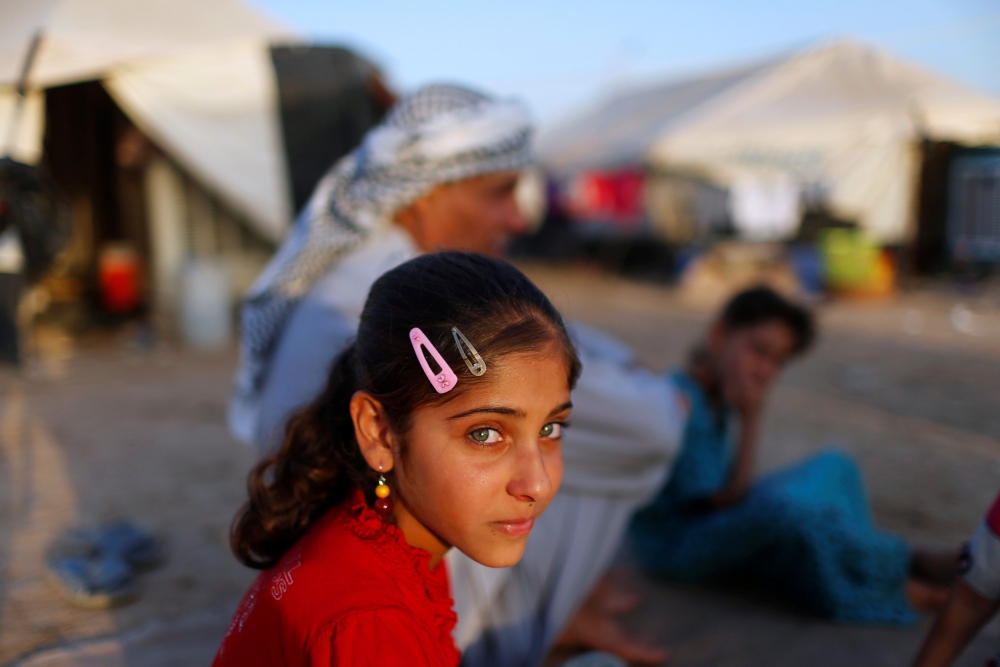
Christian Post Report – A displaced Iraqi child, who fled from Islamic State violence in Mosul, sits with her family outside their tent at Baherka refugee camp in Erbil, September 14, 2014.

A Yazidi sex slave who was raped three times a day for over 16 month by various Islamic State fighters detailed in a recent interview how she was bought and sold by eight different jihadis and how the group sold off over 800 Yazidi girls inside a Raqqa “meat market.”

In an interview with The Daily Mail, 20-year-old Khalida, who was captured by the militant group in Iraq in August 2014, explained how she and her family were attempting to escape from the wrath of IS (also known as ISIS or ISIL) when a Muslim neighbor outed them as un-believers when they were stopped at a checkpoint.

After being outed by the neighbor, IS rounded up all 36 Yazidis in the group and separated them by gender. IS then separated the females into married and unmarried groups, Khalida said.

Khalida explained that she and about 800 other unmarried Yazidi girls were bussed to IS’ Syrian stronghold of Raqqa where they were to each be sold as sex slaves.

She and the other women were put on display in the aforementioned meat market and were purchased relatively cheaply by IS militants.

‘We were put on display. Men came in and looked at us like objects. It was like a car showroom,” Khalida said. “Women were bought for cash — as little as $20, or exchanged for things like mobile phones, or given away as gifts.”

When it came to the most beautiful of the Yazidi women, Khalida said that they were taken to a VIP room so IS leaders could take their time deciding which girls they wanted to buy and abuse as their personal sex toys.

“The most beautiful women were put into a special room,” she explained. “Then five top ISIS leaders — emirs — came to choose girls. They took away three or four girls each.”

“I was very afraid,” She recalled. “I didn’t know what would happen to me — raped, murdered?”

Khalida and her cousin were eventually sold to a white-bearded old Syrian man named Abu Qalla. The girls were taken to Qalla’s home, which he shared with his own wife and family.

After arriving to Qalla’s home, the two women were locked in a room for about two weeks until Qalla finally came in and raped Khalida’s cousin right in front of her.

Khlaida stated that after Qalla was done having sex with her and her cousin, Qalla’s wife would always come in and beat them for “tempting her husband.”

“‘You are Yazidi. You deserve what you get,” Khalida recalled the wife telling them.

Over the course of the next 16 months, Khalida was continuously sold and raped by multiple militants, sometimes she was gangraped with such brutality that she was knocked unconsious.

Khalida admits that she was constantly forced to take contraceptives after having been raped. One time after she was knocked unconscious during a gang rape, Khalida was taken to a hospital to receive a contraceptive injection.

‘They [IS fighters] did not want me get pregnant, especially if there was more than one man because they would not know who the father of the baby was,’ she told MailOnline.

Khalida tried to escape from IS three different times. However, the three different arab families she appealed to for help ultimately returned her back to her “slave master.”

Life as an IS sex slave was so brutal that Khalida tried to kill herself multiple times. She even tattooed her father’s name on her arm so that her body could be identified.

“I tried to kill myself many times. I covered myself in water and put my hand on electric cables but I always survived,” she said. “I asked God to kill me. I thought it was better to die than to live as a sex slave with what they were doing to me, every day.”

Khaldia was finally freed when she struck a deal with her eighth and final “slave master.”

Although the Khalida’s family was poor and homeless, the militant demanded about $30,000 from her family for her release.

‘I begged him and kissed his feet begging for him to contact my family,’ Khalida detailed. “‘I told him I had been enslaved for over a year and had heard nothing about my family. I begged him every day for two months.”

“Finally he let me call my brother Faisal. He told him he would sell me for $30,000,” she continued. “I told him my family were poor and had nothing, that they had abandoned their home.”

Khalida said she had to haggle for her own freedom until he agreed to sell her.

“I was taken to a village near the front line near Mosul,” she said. “I had to walk for five hours and I called to the Peshmerga fighters.”

Follow Samuel Smith on Twitter: @IamSamSmith

Source : Christian Post

Girl Raped 3 Times a Day for 16 Months Reveals Untold Details of ISIS’ Sex Slave ‘Meat Market’

Iraq (Photo: Reuters/Ahmed Jadallah)

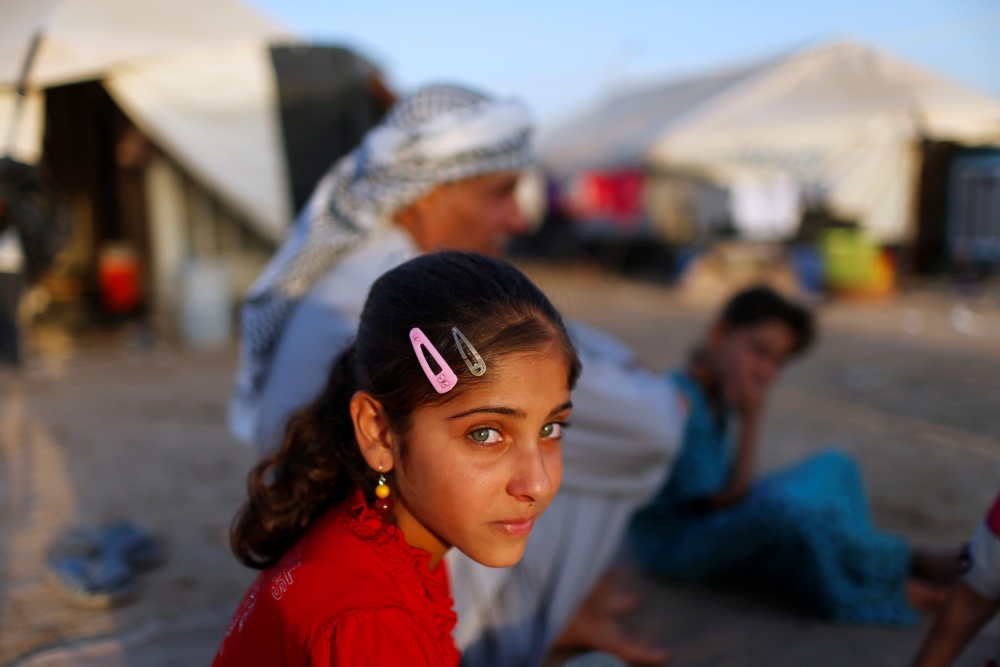
Christian Post Report – A displaced Iraqi child, who fled from Islamic State violence in Mosul, sits with her family outside their tent at Baherka refugee camp in Erbil, September 14, 2014.

A Yazidi sex slave who was raped three times a day for over 16 month by various Islamic State fighters detailed in a recent interview how she was bought and sold by eight different jihadis and how the group sold off over 800 Yazidi girls inside a Raqqa “meat market.”

In an interview with The Daily Mail, 20-year-old Khalida, who was captured by the militant group in Iraq in August 2014, explained how she and her family were attempting to escape from the wrath of IS (also known as ISIS or ISIL) when a Muslim neighbor outed them as un-believers when they were stopped at a checkpoint.

After being outed by the neighbor, IS rounded up all 36 Yazidis in the group and separated them by gender. IS then separated the females into married and unmarried groups, Khalida said.

Khalida explained that she and about 800 other unmarried Yazidi girls were bussed to IS’ Syrian stronghold of Raqqa where they were to each be sold as sex slaves.

She and the other women were put on display in the aforementioned meat market and were purchased relatively cheaply by IS militants.

‘We were put on display. Men came in and looked at us like objects. It was like a car showroom,” Khalida said. “Women were bought for cash — as little as $20, or exchanged for things like mobile phones, or given away as gifts.”

When it came to the most beautiful of the Yazidi women, Khalida said that they were taken to a VIP room so IS leaders could take their time deciding which girls they wanted to buy and abuse as their personal sex toys.

“The most beautiful women were put into a special room,” she explained. “Then five top ISIS leaders — emirs — came to choose girls. They took away three or four girls each.”

“I was very afraid,” She recalled. “I didn’t know what would happen to me — raped, murdered?”

Khalida and her cousin were eventually sold to a white-bearded old Syrian man named Abu Qalla. The girls were taken to Qalla’s home, which he shared with his own wife and family.

After arriving to Qalla’s home, the two women were locked in a room for about two weeks until Qalla finally came in and raped Khalida’s cousin right in front of her.

Khlaida stated that after Qalla was done having sex with her and her cousin, Qalla’s wife would always come in and beat them for “tempting her husband.”

“‘You are Yazidi. You deserve what you get,” Khalida recalled the wife telling them.

Over the course of the next 16 months, Khalida was continuously sold and raped by multiple militants, sometimes she was gangraped with such brutality that she was knocked unconsious.

Khalida admits that she was constantly forced to take contraceptives after having been raped. One time after she was knocked unconscious during a gang rape, Khalida was taken to a hospital to receive a contraceptive injection.

‘They [IS fighters] did not want me get pregnant, especially if there was more than one man because they would not know who the father of the baby was,’ she told MailOnline.

Khalida tried to escape from IS three different times. However, the three different arab families she appealed to for help ultimately returned her back to her “slave master.”

Life as an IS sex slave was so brutal that Khalida tried to kill herself multiple times. She even tattooed her father’s name on her arm so that her body could be identified.

“I tried to kill myself many times. I covered myself in water and put my hand on electric cables but I always survived,” she said. “I asked God to kill me. I thought it was better to die than to live as a sex slave with what they were doing to me, every day.”

Khaldia was finally freed when she struck a deal with her eighth and final “slave master.”

Although the Khalida’s family was poor and homeless, the militant demanded about $30,000 from her family for her release.

‘I begged him and kissed his feet begging for him to contact my family,’ Khalida detailed. “‘I told him I had been enslaved for over a year and had heard nothing about my family. I begged him every day for two months.”

“Finally he let me call my brother Faisal. He told him he would sell me for $30,000,” she continued. “I told him my family were poor and had nothing, that they had abandoned their home.”

Khalida said she had to haggle for her own freedom until he agreed to sell her.

“I was taken to a village near the front line near Mosul,” she said. “I had to walk for five hours and I called to the Peshmerga fighters.”

Follow Samuel Smith on Twitter: @IamSamSmith

Source : Christian Post

Majority of Norwegians Don’t Believe in God for First Time Ever, New Study Finds

Norway (Photo: Reuters/Torstein Boe/NTB Scanpix)
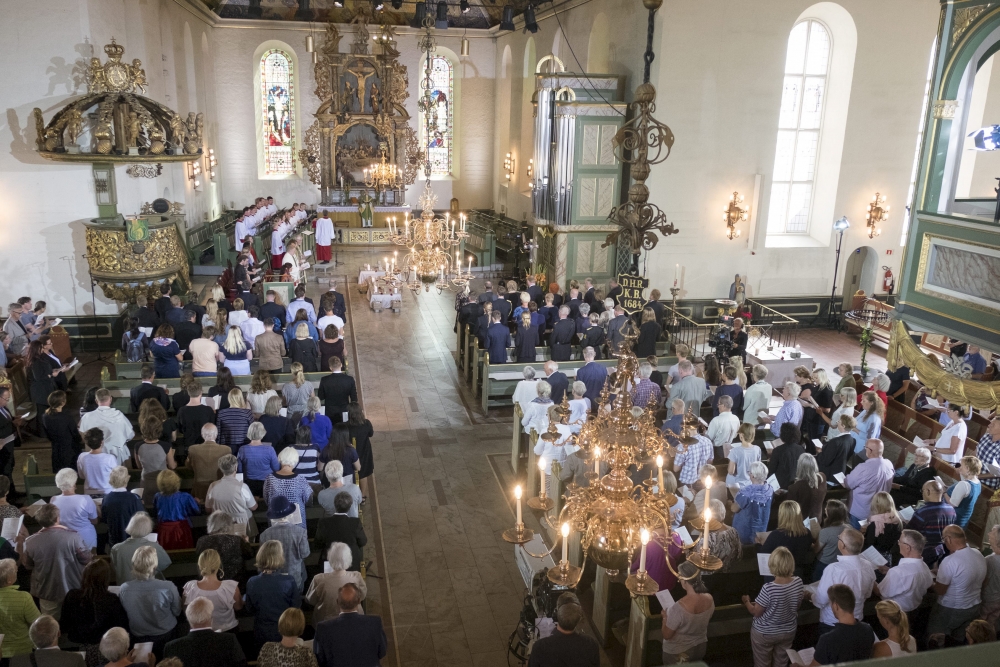
Christian Post Report – A memorial service is held at Oslo Cathedral, as Norway marked the fourth anniversary of the 2011 attacks, in Oslo, Norway, July 22, 2015. Norway marked the fourth anniversary of the bombing of government buildings in Oslo, and shooting at the Labor Party youth camp on Utoeya island, killing in total 77 people.

For the first time ever, the majority of Norwegians do not believe in God, a new study has found.

The study, conducted annually by the Norwegian Monitor/Ipsos Norway, found that among 4,000 participants, 39 percent said they do not believe in God, while 37 percent said they do. Twenty-three percent said they were undecided, according to The Local.

In past years, the survey has found that believers outweighed nonbelievers, or the two groups were equal.

Jan-Paul Brekke, who oversaw the survey through Ipsos Norway, told The Local that the results are vague, as they do not provide an exact definition for God.

“It could be the Christian God, an independent god or one from other faiths. But since we started asking the question 30 years ago, the percentage of those who said they aren’t sure has been about the same,” Brekke said.

Brekke added that while the survey took a sampling of multiple faiths, it primarily questioned western religions, like Christianity.

“There are quite a few immigrants included [in the survey] but the majority of them come from Western religious traditions. We have only a few Muslims in our material,” the researcher said.

While Norwegians’ religious beliefs seem to be declining, a poll conducted last year by the Barna Group found that one in four unchurched Americans now identify as atheist or agnostic.

As The Christian Post reported last March, the study found that there are three main reasons non-churchgoing Americans have lost faith in God: they reject the teachings of the Bible, they don’t trust their local church, or they’ve given in to a “cultural reinforcement of a secular worldview.”

In recent months, Norway has come under fire and accused of persecuting Christians after government officials removed five children from their parents’ custody amid allegations of spanking, although activist groups argue that the family was separated due to its religious beliefs.

Mutliple international protests have taken place after Norway’s Barnevernet, or child protective services, removed the five children from the care of Ruth and Marius Bodnariu, who are Romanian Pentecostal Christians.

The couple is currently waiting to find out if they will regain custody of their children, with a ruling expected as early as April.

Peter Costea, the the president of the Alliance for Romania’s Families, reported in late February that recently-obtained government documents indicate that officials had been watching the family before removing them from their parental custody in November, expressing concern that the family had “their own faith and way of upbringing when it comes to religion.”

“Documents and minutes of meetings have emerged since the abduction showing that as early as Oct. 13, 2015, more than a month before the children were taken into custody, the officials at Naustdal municipality disapproved of the parenting style of the Bodnariu parents; believing it, after questioning the children, to be based on the Bible,” Costea wrote in an analysis of the court documents, as reported by The Christian Post.

“They plainly state that Barnevernet ‘is worried that this is a way of upbringing which is justified by the Bible.’ The authorities pivoted their contemplated removal of the children on the ‘attitude’ the parents ‘have to their own faith and way of upbringing when it comes to religion,'” Costea added.

Source : Christian Post

Morgan Freeman Says He Felt ‘Connected’ at Joel Osteen’s Lakewood Church Ahead of New Series ‘Story of God’

The Story of God (Photo: National Geographic/Morgan Freeman)
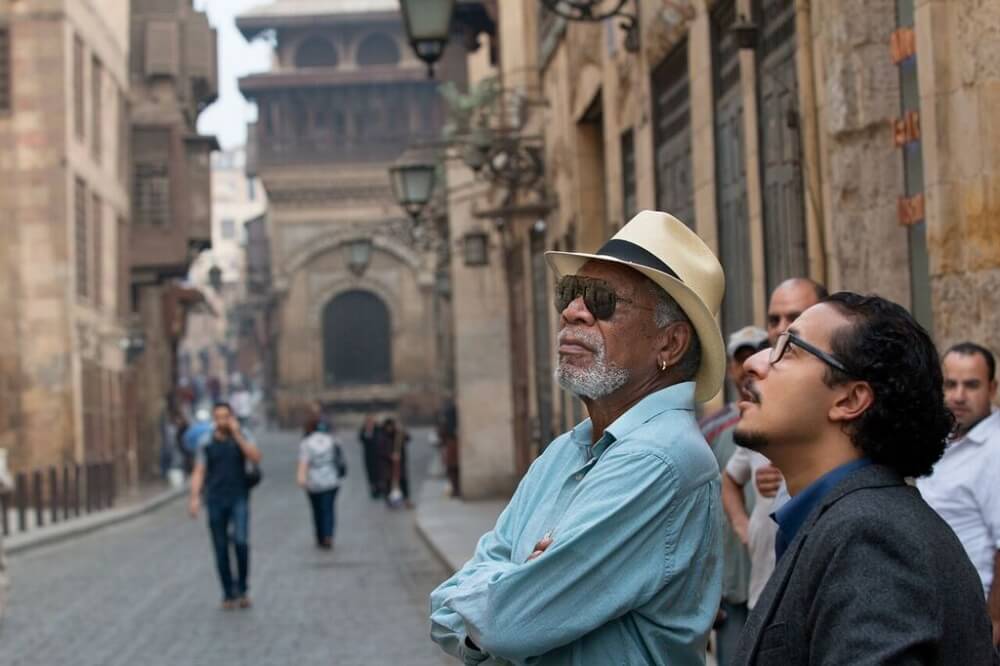
Christian Post Report – Academy Award-winning actor Morgan Freeman travels the globe to explore how different cultures view God in the NatGeo docu-series, “The Story of God.”

Morgan Freeman has circled the globe in a quest to examine how different cultures view God for his upcoming NatGeo docuseries “The Story of God,” and says a visit to Pastor Joel Osteen’s Lakewood Church in Houston, Texas, for the series made a positive impression on him.

“In a Houston megachurch I connected somewhat,” Freeman told Page Six this week. “Encouraged to think positive. You don’t just get some things just like that! You have to go do it to get it. God’s plan for us is to succeed.”

The 78-year-old Oscar winner is referring to his visit to Lakewood Church in early December of last year to explore the practices of Christian megachurches as research for the upcoming docuseries, which he hosts and executive produces. The fact that Freeman was “encouraged to think positive” during his visit coincides with the perennial uplifting themes of Osteen’s messages.

The Story of God(Photo: National Geographic/Morgan Freeman)Academy Award-winning actor Freeman travels the globe to explore how different cultures view God in the NatGeo docu-series “The Story of God.”

As a child, however, Freeman felt much less of a connection to God when attending church. He told Page Six, “I went to churches and synagogues, only it never caught hold. At 13, I stopped.”

Today, the actor describes himself as a “privatist,” saying that “All of life is this planet. Life ever after is here.”

The godly connection Freeman experienced at Lakewood Church may have begun long before the actor landed in Houston when he walked away uninjured after a his plane had a freak accident en route. The thespian’s private Syberjet SJ30 twin-engine aircraft hit an armadillo during take-off from a Mississippi airport, forcing it to make an emergency landing, as previously reported by The Christian Post.

“Sometimes things don’t go as planned and a tire blew on takeoff, which caused other problems,” said Freeman in a statement issued by his publicist. “But thanks to my excellent pilot Jimmy Hobson we landed safely without a scratch. … I appreciate the concern and prayers for our safety.”

The actor eventually arrived to the church where he met with Osteen. Details of that visit are expected to be revealed in the upcoming series.

“The Story of God” premieres at 9 p.m. ET April 3 on National Geographic Channel and Nat Geo Mundo.

Follow me on Twitter: @kevindonporter

Source : Christian Post

Israel Grants 850 Palestinian Christians Permits to Visit Jerusalem for Easter

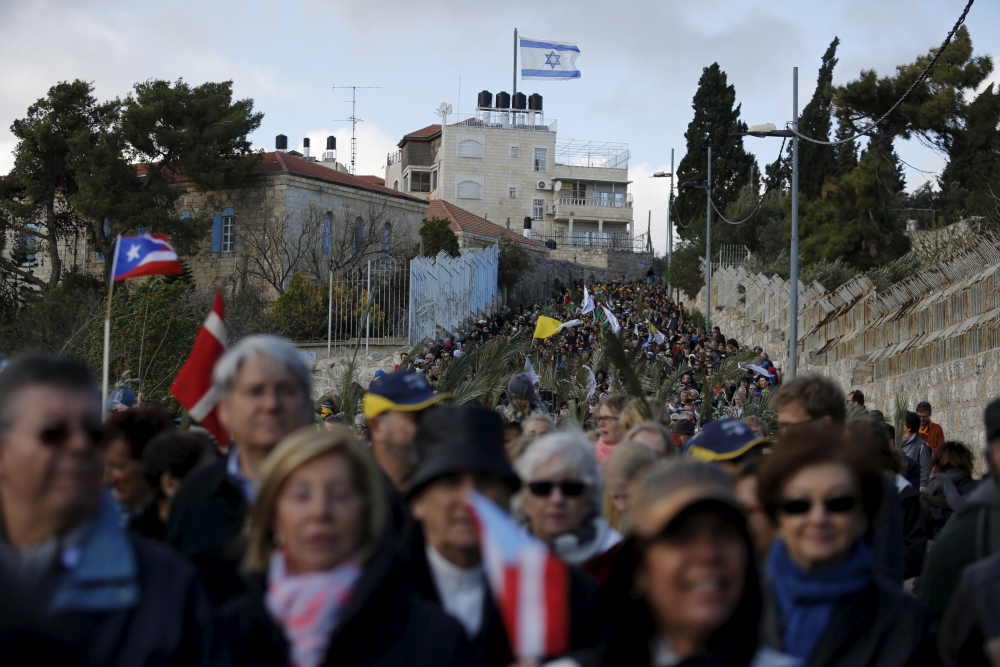
Christian Post Report – Catholic faithful hold palm fronds during a Palm Sunday procession on the Mount of Olives in Jerusalem, March 20, 2016.

Israel has granted approximately 850 Palestinian Christians who live in the Gaza Strip permits allowing them to visit Jerusalem for Easter.

“Muhammad al-Maqadma [spokesman for the Palestinian Ministry of Civil Affairs] said the permits were the result of ‘dedicated efforts’ by Minister of Civil Affairs Hussein al-Sheikh in order to enable hundreds of Christians to celebrate the holidays within a span of 45 days,” reported the Middle Eastern publication Ma’an News.

“This is the first time such a large number of Christians from Gaza received permits to travel to the West Bank and Jerusalem,” al-Maqadma told Ma’an Saturday.

For years Israel has garnered controversy for how it oversees access to Jerusalem on various holy days for Jews, Muslims, and Christians.

The U.K.-based publication the Catholic Herald ran a story Monday alleging that Israeli officials are purposely restricting Christians access to the holy city.

The Herald cited Yusef Daher, secretary-general of the Jerusalem Interchurch Centre, who argued that officials were not allowing sufficient access to sites such as the Church of the Holy Sepulcher.

Church of the Holy Sepulcher (Photo: Reuters/Yannis Behrakis)

A Christian pilgrim prays at the large marble slab traditionally believed to be the stone that Jesus Christ’s body was washed upon when removed from the cross, in the Church of the Holy Sepulcher, Jerusalem, Israel, June 6, 2006

“Over the past two years the Jewish Passover and Easter holiday have coincided and while the Jews entering the Old City have had complete freedom of movement, the movement of Christians celebrating Good Friday and the Orthodox Holy Fire ceremony have been restricted by the barriers, Daher said,” noted the Herald.

In a press briefing last week, the rector of the Latin Patriarchate of Jerusalem, Father Jamal Khader contrasted the recent distribution of permits by Israel to past years.

“In previous years, permits (for Gaza Christians) were given randomly, and if they don’t have them for the whole family, they cannot come,” stated Khader.

“Can you imagine some members of the family coming to celebrate in Jerusalem and leaving behind their family? It’s not in our traditions, we celebrate together. So we had the experience in previous years when very few came. This year I’m not sure.”

According to Open Doors USA, Christians living in the Palestinian Territories face a “complex” situation regarding their religious rights.

“Christians are squeezed in the Israeli-Palestinian conflict, their ethnicity causing many restrictions from the Israeli side and their religion putting them in a minority position within the Palestinian community,” noted Open Doors.

“The West Bank’s ruling Fatah party is formally based on secular principles, and Christians enjoy several rights. Though Christians are largely tolerated by Islamist Hamas, the rights of Christians are neither upheld nor protected in Gaza. Apart from this discrimination, Christians face threats from radical Islamic vigilante groups.”

Source : Christian Post

Jesus’ Time on Earth Was Not a Failure, Billy Graham Says

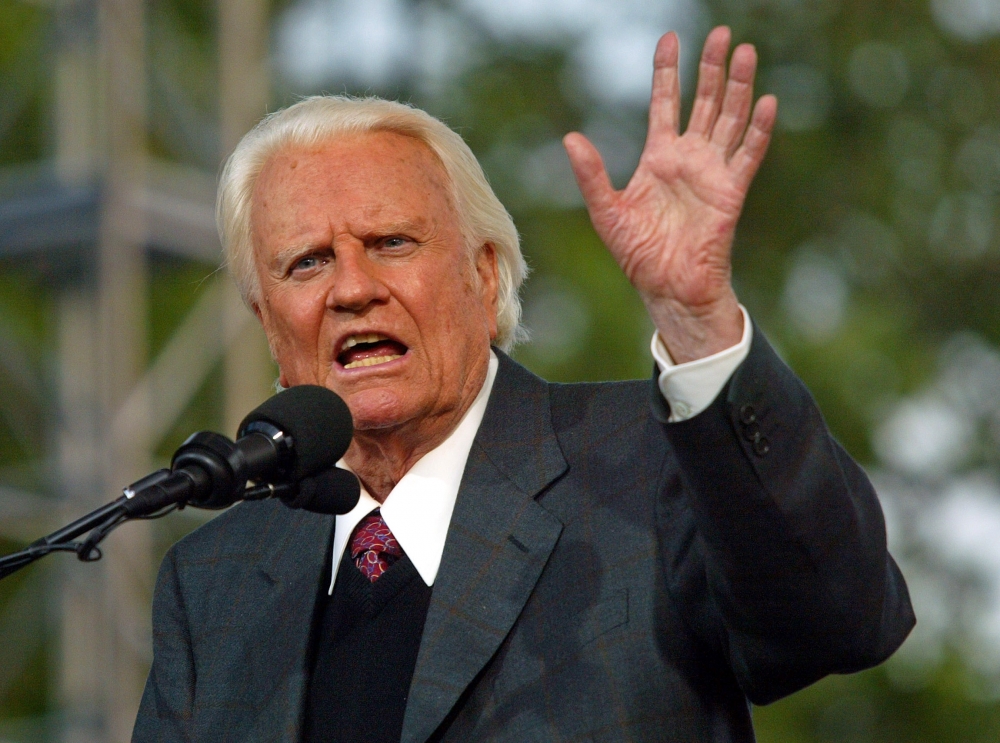
Evangelist Billy Graham(Photo: Reuters/Shannon Stapleton)Evangelist Billy Graham speaks during his Crusade at Flushing Meadows Park in New York, June 25, 2005. Graham, 86, has preached the Gospel to more people in a live audience format than anyone in history – over 210 million people in more than 185 countries. His followers believe that the New York Crusade which runs from June 24 to 26 will be his last live appearance.

Christian Post Report – Jesus’ time on earth before his resurrection was anything but a failure, the Rev. Billy Graham said in a recent post.

Responding to a question posted to the “My Answers” portion of the Billy Graham Evangelistic Association’s website, the 97-year-old religious leader said that only Jesus’ enemies would have seen His time on earth as unsuccesful.

The question asked if Jesus’ mission on earth was a failure, as he had hoped to be made king on earth but was rather killed.

Graham responds by saying that “Jesus had no desire to become an earthly king — as He repeatedly made clear. Instead, He came into the world to establish another type of kingdom — a spiritual kingdom, drawing together all who put their faith and trust in Him as their Savior, and committed themselves to follow Him as their Lord.”

The evangelical leader indicates that this spiritual kingdom was far better than any earthly kingdom, because this Kingdom of God “would never end, for it was part of God’s eternal plan for the human race.”

The Baptist preacher went on to say that while Jesus’ enemies may see Him as a failure because they thought he would be put to death and forgotten, in actuality he is remembered by millions, every day, 2,000 years later.

“By putting Him to death [Jesus’ enemies] believed everyone would soon forget about Him. But they were wrong — because on the third day His tomb was empty! By the power of God, death had been defeated and Jesus was alive! And now, 2,000 years later, countless millions follow Him and worship Him every day,” Graham writes.

Graham concludes by saying that to see Jesus’ time on earth as a failure would be to miss the whole picture of God’s purpose.

“[God’s enemies] rejected Jesus because they failed to see who He really was — the eternal Son of God, sent into the world to save us from our sins and make us part of His Kingdom forever. Instead, by faith turn to Him today, confessing your sins and welcoming Him into your life,” Graham writes.

Graham has spoken on the importance of Easter before, writing in April 2015 that it is important to remember the real reason Christians celebrate Easter: Jesus’ resurrection.

“Easter does not mark the arrival of spring, nor is it simply meant to give us a break from work or school (although many see it this way). Instead, Easter celebrates what Christians believe is the most important event in human history: the resurrection of Jesus Christ from the dead,” Graham writes.

The preacher adds that Christians must remember the ultimate sacrifice Jesus made when he came down from heaven and went through the crucifixion and resurrection.

“[Jesus became] the final and complete sacrifice for our sins. Jesus was without sin, but when He died, something happened that’s almost beyond comprehension: all our sins were transferred to Him, and He took upon Himself the judgment we deserve. Because of Christ, we can be cleansed of our sins and given the gift of eternal life,” Graham says.

Source : Christian Post

Neanderthals and Humans Interbred, Produced Hybrid Babies, Scientists Claim

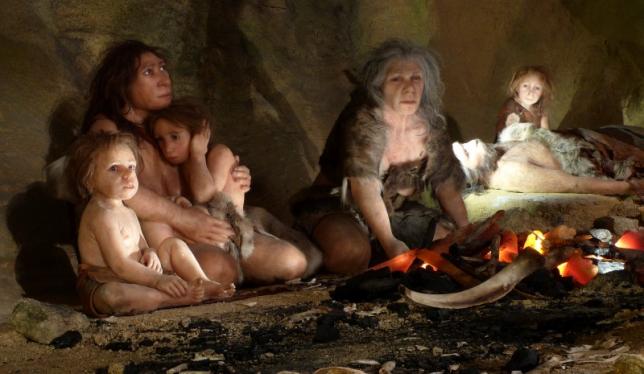
<b>Christian Post Report</b> – An exhibit shows the life of a neanderthal family in a cave in the new Neanderthal Museum in the northern town of Krapina February 25, 2010″ title=”<b>Christian Post Report</b> – An exhibit shows the life of a neanderthal family in a cave in the new Neanderthal Museum in the northern town of Krapina February 25, 2010″ name=”jpg” src=”http://images.christianpost.com/full/83046/an-exhibit-shows-the-life-of-a-neanderthal-family-in-a-cave-in-the-new-neanderthal-museum-in-the-northern-town-of-krapina-february-25-2010.jpg” class=”imgPhoto” width=”550″ height=”450″ /> <small class=(Photo: Reuters/Nikola Solic)

Christian Post Report – An exhibit shows the life of a neanderthal family in a cave in the new Neanderthal Museum in the northern town of Krapina February 25, 2010

Scientists have presented evidence for what they argue is interbreeding behavior between Homo sapiens and Neanderthals that might have influenced changes to humans’ metabolism and immune systems.

Researchers in the journal of Science noted that although Neanderthal sequences that persist in the genomes of modern humans have been identified in Eurasians, there was a lack of comparable studies when it comes to Neanderthals and Denisovans. Genetic information from close to 1,500 people around the world has now led them to believed that early humans interbred with Neanderthals and Denisovans.

As CNN pointed out, Denisovans are believed to be related to Neanderthals but were genetically different, and were also distinct from modern humans.

The latest research showed that people even in Melanesia have traces of Denisovan DNA, even though they live far away from the Siberian region that Denisovans are believed to have thrived in.

University of Washington evolutionary geneticist Joshua Akey, who helped lead the study, claims the report shows that human ancestors interbred with other hominins following their migration away from Africa 50,000 years ago.

“It is still not exactly clear when and where Melanesian ancestors crossed paths with Denisovans, but our best guess is somewhere in mainland Southeast Asia,” Akey told CNN.

“What was surprising from our study is that it revealed the history of contact with Neanderthals was more complicated than previously anticipated,” he added.

The researcher suggested that the hybrid babies paved the way for evolution in human biology that gave people infection-fighting advantages.

“Many of these genes are involved in immunity and likely helped our ancestors fight new pathogens that they were exposed to as they dispersed into new environments,” Akey argued.

The report concludes that despite the latest findings, a lot of research remains to be carried out on the patterns of genomic variation concerning humans, Neandertals, and Denisovans.

Creationist groups that oppose such evolutionary claims, such as Ken Ham’s Answers in Genesis, have argued that Neanderthals should not be considered “soulless human-like bipedal beings,” but as creations of God, like humans.

“How much knowledge of the true God these groups retained, we do not know. However, as the not-too-distant descendants of Noah’s family, it is possible those unrecorded discussions around some campfires concerned the things of God and that as they gazed up at the stars they recognized the hand of their Creator,” AiG’s Elizabeth Mitchell wrote in April 2015.

“But neither culture nor time nor geography nor lack of literacy nor any anatomical distinction alters the fact that the proper place for Neanderthals and all other extinct human beings was among the descendants from Adam and Eve, all made in the image of their Creator just as we are,” she added.

Source : Christian Post

Pope Francis: People Who Ignore Plight of Refugees Are Like Those Who Washed Their Hands of Jesus’ Suffering

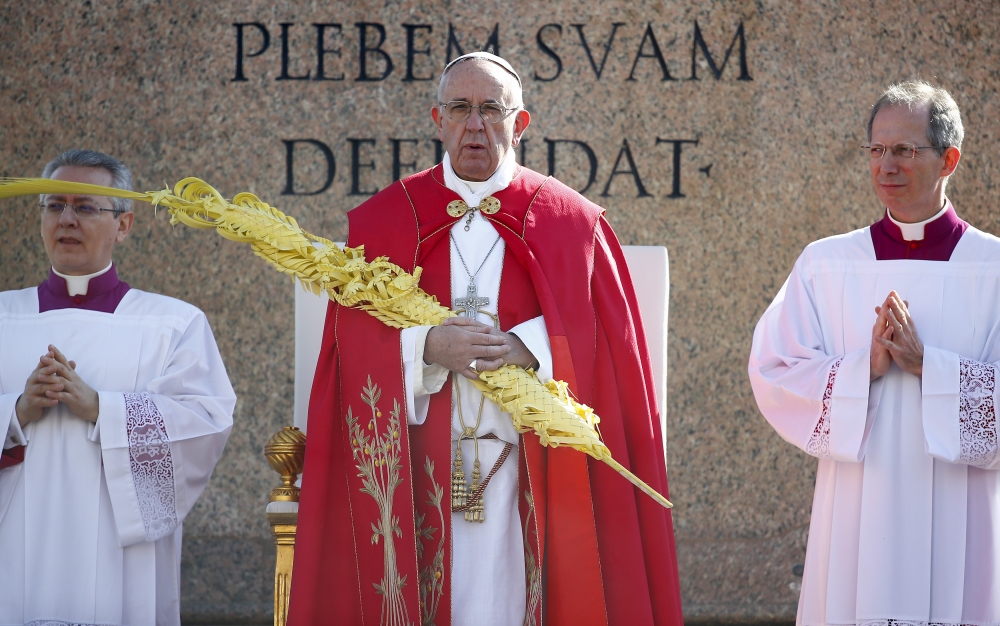
Christian Post Report – Pope Francis leads the Palm Sunday mass at Saint Peter’s Square at the Vatican, Rome, Italy, March 20, 2016.

Pope Francis broke from his Palm Sunday homily where he recalled the suffering of Jesus Christ to decry the treatment of refugees, noting that those who ignore their plight are like those who washed their hands of Jesus’ fate.

In a prepared speech, Francis spoke about the pain and suffering Christ went through before his crucifixion at the hands of the Roman soldiers, including “mockery, insults, and spitting,” along with beatings and torture.

“He suffers in His body terrible brutality: the blows, the scourging and the crown of thorns make His face unrecognizable. He also experiences shame and disgraceful condemnation by religious and political authorities: He is made into sin and considered to be unjust,” Francis said.

“Pilate then sends Him to Herod, who in turn sends Him to the Roman governor. Even as every form of justice is denied to Him, Jesus also experiences in His own flesh indifference, since no one wishes to take responsibility for His fate,” he added.

At that point Francis mentioned the refugee crisis in Europe, where millions are making their way across the continent fleeing terrorism and war.

“And I am thinking of so many people, so many on the margins, so many refugees” for whom “many don’t want to assume responsibility for their destiny,” Francis said, according to The Associated Press.

The Vatican leader has repeatedly called on Europe’s leaders to “overcome the inevitable fears associated with this massive and formidable phenomenon” and help the refugees as much as possible.

Francis told European diplomats back in January that it is wrong to turn down refugees because of fear and uncertainty.

“Extremism and fundamentalism find fertile soil not only in the exploitation of religion for purposes of power, but also in the vacuum of ideals and the loss of identity — including religious identity — which dramatically marks the so-called West,” the pope said back then.

“This vacuum gives rise to the fear which leads to seeing the other as a threat and an enemy, to closed-mindedness and intransigence in defending preconceived notions.”

In his homily on Sunday, Francis reminded Christians that Jesus sacrificed everything for the sake of the people, while many people today find it difficult to stop focusing so much on themselves even a little.

“He comes to save us; we are called to choose His way: the way of service, of giving, of forgetfulness of ourselves. Let us walk this path, pausing in these days to gaze upon the Crucifix, the ‘royal seat of God,’ to learn about the humble love which saves and gives life, so that we may give up all selfishness, and the seeking of power and fame,” the Roman Catholic Church leader added.

Other Christian leaders, such as the Archbishop of Canterbury Justin Welby, have also made a link between Christ and the fate of refugees, arguing back in September that Jesus himself was a refugee fleeing war and persecution.

“As the archbishop has said, Jesus was a refugee, and there are refugees here who are desperate for sanctuary from war-torn places and the archbishop is completely torn about their situation and wants to make a difference,” a spokesperson for Welby said at the time.

Source : Christian Post

Tina Campbell Reveals Why ‘Mary Mary’ Is Packed With Drama

Christian Post Report – Mary Mary arrive at the 54th annual Grammy Awards in Los Angeles Gospel duo Mary Mary arrive at the 54th annual Grammy Awards in Los Angeles, California February 12, 2012.

Fans of the hit WE tv reality show “Mary Mary” have witnessed a large dose of drama played out on their television screens, and now one half of the gospel music duo the show follows is explaining why.

“TV loves those heated moments. When you have a reality show and they’re following you, they catch all those heated moments and TV loves those heated moments more than they love those other moments,” Mary Mary group member and co-executive producer Tina Campbell told Fox LA. “Life happens and it’s not always easy and it’s not always perfect. And again, the TV likes to show a lot of the craziness.”

While Tina and Erica Campbell have taken time apart to pursue solo music efforts, the pair still appear on and co-executive produce their show. Now in its fifth season, the show highlights some drama, with Tina refusing to specify when she will be ready to make the next Mary Mary record that the group is contracted to create.

This results in Erica’s husband and group producer Warryn Campbell threatening to replace Tina with a potential option being presented by former Mary Mary manager Mitchell Solarek.

Still, Erica told Fox LA that the show is about more than showcasing drama.

“I’m hoping that what people are seeing is the fact that we stick together. And even though we argue big, we love big as well,” Erica said.

Her sister agreed with the sentiments, assuring fans that the sisters work through their differences in spite of all of the drama.

“We do fix everything. We do work through everything,” Tina said. “The next moment could be a great moment, but if the bad moment is better, that’s what you show.”

Last year, Tina told JET magazine that she refused to engage in too much drama on her show this season.

“I’m contractually committed, yet I want to reflect my God even with these executives and behind the scenes people,” Campbell told JET magazine. “I’m not compromising my faith by no stretch of the imagination.”

While Tina is the more outspoken of the sisters, she admits that this season was harder for her to film because of her decision to release negativity in her life.

“I’m not what TV likes. TV likes drama and I have a very big personality, [and] I think TV likes that kind of person, but, they’re looking for fear and problems,” Tina told JET. “I ain’t that. So it’s challenging for me at times. They’ve got to be creative when they’re taping my life and things.”

The singer has also publicly documented her decision to forgive her husband and drummer Teddy Campbell for stepping outside of their marriage, and even agreed to renew their vows. After engaging in a number of interviews, taking to social media, and creating an album and devotional book about overcoming marital strains, Tina is ready to document the results of forgiveness on her show.

“All we’re doing is literally showing people what the process of forgiveness looks like — not just in marriage but in everything in our life,” she told JET.

Season five of “Mary Mary” airs at 9 p.m. ET Thursdays on WE tv.

Source : Christian Post