
Playing God: Pandemic Brings Moral Dilemmas to US Hospitals

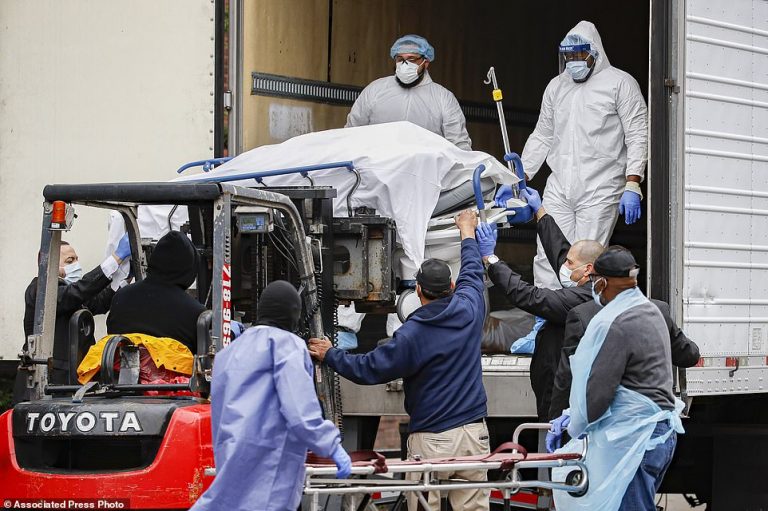
Medical professionals across the US are preparing COVID-19 units in a suspenseful quiet, while others in places like New York are already overwhelmed with patients. The city has ordered hospitals to increase capacity by 50 percent, and they are looking at ways to use temporary facilities, including a recently arrived Navy hospital ship, hastily built field hospitals, and even hotels.

In the midst of all this, doctors and nurses are preparing to face agonizing ethical decisions as their Italian counterparts have already in recent weeks. According to some estimates, the number of projected coronavirus patients needing ventilation in the US could reach anywhere between 1.4 and 31 patients per available ventilator.

There are three main ethical concerns that medical professionals are now facing, according to the Center for Bioethics and Human Dignity: protecting the vulnerable by not overwhelming health care systems, allocating insufficient medical supplies, and keeping medical workers safe who lack the proper protective equipment against the virus. The questions are very real: Who should receive medical care when there aren’t enough resources to go around?

Two ethicists aiding US medical workers with these dilemmas are Carol L. Powers, a lawyer and the co-founder and chair of the Community Ethics Committee out of Harvard Medical School’s Center for Bioethics in Boston; and David Stevens, a physician and CEO emeritus of the Christian Medical & Dental Associations in Bristol, Tennessee who spent 11 years on the front lines of the HIV/AIDS and malaria epidemics in Africa.

CT spoke to Powers and Stevens about how Christians should approach issues of life or death.

How does the relationship between the physician and patient change during a public health crisis like a pandemic?

Powers: In the normal course, the physician-patient relationship is shaped by two different “spheres of decision-making.” Typically, the patient is charged with articulating their individual goals of care based upon their personal values and preferences. The physician then responds with various treatment options that would accomplish those individual goals of care.

In a public health crisis where health-care resources become limited, the physician-patient relationship changes drastically. The weight accorded to an individual patient’s goals of care diminishes in light of the community’s increased need for health care resources. Rather than focusing solely on the patient in the bed, the physician must now consider the many patients in many beds. Treatment options available to both the physician and the patient become necessarily limited.

Critical care resources—an isolation unit or an ICU bed or a ventilator or dialysis—may not be a treatment option offered or it may even be withdrawn. In the case of non-critical medical needs, surgeries or treatments may be delayed or become completely unavailable. Resource allocation questions force a shift in the physician-patient relationship so that the patient’s desires for specialized medical treatments cannot be accommodated and the physician reluctantly becomes a gatekeeper for access to any care at all. Medical care that was once assumed to be available may become limited or completely unavailable.

For the physician, an uncomfortable shift occurs from providing patient care supported by evidence-based medical standards offering a full panoply of treatment choices to operating under crisis standards of care providing limited treatment options in an attempt to save as many people in jeopardy as possible.

Whenever the question arises “what should we do?” then you are in the arena of ethics. The focus of decision-making in ethics often centers upon balancing benefits and burdens of competing “good or right answers.” In our pre-March 2020 world, a patient was able to exercise a good deal of decision-making authority about what treatment options they wanted based upon an ethical decision-making principle of autonomy. In our post-March 2020 world, the ethical principle of justice asserts itself and physicians must find ways to allocate limited resources in ways that are fair and do the most people the most good. For years, we have stayed away from talking about rationing health care and now, because of a crisis beyond our control, we are being forced to ask hard resource allocation questions.

How are medical professionals making decisions about who to prioritize for care?

Stevens: The four basic principles of ethics [include] beneficence, which is doing good; non-malfeasance, which is doing no harm, justice, [and autonomy], and all those things are impacted by an epidemic.

You have the ethical quandary of, do I take care of the sickest folks or do I take care of the most folks? You focus on those in the middle. You have those that aren’t very sick, you tell them to stay home. And then you have people who are desperately sick and when there are not enough respirators, there’s going to be a decision-making situation where you’re going to say, this person is so sick, I’m just going to sedate them or give them something for pain or air hunger, but I don’t have the resources nor the time to focus on this person to the detriment of 15 others who are moderately sick who I can save. That is what we call competing goods. Both of those are good things but you can’t do both.

I remember as a young missionary in Kenya, we had a lot of premature births—some of the highest in the world because we had the highest multiple births—that one out of every 28 deliveries was a set of twins. So we had a lot of preemies. We didn’t have 24-hour electricity. We had a little generator we could use to run one isolette. You can put three premies in an isolette, but what do you do when the fourth one comes? I had to make this decision many times and say, Okay, great, this one’s doing better. I think we can take it out and put this one in. But other times you looked, and all of them were doing bad and you think, this one is so bad in the middle, I’m going to take that one out and just give it comfort care and give it back to its mother and I’m going to take this other one that was just born and is doing better and put it in.

Well, that’s not fair. You can’t be fair in these types of resource-depleted situations. And you get into what we call utilitarian ethics of doing the best you can to save the most people when you can’t save them all. You do that while not violating any moral absolutes.

Powers: There are several different ways to allocate scarce medical resources. One could argue for a first-come, first-served system or even a lottery. What most hospitals are instituting are crisis standards of care that are that trying to maximize the most life years. What that means on a practical basis is a patient with COVID-19 whose health is already compromised by other life-threatening medical conditions may not receive as much intensive medical support as someone whose health is not medically compromised.

Doctors are trying to assess who will benefit the most for the longest when they offer access to scarce medical resources. It means hard choices are inevitable, especially because we have come to rely on the physician acting as an advocate for their individual patients. In order to keep that relationship intact as far as possible, hospitals are now putting into place triage teams—clinicians who are not directly providing care to a patient—who evaluate the test results and determine who will be most likely to benefit the most.

Stevens: One of the premises of medicine is you do no harm. We are taught in health care in this country that you never do anything you’re not trained to do, that you’re not competent to do. We’re already moving past that in New York because you’re going to have people that haven’t practiced medicine in years coming back to help out. This is a place where you have to do that. There’s a place when you’ve got a moral duty to help people, but you have a conflict. And you’ve got to set priorities and you have to allocate limited resources. All these things play into it and make it a very difficult situation, especially here in the US where people haven’t had to deal with these things.

All Content & Images are provided by the acknowledged source
‘Faith over Fear’: Thousands Place Crosses in Yards to Celebrate Hope amidst Pandemic

‘Faith over Fear’: Thousands Place Crosses in Yards to Celebrate Hope amidst Pandemic


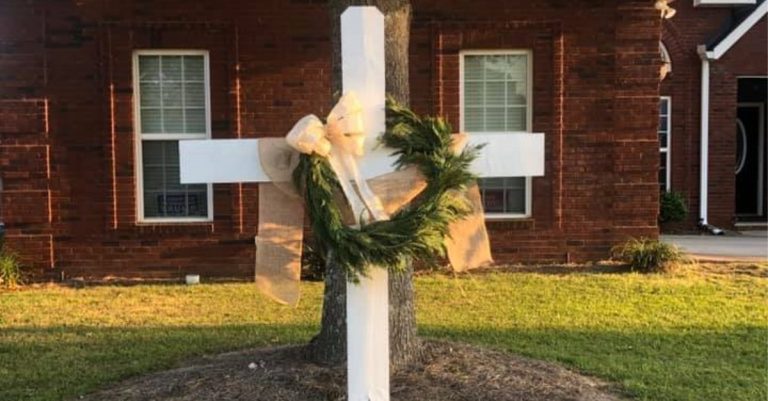
A campaign encouraging homeowners to place crosses in their front yards has now spread to at least six states, with supporters hoping to spread an Easter message of hope during the COVID-19 pandemic.

Facebook in recent days has been filled with thousands of pictures of crosses displayed by homeowners in Georgia, Kentucky, Ohio, Louisiana, Arkansas and Florida.

The “Faith over Fear” movement originated in Middle Georgia. (Some are calling it “Faith not Fear.”)

Many homeowners are putting Christmas lights on the crosses.

Susan Polhill of Louisville, Ga., told The Augusta Chronicle she got the idea after reading about Californians hanging Christmas lights during the pandemic to bring people cheer.

“I thought, ‘Gosh, that is awesome!’ It is the Easter season, so let us light up some crosses as they are packed with meaning,” Polhill said. “We post pictures on Facebook of all the crosses along with a special scripture or verse from a hymn or song. … The cross is a symbol of what Jesus has done for us, all people.”

The “Faith over Fears Crosses in Middle Georgia” Facebook page has more than 10,000 members. Similar pages have been set up by Christians in Arkansas and Louisiana. A Jefferson County, Ky., Facebook page has 11,000 members.

The Middle Georgia page encourages the community to place a cross “in your yard to bring hope and assurance that…

… Read More

Click here to read the rest of the story from our content source/partners – Christian Headlines.

قالب وردپرس

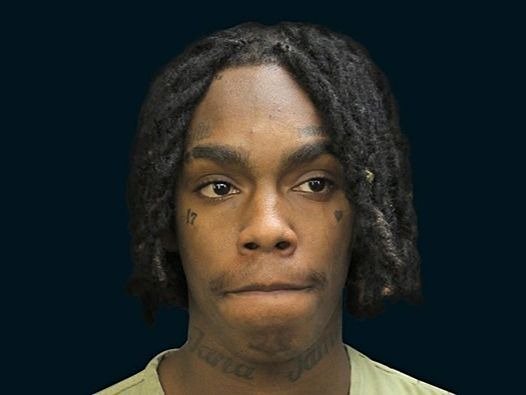
YNW Melly Begs to be Released from Prison After Contracting Coronavirus

YNW Melly is stuck behind bars after testing positive for COVID-19, but his lawyer is trying hard to secure his release. Attorney Bradford Cohen announced he filed another motion to get Melly out of jail on Monday (April 6), detailing why his client is facing a dire situation.

“Just an update we are waiting to hear from the judge regarding the release of Mr Demons to receive medical care and treatment,” Cohen wrote on Instagram. “Supplemental motion was filed today detailing the jail having Mr. Demons share a cell with another COVID19 positive inmate. This is not recommended by any medical physician.”

Cohen is asking the court to allow Melly to go on house arrest because the Broward County Jail is struggling with the coronavirus pandemic. The incarcerated rapper would also pay for his own medical treatment.

“The jails and prisons are not prepared to handle this crisis,” Cohen asserted. “Rules on alcohol based hand sanitizer and wipes must be lifted at a bare min. Inmates are passing trays, jail phones and shared items that are not sanitized when passed between inmates.”

SOURCE: HipHopDX, Justin Ivey

All Content & Images are provided by the acknowledged source
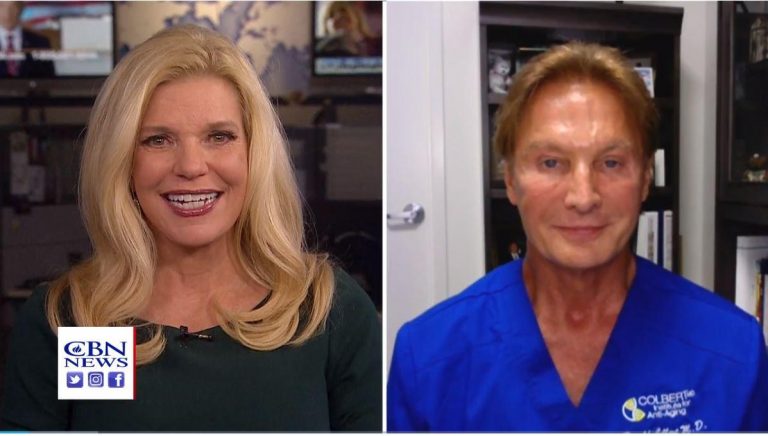
CBN News Asks Dr. Don Colbert Your Questions About the COVID-19 Pandemic

CBN News Medical Reporter Lorie Johnson spoke with Dr. Don Colbert, a Christian physician, best-selling author, and creator of Divine Health nutritional supplements, to ask him your latest questions about the coronavirus pandemic. 

You can visit his website at drcolbert.com. 

Here are the questions being addressed in this Q & A:

Mark: If we already have items such as soap that kill the virus, why is it so hard to find a cure if we already have things that kill it on the outside?
 
Marie: Can you get the virus a second time?
 
Healed Now: What kind of plan can there be to treat traumatized health care workers?
 
Dale: Should the more vulnerable seek testing as soon as possible if early detection helps people recover better?
 
 Siu: How is God related to coronavirus?
 
Laura: If someone sneezes, how do you know and convince others it’s allergies and not the coronavirus?

You can submit new questions to us for our next Q&A at  [email protected]  or click here. 

We are answering your questions in the order in which we receive them.

GET YOUR FREE FACTSHEET: Coronavirus: What You Need to Know

BELOW: More COVID-19 Q&A with CBN News Medical Reporter Lorie Johnson and Experts

CBN News Asks Dr. Daniel Amen Your Questions About the COVID-19 Pandemic, Pt. 2

CBN News Asks Dr. Daniel Amen Your Questions About the COVID-19 Pandemic, Pt. 1

CBN News Asks Dr. Perlmutter Your Questions About the Coronavirus Outbreak

CBN News Asks Dr. Josh Axe Your Questions About the Coronavirus Outbreak

CBN News Asks Dr. Josh Axe Your Questions About the COVID-19 Pandemic

Dr. Perlmutter: Boosting Your Immune System and Gut Health to Fight Coronavirus

Psychiatrist Daniel Amen Targets Virus Fears: ‘Disinfect Our Thoughts so They Don’t Ruin Our Immune System’

FOR CBN NEWS CONTINUING COVERAGE ON COVID-19, CLICK HERE. 

Source CBN

All Content & Images are provided by the acknowledged source
Most Pastors Bracing for Months of Socially Distant Ministry

As the US outlook around the coronavirus pandemic changes day by day, pastors are quickly adjusting their expectations about how the disruptions will impact their ministry.

Oregon pastor Tyler Braun explained that “on top of just navigating the right-now urgency of how to pivot”—the push to move services and giving and small groups online—pastors are grappling with the inevitable fallout on their members and community.

At New Harvest Church, where he leads worship and family ministries, Braun worries people will be forced to experience grief in isolation, lose out on finances, and face the coronavirus restrictions “well into the summer.”

A new survey by Barna Research found over the course of just a week, most church leaders went from thinking they’d be back to meeting as usual in late or March or April (52%), to projecting the changes would extend to May or longer (68%).

“There is this realism that’s setting in,” said David Kinnaman, Barna Group president.

But while most pastors are realistic, they’re also optimistic, according to Kinnaman. “One of the cool things about pastors we’ve learned over the years is that they are by job description and by disposition more upbeat, positive, hope-filled people,” he said. “So they are often pretty capable of putting a good face in a tough situation, and they, like other leaders, are going to face a lot of tough decisions in the coming weeks as the crisis continues.”

Though most had already called off normal activities at church, pastors also implemented swift changes in policies around smaller group meetings over the past several days.

The percentage who still allow the church building to be used for “small meetings and gatherings” has dropped by about half (from 18% to 8%), according to Barna’s Church Pulse survey, hearing from 434 Protestant senior pastors and executive pastors in the US. A plurality say the church staff will be working remotely for the foreseeable future (up from 25% to 40%).

The question of restrictions (not just for worship but also staff meetings, Bible studies, even the group assembled to livestream services) has been an urgent one for pastors as more stories emerge of coronavirus spreading in church settings like choir practices and funerals.

A recent poll conducted by Denison University political scientist Paul Djupe and two fellow researchers found as many as 17 percent of US worshipers across traditions were still attending in-person gatherings of some sort as of early last week.

Compared to other traditions, evangelicals weren’t significantly more likely to say their churches were still open, but those who also ascribe to the prosperity gospel do have stronger feelings against churches closing to comply with government orders, a case which played out in Tampa on Monday. Nearly half of evangelicals with prosperity gospel beliefs agreed that “freedom to worship is too important to close in-person religious services due to the coronavirus even if more people die as a result.”

Source: Christianity Today

All Content & Images are provided by the acknowledged source

Churches Prepare for First Digital Easter – as Part of 2020 'New Normal'

In just a matter of weeks, the majority of churches across the country have switched to or enhanced their online ministry. It’s the “new normal” for 2020. And it means a digital Easter as well.

About 400 pastors responded to a Barna Group survey during the last week of March and half reported that they’re experiencing online “attendance” that’s higher than their normal in-person Sunday service attendance. One in three pastors said they think this growth will continue after the current crisis has passed.

But eight in 10 also reported that giving is down – and that’s led to some cutting staff hours and compensation.

Dr. Walter Kim, the new president of the National Association of Evangelicals (NAE), is encouraging churches to ramp up their ability to receive offerings and tithes online. 

He told CBN News “Churches that have online giving as a regular practice or significant portion of their congregation engaging in that–they’re going to experience a bit of a decline immediately – but they’ll be able to bounce back. Churches that are in areas of the country where that isn’t as available have some pretty significant challenges.”

The NAE recently partnered with the Humanitarian Disaster Institute at Wheaton College to host a COVID-19 Church Online Summit for pastors and staff grappling with how best to serve their congregations and communities right now. 

Many church leaders believe the pandemic represents a unique opportunity to share the Gospel. 

A recent Pew Research Center report showed that more than half of adults are praying for the end of the crisis – including people who normally don’t pray.,

Dr. Jaime Aten, executive director of the Humanitarian Disaster Institute, says research shows people head to the community of faith when they’re in need. “Churches are often one of the first places people turn to when they are in crisis – whether they need physical, emotional or spiritual support,” he said.

Kim says he’s noticed people thinking more deeply about eternity. “We’re at a point in our country where people are asking pretty serious questions about meaning in life and where do you find hope in the midst of anxiety? These are questions that open the door for the Gospel,” he said. 

Dr. Ronnie Floyd, president of the Southern Baptist Convention’s Executive Committee, says the pandemic could usher in a spiritual awakening. “We need to understand God may be using this to revive His church and to call his people back to Him,” said Floyd.

The current challenges for churches include preparing for more COVID-19 cases and more deaths.  

It also includes preparing for Easter. Barna found a majority of pastors say they will host a digital Easter service. Others will organize an outdoor service.

Some are trying a hybrid approach. Pastors at River Oak Church in Chesapeake will offer pre-packaged Communion elements available via a church drive-through on Thursday. Church attendees can then take Communion in their homes Friday night during a live-streamed Good Friday service.

GET YOUR FREE FACTSHEET: Coronavirus: What You Need to Know

FOR CBN NEWS CONTINUING COVERAGE ON COVID-19, CLICK HERE. 

Source CBN

All Content & Images are provided by the acknowledged source
A century later, have we learned the lessons of the ‘Spanish flu’ pandemic of 1918?

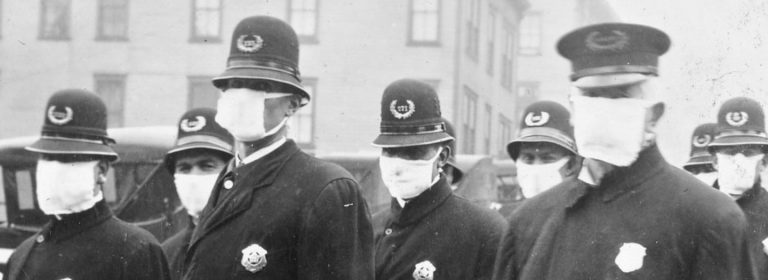
Police in Seattle, WA, wear masks during the “Spanish flu” pandemic of 1918. Public domain.
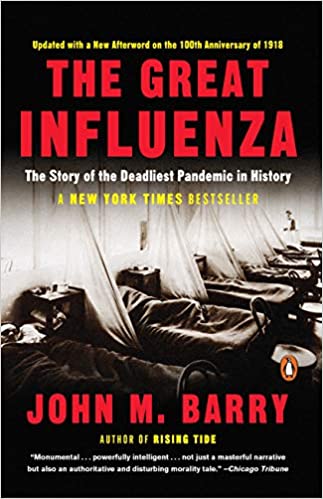
The Great Influenza: The Story of the Deadliest Pandemic in History by John M. Barry

In Philadelphia, one of the hardest-hit cities in America, “fear came and stayed,” Barry wrote. “Death could come from anyone, anytime. People moved away from others on the sidewalk, avoided conversation; if they did speak, they turned their faces away to avoid the other person’s breathing. People became isolated, increasing the fear.”

How some Christians responded to the 1918 pandemic

Although health officials have avoided comparisons between the outbreaks, the impact of influenza one hundred years ago on community life, such as church services, seems eerily familiar today.

In Providence, Rhode Island, evangelist Billy Sunday held a crusade, with one newspaper reporting that ten thousand people “grasped Mr. Sunday’s hand.” Although he vowed to “pray down” the epidemic, people in the crowd, sick with the flu, collapsed. The influenza canceled three weeks of his nightly services.

Government officials around the country called a halt to public meetings such as church services for safety’s sake, just like during the coronavirus outbreak. With no place to meet, pastors sent their sermons to local newspapers to print. One pastor in Los Angeles had Boy Scouts deliver Sunday school lessons to his church members. Other pastors encouraged their flocks to meet in homes, like the apostles did.

In Ennis, Texas, a man said that he wouldn’t be able to attend worship services for the first time in twelve years. But he told the Gospel Advocate, “We had three funerals here Sunday.”

Some churches protested restrictions on indoor services. Others got around them by meeting outside. At the First Baptist Church of San Francisco, the theme of one such Sunday service was “The Spanish Influenza, One of the Last Plagues.”

The “Spanish…

… Read More

—

Click Read More to read the rest of the story from our content source/partners – Denison Forum.

قالب وردپرس

WATCH: Franklin Graham Says Coronavirus Pandemic is the ‘Result of a Fallen World’ That Has ‘Turned Its Back on God’ and Encourages People to ‘Pray and Ask God for Help’

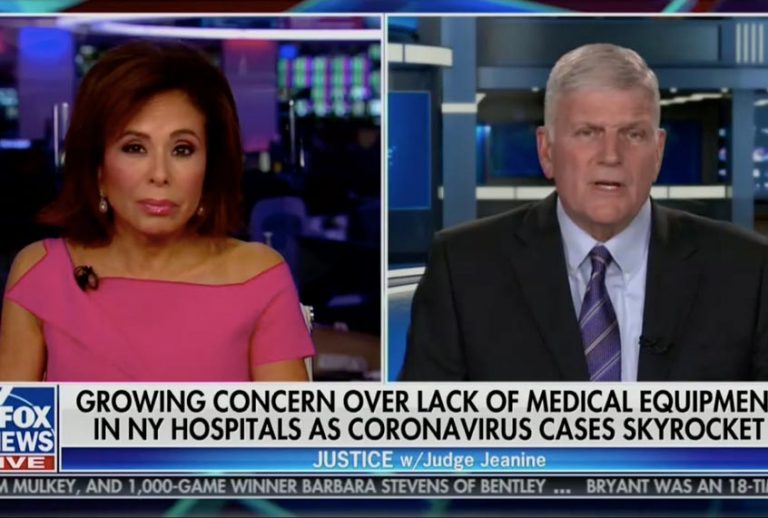
The novel coronavirus pandemic is the “result” of sin that exists in a “fallen world” that has “turned its back on God,” conservative evangelical leader Franklin Graham said. 

Graham, president of the Christian humanitarian organization Samaritan’s Purse, spoke with Fox News’ Jeanine Pirro on Saturday for an interview that mostly focused on the emergency field hospital Samaritan’s Purse is operating in New York City’s Central Park.

In New York City, there are over 67,551 confirmed cases of the virus with over 3,048 related deaths as of Monday afternoon, according to statistics compiled by Johns Hopkins University & Medicine. Nationally, there are over 338,995 cases of coronavirus with over 10,000 deaths, and over 1.3 million cases and 72,638 related deaths worldwide.

“This pandemic, this is a result of a fallen world, a world that has turned its back on God,” Graham said in the interview. “So I would encourage people to pray and let’s ask God for help.”

Toward the end of the interview, Graham, the son of the late evangelist Billy Graham, was asked by Pirro if he gets questions from a lot of people wondering: “Why would God allow this kind of thing to happen?”

“I don’t think that God planned for this to happen,” he responded. “It’s because of the sin that’s in the world. Man has turned his back against God. We have sinned against Him. We need to ask for God’s forgiveness.”

“That’s what Easter is all about it,” Graham, who also leads the Billy Graham Evangelistic Association, continued. “It’s about God so loving the world that He gave His only begotten son so that whosoever believeth in Him shall not perish but should have everlasting life.”

He assured that “Christ came to save sinners” and “save the world.”

“If we put our faith and trust in Him, He’ll forgive our sins and heal our hearts and He’ll change the course of our lives,” Graham added.

The evangelist has long warned that sin is being glorified in American society and that God’s judgment could be coming for embracing things like same-sex marriage or abortion. During the 2016 election cycle, Graham held “Decision America” tour rallies across the United States to encourage people to let biblical values inspire their votes.

SOURCE: Christian Post, Samuel Smith

All Content & Images are provided by the acknowledged source
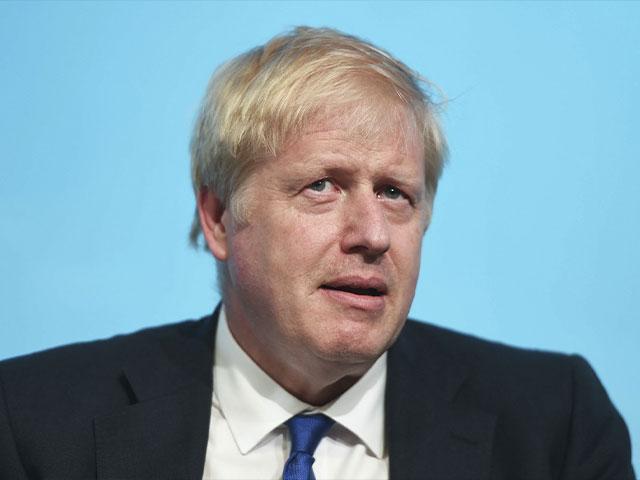
British Prime Minister Boris Johnson Moved to Intensive Care After COVID-19 Symptoms Worsen

LONDON (AP) – British Prime Minister Boris Johnson was moved to the intensive care unit of a London hospital after his coronavirus symptoms worsened Monday, just a day after he was admitted for what were said to be routine tests.

Johnson was admitted to St. Thomas’ Hospital late Sunday, 10 days after he was diagnosed with COVID-19.

“Over the course of this afternoon, the condition of the Prime Minister has worsened and, on the advice of his medical team, he has been moved to the Intensive Care Unit at the hospital,” his office said in a statement.

Downing St. said Johnson was conscious and does not require ventilation at the moment, but was in the intensive care unit in case he needed it later.

It said Johnson has asked Foreign Secretary Dominic Raab to deputize for him.

Hours earlier, Johnson tweeted that he was in good spirits after spending a night in the hospital.

The prime minister’s spokesman said Johnson had spent a comfortable night and remained in charge of government despite being admitted to St Thomas’ Hospital after COVID-19 symptoms of a cough and fever persisted.

Johnson sent out a tweet thanking the National Health Service for taking care of him and others in this difficult time.

“On the advice of my doctor, I went into the hospital for some routine tests as I’m still experiencing coronavirus symptoms,” Johnson said in the tweet. “I’m in good spirits and keeping in touch with my team, as we work together to fight this virus and keep everyone safe.”.

Johnson’s spokesman, James Slack, refused to say what kind of tests Johnson was undergoing. He insisted that “the PM remains in charge of the government.”

“He is receiving updates in hospital and is continuing to receive a (ministerial red) box” of files and briefing papers, Slack said,

The 55-year-old leader had been quarantined in his Downing Street residence since being diagnosed with COVID-19 on March 26 – the first known head of government to fall ill with the virus.

He continued to preside at daily meetings on the outbreak until Sunday and has released several video messages during his 10 days in isolation. Raab chaired the meeting Monday.

Britain has no official post of deputy prime minister, but Raab has been designated to take over should Johnson become incapacitated.

Speaking at the government’s daily coronavirus press briefing, Raab said Johnson was being “regularly updated,” but admitted he had not spoken to him since Saturday.

“He’s in charge, but he’ll continue to take doctors’ advice on what to do next,” Raab said.

Johnson was admitted to the hospital as a message to the nation from Queen Elizabeth II was being broadcast Sunday evening. The 93-year-old monarch urged the public to show resolve and follow advice to stay inside.

Concerns had been growing about Johnson’s welfare ever since he posted a message Friday saying that he was feeling better, though he was still feverish. 

The virus causes mild to moderate symptoms in most people, but for some, especially older adults and the infirm, it can cause pneumonia and lead to death.

The government said Monday that 51,608 people had been confirmed to have the coronavirus in Britain, 5,373 of whom have died.

One of the advantages of being in the hospital is that it will allow doctors to directly monitor Johnson’s condition. 

Derek Hill, a professor of medical imaging science at University College London said that since COVID-19 causes difficulty breathing, one test performed on people with the disease is lung imaging with ultrasound or CT scans to see how badly they might be affected.

“Some people are rapidly discharged,’’ he said. “Some others can quickly deteriorate and need help breathing. We have no reason to believe the PM needs such help.‘’

Hill said there are various types of breathing help, depending on the person and the difficulties.

“The reasons some people get seriously ill with COVID-19 while others have minor symptoms is not yet fully understood,″ Hill said. “But doctors managing these patients report that more men than women have serious problems, and patients who are overweight or have previous health problems are at higher risk.”

Copyright 2020 The Associated Press. All rights reserved. 

FOR CBN NEWS CONTINUING COVERAGE ON COVID-19, CLICK HERE. 

Source CBN

All Content & Images are provided by the acknowledged source
Churches Eligible ‘Without Restrictions’ for Loans under Rescue Package –

Trump Admin.: Churches Eligible ‘Without Restrictions’ for Loans under Rescue Package


Religious leaders are applauding the Trump administration for adopting an interim rule allowing all churches and faith-based organizations impacted by the pandemic to receive loans under the new CARES Act.

Jovita Carranza, head of the Small Business Administration (SBA), on Saturday announced that houses of worship and faith-based organizations are eligible to participate in the new law’s Paycheck Protection Program and the Economic Injury Disaster Loan program. 

Both programs are part of the CARES Act signed by President Trump and designed to help businesses stay afloat and pay their employees during the coronavirus pandemic. The business and organizations must have fewer than 500 employees.

“Following the passage of the emergency economic relief assistance, the Administration and Congress acted to ensure that small businesses and non-profits alike have access to critical funds to keep their workers paid and employed,” Carranza said in a statement. “Faith-based organizations have always provided critical social services for people in need, and SBA will make clear that these organizations may access this emergency capital.”

The $2 trillion law includes $350 billion for small businesses and organizations. An SBA press release said churches and faith-based groups are eligible “without restrictions based on their religious identity or activities.”

An FAQ…

… Read More

Click here to read the rest of the story from our content source/partners – Christian Headlines.

قالب وردپرس