New York Times Writer Argues Conservative Christians Are a Detriment to Coronavirus Pandemic Response

New York Times Writer Argues Conservative Christians Are a Detriment to Coronavirus Pandemic Response


A New York Times opinion piece says that President Donald Trump’s conservative, religious supporters are not helping the coronavirus pandemic.

Katherine Stewart, the author of The Power Worshippers: Inside the Dangerous Rise of Religious Nationalism, writes in her piece that “the denial of science and critical thinking among religious ultraconservatives now haunts the American response to the coronavirus crisis.”

“In his daily briefings from the White House, Mr. Trump actively disdains and contradicts the messages coming from his own experts and touts as yet unproven cures,” she writes.

In a response piece at the Washington Examiner, Timothy P. Carney says Stewart is implying that “evangelical conservatives caused” the coronavirus outbreak.

In an interview with Faithwire.com, Christian leader Johnnie Moore said Stewart’s piece was “old fashion bigotry.”

“The truth is that evangelicals are playing a really important role in addressing this pandemic, not only in the United States but around the world,” Moore told Faithwire.

“We are a part of the solution, not a part of the problem.”

In her piece, Stewart pointed to some pastors in the country who have been “reckless” about the pandemic. In Miami, Guillermo Maldonado told his congregation to show up for worship in person because “Do you believe God would bring his people to…

… Read More

Click here to read the rest of the story from our content source/partners – Christian Headlines.

قالب وردپرس

PODCAST: Whyte House Family Devotional Reading of Charles Spurgeon’s Morning and Evening #74 with Daniel Whyte III

This is Daniel Whyte III, president of Gospel Light Society International with the Whyte House Family Devotional Reading of Charles Spurgeon’s Morning and Evening podcast. This is Episode #74.

Charles Spurgeon was a prominent English Particular Baptist preacher. He was very influential among the Christians of various denominations during his age and even today, and is commonly called the “Prince of Preachers”. After some time of alternately searching for God and running from God, he had a powerful encounter which led him to give his life to Christ. Spurgeon was only 16 when he preached his first sermon and he began publishing books shortly afterward. At the time of his death, he had preached nearly 3,600 sermons and published 49 volumes of commentaries, sayings, anecdotes, illustrations and devotions. Spurgeon said, “encouraging thoughts are like honey to the heart”, and wrote this devotional in hopes that its uplifting messages for each day of the year would bring comfort and refreshment to our walk with God. He was inspired by Isaiah 50:4 which reads, “He wakeneth morning by morning. He wakeneth mine ear to hear as the learned” and Psalm 63:5-6 which says, “My soul shall be satisfied as with marrow and fatness; and my mouth shall praise thee with joyful lips; when I remember Thee upon my bed, and meditate on Thee in the night watches.”

James 5:16 reads: “Confess your faults one to another, and pray one for another, that ye may be healed. The effectual fervent prayer of a righteous man availeth much.”

As an encouragement cheerfully to offer intercessory prayer, remember that such prayer is the sweetest God ever hears, for the prayer of Christ is of this character. In all the incense which our Great High Priest now puts into the golden censer, there is not a single grain for himself. His intercession must be the most acceptable of all supplications—and the more like our prayer is to Christ’s, the sweeter it will be; thus while petitions for ourselves will be accepted, our pleadings for others, having in them more of the fruits of the Spirit, more love, more faith, more brotherly kindness, will be, through the precious merits of Jesus, the sweetest oblation that we can offer to God, the very fat of our sacrifice. Remember, again, that intercessory prayer is exceedingly prevalent. What wonders it has wrought! The Word of God teems with its marvellous deeds. Believer, thou hast a mighty engine in thy hand, use it well, use it constantly, use it with faith, and thou shalt surely be a benefactor to thy brethren. When thou hast the King’s ear, speak to him for the suffering members of his body. When thou art favoured to draw very near to his throne, and the King saith to thee, “Ask, and I will give thee what thou wilt,” let thy petitions be, not for thyself alone, but for the many who need his aid. If thou hast grace at all, and art not an intercessor, that grace must be small as a grain of mustard seed. Thou hast just enough grace to float thy soul clear from the quicksand, but thou hast no deep floods of grace, or else thou wouldst carry in thy joyous bark a weighty cargo of the wants of others, and thou wouldst bring back from thy Lord, for them, rich blessings which but for thee they might not have obtained:—

“Oh, let my hands forget their skill,
My tongue be silent, cold, and still,
This bounding heart forget to beat,
If I forget the mercy-seat!”

PRAY.

Thank you for listening to the Morning and Evening podcast. If you do not know the Lord as your Savior, here is how you can be saved from Hell and walk with the Lord morning and evening until you go to that wonderful place called Heaven when you die:

First, accept the fact that you are a sinner, and that you have broken God’s law. The Bible says in Romans 3:23: “For all have sinned and come short of the glory of God.”

Second, accept the fact that there is a penalty for sin. The Bible states in Romans 6:23: “For the wages of sin is death…”

Third, accept the fact that you are on the road to hell. Jesus Christ said in Matthew 18:8: “Wherefore if thy hand or thy foot offend thee, cut them off, and cast them from thee: it is better for thee to enter into life halt or maimed, rather than having two hands or two feet to be cast into everlasting fire.” Also, the Bible states in Revelation 21:8: “But the fearful, and unbelieving, and the abominable, and murderers, and whoremongers and sorcerers, and idolaters, and all liars, shall have their part in the lake which burneth with fire and brimstone: which is the second death.”

Now that is bad news, but here’s the good news. Jesus Christ said in John 3:16: “For God so loved the world, that he gave his only begotten Son, that whosoever believeth in him should not perish, but have everlasting life.” Just believe in your heart that Jesus Christ died for your sins, was buried, and rose from the dead by the power of God for you so that you can live eternally with Him. Pray and ask Him to come into your heart today, and He will.

Romans 10:9 & 13 says, “That if thou shalt confess with thy mouth the Lord Jesus, and shalt believe in thine heart that God hath raised him from the dead, thou shalt be saved… For whosoever shall call upon the name of the Lord shall be saved.”

If you believe that Jesus Christ died on the Cross for your sins, was buried, and rose from the dead, and you want to trust Him for your Salvation today, please pray with me this simple prayer: Holy Father God, I realize that I am a sinner and that I have done some bad things in my life. I am sorry for my sins, and today I choose to turn from my sins. For Jesus Christ sake, please forgive me of my sins. I believe with all of my heart that Jesus Christ died for me, was buried, and rose again. I trust Jesus Christ as my Savior and I choose to follow Him as Lord from this day forward. Lord Jesus, please come into my heart and save my soul and change my life today. Amen.

If you believed in your heart that Jesus Christ died on the Cross, was buried, and rose again, allow me to say, congratulations on doing the most important thing in life and that is accepting Jesus Christ as your Lord and Saviour! For more information to help you grow in your newfound faith in Christ, go to Gospel Light Society.com and read “What To Do After You Enter Through the Door”. Jesus Christ said in John 10:9, “I am the door: by me if any man enter in, he shall be saved, and shall go in and out, and find pasture.”

If you accepted Jesus Christ as your Savior today, please email me at [email protected] and let us know. There is some free material that we want to send you. If you have a prayer request, please e-mail that to us as well, and we will pray for you until you tell us to stop.

God loves you. We love you. And may God bless you.

All Content & Images are provided by the acknowledged source

Record Low 6 Percent of Americans Adhere to a Biblical Worldview, New Study Shows

Record Low 6 Percent of Americans Adhere to a Biblical Worldview, New Study Shows


A new study shows that only six percent of Americans adhere to a biblical worldview.

The American Worldview Inventory 2020 survey is a premier study of an annual report conducted by veteran researcher George Barna of the newly launched Cultural Research Center at Arizona Christian University (ACU).

“The survey asked 51 worldview questions that examined both what people believe and how they conduct their lives”, The Christian Post reports.

The survey found that approximately one-fifth of congregants in evangelical Protestant churches hold fast to a biblical worldview (21 percent), whereas only one-sixth of those who attend charismatic or Pentecostal churches (16 percent) adhere to a biblical worldview.

Additionally, the numbers throughout mainline Protestant churches (8 percent), and Catholics (1 percent) were even lower.

Defined in part by “their acceptance of scriptural exhortations regarding sin, grace, and salvation,” the survey found that born again Christians were three times more likely (19 percent) to have a biblical worldview than the average.

Nonetheless, the report asserts that this with less than one-fifth of born-again adults holding a biblical worldview, it suggests that there has been an “extensive decline of core Christian principles in America over the last several decades.”

Notional Christians, the largest segment of people who profess Christ but…

… Read More

Click here to read the rest of the story from our content source/partners – Christian Headlines.

قالب وردپرس

Don’t ‘Let This Virus Own You’: Tony Evans Urges People Not to Worry amid COVID-19 Pandemic

Don’t ‘Let This Virus Own You’: Tony Evans Urges People Not to Worry amid COVID-19 Pandemic


Tony Evans, the pastor of a Dallas-based megachurch, warned in a toned-down sermon Sunday—delivered from a chair in his living room—that fear was spreading more quickly than the coronavirus and urged his audience to not let “worry own you.”

Like thousands of other pastors across America, Evans was far removed from his regular routine of preaching before his flock while he honored a coronavirus lockdown. For the foreseeable future, sanctuaries have become empty shells. While the buildings are closed for business, God is not.

“Worry and fear have a way of transferring very quickly from you to other people,” Evans, senior pastor of Oak Cliff Bible Fellowship, said as a fire crackled behind him, The Christian Post reports.

No choir. No vestments. No altar.

“I think that’s what’s happening with this virus,” he said in a YouTube video of his sermon. “The virus is not the only thing that transfers quickly. Our anxiety, worry, and fear is outpacing the problem of the virus because it’s consumed the mind, the heart, the energy and the emotions of our selves, our families, the whole nation and even the world.”

Using Matthew 6:25-34 as his text, Evans offered a straightforward antidote: Don’t worry.

“We have a legitimate right for legitimate concern. What we don’t have the right to do is worry,” he said, adding that worry is “concern gone…

… Read More

Click here to read the rest of the story from our content source/partners – Christian Headlines.

قالب وردپرس

How robots are helping fight the pandemic: Creativity depends on our Creator

If you haven’t seen a man walk a dog using a drone, you’re in luck. As you’ll see, a man on lockdown in Cyprus found an unusual way to get his dog some exercise.

Robots are being used in China to take people’s temperature, though experts believe they could also help with the delivery and handling of contaminated waste as well as reconnaissance with quarantines, delivery of food, measuring vital signs, and assisting border controls. They could also enable a kind of telemedicine that would keep humans away from areas of contagion.

A robot manufacturer in China has seen his orders triple since the coronavirus outbreak began there. His self-driving cart is sold to retailers, hospitals, malls, and apartment complexes.

One of them patrols Shanghai’s Taikoo Hui shopping mall, where it can spot customers with bare faces and remind them to put on a mask. It distributes hand sanitizer and broadcasts anti-virus information. The company plans to produce ninety robots in the next six weeks.

Robot technology is just one way humans are responding creatively to the pandemic. From utilizing artificial intelligence to repurposing companies and factories to make needed equipment to finding innovative ways to produce vaccines and antidotes for the virus, people around the world are finding new ways to respond to this new disease.

Creativity depends on our Creator

Such creativity is just one way we express the character of
our Creator. He made all that is (Genesis 1) and made us in his image (v. 27).
Like a painting that reflects its painter or a girl who looks like her mother,
we create as an expression of…

… Read More

—

Click Read More to read the rest of the story from our content source/partners – Denison Forum.

قالب وردپرس

Wycliffe USA Helps Christians Connect with Each Other in the Age of Social Distancing

We weren’t made for social distancing, but it might be an opportunity to examine our potentially half-hearted interactions with others.

With roughly 20% of the world population in lockdown, Beth Matheson from Wycliffe USA points out social distancing has revealed how hollow our in-person interactions often are. “We all are pretty good at the social niceties of, ‘Hi, how you doing? I’m fine.’ But I think a lot of us now are realizing that you need more than that.”

The new Wycliffe devotional Lessons from Lesser Knowns is intended to be used in a group of people having dinner together. But Matheson says this kind of interaction can be done over the internet as well. People have more ways to connect now than ever before, and Matheson encourages Christians to make their interactions with other people meaningful.

And to do that, our interactions must be grounded in the Gospel. The devotional features six different Bible passages, but not the kind you might see at women’s conferences or in a craft store. “These are forgotten and overlooked passages that talk about how God loves people who are forgotten and overlooked. He wants his people to have the same heart for marginalized people.”

The devotional comes with international recipes for each lesson, and Matheson encourages Christians to visit Wycliffe.org/dinnerparty to learn more.

SOURCE: Mission Network News, Kevin Zeller

All Content & Images are provided by the acknowledged source

Christian Watchdog Group to Challenge UK Govt's Approval of Abortions at Home in Court

Christian Concern, a Christian watchdog organization in the United Kingdom, has announced it will mount a legal challenge to the government’s decision to permit “Do-It-Yourself” abortions. 

The group said the government’s decision came without any public consultation, parliamentary scrutiny, or debate, with the government itself having warned that the move would put thousands of vulnerable women at risk at an already highly vulnerable time.

Government officials reversed an earlier decision Monday, announcing that women can now perform abortions at home without medical supervision during the COVID-19 outbreak.  

The BBC reports the official abortion policy has been changed several times by the government during the pandemic. 

Women and teenagers were first told abortion services would still be available, but that decision was later retracted. Now the UK government will allow women to take two abortion pills at home, instead of risking exposure to the Coronavirus by going to a clinic. 

Christian Concern says Monday’s announcement is the most significant change to UK abortion law since the Abortion Act of 1967. The announcement came despite last week’s statement by government officials that there would be no change to abortion law as a part of its response to the COVID-19 pandemic.

“Abortion has nothing to do with Coronavirus, and abusing public trust to advance a different agenda undermines trust in the government and effectiveness of the response to the epidemic,” said Andrea Williams, CEO of Christian Concern. “There are no proposals, to our knowledge, to use abortion clinics’ capacity or personnel to respond to Coronavirus.”

Williams also warned that the new measures will see Do-It-Yourself abortions performed on women by themselves in their homes without a doctor or medical professional.  

“At a time of national and global crisis, to be pushing through a back-door policy that will put thousands of women at risk is dangerous and chilling. This policy will not help the women involved and will only lead to further vulnerability and trauma,” she continued.

“Something has gone wrong at the heart of our democratic systems when such a policy is introduced without proper public scrutiny, especially when our NHS (National Health Service) is and will be under such strain in the coming weeks and months. We call on the government to urgently repeal these changes,” Williams concluded. 

Other pro-life groups in the UK have also spoken out about the sudden change in the abortion law. 

“It is unconscionable that the Government is contradicting their stance, yet again, to allow women to be taking both stages of the medical abortion at home,” Liz Parsons, director of advocacy for the UK pro-life charity Life, told the Catholic Sentinel website. 

“It is an absolute disgrace that the abortion lobby should take advantage of the terrible situation we find ourselves in, with COVID-19, to instigate the biggest change to the 1967 Abortion Act we’ve seen in years, without any public consultation,” she continued. 

UK abortion law had previously mandated that abortions only be carried out in a hospital, by a specialist provider or at a licensed clinic, with the approval of two doctors.

Source CBN

All Content & Images are provided by the acknowledged source

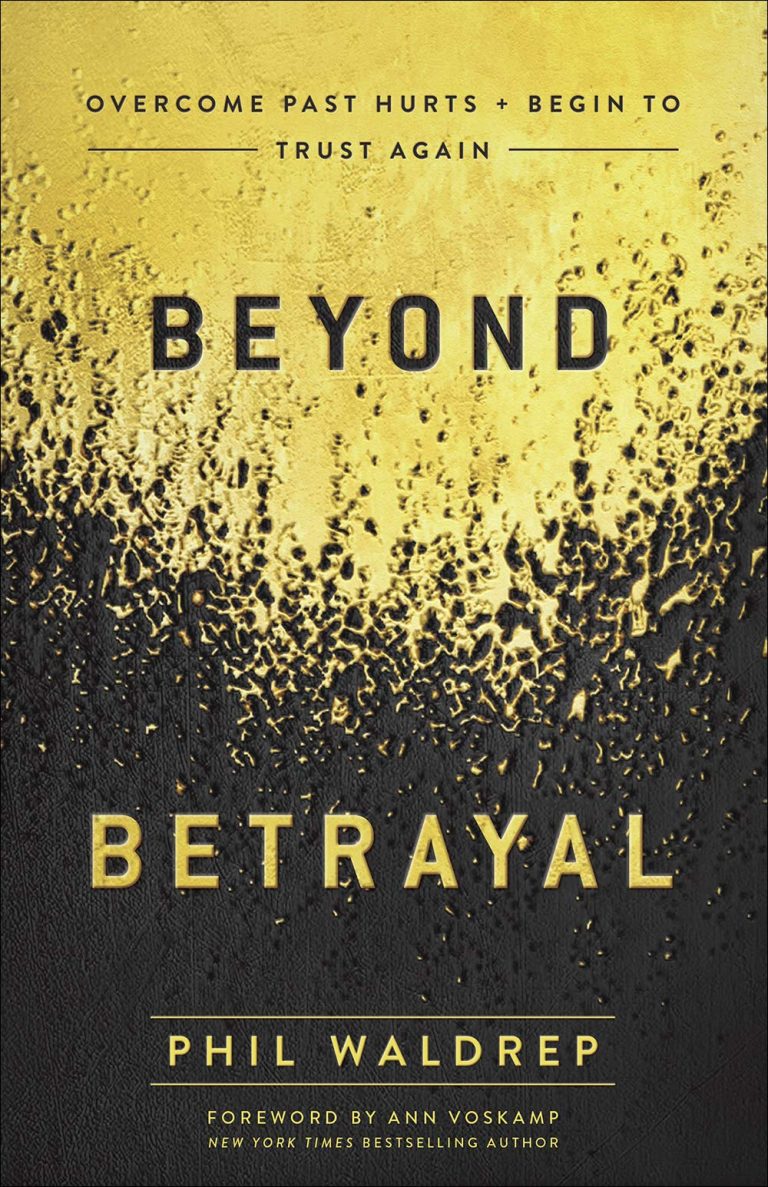
In New Book “Beyond Betrayal”, Pastor Phil Waldrep Offers Biblical Solutions to Overcoming Betrayal and Finding Healing and Freedom in Christ

Acts of betrayal have the power to violate our sense of trust, dismantle our faith in God, and uproot life as we know it. Yet victims of even the worst betrayal can experience healing and discover a life of health and wholeness through Christ. 

That’s according to Phil Waldrep, author and founder of Phil Waldrep Ministries.

“When people go through betrayal, one of the things that happens is their self-worth is shattered,” he said. “They feel hopeless, that this person did not value their relationship, friendship, or marriage, that the betrayer was able to do whatever they did without thinking about how it would have hurt them. They feel like their life is in a million pieces.”

“If you let God pick up the pieces and put them back together, His way and with His Word, healing is possible. It may take some time, but the other side is more beautiful than you could’ve imagined.”

The popular pastor and author speaks from experience. During a sit-down interview with The Christian Post, he shared how two decades ago, law enforcement officers surprised him at his office. Though the ministry was not its target, the investigation brought to light an employee’s unsavory activities, leaving Waldrep with no choice but confrontation.

“This was one of my closest friends, a guy I loved like a brother,” he recalled. “He was the one guy I would have said would be with me through thick and thin. But I found out he was doing a lot of very serious, immoral, unethical, although technically not illegal, behavior. I was shell shocked because he was riding on the back of the ministry to do a lot of that.”

After the initial confrontation, the employee was “broken, repentant, and acknowledged he had a problem,” Waldrep said. “So I decided to extend grace.”

Just a few months later, the man’s wife called Waldrep and informed him her husband had resumed his undesirable activities. Once again, the pastor confronted his friend. But this time, his reaction was different.

“He was defiant and unkind,” Waldrep said. “I was gracious, I think, to let him resign before I had to do anything. But when I look back, it left me emotionally and spiritually in shambles.”

“Oftentimes, in a deep betrayal, the person who got betrayed is the one who is left picking up the pieces. The betrayer, many times, walks away unscathed.”

SOURCE: Christian Post, Leah MarieAnn Klett

All Content & Images are provided by the acknowledged source
Elliott Crozat on Asking Philosophical Questions During a Pandemic

Philosophers inquire. They do not (or at least should not) avoid difficult questions, unless there is good reason to do so. As a philosopher, I find that the COVID-19 pandemic raises important questions of moral philosophy. In what follows, I will examine one. Should our response to the pandemic be guided by consequentialist reasoning? I will suggest a negative answer.

Consequentialism is the position that the only factor which morally justifies an act is its results. In other words, the moral rightness or wrongness of an act is fixed solely by its outcome; the consequence of an act makes the act right or wrong.[i] If the outcome of an act is beneficial, then the act is justified: the end justifies the means. The main versions of consequentialism are utilitarianism and moral egoism. Utilitarianism is the view that, in any moral situation, the right act is the one which will lead (or tend to lead) to the greatest amount of happiness for the greatest number of people.[ii] On moral egoism, one ought to behave in ways which maximize the best outcomes for oneself and let others do the same. Philosophers who deny consequentialism are called non-consequentialists.

Utilitarianism is a popular view of morality. Prima facie, the idea is attractive and easy to understand: satisfy desire for as many people as possible. After all, we intuitively grasp the idea of desire-satisfaction. And who doesn’t want to maximize his own satisfaction, anyway? But there are significant objections to consequentialism in general, and to utilitarianism in particular. As David Oderberg puts it:

I have given a number of fairly abstract reasons why consequentialism is on the face of it unintuitive and unmotivated. But I also think it is straight out false, and not only false but an evil and dangerous theory – a view I am not alone in holding. There are a number of ways in which I could defend the view, but I want to focus on one in particular, …This is the charge that consequentialism allows, indeed requires, certain kinds of action that are obviously wrong and so not to be done. In particular, consequentialism permits and requires actions that are horrendous evils, as evil as anything can be… In general, according to consequentialism, it is at least permitted, often obligatory, for a person to commit what looks to any sane observer like a blatant and serious violation of someone else’s rights, and hence to commit an act of grave injustice, in order to maximize value, or at least to do what he thinks is likely to maximize value. Now, for the non-consequentialist, no intuition his opponent can bring to bear in support of the consequentialist position on this matter is as strong as the intuition that such apparent injustices are indeed injustices, and so to be forbidden on all occasions, no matter what the consequences.

SOURCE: Christian Post, Elliott Crozat

All Content & Images are provided by the acknowledged source

Jeff Myers on Should Christians Engage or Escape Culture?

Once, after a nighttime scuba dive in Mexico, my son and I were ambling back to our hotel from the dock and passed a couples-only resort preparing for a huge dance party. The music was cranked up, inviting people to the celebration.

After we had passed by, my son asked, “Did you hear that song?”

“No, I didn’t,” I replied. “I was still thinking about our dive.”

He replied, “I’m glad you didn’t — because it had the F–word every other word.”

It struck me as funny that my teenage son thought my tender adult ears needed protection from that kind of influence. But his comment — and the conversation that followed — caused me to rethink how I approach culture as a Christian.

Does Ignoring Culture Equal Spiritual Maturity?

That evening in Mexico, I didn’t hear the music because I tend to tune out negative influences. My son, however, didn’t tune it out. As a teenager, he’s hyper-aware of his cultural surroundings. To him, bad stuff doesn’t go away just because you don’t want to think about it.

How did I come to believe that spiritual maturity involves separating myself from things that are vulgar/profane? For me, it was what I have started calling an unquestioned answer. I had never really thought it through. But if I had been paying attention to how the apostle Paul dealt with culture, I might have learned something new about how to bring the gospel to a hurting world.

Paul’s Example in Athens

Once my son shook me out of my stupor about the vulgar song, I began to ask him questions: What do you think about music like that? How does it affect you when people use those words? How do you keep your mind focused on what is good and true when other people use language like that?

It turned into a great discussion about faith and culture. And it made me wonder: What does it look like to use culture as a platform from which to proclaim the gospel?

In Acts 17, we learn that Paul visited the city of Athens and shared about Jesus in the synagogue and in the marketplace (v. 16–17). The marketplace of that day essentially served as a garden of idols. Some of it has been preserved and can be viewed in Greece to this day. The statues Paul would have seen expressed worship of all kinds, from bodily perfection to sexual perversity.

SOURCE: Christian Post, Jeff Myers

All Content & Images are provided by the acknowledged source