Rick Warren Says ‘Jesus Model of Discipleship’ is responsible for Saddleback’s Growth;

Having a large church does not matter unless people are being discipled and growing with a purpose, said Rick Warren during a Hispanic pastor’s conference, LiderVision, in Los Angeles Friday…report by CP

Warren, whose Saddleback Church boasts nearly 25,000 people, says having a mass following only counts if the church pastor has the right purpose and process and if they are the right person to lead.

“I’m not impressed with crowds, because a crowd is not a church. I’m not against crowds but you only turn them into a church if you have a process,” he said.

Warren’s message focused on the importance of implementing a structured process for church members to transition from being nonbelievers to believers, then maturing as Christians in order to develop their ministries.

The same way individuals undergo physical growth, every Christian must undergo various stages of spiritual growth as well, Warren noted. He also gave insight on Saddleback’s “secret,” noting that during their 34 years, the church has become successful because of their overall purpose.

He noted that in the Bible, Jesus tells his disciples to follow Him, beginning with no commitment. However, through time, He begins to give them requirements in which they must adhere by, one of which commands them to take up their cross and die.

“The business of the church is to move people from ‘come and see’ to ‘come and die,’… it’s the secret of Sabddleback church … we call it the Jesus model …,” said Warren.

He added, “Jesus gave the first words of his ministry, ‘Come and see.’ This is the beginning of all ministry and should be the first thing your church says to your community. It allows very little commitment. It’s a wide invitation and when you say it to the lost, you don’t have to say much or offer anything …”

Warren noted that despite his church’s large crowd, Saddleback still learns from its mistakes and follows the five purposes of the church as noted throughout Acts 2, John 17 and Ephesians 4, which are also best explained within the great commandment and great commission.

He said the first purpose of the church is to love God whole-heartedly, which is considered worship whether an individual is alone or in a crowd. The second is about loving thy neighbor, he noted.

While those two purposes are from the great commandment, Warren explained that the other three derive from the great commission which is to go make disciples, baptize them in the body of Christ and teach them everything an individual knows about Jesus.

Aside from building his church with a purpose, Warren notes that he has made it a point to live his life the same way. He also said his deceased son Matthew took on the same approach before committing suicide due to mental illness last year.

“My son had a tender heart but a tortured brain. When he died, I received about 35,000 letters from people and it wasn’t the notes from presidents, kings and queens that meant the most to me, it was the notes from people whom Matthew led to Christ,” said Warren.

Even though last year was “the worst” year of his life, Warren says it was the best year for the church. Despite not attending or preaching at church for four months following his son’s death, Saddleback grew by 4,000 people and baptized over 3,000 new believers, he said.

He also mentioned the topic of his son’s death to note that “When the church is built on the Jesus model of discipleship, it keeps growing even when the leader is in pain and not present.”

Original Post by Christian Post

Apple in China Telecom deal moves data storage to China

BEIJING, Aug 15 — Apple Inc has begun storing personal data for some Chinese users on servers provided by China Telecom, marking the first time that the company has stored user data on mainland Chinese soil.

Apple attributed the move to an effort to improve the speed and reliability of its service.

It also represents a departure from the policies of some technology companies, notably Google Inc, which has long refused to build data centres in China owing to censorship and privacy concerns.

All data stored with China Telecom, as with all data centre providers worldwide, will be encrypted, Apple said in a statement today.

“Apple takes user security and privacy very seriously,” it said. “We have added China Telecom to our list of data centre providers to increase bandwidth and improve performance for our customers in mainland China. All data stored with our providers is encrypted. China Telecom does not have access to the content.”

A spokesman for China Telecom declined to comment.

Technology companies seek to position data centres as close to their customers as possible because smaller physical distances mean faster service speeds. — themalaymailonline /Reuters


The ‘Na You’ Project – By Silas Omoha

The ‘Na You’ Project chronicles Silas’ faith in who he call’s ‘Abraham’s God’; typifying God as the Ultimate Helper.

Listen Here – http://www.reverbnation.com/silasworship

Silas Omoha is an anointed and gifted minister who draws from God, with focus in Christian genre. He accepted the call to repentance and salvation at an early age, and has tuned himself to sanctified worship ever since. For nearly two decades, Silas has immersed himself in choral service and strives to maintain a personal and consistent relationship with the Lord Jesus Christ.

As Worship Leader, Silas exerts passion for purity, a sincere heart, excellence, and character of the vessel (Worshiper) and aspires to see God develop musicians and singers dedicated to God, God’s Kingdom & God’s righteousness.


Silas holds a Master of Arts degree in Global Affairs & Diplomacy from the University of Buckingham, England, and shares a wealth of experience in gospel music. Silas has served as Worship Leader and Worship Director at various branches of the Redeemed Christian Church of God and also volunteers as a member RCCG UK’s National Worship Team, the Ancient Landmark.


silas_omoha_also_worshipping
(Photo: Silas Omoha)

‘Na You’ EP Project is due to be released on the 30th of August 2014

Follow Silas Omoha on;

Facebook – Silas Omoha

Twitter – @silasworship

Reverbnation – http://www.reverbnation.com/silasworship

Christian Media Critic says Robin Williams Considered Christ, But He Was Never Set Free

Oscar-winning actor and groundbreaking comedian Robin Williams had an interest in God and religion but he never experienced a genuine conversion or commitment to Christ, says Dr. Ted Baehr, chairman of the Christian Film and Television Commission and editor-in-chief of Movieguide.com.

Baehr, who interviewed Williams on several occasions, said Williams’ drug problems were actual demons that he “was trapped by” and although the late actor sought help in Christian facilities, he never found the inner peace he desperately searched for.

“I’m not sure he came to Christ, I’m sure he considered Christ … because when you come to Christ, your life changes 180 degrees. I don’t think he had that explicit experience of being set free,” Baehr told The Christian Post.

He added, “A lot of people say they’ve accepted Christ but the bottom line when you do accept Christ is whether if you have been saved and transformed or renewed. We live in an age where everyone is against the authority of God and we think we’re saving ourselves. We’re actually not saving ourselves, we can only be saved through Jesus.”

The film critic also said he fondly remembers his encounters with Williams including a time when they spoke while he was promoting the 1999 “Bicentennial Man” film.

“We talked about how his father grew up in a mainline church and his mother grew up Christian Science so we had some common points to talk about. We discussed the reality of Jesus Christ and the fantasy of Christian Science … the producer would walk in and say, ‘this interview has to end.’ But he was very interested in trying to explore the meaning of life,” said Baehr.

Williams, who was known for his comedic films like “Mrs. Doubtfire,” “Flubber,” “License to Wed” and others, was “highly introverted” despite being “conspicuously charismatic,” said Baehr.

In the past, Williams had been open about his struggles with severe depression, alcohol and cocaine and had entered a rehabilitation center to help him become sober during the last few months.

Despite his fame and success, Williams was truly never happy, explained Baehr “because when you want an abundant life and you don’t get it, we get depressed and that’s the end of the road.”

Baehr noted that Williams, who was found hanging from a belt Monday morning, was a “fascinating intellect” and just like him, he said the entertainment industry is full of people who have a similar background that need prayer “so they do not self-destruct.”

“My reaction to the news of death was extreme sadness because suicide is a horrible way to die and it means that he abandoned life itself, I’m not talking about mortal life, I’m talking about eternal life,” said Baehr.

Williams is survived by his third wife, Susan Schneider, and three children, Zachary Pym, Zelda, and Cody. His family has not released any information regarding his funeral.

Original Report by Christian Post

Rick Warren’s Plans to Host All African Nations at Purpose Driven Church Congress

Pastor Rick Warren of Saddleback Church in Lake Forest, California, and author of The Purpose Driven Life, announced plans earlier this week at a press conference in Kigali, Rwanda, to host an unprecedented gathering of pastors and church leaders from all 54 African nations in conjunction with a national day of Thanksgiving next year…report by CP

The All Africa Purpose Driven Church Congress, which is planned for August 6-10, 2015, will be held during Rwanda Shima Imana, a relatively new celebration in Rwanda, a “Day of Thanksgiving” to celebrate reconciliation and gratitude on the anniversary of the Rwandan genocide.

The conference will be the first of five annual continent-wide conferences to take place by 2020, with the second planned to be held in Latin America in 2016, organizers said.

“I have been to Rwanda many times but this is by far my most important trip,” said Warren. “This week I am bringing over 100 leaders from 30 African nations as well as Russia, China, India and the U.S. I want them to see what is happening in this country and to see the growth, development and progress that has been made in both this nation and its churches as we prepare for the 2015 gathering.”

Warren explained how the idea for The PEACE Plan was birthed in 2003 while he was speaking in South Africa, but two years later following a call from His Excellency Paul Kagame, president of Rwanda, it became a reality as the country became the first Purpose Driven nation.

“I have been working with and watching the churches of Rwanda for nearly 10 years, and I believe now is the time for them to be a model to the world,” Warren said. “It would be just like God to take a small nation like Rwanda on which the world turned its back 20 years ago in its greatest need and use it for God and for good.”

Warren emphasized that as leadership training begins this week in Rwanda and continues in 2015 with the continent-wide gathering, it will emphasize reconciliation, with Rwandan leaders sharing their stories of forgiveness and healing following the 1994 genocide, which took the lives of 1 million Rwandans and left 1 million children orphaned over the course of 100 days.

“I believe the secret to Middle East peace is in Rwanda,” said Warren. “World leaders should be studying Rwanda. This should be the model.”

The 12 pastors who serve on the Rwanda PEACE Plan Board of Directors joined Warren for today’s press conference along with eight of more than 25 leaders that serve as Master Trainers for PEACE.

“These men, whether you realize it or not, are world leaders,” Warren said. “What they are doing with churches in Rwanda is being watched by churches all around the world.”

The PEACE Plan works worldwide to Promote reconciliation, Equip servant leaders, Assist the poor, Care for the sick and Educate the next generation, through a massive effort to mobilize millions of Christians to combat the five global evil giants of spiritual emptiness, self-centered leadership, extreme poverty, pandemic disease and illiteracy/education, according to church officials. Since its founding, Saddleback has sent over 23,000 members to implement The PEACE Plan in all 197 nations of the world.

“Most nations are validated by their strength in exports; Rwanda can become famous for exporting leadership,” Warren said. “Rwanda should be the leadership and innovation capital of the continent of Africa. That is why I am calling leaders from across the continent to come to Rwanda next year to learn. The strength of Rwanda is not in the ground; it’s in the people.”

Through The PEACE Plan in Rwanda, Saddleback Church has worked together with the public, private and faith sectors of the nation – what it calls the three-legged stool of churches, government and businesses – to help lower the poverty rate, empty orphanages, provide healthcare, train pastors and provide education.

“What makes The PEACE Plan unique is that it is done by local churches, in local churches, in the community,” said Warren. “I could take you to 10 million villages around the world where the only thing there is the church. The church is the biggest organization on the planet and has most potential to do good if mobilized.”

Over 3,200 pastors have completed a three-year intensive training in the purpose-driven PEACE Plan. These churches now offer everything from micro-savings clubs to preschools to programs training farmers how to double their crops on the same amount of land.

The media site AllAfrica.com reports that Rwanda Shima Imana is a national Christian Thanksgiving Day and was “inaugurated in 2012, by Peace Plan, a brainchild of Pastor Warren, with a presence in most Christian churches in Rwanda.”

“It is a day when believers come together to thank God for the progress made in the country and the Church so far,” according to AllAfrica.

The 3rd annual Thanksgiving crusade is this Sunday (Aug. 17), at the Amahoro stadium. Warren is a member of the Rwanda Presidential Advisory Council and would like to see Rwanda Shima Imana a public holiday, “just as [Thanksgiving] is in some other countries, including the US, Japan, and the Netherlands,” reports AllAfrica.

“It is my prayer that this day becomes a national holiday just as it is in some parts of the world,” Warren said. “Twenty years after the Genocide, we are now a new Rwanda. We have seen the country develop and have nothing to hold against God, other than celebrating what He has done for our country.”

For more information about Saddleback’s work in Rwanda or The PEACE Plan, visit http://www.saddleback.com or http://www.thepeaceplan.com. For additional information about Rwanda Shima Imana, visit http://www.shimaimana.rw.

Original Post by Christian Post

ISIS Threatens to Kill Pastor Saeed Abedini

Pastor Saeed Abedini is facing new death threats from ISIS terrorists who are in the same Iranian prison where he is being held…report by CBN

According to the American Center for Law and Justice, Abedini, a U.S. citizen, has been able to communicate with his family members and let them know he fears for his life.

“This is an extremely dangerous development that puts Pastor Saeed’s life at grave risk,” ACLJ Chief Counsel Jay Sekulow said.

The ACLJ has been working to bring Abedini home after he was sentenced by Iran to eight years in prison for his Christian faith.

“We call on President Obama and Secretary Kerry to intervene immediately to secure Pastor Saeed’s release and to ensure that he is protected during this transfer to freedom. Pastor Saeed, who is approaching his second year of imprisonment in Iran, must be returned to his family without delay,” Sekulow said.

Pastor Saeed’s two young children, Jacob and Rebekka, have recorded a personal plea asking President Barack Obama to bring their father home. Click here to watch.

Abedini is in Rajai Shahr Prison and said that other prisoners have told him the ISIS prisoners plan to kill him.

For now, he is in a separate section of the ward than the ISIS inmates. The Christian pastor said he has to rely on the protection of other prisoners and hide in his cell during daily exercise time when the prisoners mingle.

September 26 will mark two years since the Abedini was imprisoned.

According to the ACLJ, nearly 290,000 people worldwide have signed the BeHeard Project petition in an effort to get him released.

Let your voice be heard, sign the petition.

Original Post by CBN News

US Navy Rids Hotels of Gideon Bibles

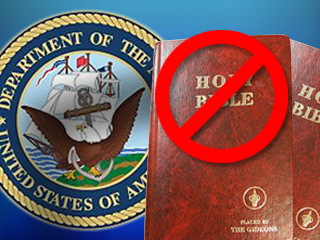
The U.S. Navy is removing the Gideon Bibles from every hotel room on its military bases…report by CBN

The American Family Association said the move came after a letter from the atheist Freedom from Religion Foundation.

The AFA cites a letter from a hotel housekeeper who said, “They told us to put them in boxes, where they would be taken to a donation center somewhere.”

The Bible removal was reportedly part of a new policy from Rear Adm. Robert J. Bianchi, the CEO of NEXCOM, the Navy Exchange Service Command. The policy affects 34 Navy lodge locations and 24,000 Navy gateway guest rooms on Navy bases worldwide.

Ron Crews, director of the Chaplain Alliance for Religious Liberty, is calling on the Navy to reverse its “censorship.”

“A Bible in a hotel room is no more illegal than a chaplain in the military,” Crews stated. “It’s tiresome to see senior military leaders needlessly cave in to activist groups offended by anything Christian.”

AFA President Tim Wildmon said this incident highlights another religious freedom issue, noting the Navy is discouraging Christianity while defending Islam.

“The Navy is pushing for the mass removal of Bibles in hotel rooms across the country, yet U.S. soldiers are being encouraged to respect Muslims,” he said.

Earlier this summer, soldiers were told to respect the rights of Muslims during Ramadan through a directive at the Uniformed Services University of the Health Sciences, a Department of Defense medical and graduate school in Bethesda, Maryland.

“Where is the priority here in a country founded on religious freedom? Take Bibles out of hotel rooms but support an Islamic observance. This is a truest definition of a double standard,” Wildmon said.

Original Post by CBN News

Mosul Dam in the hands of ISIS terrorists – a great source of concern

When the Islamic State, also known as ISIS, swallowed large swaths of territory in Iraq, they also captured what might be the biggest “weapon” of all: Iraq’s largest dam…report by CBN

The nightmare scenario for the world has been a terror group getting its hands on a weapon of mass destruction.

Now, just a two-hour drive from Erbil in northern Iraq, ISIS has done just that. When it captured the Mosul Dam, experts knew the group had a new weapon in its terror arsenal.

Kurdish civil engineer Adwa Jaji said terrorist control of the dam is a frightening prospect.

He explained that the huge structure, which in the best of times has been called “the most dangerous dam in the world,” now represents a ticking time bomb in the hands of ISIS.

“I think now it’s too dangerous,” Jaji told CBN News. “Even if not blasted by ISIS, the dam will destroy itself because there is nobody to rehabilitate it.”

Jaji said the poorly designed dam is built on unstable soil that needs periodic infusions of grout to stabilize it.

“One, it is not resisting earthquake and vibration forces. The dam is not built to resist these two types of forces,” Jaji explained.

And if ISIS fails to maintain the dam, it could burst. Jaji said if the dam — located above Mosul — bursts, it would send a 60-foot-high wall of water toward Mosul, which could reach all the way to Baghdad.

“According to the information we have, maybe 500,000 [to] 600,000 people [could be] killed in one day,” he said.

Jaji said an international effort should be made to recapture and secure the dam. Even if ISIS does not destroy it, the group could hold the country hostage with the threat of an ecological disaster.

In the meantime, the United States continues its humanitarian air drops to the stranded Yazidis and its airstrikes against ISIS positions, as more information surfaces about the group.

Peshmerga commanders on the front lines told CBN News that ISIS often begins its attacks when suicide bombers drive into their positions. The commanders said when ISIS takes over a town, their fighters often come in like a lamb but soon become a wolf.

“First of all, they don’t do anything. They say ‘calm down until things get better’ and then when they have full control of an area…they start killing people,” one commander said.

ISIS terrorists threatened one Iraqi man who works at a power plant, saying “if you personally are not giving back the electricity, we will destroy your family.”

The terrorists’ barbarism is also being passed down to the next generation, as evidenced by the photo of an Australian boy holding the severed head of a Syrian soldier that’s gone viral. The boy’s father, an ISIS fighter, added the caption, “That’s my boy!”

“It’s just so hard to hear all these stories and imagine a human being doing this. It’s so hard,” Dr. Sarah Ahmed, with the Foundation for Relief and Reconciliation in the Middle East, told CBN News. “It’s the work of the devil.

Original Post by CBN News

Kurds Plead for Better Weaponry

Despite some recent setbacks, the Kurdish military, known as the Peshmerga, is still the best fighting force facing the terror group Islamic State, also known as ISIS…Report by CBN

After ISIS defeated the Peshmerga in a couple of battles, some wondered if the Kurdish military was up to the challenge.

There was a two-hour battle between ISIS and the Peshmerga Monday night. The jihadist army came with a large convoy and heavy artillery, but this time the Peshmerga prevailed.

Signs of the battle litter the town. A destroyed vehicle lobbed shells at the Peshmerga. Across the road, ISIS left behind a dead fighter.

The victory at Makhmur encouraged the Peshmerga, but they still face an enemy with a robust arsenal, much of it captured Iraqi equipment supplied by the U.S.

“Unfortunately, we have been outgunned by their access to resources because they are a rich terrorist organization,” one Peshmerga commander told CBN News. “We need heavy weaponry, armor, ammunition because they have access to massive amount of resources like bullet proof vehicles, heavy weaponry, [and] armor, which we unfortunately lack.”

Peshmerga commanders say because ISIS has heavy weapons, they can keep their distance. The Kurdish military says if they had the same kind of weapons it would be a different war.

One thing is clear. U.S. airstrikes have made a difference on the battlefield and in the diplomatic arena.

“Of course it’s good for us when a super power like the United States intervenes,” he continued. “The balance of power goes in our favor. But also it’s very important for us that it’s the first time recently that the U.S. has intervened and said ‘I’m going to protect my ally.'”

Peshmerga commanders told CBN News they need more help.

“The weapons that we have, ISIS has the same stuff, but even better ones. We need heavy weaponry, artillery and Humvees. These are all very important to us,” one commander said.

One senior Kurdish official said if the Peshmerga had been better armed, much of the current crisis and potential genocide might have been avoided. Commanders in the field say if they have the weapons, they’re more than up to the task.

“The Peshmerga are fighting for the sake of their land, their people and their rights, so they are encouraged. And they are ready to confront the enemy wherever they are,” he said.

Original Post by CBN

Fighters abandon Al-Qaeda affiliates to join Islamic State

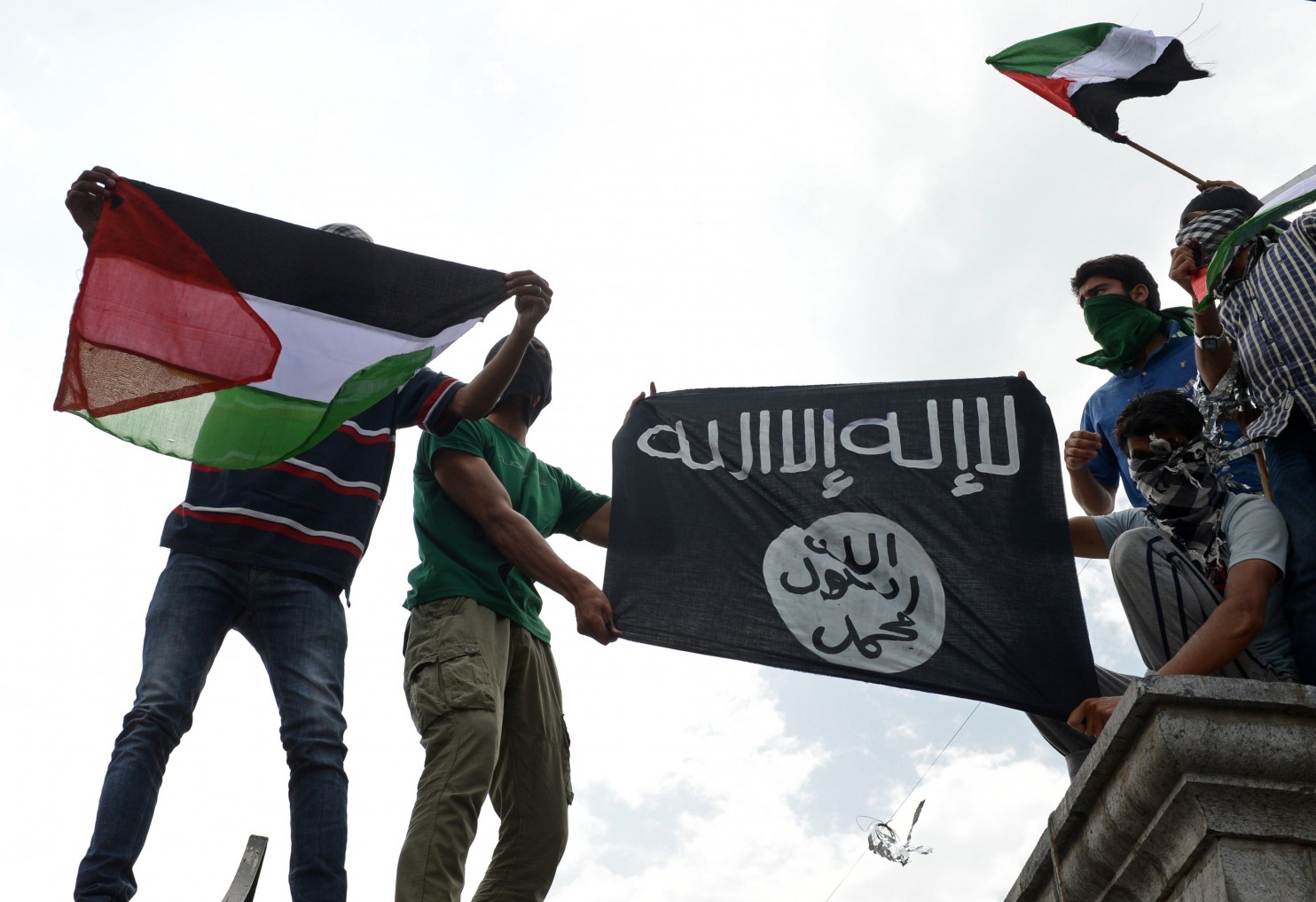
U.S. spy agencies have begun to see groups of fighters abandoning al-Qaeda affiliates in Yemen and Africa to join the rival Islamist organization that has seized territory in Iraq and Syria and been targeted in American airstrikes, U.S. officials said…report by Washington Post

The movements are seen by U.S. ­counterterrorism analysts as a worrisome indication of the expanding appeal of a group known as the Islamic State that has overwhelmed military forces in the region and may now see itself in direct conflict with the United States.

“Small groups from a number of al-Qaeda affiliates have defected to ISIS,” as the group is also known, said a U.S. official with access to classified intelligence assessments. “And this problem will probably become more acute as ISIS continues to rack up victories.”

The influx has strengthened an organization already regarded as a menacing force in the Middle East, one that has toppled a series of Iraqi cities by launching assaults so quickly and in so many directions that security forces caught in the group’s path have so far been unable to respond with anything but retreat.

U.S. officials attribute the Islamic State’s rapid emergence to factors both psychological and tactical. Its core group of fighters honed their skills against the armies of Syrian President Bashar al-Assad and the United States when it occupied Iraq. The group has used raids and ransoms to stockpile weapons and cash. And its merciless reputation triggered rampant defections among Sunni members of Iraq’s security forces already disenchanted with the Shiite-led government in Baghdad.

Even before its assault on Kurdish territories in northern Iraq this month, analysts said the Islamic State had shown an almost impulsive character in its pursuit of territory and recruits, with little patience for the elaborate and often time-consuming terror plots favored by al-Qaeda.

Counterterrorism analysts at the CIA and other agencies have so far seen no indication that an entire al-Qaeda node or any of its senior leaders are prepared to switch sides. But officials said they have begun watching for signs of such a development.

The launching of U.S. airstrikes has raised new questions, including whether the bombings will hurt the Islamic State’s ability to draw recruits or elevate its status among jihadists. “Does that increase the spigot or close it?” said a senior U.S. counterterrorism official, who, like others, spoke on the condition of anonymity and noted that U.S. military operations in Afghanistan and elsewhere have crippled al-Qaeda but also served as rallying cries against the United States.

Longer-term, U.S. officials expressed concern that the Islamic State, which so far has been focused predominantly on its goal of reestablishing an Islamic caliphate, may now place greater emphasis on carrying out attacks against the United States and its allies.

President Obama was careful to depict the strikes as part of a humanitarian mission to protect endangered Iraqis, including members of a Christian sect, encircled with scant supplies on a northern Iraq mountaintop. Obama also referred to the presence of U.S. personnel in the region and stopped short of authorizing a broader assault against the Islamic State.

Still, the strikes triggered widespread calls for retaliation among militant groups online. A prominent figure on a well-known jihadist forum, Shumukh al-Islam, wrote Friday that the airstrikes should prompt fighters to unite against the United States.

“The mujahideen must strike and seek to execute proactive operations in their own home, America, to discipline America and its criminal soldiers,” the jihadist, Abu al-Ayna al-Khorasani, wrote, according to the SITE Intelligence Group, which monitors militant postings.

U.S. officials said the defections to the Islamic State have come primarily from al-Qaeda in the Arabian Peninsula, the Yemen-based group that has launched several bombing plots targeting the United States, and al-Qaeda in the Islamic Maghreb, which had seized territory in northern Mali before facing strikes carried out by France last year.

“It’s not to the point where it’s causing splintering within the affiliates,” said the senior U.S. counterterrorism official. But the defections have accelerated in recent months, officials said, and also involve fighters from groups in Libya and elsewhere that are not formally part of al-Qaeda.

U.S. officials estimate that the Islamic State has as many as 10,000 fighters, including 3,000 to 5,000 from countries beyond its base in Iraq and Syria. Its ranks have swelled with the emergence of the civil war in Syria — a country relatively easy to reach from both in the Middle East and Europe — as a larger magnet for jihadists than Afghanistan or Iraq were. The group has also attracted critical support from disenfranchised Sunni residents in Mosul and other Iraqi cities, civilians who have lost patience with the government of Iraqi President Nouri al-Maliki but may not embrace the hard-line agenda of the Islamic State.

The group has not been linked to any known plot against the United States, but Director of National Intelligence James R. Clapper Jr. testified in January that the group “does have aspirations for attacks on the homeland.”

U.S. officials have said about 100 Americans have either traveled to Syria or tried to. Among them was a former Florida resident, Moner Mohammad Abusalha, who returned undetected to the United States for several months this year before departing again for Syria and detonating a suicide bomb. Abusalha was not tied to the Islamic State, but officials believe that as many as a dozen Americans have linked up with the group.

The Islamic State traces its origin to al-Qaeda in Iraq but broke from the terrorist network this year after being criticized for its tactics — including the slaughter of civilians — and refusing instructions to cede the fight in Syria to a separate al-Qaeda ally known as al-Nusra.

Since then, the Islamic State has amassed arms, cash, fighters and territory at a breathtaking rate. In July, the group’s leader, Abu Bakr al-Baghdadi, took the pulpit at the largest mosque in Mosul, declaring himself the “caliph” of the Muslim world and urging followers to flock to his organization.

In doing so, Baghdadi fulfilled an ambition articulated by his predecessor, Abu Musab al-Zarqawi, who was killed by U.S. forces in Iraq in 2006. It also marked a significant departure from the al-Qaeda playbook.

Al-Qaeda’s commander in Yemen, Nasir al Wuhayshi, has written letters to subordinates cautioning against prematurely declaring Islamic rule even in small villages — in part out of fear that failing to hold territory or enforce Islamic law would lead the group to lose face with the local population.

Baghdadi’s lack of restraint appears to have expanded his appeal, according to U.S. officials who said the group’s expanding territory, aggressive reputation and roster of experienced fighters account for its momentum.

“They are demonstrating just how advantageous it is to a ­terrorist-insurgent group to be fighting in the field for years and years as they have been in Iraq and Syria,” said Daniel Benjamin, a professor at Dartmouth University who previously served as the top counterterrorism official at the State Department.

“Their skill at maneuver is really kind of extraordinary compared to groups you would compare them to,” including al-Qaeda’s affiliates in Yemen and Mali, Benjamin said. “They are not constrained by that fear of failure other al-Qaeda groups have shown,” he added, or the group’s tendency to “spend years preparing single attacks.”

Original Post by Washington Post