Trump: ‘You Can’t Turn Your Cheek’ When Attacked as President or You’ll Lose

Trump: ‘You Can’t Turn Your Cheek’ When Attacked as President or You’ll Lose


President Trump suggested Thursday that if he turned the other cheek in the political world, he wouldn’t be in office.

Trump participated in a Fox News town hall and addressed several issues, including the coronavirus, the economy and foreign policy. But two questions from the audience related to the political divide and his inclination to hit back on Twitter and in the media when attacked sparked insightful responses.

“Insult politics,” a man in the audience told Trump, “have become a staple of this political environment.”

“Could there be a way that we can deliver your message without the controversial rhetoric and [with] efforts to reunite this country during these divisive times?” the man asked. 

Trump answered by saying the “country is far more united than people think” and that economic success is the “way we unite” people from opposing viewpoints.

But hitting back, he said, is a necessary part of his strategy.

“When they hit us, we have to hit back,” Trump said. “I feel that. I mean there’s two ways of doing it – turning your cheek, but I wouldn’t be sitting up here if I turned my cheek. 

“If I said, ‘OK, just let them keep hitting at me, and I won’t do it [hit back],” then Fox News is “not interviewing me right now, they’re interviewing somebody else. … You can’t turn your cheek.”

“We get hit so hard,” he added, “and we have a…

… Read More

Click here to read the rest of the story from our content source/partners – Christian Headlines.

قالب وردپرس

Cheryl Bridges Johns on PMS is Not a Sin of the Flesh

Cheryl Bridges Johns holds the Robert E. Fisher Chair of Spiritual Renewal at Pentecostal Theological Seminary. Her book, “Seven Transforming Gifts of Menopause: An Unexpected Spiritual Journey” (Brazos Press), will be released on March 17. The views expressed in this commentary are solely those of the author(s) and do not necessarily represent those of BCNN1.

The ancient Greeks believed the female body was particularly tainted and inferior. Women were seen as less rational than men and driven by instincts, and as such, they were closer to animals than to men. A woman’s uterus (Gk.: Hysterika) was a troublesome creature that roamed throughout her body, driving her mad with urges to have sex. Quipped Hippocrates, “What is woman? Disease.” We can thank him for the term “hysteria,” which later became a catchall phrase for “women’s disease.”

The ancient church father Tertullian, in his treatise “On the Apparel of Women,” broke into a tirade against women: “And do you not know that you are (each) an Eve? You are the devil’s gateway. … You destroyed so easily God’s image: Man.”

It was Tertullian I was thinking of as I read Rachel Jones’ recent article, “PMS: The Monthly Fight with the Flesh,” on The Gospel Coalition website. Jones, who suffers with premenstrual syndrome, commonly referred to as PMS, believes her struggle offers a window into the spiritual reality of the war of the flesh against the Spirit. Jones invokes the Apostle Paul’s words from his letter to the Galatians, “For the desires of the flesh are against the Spirit, and the desires of the Spirit are against the flesh, for these are opposed to each other, to keep you from doing the things you want to do.”

Online reaction to Jones’ argument was swift. Many women expressed feeling shamed by the post, which seemed to equate PMS symptoms, which she called “a fight with the flesh,” with sin.

Many of the theologians in the ancient church, including Paul, were influenced by Hellenistic (Greek) philosophy, which promoted the idea that spirit was superior to the body. In the course of time, Paul’s usage of the flesh became synonymous with the body. In order to fight the flesh, Christians have denigrated the body and waged all war against it.

Jones is not ignorant of how Paul uses the phrase “the flesh.” His purpose, she wrote, is to refer to “the whole person as under the impulses of sin.” But in advising Christian women about how to deal with PMS, Jones jumps to the role of the body as the battleground on which the war against sin is fought and stays there.

A better reading of Paul’s use of the word “flesh” would be to include the dimensions of the mind, the affections and the will. To fight this fight is to have the mind of Christ, to love as God loves, and to live in obedience to God’s will.

But even if Jones were to restrict herself to emotions, she too readily identifies negative emotions as sinful. They are not. This is the real danger of Jones’ argument. In a conservative Christian world where pleasantness and niceness define a Christian woman, negative emotions are already too often considered shameful. Jones not only supports this view, she perpetuates images of women as ruled by their hormones, which in turn serves the ideology that women are designed by God to submit to the leadership of men.

Source: Religion News Service

All Content & Images are provided by the acknowledged source

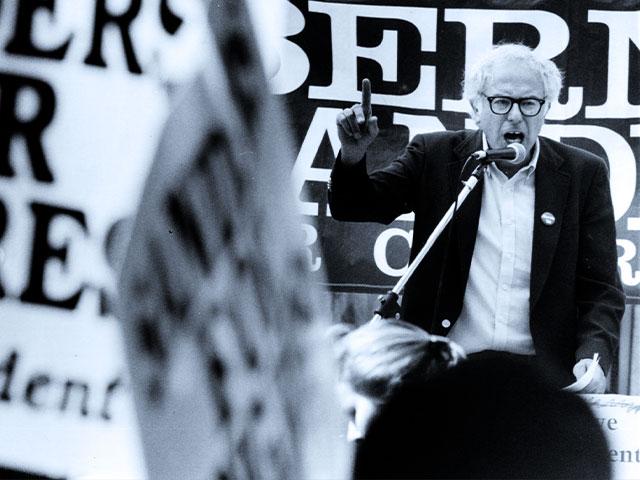
Report: As Bernie Sanders Pushed for Closer Ties and Toured Communist Russia, Soviet Union Found 'Propaganda Opportunities'

Back when he was the mayor of Burlington, Vt., Bernie Sanders wrote to a Russian official in the late 1980s about creating a sister city relationship. Communist officials in the Soviet Union couldn’t have been happier, viewing it as a chance to exploit that relationship and others like it for propaganda purposes. 

The New York Times reports it examined letters, telegrams, and internal Soviet government documents that revealed in greater detail the extent of Sanders’ effort to establish ties between his city and a country many Americans then still considered a dangerous enemy.

Sanders’ desire for friendship fell in line with a goal of Kremlin officials to “reveal American imperialism as the main source of the danger of war.”

The documents also show how the Soviets wanted to use the sister-city exchanges as a way to sway American public opinion about their country. 

“One of the most useful channels, in practice, for actively carrying out information-propaganda efforts has proved to be sister-city contact,” a Soviet Foreign Ministry document said.

All the documents are part of a government archive in Yaroslavl, Russia, which later became the sister city of Burlington. The files are open to the public, though archivists there said that, until now, no one had asked to see them, according to The Times. 

The newspaper reported there is nothing in the documents to suggest that Sanders was the only American official targeted to be used in propaganda, but he is described in the papers as a socialist. 

In 1987, when Sanders announced that Burlington was seeking a Soviet sister city, several dozen other American cities already had a similar relationship or had applied for one. By 1989, there were 36 recorded affiliations, according to Sister Cities International. 

“Mayor Sanders was proud to join dozens of American cities in seeking to end the Cold War through a Sister Cities program that was encouraged by President Reagan himself,” a Sanders campaign spokesman, Mike Casca, said in a statement to The Times. 

“The exchange between Burlington and Yaroslavl, which continues to this day, confirmed Sanders’ long-held view: by meeting face to face, we can break down the barriers and stereotypes that exist between people and their governments,” he continued. 

The Times article published on Friday goes into detail about Sanders’ trip to the Soviet Union in 1988, which according to the paper, has been told before. The bottom line is that, in 1988, Sanders chose to spend his honeymoon in communist Moscow. Historian Lee Edwards wrote for the Heritage Foundation that Sanders visited Lenin’s tomb among other sites.

Source CBN

All Content & Images are provided by the acknowledged source

Rotting wood is threatening expensive homes in Boston: The cost and benefit of personal character

Boston is one of my favorite cities. From its history to its
academic institutions to its culture, it is always a fascinating place to
visit. But if I’m going to revisit some of its most expensive real estate, I’d
better hurry.

It turns out, depleted groundwater levels are causing the rot of wooden piles that support historic buildings across the city. In particular, homes in the Back Bay, the South End, and Beacon Hill are threatened. You’ve likely seen pictures of these nineteenth- and twentieth-century row houses. They are among six thousand buildings in the city supported by such pilings, constituting 40 to 50 percent of the city’s residential tax base.

Here’s their history: When European settlers first arrived in this area, much of modern-day Boston was underwater. As the city expanded, it filled parts of Massachusetts Bay with soil, sand, and gravel. To build on such an unstable surface, builders drove tree trunks into the fill until they hit firmer ground, then placed foundation stones on top of these woodpiles.

This technique was used until the 1920s. Such wooden piles
can remain intact for hundreds of years if covered by groundwater, as they were
when they were first installed. However, as the city has grown, construction of
tunnels, sewers, basements, and subways has caused the groundwater level to
drop in many areas.

This exposes the tops of the pilings, then air causes them
to rot. The foundation stones then sink, as do the structures they support.

This story, however, is not just about architecture—it’s
also about human nature.

Repairing the wood pilings can be enormously expensive.
Buildings with pilings damage also sell for a significant discount. If owners
learn that their homes are at risk, they are obligated to say so if asked by
potential buyers. Testing the pilings can be intrusive and expensive as well.

An experienced building inspector can often locate signs of
rotted pilings, but many…

… Read More

—

Click Read More to read the rest of the story from our content source/partners – Denison Forum.

قالب وردپرس

‘We Say a Prayer Every Game,’ Georgia State Basketball Coach Shares

‘We Say a Prayer Every Game,’ Georgia State Basketball Coach Shares


A postgame press conference where the Georgia State men’s basketball coach talked about God and gratitude is drawing thousands of views.

According to FaithWire, Rob Lanier, the Georgia State men’s basketball coach, told reporters after their March 3 game against Little Rock that the team has had a “long year.”

“We’ve been resilient and tough and had some fight,” he said in the postgame interview, which has drawn more than 334,000 views. “We just need to get back to that aspect of our personality. Maybe we need to put a little more value in one another and be connected.”

Lanier added that more importantly, the team places a priority on being thankful.

“We say a prayer every game before and after,” he said. “We take a moment of silence for those less fortunate than ourselves because we get the opportunity to do what we love and we shouldn’t take it for granted. This whole experience is very fleeting.

“When you get an opportunity as a young person to go through this journey together, (we) try to make the most of it,” he said.

He said he wants his team to play without regrets.

“I don’t want these guys to regret this experience,” he said. “If we go down swinging, and we go down, then we shake hands and we go back to work and try to get better, but when you quit, you’re going to have regret. I think it’s more about that.

“We got to get better, appreciate…

… Read More

Click here to read the rest of the story from our content source/partners – Christian Headlines.

قالب وردپرس

Vatican City Reports Its First Case of Coronavirus, Days After Pope Tested Negative

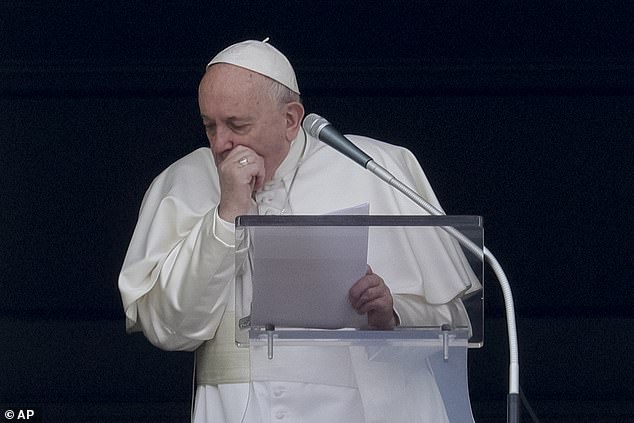
The Vatican has reported its first case of coronavirus today – days after Pope Francis tested negative for the virus.

The discovery brings the epidemic to the city-state surrounded by Italy, which has confirmed more than 3,800 cases and 148 deaths due to the virus.

Vatican spokesman Matteo Bruni said the new case was diagnosed on Thursday and that services in Vatican clinics had been suspended in order to deep clean the areas.

Bruni gave no details on whether the person who tested positive was a Vatican employee living in Italy or was among the few clergy and guards who live inside its walls.

Pope Francis himself tested negative for the virus after suffering from a cold last week. Today his official Twitter account said he wishes to ‘express my closeness to those who are ill with the coronavirus’.

The Vatican has also put another official into protective quarantine and shut the doors of its Apostolic Library to guard against the spread of the virus.

Most Vatican employees who use its health services live in Italy, on the other side of the border with the 108-acre city state.

The Vatican said it is working with Italian authorities to keep the coronavirus from spreading, with a suspension of Pope Francis’ weekly audiences likely.

It remains unclear how the Vatican will alter Francis’ schedule and other events leading up to Easter Sunday on April 12.

Francis would normally preside over the Way of the Cross procession at the Colosseum on Good Friday, celebrate an Easter Vigil in St. Peter’s Basilica and deliver a traditional Urbi et Orbi message in St Peter’s Square on Easter Sunday.

Source: Daily Mail

All Content & Images are provided by the acknowledged source

Southwest CEO Says Coronavirus-Driven Fear of Flying Has a ‘9/11-Like Feel’

The fear of flying caused by the coronavirus outbreak is reminiscent of 9/11, Southwest Airlines CEO Gary Kelly told CNBC on Thursday.

“9/11 wasn’t an economically driven issue for travel. It was more fear, quite frankly, and I think that that’s really what’s manifested this time,” Kelly said on “The Exchange.”

He said the lack of travel demand as the coronavirus spreads across the U.S. is also similar to past economic recessions.

Kelly noted the travel restrictions put in place by many companies and said it’s tough to determine how much of the lost bookings were going to be business or personal flights.

“So I think there are elements of both, but it has a 9/11-like feel. Hopefully we’ll get this behind us very quickly,” he said.

Southwest began to experience “very sharp declines” in bookings last week, in the range of “several hundred million dollars we think,” he said. “We’re guessing. It’s still early March.”

“It was a very noticeable, precipitous decline. It’s continued on a daily basis,” Kelly said.

All Content & Images are provided by the acknowledged source

‘The Banker’ Stars Hope Film Motivates Church Leaders to Discuss Financial Literacy & Inequality

MEMPHIS, Tenn. — The forthcoming film “The Banker” should motivate the church to address the issues of financial literacy, caring for the “least of these,” and perseverance in the face of adversity, according to stars Samuel L. Jackson, Anthony Mackie, and Nia Long.

Based on historic events that took place in the 1950s and ’60s, “The Banker” tells the true story of Bernard Garrett (Mackie) and Joe Morris (Jackson), a pair of African American entrepreneurs who made themselves part of the real estate game in Los Angeles, California, and Texas.

Due to racial inequality, the two men decide to hire a white man, a home-repair worker named Matt Steiner (Hoult), to act as the head of their company while they posed as a janitor and a chauffeur and ran the business.

Thanks to their savvy and financial ingenuity, Garrett and Morris made it possible for black citizens to move into formerly all-white neighborhoods before the Fair Housing Act of 1968 made discrimination unlawful. Their success ultimately drew the attention of the federal government, which threatened everything they had built.

Directed by George Nolfi, “The Banker” brings to life a fascinating true story of financial gamesmanship and racial discrimination in a segregated America. The film premiered at a special event at the National Civil Rights Museum on Monday that was attended by The Christian Post.

Mackie (the “Avengers” series), told CP he hopes the film motivates church leaders to address the issue of financial literacy from the pulpit.

“Financial literacy is something that we need to talk about in the church weekly,” he stressed. “I feel like when we go to church, we look for guidance and leadership. So we need the spiritual understanding of our day to day lives, but also our financial security so that we can take care of our families.”

The actor added that Scripture often addresses the importance of stewarding one’s money wisely, adding: “Tithing is there to build and grow the church and spread the Lord’s work. So in order for me to be a vehicle of the Lord, I need to have a home and a strong family system so that I can go out and live by His Word. That’s why it’s so important to talk about financial literacy.”

Jackson, who grew up in segregated America, told CP that while the country has come a long way, there’s still a “serious wealth gap” that makes it difficult for many African American and low-income families to achieve the “American dream.”

All Content & Images are provided by the acknowledged source

Pastor William McDowell Urges Worship Leaders to Depend on God for Their Power

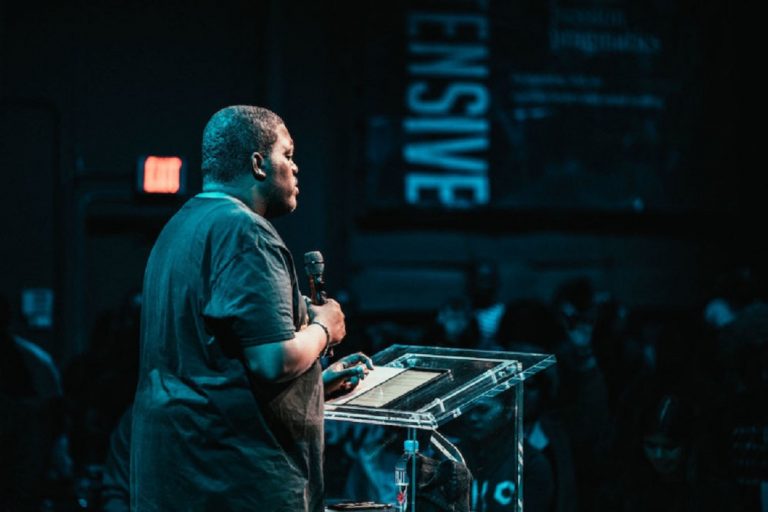
ORLANDO, Fla. — World renowned worship leader turned pastor, William McDowell, hosted his second annual Deeper Worship Intensive last week where he encouraged leaders to refrain from getting sucked into the “epidemic” of imitating others and should instead “stay hidden” in God in order to be moved by divine power.

“I have been sharing a weight and a burden for this gathering for months. DWI is one of the things that I know I was born for. So because of that, I carry the weight of this assignment,” McDowell told the hundreds gathered from several nations at the conference.

The Billboard-topping singer told the pastors and worship leaders gathered that he believes Christians are “either growing or dying, there’s no in-between.” He said many people in leadership are emulating what other leaders are doing and they are not receiving from God on their own.

“What I see is that we have a lot of people imitating things that they see. I want to say imitation is not necessarily, inherently bad. It was Paul that wrote in 1st Corinthians twice, 1st Corinthians chapter four and in 1st Corinthians chapter 11, he said, ‘Imitate me, as I imitate Christ.’ There was a sentiment that there is an OK nature to imitation when it’s done right,” McDowell stressed.

He added, “The problem is that there is a lifestyle that accompanies this call and the expectation of Heaven and the world as a result of this call. I’m going to endeavor to talk to us about Heaven’s expectation because I want you to know that there is a divine expectation for the gift you’ve been given.”

“There is something that we are required to do as a result of this gift that we’ve been given. So many of us do our best to imitate what we see. But I want to share something with you, the issue with imitation without a relationship with God is that it can lead to trouble and confusion. The greater problem with that, is that you won’t discover what’s in you or what’s not in you until you are actually in the moment where you need it,” McDowell maintained.

“Here lies the problem with imitation, because if you’re imitating something that’s not actually in you and you find yourself in a circumstance where you need it, you’re going to have trouble,” he continued.

The Ohio native, who has five critically acclaimed albums, including his latest Billboard-topping album, The Cry, then quoted a story told by the Apostle Paul in the book of Acts chapter 19 in the Bible.

In this account, Paul shared how he was used mightily by God which even allowed him to transfer healing and deliverance to others by sending handkerchiefs as a point of contact. Then the story introduces seven others, named the sons of Sceva, who were just imitating followers of God and were overpowered by a demon because they had no authority in God for themselves.

“The issue with imitation without Christ’s proximity or relationship is you can actually enter into a circumstance, or a situation, or a moment, or a service, or a time in which there is a requirement for what’s supposed to be in you. But it’s not actually in you because you’ve been imitating without relationship,” McDowell warned.

The 43-year-old minister said social media has heightened people’s ability to copy others only for the sake of showing one’s mountain top experience.

“We are the generation that loves to watch YouTube videos, and loves to watch live streams, and loves to buy videos and listen to music. We get up there and we close our eyes, but instead of worshiping, we’re actually trying to imitate or pretend like we’re the person we watched. … Completely not present to the moment, all trying to recreate that moment that’s not even here. [That’s] imitation,” McDowell maintained.

He looked out in the crowd and said, “Many of us are attempting to do this without genuine relationship and I want you to know, that the issue with that, is that you won’t know that it’s not in you until you need it,” he exhorted.

“Scripture says to us that the genuineness of faith is proven in trial. The genuineness of faith is not proven on the mountaintop. The genuineness of faith is proven in trials, which is to say to us that we won’t actually know until we’re in it.”

McDowell said “one of the major pitfalls of the social media age” is that it can potentially remove one of the most important and vital aspects of God’s process, which, he said, is “preparation” developed by “hiddenness.”

“Hiddenness is a critical part of purification,” he continued. “I understand that we’re in a time now that we want everybody to see that we can do something, but our character is developed in the crucible of hiddenness.”

Since McDowell launched his church five years ago, he testified that hundreds of people have had documented healing.

Source: Christian Post

All Content & Images are provided by the acknowledged source

The Way Back Has a Message about ‘Second Chances’ for Moviegoers, Director Says

The Way Back Has a Message about ‘Second Chances’ for Moviegoers, Director Says


The director of the new sports drama The Way Back says he views basketball as a metaphor for life – or as he calls it, “life in shorts.”

Each has trials. Each has triumphs. And each has moments when you want to give up. 

“Destiny, faith, emotion, adversity – there are all things that happen in basketball and also happen in life,” director Gavin O’Connor told Christian Headlines. 

The Way Back (R) tells the story of Jack Cunningham (Ben Affleck), a man who is battling alcoholism when he is given a second chance in life by coaching his alma mater, the local Catholic high school where he formerly was a star player. 

Cunningham’s alcoholism was sparked by the death of his young son – a tragedy that led him into a spiral of anger and depression.

The story has a lesson about life for moviegoers, O’Connor said.

“When you’re faced with tragedy, or even just adversity, how do you deal with it? And that’s what defines you,” O’Connor told Christian Headlines. “In a way, it’s a movie about second chances. I’m a believer in third chances, fourth chances. As long as you’re trying I’m just not a believer in shutting the door on people. It’s very much about that. It’s about a guy who was finally willing to face his demons. Adversity had kicked his butt – and trying to overcome them on the road to recovery. This is analogous to a lot of people’s lives. It doesn’t…

… Read More

Click here to read the rest of the story from our content source/partners – Christian Headlines.

قالب وردپرس