
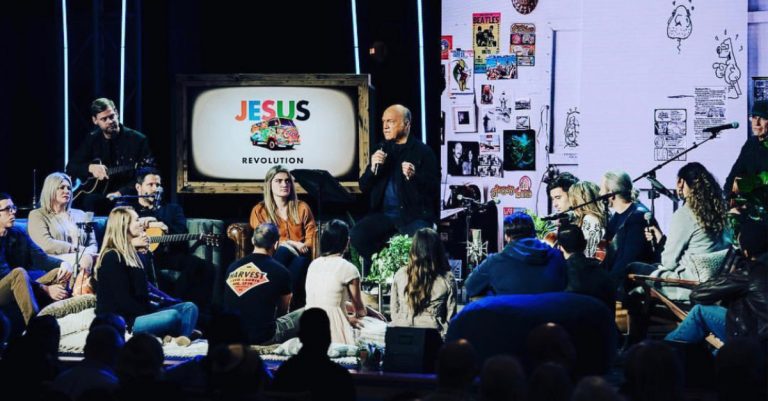
Greg Laurie on Why Being a Pastor Is Still the Greatest Privilege in the World

Being a pastor is hard.

Many churchgoers may not realize this because they tend to see us at our best. After all, our job is to encourage others, love them and give them hope. But our jobs are not always easy.

Recently, a reporter emailed me to ask for my thoughts on the intense stresses that clergy in America face. I told him, “People may think pastors simply preach sermons, do an occasional wedding and have a relatively easy life. That is simply not true. In reality, we often find ourselves dealing with some of the hardest situations imaginable: like trying to help save a marriage that’s on life support, attempting to give hope to a young person who is addicted to drugs or offering comfort to a family that just lost a child. Perhaps the hardest part is people find it easy to critique us each step of the way as well.”

Then I added, “Pastors are people, just like everyone else. We are broken people who live in a broken world. Sometimes, we need help too.”

These last few sentences were later quoted in an article that has gotten a lot of attention.

I know I am not alone in feeling this way.

The reporter also interviewed another pastor who said, quite frankly, “Had  I known the ugly side of ministry – the hospital visits, burying the dead, being in the room when someone is dying and trying to comfort their family … Had I known all that, I don’t think I would have accepted being a pastor.”

I understand how this pastor feels because I have been in his shoes many times and have struggled with the same feelings. Yet my experiences have driven me to draw a different conclusion: I have found that the hardest times in ministry — the points when I have felt like giving up — have confirmed my calling as a pastor. It’s in these moments I have experienced the most profound expressions of God’s love and grace.

I have been a pastor for almost 50 years, and I consider it a great honor.

Yes, I have been with parents when they heard the news that their loved one died.

Yes, I have presided at the funerals of, sadly, many children.

Yes, I have spoken to people on their deathbeds.

But I don’t consider that the “ugly” side of ministry — it is actually a great privilege. Because I, too, have been on the other end and needed a pastor’s comfort.

When my son Christopher died in an automobile accident in 2008, I was not the pastor called in for support, I was the person in need of a pastor.

My pastor was Chuck Smith of Calvary Chapel of Costa Mesa. He helped me when I was at my lowest. I still remember his words to me as I struggled with the question, “Why did my son die?”

He said, “Never trade what you do know for what you don’t know.”

Source: Christian Headlines

All Content & Images are provided by the acknowledged source

Christians Opt In to Healthcare Sharing to ‘Bear One Another’s Burdens’

One of the main principles of Christianity that we hear the minister preach about all the time in church is the idea of helping your fellow brothers and sisters in their time of need. We know that, even as Christians, we’re going to experience hard times but those hard times can be made so much more manageable with the assistance of our fellow Christians. It’s this special relationship that we share with those in our church and our religion that make the power of Christianity so great.

For so many of us, some of the most challenging times in our lives have to do with health issues, either of our own or those close to us. Often, it is not only the physical condition itself that poses so much concern for us, but also the financial strain that accompanies it. When we, or someone close to us, are facing health concerns, we have enough to worry about without the added burden of expensive medical bills. Wouldn’t it be nice if you had someone on your side who not only cared about what you were going through but also was able to help you financially?

That is where healthcare sharing ministries fill a unique role in the healthcare payment system. These organizations are based on the Biblical principle of “bearing one another’s burdens” and have been easing the burden of medical expenses for decades. In fact, membership in these organizations have grown most rapidly since the passage of the Affordable Care Act, with over one million Americans currently being a healthcare sharing member. That’s over one million Americans who have a group of fellow Christians who are there for each other not only emotionally but also financially when someone in the group has an unexpected medical incident.

One of the largest and most well-known healthcare sharing ministries, with over 200,000 of those million-plus members, is Liberty HealthShareSM. Throughout their rapid growth over the past decade, Liberty HealthShare has continued to keep their organization rooted in the Christian principles upon which it was founded. These Christian principles are evident not only in the organization’s shared belief statement and sharing guidelines but also in how financially accessible they make membership in the organization.

First, it’s important to know that participation in healthcare sharing ministries is precipitated by agreeing to a shared belief statement based on Christian principles. The Liberty HealthShare statement of shared beliefs states that members “believe every individual has a fundamental religious right to worship the God of the Bible in his or her own way.” This is not the case with many health-care sharing ministries, some of which accept only specific denominations of Christianity and even require members to have a pastor or minister sign off on weekly church attendance. It’s an approach that embodies Liberty’s mission to make the Christian tradition of healthcare sharing available and affordable to all.

Source: Christian Headlines

All Content & Images are provided by the acknowledged source
Charles C. Camosy & Sherif K. Moussa on Lent’s Countercultural Call is as Old as the Church—and More Necessary Than Ever

Charlie Camosy, is professor of theological and social ethics at Fordham University. Sherif K. Moussa is a litigator in private practice in New York City whose practice focuses on civil rights, special education law and disability law. The views expressed in this commentary are solely those of the author(s) and do not necessarily represent those of BCNN1.

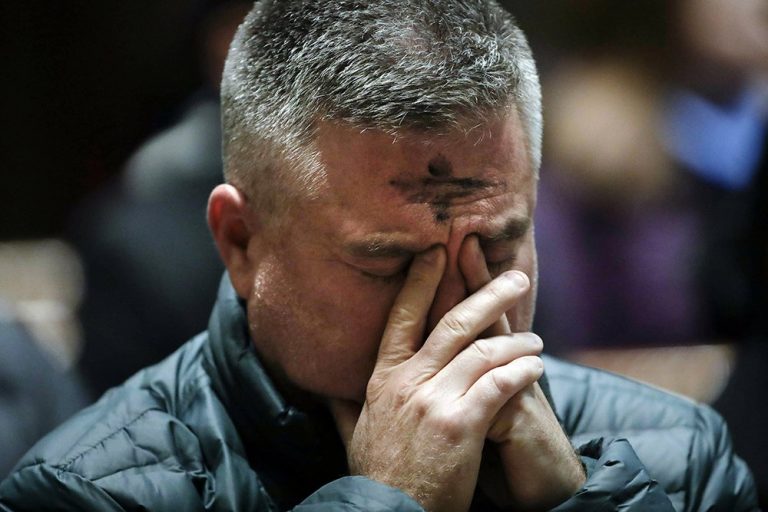
Lent is almost upon us, and for many Christians, it cannot come soon enough. Our hamster-wheel daily experience of deference and service to our consumerist use-and-throwaway culture has Americans longing for the shift to the countercultural lifestyle that Lent brings with it.

As my co-author for this column and I were discussing our need for Lent’s respite from the relentlessness of contemporary existence, we stumbled on a poignant and prophetic message from before either of us was born. In 1974, Pope St. Paul VI offered a message for Lent in which he called on fellow Christians to make an intentional and hard “break” from “too exclusive attachment to our worldly goods.”

Paul in turn invoked the words of St. Basil the Great, the bishop of Capadoccia, in modern-day Turkey, who died in 379. If we keep our abundant resources to ourselves, Basil insisted, we are actually keeping them unjustly from those who do not have enough.

Pope Paul cited Basil’s very hard sayings to reinforce that we sin in both “mind and heart” as long as we “refuse millions of our brothers and sisters the things that their human development demands.”

Indeed, Paul VI appeared to anticipate our current era of inequality, a phenomenon that was just then getting underway. He charged us to “reflect at a time when hatred and conflict are caused by the injustice of those who hoard when others have nothing, by those who put their own tomorrow before their neighbor’s today, and by those who through ignorance or selfishness refuse to give up what they do not need for the sake of those who lack the bare necessities of life.”

For centuries, then, the church has taken Lent as not only a restorative time out, but a chance to reassess how we, in our “normal” lives, contribute to the inequities of our culture.

Source: Religion News Service

All Content & Images are provided by the acknowledged source
SBTS Professor: ‘Allusive Patterns’ Fundamental to Understanding of Biblical Theology

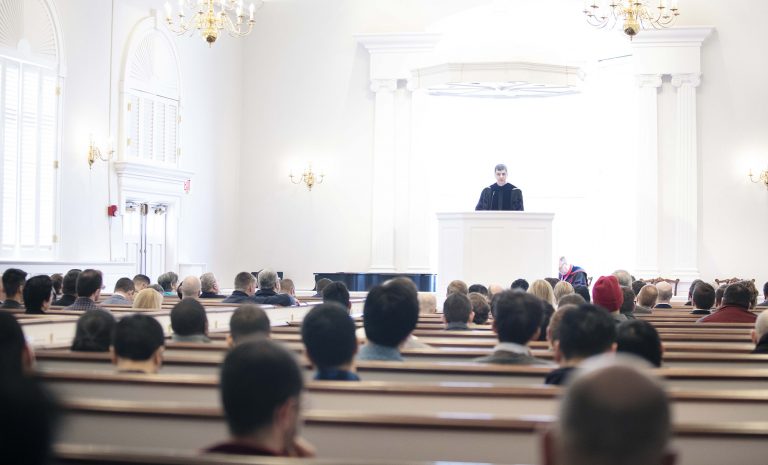
LOUISVILLE, Ky. (BP) — Biblical authors often allude to previous moments in the biblical storyline to help readers better understand theological themes, argued professor Duane A. Garrett during a faculty lecture at the Southern Baptist Theological Seminary Feb. 19. The lecture, titled “Elijah at Sinai,” was delivered in the historic Broadus Chapel.

Garrett, the John R. Sampey Professor of Old Testament Interpretation and Professor of Biblical Theology, argued that these “allusive patterns” consist of references to previous passages of Scripture that help make clear what the biblical author wants the reader to learn.

Garrett took as his theme 1 Kings 19, in which the prophet Elijah fled to Mount Sinai to escape from the wrath of Jezebel, leading to Elijah’s complaint against the faithlessness of Israel. Though Elijah had just witnessed fire come down from heaven and consume the burnt offering, reaffirming the Lord as the true God, Elijah was despondent over the Israelites’ faithlessness when he reached Sinai, and he sought to prosecute them before God. The author of 1 Kings includes details that remind the reader of Moses’ intercession for Israel while he was on Mount Sinai in Exodus 19, Garrett argued.

“Moses is the paradigm,” Garrett said. “His intercession demonstrates that, for all his frustration and disappointment, the true prophet of God must plead for Yahweh’s people and not against them. Elijah, in this regard, failed to live up to the paradigm.”

“The essential message of the Moses-Elijah parallel in 1 Kings 19 is unambiguous. The prophet of God should intercede for sinners and not seek their destruction.”

Later biblical authors connect the theme of the ideal prophet from Moses at Sinai in Exodus 19 and later Elijah at Sinai in 1 Kings 19 to their own writings, Garrett argued. This is most clear in the book of Jonah. Like Elijah, Jonah failed to live up to the standard of an ideal prophet established in the example of Moses in Exodus 19.

“Jonah’s yearning to see Nineveh destroyed has an obvious parallel in Elijah’s prosecution of Israel. Therefore by means of the allusions to Moses and Elijah, the book of Jonah extends the reader’s understanding of the compassion of Yahweh and the role of the prophet. Jonah rejected Moses’ model of intercessor and embraced Elijah’s model of prosecutor.”

Though Elijah and Jonah serve as negative examples, these passages help illuminate passages in the New Testament. The theme of the true prophet is taken up by the Gospel writers, who link the narratives of Moses, Elijah, and Jonah, and demonstrate how Jesus is the fulfillment of the ideal prophet envisioned throughout the Old Testament.

Source: Baptist Press

All Content & Images are provided by the acknowledged source

Four Major Changes in Preaching the Past Decade

Podcast Episode #618

SUBSCRIBE:
iTunes • RSS • Stitcher • TuneIn Radio • Google Play • iHeart Radio • Spotify

You may feel like an expert on the topic of preaching, but we often don’t evaluate the changes taking place in the world of preaching. We will focus on four major changes to preaching within the past decade and the reason behind these changes.

Highlights:

  1. More churches have multiple preachers/teachers.
  2. More churches expect preachers to preach in different venues or sites.
  3. Fewer churches expect preachers to preach two or more different sermons each week.
  4. More preachers are largely done preparing their sermons by Wednesday or Thursday.

Resources mentioned in today’s podcast:


Episode Sponsors

Vanderbloemen has been serving churches for nine years, but did you know that Vanderbloemen also serves Christian schools, nonprofits, and Christian businesses? So if you’re listening, and you know a Christian school, nonprofit, or values-based business that is hiring, contact our friends at Vanderbloemen for your staffing needs.

For more information, visit Vanderbloemen.com.


The mission at Southeastern Baptist Theological Seminary is to glorify the Lord Jesus Christ by equipping students to serve the church and fulfill the Great Commission. The school offers more than 40 different degree programs, including the new Master of Arts in Church Revitalization in partnership with Church Answers and the Revitalization Network. This 37-hour degree is designed to help students move…

… Read More

—

Click here to read the rest of the story from our content source/partners – Thom Rainer.

قالب وردپرس

Ohio Church Pays Off School Lunch Debt for Children in 10 Districts

When pastors at a church in Ohio presented a challenge to pay off children’s lunch debt in two school districts, they weren’t sure what would happen. They were shocked when the congregation gave enough money to eliminate lunch debt in 10 districts.

“Because of your generosity and because of the abundance and grace of our God, not only did we hit that goal but exceeded it and to date over $40,000 have come in!” Salem Church of God Lead Pastor Steve Southards said on Sunday.

The Clayton, Ohio, church had initially reached out to two neighboring school districts — Northmont and Brookville, which had a combined student lunch debt of over $14,000.

Though unsure about the congregation’s ability to give that much, Southards and the church’s Next Steps pastor, Bob Hawker, decided to announce the project during last Sunday’s service. Within four days, members gave $40,000, enough to pay off outstanding lunch debt in 10 school districts.

The church can now eliminate lunch debt also in the districts of Vandalia-Butler, New Lebanon, Milton-Union, Tri-County North, Franklin-Monroe, Troy, Eaton and Kettering.

“One school food service manager was pretty emotional. He said they’ve [had the debt] for so long,” Hawker said. “There was immense gratitude. Our schools spend so much of their time giving and giving, so for them to get to receive is a big deal.”

“As a church, we want to go looking for trouble, and we want to right a wrong,” Lead Pastor Steve Southards was quoted as saying. “We want to show the love of Jesus in really tangible ways that meets the needs of people.”

SOURCE: Christian Post, Anugrah Kumar

All Content & Images are provided by the acknowledged source
Shane Idleman on What I Saw at the US-Mexico Border

The views expressed in this commentary do not necessarily reflect those of BCNN1. Opinions expressed are solely those of the author(s).

Why has the issue of illegal immigration dominated the conversation in our nation over the years? I believe there are, at least, three reasons the border issue is at the forefront of politics:

The main question for me was: How does our government address a legitimate issue, show compassion, and administer justice while guarding the American public. So, to find the answers, I recently had the privilege of touring our Mexican border with other California pastors, including Jack Hibbs and Tony Perkins.

What I found was both remarkable and disheartening. Remarkable in that I was able to see firsthand the care and compassion demonstrated by our Border Patrol and Customs officers — the task is enormous. And disheartening because these truths are not being adequately told to the American people and, instead, are being twisted for political gain. If we don’t control the true narrative, a false narrative will be controlled by others. This is why I spend a great deal of time writing articles.

Five Things You Need to Know

Here are five things that really caught my attention based on my day at the busiest border crossing in America and the fifth largest in the world — San Ysidro.

1. The media is clearly twisting the facts. Remember the large caravan that tried to come into America? The border facility that I visited is not set up to receive 7,500 people at once. Some of the negative captions you saw of people sitting under bridges was actually to provide shade while Customs assessed the situation. And the “kids in cages” photo was actually taken in 2014. I hope you caught that —2014, before our current president was in office.

One of the biggest shocks came when I was able to talk to the officer who had firsthand knowledge of the woman who was supposedly told to drink from the toilet. The officer on the scene actually said the opposite: “We don’t want them drinking out of toilets.” I’m very disappointed in the lawmakers who twisted this. The standard of living that Customs provides is noteworthy. Immigrants receive four meals a day, and kids are never left alone. Doctors who can provide medication are also on staff. Special meals are even served to people who have dietary restrictions. Granted, there are some disheartening conditions that I wish I had answers for, as in the case of the Matamoros refugee camp on the Texas-Mexico border. But the big lesson for me was that we must acquire our information from reputable sources.

2. Building a wall is not mean-spirited.  I’ve never heard a good argument as to why there shouldn’t be a wall marking boundaries and securing them. Most of us go home to secure borders every night. We lock our doors, shut our gates, and build walls along our property lines. Is that mean-spirited? Of course not. Even hospitals, courthouses, and countless other locations have borders consisting of boundaries, perimeters, and dividing lines. (Wayne Grudem wrote an exceptional article about what the Bible says about border walls.)

Be clear on this point: The push toward open borders is more about votes than about truly helping people. We need not look any further than Venezuela to see the destruction of open borders; it was the final nail in the coffin. When you combine socialism (something all Democratic presidential hopefuls openly support) with open borders like Venezuela, it’s not sustainable. Venezuela was thriving just a little over 20 years ago. Now it finds itself crumbling from within and dealing with deplorable conditions, largely because of open borders with Colombia. They did not steward their sovereignty correctly. We cannot make the same mistake.

SOURCE: Christian Post, Shane Idleman

All Content & Images are provided by the acknowledged source

SBC Pastors’ Conference President David Uth Goes on 40-Day Prayer Fast Amid Disagreement Over Speaker Lineup

David Uth, president of the Southern Baptist Convention Pastors’ Conference 2020, has embarked on a 40-day season of prayer and fasting amid dissension over his decision to include speakers and guests who are not Southern Baptist in the upcoming program, including female teaching pastor and spoken word artist Hosanna Wong.

Uth’s reaction comes in the wake of a decision by the SBC’s executive committee stipulating that the SBCPC makes changes to the program by Feb. 24 in response to the dissent. These changes would also have to be made before it is granted space at the Orange County Convention Center in Orlando, Florida, where the SBC’s annual meeting will be held June 7-8.

In a statement published last Thursday, Uth, who leads First Baptist Church of Orlando, explained that when he learned about the decision made by the SBC’s executive committee, he reached out to the leaders and they agreed that he would have until March 30 to deliver his response instead.

“In separate phone calls I informed J.D. Greear, president of the SBC, Ronnie Floyd, Executive Committee CEO, and Mike Stone, Executive Committee chairman, that I will not have an answer to their inquiry by the deadline of February 24. I am not comfortable deciding something of this magnitude so quickly. Instead, I’m asking our church family to pray with me through this decision,” Uth said in his statement.

“I am asking our people here at First Baptist Orlando, who know me, love me and walk with me, to join me and our pastors on a 40-day season of prayer and fasting. Together we are asking God to guide us through the decisions regarding the SBCPC 2020 so that we will respond in a way that will bring Him the greatest joy and the greatest glory.”

Some SBC pastors have reportedly threatened to boycott the conference over Wong’s inclusion in the lineup. Wong is a network associate teaching pastor at the Chula Vista campus of the multisite EastLake Church in San Diego, California. Southern Baptists do not endorse female pastors.

Southern Baptists have also raised concern over David Hughes, pastor of Church by the Glades, a Southern Baptist congregation in Coral Springs, Florida; Jim Cymbala, pastor of the evangelical nondenominational Brooklyn Tabernacle in Brooklyn, New York; and Wayne Cordeiro, founding pastor of New Hope Christian Fellowship, based in Honolulu, Hawaii.

SOURCE: Christian Post, Leonardo Blair

All Content & Images are provided by the acknowledged source
China Reports 508 More Virus Cases, South Korea Has 60 More

BEIJING (AP) — China reported 508 new cases Tuesday in an outbreak of a viral illness that has spread to the Middle East and Europe.

Another 71 deaths were reported, 68 of them in the city of Wuhan, where the epidemic has been concentrated.

The updates bring mainland China’s totals to 77,658 cases and 2,663 deaths.

South Korea reported 60 more cases of the new virus, bringing its total to 893. Cases there now outnumber Japan, where many cases were detected among passengers and crew on a cruise ship.

South Korea has reported a nearly 15-fold increase in viral infections in a week, as health workers continue to find batches of cases in the southeastern city of Daegu and nearby areas, where panic has brought towns into an eerie standstill.

Of the 60 new cases reported by South Korea’s Centers for Disease Control and Prevention, 49 came from Daegu and the surrounding areas of North Gyeongsang province.

The country also reported its eighth fatality from the virus, a man in his 60s who was linked to a hospital in Cheongdo, where a slew of infections has been reported among patients who had been hospitalized at a mental ward.

Clusters have also emerged in Iran and Italy.

Schools were closed in Iran for a second day. Movie theaters and other venues were shuttered through at least Friday, and daily sanitizing of public buses and the Tehran metro, which is used by some 3 million people, was begun.

In Italy, where 229 people have tested positive for the virus and seven have died, police manned checkpoints around a dozen quarantined northern towns as worries grew across the continent.

After large increases in COVID-19 cases in other countries, the World Health Organization said the virus had the potential to cause a pandemic but wasn’t one yet.

“The past few weeks has demonstrated just how quickly a new virus can spread around the world and cause widespread fear and disruption,” WHO’s Director-General Tedros Adhanom Ghebreyesus said.

But “for the moment we’re not witnessing the uncontained global spread of this virus,” he said.

Copyright 2020 The Associated Press. All rights reserved. 

Source CBN

All Content & Images are provided by the acknowledged source
Episcopal Diocese of Washington to Provide ‘Ashes to Go’ at Coffee Shops, Metro Stations, and Schools on Ash Wednesday

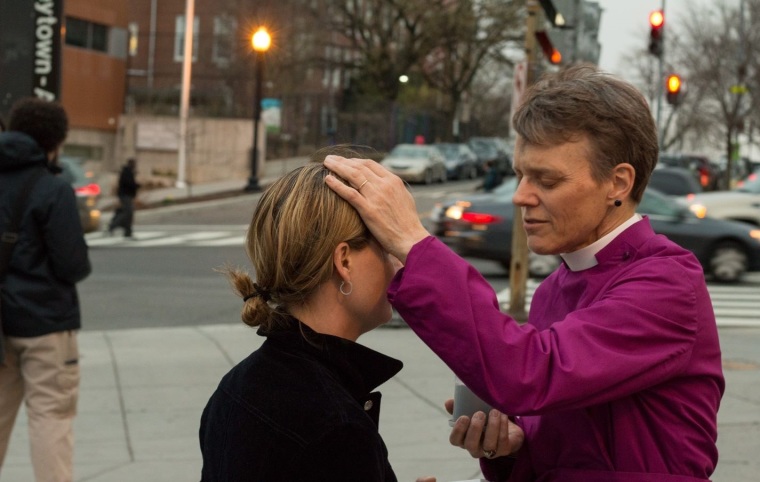
As Christians get ready to observe Ash Wednesday by attending worship services that involve the imposition of ashes on their forehead in the shape of a cross, one Episcopal diocese will be taking the ritual outside its church walls.

In an observance known as “Ashes to Go,” The Episcopal Diocese of Washington will have churches helping to provide the ash crosses at various points in the Washington, D.C., area on Wednesday.

Locations where one can receive the Ash Wednesday cross will include metro stations and assorted church properties, listed here.

J. Keely Thrall, spokesperson for the Washington Diocese, told The Christian Post that Ashes to Go was “designed to bring a moment of grace to where the people are living their lives out in the community.”

“We live in an increasingly busy world where folks are stressed and overscheduled, and the idea of adding one more thing feels like the proverbial straw breaking the camel’s back,” explained Thrall.

“From coffee shops to Metro stations to school parking lots, church leaders in the Episcopal Diocese of Washington offer ashes, prayer, and an intentional spiritual connection to all who wish to partake in this modern expression of an ancient practice.”

Thrall explained that Ashes to Go will be available for those who cannot find a time to attend an Ash Wednesday service in the middle of a busy week.

SOURCE: Christian Post, Michael Gryboski

All Content & Images are provided by the acknowledged source