Harry Plantinga on the Future of Congregational Singing

Harry Plantinga is professor of computer science at Calvin University, where he also serves as director of Hymnary.org (where a version of this article first appeared) and the Christian Classics Ethereal Library. Hymnary.org is supported by the Lilly Endowment, Inc. The views expressed in this commentary do not necessarily represent those of BCNN1.

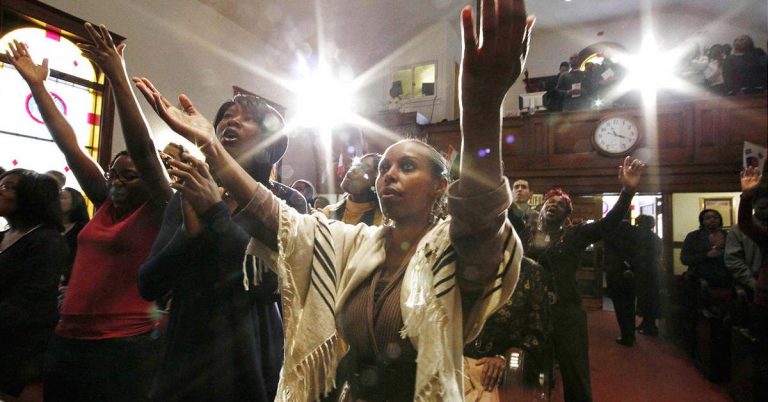
What is the future of congregational singing, especially in North America over the next 10 years? How is it changing? How can and should technology play a role? These questions are of first importance to me as director of Hymnary.org. In some circles, retuned hymns are growing. In others, singing the psalms is making a comeback. Some churches offer a high-tech multimedia presentation while a few are eliminating technology entirely. At times, the congregation is being largely removed from singing, with worship teams presenting a concert-like experience.

In singing together, a congregation “prays in unison” (Augustine). We express our belief and our hope to each other in an attractive, affective form. We build the communion of the saints. Singing together is a fundamental part of corporate worship, so changes are vitally important and potentially problematic. But not every aspect of the way we sing is essential. We should hold onto the essence: singing as corporate prayer.

One thing seems apparent: The future of congregational song 10 years from now is unlikely to be a boom in newly published hymnals. Hymnary.org indexes nearly 6,000 hymnals that have been published in the United States and Canada. It’s not a complete index, but it’s a decent proxy for the actual number of hymnals published. And the number of hymnals indexed is 17 in the 1780s, growing to a peak of nearly 600 in the 1910s. From there it has been declining steadily, and in the 2010s it may be the lowest since the late 1700s.

Of course, other kinds of print publishing are contracting, and new media such as the internet could be a factor—but they can’t account for a decline starting in the 1920s. It may be that the cost of publishing a new hymnal has risen high enough that the number of different hymnals is declining while the total number of copies printed is not. It also appears that there is less communal singing outside of places of worship. Yet the trend of the last couple of decades toward projection also seems to be having a significant impact.

Congregational singing is as ancient as the psalms, and no doubt it will continue into the future. But even as fads and fashions of congregational singing lead to change and evolution, so does the technology we use. And just as we saw a shift from printed hymnals to projection, from an approved collection of songs to a top-100 chart on the web, from congregational singing to performance by leaders, we may be about to see the arrival of another new technology for congregational song that supplements print and projection.

We expected Hymnary.org to be useful for research and planning. But to our surprise, we found that the weekly peak of usage of our site is at the 10 a.m. hour on Sunday mornings. We have heard of three primary reasons for people to use Hymnary.org in worship services: to look up a hymn number, to view songs with larger print, and to see music notation when only the words are projected (or to see four-part notation when only the melody is projected). The latter two reflect special individual needs or preferences.

Mobile devices excel at providing access to information, including text and musical notation, in a way that accommodates user needs and preferences—hiding or showing different parts of music notation, adjusting print size, showing only the verses being sung, adding Spanish to the English, and more. A mobile app could automatically load a liturgy or order of worship with customized songs when a congregant enters the church—using large print, showing just the bass line of the music, or showing a lead sheet or trumpet score for musicians. Different people could see different forms of the music as needed, all synchronized.

A current drawback of mobile devices for this purpose is that screens are usually smaller than printed hymnals. Congregations could use printed hymns or project songs as well, leaving the choice to use a mobile device with congregants. And technology evolves to improve usability. Smartphones with folding touchscreens are just now coming on the market. Or churches could lend tablets with bigger screens to visitors and those who need large print. This may sound expensive, but inexpensive tablets can be purchased for $35, at which price they are already cheaper than some printed hymnals.

At one time I believed cellphones and other mobile devices were too distracting to use in worship services. When my cellphone is visible, I feel an urge to check my email, social media, or my calendar. However, I now believe that as we become more used to the constant availability of mobile devices, we will learn to adapt and use them appropriately. Someday the technology of mobile devices may be no more distracting than the technology of print is today. Either way, people are already using these devices in worship. Perhaps we can take advantage of the strengths of mobile technology and minimize the drawbacks.

All Content & Images are provided by the acknowledged source
Ed Stetzer on Living a Life of Mission

Ed Stetzer is executive director of the Billy Graham Center, serves as a dean at Wheaton College, and publishes church leadership resources through Mission Group. The Exchange team helped with this article. The views expressed in this commentary do not necessarily represent those of BCNN1.

Interestingly enough, when I sat down to write this column, I had just received the Lausanne Movement’s latest info graphic—this time on Integral Mission, which lays out the biblical mandate of holistic mission, showing (by deed) and sharing (by word).

This is not new. God’s people have always been called to hold these in tension and it has only been in recent generations that we have created a false dichotomy. (See Acts 2 and onward for the biblical model of the people of God.)

I have written before that I call myself an “integral prioritist,” meaning that I believe in integral mission but I understand that today we tend to lose the “word” part of the equation if we aren’t careful.

We have an entire institute at the Billy Graham Center focused on helping pastors see their churches grow through conversion. Yes, this involves deed. But it can never be done without word, and when we measure our personal evangelism temperature (Are we white hot on fire for sharing Jesus with others? Or are we lukewarm and find we are poor models of evangelism?), where do we each fall on the spectrum?

A vision for mission everywhere, at all times, in all ways is one that understands that there is no moment in our day when we aren’t on mission. There’s isn’t a place we aren’t called to be witnesses. There aren’t a limited number of ways to show and share the love of Jesus.

God is on a mission to redeem people and eventually to redeem all of creation that has been tainted by sin and make it into something new. God’s mission is to see a world renewed and changed for our good and his glory.

But we live in a world which pulls us off that mission. We have a thousand reasons for not faithfully taking part in God’s mission—we are busy, we are tired, we haven’t been trained, we don’t feel equipped. On and on the list goes. But what if we were to begin to see all of life as mission?

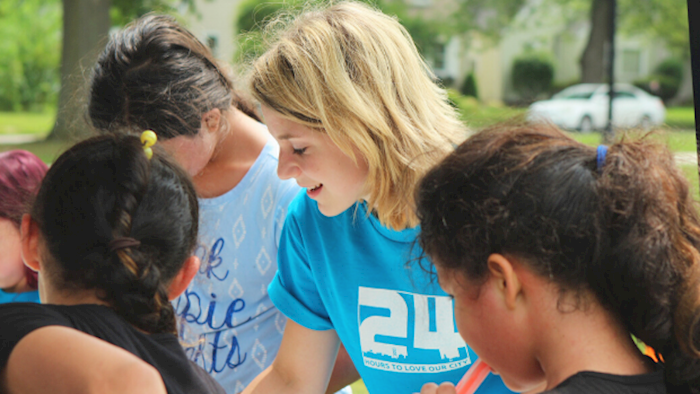
Indeed, the creativity of the Body of Christ is limitless when it comes to reaching our world with the love of Christ. I need only look at my little community of Wheaton, IL, to see the incredible variety of callings being implemented:

Source: Christianity Today

All Content & Images are provided by the acknowledged source
Can a Bestselling Christian Marriage Book about Love and Respect Lead to Abuse?

Can a Bestselling Christian Marriage Book about Love and Respect Lead to Abuse?


(RNS) — There’s not much love lost between Christian marriage and sex blogger Sheila Wray Gregoire and pastor turned marriage expert Emerson Eggerichs.

Or much respect.

The two — both of whom have been featured on Focus on the Family broadcasts — have been feuding for a year over Eggerichs’ bestselling book, “Love & Respect.”

Gregoire says she’s heard from hundreds of women who say one of the book’s main themes — that giving a husband “unconditional respect” can lead to a happy marriage — contributed to abuse in their marriages. She wants Focus on the Family, which originally published the book in partnership with Integrity Publishing, to drop its endorsement.

Eggerichs rejects any claim that “Love & Respect,” which has sold more than 2 million copies since 2004, has contributed to abuse. He believes the book and the ministry that shares its name have helped thousands of couples.  

Like any book, he said, “Love & Respect” could be misused by people with bad intentions.

The dispute over the book has raised enough controversy that Focus on the Family weighed in. Focus issued a statement last week saying Gregoire had “orchestrated a campaign” to discredit Eggerich’s book. According to the statement, Focus continues to endorse Eggerich.

“The fact of the matter is that we believe Mrs. Gregoire has seriously misread and misjudged various aspects…

… Read More

Click here to read the rest of the story from our content source/partners – Christian Headlines.

قالب وردپرس

Boxing Icon Manny Pacquiao Life Is Too Short. Read the Bible the Manual to Life

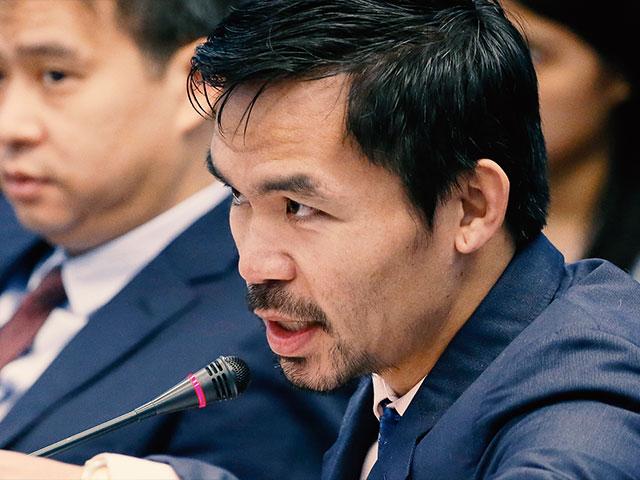
Filipino Senator Manny Pacquiao successfully defended his WBA title twice last year, defeating Adrien Broner and Keith Thurman and proving his prowess in the boxing ring even at the age of 41. But to Pacquiao, there is a greater passion than being an iconic boxing champ, and that is spreading the Word of God.

Pacquiao attributes his success in the ring to God and hard work, and he’s always been vocal about his Christian faith.

As a member of the Philippine Senate, Manny Pacquiao authored the law declaring the last Monday of January as the National Bible Day in the Philippines. People from all pillars of society – the government, entertainment, business, and the church – unite on this day to celebrate the Holy Bible as the cradle of the Christian faith. And 100,000 Bibles were printed for this event to be given away to the different sectors of society.

At the National Bible Day event this week, Pacquiao shared his testimony and reminded everyone of the power of the Word of God. He also challenged them to share the Bible as often as they can, especially at this time of so many calamities in the Philippines and around the world.

World-renowned apologist Dr. Ravi Zacharias says the time is right to preach the gospel.

“Natural calamities are causing us to realize how fragile we are. God brings a person to a time when they need to realize that I can’t do that, God does that,” Dr. Zacharias said.

Bishop Efraim Tendero, Secretary General of the World Evangelical Alliance, says they have also marked 2020 as the Year of the Bible, urging 600 million Christians worldwide to spread the Word of God.

He said, “We want to have that recognition of the role of the Bible in the community life, family life, and national life.”

Pacquiao addressed the audience saying, “The Bible is the only book we need to discover the foundational truth of how to know and walk with God.”

Pacquiao was saddened with the sudden death of friend, Kobe Bryant. He hopes reports that Bryant received Christ are true. “Life is too short in this world. So make sure you have a personal relationship to God. You have a strong relationship and you obey God,” he said.

Again, he emphasized the importance of reading God’s Word, “Read the Bible because it will lead you to all truth. The Bible is the manual to life.”


Source CBN

All Content & Images are provided by the acknowledged source
Catholic School Teacher Fired for Getting Pregnant Out of Wedlock Can Proceed with Discrimination Case

Catholic School Teacher Fired for Getting Pregnant Out of Wedlock Can Proceed with Discrimination Case


After being fired for becoming pregnant out of wedlock, a former Catholic school English teacher has been denied reinstatement of employment but has been granted permission to proceed with her discrimination lawsuit against the school.

On Tuesday, Northumberland County Judge Hugh A. Jones found that the one-year contract the former teacher, Naiad Reich, signed on June 14, 2018, did not guarantee future employment.

Jones did, however, note that Reich provided sufficient enough evidence suggesting that she was terminated because of her pregnancy to proceed with a discrimination case. 

“We are pleased that Judge Jones has ruled that we may proceed on our claims for declaratory judgment and unlawful discrimination under Title VII of the Civil Rights Act,” said Reich’s attorney Timothy A. Bowers in a statement. “We look forward to taking those claims to trial.”

Reich’s suit is seeking unspecified damages and is accusing the diocese of “discrimination by firing a female, qualified teacher employed in a non-ministerial capacity,” Penn Live Patriot-News reports.

According to Fox News, Reich – who is not Catholic – was fired from Our Lady of Lourdes Regional High School in Coal Township, Pennsylvania in December of 2018 after she informed the diocese that she and her boyfriend were expecting but not planning on getting married in the near…

… Read More

Click here to read the rest of the story from our content source/partners – Christian Headlines.

قالب وردپرس

More Christians Killed and Kidnapped by Muslim Militants in Plateau State, Nigeria

JOS, Nigeria, January 27, 2020 (Morning Star News) – Muslim Fulani herdsmen killed two Christians in separate attacks in Plateau state this month, in addition to the 13 Christians from the same denomination killed on Jan. 8, sources said.

Herdsmen invaded Torok village in Riyom County on Jan. 20, killing Reuben Bulus, a 25-year-old member of the Church of Christ in Nations (COCIN), according to Dalyop Solomon Mwantiri, a human rights activist with the Emancipation Centre for Crisis Victims in Nigeria.

“Bulus was killed at about 7:10 p.m. on Jan. 20 when herdsmen invaded his village,” Mwantiri told Morning Star News.

In Gako village, near Rim in Riyom County, another COCIN member, Ngam Stephen Dachung, was killed by herdsmen on Jan. 1, Mwantiri said.

“He was shot dead at a point at Gako-Diyan junction where many lives were previously lost to herdsmen ambushes in the area,” he said.

On Jan. 8, 13 COCIN were members slain in Plateau state’s Kulben village, Mangu County, in an attack by about 20 herdsmen that also wounded three others.

In addition, Mwantiri said, herdsmen killed a Christian woman, Mary Machief, and her baby daughter in Plateau state’s Bokkos County on Dec. 16. The herdsmen attacked them in Machief’s father’s home in Kunnet village that night, relatives told Morning Star News.

“It’s still a shock to me, I wish it were a dream,” said one relative.

Another relative said Machief was not killed instantly but died later from wounds.

“We all prayed for God to give her quick healing, but God deemed it fit to take her to eternal home,” he said.

On Dec. 22 in Tanjol near Jol in Riyom County, another COCIN member, Ayuba Lanjo, was wounded in an attack by herdsmen, said Mwantiri, who is also an attorney.

“Ayuba Lanjo was ambushed by some herdsmen; he was shot at and injured,” Mwantiri said.

Near Bukuru in Jos South County, herdsmen on Jan. 21 kidnapped Christie Peter Mwankon in Kwata village.

The 26-year-old COCIN member, daughter of a former Plateau state tourism official, was abducted after the herdsmen shot their way into the village and broke into her sister’s house, sources said.

“Christie Peter was kidnapped at about 2 a.m. in her sister’s house when the herdsmen broke into the house and kidnapped the graduate of Ahmadu Bello University-Zaria,” said area resident Solomon Kogi. “The herdsmen are demanding a ransom of 5 million naira [$US13,735] from her family.”

Source: Christian Headlines

All Content & Images are provided by the acknowledged source

What Christians Can Learn From Kobe Bryant About Fatherhood, Passion, and Mortality

Article by John C. Richards, Jr. John C. Richards, Jr. is a thought-leader, gifted teacher, and gifted writer/speaker. He currently serves as the Pastor of Assimilation at Saint Mark Baptist Church in Little Rock, Arkansas. He is currently pursuing a Ph.D. in Christian Leadership from Southeastern Baptist Theological Seminary and previously served as Managing Director of the Billy Graham Center at Wheaton College. The views expressed in this commentary do not necessarily represent those of BCNN1.

Some moments embed themselves in your memory. Most people can remember where they were during 9/11—the dreadful day thousands of American lives were lost in several terrorist attacks.

Yesterday was one of those moments for me.

Besides my family, my life tends to orbit around three Bs: the Bible, books, and basketball. I love NBA basketball—at times, much to my wife’s chagrin. As our ministry team closed our worship services yesterday, one of our members delivered me the news: “Kobe Bryant died in a helicopter accident.”

My stomach dropped. I had more questions than answers.

As the tragic story unfolded, I learned that Bryant’s 13-year-old daughter, Gianna, and seven other people also lost their lives in the accident. I felt numb all day. I didn’t know what to feel.

When the numbness subsided, one thought plagued my mind. What is it about the tragic, untimely death of iconic men and women that causes a collective lament from people from various religious, ethnic, and social backgrounds?

Three things about Kobe’s life and legacy ring true. And I think they are informative—especially for believers.

The Changing Narrative on Black Fatherhood

As a father, my heart hurt that Bryant could no longer continue to nourish and develop his growing relationship with his daughter.

While I did not care for Kobe Bryant as a player, I admired him in his retirement as a father. His active involvement in his daughters’ lives and his presence after missing special moments because of a rigorous NBA schedule was refreshing.

Our country is rife with mischaracterizations about black fatherhood. Kobe had joined the litany of NBA Black father ambassadors to help shape and change the false narrative of fatherlessness in Black and Brown communities.

We lost the opportunity for Bryant’s story as a father to play out. But we are also reminded of ordinary, everyday, working Black fathers who put the same effort and love into their children’s lives.

It is no secret that we live in racialized times. Don’t get trapped in talking point tales that undermine image-bearing men and women. As believers, let us make sure we continue to believe the best about others and not perpetuate stereotypical views that alienate brothers and sisters in the faith.

The Importance of Passion and Drive

As a Christian, I prayed earnestly that those involved had heard and believed the gospel and that my passion for gospel proclamation would never wane.

Bryant was one of the hardest working players in his sport. And it paid off for him. His passion for the game of basketball led him to study it more than any other player in modern history. He didn’t want others to remember him as a disinterested member of the NBA, but as an ambassador.

He also served as an ambassador for the women’s game—helping the basketball community acknowledge and honor the work women put in on and off the court. Down to his last game, that passion never waned—he scored 60 points in his final game.

Source: Christianity Today

All Content & Images are provided by the acknowledged source
Georgia Unveils New ‘Choose Life’ License Plates

Georgia Unveils New ‘Choose Life’ License Plates


A newly designed “Choose Life” license plate was rolled out on Jan. 28 in Norcross, Ga., giving vehicle owners in the Peach State an updated platform for supporting pro-life causes.

The redesigned plate includes an illustration of an infant’s hand resting in an adult hand. The original plate, first available in 2007, featured two children.

In a news release, Choose Life Georgia President Karen LaBarr said, “Our message is that every child – born or pre-born – deserves loving protection and support. We especially want to encourage expectant women to choose life for their babies by parenting them or by entrusting them to adoptive parents.”

In 2006, Georgia Gov. Brian Kemp, then a state senator, led an effort as sponsor of the legislation and constitutional amendment that allows the state to share revenue from the sales of specialty plates with various non-profits, including Choose Life and others. Both legislative measures passed with bipartisan support.

According to its news release, Choose Life of Georgia receives a portion of each year’s tag fee, which the charity passes on “to qualified non-profit clinics and centers that provide compassionate care to young girls, women and families trying to navigate the circumstances common to unplanned pregnancy. Some of the clinics provide free ultrasounds and other medical services.”

About 3,000 Choose Life plates, available since 2007, have been…

… Read More

Click here to read the rest of the story from our content source/partners – Christian Headlines.

قالب وردپرس

Another 039Little Ice Age039 in the Future NASA039s Solar Activity Forecast Might Surprise You

With all the talk about climate change and rising temperatures, it might be hard to imagine a “Little Ice Age” in the future. But NASA’s forecast for solar activity over the next decade could mean we’re in store for a cool-down.

The sun develops spots that are about the size of earth, and they change in intensity and number over time.

According to NASA, these sunspots provide a standard gauge of solar activity. That activity rises and falls in 11-year cycles. The next one begins this year, and the current forecast calls for the weakest solar activity in the last 200 years.

Astrophysicist Dr. Jeff Zweerink of “Reasons to Believe” spoke with CBN News about the correlation between sunspots and weather on Earth.

“If it continues to drop, one thing we do know is that sunspots, they look like dark spots on the sun, so you’d initially think, ‘Oh, maybe that’s because there’s less radiation given off’,” he said.

“It turns out because of the magnetic fields going on in there, the sunspots actually emit more radiation. And so if there are fewer sunspots, we’re receiving less sunlight from the sun,” Zweerink continued.

“And so you would expect to see a continual decline in temperatures – that things might get colder over the next 10 or 15 years,” he said.

According to The New American, more and more scientists believe this lower solar cycle could spark a lengthy period of minimum solar activity leading to cooler temperatures on Earth.

It’s happened before. From the mid-1600s to the early 1700s, the sun experienced a period of low solar activity known as the Maunder Minimum. It corresponded to a time on Earth known as the “Little Ice Age.”

“We know from historical records, and these are very early observations of the sun, that there were very few of these sunspots for very long periods, from about 1650 until 1715,” Dr. Jens Olaf Pepke Pedersen of the Danish Space Institute told CBN News.

“And this particular period of low solar activity also correlates with a period where the climate at least in most of Europe and other places of the world was very cold,” he continued.

“So what they noticed is primarily in Europe, where they were taking a lot of these measurements, what they found is that the temperatures were really cold,” said Zweerink.

It was also very cold in North America. Colonial art often shows deep snows and ice-filled rivers during the winters.

Zweerink says the bottom line is if the sunspot activity continues to drop off as expected, we’re going to experience cooler weather for a while.


Source CBN

All Content & Images are provided by the acknowledged source

Jerry Jones brought his superyacht to the Super Bowl: Cultural divisions and the persuasive power of courage

What do the Dallas Cowboys have in common with the Washington Redskins, the Atlanta Falcons, and the Jacksonville Jaguars? None of them is playing in this year’s Super Bowl.

What else do they have in common? Their owners own superyachts that are making the news these days. 

Cowboys owner Jerry Jones has already brought to Miami his 357-foot-long superyacht Bravo Eugenia, which is rumored to have cost more than $250 million. It has two helipads and a large spa that includes a sauna, steam room, massage room, plunge pool, and state-of-the-art gym. 

Redskins owner Daniel Snyder owns a 305-foot-long superyacht with something no other superyacht in the world has—a twelve-seat, two-deck tall IMAX theater that added an extra $3 million to the final price tag. Falcons owner Arthur Blank has a new 295-foot superyacht; Jaguars owner Shahid Khan owns a 312-foot-long yacht that charters for over $1.2 million a week. 

Paying $720,000 to go to the Super Bowl 

Sunday’s big game is a welcome distraction from the coronavirus crisis, which has now surpassed SARS in the total number of people infected and caused the World Health Organization to reconvene its emergency committee today. 

The Super Bowl is also a positive diversion for the sports world as the investigation continues into the tragic death of Kobe Bryant and eight others. His wife Vanessa made her first public statement yesterday, writing that “there aren’t enough words to describe our pain right now.” 

But the Super Bowl does remind us that economic distinctions are very real in America today. 

The average price of a ticket to the game is $8,940. A villa rents in Miami for as much as $15,000 a night. Or you could consider a vacation package for two with private jet transportation to Miami, a suite at the Ritz Carlton, and four days sailing the Caribbean on a private yacht, all for a mere $720,000. 

Viewing the opposition as “downright evil” 

It has…

… Read More

—

Click Read More to read the rest of the story from our content source/partners – Denison Forum.

قالب وردپرس