
Canadian Human Rights Tribunal May Drop Gender From Birth Certificates After Complaints by Transgender, Intersex Activists

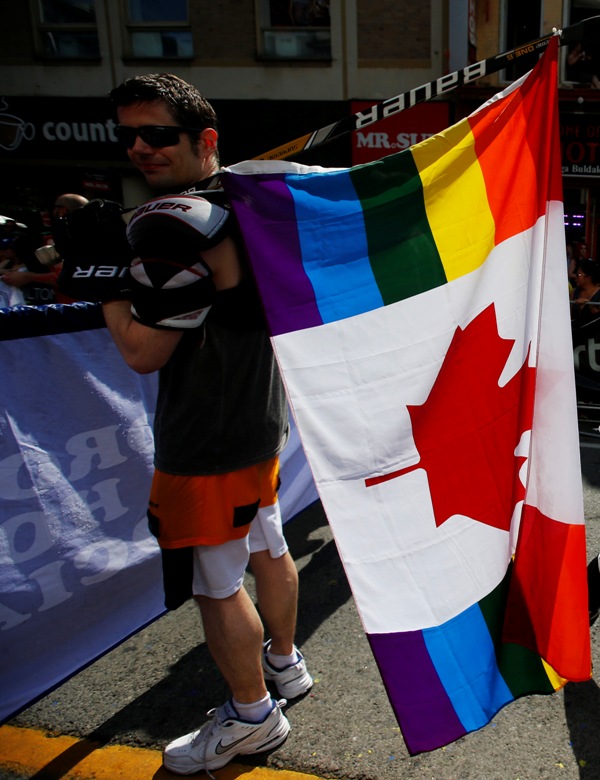
Canada (Photo: Reuters/Mark Blinch)

Christian Post Report – A man holds a rainbow colored Canadian flag attached to a hockey stick during the “WorldPride” gay pride Parade in Toronto, June 29, 2014.

In a complaint filed by the Trans Alliance Society and several transgender and intersex individuals, the British Columbia Human Rights Tribunal has agreed to consider dropping gender categories on birth certificates, which may give “false information,” activists say.

Last week, the National Post of Canada published a story detailing the complaints of transgender individuals and activists who believe possible “false information” based on a quick inspection of the genitals is discriminatory.

“Birth certificates (may) give false information about people and characterize them in a way that is actually wrong, that assumes to be right, and causes people … actual harm,” said Morgane Oger, chair of the Trans Alliance Society. “It’s considered true and infallible when it isn’t,” she added.

Vincent Villano, a spokesperson for the Washington,D.C.-based National Center for Transgender Equality, told The Christian Post, “In an ideal world there is no real reason why gender is on identification cards.” Villano, however, explained that their organization is working to better accommodate transgender individuals to have “access to accurate identification.”

The National Post quoted babrara findlay (“who spells her name in all lowercase letters for non conformity purposes”), who does not believe you can tell a child’s gender at birth.

“That means that children are raised ‘as’ the birth-assigned gender, which is a crazy-making experience,” declared findlay. “Instead of living in a social reality that recognizes that gender develops, and does not exist at birth, those children have nothing to work with except that something feels profoundly wrong.

“Getting to the stage of being able to ‘change’ gender is an anguishing process, in which a child often experiences severe pushback from their own families.”

She believes gender is determined not by what is between the legs but by simply asking a person their gender category.

In a 2014 press release on changes to New York law regarding changes to gender markers on birth certificates, the National Center for Transgender Equality wrote:

“According to the National Transgender Discrimination Survey, 40% of transgender people have faced harassment when presenting identity documents that did not match their gender identity/expression. In addition, 15% report being denied entry or asked to leave because of gender mismatches, and 3% report facing physical assault due to mismatched ID.”

The New York law was changed to allow individuals to change their birth certificate without proof of surgery, which is a right recognized by some states but not all. The American Medical Association has said surgery shouldn’t be a requirement to change birth certificates.

Connecticut is the most recent state to change the law making it easier to change your gender on your birth certificate.

Last month in South Carolina, The Washington Post reported that teenager Chase Culpepper, who now identifies as female, won a federal lawsuit that forced the state to change their rules for transgender and non-gender conforming license photos.

Some experts feel the rules requiring gender on a birth certificate may be difficult to change because data is kept for census collecting purposes.

In a post regarding the controversy in British Columbia, popular conservative Canadian citizen and American resident Mark Steyn wrote, “Having done an impressive job of demolishing the basic societal building block of the family, the left has now advanced to demolishing the basic biological building block of the sexes.”

On Tuesday, the National Post in Canada published a story about “Transable” people who purposefully become disabled or live as disabled, despite otherwise normal bodies, because they do not feel normal as able bodied individuals.

Source : Christian Post

Got Doubt? Why You Should Step Out in Faith

Christian Post Report – God loves boldness and He wants us to be confident of His love for us. He wants us to know without a doubt that we are made right with Him through the sacrifice Jesus made for us on the cross — especially on those days when we feel unworthy of His love.

  • Joyce Meyer
    (Courtesy of Joyce Meyer Ministries)

To live boldly means that we’re willing to step out in faith to try new things and pursue our God-given dreams and passions without letting the fear of doubt overshadow our faith.

Doubt is a fear that can bring a lot of confusion: Did I make the right decision? I don’t know. Maybe I did. Well, maybe I didn’t. We can go back and forth like that in our heads forever but I’ve found that when I’m confused, it’s better to stop, turn off my brain and just look at what’s in my heart—not for what I think I should do, but what I believe I should do.

Sometimes it becomes very clear what God wants us to do; other times it’s less obvious. But before you jump ahead, give God a chance to speak to your heart.

God Is On Your Side, No Matter What

James 1:5-6 (AMP) says, “If any of you is deficient in wisdom, let him ask of the giving God [Who gives] to everyone liberally and ungrudgingly, without reproaching or faultfinding, and it will be given to him. Only it must be in faith that he asks with no wavering (no hesitating, no doubting).”

I hope that you noticed it says, “If any of you” need wisdom. God isn’t looking for perfect people; they don’t exist. So no matter where you are, God wants to help you! Isn’t that good news?

God will never leave you or forsake you, and He will always remain faithful to His Word. All you have to do is ask and receive, dismissing the doubts that set themselves up against His Word. If you can do that, there’s no telling what God will make happen in your life.

Words of Faith Bring Clarity and Confidence

Romans 4 gives a wonderful account of the story of Abraham, one of the great heroes of faith. Verses 18-19 (AMP) say, “[For Abraham, human reason for] hope being gone, hoped in faith that he should become the father of many nations, as he had been promised…. He did not weaken in faith when he considered the [utter] impotence of his own body, which was as good as dead because he was about a hundred years old, or [when he considered] the barrenness of Sarah’s [deadened] womb.”

Abraham considered the facts. But he still believed God was greater. Verse 20 says, “No unbelief or distrust made him waver (doubtingly question) concerning the promise of God, but he grew strong and was empowered by faith as he gave praise and glory to God.”

Instead of relying only on what we see around us, you and I can choose to believe God’s Word. And we can open our mouths to speak words of thanks, like this:

“God, I remember the good things You’ve done for me and how You’ve been faithful to those who’ve trusted in You through the ages. I’m giving You praise today because I know You’ll always be faithful.”

Doubt cannot make you cave in if you will open your mouth and war against it with words of faith.

Be Ready to Be Stretched in Times of Waiting
Like Abraham, we all have times of waiting that God uses to test and stretch our faith. But He promises to work all things out for the good of those who love Him and are called according to His purpose (Romans 8:28).

Honestly, if we can keep a good attitude throughout the process, our wait time might be shorter than it would be if we decided we’d rather murmur and complain. God wants to use the challenges we experience to draw us closer to Him so that when our prayer is finally answered and our day of breakthrough comes, we’ll be stronger in our faith and able to withstand any opposition that comes against us.

Hebrews 10:36 says, “For you have need of steadfast patience and endurance, so that you may perform and fully accomplish the will of God, and thus receive and carry away [and enjoy to the full] what is promised.

It takes boldness to believe God’s promises are for you and not just for everyone else. It takes boldness to cling to His promises when the world around you says: It will never happen! And it takes boldness to step out in faith and try something new. But be encouraged. God isn’t concerned about you making mistakes. He knows you’re not perfect and He wants to give you His wisdom and strength to do everything He’s put in your heart.

So stop doubting and step out in faith…and believe God can do something amazing in you and through you. He wants to see boldness in you!

Joyce Meyer is a New York Times bestselling author and founder of Joyce Meyer Ministries, Inc. She has authored more than 90 books, including Battlefield of the Mind and Do Yourself a Favor…Forgive (Hachette). She hosts the Enjoying Everyday Life radio and TV programs, which air on hundreds of stations worldwide. For more information, visit www.joycemeyer.org.

© 2015 Printed with permission of Joyce Meyer Ministries

Source : Christian Post

Conference Calls on United Church of Canada to ‘Review’ Ordination Standards Amid Atheist Minister Controversy

United Church of Canada (Photo: courtesy Hamilton Conference, UCC.)
Christian Post Report – The office of the Hamilton Conference of the United Church of Canada, located in Carlisle, Ontario, Canada.

A body within the United Church of Canada has passed a proposal calling for the liberal denomination to review the questions it poses during ordination in light of controversy surrounding an atheist clergywoman who’s been leading a congregation for 14 years.

The Ontario-based Hamilton Conference approved the proposal on Sunday that seeks to have the UCC’s General Counsel order a “broad based and theological review” of ordination standards.

In a copy provided to The Christian Post by the Hamilton Conference, the proposal alludes to the Rev. Greta Vosper, an outspoken atheist who will soon face review by the UCC over the “effectiveness” of her ministry.

“In light of dramatic changes, intentional and unintentional, currently underway in our church, we need to ensure that our future ministry leadership meets the challenge of change,” reads the resolution in part.

“In light of recent events in London and Toronto Conferences relating to how particular ministry personnel publicly express their theological outlook …”

The resolution called for the General Counsel to “instruct its Theology and Inter-Church Inter-Faith Committee, or other appropriate group, to undertake a broad based and theological review of the Basis of Union part Eleven (11) which deals with the preamble and questions, posed as persons are ordained or commissioned, to ensure their continued relevance and effectiveness as we move forward in support of our ministry leaders.”

The Rev. Peter Hartmans, conference executive secretary for Hamilton, told CP that the resolution did not go into specifics as to what should be changed.

“The proposal does not ask for specific changes, it asks for a ‘broad based and theological review of the Basis of Union part Eleven (11),'” said Rev. Hartmans, adding that “it is not presuming the outcome of that review.”

Hamilton Conference’s proposal came not long after news broke that Rev. Vosper was to be called for an interview as part of a process to determine how effective her ministry can be since she’s an atheist.

In June, the UCC Toronto Conference will conduct a formal process known as a review regarding Vosper, an author and founder of the Canadian Centre for Progressive Christianity who is also a professed atheist.

The Rev. David W. Allen, executive secretary of the UCC Toronto Conference, told CP in an earlier interview about the investigative process.

“A review is a formal process within the United Church which is ordered when serious questions have been raised about a minister’s effectiveness,” said Rev. Allen.

“In this case, a team of five people will interview Ms. Vosper. They will report to a larger committee of 40 people, and that committee will give its opinion to the sub-Executive of Toronto Conference on whether Ms. Vosper is suitable for ministry within The United Church of Canada.”

According to Allen, at issue will be an interview of Vosper to determine if she continues to affirm certain questions asked during her ordination.

These questions include: “Do you believe in God: Father, Son and Holy Spirit, and do you commit yourself anew to God? Do you believe that God is calling you to the ordained ministry of Word, sacrament and pastoral care, and do you accept this call?” And finally, “Are you willing to exercise your ministry in accordance with the scriptures, in continuity with the faith of the Church, and subject to the oversight and discipline of The United Church of Canada?”

Source : Christian Post

Jeremy Lin Regains Passion for Basketball After Struggling With Discouragement

  • Los Angeles Lakers general manager Mitch Kupchak introduces Jeremy Lin during a press conference at Toyota Sports Center in El Segundo, California, Thursday, July 24, 2014
    (Photo: Reuters/Jayne Kamin-Oncea-USA TODAY Sports)
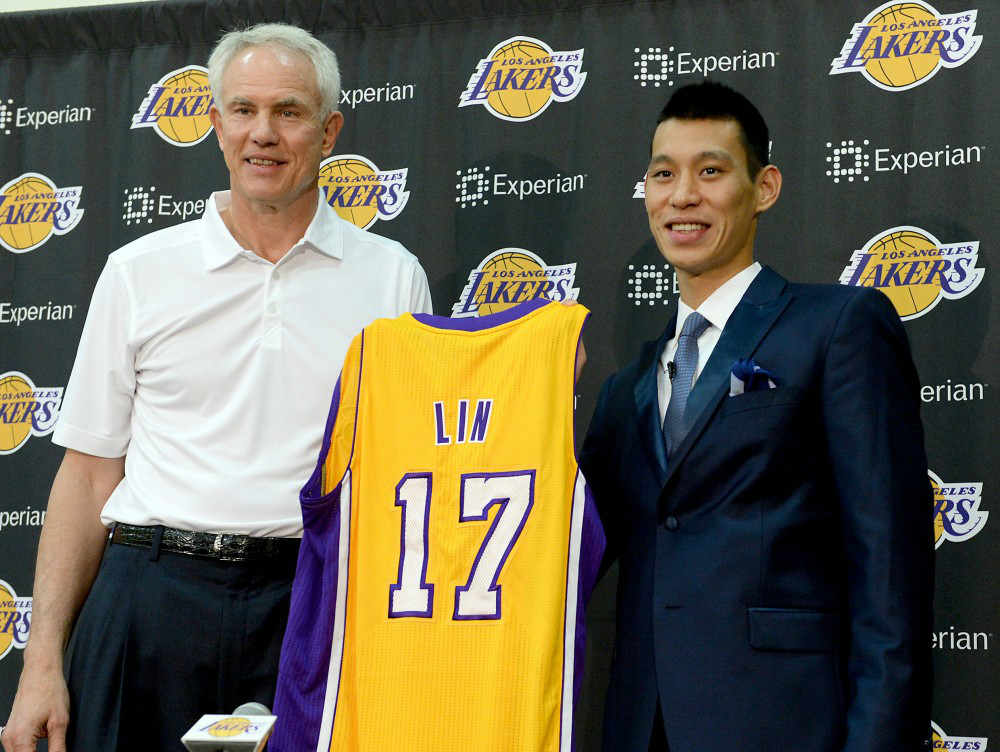
    Los Angeles Lakers general manager Mitch Kupchak introduces Jeremy Lin during a press conference at Toyota Sports Center in El Segundo, California, Thursday, July 24, 2014.

Christian Post Report – Christian NBA point guard Jeremy Lin, may be seen as a role model by his many fans, but the athlete recently revealed that at the end of his season with the Los Angeles Lakers which didn’t go according to his plan, he struggled with a serious bout of discouragement.

The future of the 26-year-old who is now an unrestricted free, is unclear as he begins training for his next season.

 In a post on his personal blog, Lin assured his fans and supporters that other than his celebrity platform, he struggles with many issues that they do.

“I guess I’m saying all of that to say…even though many of you may look up to me as a ‘role model’ or a ‘story of perseverance,’ I’m no different than you guys. I get discouraged, I get worn down, I get burnt out,” Lin wrote. “I have doubts, thoughts of giving up, and of not being good enough. But the beautiful part is that God comes through in His unique and perfect way every time!”

Lin heads a digital prayer group that he started this year where he emails prayer requests to people who subscribe. In an email titled “Jeremy’s Prayer Requests 8” sent last month, Lin admitted to losing some passion for many aspects of his life after a tough basketball season.

“In many ways, I feel burnt out from the season so please pray that I continue to regain passion and joy in all aspects of life,” he previously wrote in the email prayer. “It’s been increasingly difficult to deal with the frustrations of life, as I feel like I’m faster to reach my patience limit (another by-product of feeling burnt out), mostly because the season took a lot out of me.”

The point guard recently admitted that he needed a break from basketball after an arduous season and lacked motivation to begin his training once again. After three weeks, his fervor for basketball seems to have returned and now he is putting his focus back on God.

“I started to really miss basketball and couldn’t wait to start training again. As I begin my off-season I will focus on God’s faithfulness, His perfect plan, and His unfailing love,” Lin wrote on June 1. “Life isn’t about maintaining your highs and eliminating your lows (because obstacles will inevitably come). Life is about cherishing your relationship with Christ and loving others through the highs and lows of life.”

While Lin may not know which team he will be playing for next season, he is putting his faith in God by writing, “I may not know where I’m going next, but I trust Who I’m following!!”

follow me on Twitter @CAThomasos

Source : Christian Post

‘Whoever Does Not Recognize State of Israel’ Is Anti-Semitic, Pope Francis Affirms in Email to Reporter

Pope Francis (Photo: Reuters/Tony Gentile)

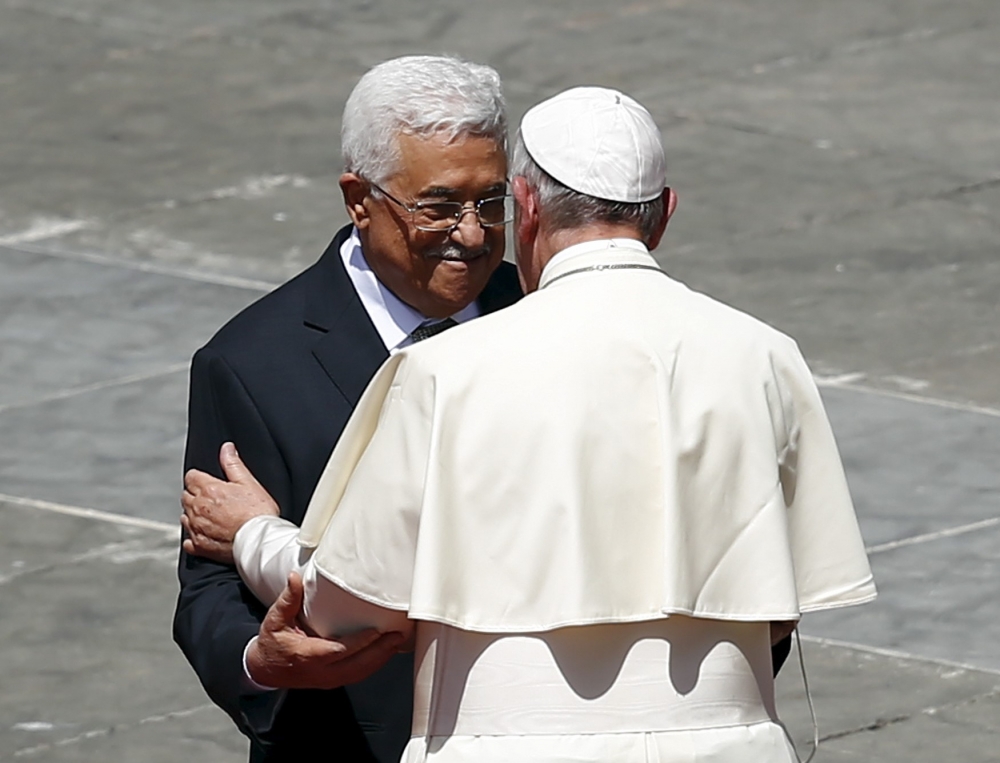
Christian Post Report – Pope Francis (R) embraces Palestinian President Mahmoud Abbas at the end of the ceremony for the canonisation of four nuns at Saint Peter’s square in the Vatican City, May 17, 2015. The four nuns being canonised include two Palestininan nuns, Marie Alphonsine Ghattas, founder of the first Catholic congregation in Palestine, and Mariam Baouardy Haddad, who established a Carmelite convent in Bethlehem.

After allegedly calling Palestinian leader Mahmoud Abbas an “angel of peace” over two weeks ago, Pope Francis reportedly asserted last week that anyone who does not recognize Israel as the Jewish state is anti-Semitic.

The Times of Israel reports that in an email sent to Portuguese-Israeli journalist Henrique Cymerman last Thursday, the pontiff equated anti-Zionism and anti-Semitism as one in the same.

“In an email we got from Pope Francis: ‘Whoever does not recognize the Jewish people and the State of Israel falls in antisemitism,'” Cymerman tweeted last Thursday.

The pope’s alleged comment comes after media controversy surrounded the Vatican when it was reported that Francis told Abbas, the chairman of the Palestine Liberation Organization, that he was an angel of peace during a traditional gift exchange at the Vatican on May 16.

According to the Jerusalem Post, the pope gave Abbas a medal featuring an angel of peace, “which destroys the evil spirit of war.”

Although many news agencies reported the pope’s informal comment to Abbas as him saying “You are an angel of peace,” the Italian newspaper La Stampa reported the pope’s comments being more along the lines of “May you be an angel of peace,” hoping that Abbas would become such an angel.

After the pope took heat for allegedly praising Abbas, the Vatican released a statement a few days later to clarify that the pope didn’t mean to offend Israel by calling Abbas abbas an angel of peace.

“Pope Francis meant no offense to Israel by referring to Palestinian President Mahmoud Abbas as being ‘an angel of peace’ and intended to encourage harmony between the two sides,” Vatican spokesman Federico Lombardi said.

Lombardi further clarified that Francis tried to use the word angel in the context of a “messenger.”

Abbas’ visit to the Vatican came after a bilateral agreement was reached between the Vatican and the “State of Palestine” that indicated that the vatican would officially recognize Palestine as a state.

“To this end, the wish was reiterated that with the support of the international community, Israelis and Palestinians may take with determination courageous decisions to promote peace,” a Vatican statement on the treaty said.

According to Crux, the treaty also governs the tax and legal status of Catholic Church properties on the West Bank and Gaza Strip.

The statement added that both parties principally agreed to the treaty and that “the agreement will be submitted to the respective authorities for approval ahead of setting a date in the near future for the signing.”

Although the Vatican is hopeful that such a treaty will progress the peacemaking between Israel and Palestine, an official within Israel’s foreign ministry told Jerusalem Post that the agreement won’t help move the peacemaking process forward and that it “moves the Palestinian leadership further away from returning to direct bilateral relations.”

Source : Christian Post

Fox Network’s ‘Empire’ Star Taraji P. Henson Says ‘Without God, I’m Nothing’ After Critic’s Choice Award Win

  • Taraji P Henson
    (Photo: BET Press)
    Taraji P. Henson is a Christian actress.

Fox Network’s “Empire” star Taraji P. Henson said she is “nothing without God” after winning the Best Actress category at the 2015 Critics’ Choice Television Awards on Sunday night.

“You know, I don’t know what to say, I just… So many people to thank,” Henson began during the annual awards ceremony, which honored her portrayal of Cookie Lyon on “Empire.”

The 44-year-old star first rattled off thanks to Fox, colleagues, and critics before turning her attention to God.

“Thank you God, because without God, I’m nothing,” said Henson. “And the fans. I love awards, they’re great, but this just means I’m touching lives, and that’s why I got into acting.”

It comes as no surprise that Henson acknowledged God in her acceptance speech. In a past interview with The Christian Post, the star credited faith in God as the reason for her success.

“I moved to California with $700 in my pocket with my son and a dream and faith,” explained Henson. “And every time a door would close I would pray to God, like ‘I know you’ve got a plan for me because I’m still here.’ There’s a plan for me and I believe in that.”

Henson, who is also an Academy Award and Primetime Emmy Award nominee, never faltered in her faith, despite early disappointments in her career.

“Whenever I thought I was supposed to get something and it didn’t fall through, I would just fall back to God and be like, ‘Ok, well what else, because whatever you’ve got must be better than this,'” added the actress.

Henson also revealed that faith in God helps her understand others around her.

“Faith keeps me from snapping on people because people will test you and push you… Humans hurt each other, because we were hurt,” explained the actress. “That’s what humans do, so why would you give that much power to another human? You’ve got to look to something higher.”

Henson stars on the Lee Daniels-created “Empire” alongside Terrence Howard, Trai Byers, Grace Gealey and others. Season two of the drama premieres on Fox Sept. 23 at 9 p.m. ET.

Watch Henson’s Critic’s Choice Awards acceptance speech here.

follow me on Twitter @emmakoonse

Source : Christian Post

Requirements of Waiting

Christian Post Report – Psalms 25:3-5

Waiting for God’s timing is neither passive nor idle—it takes discipline and commitment. I can think of four basic requirements for successful waiting.

  • Dr. Charles F. Stanley
    (Photo: In Touch Ministries)
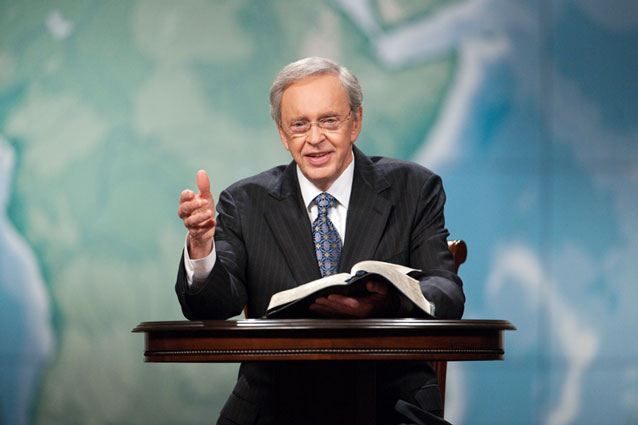
    Dr. Charles F. Stanley (File).

Faith. The Lord’s ways and timing are nothing like ours (Isaiah 55:8-9). From a human standpoint, the way He does things is usually totally different than expected. But as we trust Him more, we’ll discover that His approach isn’t so strange after all. And when we live in harmony with God’s will, His timing starts to make sense.

Humility. To wait for the Lord, you must be convinced of your need for Him. Submission to His divine will requires humility—you cannot charge ahead with your own plans and at the same time be fully surrendered to God.

Patience. Are you willing to remain in your current position until you receive clear divine direction? Pausing for clarity from God does not mean that you disengage and allow circumstances to fall apart around you. Waiting upon the Lord is a deliberate decision that requires patience.

Courage. Waiting for God often takes courage, especially when there is pressure to act. If you’re not careful, you might stop listening to the Lord and follow other advice. So keep your ear attuned to the voice of Almighty God, and you won’t go wrong.

Waiting upon the Lord is one of the wisest, most important decisions we make in life. And contrary to popular assumptions, it is an active endeavor that requires faith, humility, patience, and courage. When you rely upon God and wait for His timing, the various facets of life fall into place.

Used with permission from In Touch Ministries, Inc. © 2015
All Rights Reserved.

Source : Christian Post

9 North Alabama United Methodist Church Closings Announced Just Weeks After Data Pointing to Shrinking Christian US Population Was Released

Church (Photo: Joyce Frost)

Christian Post Report – First United Methodist Church of Seattle, Washington. This sanctuary belongs to the historic First UMC building, completed in 1906.

The United Methodist Church in North Alabama announced the closing of nine churches on Monday just weeks after a Pew report found that the number of Americans identifying as Christian in the U.S. has decreased since 2007.

One of these locations however, Lakeview Highland United Methodist Church in Muscle Shoals could stay open if it is successfully taken over by a Hispanic congregation that moved into the church building last fall. Lakeview, now goes by the name Iglesia de la Puebla and is led by Pastor Ruben DeLeon.

“It was an answer to prayer for them and it was an answer to prayer for us,” Rev. Kelly Clem, the superintendent of the Northwest District of the UMC told Al.com of the change. “They’ve renovated the building. They’re leasing it for $1. They just got to work on the roof and painted the building. It looks great.”

DeLeon, a Baptist minister, hopes to become a United Methodist and is studying their doctrine, according to Clem.

The 8 other UMC churches that are closing include Crosses Chapel in Cullman, Riser’s Chapel in Alpine, St. John’s in Huffman, Glenn Hills in Bessemer, Morningstar in Bessemer, Chapel Hill, New Chapel in Bankston and Providence in Morrie. St. Johns. All of these locations plan to officially close their doors on June 27, 2016.

UMC church membership in North Alabama has dropped to 133,695 at the beginning of 2015, down from 134,006 at the start of 2014.

The closing of the North Alabama UMC locations comes just a few weeks after a Pew study revealed that the number of Americans identifying as Christians has decreased from 78 percent in 2007 to 70 percent in 2014.

Catholics and Mainline Protestants saw the biggest drop with Catholics falling to 20.8 percent in 2014 from 23.9 percent in 2007 and Mainline Protestants falling from 18.1 percent in 2014 from 14.7 percent in 2007.

The data also showed growth in the category of people without a religious affiliation which grew from 16.1 percent in 2007 to 22.8 percent in 2014.

Contact: [email protected]; follow me on Twitter @vinfunaro

Source : Christian Post

What Should Christians Do About Anti-Christian Hostility? Christian Sociologist George Yancey Offers Guidance (Interview)

Supreme Court Hobby Lobby Protestor (Photo: REUTERS/Jonathan Ernst)

Christian Post Report – A protester dressed as a copy of the Bible joins groups demonstrating outside the U.S. Supreme Court in Washington June 30, 2014.

What should Christians do about the hostile environment they increasingly face? In a Christian Post interview, professor George Yancey talks about his new book written for fellow Christians, Hostile Environment: Understanding and Responding to Anti-Christian Bias.

  • George Yancey
    (Photo: InterVarsity Press)
    Cover for Hostile Environment: Understanding and responding to Anti-Christian Bias by George Yancey (2015)

Christianophobia exists among a powerful elite subculture in the United States, University of North Texas sociologists Yancey and David Williamson wrote in So Many Christians, So Few Lions: Is There Christianophobia in the United States? While that book was written in an academic voice, in Hostile Environment, Yancey writes as a Christian speaking to fellow Christians, and offers some guidance on how Christians should respond to that anti-Christian hostility.

In an email interview with CP, Yancey said he appreciated the opportunity to speak from the heart to fellow believers about how he thinks Christians should respond to Christianophobia.

The early chapters summarize much of his work in So Many Christians, So Few Lions and helps readers understand the sources of Christianophobia. The middle chapters, “Are Christians Responsible for Christianophobia” and “Trouble Within” discuss ways to deal with hypocrisy, sin and dysfunction within the Church. The latter chapters deal more specifically with ways to confront anti-Christian bigotry.

Yancey is also careful throughout the book to distinguish between the discrimination against Christians in the United States and the violence against Christians in other parts of the world. He does not use the word “persecution,” for instance, to describe the negative experiences of Christians domestically.

“Christians are not being persecuted, but religious discrimination and bigotry in our society can affect us. We should combat that discrimination and bigotry when it rears its ugly head,” he wrote.

Here is the transcript of Yancey’s interview:

CP: Your previous book with David Williamson, So Many Christians, So Few Lions: Is There Christianophobia in the United States?, looked at anti-Christian hostility from an academic perspective. For Hostile Environment, you went with InterVarsity Press, a Christian publisher, and you’re writing in the voice of a Christian speaking to fellow Christians. What did you hope to add to the conversation with this new book?

Yancey: The major purpose of So Many Christians, So Few Lions (SMCSFL) is to present academic research on the nature of Christianophobia and document the type of person most likely to have these negative attitudes. Such a book is important so that we have scholarly evidence about Christianophobia to use in our national dialog on religious rights and freedom.

Thus, SMCSFL plays an important role in providing evidence for the issues I discussed in Hostile Environment (HE). In fact, I could not write HE with any credibility if I had not written SMCSFL. But while we tried to write the book in an engaging manner, it is difficult to write an academic book for the average non-academic.

Since I wrote HE with a Christian publisher, I was free from using the complex jargon and sometimes stifling structure often found in academic books. I could talk from my heart in a way that is unseemly in scholarly work. I felt more open to discuss with my fellow brothers and sisters in Christ what I believe needs to be done to deal with Christianophobia.

Finally, this book is priced better for the non-academic reader and can allow that reader to get a basic description of the evidence I produced in SMCSFL. So while the topic is the same for both books, they accomplish different important objectives.

CP: What do people with Christianophobia want from Christians?

  • George Yancey
    (Photo: George Yancey)
    George Yancey, professor of sociology, University of North Texas

Yancey: In a nutshell they want Christians to shut up and stay in their homes and churches.

Individuals with Christianophobia have a great deal of pre-capita social and cultural power as they are more likely to be white, male, educated and wealthy than other Americans. They indicated in my research that they believe they know what is best for our society, and perhaps that is because they possess such power.

They also argue that Christians are leading us back to the “Dark Ages,” want to set up a theocracy, and oppose science. They also demand that Christians do not proselytize others since they believe that Christians are not very intelligent or are trying to manipulate others for money or power.

These beliefs and stereotypes provide them with justification to assert that they, and not Christians, should run our society and government. For this reason it is not surprising that they want Christians to stay out of the public square.

People with Christianophobia at least superficially value the ideals of religious neutrality. They perceive themselves as non-biased. So while they want to exclude Christians from the public square, they are unlikely to support measures that overtly single out Christians for punishment. This allows them to hold on to a social identity that is linked to “tolerance.”

However, they have a willingness to support measures that disproportionately punish Christians, or remove Christians from the public square, as long as such punishment or removal can be justified with non-bigoted reasons. This is similar to the concept of disparate impact that has been discussed as a part of the racial problems in the United States.

CP: Some argue that Christians should stop “whining” about being mistreated. Do they have a point?

Yancey: There are Christians who cry persecution at everything. Let me be clear that I am not, nor have I ever, argued that Christians in the United States are being persecuted. Christians in the United States, unlike Christians in certain other countries, are not thrown in jail, or killed specifically because of their faith. If that changes in the future then I will talk of Christians being persecuted in the United States. But right now, it is imprudent for Christians in the United States to talk about persecution.

However, anti-Christian bias is real and produces tangible consequences. For example, I documented in a previous book, Compromising Scholarship, the willingness of academics to discriminate against conservative Protestants. Other research has supported the reality of anti-Christian academic bias. It remains to be seen if future research will register the effects of anti-Christian bias in other social institutions.

While Christians are not persecuted today, they do face the reality of anti-religious bigotry. Christians should take a middle ground approach where they avoid claims of persecution but recognize the reality of how modern Christianophobia impacts society.

CP: You wrote the book before the recent Duggar family scandal. Some critics are saying it is another example of Christian hypocrisy. What lessons do you think Christians should take from the scandal?

Yancey: It is not a story I have been closely following so I will stay away from any attempt to adjudicate this particular situation. My general perspective is that Christians should be careful placing too much trust in individual Christians. We have a tendency to try to portray our heroes as perfect. But all humans are fallen and we should not portray ourselves in that way if we want an honest dialog with non-Christians.

I have never engaged in anything like child molestation but neither am I proud of everything I have done in my life. Indeed our weakness and sin nature is why we need a Savior. If we recognize this then we can stay away from a celebrity mentality where we put certain Christians on a pedestal because they have achieved fame.

CP: You have conducted research and written about racial reconciliation. Did some of what you learned help you with this book?

Yancey: Racism is not the same as Christianophobia. However, there are aspects in our racialized society that can be seen in my examination of Christianophobia. For example, the dehumanizing I documented in SMCSFL is similar in the way minority groups have been dehumanized in other social situations. My work in race and ethnicity has allowed me to understand how racism can be manifested in symbolic and institutional ways which is not unlike some of the mechanisms by which individuals exhibit their Christianophobia.

To be sure there are critical differences between Christianophobia and racism, so it is a mistake to think of them as identical. For example, we do not have the history of violence in American Christianophobia that we do with racism. Furthermore, racial minorities have never been the dominant group as Christians have been in our society.

On the one hand, those who tend to exhibit racism in contemporary society do not have a lot of social power and one of the worst things a person can be called today is a racist. On the other hand, those who have Christianophobia today tend to have cultural power and anti-Christian stereotypes are fairly widely accepted among the highly educated. Thus, we have to be careful to recognize the real differences between racism and Christianophobia, even though there are common patterns of prejudice and dehumanization that seem to emerge whenever bigotry surfaces in human society.

Contact: [email protected], @NappNazworth (Twitter)

Source : Christian Post