Christian faith increases despite various attacks in Niger

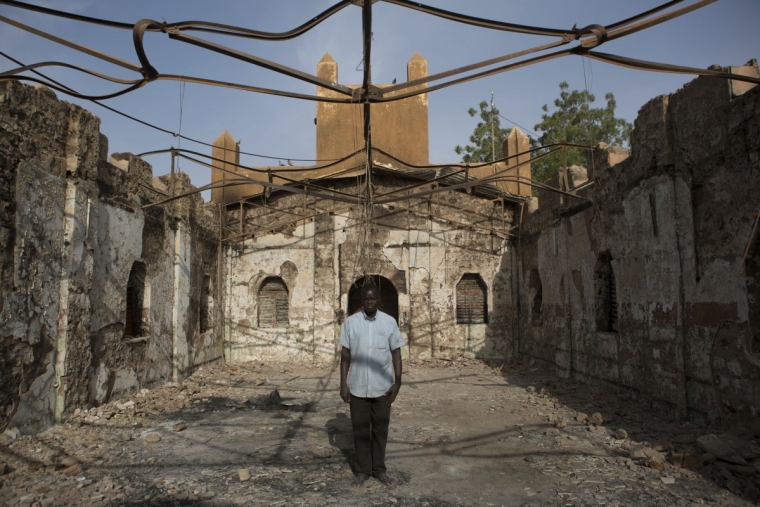
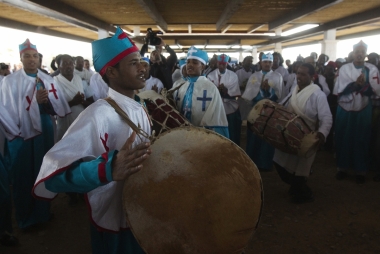
Christian Today report- The faith of the Christians in Niger continue to grow despite a series of violent attacks from January 16 to 18 that left more than 70 churches in ruins.

The attacks were perpetrated by Muslims who were angry at the latest Charlie Hebdo cartoon that depicted Mohammad carrying a sign expressing solidarity with the victims of the attack on their editorial offices earlier this month.

Now, Christians are holding meetings and services in their own homes under the protection of the Niger police.

“Last night the church members met for prayer as the pastor, who lost everything, encouraged them by flashlight to not only stand strong, but to move forward and to know that this attack will grow the church,” Christian Headlines quoted a letter from a missionary couple in the Niger. “The room was dark on the outside but illuminated by the fire in the hearts of His people, even as stones were being thrown on the roof.”

The violence began in the city of Zinder on January 16. By January 18, the destruction and attacks have spread to the capital city of Niamey. The perpetrators specifically targeted Christian buildings and properties, leading Mahamadou Issoufou to condemn the attacks on live TV.

The magnitude of the attacks was unprecedented and have not occurred before, the missionary couple wrote.

“Nearly every church in the capital city of Niamey was burned or looted, along with some schools and orphanages and several other churches and Christian homes throughout the nation,” the couple said.

Despite the destruction, the Christians praise God and have gathered together at church meetings in Niamey to share their testimonies of how God remained faithful to them throughout the attacks.

So many people turned up that they were asked to “wait until Sunday,” the couple told Christian Headlines.  They also expressed optimism that everything will be restored: “The overall damage was extensive, and there is much loss. Now begins the process of rebuilding and restoring what was lost.”

Source: Christian Today

Following attacks on doves, Pope Francis adopts new ‘symbol of peace’

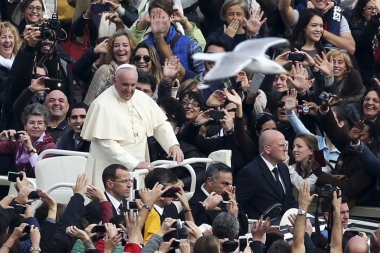
Christian Today report- The last Sunday in January is traditionally when the Pope, along with two children, release doves out of the papal studio window in a symbol of peace.

After the doves were attacked in 2014, however, a new peace symbol was adopted. Yesterday, the children released balloons into St. Peter’s Square.

The annual tradition was begun by the late Pope John Paul II, and was carried on for years without a hitch. Disaster befell the doves last year, however.

Immediately after a young boy and girl tossed the birds out of the window, one of them was chased and snapped upon by a seagull. Photographers captured the larger bird pinning the dove against a windowsill with its tail feathers clutched in its beak.

The second dove was pursued by a crow, and was similarly pinned on a windowsill. The crow pecked the bird mercilessly as thousands of spectators watched below.

The attacks brought criticism from animal rights groups, who condemned the practice of releasing doves. One advocacy organisation likened tossing doves into the square to a death sentence, as flocks of seagulls nest on the colonnade.

St Peter’s Square is near the Tiber River and is often crowded – attracting hundreds of scavenging birds.

The Vatican did not mention last year’s incident in their statement regarding Sundays messages of peace. A hot air balloon containing peace messages was flown over the square, and one of the children read a speech about peace before symbolic balloons were released.

The month of January is traditionally dedicated to calls for world peace by the Vatican.

Source: Christian Today

CAR: Government minister kidnapped by gunmen

Central African Republic’s minister for youth and sport was kidnapped by gunmen on his way home from church on Sunday.

Armel Ningatoloum Sayo was driving his wife and brother back from church in the capital, Bangui, when four unidentified gunmen got out of a taxi and stopped their vehicle.

Sayo’s spokeswoman, Tatiana Yangeko, said: “They got out of the taxi, shot in the air and forced the minister out of his car. They fled with him towards Boy Rabe,” – a neighbourhood that is a stronghold of the ‘anti-Balaka’ militia.

Yangeko added that the Prime Minister had been told.

In a separate incident on Sunday, Education Minister Eloi Anguimate narrowly escaped captured capture in Kaga Bandoro, a town 186 miles north of Bangui, a government source told Reuters.

Although the minister escaped, his driver, assistant and the town’s mayor were all seized, the source said.

These incidents follow the temporary kidnapping of a UN staff member and a French woman working for Catholic relief agency Caritas last week.

Central African Republic has been gripped by violence since the northern, mainly Muslim Seleka alliance rebelled and seized power in March 2013. The group was forced to stand aside last year having failed to contain clashes with the ‘anti-Balaka’ militia and the waves of tit-for-tat violence that went with the fighting.

The kidnapping of the Caritas worker has been linked to the arrest earlier this month by UN peace keepers of a senior member of the ‘anti-Balaka’ militia. The leader, known as General Andjilo, was wanted for crimes including murder, rebellion, rape and looting.

Sayo was a senior officer in the presidential guard before being arrested by former president Francois Bozize.

He led a northern rebel group called “Revolution and Justice” but was became a minister in the 2014 peace deal, which has seen little but conflict and political instability since independence from France in 1960.

Seleka rebels still occupy much of the north and the interim government is struggling to stamp its authority on the country. But France has started withdrawing some troops as the UN force, due to reach 10,000 by the end of April, deploys ahead of elections due later this year.

Source: Christian Today

Global call for release of head of Eritrean Orthodox church who has been under house arrest for years

Christian Today report- As the eighth anniversary of the removal of the Eritrean Orthodox Patriarch passes, the US Commission on International Religious Freedom (USCIRF) has issued a global call for his release.

Patriarch Abune Antonios, head of the Eritrean Orthodox Church, is the rightful leader of the east African country’s largest religious community.

The Eritrean authorities removed him from his position in January 2006 for failing to comply with a government order to excommunicate 3,000 parishioners who had opposed the government. Antonios had also called for the release of political prisoners.

In May 2007 he was taken from his home and put under house arrest. The government replaced Antonios with Bishop Dioscoros of Mendefera.

“We call on the Eritrean government immediately to release Patriarch Antonios and the more than 2,000 people imprisoned for their religious beliefs. Religious freedom is a fundamental, universal human right,” said Lantos Swett, chair of USCIRF in a statement.

“Unfortunately, this anniversary reminds us that these rights, as well as other human rights, have been denied to the people of Eritrea for more than two decades,” he added.

The Commission said the Patriarch suffers from severe diabetes and has been denied access to medical assistance.

Eritrea is listed ninth on Open Doors’ World Watch List of the 50 countries where it is most difficult to live as a Christian.

Since 2002 only four religious communities have been recognised by the regime, which has been governed by President Isaias Afweki since 1993.

The four recognised religions are the Coptic Orthodox Church of Eritrea, Sunni Islam, the Roman Catholic Church and the Evangelical Church of Eritrea. But the government has a tight control on all religious activities – even those that are registered.

But without this recognition, religious groups cannot gather in public. The situation is particularly difficult for evangelical and Pentecostal Christians and Jehovah’s Witnesses.

Those who are imprisoned on religious grounds, often not on any formal charges, can be subject to mistreatment and torture. Some Protestants and Evangelicals who have been released report being pressurised to give up their faith.

Source: Christian Today

First woman bishop Libby Lane pleads for prayer and support in the ministry

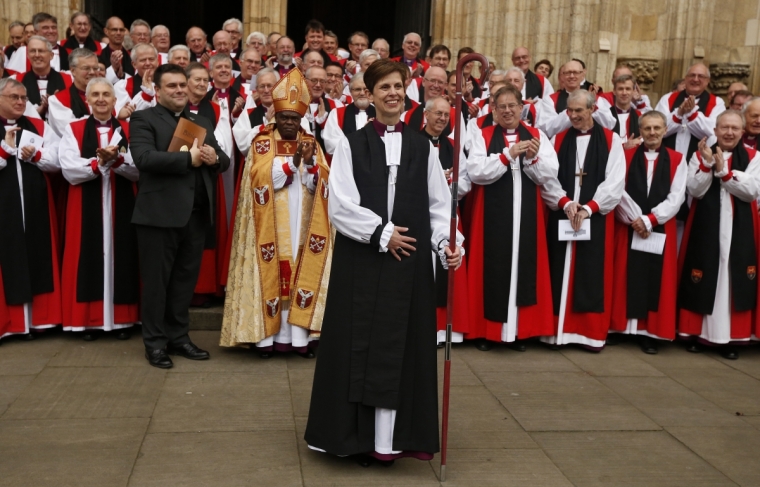
Christian Today York was teeming with robes today, as clergy from all over the world gathered to celebrate the consecration of the Church of England’s first female bishop.

It had all the markings of a momentous occasion, with the best of the pomp and circumstance the Church has to offer. Hundreds of priests, bishops and well-wishers filled York Minster to overflowing, and many more waited patiently outside to congratulate the newly appointed Bishop Libby Lane.

The service began with a procession of supporting clergy and ministers through the Minster, and a welcome from the Very Rev Vivienne Faull – herself on speculative lists as a possible candidate for first woman bishop before Lane’s selection in December. The Archbishop of York, Dr John Sentamu, presided over the ceremony, and urged those gathered to shout “The Lord Reigns!” as he opened proceedings.

Unsatisfied with the volume, however – “Jericho would never have fallen down with that” – he called for it again, three times. It was a perfectly unorthodox way of celebrating what promised to be a historic occasion.

It was a day campaigners have waited for for decades, and tears could be seen streaming down the faces of many during the laying on of hands, as Lane was officially elevated to the order of bishops. However, there was a single voice of dissent during the ceremony. As Sentamu asked the congregation if it was their will that Libby be ordained, a man walked to the front, shouting: “Not in my name”.

It was dealt with quickly by the Archbishop, and the protestor’s voice was drowned out by the rest of the congregation who declared loudly: “It is!”.

Spokesperson for the Church of England, Rev Arun Arora, later confirmed that the protestor, Rev Paul Williamson, is known by the Church, and was expected to voice his dissent. He has done so at the ordination of several women priests in the past, but a decision was taken to allow him entry to the Minster today as part of the right to object.

“The contrast was between the lone voice of the protestor, and a sea of voices affirming,” Arora said, adding on Twitter that it was “Better to show he is a lone voice” than deny him the opportunity to protest.

Despite continued tension within the Church of England over the issue, the atmosphere in York was one of celebration. Spontantous applause and cheers erupted from the Minster as Lane was declared bishop, and again as she processed out of the building.

Rev Kate Bottley, vicar in North Nottinghamshire and star of Gogglebox, told Christian Today that Bishop Libby’s consecration was an important step for unity within the Church. “It means so much that we can stand beside Bishop Libby and so many male bishops too – that’s important to mention, that there are so many men here supporting Libby today – it’s so affirming, so encouraging,” she said.

“There are people who disagree, and we saw that today, but that was one lone voice, and then 2,000 voices were even louder, saying “It is ours as well”. This is the will of God, and I’m thrilled to be a part of it.”

Russ Naylor, a retired priest from Chester, has been campaigning for female ordination and consecration for over 30 years. “The Church is finally all it’s meant to be,” he said following the ceremony.

“This is wonderful, just wonderful. And it felt completely natural,” added Rev Canon Dr Jessica Martin of Ely diocese.

Lane, now Suffragan Bishop of Stockport, was previously vicar of St Peter’s, Hale and St Elizabeth’s, Ashley in the Chester diocese. As she is not a diocesan bishop, she will not be among those women fast tracked into the House of Lords under new legislation.

Following her consecration, Lane said she has been encouraged by the support received so far.

“Archbishop Sentamu has observed, ‘the way that we show our faith and our love for one another is with two simple things, prayer and parties.’ Today is an occasion of prayer and of party – and I am thrilled that so many want to share in both,” she said in a statement.

“I cannot properly express how encouraged I have been in the weeks since the announcement of my nomination, by the thousands of messages I have received with words of congratulation, support and wisdom. I’ve heard from people of all ages, women and men – people I have known for years, and people I have never met; people from down the road, and people from across the world….every one of them has felt this moment marks something important.”

Lane added that the attention has been “a little overwhelming” and she “cannot possibly live up to everyone’s expectation”.

“And so today, at my consecration, I hold on to words of promise from the Bible, a reassurance that all this does not depend on me … ‘the God who calls you is faithful: He will do it’ (1 Thessalonians 5:24),” she said.

“My consecration service is not really about me. With echoes of practice which has been in place for hundreds of years in the church, it is a reminder that what I am about to embark on is shared by the bishops around me, by those who have gone before me and those who will come after. It places the ministry of a bishop in the context of the ministry of all God’s people. And most importantly it retells the good news of Jesus, the faithful one, who calls each of us to follow him.

“Thank you to all who are praying for me and partying with me today. Please continue to hold me in your prayers as, after the example of St Timothy and St Titus who are celebrated by the Church on this day, I share in work of proclaiming the gospel, in word and action, and bearing witness to the name of Jesus.”

Source: Christian Today

 

Porn pastor” Craig Gross says sex toys are allowed in Marriage

“Porn pastor” Craig Gross says sex toys can be used in the marriage bedroom but he draws a line at toys that cause harm, such as the ones used in the 50 Shades trilogy.

“We go to adult trade shows … every sex toy imaginable is there … I’d say some of the stuff is harmless but over the years it seems to be getting darker and darker,” Gross, founder of xxxchurch.com, says in a new video series titled “Best Sex Life Now.”

He lists whips, chains and handcuffs among the sex toys that he would avoid.

“When it gets dark or when it gets harmful, that’s a whole nother level where if you’re in love with this person, why you’d want to harm them or hurt them, I don’t know,” he states, as his wife, Jeanette, notes that the erotic romance trilogy 50 Shades has made such violent sexual acts popular.

But Jeanette reminds viewers that the novel is a fantasy and not reality.

The couple is addressing questions on sex in a newly released video series that is intended to encourage married couples, especially those of the Christian faith, to have great sex.

“So many Christians look at sex as a chore, but sex is supposed to be fun! It’s God’s way of keeping intimacy and romance in a marriage,” Craig Gross, who is known for handing out Bibles at porn shows, said in a released statement. “A lot of couples feel stuck in a rut sexually, but by encouraging open communication about their love life, couples can have mind-blowing sex for their whole lives – like God intended.”

Among the questions that the Grosses and another couple address include: Are sex toys, lingerie and sexting okay for Christians? How do we know what we can or can’t do? What if my spouse does not want to have sex?

When deciding on sex toys or “extras” such as lubricants and lingerie for the marriage bedroom, Gross recommends that spouses play to each other’s personality rather than blindly taking someone else’s advice.

“When we talk about extras, get this thing (sex) great maybe without any of these things (toys) and then look to some things as extras to go ‘oh wow, that can add to this,'” he says.

As for sexting and sending sexually explicit photos, Dave Willis, a pastor and founder of StrongerMarriages.org, gives one caution: use common sense.

“The moment you send something across airwaves that other people could have access to, then you’re opening up the potential for more people to be involved than just your spouse,” he states in the video series.

Both Willis and his wife, Ashley, are more cautious when it comes to photos (“sexy selfies”) and videos but are open to sending flirtatious texts to each other.

“Build the suspense. I think there’s things that we can do throughout the day through texting, through notes, phone calls, just to let them know you’re on my mind, I want you, I desire you. I think there’s nothing wrong with that and that’s healthy,” Ashley says.

Source: Christian Post

Razer Nabu X now in market

Techradar report- Razer’s latest fitness band was only announced a few weeks ago at CES 2015, but it is already out of the starting blocks.

The Razer Nabu X keeps a similar design flow to the original Nabu, but even more minimalist, with the text display from the original gone, replaced by a line of three LEDs. These can be customised to different colours for different alerts, and there’s also vibration for notifications.

The detachable tracking module inside the band keeps tabs on your distance travelled, steps taken, calories burnt and how long you sleep, as with every other fitness band ever. A comprehensive feature set (for its genre) for $50/£45, in other words.

The simple functionality and removal of the text display is presumably what makes the Nabu X smaller and lighter than it’s older brother, not to mention boosting the battery life to 5-7 days and reducing the price.

There’s also a twist in the tail, courtesy of what Razer calls ‘Pulse’. This is essentially NFC tech, built into the Nabu and Nabu X so that you can swap contact details with a high five, or compete for step supremacy with those around you.

Does this budget fitness band sound like the one for you? Check out our Razer Nabu X hands-on for some more impressions.

Source: Techradar

Suspected Boko Haram militants attack major city in Northeastern Nigerian

Suspected Boko Haram militants began attacking Nigeria’s major northeastern city of Maiduguri just after midnight onSunday, military, government and local sources said.

At around 9 am (0800 GMT) on Sunday, a Reuters witness said shelling could be heard and that military helicopters were circling the city.

All roads have been closed, a security source said, and commercial activity‎ has been shut down.

The militants began the attack at the edge of the city in the Njimtilo area. The city is the capital of Borno state and would be a major prize for the insurgents who are trying to carve out an Islamic state.

Boko Haram has waged a five-year insurgency to carve out an Islamic state in the northeast of Africa’s biggest economy. The militants control vast swathes of Borno state and some areas of neighbouringAdamawa and Yobe states. They recently took control of the town and army base at Baga by Lake Chad.

The army’s inability to squash the group has become a major headache for President Goodluck Jonathan, who is seeking re-election in February. Jonathan visited the state capital on Saturday as part of his campaign and opposition candidate Muhammadu Buhari was due to arrive Monday.

The insurgents last attempted to take Maiduguri from the same area in December 2013 and attacked a nearby army and airforce base.

A resident, Rachel Adamu, who lives around Njimtilo said “please pray for us, we are in danger, under serious attack now.”

Source: Christian Today

Women Bishops: how it all happened

Anyone who imagined that the consecration of Rev Libby Lane as the Church of England’s first woman bishop would bring to a close nearly four decades of debate over women’s ordination was deluding themselves. Just a week later, also at York Minster, in a highly unusual departure from tradition, just three of the assembled bishops from the northern province will actually lay on hands at the consecration of a new traditionalist bishop, Father Philip North.

The remainder have been asked to hold back out of “gracious restraint” in an attempt to preserve the authenticity of the Apostolic succession as regarded by the Church’s traditionalist wing.

As long ago as 1975, the General Synod voted: “This Synod considers that there are no fundamental objections to the ordination of women to the priesthood.”

In vain did upporters of women’s ordination argue for a change in tradition from the examples of biblical figures such as Phoebe, Junia, Mary Magdalene and the women who witnessed the Resurrection, as well as the women house church leaders in the Early Church.

Since the Oxford Movement and the High Church revival of the 19th century, the Catholic wing had flourished as a socially active as well as devout form of Anglican witness. The movement also seemed to signpost a possible path to reunion with Rome. For a long time, not jeopardising the place of Anglican Catholics in the Church, or increasingly faint hopes of rapprochement with Rome, became a priority of the leadership on a level with, if not higher than, the desire to achieve justice for women.

At the same time, pioneers such as John Stott and later Sandy Millar led an extraordinary evangelical revival through the second half of the 20th century. The headship argument from the writings of St Paul, that the man should be the head of the woman, came to dominate “orthodox” thinking on the issue.

As the secular world moved forward fast on matters of gender equality, the Church of England’s liberal wing, the only part arguing forcefully for women’s ordination in the Church, began to suffer a loss of momentum, credibility and membership in the face of catholic and evangelical renewal.

Personally, I’ve always felt the liturgical disasters of the 20th century should bear some responsibility for the divisions and traumas that we are still witnessing today.

I would go to one of the evangelical flagships, All Souls Langham Place, St Helen’s Bishopsgate or HTB, and be transported by language and prayer into a world of divine possibility, of restoration, of hope. Then I might drop in at the profoundly catholic All Saints Margaret Street, or St Matthew’s Westminster, or one of the divine Pugin chapels that were my favourites, and be lifted heavenwards by the beauty of the Roman-style Mass. Or there were the Chapels Royal, such as at Hampton Court, with the majesty of the 1662 Book of Common Prayer. More often than not, all these churches were full, some with standing room only.

Then I would return to a near empty, more liberal church, using the 1980 Alternative Service Book, the kind of church where for my entire life it seemed I had remained the youngest in the congregation, we baby boomers of the late 1950s seemingly the last generation to turn up. Soon even we began to drop off. We just couldn’t take another: “And also with you.” Would the story of women’s ordination have been better if a more uplifting and inspiring liturgy had been in place across the Church?

As it was, the vote for women priests in 1992 got through on a knife’s edge, gaining the two-thirds needed by just two votes. Many Anglo-Catholic clergy at that point took the generous compensation on offer and left for Rome, the Orthodox church or simply to return to secular life. The departure of priests such as Father Peter Geldard left the Church tragically bereft of some enormous gifts and holiness. But enough remained for it to be clear that the road to women bishops would be even more troubled than that to women priests. This was because of the particular authority vested in a bishop.

Jean Mayland, one of the original pioneers of both women’s ordination and the ASB, expresses the frustation well. Writing in Ontlook, the magazine of WATCH, in 2001 she wrote: “When women were ordained priests, we expected that the Church would welcome and affirm us. We were prepared to be charitable and recognised the need for a time of reception – giving parishes and individuals the chance to come to terms with the new situation.

“We nevertheless believed that the Church of England had made a decision by which it would stand. Instead we discover that the acceptance is half-hearted, grudging, reluctant and based on the premise that the Church might, in fact, be wrong and all we women priests can be disposed of, dispensed with and wiped off the face of history as a temporary aberration! Meanwhile great care is being shown to the needs, feelings and sensitivities of young men opposed to the priesting of women who are preparing for ordination….What is the justification for going on ordaining young men who will not accept women priests?

“It is one thing to show compassion and concern for older priests who were ordained before the Church of England accepted women priests. It is quite another to perpetuate opposition.”

Three years after the process began in 1975, a motion for legislation to remove the barriers to the ordination of women to the priesthood and their consecration to the episcopate was passed by the House of Bishops and the House of Laity, but lost in the House of Clergy by 94 votes to 149.

In 1981 synod voted for the ordination of women deacons should be open to women and passed the legislation in 1985. The first women deacons were ordained in 1987.

In 1984 the General Synod voted for to move forward on women priests but this time there was no reference to bishops. It narrowly passed in 1992 and the first women were ordained priest at Bristol in spring 1994.

The even more difficult path to women bishops kicked off in July 2000, when the synod requested a theological study. The report was debated by synod in February 2005.

Further reports were debated, and in July 2005 the synod voted that “the process for removing the legal obstacles to the ordination of women to the episcopate should now be set in train.”

Years more of complex debates followed, and by November 2012 the synod was at last ready to vote on a deeply flawed measure that hardly anyone was happy with and that would have put in place convoluted prodecures to cater to both women bishops, their supporters and the traditionalists and evangelicals on the other side. As an astounded secular world looked on, the legislation was rejected by the synod’s house of laity, meaning it could not go through. Mass soul-searching ensured in the Church of England which was subjected to worldwide ridicule but which, in retrospect, did the right thing to refuse that measure at that time.

The process was recommenced the following July, a more simple measure drawn up and finally passed a year later, last July, allowing for the choice of Libby Lane as suffragan bishop of Stockport and many more women bishops surely to follow soon.

Even among Anglo-Catholics, there is a desire to put all the trauma of the past few decades to bed. The deluge of documents and reports setting out strategies for renewed leadership and mission facing the synod over the next few years are at once challenging and exciting. Today’s consecration of Libby Lane, and that of Father North a week later, are both to be celebrated and rejoiced. The debates will continue, as the formalities of separate consecrations are finessed. But last the Church and its mission are free to move on with that all important factor, episcopal leadership, given fresh life that can flow throughout the Church, simply because it can now be resourced by 100 per cent and not just 50 per cent of the population of England.

Source: Christian Today

US:Governor Bobby Jindal calls for ‘spiritual revival’

Governor of Louisiana Bobby Jindal addressed thousands of evangelical Christians at a prayer rally in Louisiana on Saturday, where he called for a “spiritual revival” in the United States.

Jindal, who is a potential candidate for the 2016 Republican presidential nomination, missed joining a number of other Republican hopefuls at an event in Iowa, the Washington Post reports.

The rally, described as a ‘global prayer rally for a nation in crisis’, was hosted by the controversial American Family Association at Louisiana State University (LSU).

In his 15-minute speech Jindal said: “We can’t just elect a candidate to fix what ails our country. We can’t just pass a law to fix what ails our country. We need a spiritual revival to fix what ails our country.”

Jindal was raised by Hindu parents but converted to Catholicism, and now describes himself as an evangelical Catholic.

In his address Jindal described his personal journey to faith, and said it was a religious event, not a political one. But the Associated Press reports that Jindal has held a number of meetings with Christian leaders in Iowa and New Hampshire, in the hope of securing the support of the Christian right.

He told the largely Protestant evangelical congregation about his gradual conversion, saying that a high school friend had bought him a Bible for Christmas one year, the Guardian reports.

Another significant moment, Jindal said, was a conversation he had with a “pretty girl” at school who said she wanted to become a Supreme Court justice in order to overturn Roe v Wade, a landmark ruling on abortion rights. He said he was inspired by her conviction.

But the actual moment of his conversion came some time later when he saw a film about the crucifixion that was screened in the LSU chapel.

“God chose that moment to hit me harder than I’ve ever been hit before” Jindal said.

“Never in a million years did I think 27 years later I’d be back on the LSU campus as the governor of this great state calling for a spiritual revival for Baton Rouge, for Louisiana, for the United States.”

Jindal encouraged those gathered to share their faith with those they meet as his friends had with him.

“Let’s all go plant those seeds of the gospel,” he said “Share the good news with all whom we encounter.”

Protesters gathered outside the prayer event in response to the American Family Association’s stance on homosexuality and non-Christians.

Jindal was heavily criticised in Britain this week after he said that there were “no-go zones” in London and other Western cities where non-Muslims were not welcome.

Source: Christian Today