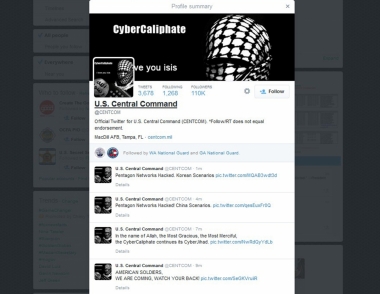
CyberCaliphate believed responsible for Pentagon Twitter hacking

The “CyberCaliphate” hacking group that attacked a Twitter account belonging to the Pentagon on Monday was founded by a Briton who was once jailed for hacking the personal address book of former British Prime Minister Tony Blair, according to government sources and private sector security experts.

US and European government sources said investigators strongly believe that Junaid Hussain, 20, was the leader of CyberCaliphate, though they do not know if he was personally involved in hacking the Twitter and YouTube accounts of the US Central Command, which oversees military operations in the Middle East.

Hussain could not be reached for comment.

In 2012, Hussain was jailed for six months for stealing Blair’s address book from an email account maintained by one of Blair’s advisors. Hussain pleaded guilty to putting details of the address book online and making hoax calls to a counter-terrorism hotline.

Hussain, who lived in Birmingham, England, moved to Syria sometime in the last two years, according to British media reports.

US and European investigators said they are investigating whether Monday’s attack on the US Central Command’s Twitter and YouTube accounts was launched from Syria, though they have not finished examining the technical evidence. The sources spoke on condition of anonymity.

Pentagon spokesman Army Colonel Steve Warren has called the cyberattack “inconvenient” but stressed that no sensitive or classified information was compromised by the hackers, who claimed to be sympathetic toward the Islamic State militant group being targeted in American bombing raids.

Investigators believe that Hussain was the main individual behind a Twitter account that operated under the pseudonym Abu Hussain al Britani, according to the sources. That account was linked to CyberCaliphate after the group last week claimed responsibility for hacking the Albuquerque Journal in New Mexico and WBOC, a Delaware television station. Neither the Albuquerque Journal nor WBOC responded to requests for comment.

The Abu Hussain al Britani account has been suspended as of Tuesday. One of the government sources said it was possible that other people besides Hussain used that account.

Alex Kassirer, an analyst with Flashpoint Global Partners, said Hussain led efforts by Islamic State to recruit “hackers for a CyberCaliphate.” Flashpoint Global Partners is a private company that monitors extremist Internet postings for government agencies and private clients.

Source: Christian Today

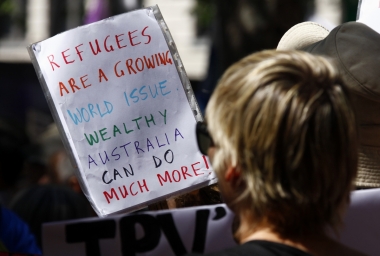
Asylum seekers sew their lips shut in Australian Detention Center

Hundreds of asylum seekers have gone on hunger strike at an Australian immigration detention centre in Papua New Guinea.

Some have sewn their lips shut to highlight fears for their security.

Australia uses offshore detention centers in Papua New Guinea and the tiny South Pacific island nation of Nauru to process would-be refugees trying to reach the country, often in unsafe boats after paying people-smugglers in Indonesia.

The detention center on Manus Island in Papua New Guinea was the scene of deadly riots in February 2014, in which one asylum seeker was killed and more than 70 injured after residents overran the camp, attacking detainees with makeshift weapons.

The protests began after detainees were told they would be moved into new accommodation, which they feared they make them more vulnerable to attack, said Ian Rintoul, executive director of the Refugee Action Coalition.

“Things have just come to a head. It’s impossible to exaggerate the real fears that people have for their safety and for their lives,” he told Reuters.

Manus Island is one of the poorest regions of Papua New Guinea, and residents have repeatedly expressed anger at the prospect of refugees being resettled in a community already lacking enough jobs.

Many of the detainees have been in the camps as long as 18 months and a technical problem has left them without running water for bathing.

A photograph provided to Reuters on Wednesday shows what appears to be a detainee with his lips stitched shut.

“Refugees inside the Manus Island detention camp are clearly suffering and have resorted to self-harm in an act of desperation,” opposition Greens Party Senator Sarah Hanson-Young said in a statement.

Prime Minister Tony Abbott’s tough line on people smuggling has been credited with grinding the trade to a virtual halt, but thousands remain in camps like Manus Island.

Under tough new laws instituted by former Prime Minister Kevin Rudd, none of the asylum seekers in Papua New Guinea will ever be eligible for resettlement in Australia, even if they are found to be genuine refugees.

But settling in Papua New Guinea would appear to be out of the question.

“There simply is no safe arrangement for resettlement in Papua New Guinea. It is a gaping whole at the end of the Australian government’s offshore processing arrangement and as long as that exists, there isn’t a remedy,” Rintoul said.

source: Christian Today

UN should intervene more in emergencies, says UN aid chief

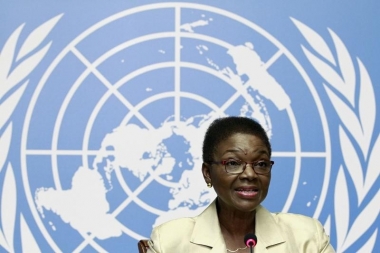
UN aid chief Baroness Amos on Tuesday suggested more intervention in humanitarian emergencies as she said some states were aggressively asserting sovereignty rights to stop action being taken to protect civilians.

Amos cited Syria as an example after the United Nations Security Council had to adopt two resolutions to authorise the delivery of cross-border humanitarian aid in a bid to reach millions of people in need as a result of the country’s civil war.

“I don’t think that the Syrian government has ever forgiven me. They see me as personally responsible for pushing the Security Council to agree to those resolutions,” Amos told the Council of Foreign Relations in New York.

Amos, who will step down in March after more than four years, also said the conflict in Syria has been her low point. More than 12 million people in Syria need help, while another 3.2 million have fled the conflict that has killed some 200,000 people.

“Perhaps we could have pressured the Security Council earlier to get the resolutions that we did,” she said.

Amos said there was not enough accountability at the United Nations and that while the Security Council has recognised flagrant violations of international humanitarian law around the world, “there is no action after that”.

“As millions of people are forced to flee, as there is abuse on an unprecedented scale of girls and women in many countries … and action is not being taken in relation to this, I ask the question: should we not be more interventionist?” she said.

But Amos said she did not necessarily mean “boots on the ground” intervention.

“I’m asking the question about an architecture that we already have, a body of rules and law that we already have that we are not holding ourselves accountable to. I see this as a significant failure,” she said.

Source: Christian Today

Pope Francis gave Sri Lanka its first saint for half a million people

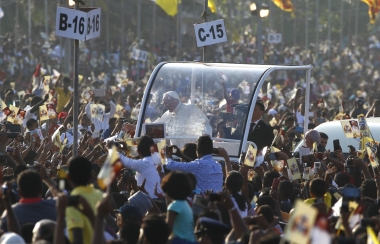
Pope Francis gave Sri Lanka its first saint at a waterfront Mass for more half a million people in Colombo on Wednesday, calling 17th century missionary Joseph Vaz a model of reconciliation after the country’s recent civil war.

The Pope, who on Tuesday was tired after starting his trip under a blazing sun, looked relaxed against a sparkling backdrop of rolling waves as he told the hushed crowd that Vaz was an example of religious tolerance relevant to Sri Lanka today.

“Saint Joseph shows us the importance of transcending religious divisions in the service of peace,” he said in his homily, delivered to a nation recovering from a long war between mainly Buddhist Sinhalese and Hindu Tamils.

Vaz, who was captured as a suspected spy after he crept into the tropical island in disguise, was born in 1651 in India’s Goa, then a Portuguese colony.

He traveled south at the age of 36, dressed as a beggar, to a country then divided into kingdoms and European colonies after hearing about the persecution of Catholics by the Dutch. He worked for years under the protection of a Buddhist king.

On Monday, Francis called on the Buddhist-majority country to uncover the truth about its bloody civil war that ended in 2009 with the army’s crushing defeat of Tamil rebels and the deaths of tens of thousands of civilians.

Francis’ visit, the first by a pope in 20 years, has added to the sense that a new chapter is opening on the island, which voted the wartime leadership out of power last week.

Francis, speaking slowly in English, said Christians should follow the example of Vaz to build peace, justice and reconciliation. Catholics make up about seven per cent of Sri Lanka’s 20 million population, while 10 times as many people follow Buddhism.

“We really need people like him to ensure peace and harmony in this country,” a woman who identified herself as Fathima, wearing traditional Muslim dress, said of the Pope.

About 10 percent of the population follow Islam. They faced rising attacks from Buddhist extremists under the government of former President Mahinda Rajapaka.

Earlier, Francis stepped out of his popemobile to greet people, placing his hands on children’s’ heads.

He was due to go by helicopter to a shrine in the north that was shelled in the war, then move on to the Philippines on Thursday as part of a week-long tour, his second trip to Asia, to shore up the Church’s presence in developing nations.

BENDING THE RULES

The canonization is an example of Francis’s no-nonsense approach to creating saints to meet the demands of the flock for new holy figures, particular in parts of the world where the Church is still growing.

He bent Church rules and dispensed with a regulation that normally requires a second miracle to be attributed to a candidate for sainthood. Vaz was beatified by Pope John Paul during a visit to Sri Lanka in 1995.

Vaz spent five years secretly preaching in the lush lowlands before making his way to the fortress-like Kingdom of Kandy in the hill district’s rainforests, where he was captured and accused of espionage for Portugal under the guise of religion.

He was detained for nearly a year until he convinced the powerful king that he was a priest, according to texts from the 17th century cited on a website run by Sri Lankan Catholics.

Vaz remained in Kandy until his death in 1711, by which time the Church says he had almost single-handedly re-established Catholicism in Sri Lanka.

Some nationalists highlight the violence of the Church’s early years and say it led to the destruction of many Buddhist temples.

Source: Christian Today

Half of British Population holds an antisemitic view

Nearly half of the British population holds an antisemitic view, according to a new poll published in a report today (Wednesday).

Britain is at “tipping point” on the issue of antisemitism, the report says.

The YouGov poll for the Campaign Against Antisemitism comes in the wake of shocking anti-Jewish outbursts in Paris after the Charlie Hebdo and other recent Islamist fundamentalist murders, which included a deadly attack on a Jewish supermarket.

Pollsters found that 45 per cent of Britons hold an antisemitic view.

And in a second survey carried out by the campaign itself, more than half of British Jewish people said they feared Jews have no future in Great Britain. A quarter of British Jews have considered leaving.

The YouGov survey, commissioned ahead of the 70th anniversary of the end of the Holocaust to be marked on Holocaust Memorial Day later this month, found that one in eight Britons believe Jewish people use the Holocaust as a means to get sympathy.

Between them, the two surveys found that one in four British people believe Jews chase money more than other British people, one in six people believe that Jews think they are better than other people and that Jews have too much power in the media.

More than half of all British Jews feel that antisemitism now echoes the 1930s and nearly as many fear their family is threatened by Islamist extremism. Nearly eight in ten said they had witnessed antisemitism disguised as a political comment about Israel.

There are nearly 270,000 Jewish people living in Britain, 0.4 per cent of the population. The community has thrived in Britain since Oliver Cromwell permitted their readmission to the country 360 years ago but the report shows that many people still harbour anti-Jewish opinions.

It says that although some antisemitic views may be unintentional, they are no less offensive for it. Many people in the UK have simply never met Jewish people, it says.

Last year saw the most antisemitic incidents since records began 30 years ago. In July 2014 alone, London suffered its worst ever month for hate crime, 95 per cent of which was against Jews.

The Annual Antisemitism Barometer is the largest study of its kind. While antisemitism in Britain is not at the levels seen most of Europe, the report says the poll results should be a wake-up call.

“Britain is at a tipping point: unless antisemitism is met with zero tolerance, it will continue to grow and British Jews may increasingly question their place in their own country,” it says.

Gideon Falter, chairman of the Campaign Against Antisemitism said: “Britain’s Jews must be shown that they are not alone. The government is clearly taking this seriously and in light of these figures we expect that the Police and Crown Prosecution Service will want to accelerate discussion of the five-point plan presented at our meeting with the Home Secretary last week.”

Jonathan Sacerdoti, also of the campaign, said: “Jewish people have contributed to almost every part of British life, yet rising antisemitism here and across Europe means that now more than ever Jews are afraid. Some are even reconsidering their future here. British values of tolerance and pluralism must be upheld, so that minority groups like Jews feel comfortable and protected.”

Source: Christian Today

Reasons behind Obama’s absence in Paris Solidarity March

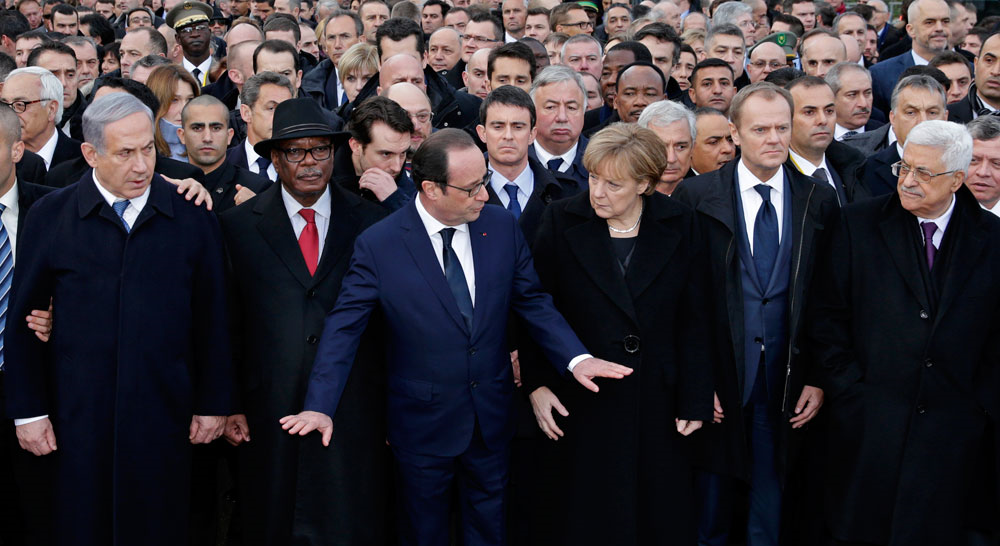
While President Barack Obama was criticized for not attending Sunday’s solidarity rally in Paris in support of a satirical magazine, Charlie Hebdo, that was attacked by Islamic terrorists, the White House has cited three reasons Obama’s attendance was unworkable.

1. Timing

The rally came together in a short period of time. The White House only learned of the event on Friday night. Presidential appearances at public events in modern times require planning, and more than the short notice the White House was provided.

2. Security

Even though security was tight due to the many world leaders at the rally, the president of the United States has more stringent security requirements. Obama’s security needs were an “onerous and significant” reason he could not attend the event, Press Secretary Josh Earnest explained.

Speaking of both the timing and security issues, Earnest added, “We’re talking about a march that came together in about 36 hours, and a march that took place outdoors.”

3. He Would Have Been a Distraction

If Obama would have gone, his security needs and the fact that he would have been the most high-profile figure at the event would have been a distraction, an unnamed White House source told CNN.

“It is worth noting that the security requirements for both the President and [Vice President] can be distracting from events like this — for once this event is not about us!” he said.

Some media figures and Republicans criticized Obama for not attending the event.

NBC News’ Andrea Mitchell said the decision to not attend came “after a noticeable absence of really strong reaction after those horrors in France last week” and, citing a senior official, the decision “seemed ham handed.”

In an op-ed, CNN’s Jake Tapper wrote, “I say this as an American — not as a journalist, not as a representative of CNN — but as an American: I was ashamed [Obama was not at the rally]. … There was higher-level Obama administration representation on this season’s episodes of “The Good Wife” on CBS.”

CNN’s Fareed Zakaria called the White House’s explanation “pathetic.” It is “possible,” he added, that Obama could not attend due to the timing and security concerns, but a high level official should have attended.

“I thought this is why God invented vice presidents,” Zakaria said.

At a Monday press conference, Earnest agreed. “I think it’s fair to say that we should have sent someone with a higher profile,” he said.

The highest level official at the event was the U.S. ambassador to France, Jane Hartley. Vice President Joe Biden was at his home in Delaware that day and had no public events scheduled. Secretary of State John Kerry was at an event in India. Attorney General Eric Holder was in Paris at the time, but did not attend.

Republican Florida Sen. Marco Rubio agreed with the timing and security concerns and that Obama’s appearance would have been disruptive, while also arguing that a higher profile official should have represented the United States at the event.

“I understand that when the president travels, he brings with him a security and communications package which is intense. And I understand you drop that into the middle of something like this, it could be disruptive. There’s a plethora of people they could have sent. I think, in hindsight, I hope that they would have done it differently,” he said on “CBS This Morning.”

Republican Texas Sen. Ted Cruz, on the other hand, argued that Obama should have been there. In an op-ed for Time, Cruz argued that his absence was “symbolic of the lack of American leadership on the world stage, and it is dangerous.”

“Our President should have been there, because we must never hesitate to stand with our allies,” he added.

Source: Christian Post

Man linked To Charlie Hebdo Massacre Arested in Bulgaria

A man believed to be linked to the Charlie Hebdo massacre in Paris last week has been arrested in Bulgaria, officials announced today.

Prosecutor Darina Slavova told ABC News that Fritz-Joly Joachim, 29, was arrested on Jan. 1 for allegedly trying to smuggle his 3-year-old son into Syria. Joachim is believed to be part of a terrorist criminal group and had been in communication with Cherif Kouachi, one of the Charlie Hebdo killers, before his attempt to enter Syria. He was arrested in Bulgaria for allegedly kidnapping his son, and a background check showed his association with the terrorist group.

Joachim converted to Islam 15 years ago and reportedly became radicalized just two years ago. He resides in Bobigny, a suburb of Paris and is expected to be extradited to France, where he will likely face charges in association with the massacre that saw 12 people initially murdered before the Kouachi brothers were taken down by police after a standoff.

Two other suspects, Amedy Coulibaly and his wife Hayat Boumeddiene, then murdered a police officer and eventually took several people hostage in a kosher grocery store before Coulibaly was killed by police. Five hostages were killed in the grocery store standoff.

Boumeddiene was able to escape to Turkey before the attacks took place, and she later crossed the border into Syria. It’s unknown if authorities will pursue her in the country or exactly what role she may have played in the attacks in Paris.

Officials in the United States have placed new security restrictions to hopefully prevent further attacks and possible airplane bombings.

“This group, AQAP, is absolutely determined … to try to [carry] out an attack on a U.S.-bound airplane,” Matt Olsen, former head of the National Counterterrorism Center and ABC News consultant said of al Qaeda’s Yemen affiliate, which is the branch that the Kouachi brothers belonged to and likely received training from before carrying out their attacks.

Source: Christian Post

Sister Donna Markham becomes First Female President of Catholic Charities USA

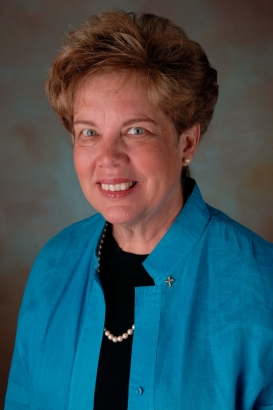
Sister Donna Markham has been named as the new president of Catholic Charities USA (CCUSA), the first time a woman has occupied the post in the organisation’s 105-year history.

CCUSA, based in Alexandria, Virginia, is the national office of more than 160 local Catholic Charities agencies nationwide, all of which are working to tackling poverty in America.

Sister Donna is an Adrian Dominican sister and clinical psychologist. She has a PhD in clinical psychology and is currently president of the Behavioural Health Institute at Mercy Health, one of the largest non-profit health systems in the US.

“There can be no greater call than to serve and advocate on behalf of persons who struggle to get by in a world where they are all-too-frequently relegated to the margins of society and where they long for dignity, hope and compassion,” Sister Donna said in a statement.

“I feel blessed to walk among the many dedicated Catholic Charities workers across the country who daily make the Gospel come alive through their care for their sisters and brothers in need.”

Sister Donna, who will start her new role in June, previously served on CCUSA’s board of trustees for eight years.

The organisation reaches more than 9 million people in America each year, providing social services such as housing and family support services, regardless of religion.

The outgoing president, Father Larry Snyder, has been in post since 2005, and is moving to become vice-president for mission at the University of St Thomas in Minnesota. During his time as president he became a leading voice for the rights of the poor in US politics.

Source: Christian Today

Austrian Teenagers who planned to marry IS militants walk free from custody

Two Austrian teenage girls intercepted on their way to marry fighters of the insurgent group Islamic State (IS) walked free from custody on Tuesday when a judge issued a preliminary ruling that they had committed no crime.

Prosecutors had asked a Salzburg court to place the girls, aged 16 and 17, in investigative custody pending an investigation into whether they were members of a terrorist organization.

The teens had returned to Austria from Romania, where they were picked up by authorities on a train on Dec. 30 as they tried to make their way to Syria to marry Islamic State jihadist fighters there.

But the Salzburg judge decided to release the girls.

“In her opinion the girls’ behavior is not criminal, not yet, because they were stopped in Romania and did not really get to join a terrorist organization,” a court spokeswoman said.

The court imposed no travel restrictions on the two, she added.

Prosecutors, who had wanted the suspects jailed to prevent them from fleeing, have 14 days to appeal against the ruling while the investigation continues.

Around 170 people, many from Islamic immigrant backgrounds, have traveled to the Middle East from Austria to join Islamist militant groups, the government says.

Around 60 have returned, raising fears they could launch attacks akin to the slayings in Paris last week.

The girls were detained in their homes in Salzburg and Upper Austria province after their return. They had Bosnian and Chechen family backgrounds, according to the APA news agency.

Source: Christian Today

Pope Francis blames massacre in France on “deviant forms of religion”

Pope Francis spoke to a large crowd last week to address the massacre in France and condemned “deviant forms of religion” for the shedding of blood.

“Losing their freedom, people become enslaved, whether to the latest fads, or to power, money, or even deviant forms of religion,” Francis said in an address to the members of the Diplomatic Corps. There is a “culture of rejection” that leads to “the breakdown of society and spawning of violence and death.”

Last week was one of the worst attacks in the city of Paris, with a total of 17 people left dead after persons loyal to the Islamic State murdered 12 persons, and another two people killed a police officer and several hostages in a standoff that ended on Friday. The three suspected killers were shot dead by police after the standoff. In the wake of the assault, Parisians and European leaders came together to send a powerful message that they would not cower to terrorists.

“We see painful evidence of this in the events reported daily in the news, not least the tragic slayings which took place in Paris a few days ago,” the Pontiff said. “Religious fundamentalism, even before it eliminates human beings by perpetrating horrendous killings, eliminates God himself, turning Him into a mere ideological pretext.”

However, Francis did not limit his words of concern to the actions in Paris. He also addressed the kidnapping of young schoolgirls in Nigeria by Boko Haram and the “unspeakable brutality” of over 100 children by the Taliban in Pakistan. The Pope then spoke to the closing of Guantanamo prison, which he hopes will happen sooner rather than later, and the newly reformed relations between Cuba and the United States. Francis was instrumental in helping the two countries come together after years spent in seclusion.

The Pope is currently in Sri Lanka on a mission to pursue the truth and greet his followers.

“The process of healing also needs to include the pursuit of truth, not for the sake of opening old wounds, but rather as a necessary means of promoting justice, healing and unity,” Francis said after landing in the capital of Colombo. “The great work of rebuilding must embrace improving infrastructures and meeting material needs, but also, and even more importantly, promoting human dignity, respect for human rights, and the full inclusion of each member of society.”

This is the first papal visit to the country since 2009, when a deadly civil war finally ended.

Source: Christian Post