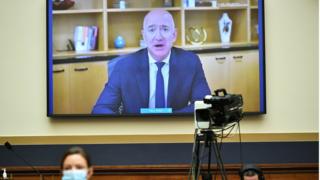
Las Vegas Sands president says city of Las Vegas will see more pain as pandemic persists – CNBC

Las Vegas Sands President Robert Goldstein told CNBC on Thursday that the city of Las Vegas will continue to struggle economically as the coronavirus pandemic persists. 

“It’s clearly a difficult time for us … and from my perspective, we’re in for some more pain around here,” Goldstein said in an interview on “The Exchange” with CNBC’s Contessa Brewer. 

Goldstein’s comments come two days after the announcement that CES, the U.S.’ biggest technology show, will be an online-only event in January due to the coronavirus — yet another blow to the economy of Las Vegas, where CES is held. Last year, the multiday event had more than 171,000 attendees from across the world. 

“Las Vegas … is a large-scale city by any means you measure it: 150,000 sleeping rooms, large conventions, large banquets. Large is the word for Las Vegas, so not exactly an easy place to be in this environment,” said Goldstein, who called CES going virtual “hurtful short term” for the city. 

Casino resorts in Las Vegas closed due to the coronavirus in mid-March and began to reopen on June 4.

Las Vegas is a destination city dependent on tourism, especially from visitors who fly in. For Las Vegas to recover meaningfully, Goldstein said, a vaccine to prevent Covid-19 or “something that changes the consumer perception of this virus” is needed. “And I don’t see that happening short term,” said Goldstein, who also is chief operating officer. 

Las Vegas Sands, which generates about 90% of its EBITDA from Macao and Singapore, did receive a bit of relatively positive news this week as the Chinese government will begin broader visa issuance for Macao. The company generates a little over 60% of its revenue from the Chinese territory and casino hub. 

“It’s a step in the right direction, but not the step,” Goldstein said, because the change to visa issuance policy does not yet cover tourists. “We’re tourist-driven.” 

However, Goldstein said he believes that a restart to the critical program known as the individual visit scheme, or IVS, may not be too far off. “I think it will happen in the course of the summer or fall. It will be slow. It will not be large steps. It will be a series of small steps leading to a full-scale IVS opening both for Guangdong and all of China at some point,” he said. “What that point is, no one really knows.” 

But he added: “We do know that the Asian consumer, the Chinese consumer, is very conversant with a virus environment. They’re used to masks and gloves and social distancing and temp checks. They’re not going to respond like Americans, who had a hard time with it. We also know that they’re not going to travel beyond China, so I think Macao will become a very favorable destination when those doors do open.” 

Shares of Las Vegas Sands were higher by more than 3% on Thursday, outperforming the broader S&P 500, which was trading slightly negative. The company, founded by CEO Sheldon Adelson, reported last week net revenues were down 97% year over year for the quarter that ended June 30. It posted a net loss of $985 million for the quarter. 

Despite the financial challenges the pandemic has presented for the company, it recently said it was extending its pledge to maintain employee benefits and pay through at least Oct. 31. In a letter to employees obtained by CNBC’s Brewer, Adelson said he believed Las Vegas Sands was the only casino operator not to furlough or lay off workers due to the Covid-19 crisis. 

Adelson feels that “supporting people in these difficult times is the right thing to do from a moral perspective, at a time when this city is really having some incredible challenges,” Goldstein said. “But also business wise, we believe this pandemic will eventually go away and we’ll be at the head of class in terms of desirability both for customers and also for employees.” 

— CNBC’s Contessa Brewer contributed to this report.

Facebook usage and revenue continue to grow as the pandemic rages on – The Verge

The surge in Facebook usage during early shelter-in-place orders in the United States was not just a blip. Daily users of Facebook increased 12 percent year over year, to 1.79 billion. Monthly usage across its family of apps, which also include Instagram and WhatsApp, rose 14 percent, to 3.14 billion. And Facebook’s mostly ad-based based business rose along with them: the company’s revenue was up 11 percent year over year, to $18.69 billion.

“We’re glad to be able to provide small businesses the tools they need to grow and be successful online during these challenging times,” Facebook CEO Mark Zuckerberg said in a statement. “And we’re proud that people can rely on our services to stay connected when they can’t always be together in person.”

The company’s stock surged more than 5 percent in after-hours trading.

While Facebook has thrived during the pandemic, its growth is still lower than that of other tech giants. For example, Amazon revenue grew 40 percent to $89 billion in earnings announced Thursday, beating analyst expectations by roughly $8 billion. Still, Facebook did better than Alphabet, where revenue declined 2 percent year over year.

But the company’s numbers are impressive in part because of a high-profile advertiser boycott that roiled the social network in July. Coca-Cola, Lego, Starbucks, and Unilever are among the companies that pulled advertising from Facebook and other social networks, driven by a coalition of civil rights groups that accused them of doing too little to stop the spread of hate speech.

Even without big-brand advertisers, Facebook was able to grow revenue on the strength of the millions of small businesses that rely on it for direct-response advertising. Facebook said in the first three weeks of July, revenue growth was roughly in line with its second quarter growth rate of 10 percent, indicating that the company had largely shrugged off the boycott.

As it did last quarter, the company warned that increased engagement may not last once the COVID-19 pandemic begins to subside. “More recently, we are seeing signs of normalization in user growth and engagement as shelter‑in-place measures have eased around the world, particularly in developed markets where Facebook’s penetration is higher,” the company said.

Usage will be flat or slightly down next quarter, the company said.

Facebook has $58.24 billion in cash and cash equivalents on hand, the company said. It now has 52,534 employees, up 32 percent from a year earlier.

Google parent company Alphabet sees its first revenue decline in history – The Verge

Google parent company Alphabet warned in last quarter that it was expecting to see the impact of coronavirus in the second quarter results, and it did: the company saw its first revenue decline in its history. But it managed to beat Wall Street’s revenue expectations.

Total revenue for the quarter was $38.3 billion, versus the $37.4 billion expected, but that marks a 2 percent decline from the second quarter of 2019. Net income dropped to $6.9 billion, from $9.9 billion a year ago,. Revenue for Search was $21.3 billion, down from $23.6 billion.

“We continue to navigate through a difficult global environment,” CFO Ruth Porat said in a statement announcing the earnings.

One bright spot was YouTube, where advertising revenue rose to $3.81 billion, from $3.6 billion last year. Google’s Cloud division saw rising revenue as well, to $3.01 billion from $2.1 billion in the year ago quarter.

During a call with analysts, Porat said she was “cautiously encouraged” by the company’s growth near the end of the quarter, which ended June 30th, but added “we believe it its premature to gauge the durability of recent trends given the obvious uncertainty of the global macro environment.”

CEO Sundar Pichai said on the call that while the economic climate remained fragile due to the coronavirus pandemic, “we saw the early signs of stabilization as users returned to commercial activity online.”

Pichai said YouTube and Google Play subscriptions saw “good traction” in the quarter, with app and game downloads rising 35 percent. It added some large customers to its Cloud segment, including Deutsche Bank, Pichai added, and Cloud also benefited from the number of people working from home during the pandemic. “Customers are choosing Google Cloud to either lower their costs by improving operating efficiency or to drive innovation,” he said.

Revenue for Alphabet’s Other Bets category — which includes its experimental X lab, Waymo self-driving subsidiary, and a number of other divisions like its Verily life sciences unit was down, to $148 million from $162 million a year ago. Other Bets saw an operating loss of $1.12 billion.

Google “other revenues,” which includes its hardware, Play Store, and non-advertising YouTube revenues — reported $5.12 billion, up from $4 billion.

Asked about the anti trust investigations into Google’s search and Android businesses, Pichai said the company would “adapt,” adding, “I think the scrutiny is going to be here for a while.”

Alphabet was one of four tech giants reporting quarterly earnings on Thursday, and the only one whose results showed a decline from the year-ago quarter. Its stock rose slightly in after-hours trading Thursday.

Stocks are set to jump Friday after four tech giants post strong earnings, Nasdaq futures gain 1% – CNBC

Stock futures jumped on Thursday night, priming Wall Street to end the week on a high note as some of the biggest tech stocks — Facebook, Amazon, Alphabet and Apple — reported quarterly results that beat high expectations. 

Nasdaq 100 futures traded 0.9% higher. Dow Jones Industrial Average futures gained 173 points, or 0.7%. S&P 500 futures climbed 0.5%.

Apple reported a blowout quarter, with overall sales expanding by 11%. Apple also announced a 4-for-1 stock split. 

“Apple’s earnings report was breathtaking,” said Andrew Smith, chief investment strategist, Delos Capital Advisors. “Double-digit revenue growth during a quarter which saw most of the U.S. economy shutdown is remarkable. This earnings report shows that Apple is firing on all cylinders. Apple’s stock crossed the symbolic $400 a share threshold in after-hours trading, boosted by a four-for-one stock split, which was icing on the cake for investors.”

Amazon, meanwhile, traded 5.3% higher as the company saw its sales skyrocket during the coronavirus pandemic. Facebook shares rallied more than 7% after the bell as the social media giant posted revenue growth of 11% even amid the coronavirus pandemic slowdown. The company also issued stronger-than-expected sales guidance for the current quarter. 

Google-parent Alphabet also posted better-than-expected results, sending the stock up 0.4%. The stock’s performance was muted relative to the other Big Tech names as the company’s overall revenue decline in its history. Revenues for Google Cloud were also just below analyst expectations. 

“The numbers were amazing relative to expectations,” said Peter Boockvar, chief investment officer at Bleakley Advisory Group. “We’ll see after their conference calls what has been priced in and what hasn’t.”

With those gains, the four stocks were set to add about $200 billion to their total market cap, bringing it to more than $5 trillion. 

Big Tech has been the stalwart on Wall Street this year. Amazon and Apple are up 65.2% and 31%, respectively, in 2020. Facebook and Alphabet have risen more than 14% over that time period. 

The Dow and S&P 500 both fell on Thursday after the U.S. government released data showing the biggest quarterly gross domestic product contraction on record for the country. The Dow dropped more than 200 points and the S&P 500 ended the day down 0.4%. U.S. GDP contracted by 32.9% during the second quarter, surpassing a record drop from mid-1921. 

— CNBC’s Patti Domm contributed to this report.

Subscribe to CNBC PRO for exclusive insights and analysis, and live business day programming from around the world.

Amazon Q2 earnings blow past estimates as coronavirus buying boosts revenue, profit – Yahoo Finance

Amazon (AMZN) posted second quarter earnings on Thursday that blew away Wall Street estimates, bolstered by consumer trends during the coronavirus pandemic that have catapulted the tech giant into one of the crisis’ biggest beneficiaries.

The company’s results are even more impressive given that it acknowledged spending over $4 billion during the quarter on COVID-19 related costs. Here are the results compared to estimates from consensus compiled by Bloomberg:

The quarter’s performance was boosted by operating cash flow that surged 42% to $51.2 billion for the trailing twelve months, compared with $36.0 billion comparable year-ago period. Net sales soared 40% compared with $63.4 billion a year ago, and Amazon’s Web Service (AWS) — the company’s massive cloud operation — saw 29% growth as more companies shifted to working remotely.

Patrick Moorhead, president and principal analyst at Moor Insights and Strategy, noted that AWS’s growth during the quarter was “larger than the entire annual revenue of many cloud plays. AWS is well on its way to creating an annualized, $40B revenue company. This makes AWS larger than Salesorce.com and SAP.”

Meanwhile, Amazon also said it plowed over $9 billion into capital projects, and saw its grocery delivery capacity skyrocket by more than 160% amid a threefold spike in online grocery sales during the quarter.

“We’ve created over 175,000 new jobs since March and are in the process of bringing 125,000 of these employees into regular, full-time positions,” CEO Jeff Bezos said in a statement.

“And third-party sales again grew faster this quarter than Amazon’s first-party sales. Lastly, even in this unpredictable time, we injected significant money into the economy this quarter, investing over $9 billion in capital projects, including fulfillment, transportation, and AWS,” he added.

A surging stock

The stock — which rallied by over 6% in after-hours trading — has been on a tear since the coronavirus pandemic resulted in widespread lockdowns, with home-bound consumers flocking to the website for their needs. Year to date, Amazon has rallied by over 63%, far outpacing the S&P 500 Index.

Amazon’s results boosted the net worth of Bezos, the world’s richest person, by almost $10 billion to $189.5 billion, according to Bloomberg’s Billionaires Index data. The billionaire is his company’s single largest individual stockholder, owning over 11% of the shares outstanding.

Amazon has notched multiple consecutive record closes — along with the other cohorts within the high-flying “FAANG” tech stocks that include Facebook (FB), Amazon (AMZN), Apple (AAPL), Netflix (NFLX) and Alphabet’s Google (GOOG).

According to Q3 guidance provided by the company, net sales for the next quarter are expected to check in between $87 billion and $93 billion, a 24% – 33% gain from the comparable period in 2019. Coronavirus-related spending is seen topping $2 billion in Q3, Amazon said, on operating income that is expected to fall within a $2 billion to $5 billion range.

Daniel Salmon, an analyst at BMO Capital Markets who ranks Amazon at No. 4 among a “mega cap pecking order” of top stocks, said this week that the stock’s “long-term opportunity is stronger than ever, and we also continue to see outperformance over the next 12 months.”

However, he added that the bank was “cautious” given the recent surge, and the potential for Amazon to ramp up investment spending.

Bezos goes to congress

The Q2 report comes on the heels of Bezos testifying before Congress for the first time ever Wednesday afternoon. The billionaire, who is usually able to control the narrative over the technology and retail behemoth, found himself on the defensive after being asked about Amazon’s use of third-party seller data.

When asked if customer information is used for Amazon’s benefit, Bezos said the company restricts this, but added: “I can’t guarantee that the policy hasn’t been violated” — a response that raised eyeballs among market participants.

Javier David is an editor for Yahoo Finance. Follow him on Twitter: @TeflonGeek

Find live stock market quotes and the latest business and finance news

For tutorials and information on investing and trading stocks, check out Cashay

Follow Yahoo Finance on Twitter, Facebook, Instagram, Flipboard, LinkedIn, and reddit.

The FCC authorizes Amazons satellite internet network that would compete with Elon Musks Starlink – CNBC

Jeff Bezos, founder and chief executive officer of Amazon, speaks in Washington, D.C., on Sept. 19, 2019.

Andrew Harrer | Bloomberg | Getty Images

The Federal Communications Commission declared on Thursday that Amazon may build its ambitious satellite internet system, which would compete with SpaceX’s Starlink network.

Amazon’s project, known as Kuiper, would see the company launch 3,236 satellites into low Earth orbit. Amazon says it will deploy the satellites in five phases, with broadband service beginning once it has 578 satellites in orbit.

“We conclude that grant of Kuiper’s application would advance the public interest by authorizing a system designed to increase the availability of high-speed broadband service to consumers, government, and businesses,” the FCC secretary Marlene Dortch said in its authorization order.

The company has not outlined a timeline or cost for Kuiper and the FCC said the company has not finished the satellites’ design. But Morgan Stanley has declared the high-speed internet network has the potential to be a “$100 billion opportunity” for Jeff Bezos‘ company.

Kuiper is poised to go toe-to-toe with SpaceX’s Starlink network of high-speed internet satellites, which Elon Musk’s company has been steadily launching for the past year. SpaceX has launched more than 500 Starlink satellites and aims to begin offering direct-to-consumer broadband service later this year.

One issue that SpaceX pushed back on during was Kuiper’s approach to orbital debris. While Amazon emphasized that it would remove its satellites from orbit within 355 days of them completing their missions, SpaceX pointed out that Kuiper “failed to submit a casualty risk analysis” of whether Amazon’s satellite debris might survive reentry. Part of that analysis would be an estimate calculating “the probability of human casualty,” which the FCC said Amazon will have to latter present as a part of a final debris mitigation plan.

Notably, SpaceX wasn’t the only one to push back during the FCC’s consideration of Amazon’s application. Iridium Communications, Hughes Network Systems, Intelsat, Inmarsat, SES, WorldVu, Telesat and Theia also filed comments about or petitions against Kuiper’s application. 

Amazon’s space reach

Jeff Bezos, founder of Amazon, Blue Origin and owner of The Washington Post via Getty Images, introduces their newly developed lunar lander “Blue Moon” and gives an update on Blue Origin and the progress and vision of going to space to benefit Earth at the Walter E. Washington Convention Center.

Jonathan Newton | The Washington Post | Getty Images

While wholly separate from Amazon, Bezos also runs another space venture called Blue Origin that is developing next-generation rockets and spacecraft such as a lunar lander for returning humans to the moon. A team led by Blue Origin recently won a NASA contract worth $579 million as it competes with Elon Musk’s SpaceX and aerospace contractor Dynetics to build spacecraft that help the agency achieve its goal of landing astronauts on the moon by 2024.

Kuiper is the name of a belt of objects that include asteroids and dwarf planets. It was named for the late Dutch American astronomer Gerard Kuiper.

Subscribe to CNBC PRO for exclusive insights and analysis, and live business day programming from around the world.

Amazon, Facebook and Apple thriving in lockdown – BBC News

Jeff Bezos testifies by remote videoImage copyright
Reuters

The coronavirus crisis might be causing widespread economic upheaval around the world, but the world’s biggest tech firms are thriving.

Amazon sales soared 40% in the three months ending June, while Apple saw a surge in purchases of its iPhones and other hardware.

At Facebook, the number of people on its platforms, which include WhatsApp and Instagram, jumped by 15%.

The gains come as the firms face scrutiny over their size and power.

At a hearing in Washington on Wednesday, lawmakers grilled the companies about whether they were abusing their dominance to quash rivals, noting the sharp contrast between their fortunes and many other firms.

Their positions are likely to become even stronger, as the pandemic pushes even more activity online, said Congressman David Cicilline, the Democrat who leads the committee.

“Prior to the coronavirus pandemic, these corporations already stood out as titans in our economy,” he said.

“In the wake of COVID-19, however, they are likely to emerge stronger and more powerful than ever before.”

The gains weren’t a surprise to analysts – though just how well many of the firms did, was.

At Amazon, the quarterly profit of $5.2bn (£4bn) was the biggest since the company’s start in 1994 and came despite heavy spending on protective gear and other measures due to the virus.

“This is an exceptional quarter on all fronts under extreme circumstances,” Moody’s vice president Charlie O’Shea said of Amazon’s blockbuster rise.

What were the results?

The e-commerce firm’s sales surged 40% for the three months ending 30 June to $88.9bn (£67.9bn) – its strongest year-on-year growth in years. Profits rose to $5.2bn from 2.6bn for the same period in 2019.

Image copyright
NurPhoto

Image caption

Amazon says it is running out of space due to a surge in online shopping orders

The flood of online shopping has strained the firm’s capacity. Amazon hired about 175,000 people in the quarter and is working to expand its warehouse space in anticipation of continued growth.

“We’ve run out of space,” chief financial officer Brian Olsavsky said on a call with analysts about the results.

Meanwhile, Apple said quarterly revenues jumped 11% year-on-year to $59.7bn.

The shift to remote work and school helped drive demand for new devices, such as Macs and iPads, both of which saw double-digit gains. Profits hit $11.25bn, up from $10bn in the same period a year ago.

Apple said the release of the low-cost iPhone SE in April had helped to boost sales and put the electronics giant in a better position, despite the financial impacts of the coronavirus crisis.

“The last few months have underlined the importance of users – and households alike – to own better quality devices, connections and services,” said Paolo Pescatore, tech analyst at PP Foresight. “Apple smashed it.”

At Facebook, revenues rose 11% – slower than other quarters – but were still ahead of analysts’ expectations, as advertising held up better than expected. The firm’s profits hit almost $5.2bn for the quarter.

The resilience was helped by a spike in users, which makes the firm attractive to advertisers, said Sophie Lund-Yates, equity analyst at Hargreaves Lansdown.

The firm said 2.4 billion people were active on its social media platforms and messaging apps on average in June, up 15% from last year. That included nearly 1.79 billion daily active users on Facebook, up 12% year-on-year.

As lockdowns have eased, Facebook said it was “seeing signs of normalisation in user growth and engagement”, warning those figures could flatten or decline in the months to come.

Ms Lund-Yates said the firm also remains vulnerable to social and political pressure, which could just as quickly push users away again.

“But this isn’t the first time Facebook’s navigated regulatory or social speed bumps, and it has deep pockets to throw at fixing problems,” she said.

Image copyright
Getty Images

Image caption

Google’s offices in New York City, boarded up to prevent looting in June

Alphabet, which owns Google and YouTube, was the weakest of the four.

The search giant said revenues were $38.3bn, down 2% from a year ago, as businesses cut back on ad spending.

It was the first year-on-year decline in quarterly revenue for the search giant, since Google became a publicly-listed company in 2004.

Profits dropped about 30% year-on-year to roughly $7bn. But even those falls failed to faze analysts, who had expected damage.

“We expected April to be the bottom of the digital ad market, with a return to growth in May and June, and these results suggest that acceleration was stronger than expected,” eMarketer principal analyst Nicole Perrin said.

57 Percent of Churchgoers Say the Bible Is ‘Challenging’ When Reading on Their Own

57 Percent of Churchgoers Say the Bible Is ‘Challenging’ When Reading on Their Own


An overwhelming majority of Protestant churchgoers say they are confident they could address someone’s doubts about the truthfulness of Scripture, but many churchgoers nevertheless say they also find the Bible “challenging” at times, according to a new poll.

The LifeWay Research survey of 1,002 Protestant churchgoers who attend services at least once a month found that 57 percent said they “find it challenging to make sense of the Bible” when they read it on their own. Nineteen present “strongly” agreed with the statement, while 38 percent said they “somewhat” agree.

The poll, released Wednesday, was conducted in partnership with Explore the Bible curriculum.

“Reading and studying as an individual is important, but we need others to help us think through what we discover,” said Dwayne McCrary of Explore the Bible. “Studying together also allows us to gain insights from others that move us forward in our study as well.”

But on other questions, churchgoers expressed confidence. For example:

  • 90 percent agreed that “when I read a passage of the Bible on my own, I can usually understand how it is relevant to me.”
  • 82 percent agreed that if someone came to them “expressing difficulty accepting morals taught in the Bible that don’t fit their cultural values,” they “would be able to directly address their difficulties.”
  • 81 percent agreed that if…

… Read More

Click here to read the rest of the story from our content source/partners – Christian Headlines.

قالب وردپرس

Cardinals’ Wainwright Says Christian Faith Led Him to Wear Black Lives Matter Shirt

Cardinals’ Wainwright Says Christian Faith Led Him to Wear Black Lives Matter Shirt


One of Major League Baseball’s top pitchers says his Christian faith and his love for his teammates compelled him to wear a Black Lives Matter shirt as a show of unity.

St. Louis veteran Adam Wainwright and the rest of the Cardinals wore Black Lives Matter shirts prior to Friday’s season opener, sparking some pushback and even criticism that Wainwright wasn’t being true to his faith.

But Wainwright – a three-time All-Star – said it was an easy decision after hearing from Cardinals coaches and players who are black.

“As a Christian man, my job first and foremost is to love my neighbor and to love my teammates and to love my friends and my family the best way I know how,” Wainwright told the Belleville News-Democrat. “We had a big team meeting the other day, and Dexter [Fowler] and Willie [McGee] and Jack [Flaherty] spoke – just going over some of the things that they’ve felt their entire lives. And they looked at us and they said, ‘Hey, it would really mean a lot to us if y’all would join us in this movement.’ And you don’t have to tell me anything else besides that. When my teammate looks at me and says he’s in need, he needs me to stand up for him, that’s great.”

Wainwright is known around the league as an outspoken Christian. This year, he led an online Bible study that involved thousands of people.

The meaning behind the Black Lives…

… Read More

Click here to read the rest of the story from our content source/partners – Christian Headlines.

قالب وردپرس

WONDERFUL – RCCG 68th Annual Convention (Virtual)

Plan to Participate in the 68th Annual Convention of the Redeemed Christian Church of God. It is the First VIRTUAL Annual Convention of RCCG.

WATCH LIVE on : YOUTUBE, Facebook & on their website – www.rccg.org

RCCG 2020 Annual Virtual Convention - The Christian Mail