Nigeria Elections: Focus on Religion could be dangerous

Christian Today report– An increasing focus on the religion of candidates for the Nigerian presidential elections could prove to be dangerous in a country already divided along sectarian lines.

Sources told Christian Today that religious tensions are rising in the lead up to the elections on February 14.

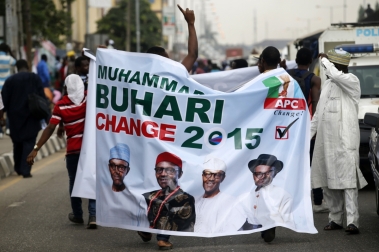
Current president Goodluck Jonathan, from the south of Nigeria, is running for a second and final term. Jonathan is a Christian and told a rally in November last year that he made the decision to run only “After seeking the face of God”. Though there are 11 candidates in all, his main competition is Muhammadu Buhari, a Muslim candidate from the north of the country.

There is reason to be concerned about an outbreak of inter-faith violence. The two candidates ran against each other in the 2011 elections, with Jonathan winning over 58 per cent of the vote, and Buhari just under a third. Buhari claimed that voting had been rigged, and his supporters began targetting Christian communities in widespread attacks that left an estimated 800 dead. “People were murdered, women were raped and this ultimately sparked retributory violence in areas such as the southern part Kaduna State where Christian communities were larger,” a regional expert who wished to remain anonymous told Christian Today.

With Jonathan and Buhari pitted against one another once again, this year’s race is being depicted as Christian v Muslim for presidency; a potentially dangerous narrative. “The rhetoric employed by some politicians has not helped to allay fears; supporters of both camps have at times used unhelpful language and there have already been a few violent incidents,” the expert said. While many Nigerians will look beyond the religion of the candidates, “politicians make use of whatever they can to swing votes and some have and are [using] religion to secure votes”.

“This is particularly so in the north of the country, where [the] poor and unemployed can be swayed easily to cast a vote in a certain way, not only out of religious duty, but also financial inducements.”

However, others suggest that religious tensions are not as prevalent as during the last election. Tearfund’s country representative for Nigeria Danladi Musa, who is based in Jos, told Christian Today that insecurity, particularly in the North East where Boko Haram are holding ground, is the biggest issue for voters.

“People are more likely to vote for a presidential candidate who will address the security concerns of Nigeria at this moment,” Musa explained. “Many Christians in Nigeria are divided as to who to vote for. Some are saying not much has been done in the way of addressing security issues in the country and so would like to have a change, and see whether a new president will address [those]. And then the other group are concerned about the situation of Christians, and want their interests to be protected, and so some will vote through that kind of sentiment.”

The anonymous source said that there is a prevailing feeling in the mainly-Muslim northern parts of Nigeria that they ought to be in control of the country, which is contributing to an anti-Christian sentiment. She said it’s an unhelpful way to frame the debate, as it polarises the issue and is ultimately divisive.

“Debating on sectarian lines at a time when the country is facing an unprecedented insurgency that is itself based on religious sectarianism is dangerous and will not assist in producing the post-electoral unity that is needed to combat this appalling threat effectively,” she said.

Terrorist group Boko Haram has garnered support through its determination to eradicate Nigerian democracy and replace it with an Islamic state guided by Sharia law. The latest statistics suggest that violence associated with the organisation resulted in the deaths of more than 6,000 civilians in 2014. Its deadliest attack to date occurred in January 2015, when up to 2,000 people were killed in Baga, Borno state.

Christian Today’s source said the rise of extremist Islam in Nigeria has its roots in sectarianism. “Boko Haram is a symptom, albeit a virulent one, of the chronic, systematic marginalisation of non-Muslim populations that has occurred in Shari’a states for many decades,” she said.

“This marginalisation was regularly underlined by episodic and orchestrated violence. Boko Haram emerged from this environment, but has now become a threat to all within that environment and to Nigeria as a whole.”

Musa added that Boko Haram is not the only security issue that poses a threat to Nigeria. There is an ethnic-religious conflict gathering support in the middle of the country, where Christians and Muslims are fighting. Many people have been killed, and many more displaced, he said.

“It’s a complex situation and not so simple to explain,” Musa explained. “There are lots of factors involved – economic, political and of course religious. These interplay to bring about conflict. The issue here is that each group [Christian and Muslim] tries to protect its interests, and there is much suspicion, and so that leads to conflict. Sometimes there is the feeling that one religion wants to outplay the other one and take advantage, and so once one group feels that way, then some turn to violence to protect their interests.”

Goodluck Jonathan has been criticised for his government’s slow reaction to increasing inter-religious tension. Despite security measures being put in place, Boko Haram continues to spread. There are almost weekly reports of terror attacks carried out by the group. Most of the Chibok schoolgirls they kidnapped in April 2014 have not been freed.

So who will win, and will there be any improvement post election? Though he won by a wide margin in 2011, it’s likely that Jonathan will face stiff competition from Buhari this time around. A retired Major General, Buhari previously ruled Nigeria from 31 December 1983 to August 1985 after taking power in a military coup. He is now the leader of the All Progressives Congress party (APC), made up of four parties which merged to take on Jonathan’s People’s Democratic Party. “It looks like it will be very tight,” Musa said.

However, Nigeria under Buhari would not necessarily see an improvement. “There is no clear idea what he will be like. His previous record does not inspire confidence; he came to power in a coup and was ousted by one,” the anonymous source said.

“He has not been part of a democratic government and some of his previous utterances have caused him to be labelled a religious bigot. These include supporting the unconstitutional introduction of Shari’a in northern states and saying it should be rolled out throughout the land.”

Though he has since denounced the group, Buhari has also previously insisted that Boko Haram was fighting for justice, and blamed their rise on the prevalence of Christian militants in the south.

“Some feel he has changed; others remain wary. We can only pray that if he is elected, he will be able to unite the nation behind the effort to bring peace to the north-east and end the insurgency, and will live up to the expectations of his supporters, which include ruling with equity and ending corruption,” the source said.

Whatever the outcome, fear remains that election time for Nigeria is likely to be a time of insecurity, and prayers are needed.

“Our prayer is that the election will be free and fair, and that none of the candidates will allow their followers to resort to violence to protest the outcome of the elections,” Musa said. “That’s the concern. But we are hopeful that many Nigerians will accept the outcome.”

Source: Christian Today
 

Pope Francis alongside Saudi Arabian blogger nominated for Nobel Peace Prize

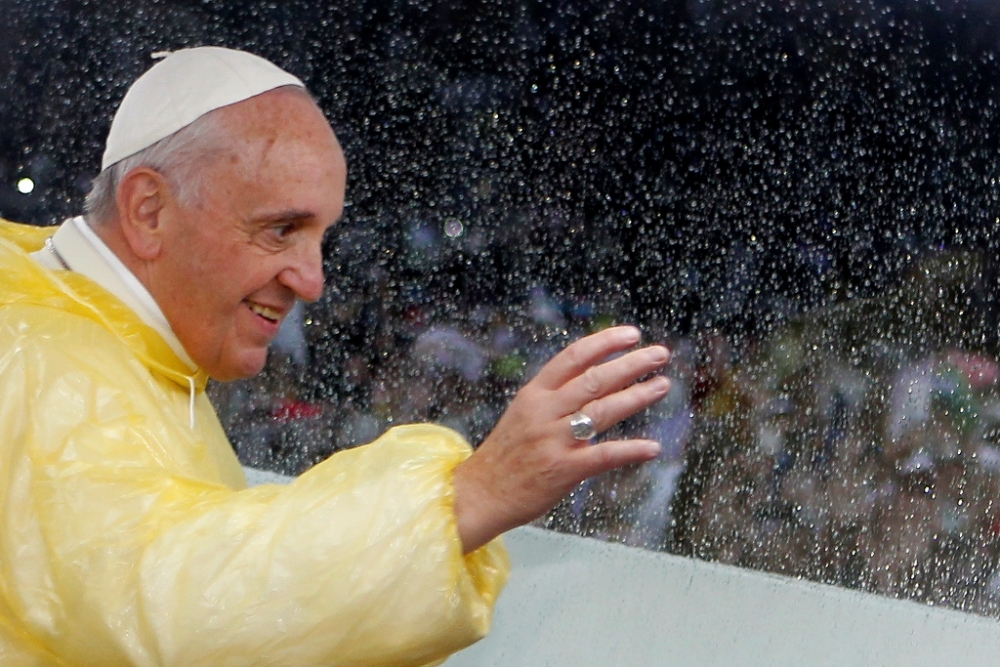
Christian Post report- The head of the Roman Catholic Church has been nominated for the Nobel Peace Prize, sharing consideration with a group including an anti-Putin Russian newspaper and a Saudi Arabian blogger.

While the Norwegian Nobel Institute does not publish an official list of nominees, Norwegian experts who can nominee do drop names, according to Alister Doyle of Reuters.

“Pope Francis has been nominated for stressing social justice and care for the environment, and former U.S. spy agency contractor Edward Snowden, who leaked details of U.S. electronic surveillance, for showing how citizens are monitored with few democratic controls,” reported Doyle.

“Thousands of people, including all members of parliaments, can make nominations, which must be postmarked no later than Feb. 1. The $1.2 million award will be announced in October.”

Since being consecrated pope in 2013, Francis has created much attention for the Catholic Church and even the occasional controversy.

Due to his global influential appeal and apparent change of course for the Church, Francis was named Time magazine’s Person of the Year for 2013.

In their December 2013 write-up on the award, Time’s Howard Chua-Eoan and Elizabeth Dias called Francis “The People’s Pope.”

“He took the name of a humble saint and then called for a church of healing,” wrote Chua-Eoan and Dias regarding Francis.

“The first non-European pope in 1,200 years is poised to transform a place that measures change by the century.”

This isn’t the only time the first Latin American pontiff in history has been considered for the prestigious honor.

Last year, it was widely speculated that the pontiff was going to receive the Nobel Peace Prize for reasons akin to his current consideration.

However, the Peace Prize instead was shared by teenager Malala Yousafzai of Pakistan and Kailash Satyarthi, aged 60, of India.

Regarding the snub, Elizabeth Dias wrote last October that Francis likely “wouldn’t have wanted the Nobel Peace Prize.”

“Part of the current Holy Father’s global appeal is that he shies away from accolades,” continued Dias in the October column for Time.

“He has his eyes on a bigger prize, to quote words of the Apostle Paul, toward the upward call of God.”

Another candidate for the Nobel Peace Prize this year is Raif Badawi, a Saudi blogger who operated a blog called “Free Saudi Liberals.” Badawi was arrested in 2012 on charges of apostasy, and was sentenced to 10 years in prison, 1,000 lashings and a fine of $266,060 for “insulting Islam” in his writings.

“Badawi was nominated along with his fellow citizen, lawyer and human rights activist, Walid Aboul Khair, who’s also imprisoned in Saudi Arabia,” reported Morocco World News.

Source: Christian Post

Ancient ‘gospel’ may have been used as a spiritiual guide

Christian Today report– A 1,500-year-old ‘gospel’ may have been used as a spiritual guide to everyday problems, according to a researcher who has deciphered the text.

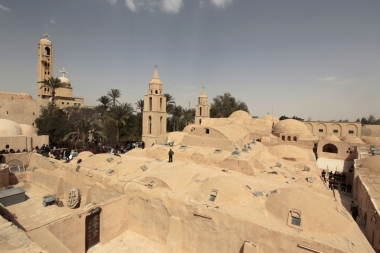
Written in Coptic, the language of ancient Egypt still used in the Coptic Church’s liturgy today, the tiny book – only three inches high – was deciphered by Princeton papyrologist Anne Marie Luijendijk. It begins: “The Gospel of the lots of Mary, the mother of the Lord Jesus Christ, she to whom Gabriel the Archangel brought the good news. He who will go forward with his whole heart will obtain what he seeks. Only do not be of two minds.”

In her book ‘Forbidden Oracles? The Gospel of the Lots of Mary’, Luijendijk says that she expected to find an account of the life of Jesus when she read the opening. However, the book consists of 37 vague ‘oracles’ which would have been used to help someone make decisions about a problem facing them, something like a newspaper horoscope.

For example, Oracle 34 reads, “Go forward immediately. This is a thing from God. You know that, behold, for many days you are suffering greatly. But it is of no concern to you, because you have come to the haven of victory.”

Luijendijk said that the book’s owner could have acted as a diviner, helping to interpret the oracles for people seeking an answer to a question – or it might have been for purely personal use. Its small size meant that it might have been designed to be concealed, as the Church discouraged such practices.

The ‘gospel’ is an example of a ‘lot book’, used in the ancient world to try to predict a person’s future. According to Luijendijk, this is the only lot book found so far that calls itself a ‘gospel’.

She told the LiveScience website: “The fact that this book is called that way is very significant. To me, it also really indicated that it had something to do [with] how people would consult it and also about being [seen] as good news.

“Nobody who wants to know the future wants to hear bad news in a sense.”

The text is now owned by Harvard University’s Sackler Museum. It was given to Harvard in 1984 by Beatrice Kelekian, who donated it in memory of her husband, Charles Dikran Kelekian. His father, Dikran Kelekian (1868-1951), was an influential trader of Coptic antiquaries.

It is not know how the Kelekians acquired the book, but Luijendijk believes it may have been used by a diviner at the Shrine of Saint Colluthus in Egypt, where archaeologists have found texts with written questions, indicating that the site was used for divination.

Source: Christian Today


Breakaway Church wins court battle over Church property

Christian Today report– A conservative breakaway Anglican diocese in the US has won a court battle to keep more than $500 million worth of church property.

The Episcopal Church (TEC) has no claim on the property of the Diocese of South Carolina or its churches, according to Circuit Court Judge Diane Goodstein.

She wrote in her decision this week that the conservative diocese and its parishes are “the owners of their real, personal and intellectual property” and that the national church has no legal interest in the properties.

The diocese and its 36 parishes, headed by Bishop Mark Lawrence, split from TEC in 2012 over theological issues including the long-running controversy over homosexual relationships, ordinations and consecrations. The diocese then went to court in order to safeguard the use of the diocesan name and in an attempt to keep its property and the three-week trial, with testimonies from more than 50 witnesses, took place last year.

Among the churches that went were historic parishes such as St Michael’s and St Philip’s in Charleston.

Bishop Lawrence said in a statement: “This has never been about exclusion. Our churches, our diocese are open to all. It’s about the freedom to practise and proclaim faith in Jesus Christ as it has been handed down to us. We’re ready to move forward and grateful for Judge Goodstein’s handling of the case.”

The congregations that remained behind formed the Episcopal Church in South Carolina which is still part of the worldwide Anglican Communion.

During the trial, the diocese demonstrated that it existed long before TEC was established and that it was one of the dioceses that founded the province in 1789. It also proved that every diocese is free to associate with a denomination of its choosing.

The judge in her decision stated that “the Constitution and Canons of TEC have no provisions which state that a member diocese cannot voluntarily withdraw its membership.”

The ruling found that had there been such a provision, it would have violated the Diocese’s “constitutionally-protected right” to freedom of association. “With the freedom to associate goes its corollary, the freedom to disassociate,” the judge said.

The court also issued a permanent injunction protecting all the diocese’s names and marks as well as those for the parishes of St Philip’s, St Michael’s, and the parish church of St Helena.

Lead Counsel for the Diocese, Alan Runyan, said that the decision is completely consistent with both South Carolina and United States Supreme Court precedent involving church property disputes.

The decision ends the latest of many legal battles TEC has fought in its effort to shore up the denomination. Since 2003, TEC has lost 17.4 per cent of its members and experienced a reduction of nearly 24 per cent in average Sunday attendance. In the last few years, the denomination has spent close to $40 million on lawsuits to prevent dioceses from leaving and to seize the property of congregations that did.

In 2013 the Diocese of South Carolina joined the global Fellowship of Confessing Anglicans and entered into a formal relationship of Provisional Primatial Oversight with Global South primates.

Source: Christian Today

TransAsia ATR 72-600 plane crashes into Taiwan river and claim lives

Yahoo News report- At least 19 people have been killed after a passenger jet crashed into a river in Taiwan minutes after takeoff.

The TransAsia ATR 72-600 plane with 58 people on board was on a domestic flight when it hit a road bridge in the capital Taipei.

The moment of impact was captured on a passing driver’s dashcam, and shows the aircraft’s wing clipping a taxi before it disappears out of view.

State media said the plane came down in the Keelung River about 25 metres (30 yards) from the shore.

According to reports, it took off from nearby Sungshan airport at 10.53am local time and lost contact with air traffic control two minutes later.

It was heading for the Kinmen islands, and as many as 31 passengers were Chinese, three of them children. Kinmen’s airport is a common link between Taipei and China’s Fujian province.

The other 22 passengers, including one child, and five crew were from Taiwan.

Taiwan’s Civil Aeronautics Administration said 19 people were confirmed dead, 15 were injured and 24 were still missing.

Wu Jun-hong, a Taipei fire department official coordinating the rescue operation, said those missing were either in the fuselage or had been swept down river.

“At the moment, things don’t look too optimistic,” Mr Wu told reporters at the scene. “Those in the front of the plane are likely to have lost their lives.”

Television footage showed survivors wearing life jackets wading and swimming clear of the wreckage, which was surrounded by rubber boats.

Others, including a young child, were taken to safety by rescuers, who could also be seen pulling carry-on luggage from an open door.

The Ministry of National Defence said it had sent 165 people and eight boats to the rescue scene, joining fire department crews.

No reasons have been given for the crash, although a ‘flameout’ – caused by a fuel supply problem or faulty combustion – is thought to be a possibility.

According to an air traffic control recording at liveatc.net, the last communication from one of the aircraft’s pilots was “Mayday Mayday engine flameout” .

TransAsia director Peter Chen said contact with the plane was lost four minutes after takeoff, but weather conditions were suitable for flying.

“Actually this aircraft in the accident was the newest model. It hadn’t been used for even a year,” he told a news conference.

Mr Chen confirmed the taxi driver and his passenger were both injured when their vehicle was hit.

The crash is the latest in a string of mishaps to hit Asian carriers in the past 12 months.

In December an AirAsia jet bound for Singapore crashed soon after taking off from the Indonesian city of Surabaya, killing all 162 people on board.

Also last year, a Malaysia Airlines jet disappeared and one of its sister planes was downed over Ukraine with a combined loss of 539 lives.

Last July a TransAsia ATR-72 crashed while attempting to land on the island of Penghu off Taiwan, killing 48 people and injuring 10.

The plane involved in Wednesday’s crash was one of eight ATR 72-600s ordered by TransAsia in 2012.

The 72-seater aircraft are mainly used to connect Taipei with smaller cities and islands.

Source: Yahoo News

BBC not taking religion seriously, says Bishop

Catholic Herald report- The Anglican Bishop of Leeds has criticised the BBC for failing to prioritise religion.

Following the announcement by the BBC that the specialist role of Commissioning Editor for Religion is to be closed, along with three other top commissioning jobs, Bishop Nick Baines said: “At a time when it is impossible to understand the modern world – its politics, economics, military and humanitarian events – without understanding religion, why isn’t religion being prioritised by the BBC as needing expert commissioning.”

Roger Bolton, the BBC presenter and a Sandford St Martin Trustee which aims to promote excellence in religious programming, said: “It’s the old problem: not taking religion seriously. For instance, why is there no BBC News Religion Editor to complement the Science, Economics, Business, Political, Financial, Arts and Sports Editors?”

On January 23 the BBC announced that the specialist role of Commissioning Editor for Religion would be scrapped with religious programmes being commissioned by one new Commissioning Head of Specialist Factual who also will have responsibility for commissioning BBC TV’s science, business and history programmes.

Source: Catholic Herald

Religious says helping victims includes stopping trafficking demands

Catholic News Service report- Bringing the light of hope to ending human trafficking means confronting the brutal “darkness” of evil that is driving those who exploit others, said a number of women religious helping victims.

Already “thousands and thousands of us are working in networks across the world to dispel this darkness, and it’s not happening, so we have to ask ourselves, ‘What do we do?'” said Loretto Sister Imelda Poole.

Those active in the fight will have to “look at the darkness — the demand, the traffickers, to see if we can work more closely with the police, the justice (system) and, as a church, let us open the doors wider and wider to do research, to really look at the phenomenon, to be as clever as the traffickers,” she said.

She and others spoke at a Vatican news conference Feb. 3 in the run-up to the church’s first International Day of Prayer and Awareness Against Human Trafficking to be celebrated every Feb. 8, the feast of St. Josephine Bakhita.

The International Labor Organization and the U.N. Office on Drugs and Crime estimate at least 21 million people are victims of human trafficking worldwide, and 2.5 million more people fall into the snares of traffickers each year. The ILO estimates human trafficking generates more than $32 billion a year — the third most-profitable “business” after drugs and arms trafficking.

Comboni Missionary Sister Valeria Gandini, who works on trafficking and migration issues in Sicily, said people who pay for sex “have a great responsibility in trafficking” because “they are the ones who directly abuse the girl,” and the money they hand to the prostitute heads straight to the criminal networks running the industry.

She said that as she is ministering to women on the street, she sees men ranging from grandfathers to young teens on mopeds driving up to proposition the women.

“There is a lack of a sense of responsibility” and awareness that their actions have consequences on others, she said.

Often people are ignorant of the coercive hold traffickers have on these women, thinking the women are freely and willingly prostituting themselves, she said.

As part of their work in preventing trafficking, Sister Gandini said they hand out to “clients” on the streets as well as to people in school and parishes a letter explaining the poverty, trickery, coercion and risks to which the women are exposed.

The hope is that helping people recognize the plight of victims, and the need to respect and protect human dignity will help reduce the demand, she said.

“In order to understand what human trafficking is, it is necessary to meet victims, to listen to them, look at them in the eyes, embrace them,” Sister Gandini said.

So often victims “do not ask for help and they live silently in fear and shame — a silence that we find deafening,” she said.

As a way to raise awareness, the International Union of Superiors General, which includes the superiors of some 1,900 religious orders of women around the world, and the Union of Superiors General, which represents male religious orders worldwide, launched the website a-light-against-human-trafficking.info for the day of prayer, asking people to “shine a light” on the often-hidden problem of human trafficking.

Cardinal Peter Turkson, president of the Pontifical Council for Justice and Peace, said the day of prayer is meant to expand awareness and prayer on a global scale “to the very depths of this evil and its farthest reaches” and inspire people to move from awareness to action.

The only way to stop the worldwide crime of trafficking, he said, is to respond in a way that is as far-reaching, global and coordinated as the traffickers.

Women’s religious orders came together to form the international network, “Talitha Kum” in 2004. The network is one of more than a dozen networks that the superiors general have formed to educate and warn potential victims of trafficking, to work to combat the poverty that feeds the trade in human beings, and to rescue and provide shelter and rehabilitation for the victims.

Source: Catholic News Service

Kelvin Cochran compares himself to some Biblical figures

Advocate News report– Atlanta’s former fire chief, who was discharged after publishing a virulently antigay book, recently delivered a sermon in which he compared himself to biblical figures such as Job, Daniel—and even Jesus. Kelvin Cochran said he was in “pretty good company when it comes to God-induced sufferings.” He differentiated such suffering from “self-inflicted suffering” and suggested that his discharge was part of a divine plan for Cochran, his family and “the kingdom of God.”

Cochran delivered the sermon at Tabernacle Baptist Church in Cartersville, Ga., on January 25. According to the GA Voice, some religious leaders who at first rallied for Cochran seem to be distancing themselves from the dispute about his firing.

Cochran was fired in early January, following a 30-day suspension. He was given the unpaid suspension after self-publishing a book titled, Who Told You That You Were Naked? The book reportedly includes featured antigay, anti-woman, and anti-Semitic statements. It also equates homosexuality with bestiality and incest.

When he terminated Cochran, Atlanta mayor Kasim Reed explained that the chief was not being fired for his personal beliefs but for publishing a book that violated the city’s nondiscrimination policy. Reed said that the book violated the city’s standard of conduct and made the mayor question the chief’s ability to lead an inclusive workforce. (The city’s nondiscrimination ordinance prohibits discrimination based on sexual orientation and gender identity.) Reed has also expressed frustration that Cochran did not discuss the book with him prior to publication and didn’t secure permission.

“His personal religious beliefs are not the issue at all, despite the number of comments and emails I have been receiving on a daily basis,” Reed said previously. “His judgment and ability to manage the department was the subject of this inquiry.”

Reed himself “evolved” on the issue of marriage for same-sex couples and endorsed marriage equality in 2012.

As for Cochran, he maintains that he will be “vindicated.”

“I found out there are worldly consequences for standing for righteousness, but what God is about to show everybody is that there are also kingdom consequences for standing for righteousness. And he’s going to vindicate me in such a way that everybody will see it and everybody will know that it’s nobody but the most high God who is vindicating me,” Cochran said, according to the Voice article.

Source: Advocate News

Egypt Hands Down Mass Death Sentences to 183 Protesters

Christian Post report– Egypt has handed down death sentences to 183 people involved in the murder of 11 policemen and two civilians during the August 2013 mass protests. Human rights groups have pointed out, however, that the court has failed to hold a single police officer accountable for the deadly clashes.

“Today’s death sentences are yet another example of the bias of the Egyptian criminal justice system,” said Hassiba Hadj Sahraoui of Amnesty International. “These verdicts and sentences must be quashed and all of those convicted should be given a trial that meets international standards of fairness and excludes the death penalty.”

“Issuing mass death sentences whenever the case involves the killing of police officers now appears to be near-routine policy, regardless of facts and with no attempt to establish individual responsibility,” Sahraoui added.

CNN pointed out that 34 of the 183 defendants were tried in absentia, and all have the option to appeal against the sentence.

Clashes between police and protesters during the uprising that ousted former President Mohamed Morsi have sparked several trials, and back in March 2014 the Egyptian court sentenced 529 Muslim Brotherhood supporters to death for their role in the turmoil.

The verdict was slammed by several lawyers, such as Mohamed Zarie, who heads the Arab Penal Reform Organization rights center in Cairo. Zarie argued that the court is seeking revenge rather than justice.

Amnesty said that 415 of those sentences have been upheld. At the same time, no police officers have been charged with the deaths of close to 1,000 protesters in August 2013.

Human Rights Watch voiced similar concerns in a report on Tuesday. The group noted that beside the death sentences, Egypt has jailed more than 41,000 people. While close to 29,000 of those are reportedly Muslim Brotherhood supporters, others have been identified as government critics from various political groups.

“Egypt is at a post-revolution nadir, and right now there’s no light at the end of the tunnel,” said Sarah Leah Whitson, HRW Middle East and North Africa director. “The situation for thousands of Egyptians is getting worse by the day.”

“Authorities have also zealously enforced a 2013 anti-protest law, leading to hundreds of convictions, including of high-profile activists and human rights defenders such as Yara Sallam, Ahmed Maher, and Alaa Abdel Fattah,” the report added.

“The law allows the Interior Ministry near-total power to ban any gathering of more than 10 people that it has not authorized. Security forces have used the law to repeatedly and violently disperse unauthorized demonstrations, resulting in a number of deaths,” claims in the report continued.

Egypt has faced a number of violent years, with protesters bringing down former President Hosny Mubarak in 2011, before the fall of Morsi and the Muslim Brotherhood in 2013.

Egypt’s President Abdel Fattah el-Sisi has called for an end to such deadly clashes, and called on Muslim leaders to help in the fight against extremism.

Source: Christian Post

Twitter suspends Suspected Boko Haram Twitter Account After Releasing Photos of Children Extremists

Telegraph report– Twitter has suspended an account purportedly set up by Boko Haram, the Nigerian terrorist group causing havoc in the country’s north, which it had used to post pictures of child soldiers in training.

The account, @Alurwa_Alwuthqa, was set up on January 18 as part of what is believed to be a bid to mimic the successful PR and recruitment campaigns of groups like al-Shabaab in Somalia and the Islamic State of Iraq and the Levant.

Within days, it had gained 4,000 followers and on January 25, announced in Arabic the capture of Monguno, a strategic town close to Maiduguri, the state capital of Borno province and Boko Haram’s birthplace.

Pictures have also been posted on the account to suggest Boko Haram, which means “Western Education is Sinful”, was actively training child soldiers, a tactic borrowed from conflicts in other parts of Africa.

They showed children as young as ten dressed in dark robes, training in military formation and holding AK-47 assault rifles.

“Photo of Cubs nation,” the caption reads. “Generation of conquest and victory, God willing.”

The profile also posted a link to a video interview with Abu Mus’ab Al barnawi, who is said to be the group’s spokesman, in which he discussed the capture of Baga, the village where an estimated 2,000 civilians were killed.

A second video showed an interview with a group of Boko Haram fighters, explaining their motivation.

There has been intense speculation online about whether the account was genuine, since others set up previously have proved to be fake. However, the suspension of the account by Twitter boosted claims that it was.

The US State Department also lent credibility to the claims by tweeting a photo of the purported child soldiers, writing: “Amid its massacres of innocents, Boko Haram running training camps for child soldiers.”

The videos posted to the account, if genuine, reflect a growing sophistication in Boko Haram’s publicity machine, which previously was limited to disseminating shaky clips showing the group’s leader Abubakabar Shekau flanked by arms-laden pick-up trucks and ranting in rudimentary Arabic.

Across the continent, al-Shabaab in Somalia has some prolific tweeters in its ranks, with several British-born jihadis thoughts to be among them, and live-tweeted the attack on Nairobi’s Westgate shopping mall before its account was shut down by Twitter.

Isil already has proved similarly fluent in social media, posting videos, pictures and messages on YouTube, Twitter, Instagram and Tumblr, using hashtags to tap into popular searches. Social media monitors suggest that its PR campaign is gaining results, with hundreds of thousands of online accounts discussing the group.

In response, the head of GCHQ has accused social media websites of helping terror groups and called for closer ties with intelligence agencies.

Ryan Cummings, chief Africa analyst for Red 24, a crisis management firm, said the Twitter account appeared to be just one outlet in a “media network” launched by Boko Haram in mid-January through trusted jihadi channels also used by Isil.

He said the interviews reflected a desire to dispel the notion that Boko Haram was killing indiscriminately, and emphasised the group’s Islamic credentials.

“It does seem very legitimate and until it was shut down, offered some very interesting insights into the operations and methodology of the organisation,” he said.

“The fact that there was no mention of Abubakabar Shekau, for example, suggests a new degree of factionalism, and the strengthening of links with groups like Isil which is something he never supported.”

Source: Telegraph