African Union calls for deploy of 7,500 troops to fight Boko Haram

Telegraph report–  The African Union called Friday for a regional five-nation force of 7,500 troops to defeat the “horrendous” rise of Nigeria’s Boko Haram insurgents, AU Commission Chief Nkosazana Dlamini-Zuma said.

“Boko Haram’s horrendous abuses, unspeakable cruelty, total disregard for human lives, and wanton destruction of property are unmatched,” Dlamini-Zuma said in a statement after the bloc’s Peace and Security Council met late Thursday, ahead of a full AU summit meeting on Friday.

The Boko Haram uprising has become a regional crisis, with the four directly affected countries – Cameroon, Chad, Niger and Nigeria – agreeing along with Benin to boost cooperation to contain the threat and to form a Multinational Joint Task Force (MNJTF).

“I am deeply concerned by the prevailing situation as a result of Boko Haram terrorist activities, including the recent escalation of violence witnessed on the ground,” Dlamini-Zuma added.

“The continued attacks in northeastern Nigeria and the increasing attacks in the Lake Chad Basin, along the border with Chad and Cameroon, and in the northern provinces of that country, have the potential of destabilising the entire region, with far reaching security and humanitarian consequences.”

More than 13,000 people have been killed and more than one million made homeless by Boko Haram violence since 2009.

Regional nations pledged earlier this month to commit a battalion each to the force, a total of some 3,000 troops, but Dlamini-Zuma said after meetings Thursday it was decided that “no efforts should be spared” to defeat the fighters.

“Accordingly, it is recommended that the countries of the region be authorized to increase the strength of the MNJTF to up to 7,500,” she added.

A key task of the force, to be deployed with an initial mandate of a year, will be “conducting military operations to prevent the expansion of Boko Haram and other terrorist groups activities and eliminate their presence,” the statement added.

Nigeria has the largest army in west Africa but has come under criticism at home and abroad for failing to stop the advance of Boko Haram.

Source: Telegraph

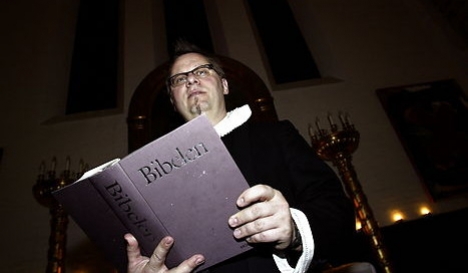
Danish Priests doubts Jesus Resurrection

Christian Today report– Faith in Christ’s resurrection is currently being challenged in Denmark, as a second Danish priest admitted to questioning the concept of physical resurrection.

In addition to saying that she doubts Christ rose from the grave three days after dying on the Cross, Ulla Charlotte Hansen also said that she does not believe in the Biblical Creation story.

“I cannot believe that Jesus physically rose from the grave,” Hansen said in an interview with the local Fyens Stiftstidende newspaper. She said that she would say that scientists have a theory about the Big Bang if she were asked how the world came to be.

Hansen is the second priest in Denmark to express doubt on the actual Resurrection in recent weeks. On Christmas Day, the Jyllands-Posten newspaper published an interview with Per Ramsdal where he stated that he finds it difficult to believe in a literal Resurrection.

“That gets a bit too supernatural for me,” he told the Jyllands-Posten. “But it’s a really important story,” he added.

Per Ramsdal serves in the Frederiksholm Church in Copenhagen.

In response, Ramsdal was summoned by Peter Skov-Jacobsen, the Bishop of Copenhagen, who gave the priest a reprimand. He was also compelled to retract his statement expressing doubt, and to embark on a training programme for six months. The programme will be about “recent interpretations of the Christian faith”.

Hansen, however, will not be subjected to the same sanctions as the Bishop of Funen, under whose jurisdiction Hansen’s ministry belongs, sees no reason to summon the priest for a reprimand.

Contrary to Skov-Jacobsen’s approach, Lindhardt encouraged the ministers and priests under her diocese to pursue an open discussion to talk about their views on the Resurrection.

“The resurrection of Jesus is the basics of Christianity, but how he rose from the dead, no one has seen,” Tine Lindhardt, the Bishop of Funen said in a statement. “And it is an event that is so special that language should be stretched to the limit in order to capture it.”

Source: Christian Today

Word on Hyper-Grace

Charisma News report- All of us who know Jesus as Lord want to live in the fullness of His grace, but what exactly does that mean and how does that work itself out in our lives?

Unfortunately, there is tremendous division in the body today over the question of grace, and to address it from any angle is to wade right into controversy and potential misunderstanding.

On the one hand, there are many who have been greatly blessed by what is called “the grace revolution” or “grace reformation,” and when any of us raise concerns about some aspects of that message, we are called grace-haters and legalists and Pharisees.

On the other hand, many of those who do not endorse the “grace revolution” attack the modern grace preachers in the harshest of terms, calling them false prophets who do not even know the Lord.

Not surprisingly, as a result of my writing Hyper-Grace, some who identify with that message have accused me of preaching another gospel and being under a curse, while others who are critical of that message have accused me of being too soft on false teachers. It comes with the turf!

Is there perhaps a way we can communicate with each other without the name-calling and volatility? Do we perhaps have more in common than we realize? Can we perhaps learn something from each other?

Let me put a few things on the table for the purpose of open and honest discussion with those both inside and outside each “camp.”

First, let me explain the reason I use the term hyper-grace.

I did not want to call it counterfeit grace, because in the vast majority of cases, this is a message preached by brothers and sisters in the Lord and it is a message filled with life-changing truths. At the same time, I believe the message is preached in an exaggerated way, sometimes with dangerous errors. How then to describe it?

Since many within the hyper-grace camp use this term themselves, saying, “Yes! Grace should be hyper, and that’s exactly how Paul described it in the Greek,” and since for others, the term would imply an exaggerated grace message, I felt this would be the best term to use. It is descriptive and can be taken positively or negatively, depending on the perspective.

Second, those of us outside the hyper-grace camp need to ask ourselves why so many believers have been genuinely helped by this message.

Why do so many attest to having their lives transformed, to loving Jesus and His Word more than ever, to finding liberation from sin and bondage?

There’s obviously something good that has happened to them, and there’s obviously some important truth they have received. Shouldn’t all of us be sure that we, too, are preaching those same liberating truths?

Third, those within the hyper-grace camp need to understand that there’s a reason we are so concerned about error within that group.

When a movement claims to be preaching things not preached since the days of Paul, when people say, “My pastor is teaching things in the Word no one has seen for centuries,” that immediately raises some concerns.

Really? Everyone else got it wrong until today, including all the great grace preachers of the past?

Not only so, but we also see lots of really negative fruit: backsliding, compromise, severe judgmentalism, divisiveness, complacency and more.

When there is a pattern like that, serious questions need to be asked. Perhaps the message is out of biblical balance? Perhaps it is reactionary? Perhaps it contains some real error?

What this means is that the millions of positive testimonies need to be taken seriously and the millions of negative stories need to be taken seriously.

Fourth, we need to recognize that not all people are the same, and we all have different backgrounds, temperaments and spiritual experiences.

More than 20 years ago, I was speaking with Pastor David Wilkerson and I told him that I never feel any condemnation from God and that I walk in a deep assurance of the Father’s love 24/7.

He said to me, “Most people aren’t like that.”

I have sought to keep that in mind in preaching and teaching ever since.

Some people gravitate to the hyper-grace message because they have sensitive consciences or because they have been burned by legalism or because they feel as if they always fall short or because they were not raised by a loving and affirming father.

They really do love the Lord and they are not looking for an excuse to sin, and finally, hearing this message, they have found a place of rest and acceptance in the Lord, and they are actually working harder for him than ever.

Others gravitate to the message because they don’t like the conviction of the Spirit in their lives or because they’re looking for an outlet for the flesh or because they are rebelling against a perceived “religious system.”

Of course, in the end, the only question that matters is: “What does the Word of God say? What does the Lord have to say about grace?”

But I raise these points to remind pastors and leaders on all sides of this debate not only to look at the Scriptures but also to understand the needs of the flock.

During the days of the Brownsville Revival, when millions of people were being impacted by the Jesus-exalting message of repentance and holiness preached by my dear departed friend Steve Hill, the altars would be filled every night with weeping sinners, backsliders and compromised believers. And there, on their knees, they encountered the love and grace of God.

But we also found that some of the students in our school (then, the Brownsville Revival School of Ministry, today FIRE School of Ministry) were also at the altar every night in tears, somehow feeling “convicted” too, despite their deep commitment to the Lord. Others would feel condemned because of the intense spiritual environment, despite us reminding them that Steve wasn’t preaching to them but to the lost and backslidden.

We quickly realized that, given the intensity of the revival, we needed to do something different for our students who were exposed to this evangelistic preaching day and night, and so, we brought in another Steve Hill (whom we nicknamed S.J. Hill). The whole thrust of his message was the love of God. (One of his books is entitled, Enjoying God: Experiencing Intimacy with the Father.)

The great bulk of the student body absolutely thrived in the midst of that glorious move of the Spirit, and many are burning bright today on mission fields around America and the world. But others, equally committed to Jesus in that very same environment, experienced burnout and discouragement.

Again, leaders need to consider carefully the needs of the flock and do their best to ground their people in the love and acceptance of the Father while also calling them to holiness and service.

So, here’s a working proposal to bridge some of the gaps of misunderstanding and accusation on all sides. How about we draw up a list of all the major points we agree on? From there we can understand where, exactly, we disagree.

Why not?

Source: Charisma News

WATCH: Ancient End-Times Bible Prophecy Rapidly Unfolding

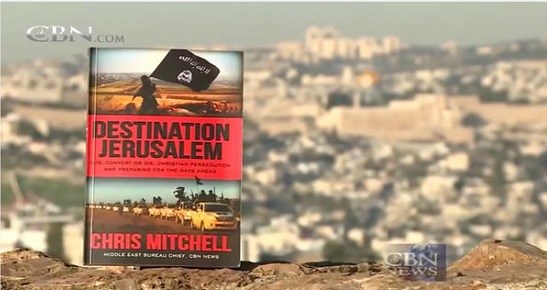
Charisma News reports  –   As world events unfold, CBN Middle East Bureau Chief Chris Mitchell’s book, Destination Jerusalem, aims to put today’s events in perspective.

Mitchell chronicles firsthand the meteoric rise of the Islamic State (ISIS), the growing persecution of Christians, the minimal response by the West and much of the Church, as well as the part Jerusalem plays in the scenario.

As prophecy unfolds before our eyes, Dateline Jerusalem points to how Christians can prepare for the days ahead.

[youtube]https://www.youtube.com/watch?v=9-tiKfQqf-w[/youtube]

– credit : youtube/CBN

Albama Pastor opposes Church gun ban bill

Christian Today report- An Albertville, Alabama pastor has come out in opposition to a House bill that would see gun control laws extending their reach into the state’s churches.

The bill, which is sponsored by Democrats Thomas Jackson and Darrio Melton, will prohibit guns inside churches without permission. The two Congressmen believe churchgoers should be spared from worrying about guns being brought into any church service that they attend.

However, the bill is not receiving support from some of the church groups it purports to protect.

According to WAAY 31, Pastor Matt Brooks aired opposition to the bill. Brooks, who serves in the Lifepoint Church, said that that “(e)ach individual church should be responsible for determining (whether or not to allows guns inside churches) themselves.”

“I don’t think we need State government to determine whether or not we can have guns in a church or not,” Brooks concluded.

In addition, Brooks revealed to WAAY that he has gun carrying security personnel inside the church during services.

“I hope it never comes to a situation where we have to use our weapons, we never want to take lives from anybody. But we do want to be able to protect our congregation,” he explained on the decision of having armed guards inside his sanctuary.

Brooks is not alone in his opposition of the gun ban. Local representatives Kerry Rich and Will Ainsworth also oppose it and say it “has no chance of passing.”

WAAY 31 said that that they were able to contact advocates of gun control in the United States. Though they declined to appear on camera, they told WAAY 31 that it could “help with public safety.”

The gun control debate is currently raging across the United States in the aftermath of several shooting incidents in the country. Last year, the LA Times reported that the US Federal Bureau of Investigation noted a rise in mass shootings in the country from 2000 to 2013.

The frequency rose from an average of 6.4 incidents in the first seven years to 16.4 in the last seven years, the FBI said.

Source: Christian Today

Muslim Religious Tolerance rally interrupted by protesters

Christian Today report- A largely Muslim group rallying for religious tolerance in Texas was met by a small but vocal group of protesters on Thursday.

The Texas Muslim Capitol Day event was repeatedly interrupted by people proclaiming themselves to be Christians and demanding that Muslims leave the country and go to the Middle East.

The rally got off to a rough start, with the opening speaker being bum rushed at the podium.

“I proclaim the name of the Lord Jesus Christ over the capitol of Texas,” a Christian activist from Michigan said, according to Reuters. “I stand against Islam.”

Ruth Nasrullah of the Houston branch of the Council of American-Islamic Relations – who was to provide the opening remarks – was shocked.

“As soon as I got to the lectern, that woman came and grabbed the microphone out of my hands. It made us feel a little unsafe,” she admitted.

As the group of about 600 sang the national anthem and began with the programme, the protesters shouted “Go home. You ain’t going to be happy here,” and other intolerant messages.

Reports indicate that there are about half a million Muslims in Texas. Republican state Representative Molly White issued a message to those that wished to visit her office.

“Ask representatives from the Muslim community to renounce Islamic terrorist groups and publicly announce allegiance to America and our laws. We will see how long they stay in my office,” she wrote on her Facebook message.

Some Islamic activist organisations have reported an increase in anti-Muslim activity since the attack at Charlie Hebdo in Paris earlier this month.

“This reinforces that rhetoric and propaganda about Muslims is really gaining traction,” Nasrullah said of the Austin protestors.

Source: Christian Today

Japanese Journalist Allegedly Beheaded by ISIS

Christian Today report- Islamic State militants released a video on Saturday which purported to show the beheading of Japanese journalist Kenji Goto, who the al Qaeda offshoot had been holding hostage.

Japan condemned the Islamist group and said Prime Minister Shinzo Abe’s cabinet would meet in response to the video, which showed a hooded man standing over Goto with a knife held to his throat, followed by footage of a body with a head placed on it.

The release of the video came exactly a week after footage purportedly showing the beheaded body of another Japanese hostage Haruna Yukawa.

“I cannot help feeling strong indignation that an inhuman and despicable act of terrorism like this has been committed again,” Chief Cabinet Secretary Yoshihide Suga said, adding the video appeared to show Goto. “We resolutely condemn this.”

A White House spokeswoman said the United States was working to confirm the authenticity of the latest video and “strongly condemns” the militant group’s actions.

Addressing Abe, the militant in the video said: “Because of your reckless decision to take part in an unwinnable war, this knife will not only slaughter Kenji, but will also carry on and cause carnage wherever your people are found. So let the nightmare for Japan begin.”

The militant had the same British accent as the man featured in previous Islamic State videos showing beheadings. Goto wore an orange jumpsuit like Islamic State captives in past footage.

The landscape in the video showed a hill and land covered in scrub, and appeared different to the desert setting of previous videos.

There was no mention in the one-minute video of another Islamic State captive, Jordanian pilot Muath al-Kasaesbeh who was seized after his jet crashed in northeast Syria in December during a bombing mission against Islamic State.

An audio message purportedly from Goto earlier this week said Kasaesbeh would be killed if Jordandid not free Iraqi Sajida al-Rishawi, in jail for her role in a 2005 suicide bomb attack that killed 60 people in the Jordanian capital Amman.

Abe’s government had put high priority on seeking the release of Goto, a veteran war correspondent captured by the militants in late October when he went to Syria seeking Yukawa’s release.

The Islamic State threats to kill their Japanese hostages came after Abe announced $200 million in non-military aid for countries contending with Islamic State. His government has rejected any suggestion it acted rashly and stressed the assistance was humanitarian.

U.S. President Barack Obama said in a written statement: “We stand today in solidarity with Prime Minister Abe and the Japanese people in denouncing this barbaric act. We applaud Japan’s steadfast commitment to advancing peace and prosperity in the Middle East and globally, including its generous assistance for innocent people affected by the conflicts in the region.”

Source: Christian Today

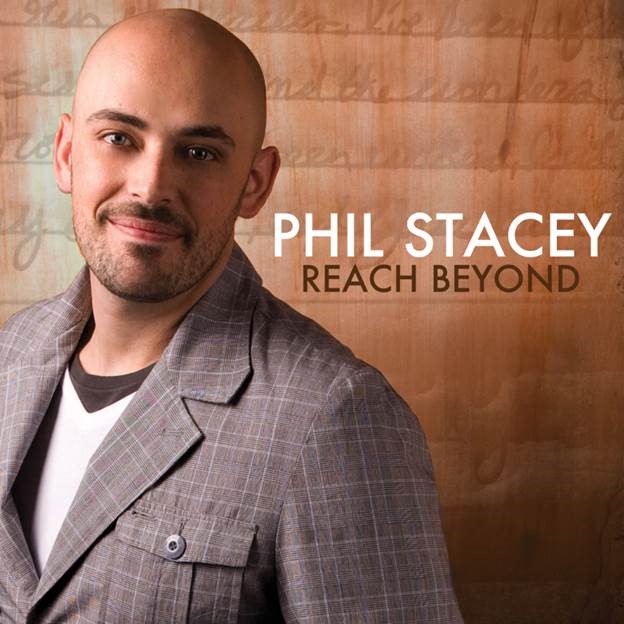
American Idol alum Phil Stacey encourages Christians to share the message of God

Christian Today report- American Idol alum Phil Stacey wants the faithful to share the message of God and he is leading by example.

Stacey, who is best known for being one of Idol’s Season 6 finalists, has joined forces with the Reach Beyond ministry to record a single in an effort to motivate Christians to do their part in spreading the Gospel and embodying the message of Christ in their own lives.

Reach Beyond and its ministries are targeted towards reaching those who are as yet unreached and untouched by the Word of God.

“I was thrilled when Reach Beyond approached me about recording this song. My heart has always been in tune with global missions, and I hope the personal and potent message of this song inspires people to tell others about Jesus – whether it’s in their immediate communities or in a country thousands of miles from home,” Stacey said.

Reach Beyond, which is also the title of the single, was a collaboration between Stacey and Christian recording artist and Dove award winner Chris August, who wrote the music.  Ty Stakes penned the lyrics.

On his website, Stacey shared the lyrics to a portion of the song which encapsulated the essence of becoming Gospel ambassadors for the faithful:

You reach beyond every limit crossing time and space,

You reach beyond majestic beauty to this broken place,

You reach beyond heaven’s glory to hang upon a cross,

You reach beyond every border counting all as lost,

You reach, you reach beyond… You reach beyond to us.

The Reach Beyond single is available on iTunes, as well as Spotify, Amazon, Google and other music providers.

The proceeds from the sale of the single will fund the ministries of Reach Beyond, which range from communication programmes to spreading the gospel, building water wells in Ghana, running health clinics in Ecuador, and working on Ebola prevention in Africa.

Source: Christian Today

Banning Christian University Grads From Practicing Law due to Homosexuality Views is not Legal, Rules Canadian Court

Christian Post report- A Canadian province’s highest court has ruled that a Christian academic institute’s lawyers can’t be banned from practicing law due to the university’s views on homosexuality.

The Nova Scotia Supreme Court ruled Wednesday that Trinity Western University students could join the bar, overruling a decision last year by the Nova Scotia Barristers’ Society.

Justice Jamie S. Campbell, author of the opinion, concluded that the society’s “resolution and regulation infringe on the freedom of religion of TWU and its students in a way that cannot be justified.”

“For many people in a secular society religious freedom is worse than inconsequential. It actually gets in the way. It’s the dead hand of the superstitious past reaching out to restrain more important secular values like equality from becoming real equality,” wrote Campbell.

“The discomforting truth is that religions with views that many Canadians find incomprehensible or offensive abound in a liberal and multicultural society. The law protects them and must carve out a place not only where they can exist but flourish.”

Based in British Columbia and established in 1962, TWU was founded as an evangelical Christian liberal arts academic institution.

As part of its Christian identity, TWU has a “community covenant” for its students and faculty that, among other obligations, states that community members will “voluntarily abstain” from “sexual intimacy that violates the sacredness of marriage between a man and a woman.”

“The university’s mission, core values, curriculum and community life are formed by a firm commitment to the person and work of Jesus Christ as declared in the Bible,” reads the covenant.

“The community covenant is a solemn pledge in which members place themselves under obligations on the part of the institution to its members, the members to the institution, and the members to one another.”

Other actions that the covenant calls for its community to abstain from include “gossip, slander, vulgar/obscene language, stealing, misusing or destroying property belonging to others, drunkenness, under-age consumption of alcohol, and the use or possession of illegal drugs.”

Last April, the Nova Scotia Barristers’ Society council voted 10 to 9 to prohibit TWU students from joining the bar, reported the Chronicle Herald.

“The bar society’s policy was that Trinity Western must either exempt law students from the mandatory vow or change the covenant so it is not discriminatory in order for graduates to be allowed to practise in Nova Scotia,” noted McLeod.

Last May, TWU filed lawsuits against the Nova Scotia Barrister Society, as well as other legal challenges in response to efforts against the university’s official recognition.

“The B.C. university announced Tuesday it is launching lawsuits in Ontario and Nova Scotia, where the provincial bar associations have voted not to accredit graduates of the law school, which is set to open in 2016,” reported CBC News.

“It will also apply to be added to a lawsuit in B.C., where Toronto lawyer Clayton Ruby is suing the provincial government over its decision to approve the law school.”

At the center of each of these legal actions, according to CBC, was TWU’s position calling for no sexual conduct outside of heterosexual marriage.

The Nova Scotia lawsuit was brought before the province’s Supreme Court in December, with arguments being heard over a span of a few days.

Regarding the recent Campbell decision, TWU spokesperson Guy Saffold stated that it was “an exceptionally important decision.”

“It affirms that protection of religious freedom is and must continue to be central value in Canada’s pluralist society,” continued Saffold.

“This decision is important not only to TWU’s effort to launch a School of Law … but also, we believe it sets an extremely valuable precedent in protection of freedoms for all religious communities and people of faith in Canada.”

NSBS President Tilly Pillay said that the legal organization would review the Campbell decision before deciding what to do next.

“We appreciate that Justice Campbell dealt with this matter very quickly and comprehensively,” said Pillay in a statement.

“We are analyzing the decision and will review it with our legal counsel before we can determine what the next steps might be. There is much to consider.”

Source: Christian Post


The inspirational teacher who never failed

Catholic Herald report-  Having blogged recently about My Battle with Hitler, the memoirs of the Catholic philosopher, Dietrich von Hildebrand, I was curious to read Memoirs of a Happy Failure by his widow, Alice von Hildebrand. Why this intriguing title? Because, as the author explains in her book, as a teacher of philosophy at Hunter College, New York, for nearly four decades, she was a “failure” as far as the faculty of this very secular college was concerned. For years von Hildebrand was given only the uncongenial evening classes to teach, was passed over for promotion, was refused tenure, only paid by the hour and even had scheduled courses changed without consultation – for no other reason than professional jealousy at her popularity in the classroom (enrolment for her courses was nearly always full) and disapproval of her Catholic faith.

As a lecturer in philosophy, the author was always very careful never to bring her personal faith into the classroom. Yet it regularly happened that some students, sometimes of no faith background, at other times lapsed from their faith, would decide to become Catholics after listening to her lectures. Thus von Hildebrand was accused by her colleagues of unprofessional behaviour and of trying to “convert” her students. As this wasn’t true, the author could only conjecture that her “uncompromising devotion to truth, a passionate desire to share with others what I myself have received, and an absolute refusal to compromise for the sake of worldly advantages” had somehow communicated itself to them. They knew they were in the presence of a teacher of integrity, who not only had a passion for objective truth as it arose in philosophical discussions, but someone who also had a pastoral concern for them as individuals. Teaching for von Hildebrand was not a career or a job – it was a vocation: a desire to help her students to discover what was good, true and beautiful in the realm of philosophical ideas.

Relegated for years to teaching evening classes, she writes that “I devoted my love and care to grooming the ‘miserable garden’ to which I had been assigned.” Looking back she comments, “It is amazing what one can endure when one has a sense of mission.” At the end of her book she makes an appeal for teachers “who courageously stand up for the objectivity of truth. There are things which do not change, which have an absolute and transcendent validity, and which every person has the right to know.”

Such a courageously uncompromising attitude does not go down well in an age of relativism, when everyone’s views are seen as valid as everyone else’s and when the put-down to any argument goes, “That’s just your opinion.” What is surprising is the revelation in the book that the collapse of a common core of values was obviously widespread in the US as early as the 1950s. My final reflection: if that was the case in the 1950s, as Alice von Hildebrand describes, how much harder it is for Catholic teachers today – in Catholic schools as well as secular ones.

Source: Catholic Herald