Muslim Council of Britain announces National #VisitMyMosque day

Christian Today report- If you’ve got some spare time this Sunday, the Muslim Council of Britain (MCB) wants you to visit your local mosque.

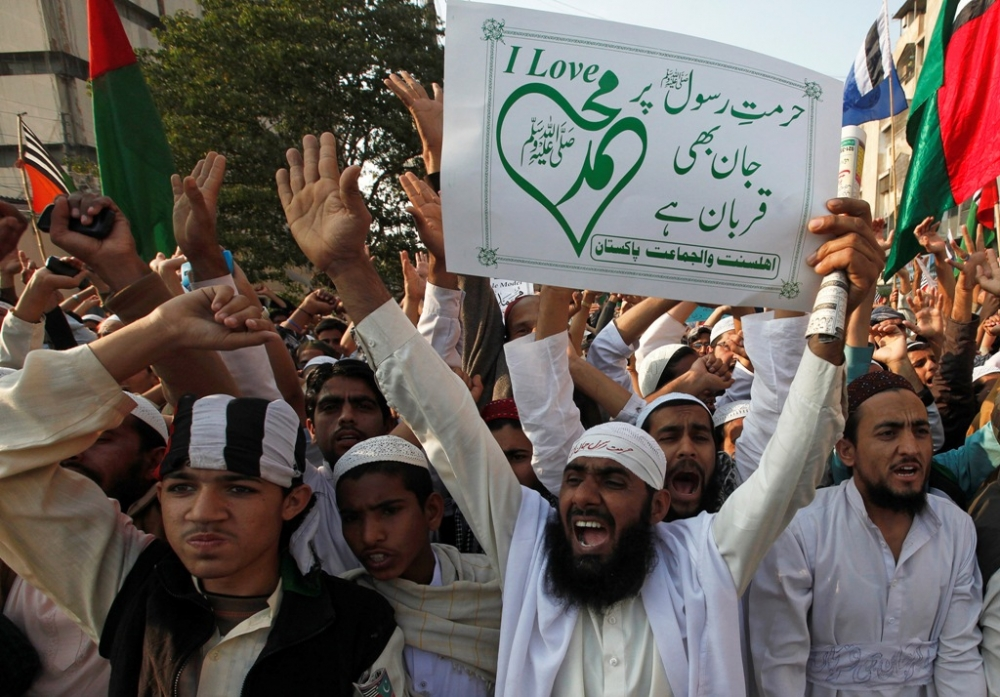
February 1 marks national #VisitMyMosque day, with Muslim places of worship opening their doors to the public all over the UK. Mosques will be offering refreshments and sharing what goes on in the day-to-day life of the building as part of an initiative to encourage better understanding of Muslims in Britain.

“Members of the community are there to get to know one another better and some may be on hand to answer questions about Muslims and Islam where this is possible,” the MCB website says.

“Local mosques will also be inviting inter-faith leaders as well, and all will be invited to come together to demonstrate unity and solidarity during what has been a tense time for faith communities.”

The initiative follows news that there has been a “significant” increase in anti-Muslim incidents in schools since the killings in Paris in early January.

Fiyaz Mughal, chief executive of Tell Mama which monitors hate-crime against Muslims in the UK, told The Independent that “racialised language and bullying against Muslim children in schools” has risen in recent weeks. The organisation is lobbying to increase training for schools in how to deal with Islamophobia effectively.

“For the past 18 months we have sought to engage with the DfE [Department of Education] to offer training to schools but on each occasion we have been rebuffed. The lack of engagement is worrying,” Mughal said.

“Whatever the reason, it gives the impression that anti-Muslim hatred is something that is not of significance for them. Lack of action is short sighted since we are seeing problems in some schools regarding bullying and prejudiced statements against Muslim students.”

Source: Christian Today

Urgent Calls for Reform of Rural Ministry in Britain

Christian Today report- Vicars in rural Britain are rushing between multiple churches to take Sunday services while their congregations are dying off faster than they can be replaced, according to a new report.

Urgent calls for reform of rural ministry, such as appointing parish administrators to relieve clergy of the burden of running several churches at once, are proposed in the report, to be debated at General Synod in February.

Fewer than one in five rural churches is experiencing growth – a statistic repeated in urban areas – and parishes are struggling to fill all the positions on the church council, especially to find church wardens. In some parishes, if all positions were filled, they would outnumber the worshippers in the pew.

“There was a frequent lament that some (not all) congregations were stuck in a rut and were not open to new ideas or approaches but were desperate for people to come to church to ensure that the building remained open and the familiar worship continued,” says the report, based on quantitative and qualitative research.

In one parish, no more than 2,000 people were maintaining six Grade 1 churches.

However, there was a strong commitment across communities to keep churches open, especially where they served as a hub for community activites and had good facilities. Initiatives such as Fresh Expressions and Messy Church were making a tangible difference.

One vicar said the age profile was heavily weighted in favour of older people. “Our numbers have stayed the same overall but I’m basically replacing the dead people with new people who are much younger but in the future when all the oldest people have died, there won’t be enough 40-50 years old to take their places.”

Nearly two-thirds of Church of England churches, 10,199 and two-thirds of parishesm, 8,394, are in rural areas. The population of rural England is 9.3 million, or 17.6 per cent of the population.

More than seven in ten are in multi-church groups, with more than 11 churches per group becoming increasingly common. Some groups cover hundreds of square miles, with tens of miles between churches.

Bishop of Knaresborough James Bell, who heads the synod’s rural affairs group, writes in the report that ministry models that assume one church per priest are not effective in such contexts and clergy have mostly had to forge their own way ahead in order to offer effective parish ministry.

They were finding it difficult to focus on growth at a time when when the demands of a scattered population, bureaucracy, many buildings and social change in rural communities can be all-absorbing, he says.

Arguing that multi-church groups need not be seen as “instances of decline and despair” and that they can instead be vanguards in rethinking mission and ministry, he nevertheless admits that there can be a “reluctance to recognise realities and an inertia which drains energy, enthusiasm and potential from everyone.”

More women clergy work in rural parishes than urban ones.

Clergy in rural areas feel pressured to conduct as many services as possible on a Sunday and they find it difficult to get to know congregations when there is no time to talk after the service because of having to rush to the next service.

The report is the latest initiative in a series of reports designed to boost growth throughout the Church to be debated at the next synod.

Released for Mission, Growing the Rural Church, also recommends more ecumenical partnerships.

Bishop Bell says: “A Christian presence in every community is more than a strap-line – it is the heart of English Anglicanism. It is the expression of our obligation, as the church for all the people of the nation, to leave no community untouched by the gospel of Jesus Christ, lived out among the people of every place.

“Ministry and mission in the rural church is highly demanding of energy and imagination. Growth is being realised but much needs to be done.”

Source: Christian Today

Pakistan Christian school attacked by Muslim students in Charlie Hebdo protest

Christian Post report- Close to 300 Muslim students armed with iron bars and sticks attacked a Christian boys’ school in northern Pakistan, reportedly in retaliation to French satirical newspaper Charlie Hebdo’s controversial drawings of the Muslim prophet Muhammad. The attack left four Christians injured.

“It is very sad that Islamic radicals attack Pakistani Christians because of Charlie Hebdo. Christians condemn the blasphemous cartoons. It is a shame that even after 67 years since the birth of Pakistan, Christians have not yet been considered Pakistani citizens, but are seen as ‘Western allies,'” Nasir Saeed, director of the NGO Center for Legal Aid Assistance & Settlement, told Fides News Agency.

The attack occurred on Panel High School in the city of Bannu, in the province of Khyber Pakhtunkhwa. The Muslim students apparently were able to jump over the outer walls of the school and open the gates before attacking the Christians.

The school has been closed down at least for two days, with additional security measures being considered to protect the students.

Last weekend, Muslim mobs burned down a number of churches and pastors’ homes in Niger, also in protest of Charlie Hebdo’s drawings. At least 10 people were killed in the clashes, with pastors in the capital Niamey revealing that almost anyone associated with churches was targeted.

Marches have also been held in Pakistan, where Muslims insisted that freedom of speech does not give the right to disrespect religion.

The protests concern the Muhammad drawings published by Charlie Hebdo throughout the years, which are considered offensive to many Muslims around the world. The satirical magazine experienced a terrorist attack organized by al-Qaeda earlier in January, when 12 people were shot dead in its offices in Paris. The two gunmen who carried out the attack, and were later killed, said that they were “avenging” Muhammad.

Charlie Hebdo’s cartoons have often targeted Christians as well, as Russian Orthodox Church Patriarch Kirill pointed out on Sunday.

“The cartoons of prophet Muhammad are childish caricatures compared to what this publication allows itself in mocking the feelings of Christians,” Kirill said in a sermon.

“Today, in saying ‘no’ to terrorism, killings, violence, we also say ‘no’ to the inexplicable drive by a certain group of people to deride religious feelings.”

Several other Christian leaders, including Pope Francis, have said that it is wrong to ridicule religion in such a way, while also speaking out against terrorism.

“You cannot provoke. You cannot insult the faith of others. You cannot make fun of the faith of others,” Francis told reporters after the attack.

The minority Christian community in Pakistan has been targeted both by the ruling government’s blasphemy laws that often focus on religious minorities, but also by radical mobs that seek to take justice into their own hands.

Saeed said that Christians in such communities are often targeted for actions in Western countries.

“Whenever incidents occur in western countries, the faithful Pakistanis are attacked. Christians, who are already living under constant fear for their lives, become even more vulnerable,” the CLAAS director said. “It is the politicians’ duty to create a cultural environment and a society in which Christians and religious minorities feel safe.”

Source: Christian Post

Download of the day: Launchy

Techradar report- Find and open any program, file or folder with ease using Launchy.

Why you need it

Very often, getting work done efficiently is reliant on being able to quickly find the programs and files you need to complete the task at hand. But with an ever-expanding contingent of installed programs and saved documents to sift through, that’s often easier said than done.

What you need is Launchy. This simple little app opens up when you hit Alt + Space and allows you to quickly search for the program you need – or the file, folder or bookmark, in fact. Launchy displays a list of matches that is automatically populated as you type, so it’s not actually necessary to type the full name of the program before it appears. Highlight it and hit enter and Launchy loads it up, ready for use.

It’s very straightforward and easy to use, but should you want to do more then there are plenty of useful plugins to extend its functionality further. There’s Killy, which kills processes instead of launching them, Mathy Resurrected, which adds an advanced calculator to Launchy, plus more.

Key features

  • Works on: PC
  • Versions: Free (although a donation is suggested)
  • Find anything: Launchy indexes your Start Menu programs and can find your files and documents quickly and simply, making it a breeze to launch pretty much anything
  • Auto-populated list: Search results appear as you type, so you can find what you’re looking for before you’ve even finished typing
  • Extra features: Launchy features plenty of community-made plugins that can add more features to it for free

Source: Techradar

Why We don’t invite our Friends to Church

Christian Today report- “Come to church on Sunday with me. It’ll be a blast.”

It turns out that among all the invitations you are likely to overhear on a crowded train, that is among the most unlikely.

We don’t like inviting our friends to church, according to new findings from Christian Research. Furthermore, though we like to blame the church for that – we’d like to wait until both the services and the congregation are absolutely perfect first – there are more deep-rooted things going on, with a fear of personal rejection at the heart of it.

The research was unveiled by Michael Harvey, whose Back To Church Sunday initiative was spectacularly successful in its early years. Here I declare an interest: when I was the editor of The Baptist Times a few years ago I was partly responsible for getting my denomination to adopt the scheme. Hundreds of churches took part and thousands of people have returned to church because of it.

Harvey is an impressively entrepreneurial and creative Christian thinker. However, I wonder if his research quite tells the whole story about why we are so reluctant to invite people to church.

The thing about churches, especially of the evangelical variety, is that they are all-absorbing.We expect total commitment or nothing. There’s no middle way. Someone appears for the first time, doesn’t know the songs and is obviously a bit out of their depth. Have they enjoyed it? Will they come back? They appear next week, and possibly the week after that. Then they don’t come for a month. What’s going on? Have they been gloriously converted, or not?

Actually, they might just have been busy. Because what regular churchgoers who are thoroughly embedded into a church don’t realise is the extent of the culture shift that it requires of someone who might have been used to an entirely different pattern of life.

Just getting up and coming out on Sunday morning is quite an ask. Doing it every Sunday, when there is so much competition for people’s attention, is huge. Then there’s the prayer meeting and the housegroup. Then there’s the sense of responsibility: a working party to clean the church or decorate the hall? Why, thank you very much, we’d be glad to have you.

No wonder Milton Jones’ famous joke got so much Christian traction: “Some people see the church as a giant helicopter. They’re scared to get too close in case they get sucked into the rotas.” Or how about the old favourite: “Mary had a little lamb, she also had a sheep/ And then they joined a Baptist church, and died from lack of sleep.” Insert your denomination of choice.

The thing is, there’s nothing intrinsically unreasonable about all this. We believe in commitment. We believe in community, and in discipleship as part of a wholehearted involvement with the people of God. Evangelicals believe in conversion, and there’s got to be a change in behaviour as part of that.

But perhaps part of our reluctance to invite people to church is a reluctance to impose such a crushing burden upon them. We know what we’re offering, but we know what it will cost, too.

As well as the cost to them personally, there’s the cost to our relationship with them, whichever way the invitation goes. Maybe we’re neighbours who chat over the garden fence. Maybe we see someone a couple of times a week in the gym. Either way, the relationship is what it is, and we’re quite comfortable with that.

Maybe, actually, we quite like having a life outside church – not much of a life, maybe, given that it’s a black hole whose massive gravitational pull attracts every moment of our time and every particle of our energy – but we do rather enjoy having conversations that aren’t about church. We’re awkward about moving things on to a different level. If we invite them to church they might think we’re weird, or have an agenda, and not come. If they do come, and enjoy it, and we start meeting them at house groups and prayer meetings, that might be even worse. So really, why would we?

So here’s a thought. Why don’t we think a bit harder about what we’re actually inviting people to be part of when we ask them to come to church? Suppose we accepted that it’s more healthy for people to have wide interests and an active social life that will take them out of church life? Instead of wanting people to sign up to a whole cultural package, in which their social circle, their pastimes – even their tastes in music and films – are dictated by a need to show their commitment by supporting meetings (and here’s a thought – shouldn’t it be the meetings that support the people?) why don’t we just relax a little, and accept that people can love Jesus even if they aren’t in church?

I’m from a church tradition which values belonging. Most churches are like that, and conventional evangelical wisdom says that strong churches are the ones that attract strong loyalties and have clear boundaries. I want to challenge that. I want to argue that really strong churches are confident enough in themselves and in Christ not to need to guilt people out if they aren’t there.

I’m all for commitment, not least for purely selfish reasons: if I’ve laboured over a sermon I’d rather preach it to a full church than an empty one. But I’m also for fuzzy edges, giving people time and space, letting them make their own way into faith rather than piling expectations on them, and not confusing discipleship with church attendance.

And maybe if we were more relaxed about church, we’d find evangelism easier too.

Source: Christian Today

Church of England against ‘three parent babies’ legislation

Christian Today report- The Church of England has said it would be ‘irresponsible’ to introduce laws to allow ‘three parent babies’ in the UK, ahead of a parliamentary vote on the issue next week.

On Tuesday MPs are due to vote on whether to change the Human Fertlisation and Embryology Act 2008 and legalise mitochondial replacement therapy.

According to the Telegraph, the Church of England announced yesterday that it could not support the legislation.

Under the proposed legislation, IVF clinics would be able to replace defective mitochondrial DNA from an egg with healthy DNA given by a donor. This would reduce the number of children born with serious inherited diseases such as muscular dystrophy, but would also mean those children would technically have two mothers, or three parents in all.

The Church has expressed concerns that the vote will happen ahead of peer-reviewed safety checks into the technology.

The Church of England’s national adviser on medical ethics, Rev Dr Brendan McCarthy, told the Telegraph: “The Archbishops Council, which monitors this issue, does not feel that there has been sufficient scientific study or informed consultation into the ethics, safety and efficacy of mitochondria transfer.

“Without a clearer picture of the role mitochondria play in the transfer of hereditary characteristics, the Church does not feel it would be responsible to change the law at this time.”

A number of leading scientists have called on MPs to support the legislation. In a letter to the Times this week, which was signed by five Nobel laureates, the signatories said parents of children with mitochondrial diseases “should not have to wait for law to catch up” with science.

“We believe that those who know what it is like to care for, and sometimes to lose, an extremely sick child are the people best placed to decide whether this technology is right for them, with medical advice and within the strict regulatory framework proposed. They have been waiting for the science for long enough. They should not have to wait for the law to catch up,” they said.

The signatories include Sir Paul Nurse, president of the Royal Society, Sir John Gurdon, who won the 2012 Nobel Prize in Physiology or Medicine, and the Rt Rev Lord Harries, a former bishop of Oxford.

“The question that parliamentarians must consider is not whether they would want to use this technology themselves, but whether there are good grounds to prevent affected families from doing so.”

Christian charity CARE criticised the letter, underscoring the safety concerns about the legislation.

“Not for one minute would we deny that mitochondrial diseases are terrible to deal with. But this letter completely fails to acknowledge the substantial and real safety concerns that exist over the new IVF regulations,” a CARE spokesperson said.

If parliament supported the bill, the UK would be the first country to permit the procedure, but scientists would have to apply to the Human Fertilisation and Embryology Authority for a licence.

The letter said that licences would only be granted when safety issues were resolved. “A vote in favour will not allow clinics to offer mitochondrial donation immediately: they will still need a licence… which will be granted only with scientific evidence that any risks in each particular case are low. Passing the regulations now will allow this licensing process to begin, so that families do not face further delay,” they said.

When the issue was last debated in Parliament in the autumn, a number of MPs expressed concerns about the ethics of making changes to our DNA.

Conservative MP Fiona Bruce, who is a Christian, said in the September debate: “This is a case of genetic engineering; it is the alteration of a potential human being – the removal of certain genes and their replacement with others, to create children.”

CARE also expressed additional concerns: “For every new human embryo created by one of the techniques the Government is proposing, at least two other human embryos are destroyed – that’s viable life being destroyed.

“More and more evidence also seems to indicate mitochondrial DNA informs the characteristics of the child and because of this CARE is firmly of the view that the term ‘three parent children’ is entirely accurate.

“The reality is we don’t know all there is to know about how this technique will affect the child and there is a strong possibility any child created using this new technique would have to be monitored for the rest of their life.”

The charity added that it was “quite extraordinary” that the government is asking MPs to vote on this controversial legislation so close to an election.

Source: Christian Today

Surprising Secrets About Flying – You Need to Know

Yahoo Travels report – . In our travelers’ haze of in-flight movies, naps, and conversations with seat mates, we miss some intriguing (and sometimes unpleasant) parts of the flying experience.

But flight attendants and pilots see all and know all. And now, Yahoo Travel takes you behind the galleys and cockpits to reveal some of what really goes on on airplanes. How do flight attendants entertain themselves? How do they handle passengers they like and the ones they don’t? And is it really possible to join the Mile-High Club without them noticing? (Hint: No.)


The real reason flight attendants rush you to take your seat
During boarding, flight attendants often sound like drill instructors on an obstacle course: “Let’s go! Stow your bags! Take your seats! Buckle up! MOVE IT, PEOPLE!!!” (But flight attendants are a lot nicer and more subtle about it.) Turns out there’s a reason for that urgency, and it’s not just about preserving the airline’s on-time departure rate.

“We don’t get paid until the doors close and the plane gets moving,” former flight attendant Shawn Kathleen, creator ofPassenger Shaming, tells Yahoo Travel. She says many flight attendants are paid by the flight hour, and that clock doesn’t start running until the doors close and the flight is underway. “We’re just as motivated to get going as the passengers,” Shawn Kathleen says.

….Read More


Source : Yahoo! Lifestyle


As Part of Strengthening Ties, United Methodist Clergy Presided over Communion at Episcopal Church Cathedral

Christian Post report- For the first time in its history, Washington D.C.’s National Cathedral had a United Methodist minister oversee the sacrament of Communion for an Episcopal service.

The Rev. Canon Gina Gilland Campbell of the UMC presided over the Eurcharist, alongside Episcopal clergy at a service on Sunday.

Although the Episcopal Church and the UMC have had an interim Eucharistic agreement since 2006, the Rev. Campbell’s action represents the most notable example of this sharing.

Richard Mammana, Ecumenical and Interreligious Associate with The Episcopal Church’s Mission Department and an attendee of the service, described the event as “an event full of joy and hope.” Mammana explained to CP that the Interim Eucharistic Sharing guidelines had been approved in 2006 and were part of still ongoing dialogue between the two denominations regarding their relationship.

“The guidelines provide for the liturgical expression of our shared faith in Christ and our growing mission together. They allow for flexibility in tradition as we move forward gradually and carefully in our theological discussions with the goal of full communion,” said Mammana.

“Our dialogue with the United Methodist Church is active at the same time as we continue dialogue with the Presbyterian Church (U.S.A.). The Episcopal Church also participates in the Anglican-Roman Catholic Theological Consultation in the U.S.A.”

Celebrated Sunday, the National Cathedral featured Campbell overseeing the sacrament of Holy Eucharist. According to the Cathedral’s website, Campbell was not the only UMC clergy present for the event.

“The Rev. Dr. Kim Cape, general secretary of the General Board of Higher Education and Ministry of the United Methodist Church, offers the sermon,” noted the site.

“The Episcopal Church and the United Methodist Church are taking steps to deepen their expression and practice of Christian Unity. The Interim Eucharistic Sharing agreement marks an important move toward full communion.”

Mammana told CP that there were other efforts beyond North America wherein Methodist churches and the Anglican Communion were working towards closer relationships regarding sacraments and worship.

“The Methodist Church in Britain and the Church of England signed an important Covenant on November 1, 2003,” said Mammana.

“Since 2009, Anglicans and Methodists in New Zealand have also had a similar covenant relationship. Since 2002, the Church of Ireland and the Methodist Church in Ireland have had a similar relationship.”

Mammana added that regarding the Irish churches, last weekend when a new Irish Anglican Bishop was consecrated, at the service “Methodist leaders participated for the first time.”

In addition to the agreement on Communion, The Episcopal Church and the UMC also recognize each other’s baptisms.

Source: Christian Post

Christians Safety Increasing in Egypt, says Catholic leader

Christian Today report- Egyptian Christians are enjoying greater freedoms under President Abdel Fattah al-Sisi, a spokesman for the country’s Catholic Church, has said.

Speaking to AsiaNews, Father Rafic Greiche said the government is committed to speeding up the application process for the construction of new churches; something that has been made difficult for decades.

“A permit has already been granted for the construction of a church in New Cairo and two in Upper Egypt,” he said.

“These applications date back to 8-10 years ago. Others go back 15 years ago and have not received any answer.”

The current law in Egypt states that churches cannot be built near schools, villages, railways, residential areas, government offices and canals, among other stipulations. “Entire cities and villages in the countryside and in Upper Egypt don’t have a single church,” Safwat al-Bayadi, the head of the Evangelical Church in Egypt, told Al-Monitor last year.

Al-Sisi has pledged to change this, however, and church representatives were asked to draft a more inclusive bill.

“The project is almost ready. In the new constitution there is a paragraph that requires the new parliament – which will sit after elections in March – to pass the law within a year,” Fr Greiche said.

“This means that by March 2016, we will have a law on new church construction without the current hassles.”

Fr Greiche also said that the government wants to “value the Christian marriage and recognise it civilly”. In the past, the spokesman has insisted that “life is much better than the year when the Muslim Brotherhood was in power…the country is becoming more confident and, in a sense, one can say that the ‘Egypt’ has found itself.

“Christians feel a lot safer. They are going to church without feeling threatened as they did under President Morsi…The problems that exist are only one tenth of those that we Christians experienced under Morsi.”

Al-Sisi ousted former President Mohamed Morsi in June 2013, and has expressed a desire to end religious intolerance throughout Egypt; calling for a “religious revolution” to tackle extremism. As part of this commitment, he became the first of the country’s leaders ever to attend a Coptic Christian Mass on Christmas Eve.

According to local news reports, Al-Sisi told the congregation: “It was necessary for me to come here to wish you a Merry Christmas, and I hope I haven’t disturbed your prayers.

“Throughout the years, Egypt taught the world civilization and humanity, and the world expects a lot from Egypt during the current circumstances.

“It’s important for the world to see this scene, which reflects true Egyptian unity, and to confirm that we’re all Egyptians, first and foremost. We truly love each other without discrimination, because this is the Egyptian truth.”

Source: Christian Today

Church of England investigates Rev Stephen Sizer over 9/11 Israel post

Christian Today report- The Church of England is investigating one of its clergy after he posted a link on Facebook post to an article entitled “9-11/Israel did it”.

In the week in which Prince Charles led commemorations at Holocaust Memorial Day marking 70 years since the liberation of Auschwitz-Birkenau, Rev Stephen Sizer’s link was condemned by the Church as “unacceptable” and a matter of “deep sorrow and shame”.

The Diocese of Guilford, where Sizer is licensed, has begun an investigation. The Church said: “The diocese is aware of the seriousness of the matter and are also in touch with the Board of Deputies of British Jews.”

The Board of Deputies of British Jews is also planning new action against him.

Last October, the Board condemned his participation at an antisemitic conference sponsored by the Iranian government. Iran does not recognise Israel’s right to exist.

Jonathan Arkush, vice-president of the board, said at the time: “I am appalled that Rev Sizer participated in a conference of antisemites in Tehran, sponsored by the Iranian government, which ranks among the most vicious persecutors of Christians and others, and is sworn to the destruction of the State of Israel.

“Sizer’s attendance and active role at such a hate-filled event is irreconcilable with his position as a minister in the Church of England. The board is currently considering all the information reaching it concerning the conference and is keeping all its options open regarding any future action. Meanwhile, the board anticipates that the Church of England will wish to conduct its own investigation into the matter.”

When Jewish News contacted Sizer about the 9/11 link, he asked the weekly newspaper to show him articles refuting such claims.

The article he linked to attempted to make connections between wealthy American Jews and the 9/11 attacks. Sizer asked online: “Is this anti-Semitic?.. It raises so many questions.”

Arkush, responding to this latest episode, called on Sizer to remove the link, which he did. Arkush said: “Posting, and giving approval to, an article which in effect accuses Jews of responsibility for the 9/11 atrocity is unquestionably anti-Semitic, just as it is beyond absurd.”

In an email to the Jewish News, Sizer said: “I would welcome articles you can recommend refuting the allegations.” Noting that many Americans feel 9/11 was “an inside job,” Sizer added: “It is essential the public become convinced of what happened before and after 9/11. Inevitably the truth will upset many people if it is shown by further investigation that the official explanations are shown to be deficient.”

He added: “Encouraging research and debate on all aspects of [9/11] is not anti-Semitic… Suppressing discussion on such grounds will fuel suspicion, not remove it.” Arkush said he was “extremely concerned that a Church of England minister could possibly have considered it appropriate or becoming to his position to advertise such racist nonsense”.

Sizer is vicar of Christ Church, Virginia Water. In 2013, the board made a formal complaint against him under Church disciplinary rules. Sizer has always maintained he is not antisemitic but he is challenging Israeli policy towards Palestinians. The complaint was settled by conciliation, which included a code of conduct and independent checking.

Arkush told Jewish News his language was “very, very strongly offensive to Jews” and regarded as “anti-Semitic” by the community.

On his linked article, Jane Cledment, director of the Council of Christians and Jews, said: “We are appalled that these malicious conspiracy theories are still in circulation, and hope those in a position to do so take appropriate action.”

Regarding the Facebook link, Arkush told Christian Today: “I am extremely concerned that a minister of the Church of England could possibly have considered it appropriate or becoming to his position to advertise such racist nonsense. I regard Mr Sizer as having breached the terms of his undertakings given to the Board of Deputies as a result of the disciplinary complaint against him. This is a very serious matter and the Board will be taking further action.”

Source: Christian Today