Catholic priest in California bans girls from being altar servers

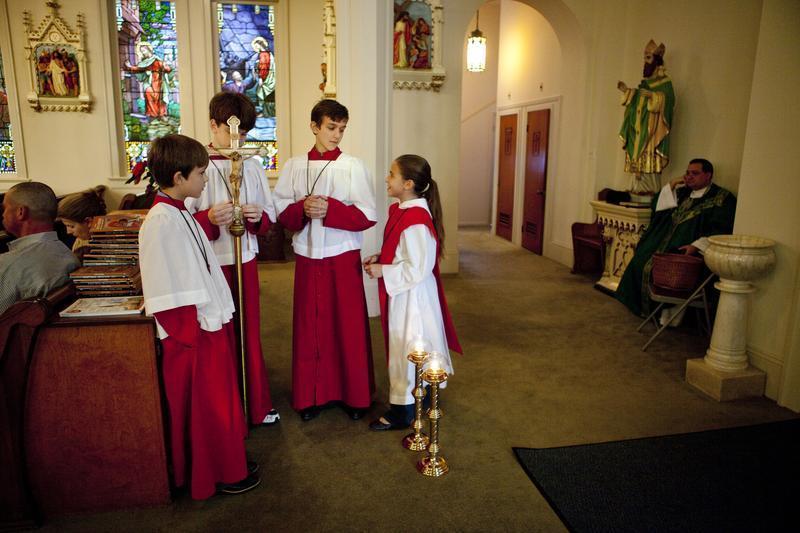
Christian Today report- A Catholic priest who has been newly assigned to a church in San Francisco has banned girls from serving in the church altars during Mass.

Rev. Joseph Illo, who previously gained notoriety for his statements to people who voted for US President Barack Obama, has barred female altar servers during Mass in the Star of the Sea Church.

According to the SF Gate, Rev. Illo said that the “intrinsic connection” between serving in Mass and priesthood makes it right that there should only be altar boys and no altar girls. He also expressed his intention to start an altar boy programme for the Star of the Sea Church, stating that the programme will be a “male bonding experience.”

The pastor explained that the experience would help mould the boys’ leadership potential and also allow them to socialise with other altar boys in preparation for priesthood.

“Maybe the most important thing is that it prepares boys to consider the priesthood,” the priest said.

Because of Rev. Illo’s decision, the Star of the Sea Church is now the only Church in San Francisco that does not have girls serving at the altar. Girls who have been trained earlier to serve as altar girls will continue to serve in Masses, the SF Gate reported, but training for new female servers will be phased out. Girls can still perform readings during Mass.

The Archdiocese of San Francisco upheld Illo’s decision, with spokesperson Chris Lyford saying in a statement that it is the decision of the parish priest to exclude or include altar girls during Mass.

Rev. Illo invited controversy and criticism in 2008, when he said that parishioners who vote for Obama should make a trip to the confessional.

“Voting for a candidate who promises ‘abortion rights,’ even if he promises every other good thing, is voting for abortion,” Illo, then serving as pastor in Modesto, wrote in a letter to parishioners. “It is a grave mistake and probably a grave sin.”

Source: Christian Today

‘Mass mobs’ save churches facing dwindling attendance

Christian Today report- New Yorkers on Sunday flocked to hear Mass in a Roman Catholic Church that has been scheduled for closing by the Archdiocese of New York because of dwindling attendance.

Rev. Bartholomew Daly told the New York Times that, on Sunday afternoon, the Our Lady of Peace Church in Manhattan was so “packed” that some churchgoers even had to stand just to hear Mass.

Our Lady of Peace is one of the churches that will be affected by the Archdiocese’s reorganisation efforts to create 55 new parishes in New York in response to weakening attendance and thinning of finances to maintain the parishes.

The reorganisation, the New York Times reported last month, will result to the closing of 112 churches including Our Lady of Peace.

Despite the declaration from the Archdiocese of the finality of the decision, parishioners engaged in a passionate campaign to keep the Our Lady of Peace and other struggling churches from being closed. Parishioners established an online election to pick churches that will benefit from what they referred to as “Mass mobs” – large groups of people who will attend Mass en masse in the selected church.

The Our Lady of Peace became the first recipient of the online election.

“What the archdiocese wants to see is more vibrant parishes,” a parish leader told the Times after Mass was celebrated. “How can you be a more vibrant parish than this one?”

For his part, Rev. Daly thanked the attendees for coming to hear Mass in Our Lady of Peace. “We hope that your presence here today will strengthen us and make it possible for us to continue as Our Lady of Peace,” he told the Mass mob.

He also told them that God might have something else in store for them.

“We dread any kind of change, but maybe God has something marvelous for us, something we cannot see now. God is a God of surprises, and he gives us what we don’t always expect,” Rev. Daly concluded.

Source: Christian Today

4 major challenges for a post-Ebola world

Christian Today report- In September last year the Centers for Disease Control depicted a worst case scenario in which the number of people infected could reach 1.5 million by January 2015 without swift intervention, and the UN called for $1 billion to tackle the epidemic.

Governments and aid agencies did respond, and the swell of humanitarian assistance has helped to contain its spread. In the week up to 18 January the World Health Organisation (WHO) reported a combined total of 145 new confirmed cases in Guinea, Liberia and Sierra Leone, the three countries most affected in the current outbreak. The Liberian government said late last week that there were now only five confirmed cases in the country, in comparison with the 300 new cases per week recorded in August and September.

It has been an uphill battle to educate communities and overcome the various stigmas around sanitation and hospitals, but it appears to be paying off. Of course, before the virus is entirely eradicated, governments in the affected countries will be rightly fearful of complacency, especially as scientists have reported…

“People are very encouraged to see the numbers of new cases going down, but they also recognise that the battle will not have been won until there have been zero cases in all the provinces for at least 42 days,” said Sarah Wilson, Ebola response communications manager for World Vision.

“So far only two provinces have had zero cases for that length of time. It only took one case to start the outbreak. So I don’t think people will relax for some time yet,” said Wilson, who has been based in Sierra Leone for the past two months.

This is not a virus to underestimate. This outbreak has been the worst on record by a significant margin, with the WHO reporting more than 21,000 confirmed, probable and suspected cases in Guinea, Liberia and Sierra Leone, and more than 8,600 deaths, though actual figures could be higher.

Outbreaks such as this don’t just affect the nation’s health. For every person who died, there will be repercussions – economic and social impacts on families, communities and nations.

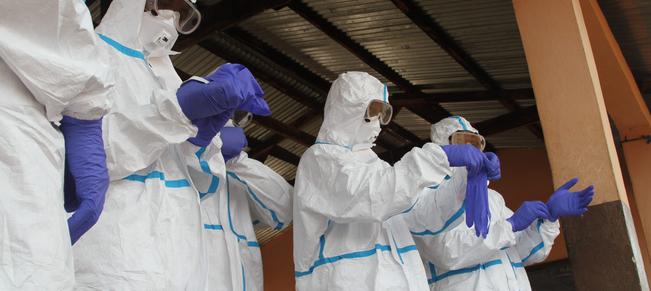
There are now four major challenges facing the world as the focus shifts from fire-fighting to planning for the future.

Challenge 1. Infrastructure – The world is ‘dangerously unprepared’

The epidemic has exposed once again the fragile, underdeveloped infrastructure in the three main countries affected, all of which are among the poorest in the world.

Liberia had only around 50 trained doctors for its 4 million population. Sierra Leone found it was radically short of hospital beds. In October, more than 1,100 beds were needed for Ebola patients and there were only 304 available for the country of 6 million people. There was also shortage of ambulances, and the fuel to run them.

The WHO has also admitted that the response to Ebola was too slow. But this doesn’t mean that it won’t happen again. Dr Jim Yong Kim, president of the World Bank Group said this week that the world, not just Africa, is “dangerously unprepared” for future pandemics like Ebola.

Dr Margaret Chan, director general of the WHO, also said that “Ebola preyed on the fear of the unfamiliar.

“The disease was unexpected and unfamiliar to everyone, from clinicians and laboratory staff to governments and their citizens,” she said.

One encouraging sign, however, is that the grave concerns about Ebola spreading across Africa, and even the world, have not been realised. There have been some cases in Nigeria, Mali and Senegal, but it has not been widespread, and it is generally thought that the virus was effectively controlled.

Challenge 2. Economy – Africa is not a country

Although fears that the whole region would be hit economically have been assuaged, the three main countries affected face huge economic challenges.

In Liberia, almost half of household heads are unemployed, according to a recent World Bank report. And in Sierra Leone many small household enterprises have gone out of business or suffered a substantial reduction in trade.

Sierra Leone was expected to see substantial economic growth in 2015 of 5-10 per cent, and instead its economy is shrinking, with Guinea heading in a similar direction. Although the Liberian economy is expected to grow this year, it is thought it will be at half the rate that it was before the outbreak.

Investment plans were put on hold, and tourism declined. Public activities were reduced in an attempt to control the disease. Markets closed, and street vendors lost their source of income, and in Liberia non-essential government workers were sent home.

According to The Economist, by November last year tour operators across Africa reported the biggest drop in business in living memory. This is partly owed to the fact that some think of Africa as a nation, not a continent, and was described by one travel agent as “an epidemic of ignorance”.

With headlines about the fear of Ebola spreading globally as a result of air travel, it’s easy to see how anxieties emerge. David Evans, a senior economist at the World Bank, said: “The vast majority of the economic impact of this crisis has been fear.”

But if the fear hadn’t been there, would the response to Ebola have been so strong?

This week Oxfam called for a form of post-Ebola ‘Marshall Plan’ to prevent countries recovering from the virus from being hit by economic disaster.

On a visit to Liberia, Oxfam GB’s chief executive Mark Goldring said: “People need cash in their hands now, they need good jobs to feed their families in the near future and decent health, education and other essential services. They’ve gone through hell, they cannot be left high and dry.

“The world cannot walk away now that, thankfully, cases of this deadly disease are dropping. Failure to help these countries after surviving Ebola will condemn them to a double-disaster. The world was late in waking up to the Ebola crisis, there can be no excuses for not helping to put these economies and lives back together.”

Challenge 3. Family and Society – Back to school but not back to normal

Schools in Liberia and Sierra Leone are due to open again in February, having been closed for months in an attempt to reduce interpersonal contact.

But things won’t necessarily return to normal. VICE News reports that a number of private Christian schools in Liberia, which are often thought to have a higher standard of education, may be forced to close as a result of the economic downturn.

Many children have been emotionally traumatised by the outbreak – those who caught the virus will have experienced the fear and stigma associated with it, as well as the loneliness of quarantine, others have been orphaned. In recognition of the emotional trauma that people face, World Vision is training people in psychological first aid.

Christian development agency Tearfund reported the story of one Liberian woman, Josephine, whose husband and two children died from Ebola. She also contracted the virus and was admitted to a clinic, but recovered and has taken six orphaned children from the clinic into her care.

Stories of newly formed families are also paired with other, less comforting reports of people being rejected by family members or their communities after they have recovered over fears of the disease spreading.

Josephine said: “Since we returned from the Ebola Treatment Unit, it has not been easy for us to get food. Many people in the community that we were once close to are afraid of us.” Tearfund’s partner organisation, EQUIP, has been distributing food parcels to households across Liberia who have been quarantined and consequently struggling to get food.

One of the significant measures taken to control the virus was to change funeral practices, as the bodies of Ebola victims are still highly contagious after death. Although people were told to report the deaths, the bodies were disposed of without any opportunity for a ceremony. People were reluctant to call the teams, and so the protocol wasn’t as effective as it might have been.

World Vision has been working on a government-funded project in Sierra Leone to ensure the dead are given safe and dignified burials. Teams are trained to come to the home of the deceased in protective clothing, and safely, but solemnly remove the body and clean the home. Families are able to invite a member of clergy, either Muslim or Christian, to perform a ceremony.

There have also been smaller societal changes, including in peoples’ body language. “Sierra Leoneans are a very expressive people who like to hug and touch each other,” said Wilson. “It is difficult to avoid doing that, but people have taken that messaging very seriously. People touch their hands to their hearts and bow as a greeting now…it seems awkward at first, but everyone does it.”

Challenge 4. Health – Ebola, one among many

Many have made the comparison between Ebola and other diseases that have a crippling hold on a number of African nations, such as malaria and HIV. In 2013, 6.6 million people contracted malaria in Sierra Leone, Guinea and Liberia, and 20,000 people died from the disease. While it’s difficult to argue that one disease is ‘worse’ than another, it is true that Ebola is one concern among many.

A WHO report in December showed that although malaria deaths have fallen in recent years around the world, Ebola poses a risk of resurgence. This is partly a result of the stretch on medical resources; some of the – already limited – health clinics in Liberia were shut down as they became places of infection instead of treatment. And this in turn may have made people more reluctant to attend outpatient clinics, which have also seen a fall in numbers attending.

The question over trial Ebola vaccines once again drew distinctions between The West and the Rest, with high-profile cases of Westerners being given experimental drugs, while the thousands in West Africa were not. But when the experimental drug ZMapp was sent out to Liberia in August it was seen as ethically questionable.

There has been huge pressure to fast-track developments of possible vaccines and treatments. In November, clinical trials began in Sierra Leone and Guinea using the blood of Ebola survivors to help victims. At the start of January Médecins Sans Frontières began a clinical trial for an anti-viral drug in Liberia, and last week British pharmaceuticals firm GlaxoSmithKline shipped its first trial vaccines to Liberia.

Jon Pender, a vice-president of GSK, said at an event in Parliament last week: “The reason we don’t have a vaccine is because it wasn’t a priority for anyone, and there are understandable reasons for that…. The number of people affected each year was very small and the overall disease burden, in comparison to other disease like malaria or HIV, is tiny.

“The fact is that in the 40 years that we have known about Ebola, including the present outbreak, there have been about 24,000 known cases. There are that many cases of malaria every hour.”

But while a vaccine may one day eliminate the virus, it’s clear that the same recurring faultiness of underdevelopment leave these countries – and particularly their economies – still vulnerable to attack. Ebola has proven to be a global challenge, though one that cost the poorest most, and international commitments are needed for the long haul, as much as ever as the death count falls.

Source: Christian Today

Rape law tightened, campaigners urge change in society’s attitude

Christian Today report- Campaigners have hailed an announcement by the Director of Public Prosecutions, Alison Saunders, that men must be able to show that women have consented to sex in cases where they are accused of rape.

However, a Christian activist and consultant told Christian Today that a change in society’s attitude was also needed and warned that the Church needed to examine its theology about women.

Saunders said that the legal system should recognise the fact that sometimes a woman might not be in a position to give their consent, for instance because she is drunk or frightened.

The move does not mark a change in the law; footballer Ched Evans has been at the centre of a long-running row after he was found guilty of raping a woman who was drunk. However, convictions have sometimes been hard to secure and Evans has continued to protest his innocence.

“Consent to sexual activity is not a grey area – in law it is clearly defined and must be given fully and freely,” Saunders said.

“It is not a crime to drink, but it is a crime for a rapist to target someone who is no longer capable of consenting to sex though drink.

“These tools take us well beyond the old saying ‘no means no’ – it is now well established that many rape victims freeze rather than fight as a protective and coping mechanism.

“We want police and prosecutors to make sure they ask in every case where consent is the issue – how did the suspect know the complainant was saying yes and doing so freely and knowingly?”

Natalie Collins, a consultant who works in the field of gender equality, told Christian Today that the DPP had sent a “powerful signal” through her words. “This is a brilliant thing. The challenge will be to implement it and make the effort to put the guidance in place,” she said.

However, she added that as well as increasing the number of convictions in rape cases, in order to reduce the incidence of rape itself it was necessary to change public attitudes. “We are all complicit, we all have views about what is ‘real’ rape and about the kind of person who is involved.

“Changing attitudes and beliefs is the hardest thing to do.”

She said that churches could play an important role in this, but that they tended not to address the issue other than to provide pastoral support in cases of rape by strangers. “Abuse by partners is a massive issue. There is teaching about headship, the sanctity of marriage, complementarianism. In churches there can be an acceptance of pressure on a woman to have sex and an assumption that men have a higher sex drive and can’t help themselves.

“The Church has a massive opportunity to make a difference on this issue, but we need to do a lot of soul-searching about how our theology has contributed to it.”

Collins warned that churches with young people focused too narrowly on persuading them to reserve sex for marriage. “If the teaching is that sex before marriage is only bad and sex after marriage is all good, it’s missing whole areas about consent,” she said.

Source: Christian Today

Researcher says ‘fear of rejection’ is the main hinderance to mission

Christian Today report- Churchgoers are reluctant to invite non-Christian friends or family to join them in the pews because they are “paralysed” by fear of rejection or damaging a relationship.

New research shows that fear of losing friends prevents many from asking the question: “Would you like to come to our service on Sunday?”

The research comes as the Church of England has launched a series of reports designed to boost church attendance. Clergy will be scouted for talent and sent on management training schemes as the two Archbishops of Canterbury and York attempt to foster a culture of going for growth rather than that of managing decline that has characterised the past few decades. Many of the reports will be debated at the next General Synod in London in February.

However, the latest findings from Christian Research suggest that, while good leaders are important, the problems may go deeper.

Early findings of the project, completed by 1,153 members of Christian Research’s Resonate panel and unveiled at Cranmer Hall, Durham this week showed that more than half had a deep-seated reluctance or resistance to inviting people to church.

Researcher Michael Harvey, who pioneered Back to Church Sunday and runs seminars on how to build a culture of “invitation”, said: “What we have discovered so far is that sublimated fears, perhaps related to previous rejections, are projected onto the church, with would-be inviters seeing it as unattractive, not fit for purpose and unwelcoming.”

He told the conference that Christians experienced “paralysing anxiety” at the thought of rejection by friends if they invited them to church. Many Christians did not recognise the Gospel imperative to “go to the people of all nations and make them my disciples.”

He said: “Perfectionism is riven through the church and this cannot be right. The Bible says where two or three are gathered in my name, I will be present. It does not say where two or three are gathered in my name, doing it perfectly well, I will be present. The church is never going to be perfect.”

He described some of what was taking place as “projection”, a theory in psychology where people defend themselves against unpleasant impulses by denying their existence in themselves and attributing them to others.

“We can see the same in the Garden of Eden. Adam explained his sin to God by saying, ‘The woman tempted me.’ Eve ascribed the situation to the serpent. Just as Adam and Eve we don’t know that we are afraid.

“The respondents imply that they are waiting for the perfect moment, or the right time to invite. They are waiting for an initiative that might work so they can stick their heads above the parapet and invite someone. If we keep waiting nothing can go wrong. The name of the game is safety and not the risk of faith. The Apostle Paul warned about timidity. For the Spirit God gave us does not make us timid, but gives us power, love and self-discipline.”

He said there was growing hostility towards Christianity and the Church has “no muscle in the area of invitation and God conversations” because it had little experience of actually doing it. However, he also believed the Church could change and adapt.

Dr Michael Volland, tutor in mission at Cranmer Hall, said: “Too often our missional effort is on the invited person but we need also to focus on the inviter. This research is already having an impact in both congregational ministry and fresh expressions of church.”

Source: Christian Today

Catholic church ban on giving room for a female priest remains unlifted

Christian Post report- A Roman Catholic archbishop said that the Catholic Church will be keeping its ban on allowing women to serve as priests in the wake of the Church of England’s consecration of its first ever female bishop.

Archbishop Bernard Longley of Birmingham, who is also the Catholic co-chair of the Anglican-Roman Catholic International Commission, told the Vatican Radio on Tuesday that while “the conversation about women’s ministry continues in parts of the Catholic Church, this development is unlikely to bring about changes in the Catholic teaching on the sacrament of ordination.”

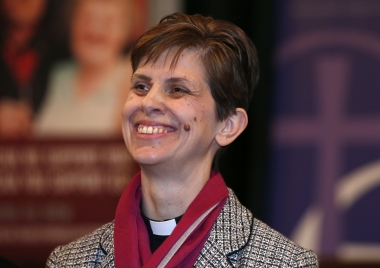
The Church of England made history earlier this week when it consecrated its first ever woman bishop, Rev. Libby Lane, who will serve the diocese of Stockport.

The Church of England made the announcement back in December, and it has been met with approval by the majority of Anglican leaders, including the Archbishop of Canterbury, the Most Rev. Justin Welby. Conservative voices within the church disagreed with the move, however, and Lane’s consecration ceremony was briefly disrupted by one priest who shouted “not in the Bible.”

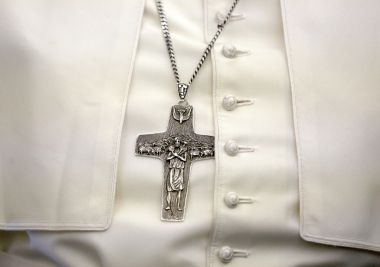
Only men are allowed to serve as priests or any higher positions within the Catholic Church, and Longley affirmed that the tradition is set to stay as it is. Still, he called Lane’s consecration a “historic moment in the life of the Church of England” and said that he wishes her well.

The Birmingham Archbishop admitted that while the ordination of women is challenging for the Anglican-Catholic dialogue, he said that Lane’s consecration “shouldn’t affect the way in which the dialogue is continued.”

Longley said that Lane’s ordination will likely be discussed at ARCIC’s next meeting in Rome in May, and said that Catholics will have to prepare to work more closely with women bishops due to the new direction.

Back in July following the vote in the Church of England that paved the way for women bishops, Longley suggested that the change creates an “obstacle” for Christian unity.

“The decision of the Church of England to admit women to the episcopate therefore sadly places a further obstacle on the path to this unity between us. Nevertheless we are committed to continuing our ecumenical dialogue, seeking deeper mutual understanding and practical cooperation wherever possible,” Longley said at the time.

Both Pope Francis and Welby have called for continued cooperation between the Anglican Communion and the Catholic Church despite such differences.

Source: Christian Post

An Anglican Bishop said he’ll defend LRA’s commander

Christian Today report- A retired Anglican bishop in Northern Uganda has said that he is prepared to go to the International Criminal Court (ICC) in The Hague to defend a notorious war criminal.

Dominic Ongwen, a senior commander in the Lord’s Resistance Army (LRA) which has terrorised large parts of central Africa and been responsible for tens of thousands of deaths, surrendered to US special forces in the Central African Republic. He appeared at the ICC on Monday.

Ongwen, kidnapped by the LRA at the age of 10, has been accused of crimes including rape, murder and enslavement. However, Bishop Nelson Onono-Onweng, who has been active in seeking a peaceful end to the conflict with the LRA and undertook a dangerous meeting with its leader Joseph Kony and with Ongwen in the Congo in 2006, has said that Ongwen himself was a victim.

“I am willing to go and give evidence at the ICC about him. I am not afraid,” he told RNS.

“The world betrayed this child. The state, which had the instruments to protect him, did not. The international community also took too long to act [against the] LRA. The world can see how things conspired against him.”

The question of what to do with LRA rebels who have surrendered or been captured is a deeply sensitive one in Northern Uganda’s Acholi community, from which the group first arose and from which many of its child victims were abducted. The fact that they were taken at such a young age – some as young as five or six – led to a reluctance to pursue a military solution, even though they had been indoctrinated and coerced into becoming ruthless killers.

The Acholi Leaders Peace Initiative, set up to help negotiate an end to the conflict and mitigate the military response of the Ugandan government, issued its annual end of year peace message in December. It spoke of the need to promote a culture of forgiveness and reconciliation, noting that army action against the LRA in 2008 had only driven it out of Uganda, causing “untold suffering” in the Central African Republic, South Sudan and the Democratic Republic of Congo.

It said that the spirit of unforgiveness had caused “the stigmatisation of those affected with HIV/AIDS, those born in the LRA’s captivity and the girl-child-mothers who came back with children born in LRA captivity. Domestic violence still persists against women; inter-state hatred still exists as a result of the LRA war … Land disputes and other community conflicts have become part of the definition of the contemporary life in Acholi Sub Region.”

However, others argue that Ongwen and others should be judged in a court of law rather than being given an amnesty, and that their crimes are too heinous to be overlooked.

The LRA has only an estimated 200 fighters left, in an inaccessible area of the Central African Republic.

Source: Christian Today

Bishop Heather Cook’s diocese calls for her resignation following fatal hit-and-run incident

Christian Today report- Maryland bishop Heather Cook, who is facing manslaughter charges for the hit-and-run of a cyclist in December, has been asked to resign by her diocese.

In a letter to Cook dated January 26, members of the Standing Committee of the Episcopal Diocese of Maryland say they “agreed unanimously that you are no longer able to function effectively in the position of Bishop Suffragan given recent events.

“Therefore, we respectfully call for your immediate resignation…The Standing Committee arrived at this decision after significant and prayerful discernment, and with due and proper consideration for the best interests of the diocese and its people.

“We continue to hold you in our prayers.”

Cook has made no statement since the incident, and her lawyer, David Irwin, yesterday declined to comment on the resignation request.

Cook hit 41-year-old cyclist Tom Palermo after driving her SUV into a bicycle lane in Baltimore on 27 December last year. She then left the scene of the accident, but returned around 20 minutes later. Palermo died of head injuries sustained in the incident shortly after.

Testing showed that the bishop was three times over the alcohol limit for drivers in Maryland at the time of the incident, and she later confessed in court that she has an alcohol problem. She has been charged with driving under the influence of alcohol and causing an accident due to texting while driving among other offences, and faces up to 20 years in prison if convicted.

Cook’s preliminary hearing is scheduled for February 6, and the bishop last week checked into an alcohol treatment facility after posting $2.5million bail.

The Episcopal Bishop of Maryland has said the diocese is in “deep pain” as a result of her actions.

Eugene Taylor Sutton, Cook’s senior, wrote in a pastoral letter earlier this month: “The Diocese of Maryland is in deep pain. Words barely express the depth of our shock and despair over the events and revelations of the past two weeks.

“There are still too many questions for which there are no easy answers, and we are filled with anger, bitterness, pain and tears. Our thoughts and prayers remain with the Palermo family in their bereavement and for ourselves as a diocese in mourning.”

Source: Christian Today

Legend of Korra characters are gay

Christian Today report- The final scene of the season finale was met with mixed reactions but creators of the popular Nickelodeon animated show The Legend of Korra have laid the debates to rest as they confirmed that Korra and Asima are indeed gay.

“Our intention with the last scene was to make it as clear as possible that yes, Korra and Asami have romantic feelings for each other. The moment where they enter the spirit portal symbolises their evolution from being friends to being a couple,” Michael Dante DiMartino, the show’s creator posted on his Tumblr account entitled Korrasami Confirmed.

For years, fans have been speculating the possibility of a deeper relationship between the two characters, forming Korrasami, the combination of the names of Korra and Asami, even devoting fan art and a separate Tumblr page for artwork featuring the duo.

“The main themes of the Avatar universe have always revolved around equality, justice, acceptance, tolerance, and balancing differing worldviews,” DiMartino continues.” I’ve already read some heartwarming and incredible posts about how this moment means so much for the LGBT community. Once again, the incredible outpouring of support for the show humbles me.”

Meanwhile, his co-creator Michael Konietzko posted his own statement on the final episode. “You can celebrate it, embrace it, accept it, get over it, or whatever you feel the need to do, but there is no denying it. That is the official story. We received some wonderful press in the wake of the series finale at the end of last week, and just about every piece I read got it right: Korra and Asami fell in love. Were they friends? Yes, and they still are, but they also grew to have romantic feelings for each other.”

Konietzko added that the original plan for Asami was different but the story evolved along with her character.

Fans of the show displayed varied reactions to the finale, most of them posted their videos on YouTube. Some were crying, fanning themselves, fidgeting and even chanting Korrasami.

While Korrasami was met with praise as a groundbreaking television moment, it was also met with criticism, especially since it was premised as an adventure show and a spinoff to Avatar: The Legend of Aang, another Nickelodeon show for kids.

Reactions varied among viewers: “It is disturbing to me, because my 10 year old daughter has loved “Legend of Korra” from the beginning,” said Ruthie Townsend of Nashville. “The show includes so many good lessons for children, like bravery, selflessness, and friendship. It’s just very sad that the creators had to push their agenda on impressionable children.”

“Really?! In a children’s show? If they didn’t want to push the heterosexual agenda then they should also not push the homosexual one,” Joy Ogbonna said.

Since it was aired in 2012, the show has received positive and negative feedback but mostly maintained critical acclaim because of its ability to push the boundaries and challenge convention, primarily in headlining the show with a strong female character and its injection of sociopolitical parallels into its storyline. Its strengths were also the source of criticisms as groups called out the subjects as being too subversive.

Source: Christian Today

Ewan McGregor on religious people view of his interpretation of Jesus

Christian Today report- Perhaps in his most challenging role to date, Ewan McGregor is playing the role of both Jesus and the Devil in Rodrigo Garcia’s Last Days in the Desert. Despite possible backlash from some sectors who may not welcome his interpretation of the religious icon, the actor remains confident of his portrayal of Yeshua, the Son of God whose faith is tested by the devil himself.

In an interview with Yahoo News, McGregor, who is well known for playing Obe Wan Kenobi in the Star Wars franchise, said that he tried to make sure that he interpreted Jesus in a manner that did not deviate from the general characteristics of Jesus as Christians know him.

“I can’t imagine any issue with it, because there’s never a moment that he’s uncertain of his faith. I played him as the son of God and a man who is in the desert for 40 days and 40 nights to meditate on his path, the path ahead of him, which is to go out and preach and dedicate his life, ultimately and completely, to spreading the word of God, his father,” he said.

For his portrayal of a dual role, the Scottish born actor credited Nash Edgerton for doing the scenes with him and said that he had a far more difficult time with playing the devil because of his more complex range of emotions.

Ultimately, McGregor said that the audience reception to the film will be dependent on their interpretation, especially on the aspect of the devil’s strategies to get Jesus to waver.

Last Days in the Desert tells the story of the Temptation of Christ while he fasted and prayed for 40 days and 40 nights at the Judaean Desert and battled with the temptations presented to him by Satan to keep him from sacrificing himself for mankind’s salvation.

His portrayal has earned the movie a lot of positive feedback from critics who viewed the film at the Sundance Film Festival.

According to The Hollywood Reporter review: “Although he’s technically 10 years too old for the part, McGregor (the latest in a line of cinematic blue-eyed Jesuses) impressively handles the role of this solitary seeker; he’s entirely credible as a man who’s grave, searching and a tad bewildered at not having found the help he expected, but he’s neither overbearingly brooding nor excessively humble. He’s still looking for the answers.”

Source: Christian Today