China: Christian faith increases despite Government’s opposition

Breaking Christian News- “By 2030, China’s total Christian population, including Catholics, is predicted to exceed 246 million, placing it above Mexico, Brazil and the United States as the largest Christian congregation in the world.” -Reuters

(China)—While Christianity continues to weaken in many parts of the world, China’s Christian churches are experiencing significant growth despite government restrictions.

“Some Sundays we are full. We also have 1,600 volunteers,” said Zhou Lianmei, the pastor’s wife of the Chongyi Church, one of the biggest mega-churches in the country. The convention-building sized church holds up to 5,000 worshipers and there are several services available every Sunday.

“I come because I found a love here that isn’t dependent on a person. It is like a river that doesn’t go away,” stated a young businesswoman from Hangzhou, the city where Chongyi Church is located.

The city of Wenzhou, often referred to as “China’s Jerusalem,” is home to over 1 million Protestants out of a population of 9 million. Experts believe that by 2030, China will hold the most Christians on the planet based on current growth rates.

“Chinese Christians know the Bible better than some Southern Baptists. That’s not a small thing,” Philip Wickeri, a Christian leader in Hong Kong, told the Business Insider.

For many years, Christianity was seen as a religion for elderly peasant women. However, that view has significantly changed: many of the newly baptized Chinese Christians are young, well-educated and earn a comfortable living.

Last year, half a million Christians were baptized in the country, according to China’s chief of religious affairs. Texas-based Baylor University and Peking University conducted a joint study that estimated 70 million Christians over 16 years of age reside in China.

Some Christians are even incorporating Biblical principles into their businesses. One company in China asks members to pledge a “Ten Commandments” of good behavior that includes “no bribing, no taking mistresses, no avoiding taxes, and no mistreating employees.”

Although China’s Christian population is growing, the government continues to tighten its hold on the faith. Over the past year, the country’s Communist police have bulldozed church buildings, demolished crosses, and destroyed religious artifacts.

One church offered to pay a series of fines in the belief that the attacks were about money. “We were fooled at first,” says one local pastor. “Then we discovered they didn’t care about fines. They went after our crosses and gave the impression they enjoyed it.” The aim was to humiliate and shame, he believes.

Source: Breaking Christian News

Faith Leaders urge Cameron to keep refugee promise

Christian Today report- A year on from the UK government’s promise of a resettlement scheme for Syrian refugees, just 90 have been offered asylum.

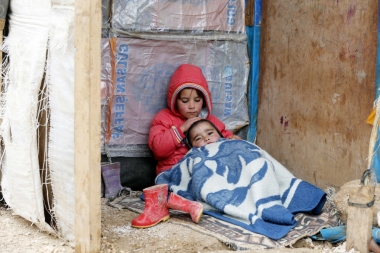
Some of Britain’s top faith leaders are now urging David Cameron to do more to protect the most vulnerable, particularly in the face of a hash Syrian winter.

“Many refugees have experienced persecution, torture or sexual violence, sometimes because of their religion or ethnicity, or have disabilities or other urgent medical needs which make them particularly vulnerable. Some will not survive the winter,” a letter signed by multiple religious leaders reads.

“We are proud of the way in which the UK has led the world in its humanitarian aid contribution to the Syria crisis. However, our help cannot end with aid. We urge you to show the same leadership on resettlement so that more of Syria’s most vulnerable refugees can find sanctuary here in the UK.

“We welcomed the announcement, a year ago, of the Syrian Vulnerable Persons Relocation (VPR) scheme but we are disappointed that only 90 refugees have so far been offered a safe haven here in the UK via this route,” the letter continues.

“One year on, we urge you to take this opportunity to commit to offering resettlement places to thousands, not hundreds, of refugees from Syria.

“In the face of a desperate and growing need, we believe that Great Britain has a moral responsibility to continue our noble tradition as a compassionate and welcoming safe haven for those in need of protection. As Prime Minister, you have the power to offer hope to people whose suffering is almost unimaginable to us. We ask you to do this today.”

Signatures of the letter include the Archbishop of Wales Barry Morgan, Head of the Jewish Reform Movement Rabbi Laura Janner-Klausner and Assistant Secretary General of the Muslim Council of Britain Shaykh Ibrahim Mogra.

An estimated ten million people have been displaced by the ongoing conflict in Syria, four million of whom have fled the country since the outbreak of civil war almost four years ago. Over 1.25 million of these are children, and aid organisations working in the region have repeatedly expressed concern about both the immediate and long-term effects that the ongoing crisis will have on them. They are often described as a “lost generation”.

Amnesty International is now calling on countries to increase their resettlement commitments to five per cent of Syria’s refugees by the end of 2015, and a further five per cent next year. The UK has so far pledged to offer asylum to only a few hundred Syrians over the next three years.

“The UK government’s relief efforts in the region are to be commended but it is clear that so much more needs to be done to protect people fleeing the Syrian conflict, including those at risk of persecution due to their religion or ethnicity,” said Kate Allen, Amnesty International UK director.

“A year on from agreeing to resettle hundreds of refugees, the UK should take this opportunity to up their game and resettle thousands of Syria’s most vulnerable. The UK has done this in response to other conflicts, what is stopping this government from doing the same?”

Refugee Council Chief Executive Maurice Wren has accused Cameron of failing those in need. “We promised them safety. We promised them hope. We promised them a future. If David Cameron fails to significantly increase the scale of Britain’s resettlement scheme he will have broken that promise,” Wren said.

Edie Freedman, Executive Director of The Jewish Council for Racial Equality added: “We in the Jewish community know only too well the perils of being refugees and the indifference which too often meets their desperate plight to find sanctuary.

Syrians now make up the largest refugee group in the world. We appreciate that this is not a job for Britain alone, but we must do our fair share.”

The faith leaders join many others in calling on Cameron to do more. On Monday, a group of celebrities including Emma Thompson, Michael Palin and Sting signed a letter in which they said “every settlement place countries like Britain provide is a lifeline”.

“Resettling ‘several hundred people’ just isn’t good enough for a global leader. This issue isn’t about migration statistics or party politics, it’s about people. It’s about the values that we in Britain hold dear; compassion and humanity,” the letter contined.

“Your choice is simple, yet historic. You are in a position to offer some of the most vulnerable people in the world safety in Britain. You can offer hope. You can offer a future.”

Source: Christian Today

Nicky Morgan says she won’t stop defending the motion to instil British values

Christian Today report- Education Secretary Nicky Morgan yesterday said she will “vigorously defend” the drive to instil British values in UK schools, despite controversy over “intrusive” Ofsted questioning.

“I’m afraid I have no sympathy for those who say that British values need not apply to them, that this should purely be a special test for schools in predominantly Muslim communities or our inner cities,” Morgan said in a speech to think tank Politeia

“A commitment to British values means that we also hold to account those schools where girls are made to sit at the back of the class, where homophobia goes unchecked, where young people aren’t being made aware of the many facets of British culture.”

Morgan said that though children in some parts of the country may not know anyone of an ethnic minority, it’s important that they learn about diversity while they are young. “Surely a key part of our responsibility to those young people in enabling them to succeed in modern Britain is ensuring they understand and respect the differences that make our country unique,” she said.

“So I’m unapologetic in saying that no school should be exempt from promoting fundamental British values, just as no school should be exempt from promoting rigorous academic standards.”

Morgan’s comments come in the wake of faith schools coming under fire for supposedly failing to foster a tolerant environment.

The January 2015 Ofsted report for Grindon Hall, a Christian school in Sunderland, says that the curriculum “does not adequately prepare pupils for life in modern Britain.”

“Pupils show a lack of respect and tolerance towards those who belong to different faiths, cultures or communities…Discrimination through racist or homophobic language persists,” the report adds.

However, principal Chris Gray attributed Grindon Hall’s downgrading to “inadequate” to inappropriate questioning by Ofsted inspectors.

“The tenor of the inspection was negative and hostile at every stage, as if the data collected had to fit a pre-determined outcome,” Gray wrote in a formal letter of complaint.

He said that a ten-year-old girl was asked if she knew what lesbians “did”, while other children were asked “intrusive and deeply personal” questions.

“I have also heard reports of primary school children being asked if they knew of any boys or girls who thought they were in the ‘wrong body,'” Gray said. “Pupils were embarrassed and surprised to be asked questions about sexuality.”

He later accused the inspection team of having an “aggressive attitude”.

The government’s drive to promote British values has been criticised by some for being too narrow in its definitions.

Chief education officer for the Church of England, Nigel Genders, said last year that the Church “wholeheartedly support[s] the idea of schools being required to promote the values of tolerance and respect for those coming at things from a different perspective.

“However, ‘British Values’ cannot be allowed to become a test or an assessment of whether somebody in a community is ‘safe’ or ‘loyal’,” he said.

Source: Christian Today

More millennial teenagers are changing their views on abortion

Christian Today report- The landscape of the battle between pro-abortion and pro-life activists is showing some change as trends reveal that millennial teenagers are leaning more towards a pro-life stance rather than favouring the practice of abortion.

Robert P George, law professor at Princeton University, said at the Students for Life America’s 28th annual conference on Friday that the pro-life movement had appeared to have a bleak future in the past decades.

However, the professor said the dedication of pro-life leaders to the cause as well as the availability of new technologies have helped in educating the youth on “the reality of the beautiful human life of the child in the womb.”

According to the Washington Times, delegates to the conference exceeded previous figures. About 2,000 people attended the conference on Friday alone and the demand was so huge that the SFLA had to schedule a second day of the conference on Sunday in San Francisco in order to accommodate the numbers.

The professor said on Friday that there is a turning of the tide in favour of the pro-life movement, and he honoured the youth as being responsible for this new development.

“I see the future, and you are it,” Professor George told the attendees.

SFLA President Kristan Hawkins urged youth to speak out and let their thoughts be known on the issue. “When you speak, people listen,” Ms Hawkins said.

The Students for Life America is a pro-life umbrella organisation that encompasses more than 800 pro-life student groups scattered in various universities and high schools in the entire United States. It holds an annual conference whose purpose is to educate the youth, as well as bring them close to individuals who can help them pursue their own pro-life campaigns.

The SFLA also purports to introduce attendees through the annual conference to national leaders “who all know just how vital this pro-life generation is to abolishing abortion in our lifetime.”

Source: Christian Today

Most Americans agree they know nothing about Sikhs

Christian Today report- Almost two thirds of Americans admit they know nothing about Sikhs, a new survey has found, despite the fact that Sikhism is the fifth largest religion in the world.

A survey commissioned by the National Sikh Campaign (NSC) showed that 31 per cent of non-Asian Americans have never seen or interacted with someone who is Sikh, and only 11 per cent have a close friend or acquaintance who is Sikh.

When shown a photograph of a man in a turban, just 11 per cent of respondents identified him as Sikh – 20 per cent thought he was Muslim.

The survey also appeared to reveal reservations about traditional Sikh dress – 17 per cent of those surveyed thought they had much in common with a Sikh woman wearing a turban, in comparison with the 30 per cent who said the same of a Sikh woman with long hair and no turban.

A number of those polled admitted to feeling a little “wary,” “nervous,” or “cautious” of men in turbans.

The NSC report, entitled ‘Sikhism in the United States: What Americans know and need to know’, supports research conducted in 2014, which found that more than half of Sikh children are bullied at school, a statistic which increases to two-thirds among those who wear turbans.

According to the NSC, there has been a “dramatic increase in hate-based violence against Sikhs” since 9/11. This includes the Wisconsin Sikh temple shooting in 2012, which was biggest act of violence against a faith community in the US since the 1963 church bombings in Alabama.

“Sikhs experience daily encounters with discrimination and hate incidents that go unreported and therefore unrecognized,” the report said.

The report suggests that Sikhism is largely misunderstood in the US, although there are around half a million Sikhs living in the US. In response, the NSC is urging Americans to educate themselves about the faith, in the hope of seeing perceptions change.

“We want to make sure that we pave a way for a conducive environment for our future generations so they don’t have to take off their turban to hide or to feel sorry for their identity,” NSC co-founder Rajwant Singh said on Monday.

Another co-founder, Gurwin Singh Ahuja, added: “We hold incredibly progressive values. Sikhs believe that men and women are equal, that all faiths should have the right to practice, and we have to do a better job of communicating those things.”

“Ultimately,” he continued, “we want to give young Sikhs a future where tying their turban in the morning is not a cause for concern.”

Source: Christian Today

Clergy protest against use of mugshots for police target practice

Christian Today report- The revelation that a Florida police department was using mugshots of real people for target practice has caused widespread outrage and sparked a protest by clergy on social media.

It was discovered last month that North Miami Beach’s police department used pictures of black men at its gun range. National Guard sergeant Valerie Deant was shocked to find one of them in a rubbish bin – with her brother’s face on it.

The city council has now banned the practice following protests which included the display of poster-sized photos of Police Chief Scott Dennis riddled with bullet holes. Dennis told the Miami Herald that he felt “very, very badly” about the practice.

“I sincerely apologised for what my department has done,” he said. “This was a training program that had been going on long before I was here and when I found out about it, I ceased it.”

However, the revelations that the mugshots – all of black men – were used at all has played into allegations that police have been careless toward black lives, following the shooting of Michael Brown in Ferguson and the death of Eric Garner in New York. There have been widespread street protest over the issue.

Then a closed Facebook group for Lutheran clergy shared the idea of sending in their own photos for target practice. The Twitter protest adopted the hasthag ‘UseMeInstead’ and features a number of ministers in clerical collars.

The Facebook statement said: “Although we acknowledge the need for a police force that is trained in the use of their firearms, we feel that, if pictures of human targets are used for target practice, great care should be taken in not allowing the selection of these targets to allow for the dehumanisation of those most vulnerable to police violence.

“Our faith teaches us that all human life is sacred. And when human life is devalued, Jesus teaches us to put ourselves in the place of those whose humanity is denied, just as he did.

“To the members of the North Miami Beach Police: If you must use pictures of real humans for your target practice, we request that you use ours. We’re sending pictures of ourselves, in our clergy uniforms, to use.”

While the protests have proved popular, some activists have also drawn criticism because most of those taking part are white, and black clergy have largely chosen not to participate.

Source: Christian Today

Archbishop of York urges Cameron to reverse decision over granting visas regarding young girl’s funeral

Christian Today report-  The Archbishop of York has urged David Cameron to reverse a decision not to grant visas to the Zimbabwean family of a young girl killed in December.

The Home Office has refused visas for the grandparents and aunt of five-year-old Andrea Gada, who was fatally hit by a car near her home in Eastbourne. The family claim that it is because they are “too poor” and are therefore considered an illegal immigration risk. They say the government’s decision is “unbearable”.

In a letter to the Prime Minister, Dr John Sentamu urges Cameron to reconsider. “Having read about the situation, I feel sure that you will understand the need, in this instance, to intervene to ensure that the [grandparents] are able to attend this tragic funeral,” he writes.

The Gadas are Seventh Day Adventists, and have said that having their family present at the funeral is important “both for cultural and religious reasons”.

“Losing a child is one of the hardest things a person can experience, and at this time myself and my husband are both longing for the support of our family,” Andrea’s mother, Charity Gada, said on the Change.org petition.

“Having our family together at this time is incredibly important to us, and an important part of our culture… At the heart of it, all I really wants is to have my mother at my side whilst I grieve the loss of my child.”

Andrea’s Zimbabwean relatives have offered to wear electronic tags and report to local police stations, and Stephen Lloyd MP pledged to personally guarantee that they leave the UK after the funeral.

The Prime Minister had previously promised to “look into the case” at Lloyd’s request, but the Gadas appeal was rejected two weeks ago.

More than 95,000 people have signed the petition, which calls on Cameron and Home Secretary Theresa May to ensure that Andrea has “a proper farewell”. Andrea’s parents are due to present it to Downing Street today.

“My family are street sellers from Zimbabwe. They pose no risk to the country, they simply want to support us and grieve the loss of our beautiful girl,” Charity Gada said.

“Andrea was a wonderful little girl and she deserves a proper farewell.”

Source: Christian Today

Alabama’s only gay legislator threatens to expose her her peers’ extramarital affairs

Christian Today report- An Alabama congresswoman is threatening to reveal other legislators’ extramarital affairs to lampoon their alleged commitments to “family values.”

Rep. Patricia Todd (D) Is the state’s only openly gay member of Congress, and said she is fed up with cheating legislators criticising gay marriage.

“I will not stand by and allow legislators to talk about ‘family values’ when they have affairs, and I know of many who are and have,” she wrote on Facebook over the weekend, according to the TimesDaily.

“I will call our elected officials who want to hide in the closet out.”

Alabama is in the middle of a war over their gay marriage ban, and a federal judge ruled Friday that the ban is unconstitutional. Many elected officials in the red state have spoken out in opposition to the ruling, but Rep. Todd said that the naysayers should choose their words carefully.

“If certain people come out and start espousing this rhetoric about family values, then I will say, ‘Let’s talk about family values, because here’s what I heard,'” she wrote.

“I don’t have direct knowledge, because obviously I’m not the other person involved in the affair. But one thing you would never hear about me is that I ever cheated on a partner or had an affair,” said Todd.

The belief in marriage as a union between a man and a woman is often cited as a means of upholding biblical principles, but the congresswoman insisted that adulterers should not use that argument.

“One thing I’m pretty consistent on is I do not like hypocrites,” she said. “If you can explain your position and you hold yourself to the same standard you want to hold me to, then fine.

“But you cannot go out there and smear my community by condemning us and somehow making us feel less than, and expect me to be quiet.”

U.S. District Court Judge Callie Granade issued a two-week stay on her ruling, and the 11th U.S. Circuit Court of Appeals has until February 9 to decide whether to continue the stay.

Source: Christian Today

Christian college President resigns and admits he can’t cope after son’s tragic death

Christian Today report-  During a board meeting this week, Dr Ergun Caner, president of Brewton-Parker College in Mount Vernon, Georgia, has announced his resignation due to his inability to cope after his son’s tragic death.

According to The Christian Post, his 15-year old son Braxton Caner committed suicide last July of 2014. Dr Caner immediately went back to work a week after his son’s death, but the work took its toll on his health.

“In July, my fifteen-year old son Braxton committed suicide. I was back to work a week later because, frankly, that’s all I knew to do. The subsequent result was my hospitalisation in November. A heart catheterisation, the removal of seven pints of fluid and all the tests in the world can’t resolve this one issue,” Dr Caner told the school’s board of trustees.

After six months of trying to cope, Dr Caner admitted that he is broken and he cannot get over his son’s death.

“Brewton-Parker College cannot become a healthy, growing and stable college under the leadership of a man who is broken. And I am admitting to you that I am broken. I can’t get over his death, and I am not sure I want to. I do know that I cannot muster the fight needed to be the leader of our college. My family and my heart need healing, and you deserve better,” said Caner.

“Therefore, I am resigning as President, so I can go back to Texas and heal with my wife and ten year old son, Drake. It is one thing to lead a college through a crisis, but this position demands a person’s full attention and full strength. At the moment, I have neither. When Braxton died, a part of me died as well,” he added.

The Christian Post reports that under his leadership, over 100 students were saved during a college activity. Dr Caner also managed to balance the school’s budget and get the Christian college out of debt.

After hearing his decision, the board of trustees immediately convened and gave their support to his decision.

“The Board of Trustees of Brewton-Parker College hereby express our thanks and appreciation for Dr Ergun Caner’s service; and … pray for God’s blessing and restoration for Dr Caner and his family as they move forward through a time of personal tragedy and healing; and for Dr Caner much success in his future endeavors,” said a statement released by the college.

Source: Christian Today

Nigerians want Rtd Gen Muhammadu Buhari

New York Times report-  KADUNA, Nigeria — Boisterous crowds packed the streets for the retired general, while young men climbed lampposts, walls and billboards to glimpse his gaunt face. Others danced on careening motorcycles, brandishing homemade brooms, symbols of his campaign.

With Nigeria’s presidential election only weeks away, Boko Haram’s unchecked rampaging here in the country’s north is helping to propel the 72-year-old general, Muhammadu Buhari, to the forefront.

After ruling Nigeria with an iron hand 30 years ago as the country’s military leader, Mr. Buhari is now a serious threat at the ballot box, analysts say, in large part because of Boko Haram’s blood-soaked successes.

“The state is collapsing and everybody is frightened,” Jibrin Ibrahim, a political scientist with the Center for Democracy and Development in Abuja, the Nigerian capital, said of Boko Haram.

“They are able to capture more and more territory, but also increase the level of atrocity,” he added. “A lot of people are frightened that these people can take over the whole country. So a lot of people are saying, ‘Give Buhari a chance.’ ”

A Buhari victory over President Goodluck Jonathan would be a rare upset for an incumbent in a country where petrodollars have long flowed and the presidency has great latitude to distribute them.

But oil prices have crashed; attacks on schools, markets and entire villages continue unabated; and Nigeria’s army has been thoroughly incapable of stopping Boko Haram, which now controls substantial portions of the northeast and regularly sends the country’s soldiers fleeing.

“We have to solve it; it’s the first problem of the country,” Mr. Buhari said tersely about the battle with Boko Haram during a long day of campaigning this week.

“This should have been an easy one,” added the former general, who is believed to have been a target of bombings in this city over the summer in which dozens were killed. “But it has been allowed to develop over five years.”

There is much at stake in Nigeria, Africa’s largest economy, even as it falters — the currency has dropped sharply, questions are swirling about the ability to pay civil servants and the country’s oil-money reserves have withered. The campaign has become a vociferous, at times violent, joust between Buhari partisans in the mostly Muslim north and supporters of Mr. Jonathan in the largely Christian south.

Mr. Buhari’s tenure as Nigeria’s military ruler was brief: a 20-month stint in the 1980s, ended by another military coup. Yet it is remembered with trepidation by many Nigerians.

His self-proclaimed “war against indiscipline” was carried to “sadistic levels, glorying in the humiliation of a people,” wrote the Nobel laureate and writer Wole Soyinka. Mr. Buhari forced tardy civil servants, even older ones, to perform frog jumps, jailed journalists for critical articles, and expelled tens of thousands of immigrants from other West African countries, blaming them for the country’s problems.

The current president and his party, which has held power since military rule ended more than 15 years ago, have made this past a central part of Mr. Jonathan’s re-election strategy, hoping to fan old fears about the general.

Full-page newspaper ads suggest that Mr. Buhari is eager to introduce Shariah law all over the country, beyond the northern states where it already exists (in the campaign, Mr. Buhari has not said that).

Other ads remind readers of the retired general’s coup-prone past. (Historians say that even before Mr. Buhari came to power in a military coup at the end of 1983, he played an active role in the coups that marked Nigeria’s early years.)

But Mr. Buhari’s supporters are far more interested in the instability shaking the north, urging a total overhaul of the lackluster fight against the Islamists. Many of them turned out in this northern metropolis this week for a glimpse of the general, who has traded his medal-bedecked uniform for traditional robes and thick-framed spectacles.

Hadiza Bala Usman, the main campaigner for the return of more than 200 schoolgirls kidnapped by Boko Haram last spring, was waiting for the general at the airport here. She helped start the group that pressed the government on the girls’ fate, demonstrating for weeks in a public square in Abuja. Nine months after their abduction, the girls remain missing.

“The resources meant for the military don’t go to the military; the bullets and boots don’t go to the soldiers,” Ms. Usman said. “And what is happening to security, you see it in all the sectors.”

“The support we’re giving” to Mr. Buhari “is for ending the insurgency,” she added. “And so no more children are abducted.”

A retired general in the crowd of supporters, Alhassan Usman, who is not related to Ms. Usman, agreed, expressing anger that Boko Haram had gained the upper hand over Nigeria’s soldiers.

“The issue is lack of discipline; the commander has eaten his money,” he said, arguing that officers take money meant for soldiers, who then see little reason to obey orders.

Mr. Buhari stood as ramrod straight as he had in the days when he rose in a coup against Nigeria’s fledgling, but corrupt, democracy. After taking power, he soon instituted what he called his attempt to straighten out a chaotic nation.

That tarnished past has been, if not forgotten, at least pushed aside by many in the tumultuous jumble of Nigerian history. Mr. Buhari is expected to do particularly well in the Muslim north, his home turf, on Election Day, as he did in an unsuccessful run four years ago.

Still, his campaign faces stiff obstacles. Tens of thousands of people in northern Nigeria have been displaced by relentless violence, and many of them will be unable to vote in the Feb. 14 election. Even if they can, Nigerian elections are prone to violence and fraud.

This week, the streets of Kaduna were packed three-deep with people, many waiting since early morning or trekking miles from nearby villages to see him. Partisans yelled as they climbed on the general’s vehicles, frenetically brushing windshields with the symbolic brooms.

Mr. Buhari spoke only briefly to the packed stands in a downtown stadium, vaguely promising greater security, prosperity and better education. But the words appeared not to be the point. It was his presence, and an implicit promise of austerity and military action, that the crowd seemed to want, after years of scandalous stories in the Nigerian news media about missing oil funds and high living by officials in Mr. Jonathan’s administration.

“The enthusiasm for Buhari is almost like a religion,” said Nasir el-Rufai, a former government minister running for governor of Kaduna State.

“Look at all these people,” he said, pointing at the crowds pressing up against his own car before the general arrived. “They are all waiting just to see Buhari.”

As military ruler, Mr. Buhari showed little respect for the democratic process, rising to power in a coup that swept aside a civilian government and promising to include the political participation of Nigerian citizens “at some point.”

His government also carried out a bizarre kidnapping plot targeting a former minister who had fled to London. It involved Israeli secret agents, giant packing crates and anesthetic drugs.

In an interview, Mr. Buhari said that the times had changed and that he had changed with them.

“I operated as a military head of state,” he said. “Now I want to operate as a partisan politician in a multiparty setup. It’s a fundamental difference. Whatever law is on the ground, I will make sure it is respected.”

Yet it is Mr. Buhari’s long military career, not the respect for civil liberties he has proclaimed later in life, that will ultimately swing voters wary of his past, analysts say.

“You’ve got the Boko Haram in the northeast, where they bomb churches and marketplaces, and slaughter children,” Mr. Buhari said.

But he also noted the security problems in the nation’s south, where militants at oil fields have created havoc for years. “No highway in the country is absolutely safe,” he said.

Though supporters insist he will knock out the Islamists “in a month,” as Mr. el-Rufai put it, the retired general is far more cautious. He spoke of a methodical approach, declining to say whether he would fire the country’s top military chiefs.

“We have to see the whole picture,” Mr. Buhari said. “We’ll ask them to brief us, one by one. Why haven’t they been performing?”

“Let them justify the use of funds,” he said. “What is the intelligence community doing?”

Referring to Boko Haram, he added, “Where do they get weapons?”

He focused on the individual failures in confronting Boko Haram — the misspent money, the lack of weaponry for the soldiers, their lack of motivation for the fight — rather than on an overall condemnation of the army.

His jaw muscles tightening, he said, “This is not the Nigerian Army I knew.”

Source: New York Times