Bible classes to be considered in Public schools in Oklahoma

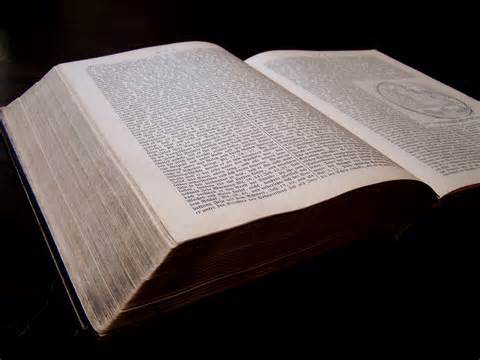
Oklahoma Senator Kyle Loveless plans to present a bill that would allow the state’s oft-debated public school Bible classes to become a reality.

Loveless’ plan offers the class as an elective course in the hopes that the classification will shield districts from litigation.

The curriculum has had a contentious history in the state over the past year.

Museum of the Bible Chairman Dr. Jerry Pattengale and Hobby Lobby President Steve Green developed the course to coincide with the museum, which will open in Washington D.C. in 2017.

Mustang Public Schools in Mustang, Oklahoma unanimously approved the Bible course in April, and the curriculum was scheduled to begin in August.

The launch was eventually pushed back to January 2015, then cancelled altogether after complaints from the Freedom From Religion Foundation (FFRF) and the ACLU.

“The topic of a Bible course in the Mustang School District is no longer a discussion item nor is there a plan to provide such a course in the foreseeable future,” Superintendent Sean McDaniel informed the FFRF in a November email.

After the cancellation, Pattengale and Green announced plans to move forward with Bible curricula in other school districts that have expressed interest in the course.

“We understand Mustang’s decision to withdraw the new, elective Bible course from consideration,” Pattengale said in a statement.

“Museum of the Bible remains committed to providing an elective high school Bible curriculum and continues work on an innovative, high-tech course that will provide students and teachers with a scholarly overview of the Bible’s history, narrative and impact.”

Sen. Loveless said that 200 students signed up for just 20 classroom slots before the cancellation, and hoped to have the issue on the next ballot.

“Basically, it would give school districts flexibility to — if they wanted — to offer this class as an elective, [and] they would have protection from lawsuits,” he told Fox News. Loveless emphasised that the course was not meant to proselytise, but to teach the Bible’s history.

Source: Christian Today

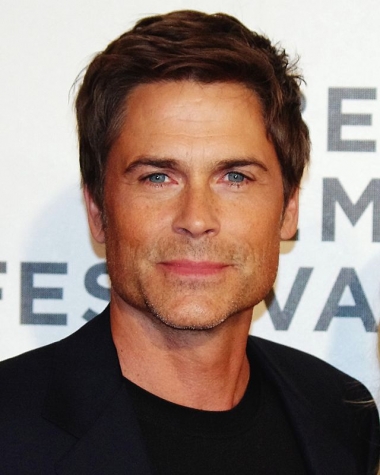
Rob Lowe to star as a Priest in new comedy drama Apocalypse Slough

American actor Rob Lowe will be starring in a new Sky1 comedy drama called Apocalypse Slough, a mini series that will navigate through the lives of completely different individuals who were forced to get along after they were thrust into a compromising situation.

Lowe, of West Wing fame, will play a rebellious former Catholic priest Father Jude in the 10-part series, which will air in the US on NBC, reports The Guardian.

His co-stars include Game of Thrones’ Joel Fry and Paterson Joseph from Peep Show. It will also star Jenna Fischer from the US version of The Office, Megan Mullally from Will and Grace, Mathew Baynton from The Wrong Mans, and Pauline Quirke from Birds of a Feather.

In the show, the unlikely group will take refuge in a bunker hidden deep in the Berkshire town of Slough after an eight-mile wide comet threatens to hit earth.

Aside from Father Jude, the other characters will be a cyber terrorist who is afraid of dirt, a five-star American general, a somewhat unhinged white supremacist, and a seemingly normal bank manager.

Lowe is pretty excited about playing his new character.

“I’ve always been a fan of the kind of smart, ambitious and challenging film-making that comes from Sky and Working Title. This script and my character in particular, blew me away,” he said, according to The Guardian.

Sky1 director Adam MacDonald said that the new series Apocalypse Slough will be a world-class and high-concept drama for Sky1. “The show has bundles of energy, vibrancy and laughter, as well as delivering an exuberant heart-warming story on an epic scale,” he said.

Apocalypse Slough was created by Iain Hollands, who also wrote E4’s comedy drama Beaver Falls and is made by Working Title with Bigballs Films in a co-commission by Sky and NBC.

Other Sky1 productions this year will include Critical from Line of Duty creator Jed Mercurio and a new adaptation of Fungus the Bogeyman.

Source: Christian Today

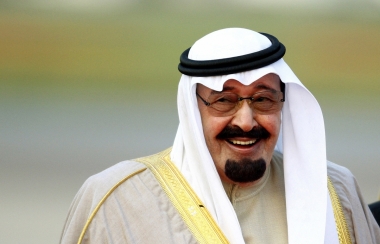
King Abdullah: The cautious social and economic reformer

Saudi Arabia’s King Abdullah bin Abdulaziz, born the year the first motorcar bumped through the dusty streets of Riyadh, left a modernizing legacy of cautious social and economic reform.

King Abdullah, thought to have been born in 1924, had ruled Saudi Arabia as king since 2006, but had run the country as de facto regent for a decade before that. State television reported early on Friday that King Abdullahhad died.

After outliving two designated heirs, his younger half brothers Sultan and Nayef, Abdullah is succeeded by Crown Prince Salman.

The new king is thought likely to persevere with Abdullah’s efforts over nearly two decades to nudge powerful conservative clerics to accept cautious changes aimed at reconciling Islamic tradition with the needs of a modern economy.

Plain-spoken and avuncular, King Abdullah was born in the court of his father King Abdulaziz Ibn Saud in 1924, according to the Saudi embassy in Washington. The capital Riyadh was at that time a small oasis town ringed by mud-brick walls at the center of an impoverished but rapidly growing kingdom.

By the time he became de facto regent in 1995 when his predecessor King Fahd had a stroke, he was known to foreign diplomats as devout and conservative with strong ties to the kingdom’s Bedouin tribes.

That reputation was soon blown away by the then-crown prince’s reforming zeal as he tried to curb the indulgent habits of his large ruling family and address the alarming problem of youth unemployment by liberalizing the economy to stimulate private sector growth.

However, his response to the Arab spring – a domestic security crackdown, populist economic measures and a hawkish foreign policy – disappointed some liberal Saudis.

After the September 11, 2001, attacks on the United States, in which 15 of the 19 hijackers were Saudi, and an al Qaeda bombing campaign against Westerners inside the kingdom, he took on the conservative clergy who had promulgated an intolerant Islamist message in schools and mosques.

“The state is proceeding, with the help of God, in its gradual and studied course of reform,” he said, vowing to ignore both conservatives calling for “stagnation and immobility” and liberals seeking a “leap into darkness and reckless adventure”.

The reforms were slow and only partly successful, but they skewed the dynamic of Saudi policy toward gradual change and made King Abdullah a popular leader among an increasingly young population where 60 per cent of Saudis are under the age of 30.

Abdullah left the kingdom’s political system largely untouched, however.

Apart from introducing elections for town councils that hold little real power, his only major political reform was to set up a council of the ruling family to make the royal succession more orderly.

ARAB UPRISINGS

King Abdullah was staunchly opposed to the pro-democracy protests in neighbouring countries during the Arab Spring, reflecting Saudi concerns that the fall of old allies might create opportunities for regional rival Iran and al Qaeda.

His order to spend $110 billion on social benefits, new housing and new jobs helped to avert any significant pro-democracy unrest in Saudi Arabia.

In recent years activists who have demanded change through petitions ended up in jail, and political parties and public demonstrations are banned.

Yet even among those Saudis who called for a “day of rage” to protest against the lack of democracy, the king appeared to remain popular. Critics of the ruling family said that was because of his government’s lavish spending during his reign, a period of historically high oil revenue.

In a ruling family known for lavish excesses, his fondness for retreats at his desert camp distinguished him from Saudi princes who prefer to spend summers in Mediterranean palaces.

One of his first acts as king was to rein in spending on the royal family, demanding princes start paying for phone bills and air tickets rather than treating state bodies as a personal valet service.

His efforts to overcome a stutter, supposedly acquired after he was punished as a child, have further cemented his image as a man of the people.

When he visited Saudis living in slum-like conditions shortly after becoming king, he was applauded for a first public recognition by the state that poverty existed.

King Abdullah also aimed to improve the position of women in his ultra-conservative country, trying to offer them better education and employment prospects and saying they will be allowed to take part in municipal elections in 2015.

He said women would be selected as members of the next Shoura Council, the appointed body that advises the government on new laws.

Women are still barred from driving and must seek the approval of a male “guardian” to work, travel abroad, open a bank account or undergo surgery in some cases.

In recent years, the king’s foreign policy was increasingly focused on efforts to contain what the Sunni monarchy sees as the rising influence of Shi’ite Muslim power Iran across the Middle East.

That policy reached its high point in March 2011 when Saudi Arabia sent troops to Bahrain to support the island’s Sunni Muslim monarchy against an uprising by the Shi’ite majority.

It was an unpopular decision among Saudi Arabia’s own Shi’ite minority, but many of the sect’s leaders in the kingdom said that King Abdullah did more than his predecessors to reduce discrimination.

Riyadh feared that the U.S. invasion of Iraq in 2003 had already altered the regional balance of power, giving Iran more sway from Beirut to Baghdad.

Those concerns were underpinned by Iran’s nuclear program, which the West suspects is aimed at making nuclear weapons.

In a 2009 diplomatic cable released by WikiLeaks, King Abdullah was quoted repeatedly as urging the United States to “cut off the head of the snake” by attacking Iran.

Source: Christian Today

Russian Orthodox blames decline in population on abortion rate

Russian Orthodox Patriarch Kirill called on Thursday for a deep cut in the “horrifyingly high” number of abortions, which he linked to a Western rejection of moral norms.

“The idea of absolutely prioritising the value of free choice and of rejecting the priority of moral norms has become a slowly exploding bomb for Western civilisation,” he said in a speech to lawmakers.

“If we could just cut in half the number of abortions, there would be steady and powerful demographic growth.”

Russia’s population has been declining since the mid-1990s, hit by falling birth rates and life expectancy in the chaos that followed the collapse of the Soviet Union. It currently stands at 142.5 million, compared with 148.7 million in 1991.

Kirill’s speech was described by state media as the first address by a head of the Russian Orthodox Church to the Duma, or lower chamber of parliament, in modern Russia.

It was a sign of the church’s growing influence under President Vladimir Putin, who has sought to champion conservative Russian values at a time of heightened tension with the West, especially over the conflict in Ukraine.

“Russia’s ability to stand up in the face of modern pseudo-values depends to a large extent on the active stance of Russian parliamentarians,” the black-robed patriarch said

Source: Christian Today

Sacked Atlanta fire Chief filed complaint against City

In a case that has rallied proponents of religious freedom, Atlanta’s ousted fire chief has filed a federal discrimination complaint against the city, arguing that his firing over a book critical of homosexuality was an attack on his faith.

Kelvin Cochran wrote a 2013 book titled, “Who Told You That You Were Naked?” in which he called homosexuality “vulgar” and “the opposite of purity”. He was fired from his post earlier this month by Atlanta Mayor Kasim Reed.

“The book expresses my deeply held religious briefs on many subjects,” Cochran wrote in the complaint to the Equal Employment Opportunity Commission (EEOC) filed on Wednesday.

“I believe I have been discriminated against because of my religion.”

Cochran did not immediately return an e-mail on Thursday seeking comment on the EEOC complaint.

“We intend to defend the mayor’s decision vigorously whether, through the EEOC administrative process or in any other appropriate forum,” Reed’s spokeswoman Anne Torres said on Thursday.

Reed said earlier this month Cochran was not fired due to his religious beliefs, but rather because of questions that arose about his “judgment and ability to manage the department” in connection with the book.

Reed said the city has a clear policy that forbids discrimination based on sexual orientation and that Cochran’s published views could be a legal liability.

Cochran consulted the city’s ethics officer but not the mayor before he published the book, Reed said.

Cochran, 54, was named Atlanta fire chief in 2008. He was nominated by President Barack Obama in 2009 to serve as U.S. Fire Administrator, a post he served in for 10 months before returning to Atlanta as the city’s fire chief.

He gained the support of the Alliance Defending Freedom, a Christian legal group, after he was fired.

“Americans are guaranteed the freedom to live without fear of losing their jobs because of their beliefs and thoughts,” the group said in a statement on Thursday.

“We are continuing to evaluate all available legal options to vindicate Chief Cochran after his unjust termination,” it said.

Source: Christian Today

Uganda: Imam father beats 15 year old daughter to death for converting to Christianity

A 15-year-old girl in Uganda has reportedly died after being assaulted by her imam father for converting to Christianity while her younger sister, who suffered the same ordeal, remains traumatised after learning of her sister’s death. In a report by Morning Star News, the girl, identified as Namugonya Jamirah, attended a five-day evangelistic meeting where she and her sister embraced Christianity. When their father, Imam Abudalah Ali learned of this, he allegedly assembled a group of Muslim men to attack the Christians attending the campaign.

However, the Christians already finished with the event when the group arrived so Ali waited for his daughters to come home at which point Morning Star reports he proceeded to beat them using a club. Jamirah reportedly died from the incident but her 12-year-old sister Naigaga Saidah managed to escape when her father was trying to look for water to splash the older sister back to consciousness. The bloodied Jamirah sought refuge from a pastor, who returned to Ali’s house the following day only to learn that the older sister had died from her injuries. The imam was arrested but was released on bail after his wife and sons supported his claim that Jamirah perished from a motorcycle accident. Saidah only learned of her sister’s death after the pastor was able to move her to a safer location upon learning that Ali was apparently determined to kill his surviving daughter too. “My father took us to the house and then locked the house. He questioned us why we attended a Christian meeting and started beating us up with a club. My sister was hit on the forehead and fell down. I tried to hide myself in the bed, but he got me out and began beating me up as my sister lay down bleeding,” Saidah recounted in an interview. The girl was treated for two weeks in a medical facility and has since been disowned by her father for leaving Islam, according to Morning Star. “Saidah has been traumatised, is still limping and she is in a need of the prayers, counselling, medical support, and school fees, because she is going to primary seventh grade this year,” their local chairman said. Source: Christian Today

American citizen who works for Al Qaeda gets 15 years sentence

An American citizen who sent nearly $70,000 to Al Qaeda was sentenced to 15 years in prison on Tuesday.

Wesam El-Hanafi has spent the last five years incarcerated, and US District Judge Kimba Wood cited his poor health and remorse as reasons for not giving him the maximum 20-year sentence.

El-Hanafi was born in Brooklyn, and worked as an information technology specialist at an investment bank. He received training in computer security that he then used to aid terrorists overseas.

“He was living the American dream and then he turned his back on America and pledged allegiance to our greatest enemy,” Assistant US Attorney John Cronan told Judge Wood in Manhattan court. “The defendant was all in with Al Qaeda.”

Cronan said that from 2007 to 2009, El-Hanafi “worked tirelessly to support Al Qaeda,” including sending them $67,000, and a remote control car to be used as an explosive device. The 39-year-old also provided the terrorists with information on encryption software, and directed a co-conspirator to surveil the New York Stock Exchange.

“Wesam El-Hanafi was deeply involved in supporting al-Qaida both financially and by facilitating surveillance of a New York landmark to bring an attack to our homeland in our city,” US Attorney Preet Bharara said in a statement. “Today’s sentence is a fitting punishment for these crimes.”

Judge Wood found that the defendant’s health deteriorated while in custody, and that he faced a “significantly harsher” incarceration because of his conditions. She also considered El-Hanafi’s statements of regret.

“I didn’t just make the wrong choices. I made the worst choices,” he, said apologising. “I regret my actions. I’m embarrassed by what I did.”

“He knows he must live with the horror of what he’s done,” defense attorney Sarah Kunstler echoed.

El-Hanafi was brought back to the United States from Dubai to face his crimes and pled guilty in June 2012 to providing and conspiring to provide material support to terrorists. His co-defendant, Sabirhan Hasanoff, received 18 years imprisonment.

Source: Christian Today

Ebola Outbreak: Death rate increases in Sierra Leone

The devastation of the Ebola virus throughout western Africa is evidenced by the high number of bodies buried at King Tom cemetery in Freetown, Sierra Leone.

An average of 175 people are buried there on a daily basis, and 156 children were buried in the cemetery in the first five days of January.

Thousands have died across Guinea, Liberia, and Sierra Leone since the outbreak began last year, but the spike in infant and child deaths is particularly disturbing.

“The number of children we are burying every week is absolutely staggering,” said aid worker Ms. McLysaght, according to the Times Gazette.

“It is an appalling situation, although we believe they are mainly non-Ebola cases that are related to the secondary health-care crisis.”

Residents said they have not seen such a death toll since the country’s civil wars.

The dead are wrapped in plastic body bags and buried by workers wearing biohazard suits. Names of the deceased are written on pieces of wood, and stuck into the ground. The Times Gazette reported that the cemetery is the size of a football field, and a bulldozer is clearing the way for more corpses.

It is unclear how many of the 4,400 buried in King Tom died of Ebola, as the country lacks the resources to test each of the deceased.

One cemetery worker, Andrew Kondoh, said he is “comfortable around dead bodies” after burying corpses during the civil wars.

“I hoped never to see dead bodies like this in Sierra Leone again, but at least this time you don’t see their faces, as they come already sealed in the plastic bags,” he said.

Sierra Leone recently overtook Liberia as the country with the highest number of reported Ebola cases with 7,897 infections since the outbreak began early this year.

However, Liberia reported 3,177 deaths from the virus, while Sierra Leone reported just 1,768.

Sierra Leone Health Minister Abu Bakarr Fofanah said that only laboratory-confirmed deaths are being recorded.

Source: Christian Today

Priest refuses bishop’s order to return to ISIS-controlled Iraq

A Chaldean priest is disobeying his bishop’s order to return to ISIS-controlled Iraq because he fears for his life.

Patriarch Louis Raphael Sako, head of the Chaldean Catholic Church, instructed Father Noel Gorgis to return to the war-torn country to strengthen the church there. Father Gorgis refused.

The dispute over the priest’s assignment goes back at least several months, and Gorgis went public with his story late last year.

“I left Iraq over 20 years ago, and I left Iraq [during the] Gulf War, so I know what’s going on there,” told Fox 5 from El Cajon, California. “And now it’s worse. Way worse. To go back, it means suicide.”

Pope Francis intervened in early January, siding with Father Gorgis and other priests defying Bishop Sako’s order. In response, Sako said the priests will be excommunicated.

Chaldean leader Mark Arabo criticised the decision.

“There is a Christian genocide going on,” he explained.

“People are being slaughtered, raped, murdered because they’re Christian, or Catholic. Churches are being bombed, people are being beheaded. He can’t go back, he won’t go back and Pope Francis solidified it.

“The pope decides. Nobody else,” he continued. “So regardless of this denomination, that denomination, if you’re part of the Catholic Church, which Chaldeans are… the pope is our holy father. He decides.”

Under Sako’s order, 10 of the 14 Chaldean priests in the US are expected to return to Iraq. The number includes those who allegedly left Iraq without the church’s permission. Father Gorgis is a naturalised US citizen, but was born in Iraq.

“Chaldean priests are being forced to choose between disobedience and martyrdom,” he insisted.

The priests await Sako’s conclusions, but are standing firm in their decision to remain in the US.

“Father Noel isn’t cattle for the slaughter,” Arabo told Fox 5.

“He’s our priest and he needs to stay here for the Christians of our Chaldean diocese.”

Source: Christian Today

Niger: Christians suffer destruction of more than 70 Churches during Charlie Hebdo violence by Muslims

Christians in the Niger are still reeling from the destruction of more than 70 churches over the weekend as Muslims angry from the Charlie Hebdo cartoons attacked these places of worship.

According to the World Watch Monitor, at least 10 people were killed during the violence. While local police reported only 45 churches damaged, World Watch Monitor claimed that there were more than 70 churches that sustained damage.

Reuters said that the attacks were triggered by the latest Charlie Hebdo magazine cover, which featured a cartoon of the Prophet Mohammad.

The violence took root in the city of Zinder on January 16, which resulted in the destruction of eight churches and 12 homes owned by Christians. The attacks did not spare schools that were built by Christians, as the mob ransacked two of these in the confusion.

After Zinder, the attacks continued and spread out to other cities. In Goure, the city’s sole church was set on fire. Local Christians evacuated to the army barracks for protection.

Protesters in Tanout destroyed two churches maintained by Evangelical Christians, while Magaria’s Christian community lost one church to the violence. In Maradi, the mob destroyed two Evangelical churches. Despite the efforts of security forces, one small Fulani church in Birnin Gaoure fell to the attacks.

The protesters managed to destroy three more churches in Birnin Gaoure as the violence approached the capital, Niamey, where 1,000 Muslims attacked Christians across the capital. They also vandalised several buildings, including the ruling party headquarters as well as a beer factory, in addition to Christian churches.

World Watch Monitor’s sources claimed that security forces in the capital made no response, making Christian-owned properties and places of worship easy targets for the attacks.

Niger’s President Mahamadou Issoufou condemned the attacks on Saturday evening and said that the attackers were people who “did not understand anything about Islam.”

Source: Christian Today