Sex abuse lawsuits drove Archdiocese of St Paul and Minneapolis to file for bankruptcy

Lawsuits from sex abuse cases have driven the Roman Catholic Archdiocese of St Paul and Minneapolis in Minnesota to file for bankruptcy.

The move was announced on Friday by Archbishop John Nienstedt, who said that it was “the fairest and most helpful recourse for those victims/survivors who have made claims against us”. He added that “Reorganisation will allow the finite resources of the Archdiocese to be distributed equitably among all victims/survivors. It will also permit the Archdiocese to provide essential services required to continue its mission within this 12-county district.”

The archdiocese is facing more than 20 lawsuits arising from previous failures to protect children and young people in its care from sexual abuse. Its liabilities could amount to as much as $100 million, while its assets may be only one tenth of that. The bankruptcy petition will freeze lawsuits against the church and protect it from creditors while it develops a reorganisation plan. It also halts three abuse trials scheduled to begin on January 26.

The move is not expected to affect directly the archdiocese’s 200 Catholic parishes or schools, which are incorporated separately.

Nienstedt said: “It must be pointed out that this action will not in any way avoid our responsibilities to those who have been affected by clerical sexual abuse. This is not an attempt to silence victims or deny them justice in court. On the contrary, we want to respond positively in compensating them for their suffering. Plaintiffs’ attorneys and I are in agreement that priority should be given to providing resources for the victims/survivors.”

One lawyer for victims, Jeff Anderson, said that the bankruptcy filing was “necessary”, and said that it would not stop the disclosure of information about abuse cases. However, another attorney, Patrick Noaker, said: “The process of bankruptcy is not going to make kids safer. I don’t think it’s any accident that they filed a week before this trial was going to start.”

The archbishop said that he and others had been “devastated” by revelations from those who had been abused, saying: “I deeply regret their suffering. I hope to do all I can to assist them toward healing.”

He concluded: “We still have a long journey ahead as we restore trust through humility, competency and transparency, in order to respond with compassion to all those who have been hurt, to continue to atone for sins that have been committed, and to foster healing. The filing for reorganisation marks another important step on our way forward as a local Church.”

The archdiocese is the 12th in the US to file for bankruptcy following abuse cases that have cost the Church millions of dollars.

Source: Christian Today

Christian magistrate suspended after saying adopted child should be raised by a mother and father, not gay parents

A Christian magistrate was suspended and sent for equality training after saying he believed it was in a child’s best interests to be raised by a mother and father, and not a gay couple.

Richard Page, 68, shared his views with colleagues in private. He was later reported for alleged prejudice and suspended from sitting on family court cases.

After an investigation by a local conduct panel, he was told he had broken the oath taken by magistrates to “do right to all manner of people… without fear or favour, affectation or ill-will”, the Daily Mail reports.

The case was referred to the Lord Chief Justice Sir John Thomas and Lord Chancellor Chris Grayling, who said last month that he had also contravened the Equality Act, which bans discrimination on the basis of sexual orientation. They said he had allowed his beliefs, and not the evidence, to influence his judgement.

Page, who is a former NHS manager, has worked as a Justice of the Peace in Kent for 15 years.

“My Christian faith informs me that children flourish best in a loving home with a married mum and dad. My 20 years of experience in mental health service also leads me to the same conclusion,” Page said in a statement. “This is not a matter of prejudice or bigotry but is based on knowledge and evidence that I have applied when seeking the best interests for a lifetime of a vulnerable child.”

“As a Magistrate in the Family Court, I must conduct a case-by-case analysis, based on the facts which are before me. In this particular case, it appeared to me that there was overwhelming evidence that the situation was not in the best interests of the child,” Page said.

His comments about traditional marriage were made to fellow magistrates as they deliberated the case last July. Page was surprised to find afterwards that he had been reported for alleged prejudice, as he felt the difference of opinion was typical of this kind of discussion.

“What I was staggered by was that they were saying I was a Christian and therefore I was prejudiced. They were far more prejudiced in their complaint than I was in what I said,” he said in an interview with the Mail on Sunday.

“Why do you have magistrates if there isn’t a different view that they can have? We all have views and that’s what you have to bring to decision-making, and mine are Christian views,” Page added.

Page said in a statement that he has faced “huge pressure to conform” since making the decision, but felt he should maintain his stance for the sake of the child.

“Christian faith demands setting aside ideologically convenient conclusions and fighting for the best interests of children,” he said.

He has sought support from the Christian Legal Centre and human rights barrister Paul Diamond, who has represented a number of Christians in employment disputes.

“Richard Page is accused of being prejudiced on account of his Christian faith. Ironically, closer inspection of this case reveals that the real discriminatory prejudice is that practised by those who would prioritise the placing of this child with a same-sex couple, not on the basis of evidence but on the basis of ideology, said Andrea Minichiello Williams, barrister and chief executive of the Christian Legal Centre.

“Children should not be denied the chance to be brought up by a mum and dad wherever that option exists. We cannot allow children to become pawns on the ‘equality’ battlefield. Real ‘equality’ means focusing on the needs of each child not being driven by the so-called rights of adults to become parents.”

Source: Christian Today

Yazidi sisters who escaped IS reunite and are searching for missing relatives

Adeba Shaker, a 14-year-old from Iraq’s minority Yazidi sect, recalled the day when she smiled again for the first time since her abduction by Islamic State militants.

It was October 28, 2014, when she was reunited with her younger sister who had also been kidnapped and sold in a market.

Shaker and 13-year-old Chenar found each other at a camp for internally displaced people just outside Dohuk, in northern Iraq, where Chenar came after being freed by a Sunni Muslim family who paid to save her from Islamist fighters.

“I can’t describe how I felt, I was so happy,” Shaker told the Thomson Reuters Foundation at the camp. “Now we need to find everybody else.”

Sixteen of Shaker’s relatives are still being held by Islamic State fighters who control large swathes of Iraq and Syria. They were abducted from their village in the Yazidi heartland of Sinjar in northwestern Iraq, and separated.

Islamic State has hounded ethnic and religious minorities in northern Iraq since seizing the city of Mosul in June, killing and displacing thousands of Christians, Shi’ite Shabaks and Turkmen who lived for centuries in one of the most diverse parts of the Middle East.

Hundreds of Yazidi women and girls have been captured, raped and tortured, and forced to convert to Islam and marry Islamic State followers, according to rights groups.

Shaker was trafficked to the Syrian border and was given as a “gift” to fighters on the frontline. She was converted to Islam and forcibly married to one of them.

Young Chenar was sold at the local market. Just hours before the bidding started, a Sunni man noticed her. “He said I was too young,” Chenar said.

He paid $1,500 for her and brought her to his home. “As soon as I stepped in the house, he allowed me to call my family.”

Although she was told she would be released, the man told her to be patient.

“The Daesh (an Arabic acronym used for the Islamist group) were watching all our moves, it was a very dangerous situation for everybody,” she said.

Chenar was held in the man’s house for 55 days.

“I wasn’t asked to do anything in the house. I would just eat and sleep. They were kind to me, although I was not permitted to go out.”

The sisters told their story while sitting in their tent in the Shariya refugee camp that opened in mid-November. They live with two brothers, two cousins and an uncle.

“We know other members of our family are still alive, some of them called us, but they have not been able to escape,” said Sal, one of the brothers.

The Yazidi are a religious sect whose beliefs combine elements of several ancient Middle Eastern religions. Tens of thousands have fled Islamic State fighters, who say the Yazidi must embrace their radical version of Islam or die.

Shaker escaped from a house in Raabia, Iraq, in late August when her Islamic State captors received a phone call and stormed out. She took the chance to escape, running towards the Syrian border and to safety with Kurdish fighters.

She is now focused on finding her mother and sisters and leaving Iraq for good.

“Nowhere is safe here for us. I want to go away. I want to go to America.”

In the meantime, the family faces harsh, wintry conditions in the camp, where water seeps into tents when it rains. And fear remains.

Some of the nearly 3,000 families sheltering at Shariya are Sunni, the branch of Islam followed by Islamic State, and Shaker, like many others, fear further violence.

“They are scared to be harmed again and, as a result, there is constant tension,” said Stefano Nanni, who works at the camp for Italian aid group Un Ponte Per.

Nanni said the two groups were housed in separate sectors of the camp, but he thought they would have to be moved to different camps.

There are 21 camps in the Dohuk area – five still under construction – where 700,000 people live, most of them Yazidis.

Source: Christian Today

Pope left Philippines after leading a Mass attended by about 7 million people marking the largest-ever in history

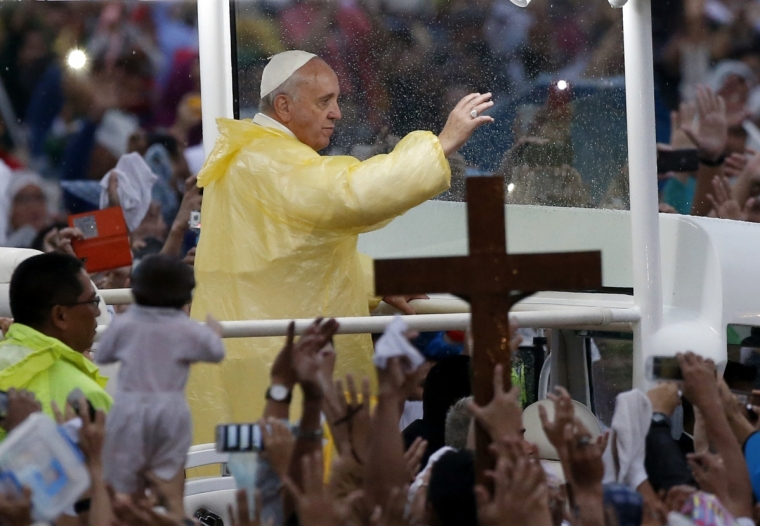
Pope Francis left the Philippines on Monday, ending a week-long trip to Asia that culminated with a rain-soaked Mass for about seven million people in the capital of Asia’s most populous Catholic nation, the largest-ever crowd for a papal event.

Vatican officials have said between six million and seven million people attended Sunday’s Mass in Manila’s Rizal Park and surrounding areas, eclipsing the roughly five million worshippers who flocked to a Mass by Pope John Paul in the same park 20 years ago.

The Pope’s plane took off from Manila at about 10 a.m. local time (0200 GMT) in clear blue skies, a stark contrast to the stormy weather since he arrived on Thursday.

Huge crowds greeted Francis at all his stops in the Philippines despite the bad weather. Thousands lined the streets along the papal route to the airport on Monday, some shouting “Viva Santo Papa!” and “Pope Francis, we love you!”

About a thousand schoolchildren danced and sang as he boarded the plane taking him back to Rome.

Several of Francis’s scheduled events in the Philippines were cut short by torrential rains and high winds, particularly on Saturday when he went to comfort survivors of Typhoon Haiyan that killed at least 6,300 people in the central Philippines in November 2013.

The Pope and the millions of faithful wore plastic ponchos during Sunday’s rain-soaked Mass.

As well as comforting typhoon survivors in the Philippines, Francis urged the government to tackle corruption and poverty, and pleaded for the world to hear the cries of poor, hungry, homeless and abused children.

Francis also took another swipe at the government’s population control efforts, saying the family was under threat from “insidious attacks and programs contrary to all that we hold true and sacred”.

Before the Philippines, the Pope spent two days in Sri Lanka, where he preached reconciliation between different religions after the predominantly Buddhist country’s 26-year civil war that ended in 2009 and killed up to 100,000 people.

Source: Christian Today

Netherlands homes more atheists than believers, according to Ipsos

There are more atheists than believers now in the Netherlands for the first time in recent history, according to a survey conducted by Ipsos.

According to the NL Times, around 25 per cent of the population are atheists while only 17 per cent still believe in the existence of God. However, the majority of the people – a substantial 60 per cent – are on the fence with it comes to faith.

They are torn between believing and not believing in God, and they consider themselves as either agnostics or “something-ists.”

Around 53 per cent of the respondents in the Ipsos survey, however, still believe in life after death while over 40 per cent consider themselves to be “spiritual persons”.

A different study conducted by the Social and Cultural Planning Office (SCP) also revealed that belief in God is waning among Netherlanders. However, during the last survey it conducted in 2012, there were still more believers than non-believers.

Pyschologist Joke van Saane attributed the further decrease of faith in God to modern beliefs and man’s selfishness, and technological developments having an impact on traditional patterns of belief.

“It used to be that your village, your family or your church determined who you are,” she told Trouw. “Now you can be someone on Facebook without traditional links.”

What surprised researchers was the fact that there were more believers among the young than the elderly, something Van Saane said was probably to do with younger people desperately seeking for spiritual guidance or something to hold on to.

Researchers said it was too early to draw conclusions from the poll and that further research needed to be done.

A 2012 poll if 51,000 people across 57 countries found that atheism as a self-description was growing the fastest in Asian and European countries, although it noted that the total number of atheists had grown globally by almost 10 per cent.

Most of the world’s population, however, still considers itself religious – 59 per cent.

“There is a notable decline across the globe in self-description of being religious,” the researchers behind the RedC Opinion Poll said at the time.

Source: Christian Today

Israeli strike in Syria kills senior officers of Lebanon’s Hezbollah

An Israeli helicopter strike in Syria killed a commander from Lebanon’s Hezbollah and the son of the group’s late military leader Imad Moughniyah, Hezbollah said, in a major blow that could lead to reprisal attacks.

The strike hit a convoy carrying Jihad Moughniyah and commander Mohamad Issa, known as Abu Issa, in the province of Quneitra, near the Israeli-occupied Golan Heights, killing six Hezbollah members in all, a statement from the group said.

It comes just days after Hezbollah leader Sayyed Hassan Nasrallah said frequent Israeli strikes in Syria were a major aggression, that the group was stronger than before and that Syria and its allies had the right to respond.

Shi’ite Muslim Hezbollah, which is backed by Iran and fought a 34-day war with Israel in 2006, has been fighting alongside President Bashar al-Assad’s forces in Syria’s four-year war.

Iran’s semi-official Tabnak news site said several of its Revolutionary Guards had also been killed in the attack, without giving further details. State-run Iranian television said the identity of the “martyrs” could not be confirmed.

The Hezbollah-run al-Manar news channel said the Israeli attack suggested “the enemy has gone crazy because of Hezbollah’s growing capabilities and it could lead to a costly adventure that will put the Middle East at stake”.

Israel’s military declined to comment, but an Israeli security source confirmed to Reuters that the Israeli military had carried out the attack.

It was not immediately clear what role Jihad Moughniyah, in his 20s, was playing in the fighting in Syria.

Hezbollah accused Israel in 2008 of assassinating his father, Imad Moughniyah, who was implicated in high-profile attacks on Israeli and Western targets and wanted by the United States. Israel denies any involvement in that killing.

Nabil Boumonsef, a columnist at the Lebanon newspaper an-Nahar, said he believed the strike was a direct response to Nasrallah’s speech and could lead to a backlash.

“Killing the son of Moughniyah is dangerous. I do not think that the group can be quiet now, now that the father and the son are killed. I expect that it will do something,” he said.

U.N. peacekeepers intensified their patrols on the border between Lebanon and Israel on Sunday night, local sources said.

RETALIATION THREAT

Imad Moughniyah was implicated in the 1983 bombings of the U.S. Embassy and U.S. Marine and French peacekeeping barracks in Beirut, which killed over 350 people, as well as the 1992 bombing of the Israeli embassy in Buenos Aires and the kidnapping of Westerners in Lebanon in the 1980s.

The United States indicted him for his role in planning and participating in the June 14, 1985, hijacking of a U.S. TWA airliner and the killing of an American passenger.

He was killed in a car bombing in Damascus in 2008.

Jihad Moughniyah appeared in public for the first time a week after his father’s death to pledge loyalty to Nasrallah.

“We are with you and we will go wherever you go. We will never leave the battlefield and we will never drop our guns, we answer for you Nasrallah,” Jihad, then aged 16, said wearing the group’s military uniform in front of thousands of mourners.

Al-Manar television said earlier that a number of fighters were killed when they were checking an area in Quneitra when their convoy came under Israeli missile attack.

Quneitra has seen heavy fighting between forces loyal to Assad and rebels including fighters linked to al Qaeda. Syrian state television said six people were killed in the attack and a child was wounded, without giving further details.

Israel has struck Syria several times since the start of the war, mostly destroying weaponry such as missiles that Israeli officials said were destined for Hezbollah, Israel’s long-time foe in neighbouring Lebanon.

Syria said last month that Israeli jets had bombed areas near Damascus international airport and in the town of Dimas, near the border with Lebanon.

Nasrallah said on Thursday “the frequent attacks on different sites in Syria is a major breach. We consider (those) hostilities (to be) against all the resistance axis.”

“(Retaliation) is an open issue,” he added.

Iran, Syria, Hezbollah and some Palestinian factions consider themselves an “axis of resistance” against Israel.

Source: Christian Today

Suspected Boko Haram militants kidnaps 80, killed 3, in attack on villages in Cameroon

Suspected Boko Haram Islamist fighters from Nigeria kidnapped around 80 people, many of them children, and killed three others on Sunday in a cross-border attack on villages in northern Cameroon, army and government officials said.

The group, which has killed thousands and kidnapped hundreds in its bid to carve out an Islamic state in northern Nigeria, has also targeted Cameroon and Niger over the past year as it seeks to expand its zone of operations.

Sunday’s kidnappings, among the largest abductions on Cameroonian soil, came as neighbouring Chad deployed troops to support Cameroon’s forces in the area.

“According to our initial information, around 30 adults, most of them herders, and 50 young girls and boys aged between 10 and 15 years were abducted,” a senior army officer deployed to northern Cameroon told Reuters.

He said the early-morning attack had targeted the village of Mabass and other villages along the porous border. Soldiers intervened and exchanged fire with the raiders for around two hours, he added.

Government spokesman Issa Tchiroma confirmed the attack, in which he said three people had been killed, as well as the kidnappings. He was not able to say with certainty how many people had been taken in the raid.

“There was a Boko Haram attack on several localities in the Far North region. The assailants burnt down about 80 homes and kidnapped several inhabitants including women and very young children,” he said.

In an attack that gained worldwide attention last year, its fighters kidnapped around 200 schoolgirls from the town of Chibok, in northeastern Nigeria.

It has stepped up attacks in the region as Africa’s biggest economy prepares for a Feb. 14 presidential election.

In a video posted online this month, a man claiming to be Boko Haram leader Abubakar Shekau threatened to step up violence in neighbouring Cameroon unless it scraps its constitution and embraces Islam.

Faced with increased violence along the border, Yaounde has deployed thousands of additional troops, including elite soldiers, to the area.

A convoy of troops from Chad arrived in Maroua, the main town in Cameroon’s Far-North Region, to support the fight against Boko Haram, late on Saturday,Cameroon defence ministry spokesman Colonel Didier Badjeck said on Sunday.

Chad has a reputation as one of the region’s best militaries and helped French forces drive al Qaeda-linked Islamists from northern Mali in 2013. Government officials in N’Djamena say the deployment to Cameroon includes around 2,000 soldiers, armoured vehicles and attack helicopters.

Ghana’s President John Mahama, who currently heads West African bloc ECOWAS, told Reuters on Friday that regional leaders will seek approval from the African Union next week to create a new force to fight Boko Haram.

Source: Christian Today

French President speaks on freedom of speech after anti-Hebdo clashes in other countries

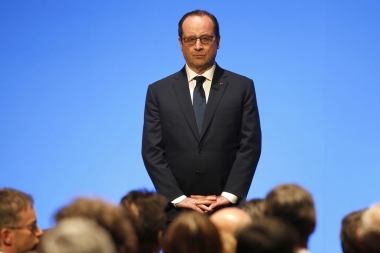
French President Francois Hollande said on Saturday that anti-Charlie Hebdo protesters in other countries do not understand France’s attachment to freedom of speech.

He was speaking a day after the satirical weekly’s publication of a cartoon of the Prophet Mohammad sparked violent clashes, including deaths, in some Muslim countries.

Demand has surged for Charlie Hebdo’s first issue since two militant gunmen burst into its weekly editorial conference and shot dead 12 people at the start of three days of violence that shocked France.

A cartoon image of Mohammad on its front page outraged many in the Muslim world, triggering demonstrations that turned violent in Algeria, Niger and Pakistan on Friday.

“We’ve supported these countries in the fight against terrorism,” Hollande said during a visit to the southern city of Tulle, traditionally his political fiefdom.

“I still want to express my solidarity (towards them), but at the same time France has principles and values, in particular freedom of expression.”

The shootings in Paris were prompted by Charlie Hebdo’s previous publication of Mohammad cartoons, a depiction many Muslims consider blasphemous.

CHURCHES TORCHED

In Niger, protesters set fire to churches and looted shops in the capital Niamey on Saturday in a second day of riots over Charlie Hebdo’s publication of the image.

France’s embassy in Niamey advised its citizens against going out in the streets.

Five people were killed on Friday in Zinder, the second city of the former French colony, while churches were burnt and Christian homes looted.

French Foreign Minister Laurent Fabius condemned the violence in Niamey and Zinder and said France stood in solidarity with Niger authorities.

Protests also turned violent on Friday in the southern Pakistan city of Karachi where police used teargas and a water cannon against demonstrators outside the French consulate.

Several Algerian police officers were injured in clashes with demonstrators in Algiers after rioting broke out at the end of a protest.

“There are tensions abroad where people don’t understand our attachment to the freedom of speech,” Hollande said. “We’ve seen the protests, and I would say that in France all beliefs are respected.”

Hollande has received a big poll boost for his handling of the attacks with his popularity rating surging to its highest level in nearly one and a half years.

His rating has jumped to 34 percent from 24 percent before the attacks, according to a BVA poll published on Saturday.

Produced by survivors of the attack, the latest edition of Charlie Hebdo shows a cartoon of a tearful Mohammad holding a “Je suis Charlie” sign under the words “All is forgiven.”

A lawyer for one of the gunmen in the Charlie Hebdo attack said the man had been buried in the eastern city of Reims in an unmarked grave so as not to attract sympathisers.

Meanwhile, Belgium deployed hundreds of troops to guard potential terrorism targets. Two gunmen were killed on Thursday during an anti-Islamist raid in the town of Vervier.

Source: Christian Today

WILD: Review

Based on the true story of novelist Cheryl Strayer, Wild documents her fearless trek along the Pacific Crest Trail, a monuments stretch of 1,100 miles across North America, as she attempts to redeem her past and “walk [her] way back to the person” she once was.

With a triumphant performance by Reese Witherspoon, who at 38 is over a decade older than the real Strayer when she undertook the journey in 1995, the film carries a depth which allows the audience to overlook such discrepancies.

Witherspoon’s portrayal is unapologetically human; her character gritty and raw. Those to whom she has always been Legally Blonde‘s Elle Woods will find her remarkably unglamorous – as Strayer she is equally stoic, powerful and vulnerable, and confidently carries the plot almost entirely alone, with only incidental meetings with strangers along the way.

The audience is forced to piece together the story of her past and her journey to the present moment through a series of flashbacks. Strayer’s determination to move forward and seek redemption is marred only by her memories; as she trudges steadily onward, the plot jumps back and forth – revealing an abusive father, the sudden loss of her mother to cancer and a heroin addiction that led to the break up of her marriage. Her fractured mindset is reflected perfectly by the narrative, though it is this constant shifting that may be the film’s downside; take your mind off the movie for more than a few moments and you could lose your place in the story.

Director John-Marc Vallée (Dallas Buyer’s Club) uses Strayer’s surroundings to beautiful effect – from the Mojave desert to the teeming forests of Oregon, the scenery is captivating. Strayer’s relationship with nature is as disjointed as those with other people; she learns to command it in some ways but is also entirely at its mercy, though ultimately we come to see her environment as an agent of her renewal. Adrienne Rich’s Power, read by Strayer on her first night in the wild, encapsulates that relationship. The real Strayer explained in an interview with the New York Times: “In the last lines of that poem Rich writes about the scientist Marie Curie, who she says died “denying her wounds came from the same source as her power.” Adrienne Rich never denied that. She always knew our wounds come from the same source as our power and she spent her life mining the beauty in our suffering. She gave me permission to do that too. She gave us all permission.”

The heart of the film, however, is found in the audience’s intimate connection with Strayer herself. We celebrate her victories and grieve with her in her lowest moments, willing her to come to terms with her mother’s death. When she finally does – sinking to the ground and overcome with emotion – it’s a heartbreakingly honest moment that pulls together past and future in a moment of agonising catharsis, and proves Witherspoon worthy of her Oscar nomination.

Ultimately, this is a story of redemption. Of one woman’s personal journey filled with grief, pain and vulnerability, but also triumph, forgiveness and hope. More than anything, it’s a celebration of the sacredness of life – as Strayer says: “There’s a sunrise and a sunset every day, and you can choose to be there for it – you can put yourself in the way of beauty.”

Source: Christian Today

Churches urged to pray and support British dairy farmers

As British dairy farmers struggle to survive amid a milk pricing crisis, churches are being asked to support and pray for the industry.

Glasgow-based dairy company First Milk announced a two-week delay in payments to dairy farms last week, leading to concern for those who rely on it to make a living. According to the BBC, Union leaders have blamed the crisis for putting “extraordinary pressure” on farmers.

“The number of dairy farmers has halved over little more than a decade,” said Arthur Rank Centre (ARC) CEO Jerry Marshall. “Prices are at their lowest since 2007 while costs have risen 36 per cent. On top of this, the recent announcement by First Milk that they are delaying payments by two weeks, presents significant cash flow difficulties to their suppliers.”

The ARC, a Christian charity which resources rural churches and their communities, is therefore calling on Christians to pray for those affected.

“British Dairy farmers are facing an exceptionally difficult time,” said Revd Elizabeth Clark, National Rural Officer for the Methodist Church and the United Reformed Church.

“Give thanks for the vital food that dairy farmers produce, pray for those struggling because of the present low prices and pray especially for those famers who sell their milk to First Milk whose pay cheques have been delayed.”

Canon Dr Jill Hopkinson, National Rural Officer for the Church of England, also stressed the importance of buying locally made, British produce and making sure that the farmer’s are getting a good deal for the price the consumer pays.

“Churches can also support the industry by buying British dairy products,” she explained. “When buying milk, butter, cheese and yoghurt look for the red tractor logo which tells you it is a British product.

“Church members could also show their support through choosing to buy milk from supermarkets that pay a fair price to farmers. Visit http://www.nfuonline.com/back-british-farming/news-channel/how-can-i-support-british-dairy-farmers/ to find out how.”

The ARC has offered a suggested prayer for those wanting to support British farmers:

Loving God we give you thanks for all the food that is produced for us by farmers every day. We thank you especially for milk, a vital food, which we don’t always fully appreciate. We pray for dairy farmers and the particular pressures that they face at this present time. We remember farmers under pressure because of low prices and late milk payments, may they know the peace of your presence. May we consumers never take our food for granted and may we value and support those who work tirelessly to feed us. This we ask in Jesus name, Amen.

Source: Christian Today