

Church of England Apologizes for Saying Sex Is Only for Married Heterosexual Couples

Church of England Apologizes for Saying Sex Is Only for Married Heterosexual Couples


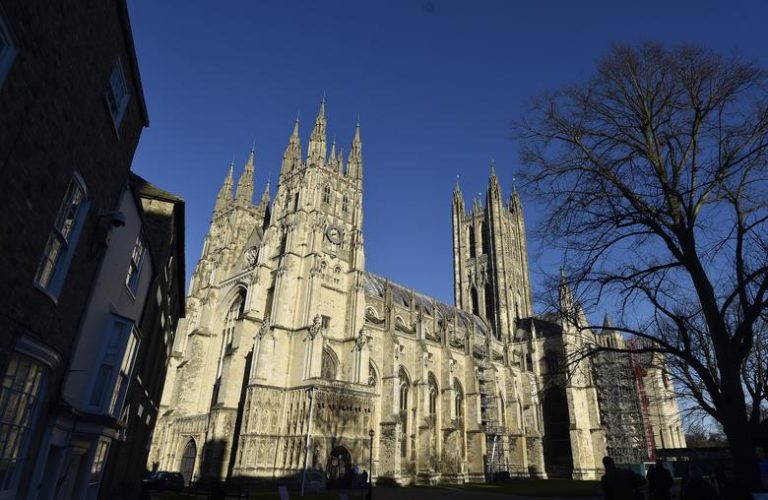
The Church of England apologized after issuing a statement declaring that sex should only be between heterosexual married couples, according to the Belfast Telegraph.

“We as Archbishops [John Sentamu and Justin Welby], alongside the bishops of the Church of England, apologise and take responsibility for releasing a statement which we acknowledge has jeopardized trust,” they said.

The original statement was prompted by a recent UK law that allows straight couples to get married in a civil ceremony instead of a traditional marriage. Previously, civil partnerships in the UK had only been an option for same-sex couples. The statement, according to CNN, mandated that Christians in civil partnerships should abstain from sex since civil partnerships aren’t always based on romantic love.

“In particular, [civil partnerships are] not predicated on the intention to engage in a sexual relationship,” the guidance said, according to the Catholic Herald. “There is likely to be a range of circumstances in which people of the same sex or opposite sex choose to register a partnership, including some where there is no intention for the relationship to be expressed through sexual activity.”

As Christian Headlines previously reported, the original guidance makes a traditional stand for marriage.

“For Christians, marriage, that is the lifelong union between a man and a woman,…

… Read More

Click here to read the rest of the story from our content source/partners – Christian Headlines.

قالب وردپرس

Taking a picture too close to a grizzly bear: The urgency and privilege of sharing our message

It is a photo you don’t want to see—or take.

A woman in Montana was taking pictures when a grizzly bear approached. Her friends and family quickly retreated. The woman, however, continued to look through her camera as the deadly predator approached.

Apparently, she was shooting with a long lens and did not realize how close she was to the bear. Fortunately, the animal left the area without incident.

When I saw this story in my news feed, I had to stop what I
was doing to write a post about it. The obvious spiritual lessons came to mind
immediately: Like a grizzly bear, Satan “prowls around like a roaring
lion, seeking someone to devour” (1 Peter 5:8). We are therefore to
“flee from sexual immorality” and other temptation (1 Corinthians
6:18) before we succumb to it.

But there’s another angle to this story as well.

The person who reported the woman’s encounter took a picture
of her taking a picture of the bear. But he also tried to warn her, shouting at
her to alert her to her danger. He said later that “she was either too far
away, too focused on taking pictures, or was employing a strategy of ‘don’t
move and the bear won’t mess with me’ as she was a statue.”

In other words, the fact that she remained in danger was not
his fault.

The urgency and privilege of sharing our message

It is our job as Christians to warn those who are in eternal
danger before it’s too late. Their response is not our responsibility. They may
hear us and heed our message. They may reject our warning. They may ignore us.

What we do not want them to be able to say one day before
God is that we didn’t tell them.

G. Campbell Morgan noted, “To call a man evangelical
who is not evangelistic is an utter contradiction.”

We can say that the gospel is right or that it is wrong, but
we cannot say that it is irrelevant. If it is true, every person we know will
spend eternity in heaven or in hell depending on their…

… Read More

—

Click Read More to read the rest of the story from our content source/partners – Denison Forum.

قالب وردپرس

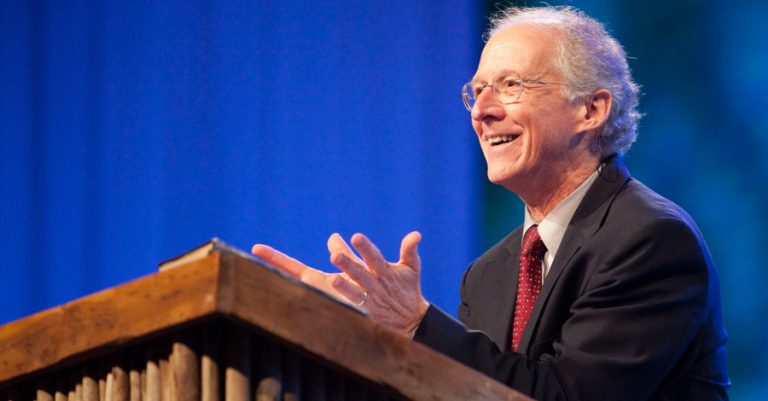
John Piper Says Calling Female Church Leaders ‘Pastors’ is ‘Misleading, Unwise, and Ill-Founded’

Theologian John Piper said it’s “misleading and unwise and ill-founded” to call female church leaders “pastors” amid an ongoing debate about the role of women in the Church. 

In a recent episode of his podcast, Piper, the founder and teacher of desiringGod.org and chancellor of Bethlehem College & Seminary, responded to a reader whose church is changing its view on the use of the word pastor to include women.

The readers’ church claimed that Ephesians 4:11 is the only place in the Bible where the Greek word for pastor is ever used, and that it doesn’t have any specific qualifications there.

“Women could fill this role and still be under male headship and a male elder board,” the reader said. “But would this change in title be in line with other parts of Scripture?”

Piper first stressed it is “misleading and unwise to use the English word pastor for women in ministry,” adding that the “attempt to say that it is more biblical to use it is built on a misunderstanding of how language works, as well as the supposed use of the word pastor in the New Testament.”

In English, the word pastor is understood to mean a “person with official leadership in the local church that ordinarily involves preaching and governing,” Piper contended. But the New Testament, written in Greek, “doesn’t use the English word pastor at all,” he explained, adding that Greek has only one word for shepherd and pastor: “poimēn.”

“It’s highly misleading to claim that in applying the word pastor to laypeople, we are recovering New Testament usage. That’s highly misleading when the word pastor does not even occur in the ESV, and only once does it occur in other versions,” Piper said.

SOURCE: Christian Post, Leah MarieAnn Klett

All Content & Images are provided by the acknowledged source

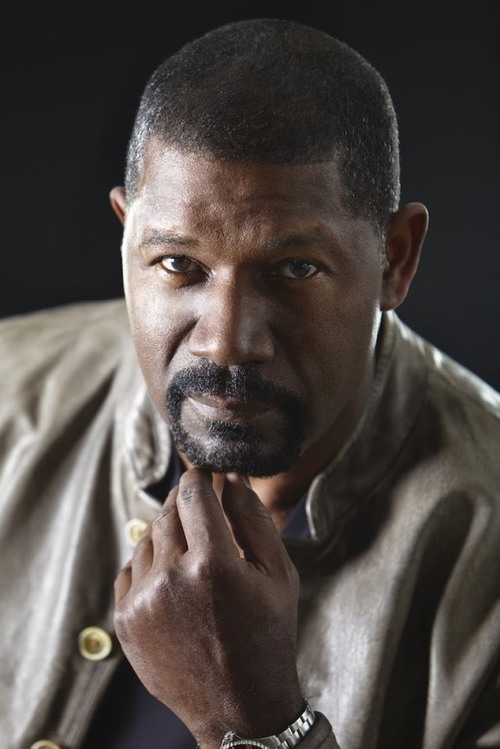
Dennis Haysbert Discusses New Roles in “Lucifer” and TBN’s “State of Faith” and Shares What Religion Means to Him

Hollywood actor Dennis Haysbert was recently cast in two roles containing faith themes, one as God for the final season of “Lucifer,” and he was chosen by TBN for their new show “State of Faith.”

The popular Allstate Insurance spokesperson serves as the narrator for TBN’s new show, “The State of Faith.” The six episode series, now airing on the network, takes viewers on a journey to discover the role of Christianity from it’s beginning to present day.

In “Lucifer,” however, he plays God and according to the Christian rating site Pluggedin the Fox show doesn’t portray the fallen angel as such a bad guy.

The following is an edited transcript of The Christian Post’s interview with Haysbert where he opens up about both of the new roles, as well as gives a description of his own personal faith.

CP: Can you share what your own beliefs are and why you felt led to loan your talents to “The State of Faith” for TBN?

Haysbert: I love education. I love history. So I wanted to be involved from that aspect of it. My faith is very personal to me. I was raised Christian, in a both Christian and Catholic house. My dad was Catholic, my mom was Christian, so of course, my mother’s faith won out because she had the most contact with the kids.

I went to Sunday school from the time I could walk all the way until high school. Then I realized I didn’t really need church so much as I needed to understand and make my faith more personal. Basically, what my faith is, is light and love and that’s my religion.

I wanted to be involved with this project because it’s educational. They contacted us and we thought about it and I said, “Hey, let’s pursue this.”

CP: What were some of the things that you learned or discovered through narrating such a historic Christian series?

Haysbert: I mean, just to find out that what happened was actually living history. Just understanding how many women were involved from the beginning, how many people lost their lives spreading the Gospel. Finding out that Queen Isabella of Spain was one of the main architects of the Spanish Inquisition. I just never studied that stuff before.

To do it in the chronological order that we’re doing it, it’s just amazing to me and highly informative. There were times when I was narrating that I had to stop and say, “Whoa, let’s stop. Let me absorb this for a second. This happened?”

SOURCE: Christian Post, Jeannie Law

All Content & Images are provided by the acknowledged source

Michael Brown on When the Church Apologizes for Opposing Extra-marital Sex

The views expressed in this commentary do not necessarily reflect those of BCNN1. Opinions expressed are solely those of the author(s).

If you read the Bible cover to cover, you’ll see there is no ambiguity when it comes to extra-marital sex. Simply stated, it is forbidden. Sex before marriage is called fornication. Sex outside of marriage is called adultery. And marriage is defined as the lifelong union of a male and a female. That’s how Genesis defines it and that’s how Jesus defines it.

Church standards through history would reaffirm all these points.

All sexual relations outside the confines of marriage (which, to repeat, has always and only been the union of a man and a woman) are considered immoral and sinful.

But in today’s morally confused society, right is now wrong and wrong is now right, to the point that the Church of England has apologized for reaffirming basic, biblical morality.

As reported by CNN, “Top archbishops in the Church of England have apologized for guidance issued by the church last week that said only married heterosexuals should have sex – while same-sex or heterosexual Christians in civil partnerships should remain abstinent.

“Archbishop of Canterbury Justin Welby and Archbishop of York John Sentamu said in a statement Thursday that they took responsibility for last week’s announcement, ‘which we acknowledge has jeopardized trust.’

“‘We are very sorry and recognize the division and hurt this has caused,’ Welby and Sentamu wrote.”

The pastoral guidance statement was issued “in response to the extension of civil partnerships to heterosexual couples in the UK.

“The guidance, published January 22, said ‘for Christians, marriage – that is the lifelong union between a man and a woman, contracted with the making of vows – remains the proper context for sexual activity.’”

From a biblical standpoint, what is controversial in this pastoral guidance statement?

SOURCE: Christian Post, Michael Brown

All Content & Images are provided by the acknowledged source

Rush Limbaugh Says He is Relying on His ‘Deeply Personal Relationship With God’ Amid Lung Cancer Battle

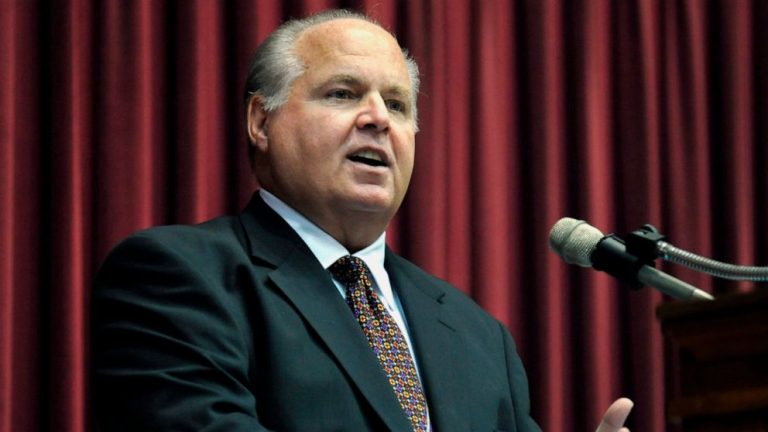
Conservative radio host Rush Limbaugh shared how his “deeply personal relationship with God” has sustained him as he battles advanced lung cancer.

On Monday, Limbaugh, 69, told his 20 million listeners he has been diagnosed with advanced lung cancer. The talk show host said he plans to take a brief sabbatical for further medical tests and to determine treatment, but hopes to return soon, Fox News reports.

“This day has been one of the most difficult days in recent memory, for me, because I’ve known this moment was coming,” Limbaugh said. “I’m sure that you all know by now that I really don’t like talking about myself and I don’t like making things about me. … One thing that I know, that has happened over the 31-plus years of this program, is that there has been an incredible bond that has developed between all of you and me.”

Limbaugh, who began his nationally syndicated radio show about 30 years ago, told his listeners that his job has provided him with the “greatest satisfaction and happiness” of his life.

“So I have to tell you something today that I wish I didn’t have to tell you. It’s a struggle for me because I had to inform my staff earlier today,” he said. “I can’t help but feel that I’m letting everybody down. The upshot is that I have been diagnosed with advanced lung cancer.”

Limbaugh revealed he’s been experiencing shortness of breath that he initially thought might be heart-related but turned out to be a pulmonary malignancy. He credited his faith for sustaining his health amid his cancer battle.

“I told the staff today that I have a deeply personal relationship with God that I do not proselytize about, but I do, and I have been working that relationship tremendously,” Limbaugh said. “I am, at the moment, experiencing zero symptoms.”

SOURCE: Christian Post, Leah MarieAnn Klett

All Content & Images are provided by the acknowledged source

Uganda ‘Studying’ to See If Embassy Should Be Opened in Jerusalem

Uganda ‘Studying’ to See If Embassy Should Be Opened in Jerusalem


Uganda is open to creating an embassy in Jerusalem, according to Ugandan President Yoweri Museveni.

“If a friend says I want your embassy here rather than there I don’t see why there would be…” said Museveni to the press before trailing off. He continued: “We are really working, we’re studying that.”

The reveal came during Israeli Prime Minister Benjamin Netanyahu’s visit to Africa, according to Reuters.

“You open an embassy in Jerusalem and I will open an embassy in Kampala,” said Netanyahu. “We hope to do this in the near future.”

Should the countries find a place for each other’s embassies, it would be considered a major win for Netanyahu, who faces the country’s third national election in a year on March 2.

But the alliance would be controversial in light of the recent peace plan presented by the US between Palestine and Israel. The plan intended to place Palestine’s capital outside of Jerusalem’s municipal limits. Palestine has rejected the plans.

Museveni has justified his desires for an Israeli embassy in Jerusalem based on the 1947 UN Partition Plan, which he believes gave the west part of Jerusalem to Israel.

According to the Times of Israel, Netanyahu has been on a campaign to call other countries to move their embassies to Jerusalem, as the US recently did. Only Guatemala has followed suit so far.

For his most recent visit to Uganda, Netanyahu landed…

… Read More

Click here to read the rest of the story from our content source/partners – Christian Headlines.
قالب وردپرس

Read an Excerpt from Tommy Barnett’s New Autobiography “What If?”

This is an adaptation from Tommy Barnett’s newly released autobiography (Feb. 4, 2020), “What If?”

I’ve never agreed with the church “experts” who advise pastors who have just come to a church to tread lightly so they could gradually bring the congregation around to their new ideas and new programs.

There’s a different method I prefer: Go in and shoot all your big guns, let everyone know exactly where you’re going, and most importantly, start leading people to Christ. You’re probably going to lose some people who don’t want anything to change, but that’s fine. You’ll replace them with people eager to join you in your mission. Old wineskins can’t hold new wine. I hate to say this, but a lot of church people don’t really want new people coming in. They feel threatened (or at least uncomfortable) around people they don’t know, especially if those people don’t look like them.

In Davenport, we had to do something immediately to let people know what kind of church God wanted to build. The most important word in that sentence is “we.” I assumed they had called me because they wanted to do big things for God at Westside Assemblies of God.

My dad had given me an old International Harvester school bus that he didn’t dare use anymore. The engine barely ran, and when it did, it was hard to keep the bus going straight because its steering was so bad. I named our bus “She Needs”: she needed tires, she needed gas, she needed a paint job, she needed a complete overhaul.

I wasn’t sure what I would do with it, so I just parked it out behind the church. On my second Sunday as pastor, a lady introduced herself and shared something that caught my attention. “Pastor, I’ve been saved for only a few months, and I don’t know if I’m supposed to do this, but I’ve been going out every week knocking on doors in my neighborhood leading people to Christ. I’ve got so many of them now, but I don’t know how to get them to church because a lot of them don’t have cars. When I told some of the people at church about it, they told me just to let them find their own church. I don’t want to make anyone angry, but I’d sure like to get them involved in our church.” I couldn’t believe my ears. I told her, “Sister, you’re exactly who I’m looking for. I’m going to give you a bus!”

The lady, her husband, and I walked behind the church and got into that dilapidated old bus. I got it started and showed her how to put it in gear. Then I had her drive it around the block. I confess that I was a little nervous as she worked that stubborn clutch and jerked forward every time we started into an intersection. She didn’t mind that the bus was a dinosaur — she literally beamed as she sat behind the wheel. She was a tiny lady, barely tall enough to see over the steering wheel.

SOURCE: Christian Post, Tommy Barnett

All Content & Images are provided by the acknowledged source

Barna Group Relaunches State of the Church Survey in a Personalized Format

In this new decade of “cultural, digital and spiritual disruption,” the evangelical Christian polling firm Barna Group is relaunching its State of the Church survey report after a gap of 10 years of its public release, and using new technology to help churches personalize the insights, beginning with the 2020 report, the group announced.

The upcoming State of the Church 2020 survey “will be the most in-depth and comprehensive study in Barna’s 35-year history,” Barna said in a statement.

Barna President David Kinnaman said the relaunch is being done “in a way we’ve never done it before.”

The project will combine updated research and “a brand-new technology,” Barna said, adding that it has tracked State of the Church survey data on an annual basis for 35 years, but the public release of the survey was discontinued in 2010. “The new research will analyze previous tracked research as well as the new 2020 survey findings.”

California-based Barna, which focuses on the intersection of faith and culture, also said it has partnered with a technology company, Gloo, “to launch a new, free and secure church assessment, the Barna ChurchPulse.”

“Through the State of the Church 2020 survey, we will unlock the big picture and frame the most important challenges and opportunities for pastors and Christian leaders. But then, for the first time ever, we have the ability to personalize those insights for each and every church through the Barna ChurchPulse,” said Barna, which has conducted more than one million interviews over the course of hundreds of studies, according to its website.

SOURCE: Christian Post, Anugrah Kumar

All Content & Images are provided by the acknowledged source

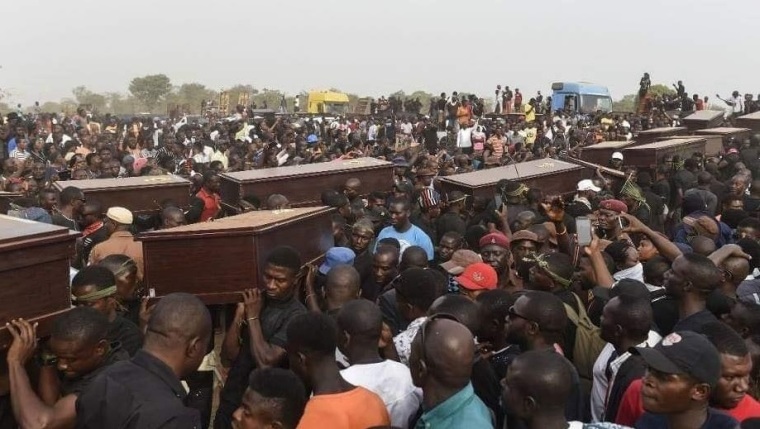
Nigerian Church Destroyed in Fire as 32 People Are Killed in Attacks by Radical Fulani Militants

As many as 32 people were killed in attacks last week said to have been carried out in predominantly Christian areas of the Plateau state of Nigeria by radical Fulani militants who have been blamed for a series of deadly attacks in Plateau this month. 

A Church of Christ in Nations church building, as well as a pastor’s home and dozens upon dozens of other structures, were destroyed as a result of attacks last week, sources told Morning Star News.

Former speaker of the Plateau state House of Assembly Titus Ayuba Alams told the nonprofit persecution news outlet that Islamic militants said to be Fulani herders were blamed for carrying out Jan. 27 attacks in Marish and Ruboi villages that took the lives of about 17 people and a Jan. 26 attack on Kwatas village that took the lives of 15.

However, the figures provided by the Plateau State Police Command differ from those offered by Alams. The Plateau State Police Command has confirmed the death of only 26 people in recent attacks in Bokkos and Mangu Local Government Areas.

“In the attacks, 14 persons were killed in Kwatas, four at Sabon Barki, three at Marish and one at Changet in Bokkos, this makes it 22 persons killed in Bokkos,” Police spokesperson Ubah Ogaba told The Daily Post. “Also, four persons were killed at Marish in Mangu. This makes the total persons killed in the two areas 26.”

Fulani are a nomadic people group of about 20 million across West Africa who have for decades competed with farming communities — many of which in Nigeria are predominately Christian — for land use and rights.

In recent years, violence has escalated between the farming communities in Nigeria’s Middle Belt and Fulani. Fulani radicals have been accused of killing thousands over the years through overnight massacres on sleeping villages while youth in farming communities have been accused of carrying out reprisal attacks.

SOURCE: Christian Post, Samuel Smith

All Content & Images are provided by the acknowledged source