WATCH: Jessica Simpson Breaks Out in Singing of “Amazing Grace” After Opening Up About Alcoholism, Childhood Abuse, and Her ‘Path to Surrender’

Pop star Jessica Simpson made an appearance on “Today” recently and broke out in worship after opening up about her past struggles with alcohol and sexual abuse.

Simpson sat down with Hoda Kotb last week to discuss her new memoir, Open Book. In the interview, the singer opened up about being molested as a child and not immediately speaking about it to her parents, who were in ministry at the time, because of the shame she felt.

She also talked to Kotb about her addiction to alcohol, which Simpson overcame a couple of years ago. The new author admitted drinking as early as 7 a.m. at times. Everything changed in 2017, however, after being unable to participate in Halloween with her kids and family. The next day Simpson sought therapy and has been sober ever since.

“I just realized that I had to surrender,” she said. “I just want to continue on the path that I’m on and at this point in my life, now I’m strong enough to deal with anything that comes my way because I don’t have something to retreat to that will numb me from actually going through it.”

At the close of her interview with “Today,” Kotb requested the singer sing the song that brings Simpson peace since faith is such an important part of her journey. She then sang a verse from the popular hymn, “Amazing Grace.”

SOURCE: Christian Post, Jeannie Law

All Content & Images are provided by the acknowledged source

Christina Crook on What Christians Can Learn From the Sharing Economy

Christina Crook, the author of “The Joy of Missing Out: Finding Balance in a Wired World,” writes and speaks about the intersection of technology, relationships and joy. The views expressed in this commentary do not necessarily reflect those of BCNN1.

In the treetops of Fewell Island, South Carolina, six young adults in harnesses dangle awkwardly from ropes. Down below, a group stands huddled in windbreakers and hoodies in the frigid February air, calling out encouragement to the Irish girl tearfully embracing the 20-foot-high pole overhead.

“Come on, Paula! You’ve got this!”

Forty minutes later, a crowd greets Paula as she ziplines her way back to solid ground.

Our group’s easy camaraderie belies the fact that most of us have met less than 24 hours ago. We are here for an A-GAP experience — all of us Christians and all of us voluntarily without our phones.

Started in 2018 by Marygrace Sexton, founder and CEO of Natalie’s Orchid Island Juice Co., A-GAP is a nonprofit with the mission to help people of Christian faith journey to clarity, unity and simplicity in a technology-free environment. In short, Christian digital detox.

Over the last decade, Sexton, a Florida business owner, mother and grandmother, had developed an acute sense of technology’s adverse effects, particularly decreased intimacy and professional performance within her own organization. This led to the launch of A-GAP: a reprieve to encourage contemplation, spiritual rejuvenation and healthy technology habits.

Most of the attendees, ironically, found out about the retreat through the internet: A post on the Instagram account of Charlotte One, a young adult ministry in Charlotte, North Carolina, drew a sizable portion of the group. Paula McKee — Paula from the high ropes course, an au pair originally from Belfast — was invited by text. But we each took a step of faith and showed up.

We can credit the internet with fostering these kinds of trusting acts, which have also powered the growth of the sharing economy. While the debate rages on whether this so-called gig economy is undermining secure jobs by replacing them with an army of mercenary, part-time workers, it has opened up new avenues of trust and camaraderie between citizens as they become customer and client.

The traditional commercial relationship, too, becomes more complex in the gig economy. Instead of grunting a rote “How are you today?” or “Have a nice day” or other platitudes as we do at retail outlets, we want to know more about the person we’ve contracted before we accept their services or rate them. That’s opening up intimate conversations and relations most consumers have never had to have before, which in turn opens up all types of opportunities to network, trust and share.

Ten years ago, no one would have dreamed of getting into the back of a stranger’s car or staying in their apartment. Now, thanks to Airbnb and car services like Lyft and Uber, it’s commonplace. (The Anabaptists, cool kids that they are, were doing their version of Airbnb, called Mennonite Your Way, long before there was an internet.)

Trust is built (and broken) the same way online and off — through the keeping or severing of promises. While trust can begin to grow online, it is solidified in close proximity. That’s why when we meet our ride-share driver, our trust in them and the sharing economy grows. We’ve closed the gap.

Of course, this trust can be broken in stunning ways, and the internet, through people’s use of blatant visual distortion and propagation of misinformation, provides plenty of opportunities for that as well. Trusting communities require a balance between nurturing existing relationships and extending outward to form new ones. Mistrust can grow when communities only take care “of their own.”

Chris Lawrence is a pastor of Living Hope church in New York City’s East Harlem, an English-speaking congregation in a historically Spanish community. His church members are making progress slowly with what they call “re-neighboring the street”: connecting 400 households that share the same block but do not currently have much to do with each other.

Source: Religion News Service

All Content & Images are provided by the acknowledged source

Caucus results from Iowa are delayed: Perception, presuppositions, and the word of God

Iowa held its first-in-the-nation caucuses last night. President Trump won on the Republican side, as expected. However, we still don’t know the winner on the Democratic Party side.

The Iowa Democratic Party said the results were delayed due to “inconsistencies in the reporting of three sets of results.” They stressed that there was not a “hack or intrusion,” but announced around 2 a.m. that the results would be provided “later today.” Officials are now hand counting the results. 

There are two very different ways to see this unusual delay. 

One is that Democrats in Iowa are working to provide results in as trustworthy a manner as possible. After the razor-close 2016 race in Iowa between Hillary Clinton and Bernie Sanders, Mr. Sanders’ allies pushed the Democratic National Committee to require caucus states to track and report the raw numbers of support for each candidate. In Iowa, the new reporting standards slowed the gathering of data to a crawl. Technical issues contributed to the delays. 

The other is to view the Democratic Party’s delayed reporting as indicative of its suitability to lead. GOP Congressman Mark Meadows of North Carolina tweeted: “Folks—this is the party that wants to run your healthcare, control your employment, decide what kind of car you can drive, and more.” 

Bernie Sanders and millennials 

These conflicting perspectives reflect the larger conflicts in our culture. 

For example, Bernie Sanders was favored by oddsmakers to win the Iowa caucuses. His campaign is fueled principally by his appeal to millennials. His focus on wealth inequality, universal health care, student loan debt, and climate change resonate with many of them. The fact that he is “quite substantially not religious,” in the words of his brother, is not a detriment to a generation noted for its lack of religious commitment. 

Consider that college graduates are less likely than non-graduates to agree…

… Read More

—

Click Read More to read the rest of the story from our content source/partners – Denison Forum.

قالب وردپرس

A Tool to Give You an Idea Where Your Church Is Headed in the Future

Podcast Episode #612

SUBSCRIBE:
iTunes • RSS • Stitcher • TuneIn Radio • Google Play • iHeart Radio • Spotify

Chuck Lawless from the Church Answers team joins us to talk about an exciting new tool created by Southeastern Seminary. The Church Future Indicator is a free tool everyone will want to get ahold of. The tool is helpful and gives great insight into where your church is headed.

Highlights:

  1. A tool meant to be a motivator, not a discourager
  2. The need for churches to face reality
  3. The need for churches to have hope and solutions
  4. Hint #1: The Primacy of Prayer
  5. Hint #2: The Great Commission Is Still Great

Other Highlights:

  • A church cannot turnaround until they are ready to face reality.
  • The Church Future Indicator tool helps churches see hope for the future.
  • Praying churches are led by praying pastors.
  • It is a sin to be good when God has called us to be great.
  • The Great Commission is still great.

Resources mentioned in today’s podcast:


Episode Sponsors

Vanderbloemen has been serving churches for nine years, but did you know that Vanderbloemen also serves Christian schools, nonprofits, and Christian businesses? So if you’re listening, and you know a Christian school, nonprofit, or values-based business that is hiring, contact our friends at Vanderbloemen for your staffing needs.

For more information, visit Vanderbloemen.com.


The mission at Southeastern Baptist Theological Seminary is to glorify the Lord Jesus Christ by equipping students to serve the church and fulfill the Great…

… Read More

—

Click here to read the rest of the story from our content source/partners – Thom Rainer.

قالب وردپرس

Christina Crook on What Christians Can Learn From the Sharing Economy

Christina Crook, the author of “The Joy of Missing Out: Finding Balance in a Wired World,” writes and speaks about the intersection of technology, relationships and joy. The views expressed in this commentary do not necessarily reflect those of BCNN1.

In the treetops of Fewell Island, South Carolina, six young adults in harnesses dangle awkwardly from ropes. Down below, a group stands huddled in windbreakers and hoodies in the frigid February air, calling out encouragement to the Irish girl tearfully embracing the 20-foot-high pole overhead.

“Come on, Paula! You’ve got this!”

Forty minutes later, a crowd greets Paula as she ziplines her way back to solid ground.

Our group’s easy camaraderie belies the fact that most of us have met less than 24 hours ago. We are here for an A-GAP experience — all of us Christians and all of us voluntarily without our phones.

Started in 2018 by Marygrace Sexton, founder and CEO of Natalie’s Orchid Island Juice Co., A-GAP is a nonprofit with the mission to help people of Christian faith journey to clarity, unity and simplicity in a technology-free environment. In short, Christian digital detox.

Over the last decade, Sexton, a Florida business owner, mother and grandmother, had developed an acute sense of technology’s adverse effects, particularly decreased intimacy and professional performance within her own organization. This led to the launch of A-GAP: a reprieve to encourage contemplation, spiritual rejuvenation and healthy technology habits.

Most of the attendees, ironically, found out about the retreat through the internet: A post on the Instagram account of Charlotte One, a young adult ministry in Charlotte, North Carolina, drew a sizable portion of the group. Paula McKee — Paula from the high ropes course, an au pair originally from Belfast — was invited by text. But we each took a step of faith and showed up.

We can credit the internet with fostering these kinds of trusting acts, which have also powered the growth of the sharing economy. While the debate rages on whether this so-called gig economy is undermining secure jobs by replacing them with an army of mercenary, part-time workers, it has opened up new avenues of trust and camaraderie between citizens as they become customer and client.

The traditional commercial relationship, too, becomes more complex in the gig economy. Instead of grunting a rote “How are you today?” or “Have a nice day” or other platitudes as we do at retail outlets, we want to know more about the person we’ve contracted before we accept their services or rate them. That’s opening up intimate conversations and relations most consumers have never had to have before, which in turn opens up all types of opportunities to network, trust and share.

Ten years ago, no one would have dreamed of getting into the back of a stranger’s car or staying in their apartment. Now, thanks to Airbnb and car services like Lyft and Uber, it’s commonplace. (The Anabaptists, cool kids that they are, were doing their version of Airbnb, called Mennonite Your Way, long before there was an internet.)

Trust is built (and broken) the same way online and off — through the keeping or severing of promises. While trust can begin to grow online, it is solidified in close proximity. That’s why when we meet our ride-share driver, our trust in them and the sharing economy grows. We’ve closed the gap.

Of course, this trust can be broken in stunning ways, and the internet, through people’s use of blatant visual distortion and propagation of misinformation, provides plenty of opportunities for that as well. Trusting communities require a balance between nurturing existing relationships and extending outward to form new ones. Mistrust can grow when communities only take care “of their own.”

Chris Lawrence is a pastor of Living Hope church in New York City’s East Harlem, an English-speaking congregation in a historically Spanish community. His church members are making progress slowly with what they call “re-neighboring the street”: connecting 400 households that share the same block but do not currently have much to do with each other.

Source: Religion News Service

All Content & Images are provided by the acknowledged source

Southern Baptists Remember 50th Anniversary of Historic Asbury University Revival

Southern Baptists remembering an historic revival that swept through Southwestern Baptist Theological Seminary in Fort Worth, Texas, say remembering what God did in the midst of one divisive period of American history should motivate believers to pray for it again.

This month marks a half century since revival broke out at Asbury College and Seminary in Wilmore, Ky., on Feb. 3 of 1970. Thanks to the testimonies of those Asbury students, the revival spread to college campuses and seminaries throughout the United States. Asbury students visited Southwestern in March of that year and spoke after a chapel service, launching the revival at the Southern Baptist seminary.

Tom Elliff, then a 24-year-old student at Southwestern, said students knew the Asbury students were on campus and expected them to be at chapel that day. Robert Naylor, the Southwestern president at the time, announced the Asbury students would speak after chapel and students could say and listen.

“Nobody left,” said Elliff, who later became the president of the Southern Baptist Convention (1996-97) and president of the SBC International Mission Board. “To my recollection, the chapel was full. That began a seemingly endless time of confession. What started everyone confessing was that not only were students confessing, but there were guests confessing sin. There were also professors confessing sin.”

The time of confession continued all night. Elliff, who lived in Dallas at the time, drove home at 7 p.m., took a shower and then returned. As he exited his car, Elliff met a man who was frantically coming out of the chapel. He asked for prayer and the two slipped into a nearby prayer room. The man then confessed to Elliff that he had been bitter toward God because he hadn’t had an opportunity to preach while at the seminary. Elliff prayed with him. As they walked out of the room, they ran into another man who said his church needed revival and wanted someone to come and share their experience of that evening.

“I told him, ‘I think you have someone right here,” Elliff said, pointing to the man with whom he had been praying. “I left those men talking and rejoicing and made my way back to the chapel where the prayer service was taking place.”

As Southwestern students went to local churches that next weekend, the impact spread throughout the Dallas-Ft. Worth area and beyond. Elliff connects his Southwestern experience to another revival he led a few months later in Colorado that touched an entire town.

Tim Beougher, the Billy Graham professor of evangelism and church growth at Southern Baptist Theological Seminary in Louisville, Ky., points to two factors that laid the groundwork for the Southwestern revival. First, leaders had prayed for revival for several years. Jack Gray, who taught spiritual formation at Southwestern at the time, began gathering students, faculty, and staff together to pray for revival at the seminary.

Elliff remembers these volunteer prayer times as significant experiences in the life of the seminary and in his own life.

Source: Baptist Press

All Content & Images are provided by the acknowledged source

Abortion Survivor Hopes That Rejected Super Bowl Ad Will Still Make an Impact

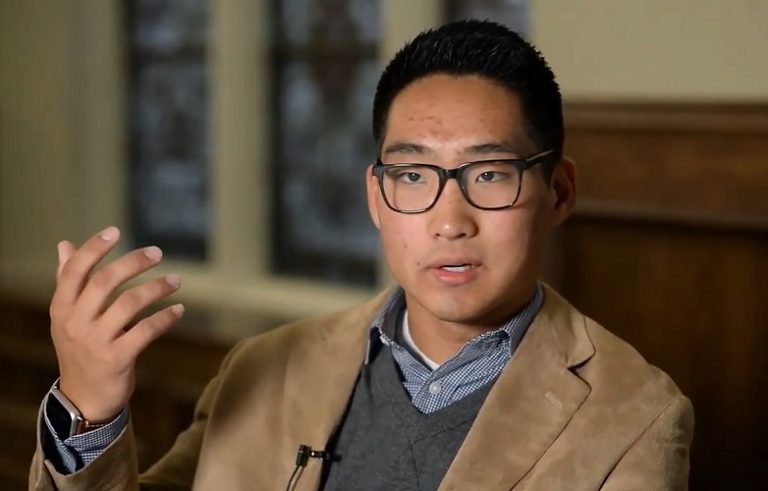
MESQUITE, Texas (BP) — Josiah Presley, one of the abortion survivors featured in a 30-second ad that Fox Sports chose not to run during the Super Bowl, is a Criswell College graduate and a youth pastor at Galloway Avenue Baptist Church in Mesquite, Texas.

“Can you look me in the eye and tell me that I shouldn’t be alive?” Presley asks in the ad made by Faces of Choice. “We are the survivors of choice. We are the faces of choice,” abortion survivors say in the ad.

The group’s founder, Lyric Gillett, told the Washington Times she repeatedly met additional terms set forth by Fox and in the end was not given a suitable reason why the ad was rejected.

Though he was disappointed, Presley said he wasn’t surprised Fox Sports chose not to air the ad. He hopes the chatter that has followed the decision will still get the message into American homes, especially as pro-life people direct others to the various abortion survivor videos at facesofchoice.org.

“Our prayer is that it still has an impact and it still shows people the truth of what abortion is,” he said.

When Presley’s birth mother was two months pregnant and in South Korea, she had a curettage abortion, “the type of abortion where a doctor goes into a mother’s womb and rips the baby apart and brings him out in pieces,” Presley told the TEXAN.

Presley’s birth mother was sent home, but a few months later she realized the abortion “had actually failed and I was still very much alive,” he said. Presley was born in 1995 and placed in a foster home in South Korea. Randy and Kathy Presley of Norman, Okla., adopted Presley when he was 13 months old, and raised him along with nine other adopted and two biological children.

Presley has a deformed arm, which is believed to have been caused by the type of abortion attempted. Throughout his childhood, he struggled secretly with low self-esteem, thinking he was less than others because of his deformity. “I thought I wouldn’t go anywhere in life,” he said.

When he was 13 years old, Presley’s parents told him he had survived an abortion. Though he was grateful to know his story, the news sent him deeper into darkness.

“It became apparent to me at that time that my life actually was worthless because the people who should have loved me the most thought my life was so ‘unvaluable’ they tried to take it,” Presley said.

As a young teenager, Presley developed hatred toward anyone who was pro-choice, including abortion doctors, post-abortive women and Planned Parenthood workers. “I thought they were the scum of the earth because it was people like them who made me the way I was, so broken,” he said.

All the while, he continued projecting a good church kid façade at Trinity Baptist Church in Norman, where his father was a worship pastor. The summer after his sophomore year of high school, God got Presley’s attention at Falls Creek Baptist Conference Center in Oklahoma. The camp pastor that week talked about the Greek word dunamis and how God imparts in the believer the power to overcome the trials of the world.

“I remember thinking I didn’t have that in my life,” Presley said.

He accepted Christ as his Savior that week and started seeing changes in his outlook. He realized his value was not in what he did but in the fact that he was created in the image of a God who had a purpose for his life, he said.

Source: Baptist Press

All Content & Images are provided by the acknowledged source

Armed Man Interrupts Church Service in Brazil and Orders Congregation to Hand Over Their Belongings

Authorities in northwestern Brazil are searching for two men who held up an evangelical church during the middle of a mass. One them pointed a gun at a woman.

The frightening scene was all caught on video Sunday night shortly after the gunman and and his accomplice interrupted the evening prayer service at the house of worship located in Manaus, the capital of the state of Amazonas.

A congregant recorded the tense moment as the unidentified suspect wearing a red sweatshirt ordered the churchgoers to give up all of their personal belongings.

A young boy could be seen approaching the congregants under orders of the gunman and filling a backpack with their possessions.

The gun-totting church thief then instructed the woman that was sitting next to him to walk over and sit next to the rest of the worshipers before he followed her.

He then appears to look search through the bag before escaping the church.

Source: Daily Mail

All Content & Images are provided by the acknowledged source

Jim Denison on How Christians Glorified God In and Throughout Super Bowl LIV

The views expressed in this commentary do not necessarily reflect those of BCNN1. Opinions expressed are solely those of the author(s).

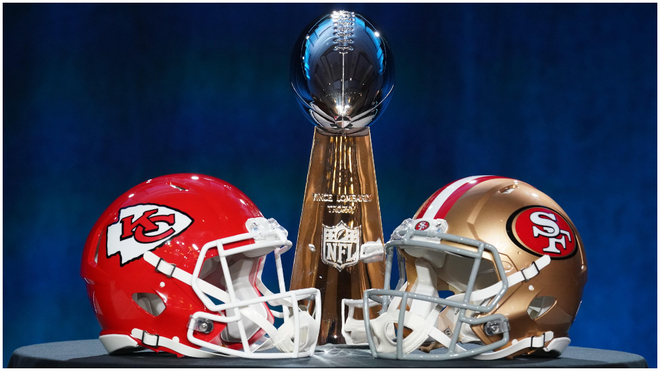
The Kansas City Chiefs defeated the San Francisco 49ers in yesterday’s Super Bowl by a score of 31 to 20. The Chiefs came back from a ten-point deficit in the fourth quarter to give their beloved head coach, Andy Reid, his first NFL championship.

What about the game will be remembered long after the score is forgotten?

Patrick Mahomes was “always about the other person” 

Chiefs quarterback Patrick Mahomes is now the first quarterback in NFL history to win a Most Valuable Player award, a Super Bowl, and a Super Bowl MVP by the age of twenty-five. However, he has been known for his humility since high school.

According to his coaches, “He was always about the team, always about his teammates, always about the other person.” Mahomes has been following Jesus since coming to faith in middle school.

Chiefs punter Dustin Colquitt has been active in the Fellowship of Christian Athletes and Athletes in Action. He says, “As a Christian, I think God has given me that platform to say, ‘Hey, I’ve allowed you to do a lot of things, and I need you to speak my Name.’”

49ers receiver Jordan Matthews became a Christian during his second year in the NFL and says “everything changed.” Another 49ers receiver, Marquise Goodwin, made headlines when he and his wife lost a premature son just hours before a game but continued to trust the Lord.

And Chiefs CEO Clark Hunt has been very public about his commitment to Christ. I was his pastor in Dallas and know personally of his family’s love for the Lord.

After the Chiefs won the AFC title, Clark said: “I want to thank the Lord for blessing us with this opportunity. The glory belongs to him.” After his team won the Super Bowl last night, he told the world: “I want to thank the Lord for blessing our family with all these incredible people who helped us bring this championship home.”

SOURCE: Christian Post, Jim Denison

All Content & Images are provided by the acknowledged source

WATCH: Jessica Simpson Breaks Out in Singing of “Amazing Grace” After Opening Up About Alcoholism, Childhood Abuse, and Her ‘Path to Surrender’

Pop star Jessica Simpson made an appearance on “Today” recently and broke out in worship after opening up about her past struggles with alcohol and sexual abuse.

Simpson sat down with Hoda Kotb last week to discuss her new memoir, Open Book. In the interview, the singer opened up about being molested as a child and not immediately speaking about it to her parents, who were in ministry at the time, because of the shame she felt.

She also talked to Kotb about her addiction to alcohol, which Simpson overcame a couple of years ago. The new author admitted drinking as early as 7 a.m. at times. Everything changed in 2017, however, after being unable to participate in Halloween with her kids and family. The next day Simpson sought therapy and has been sober ever since.

“I just realized that I had to surrender,” she said. “I just want to continue on the path that I’m on and at this point in my life, now I’m strong enough to deal with anything that comes my way because I don’t have something to retreat to that will numb me from actually going through it.”

At the close of her interview with “Today,” Kotb requested the singer sing the song that brings Simpson peace since faith is such an important part of her journey. She then sang a verse from the popular hymn, “Amazing Grace.”

SOURCE: Christian Post, Jeannie Law

All Content & Images are provided by the acknowledged source