Travelling Team Leads Pakistans to Christ

OM Pakistan men’s traveling team has been busy over the last few months, visiting towns and encouraging local Believers. The team often sets up a book table in a church area, or in the bazaar. One local believer watched the literature being set out and commented: “It’s really good that you are distributing books for children and elderly people to transform their lives. It will help people and children recognize the right way of living their lives.”

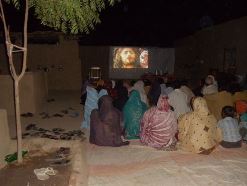
As the team shared the Word of God to those in church, and told of personal experiences of God in their lives, many were moved to make their own commitments of faith. Seminars on spiritual growth and healing encouraged churches to pray for and expect to experience healing; the impact of showing Christian films was noticeable as one man said: “I have always prayed for Christians in Pakistan, and for the faith of the nation, but now I want to pray for the salvation of all Pakistanis!”

The local pastor explained how important it was for people to understand that they needed a spiritual birth as well as a physical birth, and the place of Jesus in God’s plan for the world. Over 100 people listened with great attention to his words, many saying afterwards that this was the first time they had heard this teaching explained to them so clearly. 15 made personal decisions to follow Jesus as a result. One 75 year old woman said: “Today I have learnt from your team that prayer is very important to ask for the forgiveness of our sins, believe in Jesus and be made whole.”

Young Christian Believers living in rural areas were not left out either, as they were urged not to give up, but to complete their studies, so that they would be better able to understand the Bible and be better equipped to answer questions asked by seekers of the Truth…Read More

Source and Original Content by BCN

Westminster Cathedral mistaken for a Mosque by Ukip Official

A Ukip official confused Westminster Cathedral for a mosque yesterday, accusing the BBC of bias for filming in front of it.

The BBC’s Daily Politics programme produced a report outside Westminster Cathedral about Nigel Farage’s fitness to be prime minister.

The Ukip office at South Thanet – the constituency where Mr Farage plans to stand in the general election next May – tweeted a complaint: “Perfect place to hold vote in front of a mosque in London. The BBC’s random means selective.”

Reporter Giles Dilnot responded, providing a link to an internet page showing Westminster Cathedral and its 273-foot campanile tower, which is dedicated to St Edward the Confessor – with the comment: “not sure you’ll find a mosque in there though”.

It is possible the confusion arose because of the cathedral’s neo-Byzantine style – it has a dome instead of the more recognisable Gothic church spire.

But Fr Anthony Symondson, an architectural historian, said: “They are being extremely ignorant. There’s nothing mosque-like about Westminster Cathedral.”

Asked about the mistake on the Daily Politics show today, Ukip leader Nigel Farage said: “The people’s army are not all wholly trained. They are enthusiastic volunteers and volunteers make mistakes and that lady made a mistake.”

Fr Alexander Master, Cathedral sub-administrator, said: “We are delighted that the BBC chose Westminster Cathedral as a backdrop to survey people of all faiths and none.”

The poet Sir John Betjeman described the Cathedral as “a masterpiece in striped brick and stone in an intricate pattern of bonding, the domes being all-brick in order to prove that the good craftsman has no need of steel or concrete”.

Source and Original Content by Catholic Herald

Regular Attacks Faced by Church in Jerusalem

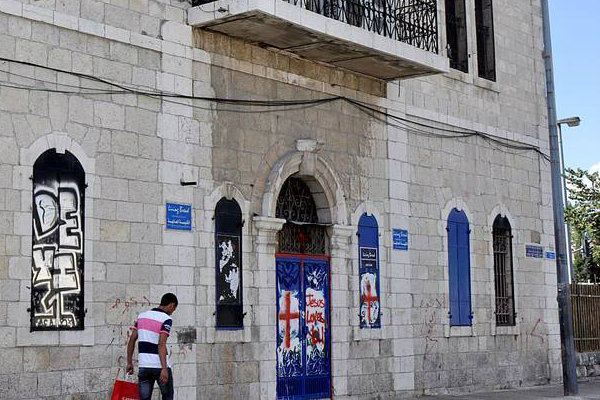
A church in the eastern Jerusalem neighborhood of Musrara has for months been facing regular attacks by local Arab Muslims over its refusal to sell the property and move out.

Living Bread International Church has ministry centers in Jerusalem, Gaza and Jericho. It has a 20-year lease on the Jerusalem location, but was recently told by a gang of Arab residents that it must vacate the premises, which is situated near the Old City.

“When we said we would not sell it, they decided to take it by force,” Karen Dunham, pastor and director of the ministry, told The Jerusalem Post

Since then, Dunham said the church’s 45 employees have been subjected to constant harassment, as have two Jewish orphans with Down’s Syndrome that are housed at the facility.

Staff members, including Dunham herself, have been physically assaulted, property has been stolen, and the assailants have started building make-shift structures on the church’s property in an attempt to take it over.

As with many similar situations in the city, Dunham has been frustrated by the Police Department’s reluctance to fully and effectively enforce the law.

“We…took pictures of [the assailants] during attacks and [were] able to identify them using Facebook, but after filing the first two or three police reports I realized nothing was happening,” she said. “They [the assailants] continued to sit outside [the church] and harass us.”

Police in Jerusalem rarely take firm action in cases of Arab violence against the city’s Jewish residents, and are even less likely to intervene in Arab assaults on a largely Arab church. And this for fear of further inflaming Muslim rioters who have for the past six months turned parts of Jerusalem into something of a war zone.

Source and Original Content by Israel Today

Arabs and Jews Unite to Strategize on How to “turn Israel upside down.”

A new generation of Arab and Jewish followers of Jesus met together last week to strategize on how to “turn Israel upside down.”

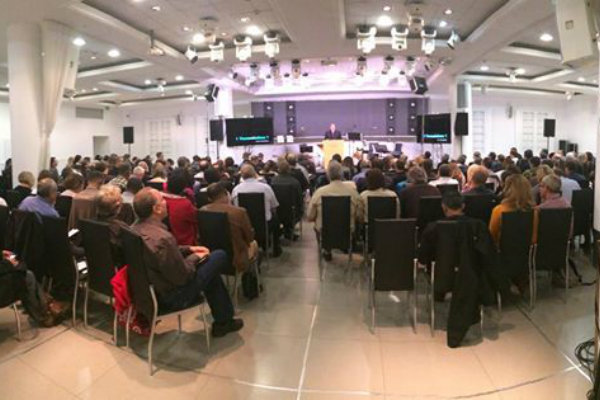
Two hundred and sixty Messianic Jewish and Arab pastors, youth leaders, evangelists, Bible-school teachers and ministry leaders gathered for a three-day council to discuss, study, pray and work together to effectively bring the word of God in power to Arabs and Jews throughout the whole Land of Israel.

These seasoned men and women of faith embody decades of labor proclaiming the Gospel to local Arabs and Jews. Most have given up everything to preach Messiah to their unbelieving Muslim and Jewish families and friends. Despised because of their faith, they have lost jobs, suffered rejection and endured multiple other hardships, yet their passion to bring the Good News to their people remains unquenched.

“We will keep preaching and teaching the Word of God until it changes the people of Israel,” declared one leading pastor. “We must be willing to suffer for the sake of the gospel and keep going no matter what happens. God will accomplish His will through the power of His word.”

With tensions now raging in Jerusalem and across Israel, it was astonishing to witness firsthand the deep friendships between these Arabs and Jews. Even the cold-blooded murders in a Jerusalem synagogue that took place on the final day of the gathering could not separate these godly men and women from their warm fellowship in Messiah.

In fact, the cowardly acts of terror and violence still raging in Jerusalem only served to move them to stand even stronger together and compelled them to more boldly declare the life-giving Word of God to both Muslim and Jew.

A regular theme throughout the gathering was the need to understand God’s prophetic word concerning the Last Days.

Scriptures related to the Second Coming of Messiah were studied. There are many signs that we are living in the latter days, particularly the return of the Jewish people to their biblical land, and the leadership of the local congregations in Israel discussed the need to prepare God’s people for the Messiah’s soon return.

All agreed that time is short, and the peoples of this land, both Arab and Jew, must hear the Word of God now.

It was mentioned that some local leaders are not teaching or preaching about the Second Coming. They do not want to stir up controversy or division over what can be a difficult subject.

While there remains much debate in Christianity and among Messianic Jews as to what exactly will happen around the Second Coming of the Lord, all were in agreement that He is coming, and that the Gospel much be preached in boldness, especially in Israel, before it is too late, for He comes this time in glory and in judgment.

According to many New Testament scriptures, the return of Messiah should unify believers, inspiring them to ready themselves in purity and holiness. It is seen as a cunning ploy of the enemy to cause so much confusion and division concerning the Last Days and Messiah’s return.

The leadership of the local Arab and Jewish congregations in Israel prayed for unity of faith in the Messiah’s return and boldness to tell others of His coming Messianic kingdom, the only real solution to the Arab-Israeli conflict and the peace of Jerusalem.

Source and Original Content by Israel Today

Fire Chief Suspended After Writing Christian Book

ATLANTA – A Georgia fire chief has been suspended without pay and has been ordered to undergo sensitivity training after publishing a book that contains quotes decrying homosexual behavior and other forms of sexual perversion.

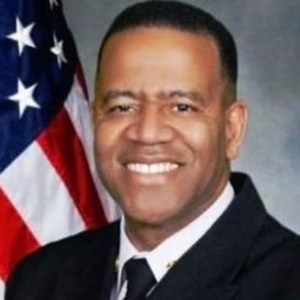
Chief Kelvin Cochran of Atlanta has been suspended for one month and is also the subject of investigation as to whether he violated city policy or engaged in discrimination by publishing the book last year.

The publication, which is being sold on Amazon, is entitled “Who Told You That You Were Naked?” and is centered on God’s question to Adam following his disobedience in the Garden of Eden, and parallels the matter with those who are now “clothed in Christ.” Cochran states that the book was compiled as a result of a number of lesson plans that he had prepared over time for men’s Bible study groups.

While “Who Told You That You Were Naked” was published last year, it was reportedly not until last week that Atlanta employees complained to Mayor Kasim Reed about its content.

“Uncleanness [is] whatever is opposite of purity; including sodomy, homosexuality, lesbianism, pederasty, bestiality, all other forms of sexual perversion,” Cochran wrote. “Naked men refuse to give in, so they pursue sexual fulfillment through multiple partners, with the opposite sex, the same sex and sex outside of marriage and many other vile, vulgar and inappropriate ways which defile their body-temple and dishonor God.”

But it wasn’t Cochran’s writings against sexual perversion that got him into hot water, it was the fact that he included homosexuality among those behaviors that are cited as being “vile,” “vulgar” and “inappropriate.”

Mayor Reed issued a statement this week condemning Cochran’s book and referring to it as being discriminatory.
“I was surprised and disappointed to learn of this book on Friday,” he stated. “I profoundly disagree with and am deeply disturbed by the sentiments expressed in the paperback regarding the LGBT community. I will not tolerate discrimination of any kind within my administration.”

“I want to be clear that the material in Chief Cochran’s book is not representative of my personal beliefs, and is inconsistent with the administration’s work to make Atlanta a more welcoming city for all of her citizens—regardless of their sexual orientation, gender, race and religious beliefs,” Reed said.

In addition to being suspended and placed under investigation, Cochran is also prohibited from distributing his book to other city employees as some firefighters stated that he had given them a free copy.

But some find that it is rather Mayor Reed who is being discriminatory by punishing Christians who publicly express their biblical values.

“You’d think the government would appreciate Kelvin Cochran being a role model to young black men in Atlanta, but they are instead much more focused on not offending the gay rights community,” wrote writer Erick Erickson for Red State. “What Mayor Reed and the gay rights community are saying is that if you work for government you cannot be open about your Christian faith. Again, you will be made to care.”

Source and Original Content by CNN

Increasing Tensions Make Life Difficult for Catholic Aid Workers and Priests in Jerusalem

Catholic aid workers and clergy are finding that life in Jerusalem increasingly difficult as violence between Israelis and Palestinians mount.

Acts of violence, seemingly one retaliatory measure after another, have occurred since June. Then, riots broke out in Jerusalem following the murder of a Palestinian boy. Authorities said he was killed in retaliation for the killing of three Jewish high school students outside of a Jewish settlement in the West Bank.

Since then tensions have spilled into religious sites, with the most recent episode occurring November 18 at a synagogue in West Jerusalem, leaving four worshippers, a policeman and two attackers dead.

Priests at the two Jerusalem parishes – St. Saviour and the Hebrew-speaking parish of the House of Simeon and Anne – have offered support to parishioners who have become accustomed to the rising violence.

Father Rafic, who leads the Hebrew-speaking parish in Jewish West Jerusalem and refrains from using his last name, said that during Sunday Mass silent prayers for peace are offered. While parishioners who live within the Israeli society may have differing political points of view, politics are not discussed in the church, he said.

People are worried about the tense situation but they are not yet experiencing a sense of trauma, he said. The prayers, which are said together, and the regular Mass readings which speak of peace and tolerance are a help to his parishioners, Fr Rafic added.

“We live with this daily,” Fr Rafic said.

Fr Feras Hejazin, whose St Saviour Parish is located within the Old City, said people have grown accustomed to living with financial, social and political instability.

“Nothing is stable in Jerusalem. No one can think about their future in their businesses because of the instability,” he said.

Many Christians are involved in the tourist industry, which has been hard hit in recent months as tourists and pilgrims refrain from visiting Jerusalem because of the violence, Father Hejazin explained. Other business owners also have suffered economically as well because people are less likely to go out nowadays, he added.

“It is a problem for us, many families are in need. Even before, it was not good,” Fr Hejazin said. “All we can do is to encourage the people.”

The support comes not only in words, he said, but financially as well as the parish tries to help the people most in need.

“We are with the people in their need,” he said. “Jerusalem is becoming difficult. There is no security.”

For Catholic Relief Services (CRS), the situation in Jerusalem has made finding funding for dialogue or peacebuilding projects challenging, said Matthew McGarry, the agency’s country representative for Jerusalem, West Bank and Gaza.

“It is not a conducive environment right now,” he said, explaining that his office recently completed a budget proposal for a cross-border peacebuilding project, but that prospects for finding funding to support it are slim…Read More

Source and Original Content by Catholic Herald

Islam, a violent religion?

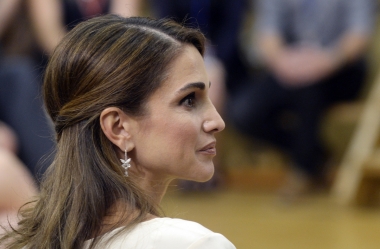
Queen Rania of Jordan has called on the Arab world to reclaim Islam as a religion of peace. Referring to Islamic State extremists, she said: “A minority of irreligious extremists is using social media to rewrite our narrative… hijack our identity and rebrand us.”

There are two stories about Islam out there. One is that it’s a religion of peace and its adherents only want to live harmoniously with other people. The other is that its fundamental aim is to take over the world, by force if necessary. There is fear, suspicion and confusion. So what are the questions that help us make sense of the different narratives?

People are just people, aren’t they?

Yes. In other words, once you’ve labelled them as ‘Muslim’, you’ve said something about them, but maybe not very much. I’m a Christian. I’m also white, British, middle-aged and a rather tepid fan of Aston Villa. I live in a pleasant spa town and enjoy country rambles and biographies of eminent Victorians. There’s a lot about religious people that the label doesn’t explain or express.

How many Muslims are there, anyway?

Islam is huge, though not as big as Christianity. According to Pew Research, 1.6 billion or 23 per cent of the world’s population is Muslim. A minority of those are Arabs: more of them live in India and Pakistan than in the whole of the Middle East and North Africa. This means that if you have a clear idea of what a typical Muslim looks like, you are almost certainly wrong.

How far back does it go?

It’s not as old as Christianity or Judaism, and nowhere near as old as Hinduism, but it’s old (622 AD). 1400 years is quite long enough for vast quantities of literature, devotional writing, scholarly rows and different schools of thought to emerge. Think of how many Christian denominations there are – not just Catholic and Protestant, but almost infinite sub-divisions within Protestantism and lots of different expressions of Catholicism too. Islam is a bit like that, if not quite as extreme.

It sounds very complicated…

You have no idea. In a nutshell: soon after Muhammed’s death Islam divided into Sunni and Shia branches. Sunnis are by far the most numerous, but each tends to dominate in particular countries – Sunnis in Egypt, Turkey and Saudi Arabia, for instance, and Shias in Iran. The split was over who should succeed the prophet. Sunnis believed that the heir should be appointed under Arab tribal tradition, whereas Shias believed it should be a descendant of the prophet. For Sunnis the leader was a political governor; Shias by contrast have an imam, a religious figure. The division was sealed in 680 with the death of the Shia claimant, Hussein, at the battle of Karbala – a key event in Shia tradition.

Does this really matter?

Yes. The different streams fought each other quite a bit, but have also developed in different ways. For instance, Shias view the sayings of Fatima, the daughter of the Prophet, and his cousin Ali (Fatima’s husband), as authoritative; Sunnis do not. There is an organised Shia clergy, but none in the Sunni tradition. The most important difference is about the interpretation of the Qur’an. The Sunni look more to the letter of the Qur’an; the Shia look more to its spirit, though both would say that in the original Arabic we are reading the literal words of God. Arguably there is more room for development in the Shia tradition, but there are extremists on both sides.

So, is Islam just one thing?

Is Christianity? The answer is both yes and no. There are different theological streams in both Shia and Sunni traditions. They argue about evil, predestination and free will, salvation and the knowledge of God – all familiar questions in Christian theology too. In the case of the Athari, they argue about whether to argue at all. There are also various types of popular devotion, such as the cults of saints, and the mystical Sufi tradition. Different schools of law have arisen from different ways of reading the Qur’an and the Sunnah (prophetic traditions). These came out of different reforming movements or political situations. Again, it’s important, with different approaches to crime and punishment, for instance.

Questions of truth aside, is it all good and helpful?

No – though on the Christian side, of course, no one should forget the Spanish Inquisition. One example is arguably the Salafi movement which seeks to return Islam to the primitive virtues of its earliest times. In its Wahhabi form it is fundamentalist and uncompromising, seeing Western innovations like democracy as dangerously un-Islamic. Wahhabism is a ‘dominant minority’ in Saudi Arabia, whose ruling House of Saud formed an alliance with its founder. Its adherents reject religious authorities from later than the first three generations of Muslims; consequently pronouncements from modern scholars and teachers have little influence on them. Islamic State has been described as “untamed Wahhabism”.

Ah, yes, Islamic State. What’s driving them?

Islamic State is a Sunni extremist group which wants to return Islam to its original pure form. It rejects later ‘innovations’ and secular laws. In the captured city of Mosul in Iraq it has imposed a school curriculum which bans the teaching of art, music, national history, literature and Christianity. It has banned music and songs, alcohol and tobacco. Women are only allowed to go outside the house if absolutely necessary and have to be veiled. Its goal is to expand its territory throughout the region and beyond. It represents an extreme form of ‘political Islam’, which seeks to reshape society in an Islamic way. While terror is obviously an appalling perversion of any religion, there is discussion both within and outside Islam about legitimacy of this as a goal anyway. It has also been argued that political Islam is political Islam, and its goals are the same whatever the methodology. However, as we’ve seen in the UK – in the comments of former Archbishop of Canterbury Rowan Williams about sharia law, for instance – there’s a legitimate argument to be had about how far a Christian country should go in accommodating Muslim principles.

Do I really need to know all this?

Possibly not, but it is very important to realise that Islam is not a monolithic religion. They agree on the fundamentals, like Christians, but apart from that there is a great variety in thought and practice. Trying to generalise about Muslims is no more sensible than trying to generalise about Christians.

Common sense, surely?
Well, you would think so. But failure to understand this leads some people to believe that Islam is just naturally going to be at odds with other cultures, as Samuel Huntingdon argued in his notorious Clash of Civilizations. Others go even further, like Franklin Graham, who described it as a “wicked” and “evil” religion. So any evidence that it isn’t is discounted, or used as evidence that Muslims are playing a deceitful double game – Protestants (and indeed some Catholics) used to say the same about Jesuits. For instance the Common Word initiative from Muslim scholars in 2007 aimed at starting dialogue was dismissed in some quarters as a Trojan Horse; so was a recent Muslim prayer service in Washington. That is not to deny that some Muslims might have ulterior motives in dialogue with Christians, but starting from a position of trust seems like a good thing.

But a lot of Muslims really do seem to believe in violence, don’t they?

As a proportion of their total numbers, no – but they do immense and tragic harm, to Christians and other Muslims. So the real question is, why a Muslim in one part of the world would be horrified by Islamic State and someone else would be all for it. The answers include: a response to oppression and powerlessness, the breakdown of law and order, and bad theology – most scholars and teachers reject Islamic State as an abomination. Other cultural factors include the extreme introversion of some communities – in Pakistan, for instance – authoritarian social structures, and deeply embedded historical narratives. Most Muslim-majority countries can point to a history of oppression, colonialism and betrayal by Western powers which we have largely forgotten, while they have definitely not. A sense of being out of place can lead young Muslims in majority Christian countries to set their Islamic identity over against their national loyalities, which leads some to head off to Iraq or Syria to fight for Islamic State. But saying that people do terrible things because they are Muslims is just not true.

So, is Islam a religion of peace?

That isn’t quite the right question, because very few religions – including Christianity – are, in an entirely unqualified way. You can go to the Muslim sacred texts and find exhortations to peace, love, tolerance and understanding. You can also find justifications for religious warfare, the subjugation of women, amputations, stonings and goodness knows what. However, most Muslim scholars and teachers in most countries remain true to their faith and their scriptures without advocating any of these things. As ever, there is a complex relationship between scriptures, the historic tradition and contemporary culture. So the point is that the answers to Islam’s problems already lie within Islam; dismissing a whole world faith because of the actions of a minority of extremists is not very helpful.

As Queen Rania said: “For the sake of each one of us… for Islam and the Arab world… for the future of our young people, we must create a new narrative and broadcast it to the world. Because if we don’t decide what our identity is and what our legacy will be, the extremists will do it for us.”

Source and Original Content by Christian Today

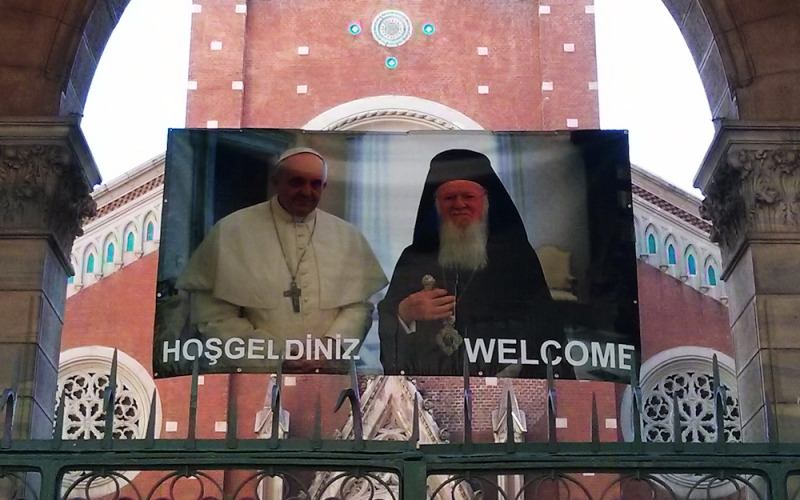
Christian Refugees in Turkey likely to meet Pope During Visit

Pope Francis is likely to meet Christian refugees from Iraq and Syria during his trip to Turkey. The Holy Father is due to arrive on November 28 for a three-day trip to the Muslim country.

Although the Pope’s official agenda in Turkey does not include any meetings with refugees, Vatican spokesman Jesuit Father Federico Lombardi has said that some may be present when the Pope meets students from Catholic schools across the Middle East on Saturday.

It is believed that Pope Francis will repeat previous calls for protection of minorities in the Middle East. More than 100,000 Christians were forced out of their homes in Nineveh, northern Iraq, this summer by ISIS. Many in the region have accused Turkey, as well as Saudi Arabia and Qatar, of supporting the terrorist group in its war against Bashar al-Assad’s regime in Syria. ISIS are also at war with Kurdish fighters, who the Turkish government regard as terrorists.

President Recep Tayyip Erdogan is also a controversial figure for pushing back some of the secularisation programme of Mustafa Atatürk, the founder of the Turkish republic.

This year he reversed the ban on women wearing headscarves in universities, and he has also claimed that Muslims discovered America centuries before Christopher Colombus, and that Islam has only ever fought wars of defence.

In August, the Holy Father said the use of force against ISIS could be justified, breaking recent Vatican policy of opposing all intervention in the region.

The Pope will most likely praise Turkey for the number of Syrian refugees it has looked after, with over one and a half million refugees currently in the country.

Source and Original Content by Catholic Herald

Young Christians in a fix Over Meeting Point of Their Faith and Sexuality

Young Christians continue to grapple with how to reconcile traditional and restrictive church teachings on sexual ethics with the intimate relationships they experience and witness in their social circles, according to a religious studies professor and recent surveys.

The traditional Christian view that sex is only to be experienced in heterosexual marriage has been shared by less and less Americans over the years. A 2013 Gallup poll indicates that Millennials (those 18 to mid-30s) are least likely to hold the same view. Americans who claim to be Christians can also be counted among those with liberal views on premarital sex. One could ask if this means that Christian doctrines on sex and sexuality need to be loosened or revised to meet the needs and concerns of the present culture.

Dr. Teresa Delgado, associate professor in the Religious Studies department at Iona College since 2005, appeared on “CP Newsroom” to comment on the changing attitudes of some Christians on matters related to human sexuality. The Theology and Ethics professor noted some of the particular concerns her undergraduate students have shared with her over the years, in terms of conflicted feelings when it comes to their faith and sexuality.

Many young Americans, predominantly white and under the age of 30, have become disenchanted with, or even hostile toward religion. The Pew Research Center, which has reported an increase in religiously unaffiliated Americans, explained that “the unaffiliated are concentrated among younger adults, political liberals and people who take liberal positions on same-sex marriage.” The Public Religion Research Institute reported earlier this year that its survey found Millennials to be the most supportive of same-sex marriage.

The PRRI also pinpointed a particular trend in their findings among Millennials in regard to their childhood faith.

“Nearly one-third of Millennials who left their childhood religion say unfavorable church teachings about or treatment of gay and lesbian people played a significant role in their decision to head for the exit,” said PRRI CEO Dr. Robert P. Jones of the survey’s findings.

The Christian Post reported previously in an article questioning whether evangelical churches need to accept gay marriage to attract Millennials…Read More

Source and Original Content by Christian Post

L3D Cube: Light up The Holidays

Want to turn your living room into a rave for the holidays? All you’ll need is a $300 L3D Cube and about half an hour.

The L3D Kickstarter project delivers a crude 3D display in a DIY kit, allowing you to build what the L3D Cube team calls a “volumetric” display. It looks like an animated 3D lightboard. After you construct the box, you can then download visualization apps to it or program your own. Less than 24 hours after it launched, the Kickstarter campaign is more than halfway to its goal of $38,000.

The standard kit takes about 30 minutes to build, says Shawn Frayne, president of Looking Glass Factory, makers of the kit. Each L3D Cube comes with 64 7-inch-long “reeds” with eight multicolor LEDs embedded in each, or 512 lights total. Plug the reeds into a Spark system board, cover it with the cube-shaped acrylic case, and then use an app to connect the device to your Wi-Fi network.

You program the Cube by downloading visualization apps to it via Wi-Fi. Each cube comes with a microphone, so it can change patterns and colors based on the volume and frequency of music or your voice. It can also work with motion sensors such as the Microsoft Kinect and the Leap Motion 3D Controller…Read More

Source and Original Content by Yahoo