Nancy Writebol Praises God with Surviving Ebola

Nancy Writebol, the second American missionary to contract Ebola while in Liberia, said Wednesday she’s thankful to be alive.

After nearly one month of battling the deadly virus, the 59-year-old nurse spoke publicly for the first time about her illness, saying she’s getting stronger with each passing day.

Writebol credits God for her recovery. She, along with fellow missionary Dr. Kent Brantly, was treated at Atlanta’s Emory University Hospital before being released in August.

“I wondered at times whether I would live or die,” Writebol said in a press conference. “His presence really was with me — and I knew that, I could sense it. … I am so thankful for His mercy and His grace.”

***Our CBN News team is down in North Carolina at the press conference and will be speaking one-on-one with Nancy Writebol and her husband David. Stay tuned for mor

Meanwhile, another American doctor from Boston has fallen ill with the virus. The 51-year-old ob-gyn often traveled to Liberia during the past 20 years to treat patients there.

He said he suspects he contracted the virus from a patient with masked symptoms.

He went to Liberia after two other doctors got sick. There are no plans currently for him to come back to the United States for now, and there no more ZMapp serum doses, used to treat Brantly and Writebol, anywhere in the world.

Still, the doctor is said to be in good condition.

So far, the West African Ebola outbreak has killed more than 1,500 people in Guinea, Liberia, Sierra Leone and Nigeria.

Original Photo by Daily Mail

Christians Need to Know 5 Things about the American Captives in North Korea

Three Americans are being held captive in North Korea. During a recent interview with CNN, Kenneth Bae, Matthew Todd Miller and Jeffrey Edward Fowle pleaded for U.S. intervention in setting them free.

The North Korean government accuses all three Americans of various forms of anti-government activity.

1. What is Known About Kenneth Bae?

Bea is an American-Korean missionary affiliated with the Southern Baptist Convention. In 2012, Bea was sentenced to 15-years of hard labor of “hostile acts” against North Korea.

“I do believe that (a) special envoy need to come in order to resolve the situation I am in right now,” Bae said during the CNN interview.

Born in South Korea and a naturalized U.S. citizen, Bae was leading a Christian tour group from China when he was arrested near the city of Yanji along the northeastern coast.

Facing a myriad of health problems, Bea was hospitalized several months ago, but has since been released back to the labor camp. Bae is the longest held American in North Korea since the Korean War and the only captive to be sent to the nations labor camp.

2. What is Known About Matthew Todd Miller?

Matthew Todd Miller is the second of three Americans being detained for “rash behavior” by the North Korean government.

According to the Korea Central News Agency, the 24-year-old Bakersfield, California resident was arrested April 10 for seeking asylum. Inverting his name, KCNA claims Miller tore up his tourist visa while attempting to enter the country.

“A relevant organ of the DPRK put in custody American Miller Matthew Todd, 24, on April 10 for his rash behavior in the course of going through formalities for entry into the DPRK to tour it,” the KCNA said.

Miller told CNN that he wouldn’t know his exact charges until he goes to trial.

“I prepared to violate the law of the DPRK before coming here and I deliberately committed my crime,” said Miller. “I have already admitted my guilt and apologized to the government of the DPRK.”

3. What is Known About Jeffrey Edward Fowle?

Jeffrey Edward Fowle lives on a small farm in West Carrollton, Ohio with his wife, Tatyana, and three children, Alex, 13; Chris, 11; and Stephanie, 9.

The 56-year-old entered North Korea April 29 on a tourist visa. From Miamisburg, Ohio, Fowle was taken into custody for leaving a Bible in a hotel room.

During the interview with CNN reporter Will Ripley, Fowle said, “It’s been very good so far, and I hope and pray that it continues, while I’m here two more days or two more decades.”

“You guys should convey my desperate situation,” he said. “I’ve got a wife and three elementary school-aged kids that depend on me for support.”

Fowle works for the city of Moraine.

According to WHIO TV, City Manager Dave Hicks claims the city of Moraine needs Fowle to return soon or face termination.

“We’re going to have to do something with that pretty soon,” he said. “At some point, we can’t let this go on forever.”

Hicks suggest the American Federation of State, County and Municipal Employees, which Foyle belongs, establish a pension to support his family.

“He’s there because he chose to go there,” Hicks told WHIO. “Everyone’s accountable for the decisions we make.”

4. What is the North Korean Agenda?

Following the attacks of Sept. 11 and later North Korea’s nuclear test in October 2006, Security Council members imposed sanctions on Pyongyang, the capital of DPRK.

Some maintain the imprisoned Americans could be a ploy by the North Korean government in an attempt to loosen sanctions against the nation’s drive to develop long-range missiles. Yet others contend North Korea’s warheads aren’t advanced enough to reach the US homeland.

Bruce Klingner. senior research fellow for Northeast Asia at the Heritage Foundation, argues North Korea deserves more attention that the administration has given.

“North Korea has likely made greater progress than perceived—if not already achieved—warhead miniaturization, the ability to place nuclear weapons on its short-range missiles, and a preliminary ability to reach the United States,” wrote Klingner. “As such, the United States and its allies face a greater threat today than is widely construed.”

Klingner warns that North Korea is as much a nuclear threat as Iran.

“Washington should no longer hold some sanctions in abeyance, to be rolled out after the next North Korean violation or provocation. There will be little change until North Korea feels pain and China feels concern over the consequences of Pyongyang’s actions and its own obstructionism.”

5. Has Washington Responded?

In news reports earlier this summer, Bea expressed that he feels abandoned.

“Bae said he had heard that the U.S. government is doing everything it can for his release but feels disappointment that there has been no sign of resolution when he is approaching two years in his stay in (the North) and that he feels abandoned by the U.S. government,” according to the Choson Sinbo newspaper.

In late August, the Democratic People’s Republic of Korea (DPRK) informed the United States that it had rescinded its invitation for Special Envoy for North Korean Human Rights Issues Ambassador Robert King to travel to Pyongyang August 30-31 on a humanitarian mission focused on securing the release of U.S. citizen Kenneth Bae.

“We are surprised and disappointed by North Korea’s decision,” said Marie Harf, deputy spokesperson of the U.S. Department of State.

Harf maintains the State Department has sought clarification from the DPRK about its decision and have made every effort so that Ambassador King’s trip could continue as planned or take place at a later date.

“We remain gravely concerned about Mr. Bae’s health and we continue to urge the DPRK authorities to grant Mr. Bae special amnesty and immediate release on humanitarian grounds.”

Bill Richardson, a former U.S. ambassador to the United Nations, contends the three Americans are being used to broker a deal with the U.S.

“They’re sending a signal, saying, ‘We’re ready to bargain for the three hostages,'” Richardson told CNN.

Russ Jones is co-founder of Christian News Service, a content creation and news distribution firm. He’s also a media consultant to a number of cause oriented campaigns and organizations. Russ has been a guest on such programs as the Mike Gallagher Show, the Dennis Prager Show, Bill Martinez Live and Sandy Rios in the Morning. He holds degrees from the University of Missouri-Columbia and a master’s degree from St. Paul School of Theology. He is married to Jackie and together they have four children.

Original Photo by christian headlines

Sotloff’s Family: Enemy Won’t Hold Us with Fear

PINECREST, Fla. – The family of a journalist slain by Islamic State militants says Steven Sotloff dedicated his life to portraying the suffering of people in war zones, but was “no hero.”

Family spokesman Barak Barfi told reporters gathered outside the family’s suburban Miami home Wednesday that Sotloff “tried to find good concealed in a world of darkness,” and to give voice to the weak and suffering in the Arab world.

A militant video released Tuesday purported to show the beheading of Sotloff, who was kidnapped in Syria last year.

Barfi said Sotloff was “no war junkie,” but was drawn to the stories of the turbulent Middle East.

Barfi said Sotloff’s family was grieving, but have pledged to “not allow our enemies to hold us hostage with the sole weapon they possess – fear

Copyright 2014 The Associated Press. All rights reserved. This material may not be published, broadcast, rewritten or redistributed.

Original Photo by CBN

Boko Haram take over churches in Nigeria as Minister for Africa condemns ‘brutal and inhumane’ crimes

Islamist group Boko Haram has begun taking over churches in the areas of Nigeria where it has gained control, beheading men and forcing women to convert to Islam, according to local reports.

The extremist group is turning churches into strategic bases, according to local Christians. Local news agencies report that it is also imposing strict sharia law, beheading Christian men, forcing conversions and living in the homes of people who have fled.

“Things are getting pretty bad,” Rev John Bakeni, the secretary of the Maiduguri Roman Catholic diocese, told the Religion News Service. “A good number of our parishes in Pulka and Madagali areas have been overrun in the last few days.

“Many civilians are now on the run,” he added. “Many others are being trapped and killed. Life means nothing here. It’s so cheap and valueless.”

Local newspapers report that “every Christian man available in the areas” has been beheaded.

This week Boko Haram seized another town, Bama, in Northern Nigeria, with just a handful of fighters, following their advances in the region and their declaration that they have founded a new Islamic Caliphate. As many as 5,000 people have fled the town, and scores were killed in the fighting.

However Amnesty International has released footage which it says shows Nigerian soldiers putting Boko Haram suspects into a mass grave.

Boko Haram has also kidnapped hundreds of children who have yet to be found. In the past few years, the group has repeatedly attacked churches and exploded bombs in Nigeria.

James Duddridge, the Minister for Africa, attended a meeting in Abuja today to discuss regional coordination in the fight against Boko Haram.

Speaking this morning ahead of the meeting he said:

“Boko Haram is a growing threat to peace and stability in the region, and regional coordination between Nigeria and its neighbours remains crucial to defeating the extremists and locating the missing Chibok girls.

“In London, the UK announced a substantial package of military, security and development assistance. I will be updating partners on the significant progress made on implementation of this package, whilst underlining that respect for human rights and safeguarding the civilian population remain the key pillars of our support.

“Most importantly, with our French, US and other international partners, we will today again reiterate our common stance that we cannot, and will not, tolerate Boko Haram’s brutal and inhumane crimes.”

Original Photo by Press Association/ Sunday Alamba

3 Ways the Bible Can Help You Lose Weight – Believe it

Have you ever worked on your weight-loss plan, got on the scale and then discovered you haven’t lost anything … or worse, actually gained weight? Biblical words of encouragement can help.

During those times, you may think “What’s the use? I might as well eat what I want, because what I am doing is not making any difference.”

Hold on there! Don’t make the mistake of cursing your efforts to do good.

Before you quit, please take these words to heart. I have three reasons it is important that you resist the urge to quit. They all involve the power of time.

1. Bible encouragement for the past. You’ve probably tried dozens of diets. You stuck with your plan for a while, and then discouragement set in. What did you do in response? You quit before, right? The only reason you must work on this again now is because you quit before.

So you know where quitting leads you. Do you really want to go there again? Even if you did not get what you wanted in the time frame you set, at least you would be closer to your goal now if you had not quit. Learn to develop a “never surrender” attitude regarding weight loss.

“And let us not grow weary while doing good, for in due season we shall reap if we do not lose heart (Gal. 6:9).”

2. Bible encouragement for the present. If you keep going, at least you would have the satisfaction of forward motion. Even if you have to crawl toward your goal, do that until you have the strength to walk again.

One of my favorite quotes that states the benefits of endurance is by Eleanor Roosevelt:

“You gain strength, courage and confidence by every experience in which you really stop to look fear in the face. You are able to say to yourself, ‘I have lived through this horror. I can take the next thing that comes along.’ You must do the thing you think you cannot do.”

I recommend you start tracking your food intake if you aren’t already. I know that is not fun to do, but from my experience, it is too easy to “forget” the amounts we eat. But your body never forgets. Here are some biblical words of encouragement regarding endurance:

“Therefore we also, since we are surrounded by so great a cloud of witnesses, let us lay aside every weight, and the sin which so easily ensnares us, and let us run with endurance the race that is set before us” (Heb. 12:1).

3. Bible encouragement for the future. If you make up your mind that you will not quit no matter what, imagine where you will be one year from now. You will be amazed at how far you’ve come. I gained 100 pounds after high school—all because I didn’t respect the power of time.

You see, I didn’t realize that just by over-eating 50 calories every day, I would gain five pounds every year. Those five pounds every year eventually added up to 100 pounds over 20 years. So believe me, even if you can only manage a little more self-control today than you had yesterday, exercise it!

I believe if I had used enough self-discipline to exercise off just those extra 50 calories per day, then that 100-pound weight gain would not have happened. Whatever you can do, do that. Here is some Bible encouragement about the future:

“Mark the blameless man, and observe the upright; For the future of that man is peace” (Psalm 37:37).

I pray many prayers to you on your weight-loss journey. Yes, it is a journey, because your responsibility to take care of your body will remain as long as you live. But it is a journey that is well worth taking for the quality of your life!

Once 240 pounds and a size 22, Kimberly Taylor can testify of God’s healing power to end binge eating. She is an author and the creator of the Christian weight loss website takebackyourtemple.com. Visit today for inspirational health and weight-loss tips.

For the original article, visit takebackyourtemple.com.

Will Warren Buffett’s Investment Advice Work for You?

In his most recent Berkshire Hathaway shareholder letter, the ever-folksy Warren Buffett sounds more like a personal finance guru than a financial mastermind, focusing on buy-and-hold investing and advocating indexing strategies.

Buffett’s net worth is about $60 billion, according to Forbes magazine, so he is obviously doing something right. But how sound is his advice for the rest of us?

I spoke to some financial advisers and pundits, some of whom are the kind of folks Buffett thinks you should ignore, to get their take.

Stay Passive, Keep Costs Low

What immediately caught my eye is Buffett’s instruction that his wife back up the truck and invest in the Standard & Poor’s 500 stock-index upon his death.

That’s not a huge surprise, though. Buffett is a longtime fan of Jack Bogle, founder of the Vanguard Group, who champions passive, low-cost investing. But this is the first time Buffett is “putting his money where his mouth is in his own estate,” Bogle said in a email exchange with Reuters.

Specifically, Buffett wants the trustee of his estate to put 10 percent of his wife’s cash inheritance in short-term government bonds and 90 percent in a low-cost S&P index fund—and he tips his hat specifically to Bogle’s Vanguard in doing so. Says Buffett: “I believe the trust’s long-term results from this policy will be superior to those attained by most investors—whether pension funds, institutions or individuals.”

Face value, that’s a solid recommendation, although it might seem a bit odd, considering that Berkshire Hathaway has underperformed the S&P 500 in the past five years, and is trailing it slightly in 2014. But that’s not surprising because Buffett tends to lag a bit in bull markets, says Robert Hagstrom, author of The Warren Buffett Way.

“I had this image of the American flag waving in the background as I read the letter,” said Hagstrom. “He’s so bullish about the U.S., not necessarily about stocks, but about the country in general.”

When it comes to equities, Buffett’s recommendation to buy the S&P 500 is solid, experts say. “The S&P 500 is probably the best index out there—it’s clearly a core holding,” says Lou Kokernak, a financial adviser at Haven Financial Advisers in Austin, Texas.

However, other advisers say Buffett is endorsing an asset allocation strategy that’s not optimal for most investors. That’s because the S&P 500 is focused on U.S. companies, even if quite a few have a multinational tilt. “We refer to that as a home bias, and it’s very dangerous,” says Randy Kurtz, chief investment officer at RK Investment Advisors in Kinnelon, N.J.

That is exactly why Paul Jacobs of Palisades Hudson Financial Group in Atlanta suggests putting as much as 40 percent of Buffett’s suggested equity stake in foreign stocks.

Another criticism? Most investors cannot tolerate the risk of a 90/10 portfolio. “They would be scared out at the bottom when their $1,000,000 would have turned into $500,000 in 2009,” says Matthew Chope, a financial adviser at Raymond James in Southfield, Mich. “It’s as easy as that. We are paid to manage risk, not just return.”

Investing vs. Speculation

Which brings us to another big Buffett takeaway: invest, rather than speculate. In his 24-page letter, Buffett uses the examples of an office building in New York City and a farm he has visited only twice as investments he has held for the long haul, through the ups and downs of the market.

A farm and office building might strike some people as odd investments. Yet they are “classic Buffett” because they get to the heart of what is plaguing investors, who spend more time worrying about the price of an asset rather than its intrinsic value, Hagstrom says. “Investment is focusing on the asset and what that asset will earn, while speculation focuses on the price and predicting what the changes in price will be,” says Hagstrom.

Writes Buffett: “With my two small investments, I thought only of what the properties would produce and cared not at all about their daily valuations. Games are won by players who focus on the playing field—not by those whose eyes are glued to the scoreboard.”

That is the key takeaway from Buffett’s latest tome to shareholders, says Josh Brown, chief executive officer of Ritholtz Wealth Management in New York City and a frequent pundit. “He invests like an owner and keeps himself aware of his own weaknesses,” Brown says. “He buys companies that he prefers to own no matter what happens with the macroeconomic picture.”

Can investors tune out the incremental ups and downs of the market? That is a tall order.

But I do love this little nugget from Buffett: “If you can enjoy Saturdays and Sundays without looking at stock prices, give it a try on weekdays.” I just might try that one.


Original post by Chrisma News

9 to 5: The New Window for Missions

Chrisma News Report

Jesus probably spent more time in the marketplace than anywhere else. Of His 132 public appearances recorded in the New Testament, 122 were in the marketplace. Over 85 percent of the parables Jesus told had a workplace context.

This fall, business leaders will join other Christian leaders from every sector of society when they convene at Movement Day in New York City for the fifth consecutive year. The idea is to transform cities through “Gospel Movements” by showing marketplace leaders that their influence in the workplace is a fundamental key to that transformation.

Since vast numbers of people spend the majority of their waking time at work or work-related events, it makes sense that Christians in the workplace devote a significant amount of time investing in workplace relationships with the ultimate goal being sharing to introduce others to God and His ways.

I believe that with the right attitude and approach, Christians in the workplace have an unprecedented opportunity to influence people from all walks of life and in the process, see the Kingdom of God advanced and their cities changed.

While many believe that the marketplace is a key place to transform cities for Christ, many also do not understand the call to let their faith lead them in business—but that is beginning to change.

A friend of mine, Bob Doll, recently posed the question: “Why is there not more transformation in the marketplace?” His answer was, “because we haven’t taken seriously the concept of our calling in the workplace. God has a holy calling for each of us.”

Billy Graham has said the marketplace in this century will be for the spread of the gospel what the medical profession was last century. Do you work heartily for the Lord as a marketplace person? We now have a 9-5 window as opposed to the 10/40 window. We need to match our action and attitudes to God’s, and Movement Day seeks to do that very thing.

During the one-day event, there are multiple tracks available. For example, in the Faith & Work Interactive Track, marketplace leaders will gather with other faith leaders from organizations such as Center for Faith and Work with Redeemer City to CityCruTheology of Work ProjectThe NavigatorsNew Canaan Society and others from around the world to hear from some of the greatest minds on urban ministry, to share ideas and establish measurable goals that will lead to lasting gospel movements in their cities. It is not just about discussion, but mobilizing Christian leaders to address some of the crippling spiritual and social issues of our time.


… READ MORE


Original Post by Chrisma News

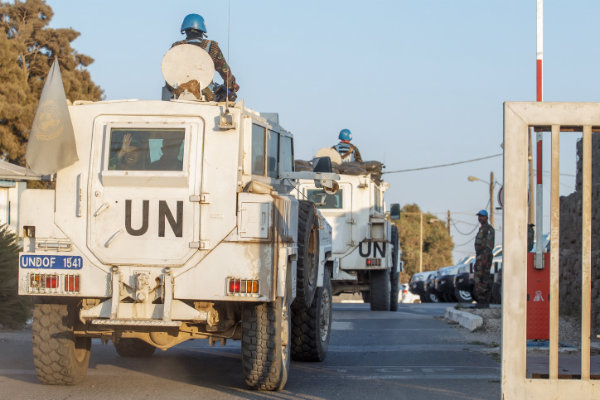
UN Peacekeepers Flee Inside Israel For Safety

Nearly every major Israeli-Arab conflict has ended the same, with the international community inserting peacekeeping forces that are intended to server as a buffer between the Jewish state and hostile Arab forces in order to prevent future wars.

Late last week, that formula was put to the test when Syrian rebel forces affiliated with Al Qaeda advanced on and seized control of the border region in the Golan Heights.

The current focus of the Al-Nusra Front is not attacking Israel, but the international forces that make up the UN Disengagement Observer Force (UNDOF) were still in the way and quickly found themselves under siege.

Numerous reports attested to heroic actions by UN peacekeepers in rescuing some of their colleagues that were pinned down by jihadist gunfire. Others were earlier taken captive.

But at the end of the day, it required the peacekeepers’ best, most valiant efforts just to save their own skin when faced with a real threat. And even then, the battle lasted a mere seven hours before scores of UN personnel fled into neighboring Israel.

Israel has asked before, and many are asking again – how exactly are such forces supposed to prevent or deter violence in the region? And the bigger question stemming from that is, can containment of more hostile elements still be viewed as a viable tactic in the Middle East conflict?

Original photo by israel today

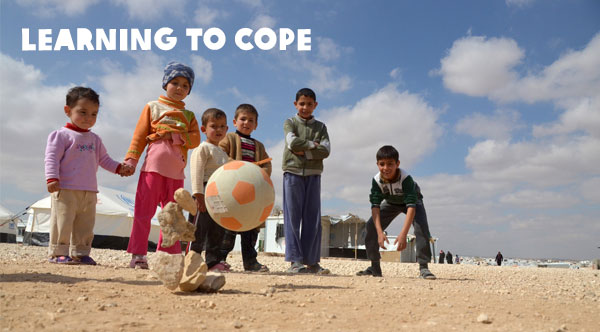
Learning To Cope

Appeal from Oxfam


It’s back to class in the UK, but in Syria and South Sudan children are missing out on school because of ongoing fighting, and in Gaza schools are now home to thousands of people. At any one time Oxfam is responding to some 25 emergencies worldwide, improving life for children and their parents.


Visit Oxfam to Donate, click here

Churches Open ways to Refugees Fleeing ISIS

ERBIL, Kurdistan — Where can you go when you’ve lost almost everything?

Throughout northern Iraq and Syria, the scourge of ISIS, the Islamic State, has forced thousands and thousands into a life without homes, jobs and family. While they face an uncertain future, churches are helping fill that void with help and hope.

Many of the churches in Erbil opened their doors, literally, to the many Christian refugees fleeing the advance of ISIS. They said they feel it’s part of the Church’s calling to provide refuge for families like these.

The Kurdsman Church transformed its building into a true sanctuary.

“The building is for the humanity,” Pastor Majeed Mohammed, who has opened the doors for both Christians and non-Christians, told CBN News.

“We wanted to show those people we don’t care if they are Christians, Yazidis, [or] Muslims. We don’t care about that,” Mohammed said. “They are human beings and they have been kicked out of their home[s] by ISIS. We wanted to show them that as Christians we love them and are very glad to have them here and save them.”

One man led a mini-exodus of several families to the Kurdsman Church.

“On behalf of all the people here, Pastor Majeed is really showing the love of Jesus,” he said.

Across town at Ankawa (Assemblies of God) Church, families who are now safe talked about the violent ultimatum they faced.

“We have been told by ISIS if we don’t convert to Islam either they will kill us or we will have to leave the city,” one refugee told CBN News.

For most, it wasn’t a choice at all.

“We prefer to die rather than convert to Islam,” he said. “God has created us as Christians so we don’t want to convert to Islam. The power of God keeps us and strengthens us to remain as Christians.”

Most will never return, like one policeman who escaped with his family and 10-day-old baby.

“I’m already wanted by the Islamic groups over there and secondly I’m a Christian,” he said. “As a minority, I’m also wanted by ISIS so we cannot go back there anymore.”

Most told CBN News they simply want to leave Iraq.

“This is the only way or the only solution for our problem because we cannot go back to our home and we cannot stay here,” he said. “We want to go out, even if they provided international protection. We don’t want to keep staying here.”

Their long-term fate remains one of the major questions in this humanitarian crisis.

Original Photo by CBN