Obama condemns the beheading of James Foley by ISIS

President Barack Obama has condemned the beheading of American journalist James Foley at the hands of terror group ISIS, describing its ideology as “bankrupt” and stating that “no just God” would stand for its violent acts…report by CP

He also pledged that despite the militants’ threats, the U.S. will not be backing down from military operations against them.

“Jim was taken from us in an act of violence that shocks the conscience of the entire world. He was 40 years old – one of five siblings, the son of a mom and dad who worked tirelessly for his release. Earlier today, I spoke to the Foleys and told them that we are all heartbroken at their loss, and join them in honoring Jim and all that he did,” Obama said in his statement on Wednesday.

“So ISIL speaks for no religion. Their victims are overwhelmingly Muslim, and no faith teaches people to massacre innocents. No just God would stand for what they did yesterday, and for what they do every single day. ISIL has no ideology of any value to human beings. Their ideology is bankrupt. They may claim out of expediency that they are at war with the United States or the West, but the fact is they terrorize their neighbors and offer them nothing but an endless slavery to their empty vision, and the collapse of any definition of civilized behavior.”

On Tuesday, ISIS released a video showing the apparent beheading of Foley. The Islamic militants also threatened a second American journalist, believed to be Steven Sotloff, and warned that his life depends on Obama ending military operations in Iraq.

The U.S. has aided the Kurdish and the central Iraqi governments with arms and airstrikes in their battle against ISIS, which has captured significant territory in Iraq and Syria. Despite the militants’ threats in the video, Obama said that the American government will not be backing down from its initiative.

“They have rampaged across cities and villages – killing innocent, unarmed civilians in cowardly acts of violence. They abduct women and children, and subject them to torture and rape and slavery. They have murdered Muslims – both Sunni and Shia – by the thousands. They target Christians and religious minorities, driving them from their homes, murdering them when they can for no other reason than they practice a different religion. They declared their ambition to commit genocide against an ancient people,” Obama stated.

“The United States of America will continue to do what we must do to protect our people. We will be vigilant and we will be relentless. When people harm Americans, anywhere, we do what’s necessary to see that justice is done. And we act against ISIL, standing alongside others.”

Foley had reportedly disappeared in northwest Syria in November 2012 after he was forced into a vehicle by gunmen. He had been working for U.S.-based online news outlet GlobalPost.

Foley’s family, who had been searching for their son, responded to the news in a Facebook message, grieving the loss of the journalist’s life.

“We have never been prouder of our son Jim. He gave his life trying to expose the world to the suffering of the Syrian people,” reads a message by Diane Foley, his mother.

“We implore the kidnappers to spare the lives of the remaining hostages. Like Jim, they are innocents. They have no control over American government policy in Iraq, Syria or anywhere in the world.”

Obama remembered the American citizen in his speech, describing him as “a journalist, a son, a brother, and a friend.”

“He reported from difficult and dangerous places, bearing witness to the lives of people a world away. He was taken hostage nearly two years ago in Syria, and he was courageously reporting at the time on the conflict there,” the president said.

“Jim Foley’s life stands in stark contrast to his killers.”

Original Post by Christian Post

“ISIS Is An Enemy of Islam”, Says Top Saudi Cleric

Saudi Arabia’s top religious official has recently denounced the Islamic State terrorist organization, better known as ISIS…by CP

Following the words of other Muslim leaders, Saudi Grand Mufti Sheikh Abdul Aziz al-Sheikh issued a statement Tuesday that was released by the Saudi Press Agency.

“Extremist and militant ideas and terrorism which spread decay on earth, destroying human civilization,” said al-Sheikh, “are not in any way part of Islam, but are enemy number one of Islam, and Muslims are their first victims.”

The Saudi Grand Mufti’s comments were the latest of several Muslim leaders both religious and secular, from Indonesia to Egypt, condemning the actions and views of ISIS.

Formed out of al-Qaida in Iraq last year and led by Abu Bakr al-Baghdadi, ISIS has garnered international attention for its military victories and horrid atrocities.

Occupying large swathes of territory in Syria and Iraq, ISIS has been known for its violent treatment of religious minorities, Muslims, and others.

Their atrocities have prompted Kurdish forces in Northern Iraq, with the aid of U.S. airstrikes, to fight the organization.

In a video posted online earlier this week, an ISIS terrorist was shown beheading American journalist James Foley.

“[We] are appalled by the brutal murder of an innocent American journalist and we express our deepest condolences to his family and friends. We will provide more information when it is available,” said National Security Council spokeswoman Caitlin Hayden, according to CNN.

Speaking from his vacation at Martha’s Vineyard in Massachusetts Wednesday, President Barack Obama said the “entire world is appalled” and the nation is “heartbroken” by the news of Foley’s murder,” USA Today reports.

While the Kingdom of Saudi Arabia is governed, in part, by a strict Islamic school of thought known as Wahhabism, Reuters reports that there are certain differences between Wahhabism and ISIS.

“Although senior Wahhabi clerics endorse execution by beheading for offenses that include apostasy, adultery and sorcery, oppose women driving or working and describe Shi’ites as heretics, they differ from al Qaeda and Islamic State militants in opposing violent revolt,” noted Reuters.

“Riyadh has been a main supporter of rebels battling Syrian President Bashar al-Assad, but has funneled arms and money away from Islamic State and al Qaeda toward other opposition groups.”

The Grand Mufti’s declaration came days after the Kingdom donated $100 million to the United Nations Counter-Terrorism Centre.

“Terrorism is an evil that must be eradicated from the world through international efforts,” stated Saudi Ambassador to the United States Adel al-Jubeir.

Original Post by Christian Post

Is it a Sin for a Christian to Drink Alcohol or Wine?

By S. Michael Houdmann of Got Religion

Question: “What does the Bible say about drinking alcohol / wine? Is it a sin for a Christian to drink alcohol / wine?”

Answer:Scripture has much to say regarding the drinking of alcohol (Leviticus 10:9; Numbers 6:3; Deuteronomy 29:6; Judges 13:4, 7, 14; Proverbs 20:1; 31:4; Isaiah 5:11, 22; 24:9; 28:7; 29:9; 56:12). However, Scripture does not necessarily forbid a Christian from drinking beer, wine, or any other drink containing alcohol. In fact, some Scriptures discuss alcohol in positive terms. Ecclesiastes 9:7 instructs, “Drink your wine with a merry heart.” Psalm 104:14-15 states that God gives wine “that makes glad the heart of men.” Amos 9:14 discusses drinking wine from your own vineyard as a sign of God’s blessing. Isaiah 55:1 encourages, “Yes, come buy wine and milk…”
What God commands Christians regarding alcohol is to avoid drunkenness (Ephesians 5:18). The Bible condemns drunkenness and its effects (Proverbs 23:29-35). Christians are also commanded to not allow their bodies to be “mastered” by anything (1 Corinthians 6:12; 2 Peter 2:19). Drinking alcohol in excess is undeniably addictive. Scripture also forbids a Christian from doing anything that might offend other Christians or encourage them to sin against their conscience (1 Corinthians 8:9-13). In light of these principles, it would be extremely difficult for any Christian to say he is drinking alcohol in excess to the glory of God (1 Corinthians 10:31).

Jesus changed water into wine. It even seems that Jesus drank wine on occasion (John 2:1-11; Matthew 26:29). In New Testament times, the water was not very clean. Without modern sanitation, the water was often filled with bacteria, viruses, and all kinds of contaminants. The same is true in many third-world countries today. As a result, people often drank wine (or grape juice) because it was far less likely to be contaminated. In 1 Timothy 5:23, Paul was instructing Timothy to stop drinking the water (which was probably causing his stomach problems) and instead drink wine. In that day, wine was fermented (containing alcohol), but not necessarily to the degree it is today. It is incorrect to say that it was grape juice, but it is also incorrect to say that it was the same thing as the wine commonly used today. Again, Scripture does not forbid Christians from drinking beer, wine, or any other drink containing alcohol. Alcohol is not, in and of itself, tainted by sin. It is drunkenness and addiction to alcohol that a Christian must absolutely refrain from (Ephesians 5:18; 1 Corinthians 6:12).

Alcohol, consumed in small quantities, is neither harmful nor addictive. In fact, some doctors advocate drinking small amounts of red wine for its health benefits, especially for the heart. Consumption of small quantities of alcohol is a matter of Christian freedom. Drunkenness and addiction are sin. However, due to the biblical concerns regarding alcohol and its effects, due to the easy temptation to consume alcohol in excess, and due to the possibility of causing offense and/or stumbling of others, it is often best for a Christian to abstain from drinking alcohol.

Recommended Resources: God Is for the Alcoholic by Bernard Palmer and Logos Bible Software.

S. Michael Houdmann is CEO of Got Questions Ministries.


Original Posting by Christian Post   | Picture by CP | Flickr/Uncalno – Creative Commons

New Hardware Gadget for your Android Phone

[youtube]http://youtu.be/vWWM6d_PFkM[/youtube]

MAKE YOUR PHONE DO ANYTHING INSTANTLY
AndroidPressy – The Almighty Android Button!Android

“…The Customisable Hardware Button Your Android Phone Has Been Waiting For” – TechCrunch

“What does this new button do? Just about anything you want.” – Yahoo News

“……two clicks could launch Maps, one long press could open a voice recorder. Handy.” – 2013 Stuff Gadget Awards

7 Reasons the AG’s Centennial Celebration Inspired My Heart – by Steve Strang

Steve Strang writes, “7 Reasons the AG’s Centennial Celebration Inspired My Heart”

General Superintendent George Wood said the goal of the Assemblies of God Centennial in Springfield, Missouri, last week was to be a celebration, a revival and to establish a strong vision for missions for the Fellowship for the next 100 years.

For me it was all this and more. The conference’s speakers, from around the world including a pastor from Iraq, inspired me. The worship and the altar calls touched me. The effective use of multimedia in the services and the attention to detail wowed me. I’ll even admit that I enjoyed one evening where they sang the songs I grew up with such as “All Hail The Power of Jesus Name” or Doris Akers’ “There’s a Sweet Sweet Spirit in this Place,” “I’ll Fly Away” and many others.

I’ve written a lot recently online and in print about the Assemblies of God. But after coming home, I wanted to give this short report of seven reasons the AG100 event touched my heart:

In a world where secularism seems to be gaining ground and the church seems to be on the retreat, it seemed that the Assemblies of God is growing (a new church begins every 39 minutes) and has vision for the future. There even seems to be new life in the headquarters where the staff seems to have more of an attitude of service and focus on the vision to be the greatest evangelism force the world has ever known.
I was particularly impressed by an initiative coming out of the youth department called The Human Right emphasizes the need not only to fight for “human rights” in the traditional humanitarian sense, but for the “ultimate human right”—everyone has to hear the gospel.
We had a booth and gave out copies of the special anniversary issue we did in August. If you missed that story, you can click here to read it. It is long—over 5000 words. But it gives a Time-magazine type of journalistic look at the Assemblies. Like any other writer, I was able to only evaluate what is going on from my personal perspective of being fourth generation AG and as an observer of the of the denomination as a journalist for more than half it’s existence.
The opportunity to connect with some key Assemblies leaders like Doug Clay, the General Treasurer, Sol Arledge, the headquarters’ COO, and Dr. Carol Taylor the new president of Evangel University.
The chance to meet old friends such as David Grant (missionary to India) and friends of my parents going back to the 1940s such as missionary Doris Johnson (who at age 83 is still a missionary to Brazil)

… read more


Steve Strang is the founder and publisher of Charisma. Follow him on Twitter at @sstrang or Facebook.

Original Post by Chrisma News

“We have been Cut like Sheep” laments Yazidis and Christians in Iraq

The UN BAJID KANDALA Refugee Camp in Northern Iraq looks like a scene out of the Bible – a modern-day exodus.

Tens of thousands of Yazidis made the 100-mile trek from Mt. Sinjar all the way to the United Nations refugee camp on the northern border.

For some, it was a two-, three- or even four-day journey. Most of them came with just the clothes on their back.

Out of the multitude, each one has a story.

When ISIS, the Islamic State, attacked Sinjar, home to most of the Yazidis, Guli Udayda — a name that means “God giveth” — said it felt like the end of the world.

“When they [ISIS terrorists] came, they caught some people and kidnapped beautiful girls and took them away,” Udayda told CBN News. “We escaped. The ones that stayed ISIS killed.”

When they reached Mt. Sinjar, her son went back for food. ISIS captured him, shot him, gouged out his eyes, and beheaded him. His friend buried him.

The long mountain trek had its own horrors. Fluce Khadr Anun used a cap from a medicine bottle to keep her children alive.

“I gave my children a drop of water every hour. The water was very far away,” Anun told CBN News.

The Yazidis who escaped from Mount Sinjar walked some 100 miles through the desert before reaching a desert road. They crossed the Tigris River and kept walking up the road on the other side till they reached the U.N. camp.

Khadr Anun arrived just one hour before CBN News talked with him.

“We are in a desperate situation,” he said. “We don’t have any hope. We don’t have any salvation. I’m tired and I just want to get some sleep.”

Twelve-year-old boys, like Tasim and Rezyen, saw things that are likely to haunt them for the rest of their lives.

Rezyen remembers the mountain.

“Many kids died on the mountain because there was no water,” Rezyen said. “We escaped from ISIS because they wanted us to convert to Islam or be killed.”

“I was there when ISIS came and shot one girl with a bullet in the head because they told her to convert. She refused and they killed her,” Tasim recalled.

When you go from a home to a refugee camp within days, how do you deal with 120-degree heat while all the time knowing winter is on its way?

“We are sleeping on the ground. The rain is coming and we don’t know what we are going to do. We have no future,” Tasim said.

“Here in the Middle East, the Christians and the Yazidis, they cut us like sheep. There is no mercy for us,” another refugee told CBN News.

The plight of the Yazidis reminded our translator, Ahmed, of when he became a refugee after fleeing from Sadaam Hussein in 1991.

“It’s not easy to explain,” Ahmed said. “You can see, as you see. It’s horrible man.”

In the tent city, life goes on. An elderly woman makes tea for her family. Young children play a game with bottle caps. The U.N. supplies water. It’s a refuge, but not a home.

The war-weary faces of the Yazidis reflect a horrific past, a precarious present, and an uncertain future. Sometimes it spills over and the tears flow. Many of these refugees don’t want to see Iraq anymore.

“We wait for the mercy of God and people like you to be protected from the evil men,” Guli said.

They’re also asking for the United States and the West to help.

“My request for all the believers in America and all over the world in all the church[es] [is] to pray for these people,” Guli said.

Original Post by CBN News

Pope Francis opinion on Iraq and ISIS:Stop the Unjust Aggressor

Pope Francis has spoken out against the persecution of Christians and other minorities in Iraq, and has addressed whether the use of force to stop their persecutors is justified.

“In these cases, where there is an unjust aggression, I can only say that it is licit to stop the unjust aggressor,” Pope Francis told journalists. “I underscore the verb ‘stop.’ I’m not saying ‘bomb’ or ‘make war,’ just ‘stop.’ And the means that can be used to stop them must be evaluated.”

Hundreds of thousands of Christians and religious minority members have had to flee their homes and communities in order to avoid being slaughtered by radical Muslims. The Islamic group known as ISIS has spent recent months murdering thousands across northern Iraq in an attempt to form a unified Islamic Caliphate. The militant group has already taken over a large area of Syria and hopes to “cleanse” the region of Christians and other minorities such as the Yazidis.

They have kidnapped men, women and children and given them the option to either convert to Islam or be put to death. Men and children have been beheaded, and many women have also been killed or abducted.

“One nation alone cannot judge how you stop this, how you stop an unjust aggressor,” Pope Francis said. “After World War II, the idea of the United Nations came about: It’s there that you must discuss ‘Is there an unjust aggression? It seems so. How should we stop it?’ Just this. Nothing more.”

Last year the pontiff fasted and encouraged world-wide prayer for those in Syria, and rebels were killed via the use of chemical weapons.

“My heart is deeply wounded by what is happening in Syria and anguished by the dramatic developments,” the Pope said in his papal appearance in St. Peter’s Square in 2013. “With utmost firmness, I condemn the use of chemical weapons. I tell you that those terrible images from recent days are burned into my mind and heart. There is the judgment of God, and also the judgment of history, upon our actions, from which there is no escaping.”

Original Post by Christian Post
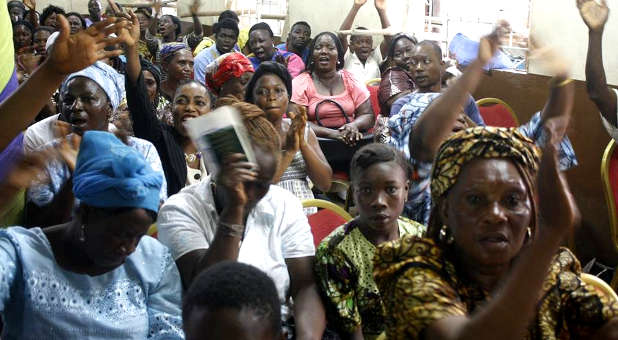
West Africans Fill Churches to Pray for Deliverance From ‘Devil’ Ebola

People in Sierra Leone and Liberia filled churches on Sunday to seek deliverance from an outbreak of the deadly Ebola virus, defying official warnings to avoid public gatherings to contain an epidemic that has killed nearly 1,000 people in West Africa.

With their creaking health-care systems completely overrun, Sierra Leone and Liberia both have declared states of emergency to tackle the highly contagious and incurable disease, which has also stricken neighboring Guinea and spread to Nigeria.

People still flocked to sing and pray at churches in Liberia’s ramshackle ocean-front capital Monrovia, many of them comparing Ebola to the brutal civil war that ravaged the country between 1989 and 2003, killing nearly a quarter-million people.

One of the deadliest diseases known to man, Ebola kills up to 90 percent of those infected. Discovered nearly 40 years ago deep in the forests of central Africa, its symptoms include internal and external bleeding, diarrhea and vomiting.

“Everyone is so afraid,” said Martee Jones Seator at Saint Peter’s Lutheran Church. “Ebola is not going to shake our faith in any way … because we’ve been through difficult times.”

With the disease now in four African countries—following the death in Nigeria last month of a U.S. citizen who arrived from Liberia—the World Health Organization (WHO) on Friday classified the epidemic as an international health emergency.

The WHO has said that the world’s worst outbreak of Ebola—with 1,779 cases and 962 deaths—will likely continue for months as the region’s healthcare systems struggle to cope. It has appealed urgently for funding and emergency medical staff.

A WHO medical ethics committee will discuss next week the use of experimental drugs to tackle the outbreak after two U.S. aid workers showed improvement after being treated with ZMapp, a drug developed by California-based Mapp Biopharmaceutical.

Spain on Sunday authorized the use of the ZMapp on 75-year-old Spanish priest Miguel Pajares—the first European infected—who was evacuated to Madrid last week after contracting the haemorrhagic fever while working in a hospital in Monrovia. A Congolese nun who worked with him died there on Saturday.

British drugmaker GlaxoSmithKline said on Sunday a clinical trial of a vaccine was due to start shortly. Three U.S. laboratories established to quickly make vaccines in the event of a public health threat also said they were standing by to support any U.S. effort to tackle Ebola.

With no other treatment available, churches in Monrovia furnished plastic buckets containing chlorinated water for worshippers to disinfect their hands. Inside, pastors told their congregations to follow instructions from health workers, some of whom have been attacked by locals terrified by the disease.

“We are in trouble here. We are in trouble,” the Rev. Marcus MacKay, dressed in a green gown, said before the altar. “But you know what? There is no way this devil is going to do its work!”

Started in Forests of Guinea

Though this outbreak was first identified in March in the remote forest region of southeastern Guinea, scientists have traced the first recorded case as far back as early December, to a 2-year-old boy near the town of Gueckedou.

Many believe the virus was carried by fruit bats from central Africa, where it is regarded as endemic. Yet it is not clear how it jumped into the human population in West Africa.

Quarantine measures imposed on infected communities have hit trade and food supplies in some of the world’s poorest countries.

In Sierra Leone, Bishop Abu Aiah Koroma of the evangelical Flaming Bible Church in Freetown said price hikes were destroying the nation’s economy, branding Ebola “a devil.”

Speaking amid chants of “Alleluia” and “Amen” from his packed church, Koroma called for penitence “to avert this plague from our country.”

Concern over the spread of Ebola grew after it spread to Nigeria—Africa’s most populous country—in late July. Seven cases of Ebola have now been confirmed there, including two deaths, and authorities have declared a national emergency.

… read more


Original Post from Chrisma News


Reporting by Daniel Flynn; Editing by Stephen Powell and Sandra Maler

© 2014 Thomson Reuters. All rights reserved.

Pope Francis Says He Has a Few Years Left to Live

Pope Francis spoke publicly about his death and old age for the first time earlier this week, noting that he tries to stay humble by remembering that he only has a few years left to live.

Francis was on a flight back from a five-day trip to South Korea when he made the remarks after being asked how he handles his popularity and suggested that he would consider retiring early if necessary.
Free Sign Up CP Newsletter!

Related
Three of Pope Francis’ Relatives Are Killed in Argentina Car Crash, Pontiff ‘Profoundly Saddened’
Pope Francis Warns Against Materialism, Urges Evangelism in First South Korea Public Mass
Evangelicals Praise Pope Francis’ Visit to Pentecostal Church, Apologize for Evangelical Discrimination Against Catholics
Pope Francis Pleads for Peace as Israel-Palestine Fighting Carries On

“I try to think of my sins, my mistakes, so as not to think that I am somebody. Because I know this will last a short time, two or three years, and then to the house of the Father,” said Francis to The Telegraph.

The 77-year-old pontiff also noted that he would consider leaving his post like his predecessor, Pope Benedict XVI, did last year as he was the first pope to retire in 600 years. Usually, the pope’s position at the Vatican is replaced whenever a pontiff dies.

“Let us think about what he said,” said Francis. “‘I have got old, I do not have the strength.’ It was a beautiful gesture of nobility, of humility and courage.”

He added, “I would do the same. I would pray, but I would do the same. He opened a door that is institutional, not exceptional.”
The pope also admitted that he needs to care for his health more than he usually does while adding that he currently has “some nerve problem” but has begun to take precautions…by CP

“I change rhythm. I sleep more, I read the things I like. I listen to music. That way I rest. In July and part of August I did that,” said Francis. ” … Our life gets longer and at a certain age there isn’t the capacity to govern well because the body gets tired, and maybe one’s health is good but there isn’t the capacity to carry forward all the problems of a government like that of the Church.”

The pope’s comments took place Tuesday, the same day the wife and two sons of his 38-year-old nephew, Emanuel Bergoglio from Buenos Aires, Argentina, were killed in a car accident.

The family was reportedly returning to Buenos Aires following a holiday weekend when the crash happened. Bergoglio is currently hospitalized after sustaining life-threatening injuries.

The Vatican released a statement following the news of their death stating, “The Pope has been informed of the tragic accident in Argentina involving family members, and he is deeply saddened. He asks all those who share his grief to unite with him in prayer.”

Original Post by Christian Post
‘Pastor Choco’ Calls for Pentecostals to Stand in the Gap

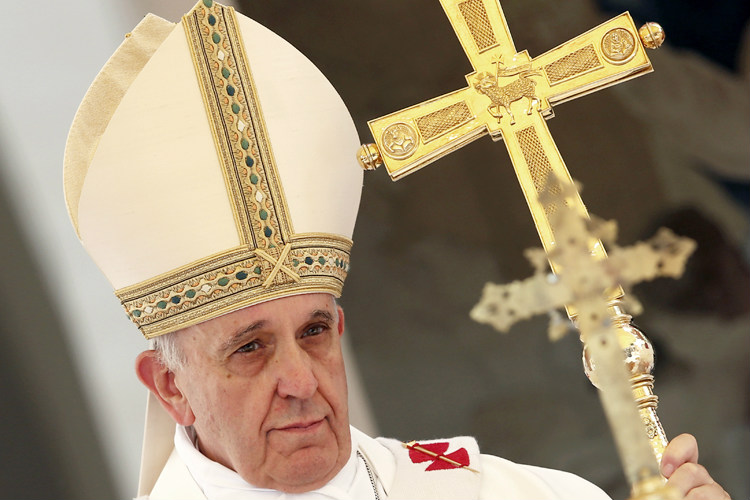
Pastor Wilfredo De Jesús, named to Time magazine’s 2013 list of the 100 most influential people in the world, carries a burden for the poor and disenfranchised. Now he has written a book that explains the biblical case for social activism, In the Gap: What Happens When God’s People Stand Strong.

Widely known as “Pastor Choco,” De Jesús is the senior pastor of New Life Covenant Church in Chicago, the largest church in the U.S. Assemblies of God Fellowship with 17,000 attendees. The church has more than 130 ministries that reach the broken-hearted, poor and homeless, including prostitutes, drug addicts and gang members.

In the Gap, which is available in English and Spanish, draws its title from Ezekiel 22:30, where God laments the lack of someone to stand “in the gap” for His people. De Jesús writes that “a gap represents a place of weakness, vulnerability and danger” and could be a social problem such as illiteracy, racism or human trafficking, or something more personal, such as a prodigal child, an unfaithful spouse or an abusive family member.

After years of standing in the gap, De Jesús has come to understand what makes a “gap person”—the champion who protects or supports someone in need, a man or woman who finds the courage to sacrifice everything to represent God and block evil from destroying those He loves.

… read more

Original Post by Chrisma News