David Platt Wishes He Preached Sooner on Abortion –

David Platt Wishes He Preached Sooner on Abortion


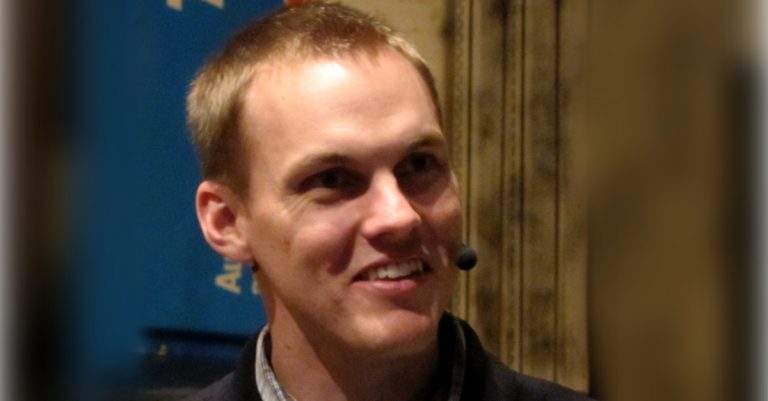
David Platt, author and megachurch pastor, confessed his need to “repent” for not preaching on abortion earlier in his ministry.

In an interview with The Christian Post, the 41-year-old pastor of McLean Bible Church in Vienna, Virginia, shared how his approach to the controversial topic changed throughout the years.

“There was a point as a pastor when I just kind of stayed away from abortion [because I’d think] that’s a political issue,” he said. “But I got really convicted. Far before it is any kind of political issue, it is a biblical issue that God speaks really clear about the value of life.”

He’s taken that conviction seriously and has attended the March for Life for several years. This year, he delivered the closing prayer for the rally in the National Mall, asking for repentance for all people, despite their sin.

“Everyone marching today is a sinner,” he said. “We have all turned aside from Your ways to our ways—in our lives and as a country. How we have settled for racial injustice, ignored the immigrant, marginalized the poor and neglected the needy. How we have confused sexuality, abused authority, objectified beauty and how we have taken the lives of children,” he said.

Platt and his family are actively involved in the pro-life cause and are currently in the process of adopting their fifth child. This will be the third child they have adopted.

“We did a lot then in…

… Read More

Click here to read the rest of the story from our content source/partners – Christian Headlines.

قالب وردپرس

Christian Views on President Trump’s Peace Plan for Israel and Palestine

After three years of anticipation—and dread—President Trump announced the launch of his “Deal of the Century” to achieve peace between Israel and Palestine.

With Israeli Prime Minister Benjamin Netanyahu at his side, he outlined details for a proposal that would recognize a Palestinian state following extensive land swaps and security arrangements.

Palestinian Authority President Mahmoud Abbas was not present, having broken off communication with the White House following several US decisions deemed biased toward Israel.

Abbas immediately rejected the plan, which Palestinians had long declared “dead on arrival.”

But Netanyahu’s acceptance was enthusiastic, declaring himself willing to begin negotiations with the Palestinians on such terms. A day earlier, Netanyahu’s challenger Benny Gantz also signaled his party’s agreement with Trump’s proposal.

With three Arab states lacking a peace treaty with Israel in attendance—Oman, Bahrain, and the United Arab Emirates (UAE)—Trump hopes there will be a regional push to implement his plan.

And with $50 billion promised as investment for the nascent Palestinian state, the president believes all the necessary pieces are in place.

“All previous generations from Lyndon Johnson tried and bitterly failed,” Trump said. “But I was not elected to do small things, or shy away from big problems.”

It only required he approach peace in a “fundamentally different” manner.

No Arab or Israeli would be uprooted from their home. This guarantees the preservation of all existing Israeli settlements in occupied Palestinian territory.

Jerusalem would remain the undivided capital of Israel. At the same time, on the other side of the separation wall, eastern Jerusalem would become the capital of the Palestinian state, receiving a US embassy.

Palestinian residents in Jerusalem on the other side of the wall would be given the option to become Palestinian citizens, Israeli citizens, or remain as permanent residents.

Israel would exercise security over Jerusalem’s holy sites, while Jordan would maintain its status quo authority over the Temple Mount and al-Aqsa Mosque. Muslim pilgrims would be guaranteed access.

Palestinian refugees would be barred from Israel but processed in limited numbers into the new state of Palestine. Pending approval, the rest would be given the option of naturalizing into their nations of residence or relocating elsewhere. Funds would be set up to facilitate.

Israel would receive land in the Jordan Valley to address security concerns. Palestine would receive land in the Negev Desert for industrial development. All international access would be controlled by Israel, with corridors created for ease of domestic transportation to non-contiguous territory.

For the first time, a conceptual map of Israel’s borders was released.

Israel would guarantee a four-year freeze on all settlements outside the scope of this plan, while Palestinian leadership studies the proposal and moves to implement it.

To do so, it must demilitarize Gaza and stop payments to the families of terrorists. Domestic laws must reflect human rights and freedom of religion.

“It is time for the Muslim world to correct the mistake it made in 1948, when it attacked rather than recognized Israel,” Trump said. “If you choose the path to peace, we will be there to help every step of the way.”

Netanyahu also referenced 1948, the year of Israel’s independence, in comparing Trump to then-US President Harry Truman. History would look back on this day similarly, he said, as Trump extended Israel’s sovereignty over “Judea and Samaria,” his favored term for the West Bank.

“You have been the greatest friend Israel has ever had in the White House,” he said. “There have been others, but it’s not even close.”

Joel Rosenberg, co-founder of the Alliance for the Peace of Jerusalem, was impressed.

“It was an excellent rollout ceremony,” he said, “dramatic, surprising—and controversial.”

Withholding full judgment until he reads the full 181-page plan, the bestselling author of End Times-inspired political fiction said that Trump’s plan gave Israel almost everything they wanted, but was also “generous” to the Palestinians.

On that count, it may complicate domestic politics for Trump and Netanyahu alike. Though some Christian Zionists oppose a two-state solution, Rosenberg believes many evangelicals will be “enthusiastic.”

But Israel’s settler community “wants everything,” Rosenberg said.

More than 600,000 Israeli Jews live in settlements scattered across the West Bank and east Jerusalem. Their main political body has rejected the deal, as have a few Netanyahu allies who have called for immediate annexation.

“They are very angry, and Bibi could have a problem on his right,” he said. “He might now surprisingly have to make a deal in the center, with Gantz.”

Trump’s plan, previously delayed due to repeated Israeli elections that failed to secure a ruling majority coalition, now heads to its third re-run on March 2.

But Rosenberg believes the Deal of the Century had two primary goals, anticipating Palestinian rejection. One, to be a creative, credible, compassionate approach to peace—just in case.

And two, to appeal to Arab regional leaders who wish to make peace with Israel but are tied by the Palestinian issue. If Abbas rejects a good plan, they may proceed without him.

“Seeing three Arab Gulf leaders at the ceremony,” Rosenberg said, “he just might have succeeded in threading the needle.”

Perhaps Palestinians will see the promise of a state and economic development and reject their rejectionist leadership, he wonders. Their situation is sad, and perhaps divinely so.

“Palestinian leaders will huff and puff, but they look ridiculous and their people are suffering,” Rosenberg, an evangelical of Jewish descent, said.

“But as I read in the book of Exodus, I can’t help but wonder if God has just hardened Abbas’s heart.”

Not at all, according to Salim Munayer, head of the Jerusalem-based Musalaha reconciliation ministry. This past year, he has held many sessions discussing peace between Muslims, Christians, and Jews.

“From our discussions, the issues are clear: Israelis want security, and Palestinians want justice,” Munayer said. “No Palestinian leader can accept this deal, because it doesn’t meet our basic needs.”

East Jerusalem should be their capital, he said, but left unsettled is the question of Jewish settlers moving into Arab neighborhoods. Refugees deserve the right of return, but are left out of this proposal. And the Jordan Valley is essential for Palestinian population expansion, agricultural development, and vital water supply.

Israel already controls security along the border, it does not need to appropriate the land, Munayer said.

But beyond the details, the “Deal of the Century” lacks the moral framework to win Palestinian support. In successive steps over the past years to move the embassy to Jerusalem, cut humanitarian funding, and no longer consider settlements as occupied territory, the US has lost all trust as a moderator, he said.

“If one side humiliates the other, there can be no agreement,” Munayer said. “Israel is eating the pizza, while saying to the Palestinians, ‘Let’s negotiate slices.’”

This fits also into Israel’s domestic context, he said. The plan was released on the same day Netanyahu was indicted on corruption charges.

Real peace must come through grassroots reconciliation, and not be imposed from the top, Munayer said. But worse, Trump’s plan comes wholly from the outside.

Overall, he had little emotional response to the proposal—that came months earlier, when the US cut funding to Palestinian hospitals.

“I didn’t have a lot of expectations, it was no surprise,” Munayer said. “It used to be one-sided before, but never this extreme.”

Daoud Kuttab, a Palestinian journalist and secretary of the Jordan Evangelical Council in Amman, read the plan in full and said its contents and its rollout “sounded more like a surrender dictate than a peace plan.”

“The fact that of 13 million Palestinians, the Americans couldn’t find a single one to attend [the rollout] spoke volumes in its one-sidedness,” he told CT.

Kuttab most approves of the plan’s Gaza-West Bank tunnel, which would end Israel’s separation of the two territories. He most opposes its lack of autonomous borders. “Despite using the words Palestinian state, the plan gives Palestine no real independence and allows Israel control over borders, over the air and sea, and [Israeli security forces] can enter Palestine at any time they choose.”

“It is a surrender document that will lay the grounds for Palestinians to continue to live under Israeli discrimination,” he said. “It is a death to the two-state solution, and will do nothing to help the peace process. This is a formula for further violence and unrest.”

Hanna Massad, a Palestinian pastor who led Gaza Baptist Church for 12 years and returns regularly, said the plan is “unfair” and fails to meet either Palestinian “ambitions” or UN resolutions. It contains “no justice,” which for him means Jerusalem for a capital and a return to 1967 borders.

Massad still has the documents showing the land his family lost in Israel. “We keep it safe, so that at least one day we might receive compensation.”

“It breaks your heart to see the poverty and suffering of the people in Gaza,” he told CT. “As Palestinians, we have also done bad things against the Israelis. But because we are the weaker party, we suffer more.”

“My father told me he wished to see peace in his lifetime,” Massad said. “Now, I wonder if my children will see it.”

“We hope for fairness and justice for all sides,” he said. “But we hope only in the Lord.”

Gerald McDermott, Anglican Chair of Divinity at Beeson Divinity School who recently wroteThe New Christian Zionism: Fresh Perspectives on Israel and the Land, said the plan is “a realistic opportunity for a two-state solution,” given its offer of “huge economic help and a Jerusalem capital.”

He is not surprised by Abbas’s rejection, but instead is struck by regional reaction. “For the first time, there is considerable Arab support for an American-initiated deal,” he said, naming the UAE, Oman, Bahrain, and Egypt. “All of these states are tired of Palestinian rejectionism.”

“Like any political compromise, it will cause pain on all sides,” McDermott told CT. “Netanyahu, for example, is suffering major criticism from the Israeli right.”

However, he said, “There is no theological reason why Israel cannot compromise with Arabs. Both Abraham and Isaac did.”

Yohanna Katanacho, a Palestinian pastor and academic dean at Nazareth Evangelical College, said it doesn’t take a “prophet” to know Trump’s plan is “destined to failure.”

“Trump is trying to address a difficult problem but he is not addressing it from the perspective of humility,” he wrote for Come and See, a Nazareth-based Christian website. “Such humility does not ignore UN resolutions, Palestinian input, Palestinian citizens of Israel, and justice.”

Source: Christianity Today

All Content & Images are provided by the acknowledged source

Florida Church Faces Backlash for Hosting Disgraced Southern Baptist Leader Paige Patterson

Amid a heated back-and-forth over Paige Patterson’s invitation to speak at a Florida church, the former Southern Baptist Convention leader’s supporters and opponents seem to agree on at least one thing: The #MeToo movement is changing the way some Baptists evaluate who is eligible for public ministry.

After Patterson was announced last month as a speaker at Fellowship Church’s Great Commission Weekend, fellow Southern Baptists and survivor advocates urged leaders to take him off the lineup in light of his 2018 termination from Southwestern Baptist Theological Seminary and allegations he mishandled students’ sexual abuse reports at multiple SBC seminaries. Last week, SBC president J. D. Greear waded into the discussion, urging churches to consider Patterson’s past before inviting him to speak.

Yet, Paige Patterson and his wife, Dorothy, remain top-billed for next weekend’s event. Timothy Pigg, pastor of Fellowship Church, told CT the church has received dozens of emails and phone calls about Patterson. The congregation’s social media traffic has increased approximately tenfold since announcing Patterson as a conference speaker, and its local newspaper, the Naples Daily News, reported on criticism of the church.

Two leaders with the Florida Baptist Convention were scheduled to speak at the conference but have withdrawn. Approximately 150–200 people are expected to attend. Sexual abuse victims’ advocate Susan Codone tweeted a request that people contact the church and ask it to withdraw Patterson’s invitation because “the #SBC and the many harmed by the Pattersons deserve better.”

Among Southern Baptists, adultery and divorce used to be the only sins thought to disqualify a person from public ministry, said Barry Hankins, a Baylor University historian who has written extensively on the SBC. But now, mishandling abuse may be joining the list.

“Things have changed so quickly across American culture with the #MeToo movement, whether you’re talking about Hollywood on one end or the Southern Baptist Convention on the other,” Hankins told Christianity Today. He said that Americans moved from thinking, “Let’s not make a big deal out of” sexual abuse, to thinking, “It’s a big deal, and anyone who doesn’t make a big deal out of it needs to be singled out.”

On Friday, president Greear cautioned churches to think twice before hosting Patterson, when asked by the Houston Chronicle about this weekend’s conference.

“Trustees terminated Paige Patterson for cause, publicly disclosing that his conduct was ‘antithetical to the core values of our faith.’ I advise any Southern Baptist church to consider this severe action before having Dr. Patterson preach or speak and to contact trustee officers if additional information is necessary,” said Greear, who himself studied under Patterson as his doctoral advisor and long saw him as a model and mentor in ministry.

Now, many Patterson supporters seem to agree with his concern, but some critics claim Greear’s statement violates the biblical principle of local church autonomy by attempting to govern a congregation from the outside—pushback that has followed every effort by the denomination to strengthen its response to abuse. The critics also say Patterson is not guilty of mishandling abuse.

Patterson told CT, “President Greear has every right to hold any opinion of my life and ministry that he wishes. While I read his persuasion with great sorrow, he has a right to publish his views as far as he wishes. If he is accurate, I deserve it. If false, I leave the matter in the hands of God confident that God will excel in mercy and justice at all times.”

Patterson was removed from his presidential role at Southwestern in 2018 and terminated a week later. Trustees cited information regarding Patterson’s “handling of an allegation of sexual abuse” at “another institution” (presumably Southeastern Baptist Theological Seminary, where he was president from 1992–2003). Patterson also is being sued for allegedly mishandling a student’s claim of being sexually assaulted at Southwestern. Patterson has denied any wrongdoing at either seminary.

Over the past year, he has continued to preach at multiple Southern Baptist churches, including Victory Baptist Church in Rowlett, Texas, where he was recently given a “Defender of the Faith Award.”

Source: Christianity Today

All Content & Images are provided by the acknowledged source

Harry Plantinga on the Future of Congregational Singing

Harry Plantinga is professor of computer science at Calvin University, where he also serves as director of Hymnary.org (where a version of this article first appeared) and the Christian Classics Ethereal Library. Hymnary.org is supported by the Lilly Endowment, Inc. The views expressed in this commentary do not necessarily represent those of BCNN1.

What is the future of congregational singing, especially in North America over the next 10 years? How is it changing? How can and should technology play a role? These questions are of first importance to me as director of Hymnary.org. In some circles, retuned hymns are growing. In others, singing the psalms is making a comeback. Some churches offer a high-tech multimedia presentation while a few are eliminating technology entirely. At times, the congregation is being largely removed from singing, with worship teams presenting a concert-like experience.

In singing together, a congregation “prays in unison” (Augustine). We express our belief and our hope to each other in an attractive, affective form. We build the communion of the saints. Singing together is a fundamental part of corporate worship, so changes are vitally important and potentially problematic. But not every aspect of the way we sing is essential. We should hold onto the essence: singing as corporate prayer.

One thing seems apparent: The future of congregational song 10 years from now is unlikely to be a boom in newly published hymnals. Hymnary.org indexes nearly 6,000 hymnals that have been published in the United States and Canada. It’s not a complete index, but it’s a decent proxy for the actual number of hymnals published. And the number of hymnals indexed is 17 in the 1780s, growing to a peak of nearly 600 in the 1910s. From there it has been declining steadily, and in the 2010s it may be the lowest since the late 1700s.

Of course, other kinds of print publishing are contracting, and new media such as the internet could be a factor—but they can’t account for a decline starting in the 1920s. It may be that the cost of publishing a new hymnal has risen high enough that the number of different hymnals is declining while the total number of copies printed is not. It also appears that there is less communal singing outside of places of worship. Yet the trend of the last couple of decades toward projection also seems to be having a significant impact.

Congregational singing is as ancient as the psalms, and no doubt it will continue into the future. But even as fads and fashions of congregational singing lead to change and evolution, so does the technology we use. And just as we saw a shift from printed hymnals to projection, from an approved collection of songs to a top-100 chart on the web, from congregational singing to performance by leaders, we may be about to see the arrival of another new technology for congregational song that supplements print and projection.

We expected Hymnary.org to be useful for research and planning. But to our surprise, we found that the weekly peak of usage of our site is at the 10 a.m. hour on Sunday mornings. We have heard of three primary reasons for people to use Hymnary.org in worship services: to look up a hymn number, to view songs with larger print, and to see music notation when only the words are projected (or to see four-part notation when only the melody is projected). The latter two reflect special individual needs or preferences.

Mobile devices excel at providing access to information, including text and musical notation, in a way that accommodates user needs and preferences—hiding or showing different parts of music notation, adjusting print size, showing only the verses being sung, adding Spanish to the English, and more. A mobile app could automatically load a liturgy or order of worship with customized songs when a congregant enters the church—using large print, showing just the bass line of the music, or showing a lead sheet or trumpet score for musicians. Different people could see different forms of the music as needed, all synchronized.

A current drawback of mobile devices for this purpose is that screens are usually smaller than printed hymnals. Congregations could use printed hymns or project songs as well, leaving the choice to use a mobile device with congregants. And technology evolves to improve usability. Smartphones with folding touchscreens are just now coming on the market. Or churches could lend tablets with bigger screens to visitors and those who need large print. This may sound expensive, but inexpensive tablets can be purchased for $35, at which price they are already cheaper than some printed hymnals.

At one time I believed cellphones and other mobile devices were too distracting to use in worship services. When my cellphone is visible, I feel an urge to check my email, social media, or my calendar. However, I now believe that as we become more used to the constant availability of mobile devices, we will learn to adapt and use them appropriately. Someday the technology of mobile devices may be no more distracting than the technology of print is today. Either way, people are already using these devices in worship. Perhaps we can take advantage of the strengths of mobile technology and minimize the drawbacks.

All Content & Images are provided by the acknowledged source
Ed Stetzer on Living a Life of Mission

Ed Stetzer is executive director of the Billy Graham Center, serves as a dean at Wheaton College, and publishes church leadership resources through Mission Group. The Exchange team helped with this article. The views expressed in this commentary do not necessarily represent those of BCNN1.

Interestingly enough, when I sat down to write this column, I had just received the Lausanne Movement’s latest info graphic—this time on Integral Mission, which lays out the biblical mandate of holistic mission, showing (by deed) and sharing (by word).

This is not new. God’s people have always been called to hold these in tension and it has only been in recent generations that we have created a false dichotomy. (See Acts 2 and onward for the biblical model of the people of God.)

I have written before that I call myself an “integral prioritist,” meaning that I believe in integral mission but I understand that today we tend to lose the “word” part of the equation if we aren’t careful.

We have an entire institute at the Billy Graham Center focused on helping pastors see their churches grow through conversion. Yes, this involves deed. But it can never be done without word, and when we measure our personal evangelism temperature (Are we white hot on fire for sharing Jesus with others? Or are we lukewarm and find we are poor models of evangelism?), where do we each fall on the spectrum?

A vision for mission everywhere, at all times, in all ways is one that understands that there is no moment in our day when we aren’t on mission. There’s isn’t a place we aren’t called to be witnesses. There aren’t a limited number of ways to show and share the love of Jesus.

God is on a mission to redeem people and eventually to redeem all of creation that has been tainted by sin and make it into something new. God’s mission is to see a world renewed and changed for our good and his glory.

But we live in a world which pulls us off that mission. We have a thousand reasons for not faithfully taking part in God’s mission—we are busy, we are tired, we haven’t been trained, we don’t feel equipped. On and on the list goes. But what if we were to begin to see all of life as mission?

Indeed, the creativity of the Body of Christ is limitless when it comes to reaching our world with the love of Christ. I need only look at my little community of Wheaton, IL, to see the incredible variety of callings being implemented:

Source: Christianity Today

All Content & Images are provided by the acknowledged source

Can a Bestselling Christian Marriage Book about Love and Respect Lead to Abuse?

Can a Bestselling Christian Marriage Book about Love and Respect Lead to Abuse?


(RNS) — There’s not much love lost between Christian marriage and sex blogger Sheila Wray Gregoire and pastor turned marriage expert Emerson Eggerichs.

Or much respect.

The two — both of whom have been featured on Focus on the Family broadcasts — have been feuding for a year over Eggerichs’ bestselling book, “Love & Respect.”

Gregoire says she’s heard from hundreds of women who say one of the book’s main themes — that giving a husband “unconditional respect” can lead to a happy marriage — contributed to abuse in their marriages. She wants Focus on the Family, which originally published the book in partnership with Integrity Publishing, to drop its endorsement.

Eggerichs rejects any claim that “Love & Respect,” which has sold more than 2 million copies since 2004, has contributed to abuse. He believes the book and the ministry that shares its name have helped thousands of couples.  

Like any book, he said, “Love & Respect” could be misused by people with bad intentions.

The dispute over the book has raised enough controversy that Focus on the Family weighed in. Focus issued a statement last week saying Gregoire had “orchestrated a campaign” to discredit Eggerich’s book. According to the statement, Focus continues to endorse Eggerich.

“The fact of the matter is that we believe Mrs. Gregoire has seriously misread and misjudged various aspects…

… Read More

Click here to read the rest of the story from our content source/partners – Christian Headlines.

قالب وردپرس

Boxing Icon Manny Pacquiao Life Is Too Short. Read the Bible the Manual to Life

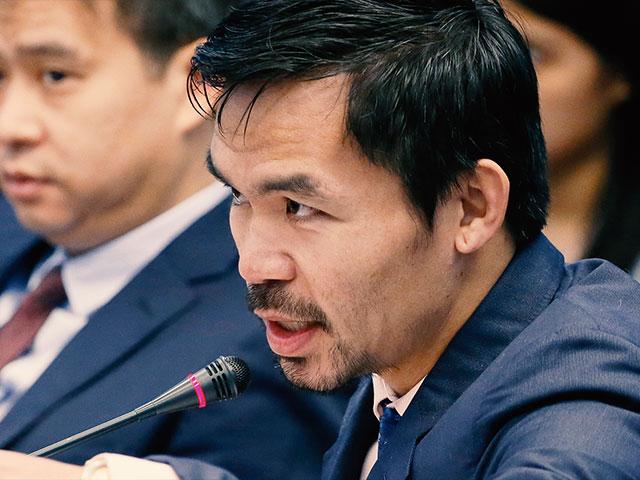
Filipino Senator Manny Pacquiao successfully defended his WBA title twice last year, defeating Adrien Broner and Keith Thurman and proving his prowess in the boxing ring even at the age of 41. But to Pacquiao, there is a greater passion than being an iconic boxing champ, and that is spreading the Word of God.

Pacquiao attributes his success in the ring to God and hard work, and he’s always been vocal about his Christian faith.

As a member of the Philippine Senate, Manny Pacquiao authored the law declaring the last Monday of January as the National Bible Day in the Philippines. People from all pillars of society – the government, entertainment, business, and the church – unite on this day to celebrate the Holy Bible as the cradle of the Christian faith. And 100,000 Bibles were printed for this event to be given away to the different sectors of society.

At the National Bible Day event this week, Pacquiao shared his testimony and reminded everyone of the power of the Word of God. He also challenged them to share the Bible as often as they can, especially at this time of so many calamities in the Philippines and around the world.

World-renowned apologist Dr. Ravi Zacharias says the time is right to preach the gospel.

“Natural calamities are causing us to realize how fragile we are. God brings a person to a time when they need to realize that I can’t do that, God does that,” Dr. Zacharias said.

Bishop Efraim Tendero, Secretary General of the World Evangelical Alliance, says they have also marked 2020 as the Year of the Bible, urging 600 million Christians worldwide to spread the Word of God.

He said, “We want to have that recognition of the role of the Bible in the community life, family life, and national life.”

Pacquiao addressed the audience saying, “The Bible is the only book we need to discover the foundational truth of how to know and walk with God.”

Pacquiao was saddened with the sudden death of friend, Kobe Bryant. He hopes reports that Bryant received Christ are true. “Life is too short in this world. So make sure you have a personal relationship to God. You have a strong relationship and you obey God,” he said.

Again, he emphasized the importance of reading God’s Word, “Read the Bible because it will lead you to all truth. The Bible is the manual to life.”


Source CBN

All Content & Images are provided by the acknowledged source
Catholic School Teacher Fired for Getting Pregnant Out of Wedlock Can Proceed with Discrimination Case

Catholic School Teacher Fired for Getting Pregnant Out of Wedlock Can Proceed with Discrimination Case


After being fired for becoming pregnant out of wedlock, a former Catholic school English teacher has been denied reinstatement of employment but has been granted permission to proceed with her discrimination lawsuit against the school.

On Tuesday, Northumberland County Judge Hugh A. Jones found that the one-year contract the former teacher, Naiad Reich, signed on June 14, 2018, did not guarantee future employment.

Jones did, however, note that Reich provided sufficient enough evidence suggesting that she was terminated because of her pregnancy to proceed with a discrimination case. 

“We are pleased that Judge Jones has ruled that we may proceed on our claims for declaratory judgment and unlawful discrimination under Title VII of the Civil Rights Act,” said Reich’s attorney Timothy A. Bowers in a statement. “We look forward to taking those claims to trial.”

Reich’s suit is seeking unspecified damages and is accusing the diocese of “discrimination by firing a female, qualified teacher employed in a non-ministerial capacity,” Penn Live Patriot-News reports.

According to Fox News, Reich – who is not Catholic – was fired from Our Lady of Lourdes Regional High School in Coal Township, Pennsylvania in December of 2018 after she informed the diocese that she and her boyfriend were expecting but not planning on getting married in the near…

… Read More

Click here to read the rest of the story from our content source/partners – Christian Headlines.

قالب وردپرس

More Christians Killed and Kidnapped by Muslim Militants in Plateau State, Nigeria

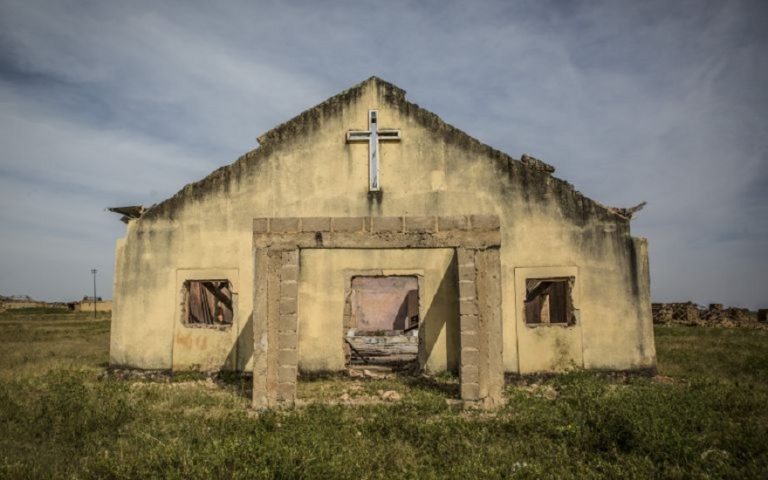
JOSNigeria, January 27, 2020 (Morning Star News) – Muslim Fulani herdsmen killed two Christians in separate attacks in Plateau state this month, in addition to the 13 Christians from the same denomination killed on Jan. 8, sources said.

Herdsmen invaded Torok village in Riyom County on Jan. 20, killing Reuben Bulus, a 25-year-old member of the Church of Christ in Nations (COCIN), according to Dalyop Solomon Mwantiri, a human rights activist with the Emancipation Centre for Crisis Victims in Nigeria.

“Bulus was killed at about 7:10 p.m. on Jan. 20 when herdsmen invaded his village,” Mwantiri told Morning Star News.

In Gako village, near Rim in Riyom County, another COCIN member, Ngam Stephen Dachung, was killed by herdsmen on Jan. 1, Mwantiri said.

“He was shot dead at a point at Gako-Diyan junction where many lives were previously lost to herdsmen ambushes in the area,” he said.

On Jan. 8, 13 COCIN were members slain in Plateau state’s Kulben village, Mangu County, in an attack by about 20 herdsmen that also wounded three others.

In addition, Mwantiri said, herdsmen killed a Christian woman, Mary Machief, and her baby daughter in Plateau state’s Bokkos County on Dec. 16. The herdsmen attacked them in Machief’s father’s home in Kunnet village that night, relatives told Morning Star News.

“It’s still a shock to me, I wish it were a dream,” said one relative.

Another relative said Machief was not killed instantly but died later from wounds.

“We all prayed for God to give her quick healing, but God deemed it fit to take her to eternal home,” he said.

On Dec. 22 in Tanjol near Jol in Riyom County, another COCIN member, Ayuba Lanjo, was wounded in an attack by herdsmen, said Mwantiri, who is also an attorney.

“Ayuba Lanjo was ambushed by some herdsmen; he was shot at and injured,” Mwantiri said.

Near Bukuru in Jos South County, herdsmen on Jan. 21 kidnapped Christie Peter Mwankon in Kwata village.

The 26-year-old COCIN member, daughter of a former Plateau state tourism official, was abducted after the herdsmen shot their way into the village and broke into her sister’s house, sources said.

“Christie Peter was kidnapped at about 2 a.m. in her sister’s house when the herdsmen broke into the house and kidnapped the graduate of Ahmadu Bello University-Zaria,” said area resident Solomon Kogi. “The herdsmen are demanding a ransom of 5 million naira [$US13,735] from her family.”

Source: Christian Headlines

All Content & Images are provided by the acknowledged source
What Christians Can Learn From Kobe Bryant About Fatherhood, Passion, and Mortality

Article by John C. Richards, Jr. John C. Richards, Jr. is a thought-leader, gifted teacher, and gifted writer/speaker. He currently serves as the Pastor of Assimilation at Saint Mark Baptist Church in Little Rock, Arkansas. He is currently pursuing a Ph.D. in Christian Leadership from Southeastern Baptist Theological Seminary and previously served as Managing Director of the Billy Graham Center at Wheaton College. The views expressed in this commentary do not necessarily represent those of BCNN1.

Some moments embed themselves in your memory. Most people can remember where they were during 9/11—the dreadful day thousands of American lives were lost in several terrorist attacks.

Yesterday was one of those moments for me.

Besides my family, my life tends to orbit around three Bs: the Bible, books, and basketball. I love NBA basketball—at times, much to my wife’s chagrin. As our ministry team closed our worship services yesterday, one of our members delivered me the news: “Kobe Bryant died in a helicopter accident.”

My stomach dropped. I had more questions than answers.

As the tragic story unfolded, I learned that Bryant’s 13-year-old daughter, Gianna, and seven other people also lost their lives in the accident. I felt numb all day. I didn’t know what to feel.

When the numbness subsided, one thought plagued my mind. What is it about the tragic, untimely death of iconic men and women that causes a collective lament from people from various religious, ethnic, and social backgrounds?

Three things about Kobe’s life and legacy ring true. And I think they are informative—especially for believers.

The Changing Narrative on Black Fatherhood

As a father, my heart hurt that Bryant could no longer continue to nourish and develop his growing relationship with his daughter.

While I did not care for Kobe Bryant as a player, I admired him in his retirement as a father. His active involvement in his daughters’ lives and his presence after missing special moments because of a rigorous NBA schedule was refreshing.

Our country is rife with mischaracterizations about black fatherhood. Kobe had joined the litany of NBA Black father ambassadors to help shape and change the false narrative of fatherlessness in Black and Brown communities.

We lost the opportunity for Bryant’s story as a father to play out. But we are also reminded of ordinary, everyday, working Black fathers who put the same effort and love into their children’s lives.

It is no secret that we live in racialized times. Don’t get trapped in talking point tales that undermine image-bearing men and women. As believers, let us make sure we continue to believe the best about others and not perpetuate stereotypical views that alienate brothers and sisters in the faith.

The Importance of Passion and Drive

As a Christian, I prayed earnestly that those involved had heard and believed the gospel and that my passion for gospel proclamation would never wane.

Bryant was one of the hardest working players in his sport. And it paid off for him. His passion for the game of basketball led him to study it more than any other player in modern history. He didn’t want others to remember him as a disinterested member of the NBA, but as an ambassador.

He also served as an ambassador for the women’s game—helping the basketball community acknowledge and honor the work women put in on and off the court. Down to his last game, that passion never waned—he scored 60 points in his final game.

Source: Christianity Today

All Content & Images are provided by the acknowledged source