
Five of the Most Common Metrics to Watch in Revitalization or Replant

SUBSCRIBE TODAY:
iTunes • RSS • Stitcher • TuneIn Radio • Google Play • Spotify

In a revitalization or replant, there are more important and more specific metrics to measure and watch than in growing churches or church plants. Today, we look at five.

Episode Highlights:

  • Three-year trend lines are important to watch in revitalization situations because of the time it takes for things to turn around.
  • If only a handful of people give a large share of a church’s budget, it can be problematic if one of them leaves the church.
  • Churches should follow up with first-time guests in a systematic and immediate way.
  • Church budgets—like the people and leadership—need to be outwardly focused.

The five metrics we discuss are:

  1. Consecutive years of worship attendance decline.
  2. The percentage of members giving 80% of the budget.
  3. Conversions relative to attendance.
  4. Average first and second-time guests per week.
  5. Percentage of budget inwardly focused.

Resources mentioned in this episode include:

Revitalize & Replant is sponsored by the North American Mission Board and ChurchReplanters.com. More than 10% of churches in North America are at risk of closing and the North American Mission Board is committed to reversing this trend by decreasing the death rate of existing churches while simultaneously increasing the birth rate of new churches. To learn more about what it means to become a replanting pastor or to explore resources for replanting and revitalization in your own church, visit

… Read More

—

Click here to read the rest of the story from our content source/partners – Thom Rainer.
قالب وردپرس

UN calls out Sri Lanka’s failure to protect freedom of religion

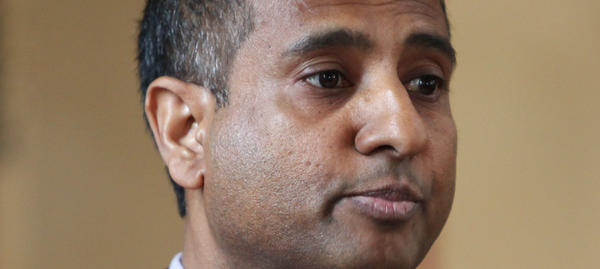
Dr Ahmed Shaheed visited the country earlier this month by invitation from the government in response to the Easter Sunday terror attacks that took place in April. 

His preliminary findings were published on Monday, in which he highlighted the hostilities faced by Christian and Muslim communities including interruption of worship, property damage, violence and intimidation and the failure of the state to protect religious minorities. 


Dr Shaheed said: “The long-standing traditions of religious harmony and co-existence in Sri Lanka must be reinforced to address the challenges of the modern context of the country.  

“This is characterised by growing politicisation of religion, polarisation of communities through segregated education based on ethno-religious identity, opening up of under-regulated spaces for communication  through privatised electronic media and spread of social media, simmering resentment against perceived majoritarian privilege, growing frustration over capricious law enforcement, and the spread of religious extremism.” 

In his recommendations, Dr Shaheed concluded that Sri Lanka should take stronger measures to stop religious hatred by prosecuting perpetrators and implementing systems, “to monitor and respond to hate speech in conformity with international human rights standards.” 

Religious freedom…

… Read More

—

Click Read More to read the rest of the story from our content source/partners – Premier Christianity News.

قالب وردپرس

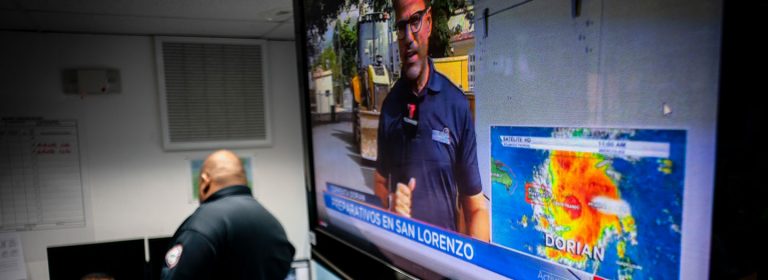
Dorian spares Puerto Rico but threatens US mainland: How praying for hurting people changes us

Ceiba, Puerto Rico, Aug. 28, 2019

“This is going to be a test,” says Nick Russo, the Federal Emergency Management Agency’s federal coordinating officer in Puerto Rico. “The people of Puerto Rico have been through a lot, and we have learned the lessons of the past.”

Russo made his statement as Hurricane Dorian was bearing down on the island. Then the storm unexpectedly veered to the north, sparing Puerto Rico the worst of its wrath. While some twenty-three thousand people were without power yesterday afternoon and schools were closed, everyone on the island knows it could have been much worse. 

Puerto Rico is still recovering from Hurricane Maria, which struck in September 2017 and is considered the worst natural disaster ever to strike the island. 

That hurricane killed more than three thousand people, destroyed homes, wiped out electrical power, and compromised water delivery systems. Some isolated communities did not receive help for days. 

Some thirty thousand homes still have tarps rather than roofs; more than a thousand roads remain blocked by landslides caused by the storm. A Puerto Rican pastor describes the horrific devastation and despair so many on his island still face. 

As I followed Hurricane Dorian’s path in the news, I found myself wondering about Puerto Rico’s history and relationship to the US. And I felt a burden for these people I’d like to explore with you today. 

Why Puerto Rico matters to the US 

What happens in Puerto Rico is of direct concern to the United States because the former is a territory of the latter. Puerto Rico is more than a thousand miles southeast of Miami, but it became an “unincorporated territory” of America in 1898 after the US defeated Spain in the Spanish-American War. 

Puerto Ricans by birth have American citizenship and can travel freely between the island and the US mainland. But Puerto Rico is not a state, meaning that it has no voting power in…

… Read More

—

Click Read More to read the rest of the story from our content source/partners – Denison Forum.

قالب وردپرس

Funerals in churches at all time low, study suggests

The Co-op said its research revealed a “staggering shift” towards a less conventional style of funeral, with some unique ways of disposing of people’s remains.

Some people want their ashes put inside a firework or the furnace of a steam train, or made into jewellery, paperweights or pendants, said the Co-op.


Its survey of 4,000 adults and a number of Co-op funeral directors indicated that just one in 10 people wanted a traditional religious funeral.

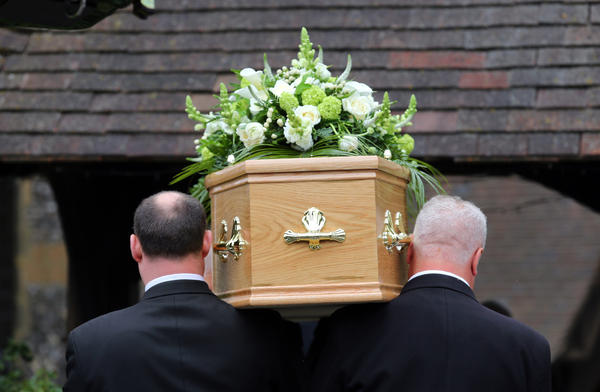
The use of pallbearers to carry coffins has fallen in the last five years, while there are also fewer obituaries, said the Co-op.

Requests for ceremonies to take place away from churches have increased, with locations including a zoo, on a bus, on a golf course or in a teepee, said the report.

Most of the Co-op’s undertakers said they have arranged a funeral where mourners wore bright clothing and half have known mourners to dress in jeans and tracksuits.

Samantha Tyrer, managing director of Co-op Funeralcare, said: “The funeral sector is rapidly changing. Whilst 16.5 million of us still feel uncomfortable talking about death, we’re clear on what we want and, in the majority of cases, it’s no longer a traditional funeral service.

“Our funerals represent the unique life an individual has lived. More so now than ever before, we’re seeing requests for wonderfully personalised ceremonies, whether that be on the…

… Read More

—

Click Read More to read the rest of the story from our content source/partners – Premier Christianity News.

قالب وردپرس