

Five Pathways for Dying Churches – Revitalize & Replant #002

[ad_1]

SUBSCRIBE TODAY: iTunes • RSS • Stitcher • TuneIn Radio • Google Play

When a church is dying, what are its options? Today we cover five of the most common pathways for dying churches.

Today’s Listener Question:

FROM WILLIAM

Our church is on its last legs. We have a little money left in our accounts, but not enough for a full-time pastor salary. There are only a few elderly families left in the church, and we don’t do much more than meet each Sunday morning for Bible study and worship. Do we just need to close or is there another option. Some just want to sell the building and give the money to a local ministry. I’d hate drive by in a year and see a strip mall where our church used to be.

Episode Highlights:

  • For a neighborhood, the church building indicates a sacred space.
  • Every neighborhood should benefit from a local church.
  • “A vacant church looks like a long-abandoned castle of a long-forgotten king.” – Graham Singh
  • Church mergers are really starting to work well when the younger church cares well for the older church.
  • An abundance of activity anesthetizes the pain of death in dying churches.

The five pathways for dying churches that we cover in this episode are:

  1. Give the building to a healthier church
  2. Give the building to a church planter
  3. Share the building with another church
  4. Merge
  5. Replant from within

Resources mentioned in this episode include:

Revitalize & Replant is sponsored by the North American Mission Board and ChurchReplanters.com. More than 10% of churches in North America are at risk of closing and the North American Mission Board is committed to reversing this trend by decreasing the death rate of existing churches while simultaneously increasing the birth rate of new churches. To learn more about what it means to become a replanting pastor or to explore resources for replanting and revitalization in your own church, visit ChurchReplanters.com.

Submit Your Question:

Do you have a question about church revitalization or replanting for us to use on the podcast? Visit the podcast page to submit your question. If we use it on the show, you’ll get a copy of Autopsy of a Deceased Church and Reclaiming Glory.

[ad_2]

Source link

قالب وردپرس

Boston bombing survivor to LV victims: ‘You will laugh again’

[ad_1]

Jeff Bauman was standing at the finish line of the Boston Marathon on April 15, 2013, when two bombs exploded. He lost both of his legs. The new movie Stronger tells his story.

After the Las Vegas shooting, he posted a message on Facebook to the victims. “I know your pain,” he wrote. But he assured them, “You will walk again. You will laugh again. You will dance again. You will live again.”

The Apostle Paul would agree.

Acts 17 finds Paul evangelizing in the Greek city of Thessalonica. After only three weeks, opposition became so acute that “the brothers immediately sent Paul and Silas away by night” (v. 10).

Yet the apostle could later write Christians in their city with this surprising instruction: “Give thanks in all circumstances” (1 Thessalonians 5:18a). How? Why?

“Give thanks” is a present active imperative in the Greek, translated literally as “always be giving thanks.” “In all circumstances” could be translated “in all places, and events” (see Ephesians 5:20). Such gratitude is “the will of God in Christ Jesus for you” (1 Thessalonians 5:18b)

Thank offerings to the gods for favors received were a basic part of ancient society. However, these were conditional expressions of the law of reciprocity—when the gods favored you with good crops or safe travel, you made a sacrifice to them in response.

Paul’s counsel is different. We are to live with an attitude of gratitude, no matter how painful and chaotic our world becomes.

Clearly, we are not taught to be grateful for challenges—we are to be grateful in them. Writing in The New American Commentary, scholar D. Michael Martin notes that “Paul never instructed the church to thank God for evil events but to thank God that even in evil times and circumstances our hope remains, and God continues his work in our lives.”

How can we give thanks in terrible times?

We can look for good in the tragic. After the Las Vegas shooting, stories emerged of incredible courage on the part of those who helped the victims. Survivors turned to God. Churches responded in remarkable ways. People around the world began praying. We can be grateful for God’s redemption through tragedy.

We can look for good in the routine. In my wife’s latest blog, she describes her joy at seeing a beautiful sunrise. When last did you thank God for a new day? Will you watch the beautiful Harvest Moon tonight with gratitude for our Creator? Will you praise him for the ability to praise him?

We can look for good in the culture. God is at work in remarkable ways. For instance, today is “Bring Your Bible to School” Day. As John Stonestreet explains, organizers “expect half a million public school students in all 50 states to bring their Bibles to school and tell their friends about the hope they have.” If we ask, the Spirit will show us how he is bringing the sacred to the secular in miraculous ways (Jeremiah 33:3).

Will you “give thanks in all circumstances” today?

[ad_2]

Source link

قالب وردپرس

Leah Hickman – Christian News Headlines

[ad_1]

Study Reveals Pornography’s Effect on Marriages


In this interview on NPR, social science correspondent Shankar Vedantam discusses the effects of pornography on marriages. The facts he reports remind us of the human tendency towards covetousness and discontentment, tendencies that God himself tells us to guard against.


Vedantam explains that the researchers “used high-quality survey research that asked about 2,000 couples about their satisfaction with their relationships and also about their use of sexually explicit media.” He goes on to explain, “By surveying the same couples repeatedly over time, you can see which couples start to use porn, which couples stop and what happens to their relationships.”


According to the survey, married Americans who view pornography are about two times more likely to end their marriage in a divorce than those who do not use pornography. Vedantam proposes that “it’s possible the effects are actually much larger for people for whom pornography is a daily part of their lives.”


Despite the observations of porn’s negative effects on marriages, Vedantam says that this survey alone doesn’t make it “exactly clear what’s happening” that makes pornography so lethal to relationships. Previous research and reports, however, can give us some clarity on this issue. For instance, this 2013 article at The Gospel Coalition outlines some of the biological effects of pornography on the brain.


But we don’t really need all of this science to understand the psychological effects of porn. We don’t need to have a history with pornography to know the dissatisfaction that comes from covetousness. Porn’s unrealistic depiction of romantic relationships results in the “grass is always greener on the other side” mentality that we’ve all struggled with in other areas of life.


Even when we were kids, seeing the bigger and better toys of our friends made us dissatisfied with our own playthings. Too many homeowners also know the struggle to stay content with their own lovely houses after seeing mouth-wateringly beautiful mansions in home improvement shows. We’re human. It’s our nature to lose satisfaction in the good things we have when we let our eyes shift to the supposedly “better” things that we don’t have.


And that’s why God himself commanded his people way back in Exodus, “You shall not covet your neighbor’s house. You shall not covet your neighbor’s wife, … or anything that belongs to your neighbor.” God didn’t give us this command to make our lives more boring or to keep us from “fun.” Rather, his command is a gateway to contentment. By living according to this law of our Lord, we can find more abundance in the blessings we do have rather than constantly looking with lust at the things beyond our reach.


Leah Hickman is a 2017 graduate of Hillsdale College’s English program. She has written pieces for multiple Hillsdale College campus publications as well as for BreakPoint.org, ChristianAnswers.net/Spotlight, and the Discover Laura Blog. Read more by Leah at aworldofgrasspeople.blogspot.com.


Photo courtesy: ©Thinkstockphotos.com


Publication date: October 11, 2017


[ad_2]

Source link

قالب وردپرس

A Pope’s Death, Theologian’s Birth, and Preacher’s Conversion

[ad_1]

Expand | Collapse
(Photo: Wikimedia Commons)A portrait of Charles Grandison Finney (1792-1875), the famous nineteenth century revival preacher.

Christianity is a faith with a long and detailed history, with numerous events of lasting significance occurring throughout the ages.

Each week brings the anniversaries of great milestones, horrid tragedies, amazing triumphs, and everything in between.

Here are just a few things that happened this week in Church history. They include the death of a controversial pope, the birth of an influential theologian, and the conversion of a revivalist preacher.

Follow Michael Gryboski on Twitter or Facebook

[ad_2]

Source link

قالب وردپرس

Francis Chan Urges Believers to Reject ‘Cop-Out’ Christianity, Lose Your Life for the Gospel

[ad_1]

(Photo: Pulse)Francis Chan addresses thousands of Christians gathered at Together 2016 on the National Mall in Washington, D.C. on July 16, 2016.

WASHINGTON — Francis Chan is calling on Christians to be willing to give up their lives for Jesus and not compromise the Gospel by hiding behind otherwise good causes.

Speaking on the main stage Saturday night on the National Mall before tens of thousands assembled from all 50 states at America’s Tent of Meeting sponsored by Awaken the Dawn, Chan encouraged believers to be willing to lay down their lives for Christ and to not shrink back from being bold.

“What does it profit a man if he gains the whole world and forfeits his soul?” Chan asked, citing the Words of Jesus in Mark 8:36.

“I’m promising you, if you try to save your life, you’re going to lose it, but you’re not going to regret it.”

Chan, 50, who leads We Are Church, a network of house churches based in the San Francisco Bay Area, mentioned that he has reached a point in his life where he’s getting rid of more and more stuff. And there is no point in trying to have it all, he said, and protect ones life from all possible forms of suffering.

“We live in a time when Christians are starting to change their theology because they’re ashamed of the Words of Jesus Christ, because it’s not popular,” Chan continued. “We can busy our lives with good things that aren’t the most important thing, and I feel like there’s a cop-out in Christianity today.”

Many are willing to care for the poor, fight human trafficking, and work toward racial reconciliation, he added, and he counts himself among such people. And those are all good, important, biblical causes, he said.

“But I’m just noticing that there are very few people who are spreading the Gospel,” he said impassionedly. “And I think I know why.”

“I’ve never been persecuted for feeding the poor. I’m applauded for that. No one’s persecuted me for my fighting [against] human trafficking. They applaud me for that. No one gets angry at me because I want unity in the Church, racial reconciliation or even reconciliation between denominations.”

Persecution comes, Chan said, when he shares the core truths of the Gospel that are not politically correct.

“When I tell someone that they are by nature an object of wrath, and that they have to stand before holy God and that there is no name under Heaven by which you can be saved except by the name of Jesus Christ. And when I call out sin for what it is in Scripture, I get persecuted.”

“And there are times when I am ashamed of the Gospel,” he admitted, “and I’ll cower and I’ll shrink back and I won’t say everything God calls me to say.”

Those other things are noble and godly, he reiterated, but it’s easy to hide behind them and refrain from sharing the Gospel.

“You will lose your life, you’ll lose your reputation,” he said, “And my stance on morality, in a city like San Francisco,” but I don’t want to be ashamed.

“But I don’t want to be ashamed of Jesus and His Words, because I don’t want Him ashamed of me when He comes.”

He pleaded: “All I want to do tonight is just beg you” to lay it all down for Jesus.

He urged the crowd to read the Bible for themselves, saying it’s impossible to read it cover to cover and think that there will be no judgement.

“Guys, it’s time for us to hurt again,” like the Apostle Paul who wrote of his “anguish” for those who did not know Jesus, Chan said.

“I know it’s not fun. But if we’re going to lose our lives the Bible says when you do that, that’s when you’re going to find it.”

The Americas Tent of Meeting will continue throughout the weekend and conclude on Monday.

Follow Brandon Showalter on Facebook: BrandonMarkShowalter

Follow Brandon Showalter on Twitter: @BrandonMShow

[ad_2]

Source link

قالب وردپرس

Cancer-Fighting Medicine Imbruvica Gets Price Drop in Australia

[ad_1]

REUTERS/Stefan WermuthAustralia seeks to reduce childhood cancer death rate to zero

The Federal Government of Australia will bankroll the cost of Imbruvica, as it aims to lighten up the financial load of leukemia patients in the country. Imbruvica, a tablet that helps ease the symptoms of chronic lymphocytic leukemia (CLL), costs up to $100,000 a year for each patient.

Starting Dec. 1, the cancer-fighting medicine will be added to the Pharmaceutical Benefits Scheme (PBS), as the government reduces its cost to $38.80 each month. On the other hand, the price of the medicine will be reduced to $6.30 per month for CLL patients who have concession cards.

According to Bill Petch of the Leukemia Foundation, around 1,500 Australians are diagnosed with CLL every year, and what Imbruvica does is block the protein that triggers the growth of cancer cells. “[The protein] affects the white blood cells that normally produce antibodies that protect the body from infections,” said Petch, adding that the Imbruvica has been proven effecting in helping sufferers prevent further infections.

The effectiveness of the cancer-fighting medicine had been reportedly tested not just in Australia but also overseas, until it was formally registered in April 2015.

Earlier this week, the price drop on Imbruvica was officially announced by Prime Minister Malcolm Turnbull at the Royal North Shore Hospital in Sydney, saying that it is a reminder of how keenly focused the Australian government is in fighting cancer. “It is one of 1,500 new drugs costing in total $7.5 billion that we brought onto the Pharmaceutical Benefits Scheme since we came into office,” he announced.

Professor Stephen Mulligan of the Royal North Shore Hospital, who was intimately involved in testing Imbruvica, said the medicine could greatly help patients who had already undergone standard therapies but were not cured. He mentioned the Imbruvica has helped revolutionize the outlook for patients that were previously deemed hopeless.

[ad_2]

Source link

قالب وردپرس

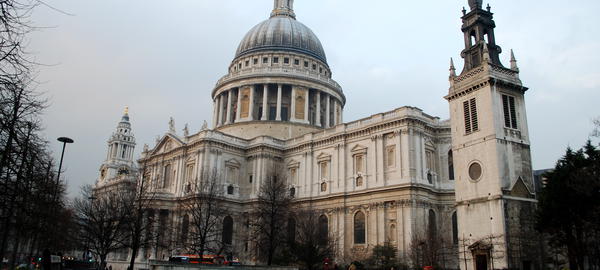
Woman dies falling from St Paul’s

[ad_1]

First aid trained staff were on the scene immediately and paramedics also attended within minutes but she was pronounced dead at the scene.

Officers are working to establish the circumstances but the death is not being treated as suspicious, City of London Police said.

St Paul’s Cathedral, which was closed after the incident, said it was “deeply saddened” by the woman’s death.

It said in a statement: “Although robust procedures for emergency situations are in place at St Paul’s, and today’s response bore that out, it does not lessen the shock we feel as a close community, especially for those of us who witnessed and responded to this incident.

“We hold also in our thoughts those visitors within the cathedral at the time.

“We think and pray especially at this time for the woman who died, and for all those who were close to her and who loved and cared for her.”

The cathedral will open as normal on Thursday.

[ad_2]

Source link

قالب وردپرس

Duke and Duchess of Cambridge Are Expecting Their Third Child

[ad_1]

kate-will-expecting-3rd-baby

Well, this is a bit of a Labor Day surprise! The Duke and Duchess of Cambridge are expecting their third child, the palace has confirmed in a statement. Yes, that’s right, our Will and Kate—parents to Prince George, four, and Princess Charlotte, two—will be adding to their family.

The announcement was made early Monday morning via a press release from Kensington Palace: “Their Royal Highnesses The Duke and Duchess of Cambridge are very pleased to announce that The Duchess of Cambridge is expecting their third child. The Queen and members of both families are delighted with the news.”

Kate, as was the case for her first two pregnancies, is suffering from severe morning sickness, and she will not be attending an event on Monday that had been on her schedule. “As with her previous two pregnancies, The Duchess is suffering from Hyperemesis Gravidarum,” continued the statement, “Her Royal Highness will no longer carry out her planned engagement at the Hornsey Road Children’s Centre in London today. The Duchess is being cared for at Kensington Palace.”

There was a bit of foreshadowing for the news, as Kate joked with William, during their tour of Poland in June, after receiving a teddy bear (designed for a newborn) as a gift, “We will just have to have more babies.”

People notes that Kate is “understood to be less than three months pregnant,” and that the statement was made at this early stage due to her morning sickness. (When she was pregnant with Charlotte, Kate also was taken care of at Kensington Palace.)

Click here to read more.

SOURCE: Vanity Fair
Josh Duboff

[ad_2]

Source link

قالب وردپرس

ACLJ Fights UN’s Threat to Redefine ‘Right to Life’ — Charisma News

[ad_1]

The way “right to life” is being redefined, babies like this may not have a chance, in some cases. (Adam McGuffie via Flickr )

“Every human being has the inherent right to life. This right shall be protected by law.”

For over 50 years, these words have been enumerated in the International Covenant on Civil and Political Rights (ICCPR)—one of the international community’s commitments to protecting the life of every human being. But these words—and the protection they help provide—are currently under attack.

As we recently informed you, the U.N. Human Rights Committee is trying to rewrite the definition of the “right to life.” The U.N. Human Rights Council has a draft General Comment on Article 6 of the ICCPR, which contains concerning and problematic language that alters the current interpretation of Article 6’s protection of the right to life.

Each U.N. treaty has a series of “general comments” attached to it. “These cover a wide range of subjects, from the comprehensive interpretation of substantive provisions, such as the right to life or the right to adequate food, to general guidance …” However, before a draft General Comment is adopted by the Human Rights Committee, stakeholders, such as Member States and non-governmental organizations (NGOs), are invited to submit comments on the draft which express support or concerns, as well as suggested changes. So, we did just that. Through our European affiliate, the European Centre for Law and Justice (ECLJ), with consultative status at the U.N., we submitted comments (English | French) addressing the danger the current draft poses to the right to life.

As we informed you before, paragraph nine of current draft places restrictions on the rights of State parties to regulate abortion stating that “States parties must provide safe access to abortion,” and forbidding States from “introducing humiliating or unreasonably burdensome requirements on women seeking to undergo abortion.” Paragraph 10 is also concerning, as it provides contradictory interpretations regarding the duty of State parties where suicide and euthanasia are concerned: “States should take adequate measures, without violating their other Covenant obligations, to prevent suicides, especially among individuals in particularly vulnerable situations. At the same time, States’ parties [may allow] [should not prevent] medical professionals to provide medical treatment of the medical means in order to facilitate the termination of life …”

Our submission points out that the current language of paragraph nine allows Article 6 of the ICCPR to be interpreted in a way that requires States to broadly guarantee a woman a “right” to abortion. Furthermore, the current language of paragraph 10, far from providing a right to life, instead creates a “right to die” and an obligation on the part of State parties to assist in—rather than prevent—suicide. Both paragraphs nine and 10 interpret Article 6 in a way that is contrary to the original intent. Article 6 was written to protect life—not provide a “right” to kill or die.


[ad_2]

Source link

قالب وردپرس

Three Important Financial Realities Facing Churches Today

[ad_1]

Podcast Episode #369

SUBSCRIBE: iTunes • RSS • Stitcher • TuneIn Radio • Google Play • iHeart Radio

LifeWay research recently released a study of financial issues in the church. Today, we discuss these three issues and ways churches can better prepare themselves financially.

Some highlights from today’s episode include:

  • 26% of churches have cash reserves of seven weeks or less.
  • Those who give faithfully typically budget their tithe.
  • Churches need both a facility reserve fund and a cash reserve fund.
  • Too many churches live for the day financially and do not plan for the future.
  • The two greatest legal dangers for churches today are child abuse and financial impropriety.
  • Having an external bookkeeper helps safeguard certain financial liabilities in a church.

The three financial realities we cover in this episode are:

  1. The need for cash reserves
  2. The potential for embezzlement
  3. The need for annual audits

Episode Sponsors

Midwestern Seminary is interested in helping you get to the field faster. And they’re serious about training leaders for the church. That’s why they’ve created the all-new Accelerate Program. In Midwestern’s Accelerate Program, students earn both Bachelor of Arts degree and Master of Divinity degree in just 5 years of intensive study. That’s a B.A. and an M.Div. at the same time. This innovative residential program combines rigorous academic training with practical ministry preparation, resulting in one of the most effective programs around, so that you can pursue your ministry calling as soon as possible.

Two degrees in five years – all in one program: Accelerate at Midwestern Seminary. Take the next step by visiting mbts.edu/accelerate.


Vanderbloemen Search GroupVanderbloemen Search Group is the premier pastor search firm dedicated to helping churches and ministries build great teams. They’ve helped hundreds of churches just like yours find their church staff and are uniquely geared to help you discern who God is calling to lead your church.

Find out more about Vanderbloemen Search Group by visiting WeStaffTheChurch.com.


Feedback

If you have a question you would like answered on the show, fill out the form on the podcast page here at ThomRainer.com. If we use your question, you’ll receive a free copy of Who Moved My Pulpit?


Resources Mentioned in Today’s Podcast

[ad_2]

Source link

قالب وردپرس