Futuristic Food: 3D Print Your Pizza, Spaghetti Sauce and Gaucamole

Christian Post Report – A chocolate bear printed with a 3D food printer of the company XYZprinting is seen the IFA Electronics show in Berlin, Germany, September 2, 2015.

Descriptions of food typically include the use of adjectives such as delicious, mouth-watering, scrumptious, delectable, flavorful, appetizing, succulent and (for those over-the-top indulgent desserts) decadent. But Natural Machines and 3D Systems, makers of 3D food printers Foodini and ChefJet, would like consumers to add inventive and futuristic to the list.

A food printer?

The growing number of devices for 3D food printing has the potential to completely alter the way in which consumers view food and food preparation. But the Foodini and its brethren aren’t the same as the 3D printers being used in the automotive and aerospace industries. Those printers generally run at one speed and print plastic. The Foodini is programmed similarly, but it works with numerous ingredients and prints edible creations. Instead of ink cartridges, 3D food printers utilize food capsules. There are a surprising number of 3D food printers currently on the market or poised to enter the market. Some of these include the Choc Creator from Choc Edge, the Discovery Extruder from Structur3D, the 3D Fruit Printer from Dovetailed, and the Original Food Printer from Fab@Home.

Ease of use

In a recent 3Ders.org article, a Natural Machines spokesperson said, “Foodini’s main purpose is to take on the difficult and/or time-consuming parts of food preparation that often discourage people from creating homemade food.” The Foodini offers pre-loaded and pre-tested recipes, or users can design their own. If using a pre-loaded recipe, the user selects the recipe using the touch-screen interface or a separate internet-connected device and will be directed on ingredients to add to the stainless steel food capsules. For example, with Foodini’s recipe for pizza, the dough and sauce – the more difficult parts to make from scratch – are printed, but the cheese, spices and toppings are added by hand.

The current iteration of the Foodini does not actually heat or cook food, which means those who want a hot meal still will need to turn on a stove or oven. However heating and cooking are features expected in future versions. Bocusini, a 3D food printer startup partially funded on Kickstarter, recently introduced a prototype that includes a heating feature. The company has told users they can expect to enjoy a reduction in cooking prep time as well as less time spent on cleanup.

What about variety?

Desserts, sweets, candies and chocolates are the most common and perfected items currently produced by 3D food printers. However, menu items are quickly expanding. Pancakes, cheese, biscuits, pasta, spaghetti sauce, potatoes, some seafood and even ice cream have been printed. Earlier this year, Chef Mateo Blanch from La Boscana restaurant in Lleida, Spain, created the first 3D printed five-course meal. The menu included items such as caviar cookies with lemon and strawberries as well as hummus and guacamole. Thus far, Chef Blanch is only one of a handful of Michelin-starred chefs using the 3D food printing technology.

Try it, you just might like it

Printing food significantly shifts the consumer-food relationship. In a world in which technology has been embedded in almost every aspect of life, some believe 3D food printing is a natural progression. It uses more naturally grown foods, such as algae, sprouts, vegetables and dried fruits, rather than meat, which is a boon for vegetarians and vegans. Also because much of the printed food does not require cooking, shelf stability is increased and there is no need for refrigeration or freezing.

However, until heating and cooking becomes more commonplace, 3D food printing doesn’t offer much in terms of texture. The consistency generally seems to be varying degrees of paste. Those who enjoy the crunchiness, graininess, creaminess or crispness of each bite may want to delay trying 3D printed food until the process is a bit more refined.

Pricing for 3D food printers varies greatly, ranging from $200 to $5,000. Not everyone will agree that 3D food printing is the next great invention, but it’s hard to deny that these printers are game-changing instruments that could impact consumer behavior and provide a potentially valuable alternative in food preparation and storage.

Source : Christian Post

Costco vs. Walmart Tires – Which Is Cheaper?

Buying tires is a big and costly deal, especially if you like to change all four tires at the same time. Being the bargain hunter I am (see my track record here), I set out with steely determination in my eyes to do my research and get the detailed price breakdown to find out who wins the price war when it comes to cost versus what you get.

Anecdotal accounts of family and friends reveal two big-box stores with a strong reputation for low prices – Costco and Walmart. Before driving to the nearest Costco and Walmart for a price quote, I did research to narrow down and select the exact tire I wanted to avoid the chaos of juggling multiple factors.

I called up my trusty dad who is a pro bargain hunter (especially when it comes to cars and home improvement), and found out that he recommends Michelin. But being a journalist, the cliché phrase, “If your mother tells you she loves you, check it out,” rings in my ears and I can’t help but factcheck my dad’s choice against an unbiased source. I turn to Consumer Report, a monthly product review magazine that is trusted by subscribers because it does not accept advertising and pays for all the products it tests, and is a non-profit organization with no shareholders.

A 2015 article published in Consumer Report titled, “What brands make the best tires? Consumer Reports rank the top tire maker,” ranks Michelin (“Dad, you’re right!”) as the number one tire brand after careful performance test. The magazine boasts that it offers a list of detailed comprehensive test findings on over 170 models.

“Across the board, Michelin offers nearly a perfect blend of grip, handing, low rolling resistance for good fuel economy, and long tread life,” read part of the review.

I decided to specifically go with the Michelin Defender, an all-season tire suitable for family cars with an impressive 90,000 mile warranty.

michelin tire (Photo: Reuters/Regis Duvignau)

Workers hold a motorsport racing tyre stocked in the Michelin tyre company’s factory in Clermont-Ferrand, central France, July 10, 2013. Picture taken July 10, 2013.

Now here comes the fun part you’ve all been waiting for.

My local Costco Tire Center (note taken: too busy on Saturday with 2.5 hour wait. Go on weekdays as early as possible) informed me that the total cost before tax will be $541.12. Costco sold the Michelin Defender 205/55R16 for $133.99 per tire but had, at the time, a $70 instant savings for any member who bought a set of 4 new Michelin tires.

The store offers a flat rate $15 installation package per tire that includes:

• mount and balance
• balance and rotation for the life of the tire
• new rubber valve stem
• inflation checks for the life of the tire
• nitrogen tire inflation
• flat repairs for the life of the tire
• Costco scrap tire disposal
• reset tire pressure monitoring system
• wheels hand torqued to manufacturer’s specifications
• mileage warranty
• road hazard warranty
• manufacturer’s defects warranty

As for Walmart, my local store does not carry Michelin tires and I would have to order them using the company’s website and have them delivered for free. A Michelin Defender tire 205/55R16 costs $136.23 per tire, which is $2.24 more expensive than Costco’s price. Moreover, Costco offers the $70 instant discount when you buy four Michelin tires, which is a deal Walmart doesn’t offer. That means we are talking about a $78.96 price difference (Costco $465.96 vs. Walmart $544.92) in terms of a set of four tires.

Walmart quoted the installation of the tire as including:

• balance for lifetime of tire – $9/tire
• new rubber valve stem – $3/tire
• road hazard warranty – $10/tire
• tire disposal – $1.50/tire

This price breakdown means we are talking about an installation package at Walmart of $23.50 per tire, which is higher than Costco’s $15 per tire.

Just out of curiosity, I went to another popular auto service center, Mr. Tire, which states on its website that it has over 1,000 locations nationwide. Mr. Tire sold the Michelin Defender 205/55R16 for $169.99 per tire for a total of $679.96 for a set of four.

In terms of installation, Mr. Tire says there is no charge for the following: tire mounting and balance, lifetime rotation, new valve stem, and tire disposal. But Mr. Tire charges $23.78 per tire for road hazard coverage and $10.49 for shop supply fee.

At the end of my tire bargain hunting, I concluded that Costco won out by a long shot. Check out the price breakdown for yourself.

costco vs. walmart chart

Source : Christian Post

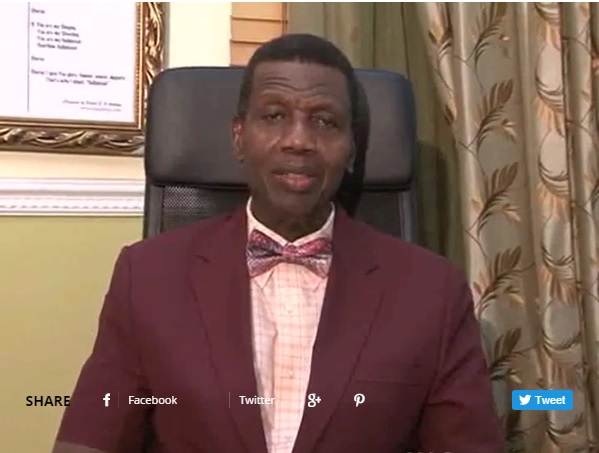
Pastor Adeboye ask Members of RCCG to Evangelism for Souls

The General Overseer of the Redeemed Christian Church of God (RCCG), Pastor Adeboye asked all Members of RCCG to Evangelism for Souls .

He said in order for your prayers to be answered, you need to evangelize for lost souls.

Watch the Video Below

Tyrese Says He Lacks Nothing Because He Has Jesus

Christian Post Report – Actor Tyrese Gibson poses during the GQ Men of the Year party in West Hollywood, California, December 3, 2015.

Model, actor, and singer Tyrese Gibson is known for his racy music and his role in the “Fast and Furious” franchise, but the R&B singer recently took to Instagram to credit Christ for the “influence” he has on others and to declare that he lacks nothing because of Jesus.

Gibson tends to make the most of social media by frequently posting comments and videos about his views on happenings in popular culture. Lately his online platforms are being used more and more to share his faith. In a recent Instagram post he revealed that his success is not the reason for his wealth.

“Every show while I’m singing I’m praying, when I lift my hands I am thanking the Lord Jesus Christ for the God given stage of influence he has given me,” Gibson wrote.

His very passionate posts often get criticized for being inspirational yet vulgar because of his use of foul language, but he is unfazed by what people think or say.

A photo posted by TYRESE (@tyrese) on

“I fear no man….. I walk in my truth and in my life’s purpose everyday…….. I am clear that God is my SOURCE and people and things are just resources……… God IS my source…. And I want for nothing cause I have it ALL cause I have Jesus……. #Amen,” Gibson ended. Gibson first emerged on the R&B scene in the late ’90s and since then has become a household name mononymously known as Tyrese. He made his acting debut alongside Taraji P. Henson in the 2001 film “Baby Boy”. The Grammy nominated singer is seemly targeting this generation with the message of finding worth in God and not fame and fortune. He often talks of his Christian faith and how it anchors him during his many motivational video rants. In a past Facebook post, he clearly stated that he believes Jesus is the remedy to cure the insistent desire for relevance, fame and fortune. The actor said, “When you love yourself deep within. When you fall in love with Jesus and you’re completely submerged in Christ your heart and soul is fulfilled independent of what’s in your bank account and where you are on the charts.” In that same message Gibson went on to say that when people are obedient to their God-given assignments and visions, they should anticipate huge life-changing blessings. He also said that there is great reward on the other side of obedience. Gibson’s company, Voltron Entertainment, is capitalizing on the reach of social media and although he has accomplished much, he regularly says he is aiming higher. The talented triple threat recently joined hip- hop legend Joseph “Rev Run” Simmons on The Oprah Winfrey Network’s newest series “It’s Not You, It’s Men.”

The series brings viewers insights on sex, love and relationships from their different perspectives. Gibson is a single father in search of his dream woman, while Rev Run has been happily married for more than 20 years and is a father of six.

Source : Christian Post

Al-Qaeda Terror Group Releases 80-Y-O Christian Missionary, but Still Holding Husband Captive

Christian Post Report – Ken and Jocelyn Elliott

An Australian Christian missionary who was kidnapped by an al-Qaeda affiliate in the African nation of Burkina Faso last month has been released, however, her husband still remains detained.

Jocelyn Elliott and Dr. Ken Elliott were kidnapped in mid-January by militants associated with al-Qaeda in the Islamic Mahgreb in the town of Djibo, which is near the Mali border.

The Christian couple, who are both in their 80s, have lived in the Djibo since the 1970s and operate a 120-bed medical clinic in the town where Dr. Elliott is the only surgeon. The Elliotts’ clinic is the only one located within hundreds of miles of the location.

The coupe was kidnapped on the same day that the al-Qaeda-linked group attacked the Burkina Faso capital of Ouagadougou and killed at least 27 people, including other missionaries.

In an audio recording released Friday, the Islamic extremist group explained that it was going to release Elliot as to “not make women involved in the war.”

“It is our religious duty to respect the civilians, based on the [Islamic] prophet’s hadith on not harming women, the elderly and the children, and based on the guidance by our commanders,” the statement asserts.

Niger and Burkina Faso authorities are still working to secure Dr. Elliott’s release.

The militant group said in the audio message that it kidnapped the Christian couple in hopes of being able to work out an agreement for the release of some of its fighters.

“The primary motive behind their kidnapping was to [gain] the release of our captives who sit behind bars and suffer the pain of imprisonment, as well as being deprived of their basic rights,” the message added.

Elliott was released in Burkina Faso’s neighboring country Niger over the weekend and returned to Burkina Faso on Monday, when she arrived at the airport in Ouagadougou.

According to a post on Dr. Elliott’s facebook page Monday, Jocelyn Elliott was quoted as saying after her release that she is looking forward to sleeping “in a lovely bed.”

“I am very moved to be here with my Burkina family. I want to thank the people of Burkina for their support in my absence,” Elliott said in French. “I want to be with my husband shortly so that we can go to Djibo and continue there.”

Elliott’s children issued a statement thanking the Niger and Burkina Faso authorities for their assistance in freeing their mother and continued effort to free their father.

“The Elliott family are deeply grateful for the safe release of our mother Jocelyn,” the statement from the family reads. “We wish to convey our great appreciation to the authorities in #Niger and #Burkina Faso for their support and assistance.”

“For over four decades she has served the Burkinabe people together with our father Dr. Ken Elliott,” the statement continued. “They are separated now but united in their desire to bring healing and hope to the people of Northern Burkina Faso and the surrounding regions.”

The family remains hopeful that the militants will eventually release their father, as they did their mother.

“We are trusting that the moral and guiding principles of those who have released our mother will be applied to our elderly father who has served the community of Djibo and the Sahei for more than half his lifetime,” the statement added. “We respectfully request that they be allowed to continue their work together in providing essential surgical services.”

Source : Christian Post

Lawsuit Alleges Gospel for Asia Fraudulently Solicited Hundreds of Millions in Donations, Enriched Leader

Christian Post Report – Gospel for Asia, one of the largest missions agencies based in the U.S., was named in a class action lawsuit Monday alleging that it and several affiliates fraudulently solicited hundreds of millions of dollars in charitable donations, and misdirected the money into the personal empire of the organization’s leader, K.P. Yohannan.

The lawsuit initiated in the United States District Court for the Western District of Arkansas by the Dallas-based Stanley Law Group, comes just four months after the Evangelical Council for Financial Accountability cut ties with the organization last October for violating five of the ECFA’s seven core standards.

In the 108-page document acquired by The Christian Post on Tuesday, plaintiffs allege that Gospel for Asia, Yohannan, and other GFA officials misrepresented to donors how, when, and where charitable donations would be spent, and funneled vast amounts of the hundreds of millions of dollars the organization has collected into for-profit businesses and an expensive headquarters.

Matthew and Jennifer Dickson, who are listed as plaintiffs in the lawsuit, charge defendants with violations of RICO and the Arkansas Deceptive Trade Practices Act, as well as fraud and unjust enrichment.

Listed as defendants along with Yohannan are: his wife, Gisela, a member of the Board of Directors of GFA; his son Daniel Punnose, also a member of the Board of Directors of GFA and a vice president; David Carroll, who serves GFA in multiple capacities, including Chief Financial Officer; and Pat Emerick. Emerick, according to the suit, is a United States citizen who resides in Ontario, Canada. He serves as the director of the Canadian affiliate of GFA.

The Christian Post reached out to GFA officials on several occasions Tuesday about the lawsuit and was directed to Taun Cortado, director of GFA’s U.S. Broadcast and Media Relations Department.

This reporter reached out to Cortado via email about the lawsuit and asked if GFA would like to respond and he replied: “Don’t worry – I won’t.”

When asked if his reply should be taken as a general “no comment” he responded: “Oh sorry brother. That was meant for someone else …”

When asked if he would like to respond a third time, Cortado provided no further response.

Gospel for Asia according to the lawsuit is a global missionary organization that operates in South Asia, primarily within India.

The organization tells potential donors that it supplies the “poorest of the poor” with food, provisions, and a Christian message, but lead attorney Marc R. Stanley said in a statement that GFA has been exploiting the goodwill of Christians.

“K.P. Yohannan and his Gospel for Asia inner circle have been exploiting the goodwill and generosity of devout Christians around the country for years. Gospel for Asia should return all the money it’s taken from donors who thought they were contributing to charity,” said Stanley.

According to the lawsuit: “Between 2007 and 2013, GFA solicited over $450,000,000 in donations from the United States alone, where the majority of GFA’s donors reside. Well over one million unique donations are made to GFA each year from tens of thousands of donors who give one time or on a recurring, sponsorship basis. However, despite repeated, explicit guarantees from GFA to donors, only a fraction of the donated money supports the people and causes for which it was donated, as Defendants redirect it for their own purposes.”

While the organization is recognized as a 501(c)(3) non-profit entity and a “religious order” in the U.S. by the Internal Revenue Service and is therefore not required to publish its financial statements, it enjoys no such exemption in India.

As a foreign charity in India, GFA is required to publicly account for all funds it spends in the country, pursuant to the Indian Foreign Contribution Regulation Act of 2010.

A financial analysis of the reports submitted to the Indian Government (“FC-6 forms”) for Believers Church, Gospel for Asia-India, and the related limited liability companies Last Hour Ministries and Love India Ministries, shows, according to the lawsuit, just how little of the money GFA sends to India is actually spent on the projects and items U.S. donors designated.

Camels for the Needy, Gospel for Asia (Photo: Screen grab)

Gospel for Asia’s ‘Camels for the Needy’ campaign.

In 2013, for example, (the most recent year for which audited financial data is available), “GFA worldwide collected around $115,000,000 in donations (more than $90 million from the U.S.), but spent only $14,644,642 on services and relief under GFA’s mission to support the poor and needy of India — directly contrary to donor designations and GFA’s promises,” the lawsuit said.

The lawsuit highlights various products and causes marketed to donors such as camels, blankets, motorcycles and “Jesus Wells” to get donors to give money, but the suit argues that little of the money actually goes to the causes, pointing as evidence to “Jesus Wells.”

“GFA represents that it constructs ‘Jesus Wells’ to provide clean, potable water to underserved villages in India. In 2012, GFA collected more than $3.5 million in donations designated for Jesus Wells, but spent only $500,000 on that project. In 2013, GFA collected more than $4 million in donations designated for Jesus Wells, but spent only $700,000 on that project. Accepting GFA’s representation that it is able to drill a well for only $1,400, in real terms, this discrepancy between donations received and money spent in India means that in 2012 GFA received funding sufficient to establish at least 2,500 wells, but its actual spending in India was sufficient to establish only 350 wells, while in 2013, GFA received funding for at least 2,800 wells, but only spent enough in India for 500 wells,” said the lawsuit.

The plaintiffs according to the lawsuit, seek to represent: “All persons in the United States who donated money to GFA within the applicable statutes of limitations. Excluded from the Class are Defendants and their subsidiaries and affiliates; all persons who make a timely election to be excluded from the Class; governmental entities; and the Judge to whom this case is assigned and his/her immediate family.”

READ THE COMPLETE LAWSUIT BELOW:

Dickson v. GFA Complaint by Leonardo Blair

 Source : Christian Post

Jimmy Kimmel Mocks GOP Candidates in ‘What Would Jesus Say?’ Skit

Christian Post Report – Actor poses as Jesus during a skit on ABC’s “Jimmy Kimmel Live” on February 3, 2016.

Late night host Jimmy Kimmel mocked Republican presidential candidates and their references to Christianity by using their own words in a “What Would Jesus Say?” skit.

On “Jimmy Kimmel Live” last week, the TV host mocked Republican presidential candidates for frequently using the name of Jesus to promote their campaigns.

Both Republican and Democratic candidates have referenced their faith as they rallied supporters at campaign events. Last Monday, for example, Sen. Ted Cruz, R-Texas, opened his speech after winning the Iowa caucuses by saying: “God bless the great state of Iowa. Let me first of all say, to God be the glory.”

During the last Fox News Republican presidential candidate debate on Jan. 28, anchor Bret Baier cited Time magazine’s cover story that labeled Sen. Marco Rubio “the Republican savior,” to which Rubio replied: “There’s only one Savior, and it’s not me. It’s Jesus Christ.”

Trump, although not an evangelical Christian, frequently mentiones that he is a Protestant, a Presbyterian. During one such political rally in October, Trump declared: “And, look, I don’t have to say it, I’m Presbyterian,” Trump said. “Can you believe it? Nobody believes I’m Presbyterian. I’m Presbyterian. I’m Presbyterian. I’m Presbyterian. Boy, that’s down the middle of the road folks, in all fairness.”

Taking the political candidates’ beliefs into consideration, Kimmel introduced the skit by saying, “God is a very important part of this primary election.”

In an effort to show that people who claim to be believers in Christ do not always speak as He did, Kimmel had an actor dressed as Jesus repeat statements made by some of the leading Republican candidates:

  • “You don’t lock your doors because you hate people on the outside. You lock the doors because you love the people on the inside.” — Marco Rubio.

  • “We need appropriate vetting, and I don’t think orphans under five are being––you know, you should be admitted into the United States at this point.” — Chris Christie.

    “you don’t stop bad guys by taking away our guns, you stop bad guys by using our guns.” — Ted Cruz.

  • “Look at that face! Would anyone vote for that? Can you imagine that, the face of our next president?!” — Donald Trump.

  • “I would bomb the [expletive] out of them!” — Donald Trump.

  • “When you get these terrorists, you have to take out their families! They care about their lives, don’t kid yourselves. They say they don’t care about their lives. But you have to take out their families.” — Donald Trump.

  • “I’ll take the votes of everyone who loves machine guns and bacon!” — Ted Cruz.

  • “I will build a wall! It will be a great wall!” — Donald Trump.

Source : Christian Post

A Stanford professor explains how ‘design thinking’ can help you lose weight, stop worrying, and change your life

What’s something you’ve always wanted to accomplish but never have?

Maybe it’s launching your own company, or maybe it’s finally getting in shape.

Whatever it is, it probably seems like there are insurmountable obstacles standing between you and your goal, from your demanding family to your busy work schedule and your deep-seated fear of failure.

But the truth is, these goals are completely achievable — and in most cases, you are the only one holding yourself back.

That’s according to Bernard Roth, a professor of engineering and the academic director of the Hasso Plattner Institute of Design (the d.school) at Stanford University. Roth’s new book, “The Achievement Habit,” outlines how a strategy called “design thinking” can help you create meaningful changes in your life.

Design thinking was invented by Roth and other Stanford engineers, and it’s typically used to improve on a specific product or experience, like a lightbulb or online dating. Yet in “The Achievement Habit,” Roth explains how the very same process can be turned inward, helping individuals become happier and more successful.

The book is based on a class Roth has been teaching for nearly half a century, called “The Designer in Society.”

Design thinking is a five-step process:

1. Empathize: Learn what the issues are.

2. Define the problem: Which question are you going to answer?

3. Ideate: Generate possible solutions.

4. Prototype: Abandon perfection and either build your project or develop a plan.

5. Test and get feedback from others.

Roth says the individual steps aren’t as important as some of the guiding principles behind design thinking: a bias toward action and limited fear of failure. The point of design thinking, according to Roth, is to challenge your automatic thinking and assumptions.

So how does design thinking work in real life?

Over at The New York Times, Tara Parker-Pope explains how the strategy helped her lose weight, something she’d long struggled with.

For the first step (empathize), Roth suggests learning what the real issues are by asking, “What would it do for me if I solved this problem?”

Parker-Pope realized she would feel better about herself, have more energy, and have more confidence to socialize with friends. So the real problem was not so much weight loss, but focusing on her friendships and boosting her energy.

In the process, she realized that carb-loading around lunchtime and eating sugar were making her tired during the day, so she eliminated both. “In shifting my focus away from weight loss to the real issues weighing on my life,” Parker-Pope writes, “I ended up losing 25 pounds.”

In the book, Roth also describes how design thinking helped a mom in one of his workshops stop worrying about her daughter getting into a good college.

The mom thought the key question was, “How do I make sure my daughter gets into a good college?”, but Roth helped her realize that the real question (step two: define the problem) was, “How do I become less anxious?” That’s because, once the daughter was admitted somewhere, she’d probably start worrying about something else.

With this new realization, the mom could start working on the big-picture issue of reducing her anxiety.

the achievement habitAmazon

Design thinking can be equally helpful for working toward professional goals.

Roth gives an example of a student in his “Designer in Society” class named Paddy, who had always wanted to start his own business. Paddy was a journalist who had served in the marines, but when Roth encouraged students to dig deep and be honest with themselves, Paddy realized that none of his accomplishments had made him happy.

“He was just doing a good job walking the paths others had created,” Roth writes.

Each student in the class has to complete a term project, which involves doing something they have wanted to do but have never done — and Paddy chose to produce his own radio show.

“In my class [Paddy] learned not to recoil or procrastinate when a new idea arose, but to act,” Roth writes. So Paddy prototyped and produced several new products for the radio program “Marketplace.” Later on, he published a book about economics.

Design thinking helped Paddy mostly by making doing an imperative, instead of thinking about doing (that’s why step four is about prototyping).

The most valuable part of design thinking, Roth says, is that once you realize you can achieve one goal, you gain momentum toward achieving the next one. In other words, it becomes an “achievement habit.”

Roth writes: “The experience of taking control of your life will change your reality, making it possible to achieve almost anything you seriously want to do.”  … READ MORE

Source : Business Insider UK

A Stanford professor says eliminating 2 phrases from your vocabulary can make you more successful

Yahoo News Report – The way you speak not only affects how others perceive you; it also has the potential to shape your behavior.

Swapping one word for another could make all the difference in how you approach your goals.

That’s according to Bernard Roth, a professor of engineering at Stanford and the academic director of Stanford’s Hasso Plattner Institute of Design, the d.school.

In his new book, “The Achievement Habit,” Roth suggests several linguistic tweaks that can make you more successful. Here are two of the easiest:

1. Swap ‘but’ for ‘and’

You might be tempted to say, “I want to go to the movies, but I have work to do.”

Instead, Roth suggests saying, “I want to go to the movies, and I have work to do.”

He writes: “When you use the word but, you create a conflict (and sometimes a reason) for yourself that does not really exist.” In other words, it’s possible to go to the movies as well as do your work — you just need to find a solution.

Meanwhile, when you use the word and, “your brain gets to consider how it can deal with both parts of the sentence,” Roth writes. Maybe you’ll see a shorter movie; maybe you’ll delegate some of your work.

2. Swap ‘have to’ for ‘want to’ 

Roth recommends a simple exercise: The next few times you say ‘I have to’ in your mind, changehave to want.

“This exercise is very effective in getting people to realize that what they do in their lives — even the things they find unpleasant — are in fact what they have chosen,” he says.

For example, one of Roth’s students felt he had to take the math courses required for his graduate program, even though he hated them. At some point after completing the exercise, he realized that he really did want to take the classes because the benefit of completing the requirement outweighed the discomfort of sitting through classes he didn’t enjoy.

Both of these tweaks are based on a key component of a problem-solving strategy called “design thinking.” When you employ this strategy, you try to challenge your automatic thinking and see things as they really are.

And when you experiment with different language, you may realize that a problem isn’t as unsolvable as it seems, and that you have more control over your life than you previously believed.

NOW WATCH: A Harvard psychologist says this is key to being more confident and powerful

Source : Yahoo News

SF 49ers WR Anquan Boldin Gives Glory to God After Winning Walter Payton Award

Christian Post Report – San Francisco 49ers Anquan Boldin poses with the Walter Payton Man of the Year award at the NFL Honors press room at Bill Graham Civic Auditorium

Anquan Boldin won the 2015 Walter Payton NFL Man Of The Year Award Saturday, but he is making sure to give honor to God.

Boldin, the 35-year-old San Francisco 49ers wide receiver, won the award that highlights charity work after establishing his Anquan Boldin Foundation in 2004 to help underprivileged children receive the best education opportunities available.

The first player of the 49ers organization to ever receive the Walter Payton Award, Boldin said he was fulfilling his God-given purpose.

“God put me on this earth for something much bigger than that and I realized and understand what my purpose is now. …,” Boldin said after winning the award. “It’s my prayer and my hope that I can live out the rest of my life honoring God and help as many people as possible.”

A runner-up for the award last year, Boldin and his wife, Dionne, have spent over $1 million to help elevate his foundation, which has held events across the nation in places like Arizona, Maryland, south Florida and the San Francisco Bay Area.

Aside from his foundation offering an enrichment program over the summer, it also gave $10,000 college scholarships to five students last year. The foundation’s college fund managed to put 13 students through four years of school.

When his foundation is not helping children, Boldin is making sure that it is feeding families with Thanksgiving food drives and making a difference globally to places like Senegal and Ethiopia.

Still, Boldin admitted that he did not always look at his NFL platform as an opportunity to help others.

“When I first got into the NFL nobody could tell me anything. I was living life,” Boldin said. “I had achieved my dream of one day making it into the NFL, but I soon realized that’s not what life is all about. I realized my purpose in life was not to make it to the NFL and score touchdowns.”

The annual NFL player award recognizes one man for his charity work and excellence off the football field. Boldin was in the running along with Benjamin Watson, the New Orleans Saints tight end, and New York Giants quarterback Eli Manning. A panel of judges consisting of NFL Commissioner Roger Goodell, former League Commissioner Paul Tagliabue, Walter Payton’s widow, Connie Payton, and former players Anthony Munoz and LaDainian Tomlinson, along with last year’s winner, Thomas Davis of the Carolina Panthers and sportswriter Peter King, chose the finalists.

Although Watson did not win the honor, he glorified God nonetheless when Boldin was awarded.

“Congratulations @AnquanBoldin! Well deserved. Glory to God,” Watson wrote.

The winner of the award was announced at the NFL Honors on CBS Feb. 6.

 A $55,000 donation will be made to Boldin’s charity, while the two runners-up will each receive $11,000 donations.

Source : Christian Post