
Anglican Church Facing Possible Split over Gay Marriage

Conservative bishops of the Anglican denomination have threatened to walk out of an upcoming meeting of bishops in which the topic of gay marriage in the church will be discussed.

According to The Christian Post, Archbishop of Canterbury, Justin Welby, will host a summit in Canterbury, England next week in an attempt to bring unity to the denomination on the issue of gay marriage.

Some conservative bishops from Asia and Africa, however, have said that they are completely opposed to gay marriage in the church and have threatened to walk out on the meeting or even to boycott it altogether.

In regard to the summit, the Church of England has said, “The Archbishop has invited everyone. If people walk out that will be viewed with disappointment rather than anger, and the door will always be open.”

Welby has also maintained that marriage is between one man and one woman, but has attempted to unite the denomination on the subject.

The American part of the Anglican Church, known as Episcopalian, has decided to embrace gay marriage, while the majority of the rest of the church remains unconvinced.

15 Christians Arrested in India While Praying

Fifteen Christians were arrested during New Year’s prayers at a church in the Indian state of Karnataka.

According to The Christian Post, a radical Hindu mob surrounded the Christians just before they were arrested.

They have since been released.

Sajan K. George, president of the Global Council of Indian Christians, said that the Christians are “vulnerable and subjected to harassment and persecution by both extremist as well as authorities, who are responsible for protecting citizens. Clearly, Christians are considered second-class citizens in secular India.”

AsiaNews first reported that police arrived to arrest the 15 Christians as a way to “protect” them from the mob of Hindu radicals.

Police told the Christians they must notify authorities before any prayer services.
George said: “(The police) acted against people who were praying in a private place. The police should have only dispersed the mob that had gathered outside the church.”

There are many reports that Christianity is being restricted in villages in India with many being forced to reconvert to Hinduism.
In response to the conflicts, International Christian Concern has launched a petition asking authorities in more than 50 villages to stop targeting Christians and charging them with crimes that have little or no evidence.

“We are joining our voice with our Indian brothers and sisters in Christ to call on the Prime Minister of India to specifically address the banning of Christianity. We believe in a society which touts religious tolerance and freedom. No one should be banned from practicing their faith freely. Sign our petition and let Christians in India know they are not alone in this fight,” the group said of the petition.

Christian Rapper Renounces His Faith in Jesus as Great Falling Away Continues

Christian rapper Jahaziel denounced Christianity three days before the celebration of Christ’s birth.

“A short while ago I turned away from 20 years as a professing Christian. I had a good job with a church organization, a house provided by the church, a large social circle of likeminded people, a career in gospel music, a worldwide fan base, a respected reputation & status within Christian and non Christian circles,” Jahaziel wrote on Facebook.

In 2013, the U.K.-based rapper told CrossRhythms he was shying away from fame for the sake of the gospel.

Now, the tables have turned. The man Rapzilla called one of the most important U.K. artists in the history of Christian hip-hop has not only renounced his faith, he’s questioning the foundation Christianity is built on.

In the Facebook post, Jahaziel told followers he cannot believe the Bible is the infallible Word of God.

He later posted a follow-up for those who were questioning his decision.

“You can believe the bible and its God all you want but to me he just demands my fear because he cannot earn my respect. I cannot possibly agree that he is love unless I ignore all the men, women and little children he has slaughtered throughout the entire bible,” the post reads.

“But maybe some peoples Christian lenses won’t allow them to see that – cool. Mine didn’t either for s (sic) long time. I have tasted and seen – and my conclusion is that Christianity (it’s flawed book, bloodthirsty god and mythical savior) i have found unsatisfactory and unworthy of my allegiance or worship unless by threatening to kill me if I don’t – as Christianity does.”   … Read More

Anne Graham Lotz Prophesy About 2016

As I look ahead into 2016, I believe our national and global situation will get worse. A good friend has focused my attention on Isaiah 60:1-2 as a word from the Lord for the New Year: “Arise, shine, for your light has come, and the glory of the Lord has risen upon you. For the darkness shall cover the earth and deep darkness the peoples; but the Lord shall rise upon you, and His glory shall be seen upon you.”

I can feel the encroaching darkness of evil that is like a heavy moral and spiritual fog. It’s permeating our nation at every level. At the very same time that our nation is enveloped in thick darkness, God commands us to arise, let our Light shine, and the distinctive glory of our Lord will be obvious to all.

These conflicting thoughts of thick darkness and light, of encroaching evil and glory, were on my mind during these days before Christmas. I have been meditating on 2 Chronicles 20 in which Jehoshaphat, king of Judah, was warned that a vast army was coming against him. As I put myself in his place, I asked myself, what do we do when we are warned of the enemy’s advance? The answer was given in the next verse: “Then Jehoshaphat was fearful and set himself to seek the Lord, and he called for a fast throughout all Judah. And Judah was assembled to seek the Lord; even from all the cities of Judah, they came to obtain aid from the Lord” (2 Chr. 20:3-4). Jehoshaphat led God’s people in a prayer that was a desperate heart’s cry for help.

I have been repeatedly warned in my spirit that the enemy is advancing. It’s something that I know. And I feel compelled, like Jehoshaphat, to lead God’s people also in a desperate prayer for help before we plunge past the point of no return into the abyss of God’s judgment.

The glory is that God answered Jehoshaphat’s prayer by reassuring him, “‘Do not fear, nor be dismayed because of this great army, for the battle is not yours, but God’s. …It will not be necessary for you to fight in this conflict. Take your positions, stand, and observe the deliverance of the Lord for you, O Judah and Jerusalem.’ Do not fear or be filled with terror. … (T)he Lord will be with you” (2 Chr. 20:15, 17)  …. Read More

Pastor Disarms Gunman in Church during New Year’s Eve service

According to WNCN on Sunday, Jan. 3, people at Heal The Land Outreach Ministries celebrated something more than the beginning of a new year. On New Year’s Eve, the pastor of the churchmanaged to disarm a gunman at the church. A man walked into the church carrying a semi-automatic assault rifle in one hand and an ammo clip in the other hand. He pointed the rifle in the air.

Sky News reported that Pastor Larry Wright, who is also a city councilman, was in the middle of preaching his New Year’s Eve sermon to a congregation of about 60 worshippers about senseless violence when a gunman walked into the church in Fayetteville, North Carolina shortly before midnight.

According to Fox8 News, the pastor stepped down quickly from the pulpit when he saw the unknown man, who appeared to be in his late 20s. The 6-feet 2-inch 57-year-old pastor said that if the man had been belligerent, he was going to try to overpower him. Instead, the pastor was able to calm the stranger, take away his weapon and then pray for him.

The pastor said the man fell to his knees and began crying as he was prayed for. Four deacons of the church hugged the gunman, and the pastor asked the man to sit on the front pew. The service was resumed, and the man asked for salvation and gave his life to Christ before the police arrived. The man apologized for disturbing the church service before Fayetteville police took him away to a medical center. Police say the man has not been charged. Instead, he’s receiving treatment at a local facility.

During the incident, church members started screaming and running straight for the door. What could have turned out to be a terrible tragedy on New Year’s Eve turned into a reason to celebrate and give God the glory. Pastor Wright concluded, “God stepped in and he moved on that young man’s heart and instead of him shooting and killing a whole lot of people, God touched his heart.”   … Read More

Why do People Hate Prophets

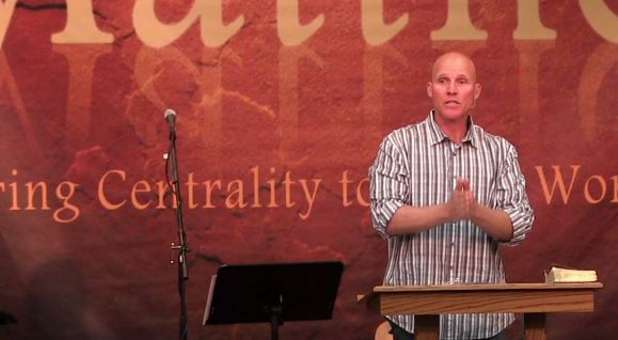
Christ had many roles, and prophet was one of them, pastor Shane Idleman says.

“Let me try to sum this up for you,” Idleman says. “Christ as king ruled us. The priest died for us, made atonement. Christ as a prophet directs us.”

Jesus as prophet directed our lives, Idleman says. But people were not a fan.

If you want people to listen, you shock them with the truth. Watch the video to see more.

Shane Idleman is the founder and lead pastor of Westside Christian Fellowship in Lancaster, California, just North of Los Angeles. He recently released his seventh book, Desperate for More of God at shaneidleman.com. Shane’s sermons, articles, books, and radio program can all be found at wcfav.org. Follow him on Facebook at:facebook.com/confusedchurch.

Great News!! Muslims in Malaysia Now Allowed To Legally Become Christians.

There is new hope for ex-Muslim converts to Christianity in Malaysia after the recent landmark ruling allowed a Muslim man to officially renounce Islam and legally embrace Christianity.

A Malaysian court affirmed the right of a former Muslim to convert to Christianity in a landmark ruling handed down just before Easter.

Rooney Rebit converted to Christianity in 1999 and was baptized at age 24, according to World Watch Monitor. But he was officially considered Muslim due to his parents’ conversion to Islam when he was 8.

Rebit asked authorities to legally declare him a Christian and affirm his right to believe in Jesus. He also wanted the National Registration Department to change his identity card and for his state’s religious department and Islamic Council to officially release him from Islam.

A recent court ruling in Malaysia is seen as good news for a religious freedom there, the decision allows for a Muslim man to officially change his religion to Christianity. We all know, Malaysia is one of the Muslim Nation where Christians were being oppressed and persecuted, but this good news made the Christian people living there see hope that anytime there could be changes with regards to this appeal. People should have the right to choose their religion. Christians have the right to choose their own faith.

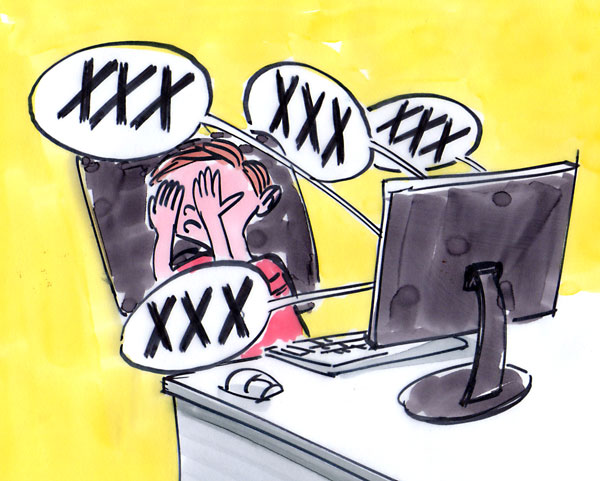
4 Ways to Prevent Porn in Your Home

If you want to keep porn out of your home, you need to know:

There’s not enough porn-proofing in the world to stop you unless you really want to quit porn.

But: the very act of taking a first step to prevent porn can lead to momentum, which can lead to total, lasting freedom. Those first steps matter.

If you can do what you ought for a while, it can become what you want for life. Once you’re in the stream of recovery, it builds on itself until you’ve hit a sweet spot of small victories that link to big ones.

It’s the initial smaller victories that require an uncomfortable re-structuring of your habits and your home.

Here are four ways to set up boundaries and prevent porn in your home.

1) Change up your whole living space, from bed sheets to pantry to picture frames.

If you’re like me, you’ve been frustrated enough at trying to break bad habits that you’ve almost flipped a table or thrown your things around.

It turns out: that might be the very thing that flips the switch.

Any habit comes with a long list of associations that we hardly think about, from the color of your sheets to the food in your pantry to the shape of your picture frames. These triggers coincide with emotions like guilt or anger, stress or depression, along with hundreds of familiar patterns that weave into a path. Your brain eventually stores these external visuals as part of a routine. When you make a drastic change to these things: you interrupt that routine and prevent porn.

Even a visually neutral cue that’s been associated with your addiction can trigger a relapse. In other words, something as plain and harmless as the shape of your computer can set off a series of habitual behaviors.

Simple things like rearranging your furniture, throwing away your blankets, putting stickers on your laptop, getting a bright lamp, or giving up midnight snacks will do wonders. Switch your sock drawer with your shirts or line up all your toiletries backwards.

This might sound like hocus-pocus pseudo-science, but the first time I tried this, I was surprised at how much even my other habits, like flossing or bringing a laptop to bed, had changed. I had the feeling of being a visitor in my own space, and the extra precious seconds between trigger and behavior created the necessary distance to shake myself out of the urge and prevent porn from invading my mind.

2) Keep your electronics insulated in boundary zones.

It’s likely that almost your whole addiction happens online.

This may sound very obvious: but if you’re able to lock your access by multiple barriers, it will slow you down enough until an urge can pass.

And yes, the urge will always pass. In fact, creating these barriers causes an aversion to accessing pornography, because you’ll associate difficulty with your computer.

I had a friend once in high school who was short, skinny, and probably weighed the size of my thigh. Whenever he was bullied, no matter how slight the comment, he would immediately drop everything and get into a fight. He lost, every single time. But the bully would never pick on my friend again, because the bully just didn’t want that sort of trouble.

This sounds like a silly example: But to prevent porn we have to be willing to fight ourselves for our recovery, to create the right kind of trouble to dispel the wrong kind of trouble. In a computer age, it’s an inconvenience to lock up your access.

It’s annoying to put your laptop in the hallway or to keep your phone charger in the living room. It can feel limiting to get X3watch to block supposedly harmless websites. But really, I would rather have filtered access to a ton of websites than a single avenue to feeding my addiction.

It’s difficult to use my computer: but that’s a cost I’m more than willing to pay, even with lifelong vigilance.

Another option for those of you with kids is Circle. It’s a little device that sits in your house and controls internet access for your kids, making it a really handy gatekeeper for those impressionable minds you’re raising.    ….. Read more


The Sensational Story of why Rifaq Bary Fled Islam to follow JESUS

CBN News first learned the name Rifqa Bary in 2009, when the then-teenager ran away from home to escape her Muslim family.

When Bary was 16 years old, her Muslim parents found out she had renounced Islam and had become a Christian. That’s when she ran away from home in Ohio and took refuge with Christians in Florida she had met on Facebook.

Bary had heard stories of so-called honor killings for those who renounce Islam, and she feared that if she returned home, her father would try to kill her.

“This is not just some threat; this is reality. This is truth,” Bary said.

Bary’s parents denied their daughter’s claims and fought to have her returned home.

Police in Florida and Ohio found no evidence she was in danger, but because she was a minor, Bary remained in Ohio state custody until her 18th birthday.

Today, the 22-year-old college student tells her remarkable story in a new book, Hiding in the Light: Why I Risked Everything to Leave Islam and Follow Jesus.

Source : CBN News

5 Things Christians Should Stop Saying on Facebook

Despite the flaws of social media, it can be a powerful force to share God’s amazing love over the long run. Our witness can be deeply powerful when our unbelieving friends see our continued faithfulness year after year and our hope of glory in the midst of pain (Colossians 1:27).

But that doesn’t mean everything we share on Facebook contributes to this witness. In fact, there are some types of updates we Christians share that, for the most part, do more damage than good.

Here are five status update traps to avoid:

1. Pastor So-and-So is a Big Ol’ Heretic

Imagine, if you will, your unbelieving friends tap into their Facebook app, and the first update they see is you complaining (again) about that pastor you love to complain about. You know the one. You mention, for the third time this week, another thing he taught that is heretical, and you make sure everyone knows it.

First of all, we absolutely must call out false teaching. Jesus laid the groundwork for this when He rebuked the Pharisees and scribes for their hypocrisy (Matthew 23). Paul and John weren’t afraid to point out many false teachers in their letters. So, that’s not the issue.

The issue is that your unbelieving friends don’t know all this. What they see, instead, is one Christian attacking another Christian for what seems like a minor matter. Such updates make it look like we spend most of our time beating each other up instead of doing that “love thing” we claim to do. (Think about how Pilate and other Roman officials responded to the complaints the Jews brought against Jesus and Paul. They didn’t see the difference; they just saw what looked like petty jealousy and bickering to them.)
Calling out false teaching is much better done in personal settings with other believers or in a private way with someone who isn’t a believer—and usually when you have time to really explain. The context is very important here. Slapping it all over Facebook makes the church seem hypocritical and hyper-judgmental.


2. Some People Just Don’t Know How Much Pain They Cause

Trust us. We get it. Someone talks about you behind your back or lies to your face. It makes you mad. You want to vent, but you don’t necessarily want to give all the details to everyone. So, up on Facebook goes a passive-aggressive post that you hope the person sees.

Maybe they will, or maybe they won’t. Either way, this isn’t what Jesus meant about us approaching that person privately to discuss the problem (Matthew 18:15–18). More than likely, you’ve made your innocent friends feel like maybe they were the ones who hurt you in some way, but they don’t know how. Now they’re paranoid.

If you need to vent, do it to someone you trust in person so that they can bear your burden (Galatians 6:2). Don’t post that vague status update.

3. Something Terrible Just Happened to So-and-So. Please Pray for the Family.

Requests for prayer can be very tricky matters on Facebook. For one thing, always-on Internet means that we can now get updates in seconds. That adds a new level of responsibility, especially in tragedy.

When something bad happens, we want people to be praying for those involved. That’s a good thing. But if we post an update about it on Facebook as soon as it happens, there’s a very good chance that family members and close friends who haven’t been notified yet could get the news through cold digital bits along with lots of strangers. That makes it even worse—especially if they don’t know all the details. At that point, our prayer request doesn’t bring the comfort we’re supposed to bring (1 Corinthians 1:3–4).

It’s much better for us to hold off on the post until we’re sure everyone knows the news (but see the next point). If you need to get prayer warriors going, text or call them directly.

4. Please Pray for So-and-So’s Failing Marriage and the Bad Rash on His Back

Another potential problem with Facebook prayer requests is TMI (too much information). Most of the time, we like to be specific about what we’re asking prayer for, and there’s nothing wrong with pointing to a specific need (Philippians 4:6)—in the right setting.

Not every single one of your hundreds of friends needs to know all the details about a sickness, relationship struggle, or other personal matter. In fact, those details could cause problems later for the people you want to help. (Remember that whatever you post on Facebook will likely be “out there” forever—even if you think you deleted it.)

It would be much better for us Christians to gather together in person and pray for these needs. Grab friends and family who know the details and pray right there with the people who need it (James 5:16). If they don’t live close by, use FaceTime or Skype.

5. If You Don’t Support Such-and-Such Cause/Candidate, Just Unfriend Me Now!!!

Court rulings, elections, and world events can certainly get us mad and make us want to take to social media to explain just how mad we are. But no cause should be more important to a Christian than the Great Commission (Matthew 28:19–20). Court rulings and elected officials come and go, but making disciples lasts forever.

When we post our anger on Facebook, we can—unwittingly—give our unbelieving friends the idea that what’s most important to us is politics. They may think that being a Christian means having a certain set of political opinions—not a life-changing relationship with Jesus. Worse yet, they might take you up on your offer to stop listening to you by unfriending you. That’s one less Christian witness in their lives.

That doesn’t mean we should never post on controversial topics. Instead, it means that we must weigh our words very carefully and speak the truth with gentleness (1 Peter 3:15). Lashing out or making threats to unfriend does not qualify. (If someone in particular bothers you, you can always “unfollow” their updates for a time.)

You’ll probably get mad at something that happens, and maybe an unbelieving friend will post something about it that drives you to distraction. But—and this is big—they aren’t saved. They’ve been blinded by the god of this age (2 Corinthians 4:4). Show them grace. They need it—even if you’re sure they’re wrong.

Source : Cross Walk