Church of England to Start Sexuality Talks

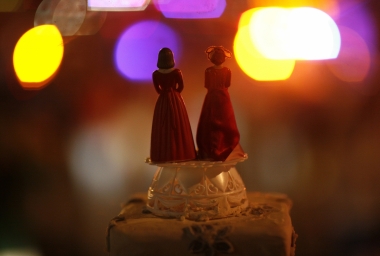
Christian Today report– The Church of England is to begin talks on whether to authorise prayers to mark same-sex relationships.

The question is raised in the resources published this week to go with the “shared conversations” on sexuality which are about to enter their second stage.

The “second circle” of the shared conversations, set up last year in an attempt to resolve the Church’s crisis over sexuality, will begin regionally in April. The dioceses will meet in 13 “clusters” of between three and five dioceses at venues across England between April this year and March next year.

The groups will consist of gay and straight clergy and laity.

One of the questions the groups are being asked to consider is: “Should the church offer prayers to mark the formation of a faithful, permanent, same sex relationship? If so, what is the right level of formal provision that should be made?”

A further question asks: “More specifically, given that same sex marriages are now taking place, what should our pastoral and missional response be to married same sex couples who seek to be part of the life of our church locally?”

The Church of England’s position has traditionally been that, whatever their faith, a couple is entitled to be married in the parish church of either, although marriage after divorce is less straightforward.

When same-sex marriage became legal in Britain last year, the Church of England, which opposed the legislation, won “protection” in law for itself from ever having to perform one.

This means that some couples who are legally entitled to marry cannot now do so in their own parish Church, even if they are practising Christians and have been churchgoers all their lives.

One of the difficulties for the Church of England is the consequences of a change of mind for the wider Anglican Communion, of which it is the “mother” church. Some Anglican provinces function in countries where homosexuality is illegal and carries serious penalties.

The questions in the conversations also ask: “How might parish churches in England reflect upon the responsibilities of being part of the worldwide Anglican Communion, in ways which remain true to their vocation to witness to God effectively in their local context?”

Those taking part are being asked to consider whether the concept of “pastoral accommodation” might help Anglicans to honour the consciences of fellow Christians while recognising that the church’s present teaching on sexuality has not changed.

In a paper put forward for the conversations arguing for the traditional, Biblical position, Dr Ian Paul, honorary assistant professor at Nottingham university, concludes: “It has been claimed that the biblical texts do not speak to our current context, since they show no knowledge of stable, same-sex, committed relations. But this is not the case; we know from other ancient texts that same-sex relations took a variety of forms. Though unequal, pederastic relations were the most common, equal partnerships akin to same-sex marriage were not unknown.

“It would therefore be more accurate to say that the biblical texts show no interest in the form that same-sex relations take. Scripture rejects the notion of ‘orientation’ as of defining significance in human identity, instead putting the binary identity of gender at the centre of its theological anthropology.”

In another paper, Canon Loveday Alexander, emeritus professor of Biblical studies at Sheffield university, says just “walking away” from the Bible is not an option for himself or the Church. “We can’t just abandon this text which has nourished the life of faith for two millennia. I can’t turn my back on a text which has sustained and informed my own faith for as long as I can remember. We have to stay with the Bible — but we have to find a way of making sense of it, in a world that is very different from the world (or rather worlds) in which it was written.”

But Dr Philip Groves, of the Anglican Communion, says in a third paper that the answer is not in choosing one option over another, or in finding a compromise that holds the strengths and weaknesses of each option in tension. “The answer is to aim for both.”

He concludes: “The radical step asked of the Church of England in deciding to enter into good disagreement is to find the energy for this mission. It is about reconnecting with society and discovering faithfulness. It is about relevance and identity. It will be hard, but it will be rewarding.

“The process will need to reflect theological diversity and to do this it will need to develop trust and relationships between unlike people so that the Scriptures and traditions of the Church can be properly examined and ways of faithfulness emerge.

“The time has come for good disagreement.”

Jayne Ozanne, director of Accepting Evangelicals, who recently “came out” as gay in an interview with Christian Today, welcomed the publication of the “conversations” timetable and resources.

She said the key was to accept there were different ways of reading Scripture. “What we are looking at is creating that middle space of accepting, as we have done with other issues, that there is an integrity to someone’s faith if they hold a different view on this.”

She said it was critical for the Church to create forums where people of different views could engage “safely” with each other.

“For me, Jesus embodied grace and truth. It is about grace, and understanding the hurt of those who hold a different point of view. For too long this has been a hot issue, a theological debate which has been a battle of words.

“When you embody these words in experience and personal testimony as we see Jesus did, I believe they take on a new meaning and authority.”

The conversations were just the start.

She called for reassurances of a “safe space” for all those taking part, including the suspension of any disciplinary measures against clergy. There are fears that clergy who share things in the conversations that might technically be against the rules, such as experience of a gay physical relationship, could be vulnerable to disciplinary action.

Ms Ozanne said: “For some, their very livelihoods are on the line. Words can never be unspoken. It is absolutely crucial that we look to our bishops to accept a moratorium on clergy discipline throughout these two years.”

Source: Christian Today

Fifty Shades of Grey: Review

Christian Today report–  Well this is awkward. The most sexually explicit, most notorious, most morally questionable film of the year so far was released today, and Christian Today sent me to review it. I’d guess a number of readers would question whether it’s even right that I saw it at all; I subscribe to the belief that we can’t critique culture that we haven’t engaged with, that we can’t condemn a film that none of us has seen. Besides, this present awkwardness is nothing compared to that which I felt in the queue for Fifty Shades of Grey today. On my own.

There has never before been so much pre-release speculation about the content of a film that didn’t feature R2D2. Partly due to their knowledge of the phenomenally successful and abysmally-written novel on which it’s based, many (not exclusively religious) people have felt justified in pre-judging it, and warning against its content. In particular, concerns have been raised that the film celebrates – and even incites – violence against women; the book’s description of the central couple’s dominant-submissive relationship is arguably abusive of main character Ana. The simple message from many groups: we should avoid Fifty Shades because it normalises dangerous, violent behaviour and dysfunctional sex.

Yet despite the warnings, people have tonight paid to see Fifty Shades in their droves. My local multiplex put on a raft of extra screenings; every one a sell-out. In the US, the film has become the fastest selling R-rated movie in decades. Like it or not, Fifty Shades is a thing. So the question is… how bad is it?

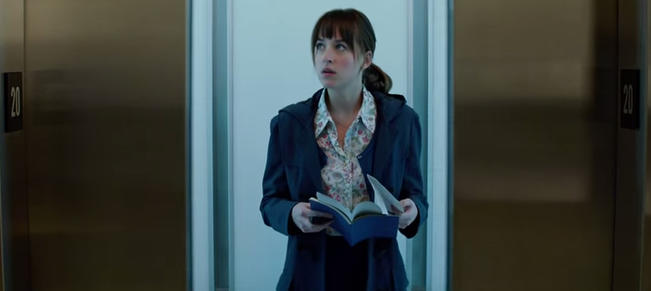
Right from the off, Fifty Shades of Grey shocking, but not quite in the way you might expect. A contrived first meeting between the two leads, Jamie Dornan and Dakota Johnson, reveals an awkward absence of chemistry, and showcases a script which appears to be paying homage to the poorly written source material. Johnson’s Ana is supposedly interviewing Dornan’s Christian Grey for a college newspaper, and a clunky interaction ensues during which Ana begins to fall for Christian. Before we know it, they’re embarking on a relationship, and that soon takes a strange turn due to Christian’s unorthodox sexual tastes.

What the first part of the film doesn’t include is sex. In fact, it’s a good 40 minutes before the two characters finally find their way into bed together, and when they do, it’s hardly an unconventional encounter. For the best part of the next hour, their relationship develops; director Sam Taylor-Johnson slowly turning up the heat as first Christian reveals his infamous ‘playroom’ (fully equipped with whips, handcuffs, ropes and so on), and then asks Ana to sign a contract to enter into a submissive-dominant relationship with him. Still, the sex scenes are brief, and not all that shocking; there’s no genitalia on show bar one brief glimpse of Dornan, and nothing on show outstrips the things that Basic Instinct was doing in 1992.

In fact, it appears that the writer and director have made every effort to soften the abusive tone of the novel. The film delicately walks that tightrope throughout, focusing in on Christian’s stipulations about safety and consent. The battle for control between the two leads becomes an interesting source of drama in an oddly-improved middle section, and Ana is no pushover, challenging Christian on his motivations and fighting back against his need for dominance. For a moment, I was starting to worry I’d have to fight the film’s corner, and I was beginning to enjoy its one saving grace: a fantastic soundtrack.

Then, suddenly, the film loses its footing – both morally and structurally. The finale sees Christian showing his true colours – as a man propelled by the stress of his job to want to hurt and ‘punish’ the woman who shares his bed, or rather, dungeon. One horrifying scene towards the end, as he administers six lashes to Ana with a belt, is almost impossible to watch. It might sound strange to suggest that this is suddenly jarring; that it feels out of context, but it does. We’d been lulled into believing that this relationship was, while odd, loving and consensual. It’s actually deeply dysfunctional, as Ana realises as she turns and runs.

And then, most bizarrely of all, the film just ends. In defiance of traditional screenplay structure, the story just runs out of road, hamstrung by its faithfulness to the source book. So we’re left feeling stung by that final, inhuman encounter, and in no rush to watch the inevitable sequels.

I’m not entirely sure, however, that the film glorifies abuse or domestic violence. BDSM (the acronym for this kind of sexual relationship) doesn’t necessarily equate with either of those things, and while in the end Christian’s actions tip him into an abusive role, neither Ana or the film allow him to get away with it. As she leaves his apartment that final time, we’re in no doubt that he’s committed an act of villainy; that’s hardly glorification.

It’s an obvious gag, but Fifty Shades is all marketing mouth, and no trousers. The pre-release buzz would have had us expecting hours of on-screen depravity. In fact we mostly watch Dornan and Johnson, the first woman to compose an acting performance entirely of lip-biting, having conversations. It’s a bit dull at times and there are some truly shocking lines: “Most of the fear is in your head” claims Dornan’s wonky-accented Christian at one moment, leading us to wonder where else it’s possible to contain a mental impulse. Mainly though, it’s a triumph of marketing hype.

Ultimately, the advance judgements prove correct: Fifty Shades does promote a warped idea of healthy sex. EL James’ misogynistic fantasy of a handsome, rich, violent man who needs control of his ‘submissive’ is far from a picture of a loving, mutually-respectful relationship, and Christians of all people shouldn’t look for reasons to affirm it. Prudishness is no alternative however, and nor is criticism without engagement.

Most articles about the film make reference to some sort of protest among ‘religious groups.’ The media loves that narrative, and often we hand it to them on a plate. Instead then, I think we should be using the release of Fifty Shades to elevate the conversation around sex and relationships – not squash it. Preachers and leaders need to be brave enough to appropriately tackle the subject; to talk about God’s gift of sex, best enjoyed in the context of a loving, committed relationship in which submission and consent are entirely mutual.

The trouble is, that’s not the view of sex we’re known for. So if we’re really going to respond to the furore around Fifty Shades of Grey in a positive, constructive way which is affirming of sex and sexuality then we’re going to have to address a few things. Here are just a few steps that might help us begin modelling a positive sexual ethic:

Stop repressing and suppressing sex… let’s talk about it

Even when we do talk in church about sex, we do so with an awkward embarrassment which belies our repression of the subject. Sex is a gift from God, not something to be ashamed of, and I see nothing in the Bible that instructs us to stick to the vanilla, missionary, pro-creation-only version of sex. With all the usual caveats in place – be mindful of age groups, don’t resort to cheap innuendo and so on – we’ve got to start talking about it more. One of the reasons why so many Christians struggle with pornography is that the subject is kept in the dark.

Disarm shame

One of the areas in which we have to do better, and especially with young people, is in dealing with people who have ‘failed’ sexually (and I use that loaded and unhelpful term intentionally). I was at a Christian event a few years ago and had to deal with the fallout of a seminar which had essentially told young people who’d had sex that they were ‘damaged goods’. That’s not the version of grace that I find in the Bible; Psalm 103 says God has removed our mistakes from us ‘as far as the East is from the west.’ So we need to be more careful with our terminology about sex, and more thoughtful in our treatment of people.

Replace legalism with idealism

The ‘don’t do it’ message which churches seem to be known for, especially in youth ministry, clearly doesn’t work. In a highly sexualised culture, we need to give people more than just a set of rules about sex. So instead, could we focus on painting a picture of healthy sex and relationships, which thrive because they’re committed? And if we’re going to do that, then every Christian in a relationship would do well to invest more time in it, so creating little beacons of relationship idealism that encourage the people around us. As part of that, can we be brave enough to give people ownership over their own decisions and discipleship? I’d argue that reflects how God engages with the world.

A church that’s known for its openness, grace and idealism is far better placed to speak into culture, because it genuinely speaks of a better alternative. It’s this version of the church that has every right to decry Fifty Shades of Grey, because it goes on to offer a sexual paradigm that has nothing to do with repression, abuse or male-dominance. It speaks instead of commitment, care, mutual submission and love.

Should you watch the film? That’s up to you of course, but I wouldn’t recommend it. It’s Oscars season, and cinemas are currently full of superb films like Selma. By comparison, Fifty Shades is a gimmick based on a story that would never have been filmed without the tidal wave of notoriety behind it. So the greatest justification for my attendance this evening ends up being this: I’ve seen it, so you don’t have to.

Source: Christian Today

Lord Sacks Says Religious Terrorism Could Last for At Least ‘Another Generation’

Christian Today report– The former Chief Rabbi has warned that terrorist atrocities committed in the name of religion could continue for another generation or more.

Lord Sacks, who is spending a year lecturing in the US at New York and Yeshiva universities, told American broadcaster PBS that his message applied across all religions.

“I fight for the right of Christians to live their faith without fear anywhere in the world,” said Lord Sacks, interviewed by Bob Abernathy. “But I need you Christians to fight for the right of Jews to live without fear anywhere in the world.”

Lord Sacks, who witnessed the damage violent religious extremism can do when he visited ground zero in New York after 9/11, said: “Murder of the innocent is forbidden in Islam. Suicide is forbidden in Islam. To be a suicide bomber is categorically forbidden in Islamic law. So you have here some religious radicals who are doing in the name of Islam what the leading teachers of Islam now and throughout the Muslim past have ruled to be categorically forbidden.”

He said problems arose when piety and power were confused. “They are two completely different things. So when I seek power in the name of piety I do great harm. I injure God’s world. Fundamentalism, which is what we are talking about here, in any religion is always the product of fear, and I believe we have to allow faith to conquer fear.”

One problem was that peace demanded compromise, which to a religious mind was not a virtue but a vice, he said.

“I set myself up to kind of educate the educators of the next generation, and I don’t think there’s any shortcuts. There’s no quick fix here. You don’t suddenly turn radicals into moderates. You have to educate a generation.”

Asked whether that meant the atrocities could continue for a generation or two, he affirmed: “I suspect so.”

Abernathy mentioned that Sack’s hope that education can prevent violence is challenged by the Nazi Holocaust, which was supported by many of Europe’s most cultured and learned people.

Lord Sacks said: “The more you study the Holocaust, the less you understand. I spent a lifetime studying it, and I still cannot understand.

“There were string quartets playing in Auschwitz-Birkenau while a million and a quarter human beings were gassed, burned, and turned to ash. What happened in Auschwitz in the Holocaust was a terrible demonstration of the limits of civilisation to civilise if we do not fear God and see His image in every human person.”

On the rise of antisemitism across the internet, Lord Sacks continued: “The end result is that hostility anywhere can be communicated everywhere. I would not say its people are suddenly starting to hate Jews. It’s just a few people have learned how you can communicate hate very effectively and very widely.”

He praised the US for its respect. “If you want proof that you can be deeply religious and yet create a society that respects the freedom of the other, then you have to look here in America.”

He also described how he received his knighthood from the Queen while obeying Jewish law that meant he could not kneel. “When you receive a knighthood you have to kneel, and Jews don’t kneel. On Rosh Hashanah and Yom Kippur we do, but any other times? No. So they provide this little thing which you hold onto, this little rail so you can incline yourself a little without actually kneeling, at which point, I’m sure you know, the Queen turned to Philip and said, ‘Why is this knight different from all other knights!”

Source: Christian Today


Iraq: Yazidis Take ‘Revenge’ on Arab Villages

Christian Today report– Iraqi Yazidis are carrying out “revenge” attacks on Arab villagers they believe to have sided with Islamic State militants during persecution of the minority group last year, it has been claimed.

Sunni Muslims living in Sinjar told Reuters that armed Yazidis have attacked four villages in the past two weeks, killing 21 people. A further 17 are still missing.

One local labelled it “an act of revenge by the Yazidis”.

“The aim is to expel Arabs from the area so that only Yazidis remain,” 41-year-old Dhafer Ali Hussein from Sibaya, one of the affected villages,” said. “They want to change the map.”

A minority ethno-religious group in Iraq, Yazidis have been systematically persecuted by Islamic State during its attempts to create a caliphate. Their religion is an offshoot from Zoroastrianism, which blends ancient religious traditions with both Christianity and Islam. IS insurgents believe them to be “devil-worshippers”.

Hundreds of them were killed and thousands more captured, made slaves and raped last year.

Human Rights Watch reported in October 2014 that hundreds of Yazidi men, women and children were being held in “makeshift detention facilities” in Iraq and Syria. Many had been forced to convert to Islam, while others had been sexually abused, raped, and girls in their teens taken as wives for jihadists.

“The Islamic State’s litany of horrific crimes against the Yazidis in Iraq only keeps growing. We heard shocking stories of forced religious conversions, forced marriage, and even sexual assault and slavery,” special adviser at HRW Fred Abrahams said.

He added that some of the victims were children.

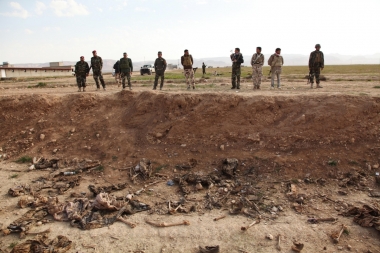
Reuters reports that Yazidis, many of whom fled the Sinjar region in the north of Iraq last year, are now returning home and “uncovering one mass grave after another” as the extent of the atrocities committed by IS militants becomes apparent. The remains of more than 40 Yazidis were found in two “bloodstained pits” just last week.

Some members of the minority are now blaming local Arabs for aiding the militants, “looting their possessions and actively participating in what they call attempted genocide”. Though villagers living in Sibaya admitted that some men had joined IS, they said those men have since fled, or were killed when Kurdish peshmerga fighters forced Islamic State out of the area in December.

There are now fears that tensions between these groups may add to the crisis perpetrated by IS.

Source: Christian Today


At Least 10 People Killed in Mosque Attack in Pakistan

Christian Today report– At least 10 people were killed when gunmen opened fire in a mosque during Friday prayers in the Pakistani city of Peshawar today.

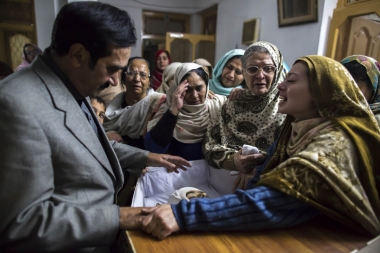
According to witnesses, the attackers entered the Shia mosque in the city’s wealthy Hayatabad district and began firing at the worshippers gathered inside. Three explosions were then reportedly heard inside the building, and police say grenades were thrown. TV footage showed people, some injured, fleeing from the scene.

“Ten dead bodies and 40 wounded people have been brought to Hayatabad Medical Complex,” a doctor, Mumtaz Marwat, told the BBC.

Though no group has yet claimed responsibility for the attack, radical Sunni Islamist groups have targeted Shia mosques in the past.

On January 30, a Shia mosque was attacked in Sindh province, killing more than 60 people. The Jundallah militant group – a Sunni organisation linked to the Pakistani Taliban and which has announced allegiance with Islamic State – later claimed responsibility for the violence. It was the deadliest sectarian attack in the country in almost two years.

Fahad Marwat, a spokesman for Jundullah, told Reuters they had targeted the building because the Shias “are our enemies”.

Peshawar, in the north-west of Pakistan, has seen significant violence in recent years. At least 119 people, including 37 children, were killed in a suicide bombing outside All Saints Church in the city in September 2013.

Some 133 children and 17 adults also died when Taliban gunmen stormed a school in Peshawar last December.

Source: Christian Today


Christians Urged to Avoid Fifty Shades of Grey

Premier report– A Christian group says Fifty Shades of Grey risks giving young people the wrong idea about relationships.

The controversial movie based on an erotic romance novel lands in cinemas on Friday with a 15 age rating.

CARE CEO Nola Leach said: “This film glories in short term pleasure and abusive relationships and is characterised by a distinct lack of hope. It is a tragedy that on this weekend of love, young and old will be queuing to see a film that celebrates such a warped version of what true and healthy relationships should look like.

Anastasia and Christian are actually deeply unhappy characters, whose individual identities revolve around sexual pleasure. Their relationship is all about what they can get, not about what they can give up for one another.”

“Increasingly, in this sexualised society the message being given to the next generation is such relationships, which are based more on lust than anything else, are the norm and this is deeply regrettable.

“The Christian teaching is that long-lasting, healthy relationships require work and should never be based solely on physical attraction, but rather mirror the deep and sacrificial love that exists between Christ and the Church,” added Mrs Leach.

Source: Premier

Benedict XVI Never Regrets His Decision to Resign, Says Aide

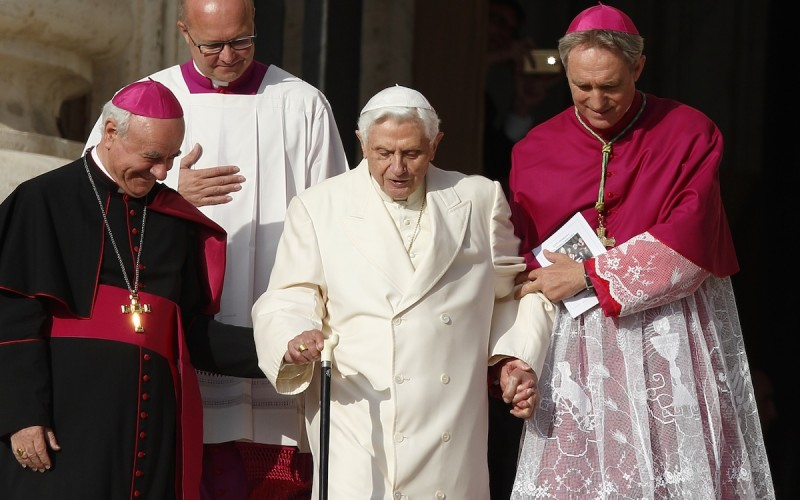
Catholic Herald report– Benedict XVI has never doubted or regretted his decision to resign, knowing it was the right thing to do for the good of the Church, Archbishop Georg Gänswein, prefect of the papal household and personal secretary to the retired pope, has said.

“The Church needs a strong helmsman,” and Pope Benedict was keenly aware of his own waning strength while faced with such a demanding ministry, the archbishop said in an interview published in the Italian daily Corriere della Sera.

Two years after Pope Benedict’s historic announcement to step down as supreme pontiff, Archbishop Gänswein said the retired pope “is convinced that the decision he made and announced was the right one. He has no doubt.”

“He is very serene and certain in this: His decision was necessary and made ‘after having repeatedly examined my conscience before God’,” he said, citing words from the Pope’s announcement.

Pope Benedict had told a stunned audience of cardinals assembled for an ordinary public consistory that “I have come to the certainty that my strengths, due to an advanced age, are no longer suited to an adequate exercise of the Petrine ministry.”

Archbishop Gänswein said in the interview that Pope Benedict was aware of his “duty not to look out for his own self but for the good of the Church.”

The Pope spelled out the precise reasons for his decision, the archbishop said, and “all the other considerations and hypotheses are wrong”, including assumptions that the Pope’s resignation was not valid or had not been done in full freedom.

“Hypotheses cannot be based on things that are not true and totally absurd,” Archbishop Gänswein said. “Benedict himself said he made his decision with freedom, without any pressure, and he assured his ‘reverence and obedience’ to the new Pope.’”

The archbishop said doubts about the validity of the resignation and subsequent election of Pope Francis stem from a lack of understanding of the Church.

Also, the option for a Pope to resign is explicitly written in the Code of Canon Law, which says a Pope may step down as long as the decision is made freely and is “duly manifested”.

Archbishop Gänswein said Pope Benedict, who will turn 88 in April, is still following the prayerful, quiet life he wanted to dedicate himself to upon his retirement.

Like his namesake, St Benedict – the father of Western monasticism – the retired pope “has chosen a monastic life. He goes out [in public] only when Pope Francis asks him to; as for the rest, he does not accept other invitations,” said the archbishop, who lives with retired Pope Benedict in a renovated monastery and has been his personal secretary since 2003.

Archbishop Gänswein told the newspaper that in addition to the pope’s usual routine of prayer, reading, keeping up with correspondence, receiving visitors, watching the evening news and walking in the Vatican Gardens, he has been playing the piano much more often: “Mozart especially, but also other compositions that come to mind at the moment; he plays from memory.”

The only health issues, the archbishop said, are “every now and then his legs give him some problems, that’s all”. The pope, who has had a pacemaker for several years and uses a cane, still has an incredibly sharp mind, the archbishop added.

When asked what Popes Benedict and Francis might have in common, Archbishop Ganswein said that while their ways of expression are very different, the one thing they share is “the substance, the content, the deposit of faith to be proclaimed, promoted and defended”.

Source: Catholic Herald

Campaigners Dissappointed As Humanism Won’t be Included in Religious Studies GSCE

Christian Today report– The Government has rejected calls to include the study of humanism in the new Religious Studies GCSE, despite widespread support for its inclusion. Campaigners have been left “bitterly disappointed” at the omission.

Though references to humanism are included, the revised content will not include the study of humanism alongside  major world religions.

At GCSE level, students are required to study two major faiths out of Christianity, Catholicism, Judaism, Islam, Hinduism, Sikhism and Buddhism. While it is hoped that this will increase religious literacy, critics believe that pupils should have the option to undertake in-depth study on a non-religious or humanist worldview.

The British Humanist Association (BHA) carried out a public consultation and found that 90 per cent of the public supported its call. The BHA was asked by the Department of Education to produce the content of an ‘annex’ on Humanism, but it was not included in the final revised content.

The group has branded this decision “inexplicable”.

The BHA has been supported by the Religious Education Council and the National Association of Teachers of RE. More than 100 leading philosophers, academics and consultants signed a letter to Minister of State for School Reform Nick Gibb calling for the annex to be included, and 30 faith leaders, including former Archbishop of Canterbury Rowan Williams, also signed a letter urging the government to reconsider.

“As religious leaders we are writing to express our support for proposals to allow students to have the option for systematic study of Humanism…and for an annex setting out content on Humanism to be added alongside existing GCSE annexes on the principal world religions,” the letter read.

“Such a change would not compel anyone to systematically study non-religious worldviews or make it possible to do so for the whole of a qualification, but it would allow young people to study a more representative sample of major worldviews that are common in Britain today.”

Signed by representatives including the Rt Rev Richard Harries, former Bishop of Oxford, Rabbi Dan Cohn-Sherbok, a Professor of Judaism, and Raheed Salam of the Interfaith Youth Trust, the letter added that including humanism “would be fair, popular, and add rigour to the subject”.

“We see no reasonable or persuasive argument to oppose it,” it concluded.

However, GCSE pupils will not study comprehensive content regarding a non-religious worldview. According to ministers, it would be inappropriate to do so.

“As these are qualifications in religious studies, it is right that the content primarily focuses on developing students’ understanding of different religious beliefs,” the government has said.

“A simultaneous focus on humanism would detract from an in-depth treatment of religion and the comparative study of two religions.”

The content will include, however, some new inclusive references. Students will be required to develop their “knowledge and understanding of…non-religious beliefs, such as atheism and humanism’, and to “demonstrate knowledge and understanding of the fact that…religious traditions in Great Britain are diverse and include…non-religious beliefs, such as atheism and humanism.”

BHA Chief Executive Andrew Copson has welcomed these additions, but says the group is “bitterly disappointed that Humanism is to be largely excluded”.

“With each generation being less religious than the previous one, it is vital that humanism be included and there is barely anyone apart from the Conservative part of the Coalition Government that disagrees. Today’s political decision is unfathomable and time will prove its futility,” he said, adding that school pupils have been “let down” by ministers.

Source: Christian Today


US to Withdraw Troops from Ebola Mission in West Africa

Christian Today report– President Barack Obama announced Wednesday that all but 100 American troops sent to West Africa to help manage the Ebola outbreak will be withdrawn by April 30.

The troops were dispatched to help contain the deadly virus, but the President said that the mission in the ravaged countries has shifted.

“While our troops are coming home, America’s work is not done,” he insisted. “Our mission is not complete. Today we move into the next phase.”

Thousands have died across Guinea, Liberia, and Sierra Leone since the outbreak began last spring. There have been nearly 23,000 confirmed or suspected cases of Ebola infection stemming from the current outbreak as of February 9.

Obama said that the focus has changed from containment to eradication, and said that civilian aid workers will be increased in the area.

Civilian government employees, volunteers, and the remaining troops will help in that effort.

“Our focus now is getting to zero,” Obama said, calling the military’s effort a “hope multiplier.”

“Every case is an ember that if not contained can light a new fire,” he added. “Plenty of American heroes remain on the ground, with even more on the way.”

The spread of Ebola has slowed, although health officials were concerned about a rise in Ebola deaths last week. For the week ending February 8, 144 deaths were reported, compared to 124 deaths the week before.

“Despite improvements in case-finding and management, burial practices and community engagement, the decline in case incidence has stalled,” the World Health Organization wrote.

Ebola cases in Liberia have generally decreased, while transmissions in Guinea and Sierra Leone continue to trouble health officials.

Source: Christian Today


Israel: Cremisan Valley Confiscation Mean Extinction for Christians, Mayor Tells Vatican

Christian Today report– The extension of Israel’s ‘separation wall’ in the fertile Cremisan Valley will mean that there is no future for Christians in the Bethlehem region, according to the Mayor of Bethlehem.

Palestinian Catholic Prof Vera Baboun has appealed to the Vatican for help.

“They want to build the separation Wall in the Cremisan valley and then expropriate the lands that belong to Palestinian Christians. If that happens, the whole area will be suppressed from the grip of the wall, and the first to go will be Christians,” she told the Fides news agency.

Baboun visited Rome with other mayors of Bethlehem’s “Christian triangle”, Nicola Khamis from Beit Jala and Hani al-Hayek from Beit Sahour, and Issa Kassissieh, Ambassador of Palestine to the Holy See.

As well as lands with vineyards and olive groves belonging to 58 Christian families in Beit Jala, the route of the wall in the Cremisan Valley also threatens two monasteries and a Salesian school.

According to Baboun, if the lands of the valley are confiscated, “There will be no future for Christians: the population density will rise to unsustainable levels and many will eventually choose the path of the exodus, which has already reduced the Christian presence in the Holy Land.”

Following an audience with Pope Francis, the delegation met Cardinal Secretary of State Pietro Parolin. Baboun told the Fides news agency: “We have reached a tipping point. We showed Cardinal Parolin maps and photos that we had with us and he listened carefully, with great concern.”

Israel’s plans for the Cremisan Valley have stirred fierce opposition among Churches, who argue, with other opponents, that it represents a land grab. Supporters say that it is necessary for military reasons.

The Israeli Supreme Court of Justice has yet to decide the issue

Source: Christian Today