Japan Vows to Avenge Countrymen’s Beheadings by ISIS

Christian Today report- Japanese Prime Minister Shinzo Abe vowed to avenge the deaths of two countrymen killed by extremist Muslim organisation the Islamic State (IS) after a new beheading video was released over the weekend.

The terrorists executed journalist Kenji Goto in a video published Saturday—a week after IS published a death photo of aspiring military contractor and Japanese citizen Haruna Yukawa.

Abe promised “to make the terrorists pay the price,” and condemned the actions of the militants in a statement.

“I am infuriated by these inhumane and despicable acts of terrorism, and resolutely condemn these impermissible and outrageous acts,” he said.

“I will never forgive these terrorists. I will work with the international community to hold them responsible for their deplorable acts.”

Yukawa, 42, was first captured in Syria in April 2014, but released with the help of Goto, 47. Yukawa reentered Syria months later, and was captured a second time in July 2014. Goto entered Syria in October, reportedly to rescue Yukawa. Abe said he grieved for their families.

“I am rendered simply speechless,” he intimated. “When I think about the unbearable pain and sorrow that his family must be feeling, I am rendered simply speechless.

“As a government, we have pursued every possible means to save their lives. We feel greatest sorrow and profound grief.”

IS demanded $200 million for the release of Goto and Yukawa after Abe pledged the same amount in non-military aid to countries fighting the terrorists in Iraq and Syria. A former Japanese diplomat and foreign affairs advisor to Abe called the executions a wake-up call.

“This is 9/11 for Japan,” Kunihiko Miyake insisted. “It is time for Japan to stop daydreaming that its good will and noble intentions would be enough to shield it from the dangerous world out there.

“Americans have faced this harsh reality, the French have faced it, and now we are, too.”

While Japan remains a pacifist country, Abe will reportedly seek to expand the role of the military legislatively in the coming weeks.

“No country is completely safe from terrorism,” he told Parliament last week. “How do we cut the influence of ISIL, and put a stop to extremism? Japan must play its part in achieving this.”

Source: Christian Today

Cuba set to have its First Church

Christian Today report- A remote town in western Cuba is set to be the first parish in the country to build a new church, as official government policy in the Communist nation towards religion makes a major shift.

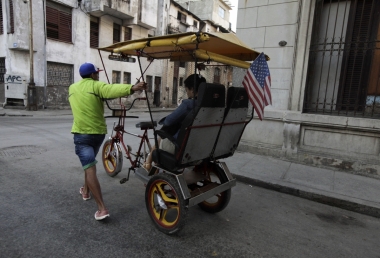
According to CNN, a new Catholic church is set to be built in the remote town of Sandino. The new church will take two years to build and will have a capacity to accommodate 200 churchgoers.

Rev Fr Cirilo Castro told CNN that Sandino’s Catholics have celebrated Mass once a week in a converted garage for many years now. The priest drives to the town every week to officiate as part of his ministerial duties to the province under whose jurisdiction the town falls. However, when the new church is completed, Fr Castro said that he will minister full-time in the town.

The diocese assured Sandino’s residents that “everything is ready” for the construction of the new church.

“There is money to start, there is the construction material to start, there are the permissions to start,” Bishop Jorge Enrique Serpa Pérez said.

CNN reported that most of the money that was donated for the church’s construction came from the St Lawrence Catholic Church in Tampa, Florida.

“Much of Tampa’s history and culture comes from Cuba,” Rev Tom Morgan, St Lawrence’s vicar, told CNN. “It’s absolutely fantastic they are building a new church, and I hope to be able to visit one day.”

Fr Morgan also hopes that the changes in the US Treasury’s policies could make it possible for St Lawrence to contribute materials for the church’s construction.

Religious freedom was suppressed after the 1959 revolution that brought the late Fidel Castro to power. However, since 1998, the Cuban government began easing up on its restrictions on the Catholic Church. This year, the government began approving requests for the construction of churches in the country, with the project in Sandino being the first to receive a green light.

Source: Christian Today

Candidates must focus on Important Issues, says Nigerian Cardinal

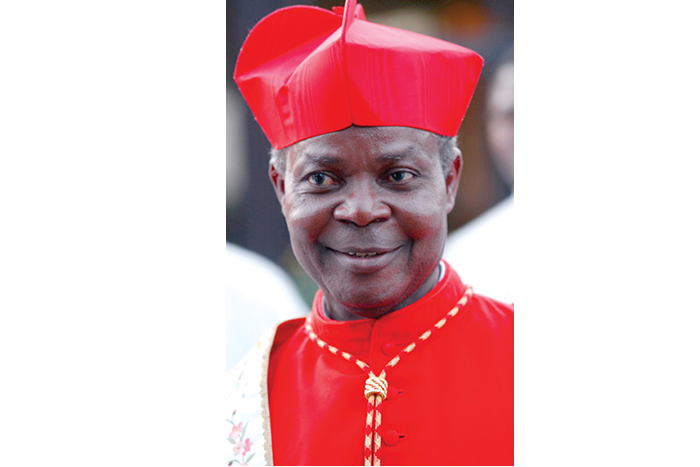
Catholic Register report-The retired archbishop of Lagos called on candidates in Nigeria’s Feb. 14 elections to focus on issues of importance to voters rather than on character assassination and smear tactics.

Cardinal Anthony Olubunmi Okogie, retired archbishop of Lagos, urged candidates to “publish their manifestoes and defend them.”

“They should be bold to say this is what they will do when they get there. It is through this that the electorate will be convinced that such candidates will be able to perform on assumption of office,” Okogie said.

The cardinal expressed fear that violence and bloodshed would erupt if the candidates do not keep in check comments about their opponents and their supporters.

“It’s already happening, as you can see, that the atmosphere is tensed. I am praying seriously, I am begging God to avert it,” he said.

”Look at the reports and advertorials in the newspapers. Instead of the candidates addressing the issues, the campaign is nothing but abuses, unearthing the past, disgracing themselves,” he said.

Polls suggest a close race between President Goodluck Jonathan and former military ruler Muhammadu Buhari, who lost to Jonathan in 2011.

Nigeria has been beset by government corruption, a flagging economy despite immense oil wealth and the Boko Haram insurgency, which nongovernmental organizations estimate has forced up to 1.5 million people from their homes and claimed 11,000 lives.

Okogie challenged the candidates to explain how they will tackle the country’s declining standard of education, unemployment, rising insecurity, poor electricity service, youth restiveness and kidnapping and hostage-taking.

“If we really want to keep Nigeria one as it should be, we should see one another as brothers and sisters. That’s the correct and proper thing to do,” he said.

The cardinal urged candidates to explain how they would partner with the international community to strengthen the Nigerian armed forces and offer plans to rescue more than 200 female students abducted in April.

He also warned candidates to guard against having political “godfathers” who would hinder them from fulfilling their campaign promises and suggested that corruption could end by reducing salaries for public officials.

“Then you will see that there will be few, sincere and honest people aspiring to political offices as against those jostling to milk the national cake,” he said.

In Washington, the U.S. Commission on International Religious Freedom warned of the potential for religiously motivated violence around the election.

“Every effort needs to be undertaken to ensure peaceful elections and prevent the use of religion to stir up more violence,” said a Feb. 2 statement from Katrina Lantos Swett, chairwoman of the commission. “The events leading up to and immediately following Feb. 14 are crucial to Nigeria’s long-term stability and status as a multi-religious and multi-ethnic society.”

Source: Catholic Register

Pope to promote peace during visit to Bosnia-Herzegovina

Catholic Register report– In an effort to help bolster a minority Catholic population and encourage dialogue and friendship among once-warring ethnic and religious communities, Pope Francis announced he would be visiting Bosnia-Herzegovina.

The Pope said he hoped the one-day trip June 6 to Sarajevo, the capital, would help “be an encouragement for the Catholic faithful, give rise to the development of the good and contribute to strengthening fraternity, peace, interreligious dialogue and friendship.”

The Pope made the surprise announcement Feb. 1 after praying the Angelus with those present in St. Peter’s Square.

It will be Pope Francis’ eighth trip abroad and the 11th country he visits outside of Italy since his election two years ago.

The Balkan nation, which is struggling to rebuild itself after a devastating war marked by ethnic cleansing, is still largely divided along ethnic lines. Bosniaks make up 48 percent of the country’s nearly 4 million people, while Serbs make up 37 percent and Croats 14 percent. About 40 percent of all citizens are Muslim, 31 percent Orthodox and 15 percent Catholic.

The 1992-1995 conflict saw a Serb campaign of ethnic cleansing of Bosnian Muslims after the mostly Muslim Bosnia-Herzegovina declared independence from Yugoslavia in 1992. More than 200,000 Muslims and tens of thousands more were killed in the conflict, more than 600 Catholic churches were destroyed and hundreds of thousands of Catholics were forced to flee certain regions.

Although the 1995 Dayton Peace Accords ended the fighting, the complex political structures the peace deal established — with one area administered by ethnic Serbs and another by a Muslim-Croat federation — meant the mostly Catholic Croat community became powerless and discrimination against them grew, according to Bosnia’s bishops.

During their “ad limina” visit to the Vatican in 2006, the bishops told journalists that Catholics were slowly “becoming second-class citizens in our own country.”

Cardinal Vinko Puljic of Sarajevo said at the time that Bosnia-Herzegovina is “a confused country” whose complex political structure is unsustainable, unjust and must be changed. Corruption and political stalemate are said to be rampant.

It has the highest youth unemployment rate in the world with nearly 63 percent of 15- to 24-year-olds without work. The overall unemployment rate of about 44 percent and a perceived sense of political inaction to address the country’s economic woes have led to a series of protests and demonstrations in some cities.

St. John Paul II visited Bosnia-Herzegovina twice in his 26-year-long pontificate: in 2003, and in 1997 when he celebrated Mass in a snowstorm in the war-ravaged capital Sarajevo. The nation, he said later, was “a symbol of the contradictions and hopes” of the 20th century.’

Pope Francis is expected to repeat the late-Pope’s calls for a change of heart and living one’s faith as the key to solving social and political problems, and building a culture of forgiveness, reconciliation and respect.

Pope Francis had been invited to Sarajevo last year to mark the 100th anniversary of the beginning of the First World War, which was triggered by the assassination of the Austro-Hungarian heir to the throne in Sarajevo on June 28, 1914.

The Pope’s visit will fall on the anniversary of D-Day, June 6, 1944, when the Allied invasion of Normandy marked the start of the Allies massive push into occupied Western Europe during World War II.

Bosnia-Herzegovina is also the nation where Medjugorje is located. A Vatican commission of cardinals, bishops, theologians and other experts, working under the auspices of the Vatican’s doctrinal congregation, is still studying the events at Medjugorje, where six village children said they first saw Mary in June 1981. The visionaries have said they still see apparitions and that they have received more than 40,000 visits from Mary.

Source: Catholic Register

Niger Archbishop set to restore ties with Muslims after attacks

Christian Today report- Despite the violent attacks carried out by Muslim mobs in the Niger, the Archbishop in the capital city of Niamey is determined to mend ties with the Muslim community all over the country.

Violence erupted in various cities in the Niger on January 16 and 17 following the publication of French satirical weekly magazine Charlie Hebdo of a cartoon depicting the Prophet Mohammed. Enraged Muslims attacked in mobs and destroyed properties owned by Christians including places of worship.

“We’re still trying to understand the savagery which erupted here — but it’s certain it was well thought-out, prepared and organised,” outgoing Archbishop Michel Cartateguy of Niamey told the Catholic News Service.

The Archbishop is due to be replaced by Archbishop Djalwana Laurent Lompo, but his successor has not yet been installed due to the eruption of violence.

Archbishop Cartateguy also told CNS of his belief that Islamist group Boko Haram had “certainly helped direct” the orchestration of the attacks against Christians in Niamey, Zinder and Maradi. The Archbishop also said that the violence included children, some “as young as 10.”

On the other hand, the Archbishop also thanked the courage of the local Muslims who protected Christians during the violence.

“We know some local Muslims, young included, showed courage and solidarity by sheltering Christians in their family homes. Some also stood in our church doorways saying the rioters would have to kill them as well,” the Archbishop revealed.

Archbishop Cartateguy said that the local Muslims were only following the teachings of their prophet Mohammed. “They told me the prophet Muhammad protected Christians in his day and pledged to follow his example by helping Christians in danger now,” he told the CNS.

For now, the Archbishop said that what they have to do is rebuild not only their churches but also their ties with their Muslim neighbours.

“We now have to reconstruct hearts and minds deeply scarred by these events and renew the friendly ties we always had with the Muslim community,” he said.

Source: Christian Today

Church of England Influencial Evangelical comes out as Gay

Christian Today report- One of the Church of England’s most influential evangelicals has come out as gay.

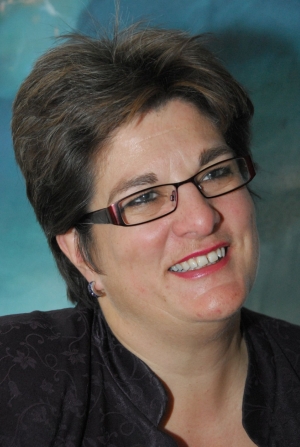
Jayne Ozanne, 46, was a founder member of the Archbishops’ Council, the Cabinet-style body at the heart of the established church’s governance. She has through a distinguished career and record of service worked closely and prayed alongside senior evangelicals including the former Archbishop of Canterbury Lord Carey of Clifton and the present Archbishop, Justin Welby.

Today, Monday, she is to be announced as the new director of Accepting Evangelicals, whose patrons include Baptist minister Steve Chalke and worship leader and commentator Vicky Beeching, who herself stunned the evangelical community worldwide when she came out last year.

Formerly from the Orthodox wing of the Church, holding strictly conservative views on sexuality, Ms Ozanne disclosed her sexuality in confidence a few years ago in a moving letter to a select group of church leaders. Not one of the few who knew has leaked details of her journey.

She has now decided to go public through Christian Today as part of what she believes will help the Church, currently deeply divided on the issue, to a better understanding of sexuality. She, along with many others, wants to see the Church end its infighting and move on to more pressing issues such as mission and social justice.

“It’s not about right and wrong, it’s about the Gospel of Christ. For me this whole issue frankly is about understanding Scripture,” she said, adding: “God is a God of surprises. We can never be sure of what the future may bring, but what I do know is that He will always look to transform our darkest hours into something beautiful. I’m personally thrilled to be able to serve Accepting Evangelicals during such an exciting and important time for us as a Church”. Accepting Evangelicals is an open network of evangelical Christians who believe the time has come to move towards the acceptance of faithful, loving same-sex partnerships at every level of church life.

The emergence of Ms Ozanne, a formidable force, as a campaigner for gay equality within evangelicalism comes as the Church engages in conversations on sexuality. As a former conservative now on the side of the gay Christian lobby, her coming out will surprise many churchgoers and add to the growing pressure on mainstream evangelicalism on an issue that still arouses deep passions on either side. Conservative evangelicals remain deeply resistant to any accommodation to secular norms, and it has become a litmus test in many churches for an individual’s Christian orthodoxy. The conservative group Reform has called for a boycott of the “conversations” in protest at what many fear is an agenda weighted towards change.

After joining the Archbishops’ Council in 1999, Ms Ozanne went on to hold a range of senior positions in the UK and abroad. She was deeply involved in General Synod, particularly in areas around mission and evangelism. At that time her views on sexuality, she said, were “extremely black and white” and gay Christians had to choose between God or a homosexual relationship. In common with conservative evangelical thinking then and now, she believed the two were mutually exclusive. “I did not believe it was compatible to be gay and a Christian.”

Before serving on the council she had a high profile career in international marketing where she managed many household brands – from Fairy Liquid to the BBC. She has been an active lay-leader in various well known evangelical churches, and has been a trustee of Trinity Theological College, the Church of England Newspaper and the International Centre for Reconciliation in Coventry, where she worked alongside the future Archbishop Welby and Vicar of Baghdad, Canon Andrew White.

At the same time, however, she struggled with her sexuality, and was ministered to many times in the hope of “healing” or change. In an interview with Christian Today, she described how experienced the full range of what is known as “deliverance ministry”, as well-meaning clergy and ministers attempted repeatedly but without success to expel a sexual orientation that was regarded as demonic.

She came out to her friends, family and senior church leaders in 2009. She also became involved in her first proper relationship, although is currently single again.

Among Ms Ozanne’s achievements, she has set up two international charities, she’s worked closely with international royalty and she was also one of Tony Blair’s directors at his Faith Foundation. She is also a former head of marketing for BBC Television and worked in marketing for Procter & Gamble and then Kimberly Clark.

In her letter five years ago, she reveals that the struggle with her sexuality led her to have a breakdown. She wrote: “I had, unfortunately, for some time been battling with a major conflict between my sexuality and my spirituality, and had been horrified by the unwanted feelings that I found myself harbouring towards certain female friends.”

Following her breakdown she told her psychiatrist about her sexuality, and was advised to change her religion.

She wrote: “There is nothing that can describe the hopelessness that one feels when we believe that God has abandoned us, and when we yearn for death but it does not come.

“Some may remember that I ended Synod’s first debate on homosexuality by reading a draft suicide note written by someone struggling with their desire for love, but knowing that the only thing that could satisfy this hunger was ‘forbidden fruit’. The letter was my own, written during this time of pain – a cry from the created to the Creator, asking why I had been created with such a cruel dichotomy.”

She also hoped she could one day be happily married and was prayed for regularly. She wrote: “I have had all sorts of things cast out of me, sometimes more than once (!), and have submitted myself to various processes. I can’t say that I fully agreed with them all, but I firmly believed that I was on a path and that the Lord would see that I would finally reach the right destination as long as I trusted Him to lead the way.”

But she continued to crave intimacy and love. “I came to understand that the intimacy I so desperately craved is a basic human desire that we have been born with. It comes from being human, and that with the right person it could bring life. To try to suppress it had, it seemed, only led me towards death.”

She told Christian Today that when deliverance ministers tried to “cast out” her sexuality, it was like “trying to cast out myself from myself. Nothing was going to budge.” These experiences left her feeling “like there was something terribly wrong with me.”

She prayed for years also for “the grace” to be celibate, a state she maintained throughout her time on the Archbishops’ Council. It nearly killed her. “I could not cope with the loneliness,” she said, quoting Genesis 2, where God says it is not good for humans to be alone. Finally she met someone special and had a relationship that lasted over five years.

She said she was inspired by Vicky Beeching coming out publicly to re-engage with the Church. She had become “cut off” and felt it was “as if I was the only gay evangelical woman in the world.” She knew this could not be the case but simply did not know of any others. Now she has met many. “It is the evangelical church more than any that needs to learn how to hear and embrace each other,” she said.

She will replace Benny Hazlehurst at Accepting Evangelicals who is stepping down soon. He said: “The last 10 years have seen the beginnings of wonderful changes in the Evangelical world, but it has also been an uphill struggle and I need some time to recharge my batteries and seek God for the future.

“I am delighted that Jayne has joined AE and is willing to take up the reins. She is a highly motivated and committed Christian with huge experience in the evangelical world, and excellent links with many senior figures in the church. It will be a joy to work jointly with her over the next few months and I thank God that she is the right person at the right time for Accepting Evangelicals.”

Source: Christian Today

Egypt: Court sentenced 183 Muslim Brotherhood Supporters to Death

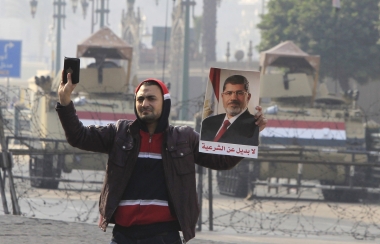
Christian Today report– An Egyptian court sentenced 183 supporters of the outlawed Muslim Brotherhood to death on Monday on charges of killing police officers, part of a sustained crackdown by authorities on Islamists.

The men were convicted of playing a role in the killings of 16 policemen in the town of Kardasa in August, 2013 during the upheaval that followed the army’s ouster of Islamist president Mohamed Morsi. Thirty-four were sentenced in absentia.

Egypt has mounted one of the biggest crackdowns in its modern history on the Brotherhood since the political demise of Morsi, the country’s first democratically-elected president.

Thousands of Brotherhood supporters have been arrested and put on mass trials in a campaign which human rights groups say shows the government is systematically repressing opponents.

President Abdel Fattah al-Sisi, who as army chief toppled Morsi, describes the Brotherhood as a major security threat.

The movement says it is committed to peaceful activism.

The death sentences followed one of the bloodiest attacks on Egyptian security forces in years. Islamic State’s Egypt wing claimed responsibility for a series of coordinated operations that killed at least 27 people last week.

Sisi blamed the Brotherhood for the violence and told Egyptians in a televised address that the war against militancy will be a long, tough one.

Egyptian authorities make no distinction between the Brotherhood, Islamic State and al Qaeda, arguing that they have a shared ideology and are equally dangerous.

Security forces killed hundreds of Brotherhood supporters and arrested thousands of others after Morsi’s ouster.

After the death sentences were read out on Monday, Brotherhood supporters held in metal cages shouted profanities at policemen. A defense lawyer looked at the Islamists and said “You have God.”

The Egyptian government’s human rights record has come under closer scrutiny since woman activist Shaimaa Sabbagh was shot dead during a Cairo protest on January 24, a day before the anniversary of the 2011 uprising that toppled Hosni Mubarak.

The Interior Ministry promised an investigation.

Separately, an Egyptian police officer has been detained on suspicion of killing a suspected member of the Brotherhood in hospital, the Interior Ministry has said.

The suspect was being treated in custody for wounds suffered while he was allegedly planting explosives. The ministry said that the man had provoked the policeman by insulting him. “Then the policeman lost control of his feelings,” it said.

Source: Christian Today

Stephen Sizer apologises for 9/11 Isreal post

Christian Today report– Rev Stephen Sizer, a pro-Palestinian campaigner who posted a link on his Facebook page to an article entitled “9-11/Israel did it” has been disciplined by his diocese and asked to suspend his use of social media.

The article he linked to attempted to make connections between wealthy American Jews and the 9/11 attacks. Sizer asked online: “Is this anti-Semitic?.. It raises so many questions.”

An outcry followed the post, with the Church of England condemning the link as “unacceptable” and a matter of “deep sorrow and shame”. The vice-president of the Board of Deputies of British Jews, Jonathan Arkush, called on Sizer to remove the link, which he did. Arkush said: “Posting, and giving approval to, an article which in effect accuses Jews of responsibility for the 9/11 atrocity is unquestionably anti-Semitic, just as it is beyond absurd.”

Sizer announced that he would be withdrawing from the use of social media, saying: “I very much regret and apologise for the distress caused by the reposting on Facebook of a link to an article about 9/11 from Wikispooks. It was particularly insensitive in that last week coincided with Holocaust Memorial Day. I removed the link as soon as I received adverse feedback, and realised that offence had been caused.

“I have never believed Israel or any other country was complicit in the terrorist atrocity of 9/11, and my sharing of this material was ill-considered and misguided.”

Source: Christian Today

Gay Marriage is not a Political Issue, says Mike Huckabee

[wp_announce_marquee]

Christian Post report– Former Arkansas Gov. Mike Huckabee, who’s expected to run for president in 2016, says gay marriage isn’t a political issue, but a biblical issue.

“This is not a political issue,” Huckabee said on CNN’s “State of the Union.” “It is a biblical issue. And as a biblical issue — unless I get a new version of the Scriptures, it’s really not my place to say, OK, I’m just going to evolve. It’s like asking someone who’s Jewish to start serving bacon-wrapped shrimp in their deli. We don’t want to do that — I mean, we’re not going to do that. Or like asking a Muslim to serve up something that is offensive to him, or to have dogs in his backyard. We’re so sensitive to make sure we don’t offend certain religions, but then we act like Christians can’t have the convictions that they’ve had for 2,000 years.”

Huckabee, a former Baptist pastor, is considering a 2016 presidential run within the Republican party, which could see a number of candidates vying for the Republican nomination. He’s been outspoken on several topics but has always linked his comments to his personal faith and Christianity as a whole.

He previously told The Christian Post that heterosexual Christians have some responsibility for the acceptance of gay marriage and divorce.

“The devaluing of marriage has also happened because many traditional, evangelical Christian people have downplayed the significance of traditional, biblical, heterosexual marriage. And in doing so, once marriage becomes anything less than God’s ideal, it becomes easier and easier for us to treat it as if it’s not important, that new versions of it are much more acceptable.

He continued: “If heterosexual Christians think marriage is like a revolving door you can go in and out, that the commitment isn’t that significant, that denigrates the biblical picture of marriage. And once we have devalued it, it becomes easier and easier to say that, ‘Well, any other form of it should also be OK.’ Again, I’m not saying that that’s the cause, because it isn’t, but it just contributes to the overall devaluing and denigrating of marriage.”

Huckabee also told CNN that while he might not agree with everyone’s lifestyle choices, it doesn’t keep him from developing friendships with people.

The former Fox News host said he’s accepting of “a lot of people as friends whose lifestyle I don’t necessarily adhere to, agree with or practice — doesn’t mean that I can’t have a good relationship with anyone or lead them or govern them. I don’t chuck people out of my circle or out of my life because they have a different point of view. I don’t drink alcohol, but, gosh, a lot of my friends, maybe most of them, do. You know, I don’t use profanity, but, believe me, I have got a lot of friends who do.”

Source: Christian Post

Traditionalist Fr Philip North to be Consecrated Today

Christian Today report–  Traditionalist Fr Philip North is to be consecrated today in York Minster, a week after the first woman was elevated to the order of bishops in the Church of England.

North will be the new Suffragan Bishop of Burnley, replacing Rt Rev John Goddard who retired last July.

Today’s ceremony has sparked heated debate about the concessions made for traditionalist parishes within legislation allowing women to become bishops. According to church law, those parishes which disagree with female bishops can ask to be overseen by a traditionalist male bishop.

It emerged in the days before Rt Rev Libby Lane, new Suffragan Bishop of Stockport, was consecrated that only those bishops who had never laid hands on a female bishop or priest would lay hands on North today in York. That disqualifies a significant number who will be present, many of whom laid hands on Bishop Lane.

It has bought about accusations of a theology of ‘taint’; the suggestion that to lay hands on a woman and then on a man would break the apostolic succession.

However, the Archbishop of York, John Sentamu, has expressly denied this. “Any suggestion that the arrangements proposed for the consecration of the Bishop of Burnley are influenced by a theology of ‘taint’ would be mistaken,” he said in a statement.

The Archbishop will lead those present “in exercising gracious restraint,” the statement continued. “The Church of England remains committed to enabling [those who are unable to receive the ministry of women bishops or priests] to flourish within its life and structures.”

“These arrangements are for prayer, not politics,” Dr Sentamu said.

Ordained in 1992, North’s most recent post was as team rector of the Parish of Old St Pancras and team vicar at St Michael’s Church in Camden. In 2012, he was forced to withdraw his acceptance of the post of Bishop of Whitby after conflict over his stance on women priests.

A letter written in November 2012 by the churchwarden of St Oswald’s Church, Lythe, in Whitby to Sentamu said: “We are puzzled, dismayed and very disappointed that for the third time running we have been assigned a Bishop of Whitby who does not accept the ordination of women priests.”

The letter, which gained a number of signatories, continued: “We are aware that some parishes, some clergy, and some of the laity in the Whitby bishopric do not accept the validity of women priests but, as in the rest of the country, a substantial majority of us do. So why should we have to have a bishop who does not accept them? We assume that there must be some sort of rationale behind the decision, but you should be aware that many of us feel aggrieved and overlooked.”

Dr Sentamu replied that he was confident that North would fully value “the ministry of his female colleagues” despite his traditional views. However, on 16 December 2012 it was announced that North would not take up the post.

“It was a great honour to be chosen for this role, and I had been very much looking forward to taking up the position,” he said in a statement issued by the diocese of London.

“However, in the light of the recent vote in the General Synod, and having listened to the views of people in the Archdeaconry of Cleveland, I have concluded that it is not possible for me, at this difficult time for our Church, to be a focus for unity. I have therefore decided that it is better to step aside at this stage.

“I have reached this decision after a time of deep reflection and feel sure that it is for the best. I now look forward to refocusing my energies on the pastoral needs of my parish.”

Source: Christian Today