Mexico:Pope Francis offers Prayers for victims of Hospital Explosion

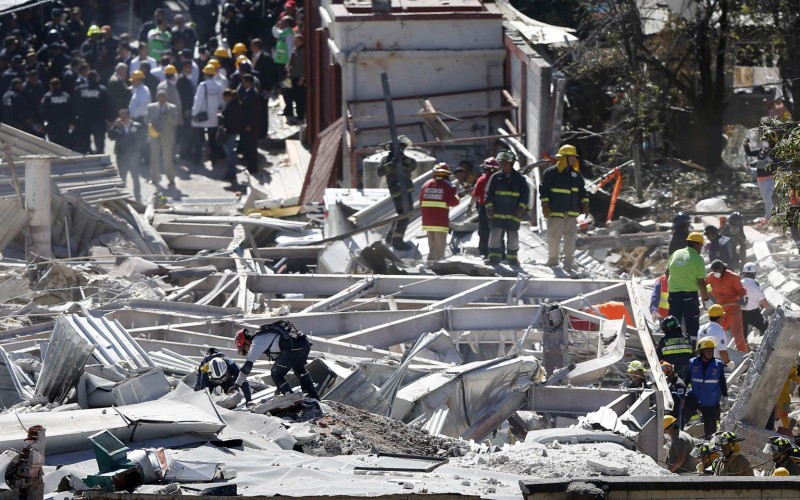
Catholic Herald– Pope Francis offered prayers and an expression of solidarity with the victims of a hospital explosion that left three dead and more than 70 staff and patients — mostly women and children — injured.

“Pope Francis is deeply sorry upon learning the painful news of the explosion that occurred near the Cuajimalpa women’s and children’s hospital, which has caused numerous victims and injured, among them, many children,” read a message sent on Friday, the day after the explosion. The message to Mexico City Cardinal Norberto Rivera Carrera was sent from Cardinal Pietro Parolin, Vatican secretary of state.

Cardinal Parolin said Pope Francis “offers prayers for the eternal rest of the dead and, at the same time, the Holy Father wants … to offer his condolences to the families of the deceased, along with expressions of comfort… and wishes for the quick recovery of the injured.”

Shortly after the accident on Thursday, the Pope Francis @pontifex account also tweeted that the Pope was praying for the victims and their families.

Fr Hugo Valdemar Romero, Mexico City archdiocesan spokesman, told Catholic News Service that Cardinal Rivera prayed for the victims of the explosion and visited them in Mexico City hospitals.

The explosion ripped apart the hospital in western Mexico City shortly after 7am, when a tanker truck was delivering propane. Mexico City Mayor Miguel Manuel Angel Mancera said the blast in the borough of Caujimalpa killed two individuals — fewer than the seven victims originally thought — and police posted photos of a baby being pulled from the rubble.

The cause of the explosion remained uncertain, but Mexico City authorities said a valve on the truck apparently was left open. Three employees — two of whom were burned badly — have been detained.

The tragedy once again turned attention to tragic accidents in Mexico, where observers say the population and public officials seldom practice prevention.

“‘It’s only an accident.’ We hear the phrase over and over again in our country,” wrote columnist Sergio Sarmiento in the newspaper Reforma. “However, accidents generate more deaths than aggressions, kidney disease, malnutrition and infectious diseases.”

Accidents involving propane trucks have caught the attention of Church officials.

An editorial in the archdiocesan publication Desde la Fe condemned “incompetent public functionaries responsible in these areas,” after a 2013 accident involving a tanker truck killed 25 residents in a working-class neighbourhood north of Mexico City.

Fr Valdemar said the authorities are often quick to act after the fact, instead of taking precautions.

“The ones that pay are always the poor drivers” and not the company, he said. “Behind this there is always corruption.”

Source: Catholic Herald

An Ice Church built on Romanian Mountain

Telegraph report– The structure in the Făgăraș Mountains of Romania is six metres tall, 14 metres long, and seven metres wide, and is a copy of an old church in Transylvania.

It is formed entirely of ice. Chunks were cut from Balea Lake, around 200 miles northwest of Bucharest, using a chain saw. They were blessed by priests and cemented together with snow and water to build the church.

A similar structure has been built every winter for the past few years, and it has been the location of baptisms and wedding blessings. It contains a depiction of the Last Supper carved from ice, and has a traditional cross on its roof.

This week more than a dozen worshippers attended a service held by Orthodox, Catholic and Protestant clerics.

Michael Regen, a priest from the Evangelical Church, said: “(We are) submerged in water now, surrounded by water. Let this be a place for us to pray, let this be a place where people come with pleasure.”

Disputes relating to church ownership have caused strained relations between the different Christian churches in Romania over the years.

The communists seized churches in 1945, which were then given to the Romanian Orthodox Church. Some have not been returned.

But Ioan Crisan, an Eastern Rite Catholic priest, said the Ice Church was a place to set aside religious differences.

“For a few moments, people forget what they left down in the valley: the fights, the misunderstandings, the contradictory arguments,” he said.

Source: Telegraph

2015 Elections: Christians role

Christian Today report– Amid debate about the Church’s right to comment on political issues, Christians are being urged to take an active role in politics, particularly in the run-up to the General Election.

Most evangelical Christians are committed to voting in the election, according to results of a new study by the Evangelical Alliance. Of the 2,000 evangelical Christians surveyed, 94 per cent said they were likely to vote, and of these, 80 per cent they would definitely vote.

But Lyndon Bowring, executive chairman of CARE, is encouraging Christians to do more than put a cross by a name. Bucking the trend of disillusionment with the state of politics in the UK, Bowring argues that Christians should exercise grace, support their MP and help to inspire young people to take an interest in politics.

“How many churches invite their local MP to come, whatever his beliefs are?” asks Bowring in an interview with Christian Today. “How many of us know the names of the children of our MP? Family life is tough for a committed politician. Offer to pray for him.”

Prayer is one way to respond, but if you’re looking for something more concrete, holding a hustings at your church may be another answer. It provides an opportunity to hear from all the candidates standing in the constituency and learn more about their policies and principles. It also demonstrates that church is interested in community life, and that churches can be used as a place for public debate – and not just on the issues that Christians are thought to care about.

Chuches are now the most common place for these face-to-face meetings to take place. In the run up to the 2010 General Election, CARE’s site registered nearly 300 hustings held across the country, attracting an estimated 40,000 people.

The run-up to the election is a frenzy of political activity, but what about long-term commitment? Churches are usually pretty good at encouraging the development of worship leaders and those with pastoral gifts, but it’s rare to find political engagement promoted among Christians, something that the Show Up campaign seeks to challenge.

Although Bowring, who is a former minister, acknowledged the pressures on church leaders, he asks: “Do you encourage your local church members to get involved as a school governor or being a local councillor, or being an MP?” The fear of losing a great home group leader should not stop churches from encouraging those with political interests and gifts, he argues.

When thinking about the future of British politics, it’s clear that the engagement of young people has to be addressed. Election data repeatedly shows that those aged 18-34 are the least likely to vote, and it may be that the Church isn’t helping to alter that trend.

Bowring says: “Very rarely… have I ever heard a preacher in the pulpit say young people must look to the assemblies, look to the media, all the institutions of our national life [and say] ‘Get in there!’.”

Suggesting that those involved in youth and student work give political involvement a higher profile, he says: “It’s right that evangelism should be top of the agenda, but not far behind is working out our salvation with fear and trembling and being effective light and effective salt.”

He adds that it’s important to make discussions issues-based, rather than party-political, noting that young people are more likely to join a movement than an organisation.

But when it comes to campaigning on issues that matter to them, young people may be better equipped than most of those who do turn out to vote.

“Young people have a significant role to play,” says Essie Mac Eyeson, a public affairs officer at CARE. “We’ve grown up in a society where we have social media, we’re so used to networking and engaging… That’s what policy, and politics and campaigning is all about.

“They [young people] may not recognise it, but when they post… a petition [or] share an article about something that’s going on around the world, that is engaging,” Eyeson added.

Converting tweets to votes or party membership is where the challenge really lies, since the democratic system relies on such formalities.

CARE’s engaGE15 election website has information on how to organise and host hustings, and on voting records for every MP on issues such as end of life care and same-sex marriage.

Source: Christian Today

Clashes rage in east Ukraine after peace talks collasped

Christian Today report

Fighting raged in eastern Ukraine on Sunday as pro-Russian separatists used artillery fire to try to dislodge government forces from a strategic rail hub after peace talks collapsed.

Hopes of easing the situation evaporated on Saturday with Ukraine’s representative and separatist envoys accusing each other of sabotaging negotiations.

“Fighting continues across all sections of the frontline,” Kiev military spokesman Volodymyr Polyovy said in a briefing, noting that some 13 soldiers had been killed in the past 24 hours. Other Ukrainian authorities said at least 13 civilians had also been killed in attacks.

The Organization for Security and Cooperation in Europe (OSCE), which took part in the talks in Minsk, Belarus, along with envoys from Ukraine and Russia, said rebel delegates had not been ready to discuss crucial points of a peace plan.

“In fact, they were not even prepared to discuss implementation of a ceasefire and withdrawal of heavy weapons,” the OSCE said in a statement.

It said rebels had instead pushed for a revision of a ceasefire plan agreed in Minsk last September.

The terms of that 12-point protocol have been repeatedly violated but Kiev and foreign governments see it as the only viable roadmap to end the nine-month-long conflict in which more than 5,000 people have been killed.

The rebels rejected the OSCE’s assessment, saying they were ready for dialogue, but unwilling to accept an “ultimatum” from Kiev so long as government forces continued shelling civilian areas, separatist news service DAN quoted rebel envoy Denis Pushilin as saying.

Ukraine’s President Petro Poroshenko held a three-way phone conversation with German and French leaders Angela Merkel Francois Hollande in which they expressed their disappointment, German government spokesman Steffen Seibert said.

“The separatists are urged not to block the talks. Russia must, in this regard, also influence the rebels,” he said.

HEAVY FIGHTING

In eastern Ukraine, the Kiev military reported no let-up in separatist attacks on government positions.

Clashes are intense around the town of Debaltseve, Kiev spokesman Polyovy said, referring to a Kiev-held transport hub connecting the two main rebel strongholds that separatists aim to cut off, though the situation remained “under control”.

The rebel advance has succeeded in seizing part of nearby Vuhlehirsk, he said. On Sunday the town was being pounded by near-constant shelling, a Reuters witness reported.

The Interior Ministry said seven civilians had been killed on Sunday in the shelling of Debaltseve, while the Luhansk regional administration said three civilians had been killed in shelling across the region overnight.

Residents are being encouraged to abandon the areas of fiercest fighting, where many have been living in makeshift bomb shelters, waiting for breaks in the bombardment to make quick trips for food and water.

In Kiev-controlled Slaviansk, refugees arrived in buses from Debaltseve and other frontline towns.

Pensioner Vyacheslav Gurov said half of his town of Avdiivka had been completely destroyed.

“We don’t even know who’s shooting. Both the rebels and the national guard are at it … there’s no water, no electricity, no heating, nothing,” he said.

In the rebel stronghold of Donetsk, which shook with artillery fire throughout Sunday, the regional administration reported the deaths of at least three civilians, describing the situation as “extremely tense”.

A Reuters witness saw the body of a young man stretched out on a street in the city centre, killed when a shell struck a wall nearby. Nadezhda Petrovna, 68, a neighbour, said the man was trying to run away from the attack when a shell landed in front of him.

“It is like this every day, people are getting killed, we are sleeping fully dressed so we can run into the cellar, this is becoming unbearable,” she said.

Following the collapse of Saturday’s talks, there was no word on when renewed negotiations might take place.

Source: Christian Today

New York Church fights against public school worship ban

Christian Today report–  A New York City church is fighting against Mayor Bill de Blasio’s prohibition against worship services in public schools.

Bronx Household of Faith, represented by Alliance Defending Freedom (ADF), filed a brief with the US Supreme Court on Monday after losing an appeal in the Second Circuit.

Former Mayor Michael Bloomberg adopted the policy, which bans churches from renting school buildings outside of school hours. Mayor de Blasio previously spoke in favour of overturning the ban.

“I believe that a faith-based organisation has a right like anyone else… to use that space,” he said in April.

The policy was never changed however, and the mayor’s office submitted a petition to the Court earlier this month defending the ban.

“The department’s decision to make public schools available to religious organisations for a wide range of activities, but not for worship services or as a house of worship, is constitutional,” the city insisted, according to World.

“The policy does not prohibit, limit, or burden any religious practice; does not entangle the government in matters of religion; and does not impair petitioners’ ability to speak freely.”

ADF attorney Jordan Lorence strongly disagreed.

“Evicting churches and the help they offer the people in their communities through their worship services in otherwise empty buildings on weekends helps no one,” he said in a statement.

“Violating the First Amendment, as New York City is doing, hurts everyone. For that reason, we hope the US Supreme Court will agree to hear this important case.”

Bronx Household of Faith’s dispute with the city goes back to 1995, when they were holding services inside of PS 15 in the Bronx. The church got its own building last summer.

On February 20, the Court is expected to decide whether it will hear the case.

Source: Christian Today

African Union calls for deploy of 7,500 troops to fight Boko Haram

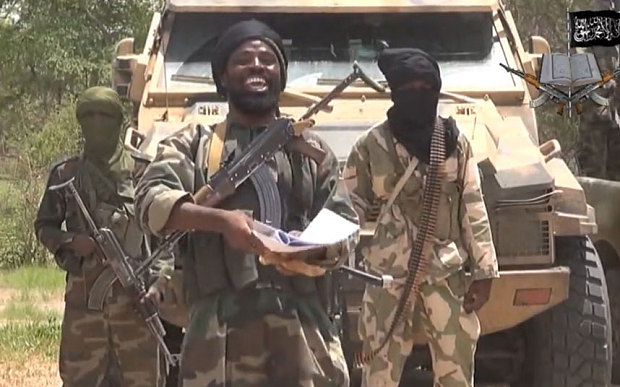
Telegraph report–  The African Union called Friday for a regional five-nation force of 7,500 troops to defeat the “horrendous” rise of Nigeria’s Boko Haram insurgents, AU Commission Chief Nkosazana Dlamini-Zuma said.

“Boko Haram’s horrendous abuses, unspeakable cruelty, total disregard for human lives, and wanton destruction of property are unmatched,” Dlamini-Zuma said in a statement after the bloc’s Peace and Security Council met late Thursday, ahead of a full AU summit meeting on Friday.

The Boko Haram uprising has become a regional crisis, with the four directly affected countries – Cameroon, Chad, Niger and Nigeria – agreeing along with Benin to boost cooperation to contain the threat and to form a Multinational Joint Task Force (MNJTF).

“I am deeply concerned by the prevailing situation as a result of Boko Haram terrorist activities, including the recent escalation of violence witnessed on the ground,” Dlamini-Zuma added.

“The continued attacks in northeastern Nigeria and the increasing attacks in the Lake Chad Basin, along the border with Chad and Cameroon, and in the northern provinces of that country, have the potential of destabilising the entire region, with far reaching security and humanitarian consequences.”

More than 13,000 people have been killed and more than one million made homeless by Boko Haram violence since 2009.

Regional nations pledged earlier this month to commit a battalion each to the force, a total of some 3,000 troops, but Dlamini-Zuma said after meetings Thursday it was decided that “no efforts should be spared” to defeat the fighters.

“Accordingly, it is recommended that the countries of the region be authorized to increase the strength of the MNJTF to up to 7,500,” she added.

A key task of the force, to be deployed with an initial mandate of a year, will be “conducting military operations to prevent the expansion of Boko Haram and other terrorist groups activities and eliminate their presence,” the statement added.

Nigeria has the largest army in west Africa but has come under criticism at home and abroad for failing to stop the advance of Boko Haram.

Source: Telegraph

Danish Priests doubts Jesus Resurrection

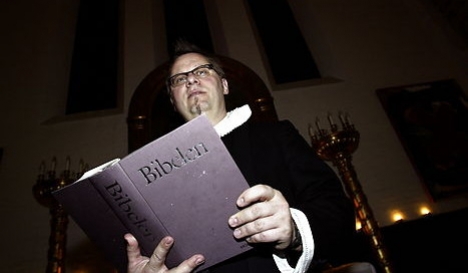
Christian Today report– Faith in Christ’s resurrection is currently being challenged in Denmark, as a second Danish priest admitted to questioning the concept of physical resurrection.

In addition to saying that she doubts Christ rose from the grave three days after dying on the Cross, Ulla Charlotte Hansen also said that she does not believe in the Biblical Creation story.

“I cannot believe that Jesus physically rose from the grave,” Hansen said in an interview with the local Fyens Stiftstidende newspaper. She said that she would say that scientists have a theory about the Big Bang if she were asked how the world came to be.

Hansen is the second priest in Denmark to express doubt on the actual Resurrection in recent weeks. On Christmas Day, the Jyllands-Posten newspaper published an interview with Per Ramsdal where he stated that he finds it difficult to believe in a literal Resurrection.

“That gets a bit too supernatural for me,” he told the Jyllands-Posten. “But it’s a really important story,” he added.

Per Ramsdal serves in the Frederiksholm Church in Copenhagen.

In response, Ramsdal was summoned by Peter Skov-Jacobsen, the Bishop of Copenhagen, who gave the priest a reprimand. He was also compelled to retract his statement expressing doubt, and to embark on a training programme for six months. The programme will be about “recent interpretations of the Christian faith”.

Hansen, however, will not be subjected to the same sanctions as the Bishop of Funen, under whose jurisdiction Hansen’s ministry belongs, sees no reason to summon the priest for a reprimand.

Contrary to Skov-Jacobsen’s approach, Lindhardt encouraged the ministers and priests under her diocese to pursue an open discussion to talk about their views on the Resurrection.

“The resurrection of Jesus is the basics of Christianity, but how he rose from the dead, no one has seen,” Tine Lindhardt, the Bishop of Funen said in a statement. “And it is an event that is so special that language should be stretched to the limit in order to capture it.”

Source: Christian Today

Word on Hyper-Grace

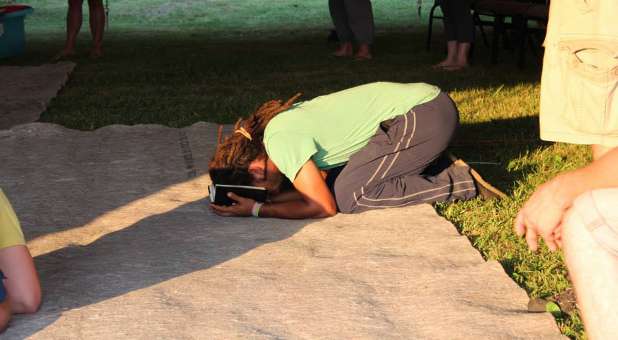
Charisma News report- All of us who know Jesus as Lord want to live in the fullness of His grace, but what exactly does that mean and how does that work itself out in our lives?

Unfortunately, there is tremendous division in the body today over the question of grace, and to address it from any angle is to wade right into controversy and potential misunderstanding.

On the one hand, there are many who have been greatly blessed by what is called “the grace revolution” or “grace reformation,” and when any of us raise concerns about some aspects of that message, we are called grace-haters and legalists and Pharisees.

On the other hand, many of those who do not endorse the “grace revolution” attack the modern grace preachers in the harshest of terms, calling them false prophets who do not even know the Lord.

Not surprisingly, as a result of my writing Hyper-Grace, some who identify with that message have accused me of preaching another gospel and being under a curse, while others who are critical of that message have accused me of being too soft on false teachers. It comes with the turf!

Is there perhaps a way we can communicate with each other without the name-calling and volatility? Do we perhaps have more in common than we realize? Can we perhaps learn something from each other?

Let me put a few things on the table for the purpose of open and honest discussion with those both inside and outside each “camp.”

First, let me explain the reason I use the term hyper-grace.

I did not want to call it counterfeit grace, because in the vast majority of cases, this is a message preached by brothers and sisters in the Lord and it is a message filled with life-changing truths. At the same time, I believe the message is preached in an exaggerated way, sometimes with dangerous errors. How then to describe it?

Since many within the hyper-grace camp use this term themselves, saying, “Yes! Grace should be hyper, and that’s exactly how Paul described it in the Greek,” and since for others, the term would imply an exaggerated grace message, I felt this would be the best term to use. It is descriptive and can be taken positively or negatively, depending on the perspective.

Second, those of us outside the hyper-grace camp need to ask ourselves why so many believers have been genuinely helped by this message.

Why do so many attest to having their lives transformed, to loving Jesus and His Word more than ever, to finding liberation from sin and bondage?

There’s obviously something good that has happened to them, and there’s obviously some important truth they have received. Shouldn’t all of us be sure that we, too, are preaching those same liberating truths?

Third, those within the hyper-grace camp need to understand that there’s a reason we are so concerned about error within that group.

When a movement claims to be preaching things not preached since the days of Paul, when people say, “My pastor is teaching things in the Word no one has seen for centuries,” that immediately raises some concerns.

Really? Everyone else got it wrong until today, including all the great grace preachers of the past?

Not only so, but we also see lots of really negative fruit: backsliding, compromise, severe judgmentalism, divisiveness, complacency and more.

When there is a pattern like that, serious questions need to be asked. Perhaps the message is out of biblical balance? Perhaps it is reactionary? Perhaps it contains some real error?

What this means is that the millions of positive testimonies need to be taken seriously and the millions of negative stories need to be taken seriously.

Fourth, we need to recognize that not all people are the same, and we all have different backgrounds, temperaments and spiritual experiences.

More than 20 years ago, I was speaking with Pastor David Wilkerson and I told him that I never feel any condemnation from God and that I walk in a deep assurance of the Father’s love 24/7.

He said to me, “Most people aren’t like that.”

I have sought to keep that in mind in preaching and teaching ever since.

Some people gravitate to the hyper-grace message because they have sensitive consciences or because they have been burned by legalism or because they feel as if they always fall short or because they were not raised by a loving and affirming father.

They really do love the Lord and they are not looking for an excuse to sin, and finally, hearing this message, they have found a place of rest and acceptance in the Lord, and they are actually working harder for him than ever.

Others gravitate to the message because they don’t like the conviction of the Spirit in their lives or because they’re looking for an outlet for the flesh or because they are rebelling against a perceived “religious system.”

Of course, in the end, the only question that matters is: “What does the Word of God say? What does the Lord have to say about grace?”

But I raise these points to remind pastors and leaders on all sides of this debate not only to look at the Scriptures but also to understand the needs of the flock.

During the days of the Brownsville Revival, when millions of people were being impacted by the Jesus-exalting message of repentance and holiness preached by my dear departed friend Steve Hill, the altars would be filled every night with weeping sinners, backsliders and compromised believers. And there, on their knees, they encountered the love and grace of God.

But we also found that some of the students in our school (then, the Brownsville Revival School of Ministry, today FIRE School of Ministry) were also at the altar every night in tears, somehow feeling “convicted” too, despite their deep commitment to the Lord. Others would feel condemned because of the intense spiritual environment, despite us reminding them that Steve wasn’t preaching to them but to the lost and backslidden.

We quickly realized that, given the intensity of the revival, we needed to do something different for our students who were exposed to this evangelistic preaching day and night, and so, we brought in another Steve Hill (whom we nicknamed S.J. Hill). The whole thrust of his message was the love of God. (One of his books is entitled, Enjoying God: Experiencing Intimacy with the Father.)

The great bulk of the student body absolutely thrived in the midst of that glorious move of the Spirit, and many are burning bright today on mission fields around America and the world. But others, equally committed to Jesus in that very same environment, experienced burnout and discouragement.

Again, leaders need to consider carefully the needs of the flock and do their best to ground their people in the love and acceptance of the Father while also calling them to holiness and service.

So, here’s a working proposal to bridge some of the gaps of misunderstanding and accusation on all sides. How about we draw up a list of all the major points we agree on? From there we can understand where, exactly, we disagree.

Why not?

Source: Charisma News

WATCH: Ancient End-Times Bible Prophecy Rapidly Unfolding

Charisma News reports  –   As world events unfold, CBN Middle East Bureau Chief Chris Mitchell’s book, Destination Jerusalem, aims to put today’s events in perspective.

Mitchell chronicles firsthand the meteoric rise of the Islamic State (ISIS), the growing persecution of Christians, the minimal response by the West and much of the Church, as well as the part Jerusalem plays in the scenario.

As prophecy unfolds before our eyes, Dateline Jerusalem points to how Christians can prepare for the days ahead.

[youtube]https://www.youtube.com/watch?v=9-tiKfQqf-w[/youtube]

– credit : youtube/CBN

Albama Pastor opposes Church gun ban bill

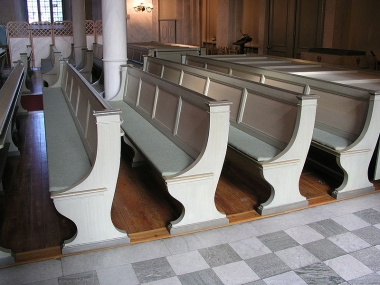
Christian Today report- An Albertville, Alabama pastor has come out in opposition to a House bill that would see gun control laws extending their reach into the state’s churches.

The bill, which is sponsored by Democrats Thomas Jackson and Darrio Melton, will prohibit guns inside churches without permission. The two Congressmen believe churchgoers should be spared from worrying about guns being brought into any church service that they attend.

However, the bill is not receiving support from some of the church groups it purports to protect.

According to WAAY 31, Pastor Matt Brooks aired opposition to the bill. Brooks, who serves in the Lifepoint Church, said that that “(e)ach individual church should be responsible for determining (whether or not to allows guns inside churches) themselves.”

“I don’t think we need State government to determine whether or not we can have guns in a church or not,” Brooks concluded.

In addition, Brooks revealed to WAAY that he has gun carrying security personnel inside the church during services.

“I hope it never comes to a situation where we have to use our weapons, we never want to take lives from anybody. But we do want to be able to protect our congregation,” he explained on the decision of having armed guards inside his sanctuary.

Brooks is not alone in his opposition of the gun ban. Local representatives Kerry Rich and Will Ainsworth also oppose it and say it “has no chance of passing.”

WAAY 31 said that that they were able to contact advocates of gun control in the United States. Though they declined to appear on camera, they told WAAY 31 that it could “help with public safety.”

The gun control debate is currently raging across the United States in the aftermath of several shooting incidents in the country. Last year, the LA Times reported that the US Federal Bureau of Investigation noted a rise in mass shootings in the country from 2000 to 2013.

The frequency rose from an average of 6.4 incidents in the first seven years to 16.4 in the last seven years, the FBI said.

Source: Christian Today