Muslim Religious Tolerance rally interrupted by protesters

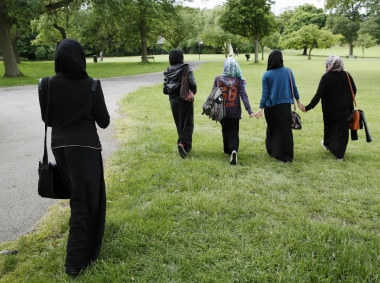
Christian Today report- A largely Muslim group rallying for religious tolerance in Texas was met by a small but vocal group of protesters on Thursday.

The Texas Muslim Capitol Day event was repeatedly interrupted by people proclaiming themselves to be Christians and demanding that Muslims leave the country and go to the Middle East.

The rally got off to a rough start, with the opening speaker being bum rushed at the podium.

“I proclaim the name of the Lord Jesus Christ over the capitol of Texas,” a Christian activist from Michigan said, according to Reuters. “I stand against Islam.”

Ruth Nasrullah of the Houston branch of the Council of American-Islamic Relations – who was to provide the opening remarks – was shocked.

“As soon as I got to the lectern, that woman came and grabbed the microphone out of my hands. It made us feel a little unsafe,” she admitted.

As the group of about 600 sang the national anthem and began with the programme, the protesters shouted “Go home. You ain’t going to be happy here,” and other intolerant messages.

Reports indicate that there are about half a million Muslims in Texas. Republican state Representative Molly White issued a message to those that wished to visit her office.

“Ask representatives from the Muslim community to renounce Islamic terrorist groups and publicly announce allegiance to America and our laws. We will see how long they stay in my office,” she wrote on her Facebook message.

Some Islamic activist organisations have reported an increase in anti-Muslim activity since the attack at Charlie Hebdo in Paris earlier this month.

“This reinforces that rhetoric and propaganda about Muslims is really gaining traction,” Nasrullah said of the Austin protestors.

Source: Christian Today

Japanese Journalist Allegedly Beheaded by ISIS

Christian Today report- Islamic State militants released a video on Saturday which purported to show the beheading of Japanese journalist Kenji Goto, who the al Qaeda offshoot had been holding hostage.

Japan condemned the Islamist group and said Prime Minister Shinzo Abe’s cabinet would meet in response to the video, which showed a hooded man standing over Goto with a knife held to his throat, followed by footage of a body with a head placed on it.

The release of the video came exactly a week after footage purportedly showing the beheaded body of another Japanese hostage Haruna Yukawa.

“I cannot help feeling strong indignation that an inhuman and despicable act of terrorism like this has been committed again,” Chief Cabinet Secretary Yoshihide Suga said, adding the video appeared to show Goto. “We resolutely condemn this.”

A White House spokeswoman said the United States was working to confirm the authenticity of the latest video and “strongly condemns” the militant group’s actions.

Addressing Abe, the militant in the video said: “Because of your reckless decision to take part in an unwinnable war, this knife will not only slaughter Kenji, but will also carry on and cause carnage wherever your people are found. So let the nightmare for Japan begin.”

The militant had the same British accent as the man featured in previous Islamic State videos showing beheadings. Goto wore an orange jumpsuit like Islamic State captives in past footage.

The landscape in the video showed a hill and land covered in scrub, and appeared different to the desert setting of previous videos.

There was no mention in the one-minute video of another Islamic State captive, Jordanian pilot Muath al-Kasaesbeh who was seized after his jet crashed in northeast Syria in December during a bombing mission against Islamic State.

An audio message purportedly from Goto earlier this week said Kasaesbeh would be killed if Jordandid not free Iraqi Sajida al-Rishawi, in jail for her role in a 2005 suicide bomb attack that killed 60 people in the Jordanian capital Amman.

Abe’s government had put high priority on seeking the release of Goto, a veteran war correspondent captured by the militants in late October when he went to Syria seeking Yukawa’s release.

The Islamic State threats to kill their Japanese hostages came after Abe announced $200 million in non-military aid for countries contending with Islamic State. His government has rejected any suggestion it acted rashly and stressed the assistance was humanitarian.

U.S. President Barack Obama said in a written statement: “We stand today in solidarity with Prime Minister Abe and the Japanese people in denouncing this barbaric act. We applaud Japan’s steadfast commitment to advancing peace and prosperity in the Middle East and globally, including its generous assistance for innocent people affected by the conflicts in the region.”

Source: Christian Today

American Idol alum Phil Stacey encourages Christians to share the message of God

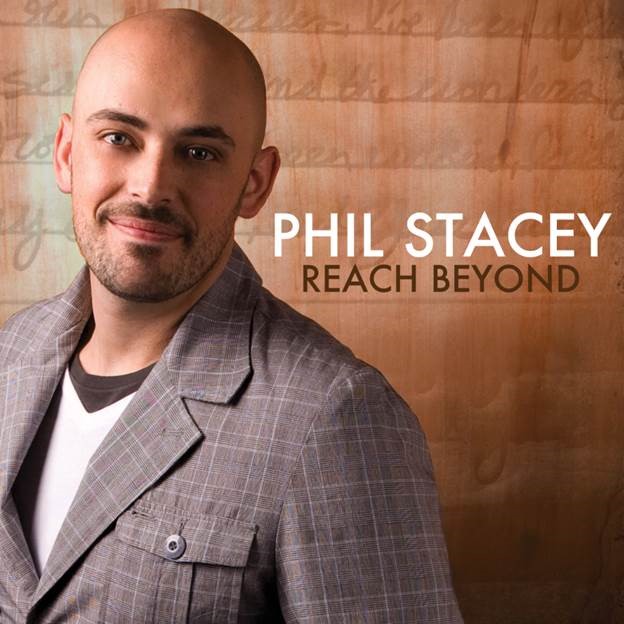
Christian Today report- American Idol alum Phil Stacey wants the faithful to share the message of God and he is leading by example.

Stacey, who is best known for being one of Idol’s Season 6 finalists, has joined forces with the Reach Beyond ministry to record a single in an effort to motivate Christians to do their part in spreading the Gospel and embodying the message of Christ in their own lives.

Reach Beyond and its ministries are targeted towards reaching those who are as yet unreached and untouched by the Word of God.

“I was thrilled when Reach Beyond approached me about recording this song. My heart has always been in tune with global missions, and I hope the personal and potent message of this song inspires people to tell others about Jesus – whether it’s in their immediate communities or in a country thousands of miles from home,” Stacey said.

Reach Beyond, which is also the title of the single, was a collaboration between Stacey and Christian recording artist and Dove award winner Chris August, who wrote the music.  Ty Stakes penned the lyrics.

On his website, Stacey shared the lyrics to a portion of the song which encapsulated the essence of becoming Gospel ambassadors for the faithful:

You reach beyond every limit crossing time and space,

You reach beyond majestic beauty to this broken place,

You reach beyond heaven’s glory to hang upon a cross,

You reach beyond every border counting all as lost,

You reach, you reach beyond… You reach beyond to us.

The Reach Beyond single is available on iTunes, as well as Spotify, Amazon, Google and other music providers.

The proceeds from the sale of the single will fund the ministries of Reach Beyond, which range from communication programmes to spreading the gospel, building water wells in Ghana, running health clinics in Ecuador, and working on Ebola prevention in Africa.

Source: Christian Today

Banning Christian University Grads From Practicing Law due to Homosexuality Views is not Legal, Rules Canadian Court

Christian Post report- A Canadian province’s highest court has ruled that a Christian academic institute’s lawyers can’t be banned from practicing law due to the university’s views on homosexuality.

The Nova Scotia Supreme Court ruled Wednesday that Trinity Western University students could join the bar, overruling a decision last year by the Nova Scotia Barristers’ Society.

Justice Jamie S. Campbell, author of the opinion, concluded that the society’s “resolution and regulation infringe on the freedom of religion of TWU and its students in a way that cannot be justified.”

“For many people in a secular society religious freedom is worse than inconsequential. It actually gets in the way. It’s the dead hand of the superstitious past reaching out to restrain more important secular values like equality from becoming real equality,” wrote Campbell.

“The discomforting truth is that religions with views that many Canadians find incomprehensible or offensive abound in a liberal and multicultural society. The law protects them and must carve out a place not only where they can exist but flourish.”

Based in British Columbia and established in 1962, TWU was founded as an evangelical Christian liberal arts academic institution.

As part of its Christian identity, TWU has a “community covenant” for its students and faculty that, among other obligations, states that community members will “voluntarily abstain” from “sexual intimacy that violates the sacredness of marriage between a man and a woman.”

“The university’s mission, core values, curriculum and community life are formed by a firm commitment to the person and work of Jesus Christ as declared in the Bible,” reads the covenant.

“The community covenant is a solemn pledge in which members place themselves under obligations on the part of the institution to its members, the members to the institution, and the members to one another.”

Other actions that the covenant calls for its community to abstain from include “gossip, slander, vulgar/obscene language, stealing, misusing or destroying property belonging to others, drunkenness, under-age consumption of alcohol, and the use or possession of illegal drugs.”

Last April, the Nova Scotia Barristers’ Society council voted 10 to 9 to prohibit TWU students from joining the bar, reported the Chronicle Herald.

“The bar society’s policy was that Trinity Western must either exempt law students from the mandatory vow or change the covenant so it is not discriminatory in order for graduates to be allowed to practise in Nova Scotia,” noted McLeod.

Last May, TWU filed lawsuits against the Nova Scotia Barrister Society, as well as other legal challenges in response to efforts against the university’s official recognition.

“The B.C. university announced Tuesday it is launching lawsuits in Ontario and Nova Scotia, where the provincial bar associations have voted not to accredit graduates of the law school, which is set to open in 2016,” reported CBC News.

“It will also apply to be added to a lawsuit in B.C., where Toronto lawyer Clayton Ruby is suing the provincial government over its decision to approve the law school.”

At the center of each of these legal actions, according to CBC, was TWU’s position calling for no sexual conduct outside of heterosexual marriage.

The Nova Scotia lawsuit was brought before the province’s Supreme Court in December, with arguments being heard over a span of a few days.

Regarding the recent Campbell decision, TWU spokesperson Guy Saffold stated that it was “an exceptionally important decision.”

“It affirms that protection of religious freedom is and must continue to be central value in Canada’s pluralist society,” continued Saffold.

“This decision is important not only to TWU’s effort to launch a School of Law … but also, we believe it sets an extremely valuable precedent in protection of freedoms for all religious communities and people of faith in Canada.”

NSBS President Tilly Pillay said that the legal organization would review the Campbell decision before deciding what to do next.

“We appreciate that Justice Campbell dealt with this matter very quickly and comprehensively,” said Pillay in a statement.

“We are analyzing the decision and will review it with our legal counsel before we can determine what the next steps might be. There is much to consider.”

Source: Christian Post

 

The inspirational teacher who never failed

Catholic Herald report-  Having blogged recently about My Battle with Hitler, the memoirs of the Catholic philosopher, Dietrich von Hildebrand, I was curious to read Memoirs of a Happy Failure by his widow, Alice von Hildebrand. Why this intriguing title? Because, as the author explains in her book, as a teacher of philosophy at Hunter College, New York, for nearly four decades, she was a “failure” as far as the faculty of this very secular college was concerned. For years von Hildebrand was given only the uncongenial evening classes to teach, was passed over for promotion, was refused tenure, only paid by the hour and even had scheduled courses changed without consultation – for no other reason than professional jealousy at her popularity in the classroom (enrolment for her courses was nearly always full) and disapproval of her Catholic faith.

As a lecturer in philosophy, the author was always very careful never to bring her personal faith into the classroom. Yet it regularly happened that some students, sometimes of no faith background, at other times lapsed from their faith, would decide to become Catholics after listening to her lectures. Thus von Hildebrand was accused by her colleagues of unprofessional behaviour and of trying to “convert” her students. As this wasn’t true, the author could only conjecture that her “uncompromising devotion to truth, a passionate desire to share with others what I myself have received, and an absolute refusal to compromise for the sake of worldly advantages” had somehow communicated itself to them. They knew they were in the presence of a teacher of integrity, who not only had a passion for objective truth as it arose in philosophical discussions, but someone who also had a pastoral concern for them as individuals. Teaching for von Hildebrand was not a career or a job – it was a vocation: a desire to help her students to discover what was good, true and beautiful in the realm of philosophical ideas.

Relegated for years to teaching evening classes, she writes that “I devoted my love and care to grooming the ‘miserable garden’ to which I had been assigned.” Looking back she comments, “It is amazing what one can endure when one has a sense of mission.” At the end of her book she makes an appeal for teachers “who courageously stand up for the objectivity of truth. There are things which do not change, which have an absolute and transcendent validity, and which every person has the right to know.”

Such a courageously uncompromising attitude does not go down well in an age of relativism, when everyone’s views are seen as valid as everyone else’s and when the put-down to any argument goes, “That’s just your opinion.” What is surprising is the revelation in the book that the collapse of a common core of values was obviously widespread in the US as early as the 1950s. My final reflection: if that was the case in the 1950s, as Alice von Hildebrand describes, how much harder it is for Catholic teachers today – in Catholic schools as well as secular ones.

Source: Catholic Herald

Trash: Review

Christian Today report- At its core Trash is a film that redefines what it means to be family. Think a cross between Slumdog Millionaire, National Treasure and Homeward Bound. This movie is an adventure centered around three boys who live and work at a garbage dump in Rio de Janeiro. While picking through the trash Rafael (Rickson Tevez) finds a wallet with some cash and seemingly ordinary objects. When the police come searching for it the boys realize they have something of real value. The excitement begins as the police try to catch them before they discover what it leads to.

Amid a plethora of films being pumped out of Hollywood with flat, predictable characters, director Stephen Daldry truly brings a breath of fresh air. Each character goes through their own journey and no one is left the same in the end. The themes running through this movie are primal to the human experience. You will find yourself feeling more connected to these characters from a garbage dump in Brazil than you do your own neighbor.

Characters/Acting: 9/10

Rooney Mara instantly steals our heart from the moment she appears on screen in her brief yet captivating performance.

Martin Sheen plays the not-so-perfect Father Juilliard. His character hits the right amount of having human flaws while still being a man of God and loving his community.

Rickson Tevez, our main star, is absolutely dynamic as Raphael. His character shows purity of heart and a willingness to sacrifice everything just “because it is right.” Raphael reminds us all that the greatest act of love is to lay down one’s life for a friend.

The other two boys Rato (Gabriel Weinstein) and Gardo (Eduardo Luis) give the film so much more depth with their radiant performances. The characters throughout will not leave you wanting for authenticity.

Story: 7/10

Trash is a brilliant adventure film. It will grip teens and adults alike. That said, there are moments when you absolutely want to cry but at that threshold of tears, the story takes its foot off the gas and leaves you wishing they had taken it a bit further. It was funny, suspenseful, sad, hopeful, depressing, and encouraging.

Cinematography/Editing: 7/10

We start the film seeing breathtaking shots of Rio then are taken right down into the trash. Shot almost entirely from ground level, the cinematography helps us feel what it is like as a kid running around the streets. The editing was nicely done and allowed the audience to focus on the story and characters without being distracted by over use of effects.

Overall: 7/10

Trash a film I encourage all to see. The message is one that needs to told over and over again, although it eventually begins to feel a bit preachy. Instead of letting the audience discover what that message was, that work was done for them by a voice over at the end. Not knowing when to simply allow the characters’ journey to show the message, nor when to push moments to their full emotional capacity are the only negative aspects to this otherwise tremendously inspiring film.

Source: Christian Today

BBC to cut the post of its Head of Religion

Christian Today report- The BBC is to axe the post of its head of religion as part of a move to streamline commissioning and cut costs.

The commissioning role of Aaqil Ahmed is one of four jobs that will go under a restructuring that will also see three new jobs created, including the post of head of science, business, history and religion.

Mr Ahmed, who is also head of religion and ethics which includes in-house programmes such as Songs of Praise and which he will continue to do, has been invited to apply for the new commissioning post.

The BBC in-house journal Ariel reported that Ahmed – the man behind The Ottomans – splits his time between commissioning and his role as head of religion and ethics.

Emma Swain, the controller of factual commissioning, said the changes were necessary because of savings targets in television and the fact that there will be fewer hours commissioned overall.

In an email to staff, she said: “I want to shape a factual commissioning team with fewer leaders, clearer distinction between roles, greater alignment with channels and external stakeholders and greater flexibility.”

Bishop of Bradford Nick Baines said on his blog that the restructuring is aimed both at saving money and to prepare for the closure of BBC3.

He writes: “This might all make perfect sense and be a rational and productive structural change within the BBC. But, in the absence of more detail, it also raises important questions.”

He asks who will take overall responsibility in the BBC for the range, quantity and quality of the religious coverage, and warns it could be left as a sort of “fill in” content. He asks: “Why is there no BBC news religion editor to complement the science, economics, business, political, financial, arts and sports editors?”

Bishop Baines argues that it is impossible to understand politics, economics, military and humanitarian events without understanding religion so it should be prioritised as needing expert interpretation in the public and broadcast sphere.

The cuts are expected to save about £700 million by 2017.

Father Christopher Jamison, former Abbot of Worth who was involved in BBC television’s The Monastery, welcomed the move. He told The Tablet that it could mean a wider variety of voices being heard.

Mr Ahmed has been an outspoken critic of religious illiteracy in modern Britain. He believes programmes such as Songs of Praise should remain exclusively Christian and opposes moves for atheists to do Thought For the Day. He has a record of broadening the corporation’s coverage to do more on other faiths besides Christianity and recently commissioned a three-part series for BBC4 on the teachings of Buddha, Confucius and Socrates.

Source: Christian Today

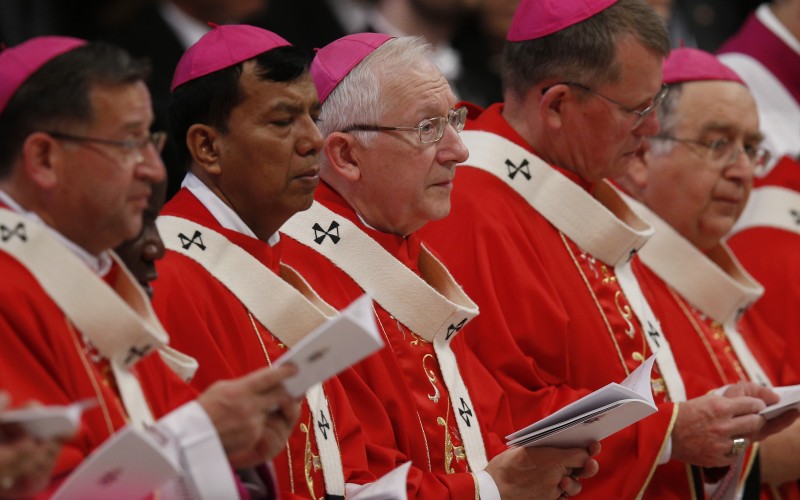
Newly Appointed Archbishops will no longer receive Pallinum in Rome, says Pope Francis

Catholic Herald report- Metropolitan archbishops will no longer receive the pallium at a formal ceremony in Rome following a decision by Pope Francis.

The Pope has decided that each newly-appointed metropolitan archbishops should be formally vested at a cermony held in their own archdiocese, by the Apostolic Nuncio, replacing the tradition of the pontiff presenting the pallium on the Feast of St Peter and St Paul in Rome.

Mgr Guido Marini, the master of liturgical cermonies, wrote in a letter to new archbishops that Pope Francis thought this new initiative would “greatly favour the participation of the local Church.”

Despite this change, Pope Francis has still invited each new archbishop to join him in Rome on June 29 this year to concelebrate at Mass on the Feast of St Peter and St Paul.

The Pope will also bless each pallium, and present the vestment to the archbishops who are present, privately after the Mass.

The wearing of the pallium dates back to the fourth century predating the miter and the crosier as episcopal symbols. The pallium is a white woolen strip, worn around the neck, which symbolises the bond between an archbishop and his Pope.

Archbishop Malcolm McMahon of Liverpool said the Vatican’s decision to stop hosting the pallium ceremony “makes sense”.

Archbishop McMahon, who received the pallium at the Vatican in June 2014, said: “Pope Francis has said that he doesn’t want ‘airport bishops’; he places a great emphasis on the local church. It makes sense to have a celebration in the Archdiocese with the people, rather than a selected few flying to the ceremony in Rome.”

Source: Catholic Herald


Vatican Document says Plastic Surgery can be an ‘aggression’ against Women

Catholic Herald report- Cosmetic surgery “can be aggressive toward the feminine identity”, a Vatican discussion document has said.

The text, published by the Pontifical Council for Culture, also addresses violence against women, cultural pressures regarding women’s physical appearance, attitudes that subjugate women or that ignore male-female differences, and the growing alienation of women from the Church in some parts of the world.

The council has chosen to discuss the theme “Women’s Cultures: Equality and Difference” during its plenary assembly on February 4-7 at the Vatican. A news conference was scheduled for February 2, but the council issued its discussion document on the topic in late January.

The document, drafted by a group of women appointed by the council, looked at the continuing quest to find balance in promoting women’s equality while valuing the differences between women and men, the concrete and symbolic aspects of women’s potential for motherhood, cultural attitudes toward women’s bodies, and women and religion, including questions about their participation in Church decision-making.

The council said the theme was chosen “to identify possible pastoral paths, which will allow Christian communities to listen and dialogue with the world today in this sphere”, while recognising that in different cultures and for individual women the situation will be different.

While cautioning against generalisations, the document rejects the notion that there are no differences between men and women, and that each person “chooses and builds his-her identity; owns him-herself and answers primarily to him-herself”.

In preparing the document and the plenary discussions, the council sought input from women around the world. But the process attracted criticism, particularly for the English version of a video featuring an Italian actress, Nanci Brilli, asking women to send in their experiences. Many women felt the use of a heavily made-up actress ran counter to the point of seeking input about the real lives of most women. The council quickly took the English version off YouTube.

In the section on women and the Church, the document described “multifaceted discomfort” with images of women that are no longer relevant and with a Christian community that seems to value their input even less than the world of business and commerce does.

Many women, it said, “have reached places of prestige within society and the workplace, but have no corresponding decisional role nor responsibility within ecclesial communities”.

Council members are not proposing a discussion of ordaining women priests, the document said and, in fact, statistics show ordination “is not something that women want”. But it said: “If, as Pope Francis says, women have a central role in Christianity, this role must find a counterpart also in the ordinary life of the Church.”

The vast majority of Catholic women today do not want a bishop’s “purple biretta”, it said, but would like to see church doors open “to women so that they can offer their contribution in terms of skills and also sensitivity, intuition, passion, dedication, in full collaboration and integration” with men in the Church.

The preparatory document looked at how much pressure women face regarding their body image and the way women’s bodies are exploited in the media, even to the point of provoking eating disorders or recourse to unnecessary surgery.

“Plastic surgery that is not medico-therapeutic can be aggressive toward the feminine identity, showing a refusal of the body in as much as it is a refusal of the ‘season’ that is being lived out,” it said.

“‘Plastic surgery is like a burka made of flesh.’ One woman gave us this harsh and incisive description,” the document said. “Having been given freedom of choice for all, are we not under a new cultural yoke of a singular feminine model?”

The document also denounced violence inflicted on women: “Selective abortion, infanticide, genital mutilation, crimes of honour, forced marriages, trafficking of women, sexual molestation, rape – which in some parts of the world are inflicted on a massive level and along ethnic lines – are some of the deepest injuries inflicted daily on the soul of the world, on the bodies of women and of girls, who become silent and invisible victims.”

Source: Catholic Herald

Justin Welby Speaks on Modern Preaching

Christian Today report- The Archbishop of Canterbury thinks there’s too much ‘moral claptrap’ in sermons these days. Justin Welby drew praise and fire in equal measure this week with his comments – made during an address in New York – about modern preaching. But while some were stung by his comments, they undoubtedly had a ring of truth about them.

Speaking at Trinity Wall Street, he said: “[Jesus doesn’t] permit us to turn religion into morality. The old sermons that we have heard so often in England, which I grew up with, which if you boiled them down all they effectively said was: ‘Wouldn’t the world be a nicer place if we were all a bit nicer?’ That is the kind of moral claptrap that Jesus does not permit us to accept.”

Anyone who actually listens during sermons knows exactly what the Archbishop is talking about, and precisely why the practice he describes is so attractive. As a preacher, it’s hard to resist the desire to be liked, and tied up with that, the temptation to be inoffensive. A gospel of ‘niceness’, explained with some witty stories and a bit of lightly-challenging personal application, is almost guaranteed to leave the punters smiling, nodding, and remarking to one another about how marvellous your preaching is. An intoxicating proposition indeed.

At the other extreme are those sermons which leave no-one smiling. Preachers who seem so angry about sin and those who purvey it that you’re worried he’s going to step down into the congregation and begin punching people at random. Joyless, graceless homilies which suggest God demands instant, total change from us, or else. No hint of personal connection, no stories, and absolutely no humour in any circumstances; just an unswerving focus on The Cross and why it should make us feel terrible about ourselves. Many of us have sat through a few of those too, and we’ve probably needed a stiff drink afterwards. I certainly don’t think this is the route Welby is proposing.

In the middle of the two however, there’s a formula for great preaching to be found, drawing the personal connection and application from the first example, and maybe just a little dose of gravitas from the second. In his New York talk, Welby suggested that preachers should prompt congregants to “a revolution of expectation and implementation”. In other words, fill people with hope, draw them closer to Jesus, and help them to act like him. Those are great directions for any preacher, and help us to formulate a few ideas about what good preaching looks like…

Preach hope

Welby said Christians should be looking at each other with ‘bursting and boundless hope for our future as a society’. Whatever might be going on in our lives when we hear it, good preaching helps us to stop for a moment and see a vision of how things could change and be made better.

Preach Jesus

The Jesus which Welby describes is compelling – the foot-washing revolutionary who dies all for love. When we’re presented with a random passage from Leviticus and asked to unlock its meaning, it’s easy to become lost in trying to make a strange and archaic-sounding section of the Bible seem relevant to modern culture. I’ve certainly prepared and preached sermons which forgot that Jesus is the very epicentre of our faith, and didn’t return ultimately to him. Good preaching never does that; it always puts Jesus front and centre, and leaves the congregation wanting to draw a little closer to him.

Preach action

If we had to boil the Archbishop’s point down even further, it might simply be stated as: quit moralising, compel people to love. This is the ‘implementation’ of which he speaks: we take the grace that we have received in being loved and accepted by God, and we let it loose on the world around us. Good preaching gives people something to ‘do’ as a result of what they’ve heard; it applies the passage to their everyday world and asks them to get involved in making it a better place.

Alongside Welby’s guidance, I’m offering a couple of other points of my own – definitely not drawn from years of personal preaching disasters…

Don’t make jokes for the sake of it

I think the desire to be liked by our congregations, whether we’re aware of it or not, can have a damaging effect on our preparation. It’s great to be witty and engaging as a speaker, but when we start throwing in amusing stories in order to placate our audience or keep them awake, then we’re probably both wasting their time and using up a section of the preach in which scripture could have been speaking to them. The old ‘open with a joke’ rule feels a bit tired now, and we’ve grown to expect it. Humour is great. Jesus used it lots, but he always had a reason for doing so.

It’s not all about meee…

Some preachers give nothing away about themselves. At the end of the sermon, you don’t know if they’re married, where they live, or even what they like to do on a weekend. This style makes it very difficult for congregants to connect with. By contrast, some of us talk rather too much about these things; every sermon point becomes an illustration about the last time we went to the vet.

Always come back to the cross

The Cross and Resurrection of Jesus isn’t just the centre of the Christian message – it is the Christian message. When we confuse that with a moral call to be nicer and change the world a bit, we fall into exactly the (clap)trap which Welby describes. So I believe all sermons should not just refer to that, but take people directly to it, and offer an opportunity to accept Jesus and his call for the first time. We should always assume that there are people listening to us who haven’t taken that step of committing.

Should the Archbishop of Canterbury be criticising the imagined ‘average sermon’? Some people were unhappy that he did. Personally, I’m glad that he’s challenging all preachers to communicate the person and the message of Jesus more faithfully. ‘Claptrap’ might describe some of the things we jot down in the rush of last-minute sermon-prep, but it certainly doesn’t describe the true message of Christ.

Source: Christian Today